Year: 2023

More Adolescents Are Underestimating Their Body Weight

Photo by I Yunmai on Unsplash

A study involving more than 745 000 adolescents from 41 countries across Europe and North America identified an increase in the amount of teenagers who underestimate their body weight. Tracking data from 2002 to 2018, the findings, published in Child and Adolescent Obesityalso show fewer adolescents overestimating their weight.

The team of international experts, who carried out the research, warn these shifting trends in body weight perception could reduce the effectiveness of public health interventions aimed at weight reduction in young people.

“During this impressionable age, body weight perception may influence a young person’s lifestyle choices, such as the amount and types of food they eat and their exercise habits,” says lead author Doctor Anouk Geraets, from the Department of Social Sciences, at the University of Luxembourg.

“So it’s concerning that we’re seeing a trend where fewer adolescents perceive themselves as being overweight — as this could undermine ongoing efforts to tackle increasing levels of obesity in this age group. Young people who underestimate their weight and therefore do not consider themselves to be overweight may not feel they need to lose excess weight and, as a result, they may make unhealthy lifestyle choices.”

A person’s perception of their body weight may not accurately reflect their actual weight. A discrepancy in body weight perception (BWP) may either be an underestimation (where actual weight is higher than perceived weight) or an overestimation (where actual weight is lower than perceived weight).

In the present study, the researchers examined survey data from 746,121 11-, 13- and 15-year-olds from 41 countries collected at four-yearly intervals between 2002 and 2018 in the International Health Behavior in School-Aged Children (HBSC), a WHO collaborative study.

The team modeled trends in BWP among adolescents across different countries over time, making adjustments for age, gender, and family socioeconomic status. They found:

  • Underestimation of weight status increased, and overestimation of weight status decreased over time among both sexes, with stronger trends for girls.
  • Correct weight perception increased over time among girls, while it decreased among boys.
  • Changes in correct weight perception, underestimation and overestimation of weight status differed across different countries — but these changes could not be explained by an increase in country-level overweight/obesity prevalence.

The authors speculated that the observed differences between girls and boys in BWP may support the idea there are sex differences in body ideals — and that these body ideals have changed over time. Notably, the increased underestimation and decreased overestimation of weight status over time for girls may be explained by the emergence of an athletic and strong body, as a new contemporary body ideal for both sexes.

“This study has clinical and public health implications. The increase in correct weight perception and the decrease in overestimation may have a positive effect on unnecessary and unhealthy weight loss behaviors among adolescents, while the increase in underestimation might indicate the need for interventions to strengthen correct weight perception,” says lead author Doctor Anouk Geraets.

“More research is now needed to understand the factors underlying these time trends and to develop effective public health interventions.”

While the large number of participating countries is a strength of the present study, but as these only included countries in Europe, the USA and Canada, the results can’t be generalised to other regions. In addition, although steps were taken to adjust the models for certain potential confounding factors, several other factors – such as body image, dieting, changing eating patterns, or migration – may also have played a role in the observed trends over time.

Source: Taylor & Francis Group
Long COVID not Caused by COVID Immune Inflammatory Response, New Study Finds

Photo by Usman Yousaf on Unsplash

Research led by the University of Bristol has found that long COVID is not caused by an immune inflammatory reaction to COVID. Emerging data shows that immune activation may persist for months after contracting COVID. In this new study, published in eLife, researchers wanted to find out whether persistent immune activation and ongoing inflammation response could be the underlying cause of long COVID.  

To investigate this, the Bristol team collected and analysed immune responses in blood samples from 63 patients hospitalised with mild, moderate or severe COVID at the start of the pandemic and before vaccines were available. The team then tested patients’ immune responses at three months and again at eight and 12 months post hospital admission. Of these patients, 79% (82%, 75%, and 86% of mild, moderate, and severe patients, respectively) reported at least one ongoing symptom with breathlessness and excessive fatigue being the most common.

Dr Laura Rivino, the study’s lead author, explained: “Long Covid occurs in one out of ten COVID cases, but we still don’t understand what causes it.  Several theories proposed include whether it might be triggered by an inflammatory immune response towards the virus that is still persisting in our body, sending our immune system into overdrive or the reactivation of latent viruses such as human cytomegalovirus (CMV) and Epstein Barr virus (EBV).”

The team found patients’ immune responses at three months with severe symptoms displayed significant dysfunction in their T-cell profiles indicating that inflammation may persist for months even after they have recovered from the virus. Reassuringly, results showed that even in severe cases inflammation in these patients resolved in time. At 12 months, both the immune profiles and inflammatory levels of patients with severe disease were similar to those of mild and moderate patients.

Patients with severe COVID were found to display a higher number of long Covid symptoms compared to mild and moderate patients. However, further analysis by the team revealed no direct association between long COVID symptoms and immune inflammatory responses, for the markers that were measured, in any of the patients after adjusting for age, sex and disease severity.

Importantly, there was no rapid increase in immune cells targeting SARS-CoV-2 at three months, but T-cells targeting the persistent and dormant Cytomegalovirus (CMV) – a common virus that is usually harmless but can stay in your body for life once infected with it – did show an increase at low levels. This indicates that the prolonged T-cell activation observed at three months in severe patients may not be driven by SARS-CoV-2 but instead may be “bystander driven” ie driven by cytokines. 

Dr Rivino added: “Our findings suggest that prolonged immune activation and Long COVID may correlate independently with severe COVID. Larger studies should be conducted looking at both a larger number of patients, including if possible vaccinated and non-vaccinated COVID patients, and measuring a larger range of markers and cytokines. 

“Understanding whether inflammation and immune activation associate with Long COVID would allow us to understand whether targeting these factors may be a useful therapy for this debilitating condition.”

Source: University of Bristol

mRNA ‘Trojan Horse’ Tricks Cancer Cells into Self-destruction

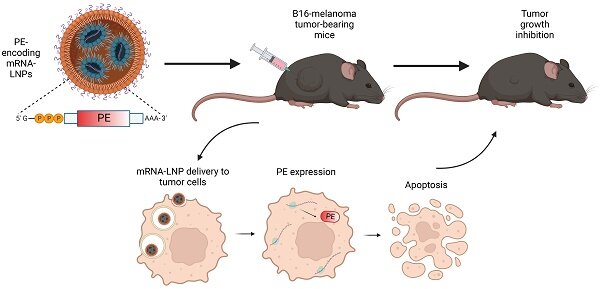
Graphical abstract. Credit: Theranostics (2023). DOI: 10.7150/thno.82228

Tel Aviv University researchers have hit upon a novel method of cancer treatment by creating an mRNA ‘Trojan horse’ that instructed cancer cells to produce a toxin lethal to themselves, eventually killing them with a success rate of about 50%. This ground-breaking study was led by PhD student Yasmin Granot-Matok and Prof Dan Peer, a pioneer in the development of RNA therapeutics. The study’s results were published in Theranostics.

Prof Peer explains: “Many bacteria secrete toxins. The most famous of these is probably the botulinum toxin injected in Botox treatments. Another classic treatment technique is chemotherapy, involving the delivery of small molecules through the bloodstream to effectively kill cancer cells. However, chemotherapy has a major downside: it is not selective, and also kills healthy cells. Our idea was to deliver safe mRNA molecules encoded for a bacterial toxin directly to the cancer cells – inducing these cells to actually produce the toxic protein that would later kill them. It’s like placing a Trojan horse inside the cancer cell.”

First, the research team encoded the genetic info of the toxic protein produced by bacteria of the pseudomonas family into mRNA molecules (resembling the procedure in which genetic info of COVID-19’s ‘spike’ protein was encoded into mRNA molecules to create the vaccine). The mRNA molecules were then packaged in lipid nanoparticles developed in Prof Peer’s laboratory and coated with antibodies to ensure they would reach their target, the cancer cells. These particles were injected into the tumours of animal models with melanoma skin cancer. After a single injection, 44–60% of the cancer cells vanished.  

“In our study, the cancer cell produced the toxic protein that eventually killed it,” says Prof Peer. “We used pseudomonas bacteria and the melanoma cancer, but this was only a matter of convenience. Many anaerobic bacteria, especially those that live in the ground, secrete toxins, and most of these toxins can probably be used with our method. This is our ‘recipe’, and we know how to deliver it directly to the target cells with our nanoparticles. When the cancer cell reads the ‘recipe’ at the other end it starts to produce the toxin as if it were the bacteria itself and this self-produced toxin eventually kills it. Thus, with a simple injection to the tumour bed, we can cause cancer cells to ‘commit suicide’, without damaging healthy cells. Moreover, cancer cells cannot develop resistance to our technology as often happens with chemotherapy – because we can always use a different natural toxin.”

Source: Tel Aviv University

Surgical Stabilisation of Odontoid Fractures Linked to Better Outcomes

Photo by Kampus Production on Pexels

In a review of patient treatment data, researchers have found that surgical stabilisation of odontoid fractures was associated with better outcomes than nonsurgical approaches. The article will appear in the September issue of Neurosurgery.

Odontoid fractures (C2 vertebra) are common in elderly patients after a low-energy fall. However, whether the initial treatment should be surgical or nonoperative still isn’t known. Previous studies haven’t accounted for differences in injury severity, or the presence or absence of neurologic impairment, which can affect patients’ results.

Michael B. Cloney, MD, MPH, of the Department of Neurological Surgery at Northwestern University in Chicago, and colleagues have published evidence that surgery should be considered as the initial approach for many patients. Compared with nonoperative approaches to treatment, surgical stabilisation of the fracture was associated with less myelopathy (mobility impairment due to spinal cord damage), and lower rates of fracture nonunion, 30-day mortality, and one year mortality.

“Given the increasing incidence of odontoid fractures with the aging population, we believe our findings could assist with neurosurgical decision-making for an increasingly common and complex problem,” the researchers say.

Accounting for nonrandomised patient groups

Dr Cloney and his colleagues reviewed initial treatment data on 296 patients who were cared for at Northwestern Memorial Hospital between January 1, 2010, and December 31, 2020, because of an odontoid fracture. Their average age was 73. During the hospitalisation, 22% had surgery and 78% had nonoperative treatment (5% were immobilised in a halo-vest and 73% received a cervical collar).

Since the patients weren’t randomised to these treatments, the research team used a type of analysis called propensity score adjustment. They calculated “propensity scores” for each individual – the probability that the patient would have been assigned to receive one of the two treatment approaches based on certain characteristics.

For example, to study the effect of surgery on mortality rates, patients were matched on age, sex, Injury Severity Score, Nurick score (a measure of myelopathy), their number of chronic diseases and chronic conditions such as smoking, and whether they had to be admitted to the intensive care unit.

Surgical stabilisation leads to better results

Follow up with patients lasted an average of 45 weeks. On the propensity score–matched analyses, the group that underwent surgery showed significantly better outcomes than the nonoperative group:

  • Lower rate of fracture nonunion – 39.7% vs 57.3%; treatment effect, 15% less risk of nonunion
  • Lower 30-day mortality rate – 1.7% vs 13.8%; treatment effect, 10% less risk of death
  • Lower one year mortality rate – 7.0% vs 23.7%; treatment effect, 10% less risk of death

Other analyses showed patients in the surgery group were 52% less likely than those in the nonoperative group to have poor Nurick scores at the 26-week postoperative follow-up visit and were 41% less likely to die during the overall follow-up period. Both differences were statistically significant.

“The mortality benefit calculated in the existing literature typically represents an unadjusted mortality rate between two potentially different populations, which leaves it liable to confounding,” the authors note. “Our study represents a relatively large institutional series that suggests a benefit from surgical stabilisation in this population while controlling for confounding factors more thoroughly than existing literature.”

Source: EurekAlert!

Study Improves Accuracy for Breast Cancer Genetic Markers in Ashkenazi Jewish Women

Photo by Robert Thiemann on Unsplash

A new study by researchers in the UK and Israel has investigated how to improve breast cancer genetic tests for Ashkenazi Jewish women. By analysing genetic samples from women from Ashkenazi Jewish backgrounds, they were able to correctly adjust the risk estimates from commercially available genetic screening tests, giving a more accurate result. They detail their technique in the journal Genetics in Medicine.

New forms of genetic tests can tell women their personal risk of developing breast cancer. However, previous research has shown they are not accurate for many Black, Asian or Ashkenazi Jewish women, or women with a mixed ethnic background.

The study focuses on tiny genetic variations called Single Nucleotide Polymorphisms (SNPs) – which, depending on the unique combination of them, can increase or decrease the risk of breast cancer.

This information is used to produce a Polygenic Risk Score (PRS), which can inform women whether they are at low, average, or high risk of developing breast cancer in the next 10 years. PRS are becoming more widely available through commercial companies and research studies on the NHS breast screening programme.

Current PRSs were developed from large-scale genome studies which predominantly collected genetic data from mainstream White European populations. As a result, the accuracy of a PRS for an individual will depend on how closely their genetic material resemble those of the people whose data was used to develop the risk score.

This means that while commercially available PRS can accurately predict breast cancer risk for mainstream White European women, they often exaggerate this risk for Black, Asian or Ashkenazi Jewish women, or women with a mixed ethnic background.

In this new study, researchers compared two available PRS based on two SNPs – SNP142 and the commercial SNP78 – and analysed their accuracy for women of Ashkenazi Jewish ancestry.

The findings showed that these PRS tests inaccurately predicted Ashkenazi Jewish women to be at higher risk of developing breast cancer.

After adjusting the test for Ashkenazi Jewish ancestry, the researchers were able to generate a more accurate prediction of breast cancer risk for these women.

The research team used genetic information from Ashkenazi Jewish women in both Manchester and Israel, with data from the Predicting the Risk of Cancer at Screening (PROCAS) study conducted in Greater Manchester, a Manchester regional genetics database, and the Breast Cancer in Northern Israel (BCINIS) study.

This research was led by Professor Gareth Evans, a leading expert in breast cancer genetics and SNPs testing and NIHR Manchester BRC Cancer Prevention and Early Detection Theme Lead.

Professor Evans said: “Polygenic Risk Scores (PRS) are a major component of accurate breast cancer risk prediction and have great potential to improve personalised screening methods. However, it is clear from our findings that you cannot simply apply current PRS developed using genetic data from individuals of white European ancestry to those from Ashkenazi Jewish backgrounds.

“A test result which exaggerates a woman’s risk of the disease could lead to undue stress or concern and unnecessary screening and preventative measures that they don’t need. Future PRS for Ashkenazi Jewish women should be based on their genetic data to provide a more accurate risk prediction.

“This study is an important step forward in our continued research into breast cancer genetic testing for people of different ethnic backgrounds to improve equity. More accurate and personalised PRS are required to avoid further increasing health inequalities and so patients can receive high-quality screening, care, and treatments.”

Source: University of Manchester

Dr Robot Will See You Now: Medical Chatbots Need to be Regulated

Photo by Alex Knight on Unsplash

The Large Language Models (LLM) used in chatbots may appear to offer reliable, persuasive advice in a format which mimics conversation but in they can offer potentially harmful information when prompted with medical questions. Therefore, any LLM-chatbot in a medical setting would require approval as a medical device, argue experts in a paper published in Nature Medicine.

The mistake often made with LLM-chatbots is that they are a true “artificial intelligence” when in fact they are more closely related to the predictive text in a smartphone. They mostly use conversations and text scraped from the internet, and use algorithms to associate words and sentences in a manner that appears meaningful.

“Large Language Models are neural network language models with remarkable conversational skills. They generate human-like responses and engage in interactive conversations. However, they often generate highly convincing statements that are verifiably wrong or provide inappropriate responses. Today there is no way to be certain about the quality, evidence level, or consistency of clinical information or supporting evidence for any response. These chatbots are unsafe tools when it comes to medical advice and it is necessary to develop new frameworks that ensure patient safety,” said Prof Stephen Gilbert at TU Dresden.

Challenges in the regulatory approval of LLMs

Most people research their symptoms online before seeking medical advice. Search engines play a role in decision-making process. The forthcoming integration of LLM-chatbots into search engines may increase users’ confidence in the answers given by a chatbot that mimics conversation. It has been demonstrated that LLMs can provide profoundly dangerous information when prompted with medical questions.

The basis of LLMs do not have any medical “ground truth,” which is inherently dangerous. Chat-interfaced LLMs have already provided harmful medical responses and have already been used unethically in ‘experiments’ on patients without consent. Almost every medical LLM use case requires regulatory control in the EU and US. In the US their lack of explainability disqualifies them from being ‘non devices’. LLMs with explainability, low bias, predictability, correctness, and verifiable outputs do not currently exist and they are not exempted from current (or future) governance approaches.

The authors describe in their paper the limited scenarios in which LLMs could find application under current frameworks. They also describe how developers can seek to create LLM-based tools that could be approved as medical devices, and they explore the development of new frameworks that preserve patient safety. “Current LLM-chatbots do not meet key principles for AI in healthcare, like bias control, explainability, systems of oversight, validation and transparency. To earn their place in medical armamentarium, chatbots must be designed for better accuracy, with safety and clinical efficacy demonstrated and approved by regulators,” concludes Prof Gilbert.

Source: Technische Universität Dresden

Female Athletes’ Metabolism Drops if They Cut Energy Intake

Photo by Andrea Piacquadio on Pexels

Most athletes know that diet and training go hand in hand for the best results, and many of them closely monitor their energy intake and training. However, a new study from Aarhus University shows that the bodies of female athletes are negatively affected when they consume too little energy through their diet in comparison with their training volume, explains PhD student Mikkel Oxfeldt. He and Associate Professor Mette Hansen are behind the study, which is published in the Journal of Physiology.

“We know that both elite female athletes and active women at times, either consciously or unconsciously, don’t have an energy intake that matches their energy expenditure when training. The study shows that insufficient energy intake can negatively affect muscles’ ability to respond to training. After just ten days of low energy intake, we began seeing changes to the hormonal system such as a decrease in the metabolic hormone followed by a decrease in metabolism.”

The study shows that it is important that women are careful not to reduce their energy intake too much. In fact, they should actually be increasing their energy intake if they increase their training volume, says Mikkel Oxfeldt:

“When you don’t get enough energy from your diet, your body will begun to pare down processes that require a lot of energy, just like a mobile phone that goes into battery-saving mode. We know from previous studies that it can cause some women’s periods to stop. However, our results show that other processes in the body, such as building new muscle proteins, are also affected.”

We must confront the unilateral focus on weight

Thirty fit women aged 18–30 participated in the study which is part of the Novo Nordic-funded Team Denmark network called ‘competition preparation and training optimisation’. All the women started the study right after the start of their menstrual period and followed a very controlled training and diet regimen for three weeks.

“Under the supervision of the researchers, the participants carried out individual training programmes aimed at increasing muscle mass, strength and overall fitness. The women’s meals were also provided by us. By controlling their training regimen and their diets, we were able to see how much energy they expended and what they ate during the study,” says Mikkel Oxfeldt and continues:

“This is the first time that such a well-controlled study has been carried out in this area, where both the diet and training of a group of fit women has been regulated to this extent. During the study, all participants drank doubly labelled water, which is enriched with a trace material. When we combine this tracer technique with the retrieval and subsequent analysis of muscle tissue samples, we can gain detailed insight into the muscles’ response to the experimental protocol,” explains Mikkel Oxfeldt.

Mikkel and the research group believe it’s necessary to confront the idea that weight loss leads to medals when in fact weight loss can negatively impact a number of the body’s systems, including muscles.

“In recent years, we’ve heard about public weigh-ins within some elite sports. They are part of promoting a culture in which some women are constantly trying to lose weight. However, our results show that this focus on weight loss can have short and potentially long-term negative consequences for women, both in relation to their health and training results. The study will hopefully provide athletes and coaches with a more nuanced picture of possible side effects.”

In collaboration with colleagues from the University of Copenhagen and University of Southern Denmark, the researchers behind the study are now investigating how physical performance, the immune system and metabolism are affected by an insufficient energy intake. They hope to one day be able to establish whether there is a difference between how women’s and men’s bodies react to inadequate energy intake.

Source: Aarhus University

Do not Automatically Bar Stroke Patients on Warfarin from EVT, Study Suggests

Source: Wikimedia CC0

Most ischaemic stroke patients taking the anticoagulant warfarin were no more likely than those not on the medication to experience a brain bleed when undergoing endovascular thrombectomy (EVT), UT Southwestern Medical Center researchers report in a new study. The findings, published in JAMA, could help doctors better gauge the risk of EVT, widening the pool of patients for this intervention.

“Although not very common, patients taking warfarin may still experience a stroke. In clinical practice, it’s very possible that some physicians may withhold an endovascular thrombectomy because patients have been treated with warfarin before their strokes. Our study could increase the number of patients for whom this lifesaving and function-saving surgery would be appropriate,” said study leader Ying Xian, MD, PhD, Associate Professor of Neurology at UT Southwestern.

EVT – a surgery that removes the clot by threading instruments through the blood vessels – is the most common treatment for acute ischaemic stroke. EVTs can sometimes cause potentially fatal symptomatic intracranial haemorrhage (sICH), Dr Xian explained. Although warfarin is a known risk factor for bleeding, it’s been unknown whether the risk of sICH following EVT is higher for stroke patients who have been on the blood thinner.

To help answer this question, Dr Xian worked with Eric Peterson, MD, MPH, Professor of Internal Medicine at UTSW, along with colleagues from other medical institutions across the country. Together, they gathered data on 32 715 stroke patients who underwent EVT within six hours of stroke symptom onset between 2015 and 2020. Data came from the American Heart Association’s Get with the Guidelines-Stroke registry – the world’s largest registry of stroke patients.

The researchers compared a variety of outcomes for the 3087 patients who took warfarin prior to stroke and the 29 628 patients who did not take any blood thinner. They evaluated whether patients experienced sICH within 36 hours of their EVT procedure, whether they had a serious systemic haemorrhage, or whether they had other complications that required additional medical intervention or an extended hospital stay. Researchers also tracked complications from additional therapies that reintroduced blood flow in the brain, in-hospital deaths, and discharges to hospice care.

After adjusting for differences inherent to patients taking or not taking warfarin, the researchers found no difference in overall risk of sICH or other adverse outcomes in patients in these two groups. However, patients with an international normalised ratio (INR) greater than 1.7 – a measure of clotting tendency of blood in patients taking warfarin – the risk of experiencing sICH increased by about 4%.

Whether this effect translates into worse outcomes for patients is unclear, Dr Peterson said. Except for higher risk of bleeding, these patients with INRs greater than 1.7 were no more likely than those not taking warfarin to die or have worse functional outcomes at discharge.

“Physicians must evaluate stroke patients on a case-by-case basis to determine whether EVT is appropriate, but our study suggests that taking warfarin alone should not necessarily be a limiting factor,” he added.

Drs Xian and Peterson said they are planning to study whether other anticoagulants frequently taken by patients at risk of stroke might increase the risk of sICH or other serious complications following EVT for ischaemic stroke.

Source: UT Southwestern Medical Center

Ticks’ Trick: Using Static Electricity as a Grappling Hook

Photo by Pixabay

Ticks can be attracted across air gaps several times larger than themselves by the naturally accumulated static electricity of their hosts, researchers at the University of Bristol have discovered. This makes it much easier to finding hosts to parasitise because ticks cannot jumping, making this is the only mechanism by which they would be able to latch onto hosts that are beyond the reach of their tiny legs.

The findings, published today in Current Biology, are the first known example of static electricity being implicated in the attachment of an animal to another animal.

Lead author Sam England from Bristol’s School of Biological Sciences explained: “We knew that many animals, including humans, can accumulate quite significant electrostatic charges.

“We see this when we get a static shock after bouncing on a trampoline, or when rubbing a balloon on our hair, for example. But this electrostatic charging also happens to animals in nature when they rub against objects in their environment like grass, sand, or other animals. These charges are surprisingly high, and can be equivalent to hundreds if not thousands of volts — more than you get out of your plug sockets at home! Importantly, static charges exert forces on other static charges, either attractive or repulsive depending whether they are positive or negative.

“We wondered whether the static charges that mammals, birds, and reptiles naturally accumulate could be high enough that parasitic ticks could be lifted through the air by electrostatic attraction onto these animals, therefore improving their efficiency at finding hosts to feed on.”

The team initially tested the idea by bringing statically charged rabbit fur and other materials close to ticks and observing whether they were attracted to them.

They witnessed the ticks being readily pulled through the air across air gaps of several millimetres or centimetres (the equivalent of humans jumping up several flights of stairs) by these charged surfaces, and so investigated further.

Sam continued: “First, we used previous measurements of the typical charge carried by animals to mathematically predict the strength of the electric field that is generated between a charged animal and the grass that ticks like to sit on and wait for hosts to pass by.

“Then, we placed ticks underneath an electrode, with an air gap in between, and increased the charge on the electrode until the ticks were attracted onto the electrode. By doing this we were able to determine the minimum electric field strength at which the ticks could be attracted. This minimum electric field was within the order of magnitude predicted by the mathematical calculations of the electric field between a charged animal and grass, therefore it is likely that ticks in nature are attracted onto their hosts by static electricity.”

There are several wider implications and potential applications to these findings. Firstly, the phenomenon likely applies to many other parasitic species that want to make contact and attach to their hosts, such as mites, fleas, or lice, and so it could be a universal mechanism for animals to make contact with and attach onto each other.

Beyond the purely scientific implications, the discovery opens the door for new technologies to be developed to minimise tick bites in humans, pets, and farm animals, such as developing anti-static sprays.

Sam concluded: “We have now discovered that ticks can be lifted across air gaps several times larger than themselves by the static electricity that other animals naturally build up. This makes it easier for them to find and attach onto animals that they want to latch onto and feed from. Until now, we had no idea that an animal could benefit from static electricity in this way, and it really opens up one’s imagination as to how many invisible forces like this could be helping animals and plants live their lives.”

Now the team plan to investigate whether the ticks are capable of sensing the approaching electrostatic charge of their prospective hosts.

Source: University of Bristol

Lessons Learnt From First Human Transplant of Genetically Modified Pig Heart

Photo by Natanael Melchor on Unsplash

A new study published in The Lancet has revealed the most extensive analysis to date on what led to the eventual heart failure in the world’s first successful transplant of a genetically modified pig heart into a human patient. This groundbreaking procedure was conducted by University of Maryland School of Medicine (UMSOM) physician-scientists in January 2022.

The patient, 57-year-old David Bennett, was treated at the University of Maryland Medical Center. He experienced strong cardiac function with no obvious signs of acute rejection for nearly seven weeks after the surgery. A sudden onset of heart failure led to his death two months after the transplant. Since then, the transplant team has been extensively studying the physiologic processes that led to the heart failure to identify what needs to be prevented in future transplants to improve the odds of success.

“Our paper provides crucial insight into how a multitude of factors likely played a role in the functional decline of the transplanted heart,” said study lead author Muhammad M. Mohiuddin, MD, Professor of Surgery and Scientific/Program Director of the Cardiac Xenotransplantation Program at UMSOM. “Our goal is to continue moving this field forward as we prepare for clinical trials of xenotransplants involving pig organs.”

Mr. Bennett, who was in end-stage heart failure and nearing the end of his life, did not qualify for a traditional heart transplant, but the experimental procedure was authorised by the US Food and Drug Administration under compassionate use.

“We were determined to shed light on what led to the heart transplant dysfunction in Mr. Bennett, who performed a heroic act by volunteering to be the first in the world,” said study co-author Bartley Griffith, MD, Professor of Surgery and The Thomas E. and Alice Marie Hales Distinguished Professor in Transplantation at UMSOM. “We want our next patient to not only survive longer with a xenotransplant but to return to normal life and thrive for months or even years.”

To better understand the processes that led to dysfunction of the pig heart transplant, the research team performed extensive testing on the limited available tissues in the patient. They carefully mapped out the sequence of events that led to the heart failure demonstrating that the heart functioned well on imaging tests like echocardiography until day 47 after surgery.

The new study confirms that no signs of acute rejection occurred during the first several weeks after the transplant. Likely, several overlapping factors led to heart failure in Mr. Bennett, including his poor state of health prior to the transplant that led him to become severely immunocompromised. This limited the use of an effective anti-rejection regimen used in preclinical studies for xenotransplantation. As a result, the researchers found, the patient was likely more vulnerable to rejection of the organ from antibodies made by the immune system. The researchers found indirect evidence of antibody-mediated rejection based on histology, immunohistochemical staining and single cell RNA analysis.

The use of an intravenous immunoglobulin, IVIG, a drug that contains antibodies, may also have contributed to damage to the heart muscle cells. It was given to the patient twice during the second month after the transplant to help prevent infection, likely also triggering an anti-pig immune response. The research team found evidence of immunoglobulin antibodies targeting the pig vascular endothelium layer of the heart.

Lastly, the new study investigated the presence of a latent virus, called porcine cytomegalovirus (PCMV), in the pig heart, which may have contributed to the dysfunction of the transplant. Activation of the virus may have occurred after the patient’s anti-viral treatment regimen was reduced to address other health issues. This may have initiated an inflammatory response causing cell damage. However, there is no evidence that the virus infected the patient or spread to organs beyond the heart. Improved PCMV testing protocols have been developed for sensitive detection and exclusion of latent viruses for future xenotransplants.

“Valuable lessons can be learned from this groundbreaking surgery and the courageous first patient, Mr. Bennett, that will better inform us for future xenotransplants,” said UMSOM Dean Mark T. Gladwin, MD, Vice President for Medical Affairs, University of Maryland, Baltimore, and the John Z. and Akiko K. Bowers Distinguished Professor. “In the future, our team of surgeon-scientists will utilise newly designed immune cell assays to monitor the patient more precisely in the days, weeks, and months following the xenotransplant. This will provide stricter control of the earliest signs of rejection and the promise of a truly lifesaving innovation.”

Source: