Year: 2023

Mast Cells Instruct the Brain to Avoid Allergens

Photo by Kanashi ZD on Unsplash

Mast cells functions are still something of a mystery, but scientists have now shown in mice that mast cells act as a sensor that signals the animals to avoid antigens, including harmful allergens, and thereby protect themselves from health-threatening inflammatory reactions. The findings were published in the journal Nature.

Mast cells are found primarily in tissues that separate the outside and inside worlds of the body, such as the epithelia of the gastrointestinal tract and lungs. Within the tissues, mast cells often reside near nerve endings. Mast cells are well known to persons suffering from allergies because they secrete messenger substances such as histamine, which cause annoying to health-threatening allergic symptoms. These symptoms occur when mast cells are activated by IgE class antibodies during repeated antigen contact.

“Why mast cells and IgE exist at all has not yet been conclusively explained,” says immunologist Hans-Reimer Rodewald at the at the German Cancer Research Center (DKFZ). The researcher his team have now been able to show for the first time in mice, in a combination of behavioural experiments and immunological studies, that mast cells act like a sensor that helps to avoid contact with allergens

Mast cells and IgE needed for antigen avoidance

The DKFZ researchers immunised mice with the allergen ovalbumin, a protein component of chicken egg white. They then gave the animals the free choice of preferring either normal or egg white-containing drinking water. Immunised animals avoided the egg white-enriched water, while their non-immunised conspecifics clearly preferred it. A large proportion of the immunised animals avoided the egg white-containing water already one day after immunisation, some mice even after the first sip.

However, when the scientists performed this behavioural test with mice that genetically lack mast cells, both immunised and non-immunised animals preferred the egg white-containing water. Mice genetically unable to produce IgE also showed no avoidance behaviour. Thus, both mast cells and IgE are responsible for antigen avoidance.

When the immunised mice had no choice because the egg white solution was instilled in them, the animals developed inflammation in the stomach and small intestine. “The avoidance behaviour mediated by mast cells apparently protects the animals from harmful immune reactions,” explains Thomas Plum, one of the first authors.

How do mast cells “talk” to the brain?

An important open question for the scientists was now: How can mast cells, as a component of the immune system, influence behaviour? In what ways do immune cells “talk” to the brain? The scientists examined a variety of biologically active substances released by mast cells. These include leukotrienes, pro-inflammatory messengers known to activate sensory nerves. If the researchers blocked leukotriene synthesis, the immunized mice no longer showed the same consequence in avoiding egg white. Leukotrienes therefore appear to be at least partly involved in avoidance behaviour. Further immunological and neurobiological experiments are needed in the future to identify the nerve connections through which the mast cell signal is reported to the brain.

“In the intestine, lungs or skin, immune reactions against non-infectious antigens can occur as a result of so-called barrier disorders, permeability of the tissues from the outside to the inside. In the case of allergy, we call such antigens allergens. Whether these substances are dangerous or not, it is important for the organism to avoid their further intake in order to prevent inflammatory diseases. This is an evolutionary advantage and finally a conclusive explanation of the physiological role of mast cells and IgE,” Rodewald summarizes the results.

Whether mast cells also contribute to the avoidance of harmful antigens in humans must be addressed in further studies.

Source: German Cancer Research Center (Deutsches Krebsforschungszentrum, DKFZ)

Is A Healthy Diet Using Ultra-processed Food Possible?

Photo by Julia M Cameron

Researchers constructed a healthy diet with 91% of the calories coming from foods classified as ultra-processed but still in line with the 2020–2025 Dietary Guidelines for Americans (DGA). The seven-day diet, which consists more of ultra-processed foods like dried fruit and canned beans instead of doughnuts and hot dogs, was published in The Journal of Nutrition.

“The study is a proof-of-concept that shows a more balanced view of healthy eating patterns, where using ultra-processed foods can be an option,” said Research Nutritionist Julie Hess at the USDA Agricultural Research Service (ARS). “According to current dietary recommendations, the nutrient content of a food and its place in a food group are more important than the extent to which a food was processed.”

In the study, scientists used the NOVA scale to determine which foods to classify as ultra-processed. The NOVA scale first appeared in literature in 2009 and is the most commonly used scale in nutrition science to classify foods by degree of processing.

According to the NOVA scale, foods can be classified into four groups depending on their degree of processing: (1) Unprocessed or minimally processed foods; (2) Processed culinary ingredients; (3) Processed foods; and (4) Ultra-processed foods.

To test if ultra-processed foods can be used to build a healthy diet, ARS scientists and collaborators created a menu with breakfast, lunch, dinner, and snacks using MyPyramid as a guide for a seven-day, 2000-calorie food pattern The menu consisted of foods categorised as ultra-processed by at least two NOVA graders. The foods included in the menu also aligned with 2020 DGA recommendations for servings of groups and subgroups of fruits, vegetables, grains, protein foods, and dairy. Scientists selected food products that have lower levels of saturated fats and added sugars while still containing enough micronutrients and macronutrients. Some of the ultra-processed foods used in this menu included canned beans, instant oatmeal, ultra-filtered milk, whole wheat bread, and dried fruit.

“We used the Healthy Eating Index to assess the quality of the diet as it aligns with key DGA recommendations,” said Hess. “The menu we developed scored 86 of 100 points on the Healthy Eating Index-2015, meeting most of the thresholds, except for sodium content [exceeded recommendations] and whole grains [below recommendations].”

Scientists will continue researching this concept, understanding that observational research indicates that ultra-processed products could be associated with adverse health outcomes. This research shows that there is a role for a variety of foods when building a healthy diet and that more research is needed in this field, especially intervention studies.

Source: US Department of Agriculture – Agricultural Research Service

An Existing Cancer Drug Could Have a New Target: Cancer Cells’ ‘Fountain of Youth’

A team of scientists has found that ponatinib, an existing cancer drug could be repurposed to target a subset of cancers that currently lack targeted treatment options and is often associated with poor outcomes. Their findings are published in Nature Communications.

Cancerous cells have a ‘fountain of youth’ by continually lengthening telomeres, but some use a different mechanism called the alternative lengthening of telomeres (ALT). This subset makes up 15% of all cancers and is especially prevalent in aggressive tumours such as osteosarcoma and glioblastoma. The team, led by Nanyang Technological University, Singapore (NTU Singapore), showed that ponatinib, a cancer drug approved by the US Food and Drug Administration, blocks key steps in the ALT mechanism that leads it to fail.

The scientists found that ponatinib helped to shrink bone tumours (a type of ALT cancer) without causing weight loss, a common side effect associated with cancer drugs. In mice with tumours treated with ponatinib, they found a reduction in a biomarker for ALT cancer as compared to untreated mice.

The researchers say that the findings move them a step closer to developing a targeted therapeutic option for ALT cancers, which lack clinically approved targeted treatments to date.

Dr Maya Jeitany and a team of researchers from the NTU School of Biological Sciences, together with collaborators are seeking to address this unmet need.

Dr Jeitany, study lead and senior research fellow at NTU’s School of Biological Sciences, said: “A prominent feature of cancer is its ability to evade cell death and acquire indefinite replication – to stay immortal, in other words – which it can do through the alternative lengthening of telomeres (ALT) mechanism. While a sizeable portion of cancer cells depend on this mechanism, there is no clinically approved targeted therapy available.

“Through our study, we identified a novel signalling pathway in the ALT mechanism and showed that the FDA-approved drug ponatinib inhibits this pathway and holds exceptional promise in stopping the growth of ALT cancer cells. Our findings may provide a new direction for the treatment of ALT cancers by repurposing an FDA-approved drug for these types of tumours.”

Commenting as an independent expert, Assistant Professor Valerie Yang, medical oncologist with the Department of Lymphoma and Sarcoma at the National Cancer Centre Singapore, said: “Sarcomas and glioblastomas are both highly complex cancers that are more prevalent in young people and currently have limited treatment options. The identification of a drug that is FDA-approved which can be repurposed to target ALT, an Achilles heel in these cancers, is very exciting.”

To date, there is no clinically approved targeted treatment for ALT cancers. Furthermore, many ALT cancers, such as osteosarcoma and glioblastoma, show resistance to chemotherapy, highlighting the need for a more targeted form of treatment.

Drug affects telomeres in ALT cancer cells

Through high-throughput drug screening and subsequent testing of shortlisted compounds, the scientists discovered that ponatinib, a drug approved by the FDA for a type of bone marrow cancer, can kill ALT cancer cells effectively.

When osteosarcoma and liposarcoma cells were treated with ponatinib, the scientists found that the drug led to DNA damage, dysfunctional telomeres, and triggered senescence. Importantly, the synthesis of telomeres in the cells also dropped after 18 to 20 hours of treatment with the drug.

Pre-clinical studies conducted on mice that had received transplants of human bone cancer cells further validated the potential of ponatinib. The drug reduced the tumour sizes without affecting the mice’s body weight, a common side effect associated with cancer treatments.

In mice with tumours treated with ponatinib, there was also a reduction in a biomarker for ALT cancer as compared to untreated mice – an indicator that the drug was effective in inhibiting ALT cancer growth.

The scientists ran further tests to identify ponatinib’s mode of action on telomeres in ALT cancer cells and identified a signalling pathway (a series of chemical reactions in which a group of molecules in a cell work together to control a cell function) that could be responsible for the drug’s effect on ALT.

The researchers are now studying further how ponatinib affects telomeres to understand in more detail the signalling pathway they have identified. They are also assessing potential ponatinib-based combinatorial drug treatments for ALT cancers.

Source: Nanyang Technological University

A Natural Repair Process for Damaged Auditory Hair Cells

Photo by Dylann Hendricks on Unsplash

Auditory researchers have discovered how hair cells can repair themselves after being damaged, an important insight could benefit efforts to develop new and better ways to treat and prevent hearing loss. Their findings are published in the free online journal eLife.

Found in the inner ear, hair cells derive their name from the hair-like structures that cover them and serve as mechanical antennas for sound detection. The prevailing belief is that when auditory hair cells are killed, they are gone for good. But this new research from University of Virginia School of Medicine shows that these delicate cells have the ability to repair themselves from damage caused by loud noises or other forms of stress.

“For many years, auditory research has placed considerable emphasis on the regeneration of sensory hair cells. Although these efforts continue, it is equally important to enhance our comprehension of the intrinsic mechanisms that govern the repair and maintenance of these cells. By gaining a deeper understanding of these inherent repair processes, we can uncover strategies to fortify them effectively. One such approach in the future might involve the utilisation of drugs that stimulate repair programs,” said researcher Jung-Bum Shin, PhD, of UVA’s Department of Neuroscience. “In essence, when replacement of hair cells proves challenging, the focus shifts towards repairing them instead. This dual strategy of regeneration and repair holds strong potential in advancing treatments for hearing loss and associated conditions.”

Repairing the damaged cells

In order to sense sound, hair cells are naturally fragile, but they also must withstand the continuous mechanical stress inherent in their jobs.

Prolonged exposure to loud noise harms hair cells in a variety of ways, and one of those is by damaging the cores of the “hairs” themselves. These hair-like structures are known as stereocilia, and Shin’s new research shows a process they use to repair themselves.

The hair cells do this by deploying a protein called XIRP2, which has the ability to sense damage to the cores, which are made of a substance called actin. Shin and his team found that XIRP2 first senses damage, then migrates to the damage site and repairs the cores by filling in new actin.

“We are especially excited to have identified a novel mechanism by which XIRP2 can sense damage-associated distortions of the actin backbone,” Shin said. “This is of relevance not only for hair cell research, but the broader cell biology discipline.”

The pioneering work has netted a grant to fund additional research into how the cores are repaired. By understanding this, scientists will be better positioned to develop new ways to battle hearing loss – even the kind that comes from aging, the researchers say.

“Age-related hearing loss affects at least a third of all older adults,” Shin said. “Understanding and harnessing internal mechanisms by which hair cells counteract wear and tear will be crucial in identifying ways to prevent age-related hearing loss. Furthermore, this knowledge holds potential implications for associated conditions such as Alzheimer’s disease and other dementia conditions.”

Source: University of Virginia Health System

Mouse Study Highlights Potential Therapeutic for Metabolic Syndrome

Photo by Diana Polekhina on Unsplash

Mopping up free radicals with antioxidants was a major health fad in the 1970s. In an effort to supposedly blunt the effects of aging and stave off chronic disease, people took huge amounts of antioxidants in the form of minerals and vitamins. Not only was this ineffective, it sometimes caused harm because untargeted antioxidants also compromised beneficial cellular signalling pathways. As theories of mitochondrial causes of disease fell out of favour, this health fad disappeared along with bell bottoms and disco.

Now, research recently published in Free Radical Biology and Medicine suggests a new way of dealing with free radicals: rather than mop them up, take a pill that selectively keeps them from being produced in the first place. Building on this work, collaborative research between the Buck and Calico Labs shows that specifically inhibiting free radical production at a particular mitochondrial site prevents and treats metabolic syndrome in mice, by preventing and reversing insulin resistance.

“We think that mitochondrial radical production drives many chronic diseases of aging, and that blocking the production of free radicals is a viable disease-treating and anti-aging intervention,” said Martin Brand, PhD, Buck Professor Emeritus and senior investigator of the study. “We’ve found a way to selectively keep problematic free radicals in check without compromising normal energy production in the mitochondria. These compounds act like a cork in a wine bottle. They plug a specific site so that it doesn’t produce free radicals, without hindering the mitochondria’s critical function of energy metabolism. We look forward to continuing this groundbreaking area of research.”

The orally bioavailable compound that has been developed, S1QEL1.719 (a new “S1QEL” – Suppressor of site IQ Electron Leak), was given both prophylactically and therapeutically to mice fed a high-fat diet that causes metabolic syndrome. Treatment decreased fat accumulation, strongly protected against decreased glucose tolerance and prevented or reversed the increase in fasting insulin levels by protecting against the development of insulin resistance.

Acting on mitochondrial complex I highlights potential interventions for other conditions

S1QEL1s act on site IQin mitochondrial complex I. (The mitochondrial electron transport chain consists of four protein complexes integrated into the inner mitochondrial membrane. Together they carry out a multi-step process, oxidative phosphorylation, through which cells derive 90% of their energy.)

First author and Buck staff scientist Mark Watson, Ph.D., says current literature strongly implicates complex I in a number of different diseases, from metabolic syndrome to Alzheimer’s, fatty liver disease, and noise-induced hearing loss, as well as the underlying aging process itself.

“S1QELs don’t sequester oxidants or radicals. Rather, they specifically inhibit radical production at the IQ site on complex I without interfering with other sites,” Watson said. “So the normal redox signaling that we require in our cells will continue. S1QELs just modulate that one site. They are very clean, very specific, and do not disrupt mitochondrial functioning like inhibitors of mitochondria do.”

Brand says the data shows that free radical production from complex I is an essential driver of insulin resistance and metabolic syndrome, a major disease of poor lifestyle choices and of aging. He says this feature is a strong reason to revisit the mitochondrial theory of aging. “These compounds fine-tune mitochondrial production of free radicals,” he said. “And it’s really interesting; just inhibiting this specific site improves the whole redox environment and prevents metabolic disease, and that is amazing.”

Source: Buck Institute for Research on Aging

Faecal Microbiota Transplants Could Boost Melanoma Immunotherapy

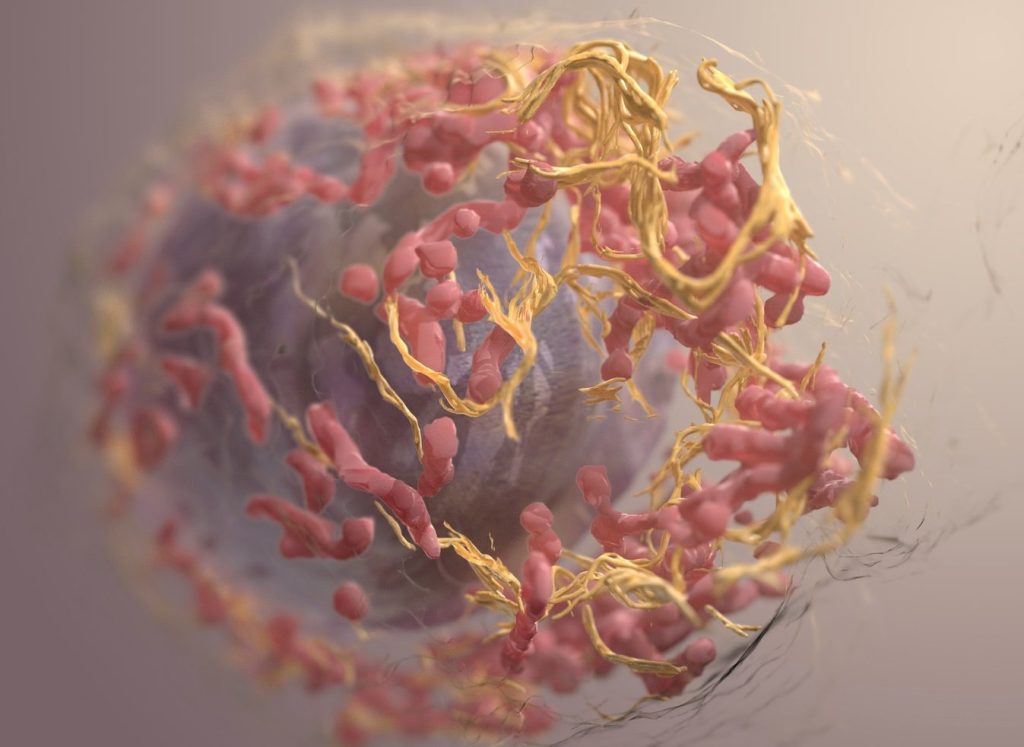
3D structure of a melanoma cell derived by ion abrasion scanning electron microscopy. Credit: Sriram Subramaniam/ National Cancer Institute

In a world-first clinical trial published in the journal Nature Medicine, a multi-centre study has found faecal microbiota transplants (FMT) from healthy donors are safe and show promise in improving response to immunotherapy in patients with advanced melanoma.

While immunotherapy drugs can significantly improve survival outcomes in those with melanoma, they are only effective in 40–50% of patients. Preliminary research has suggested that the human microbiome may play a role in whether or not a patient responds.

“In this study, we aimed to improve melanoma patients’ response to immunotherapy by improving the health of their microbiome through faecal transplants,” says Dr John Lenehan, Medical Oncologist at London Health Sciences Centre’s (LHSC).

A faecal transplant involves collecting stool from a healthy donor, screening and preparing it in a lab, and transplanting it to the patient. The goal is to transplant the donor’s microbiome so that healthy bacteria will prosper in the patient’s gut.

“The connection between the microbiome, the immune system and cancer treatment is a growing field in science,” explains Dr Saman Maleki, senior investigator on the study. “This study aimed to harness microbes to improve outcomes for patients with melanoma.”

The phase I trial included 20 melanoma patients recruited from LHSC, CHUM and Jewish General Hospital. Patients were administered approximately 40 faecal transplant capsules orally during a single session, one week before they started immunotherapy treatment.

The trial found that combining faecal transplants with immunotherapy is safe for patients. The study also found 65% of patients who retained the donors’ microbiome had a clinical response to the combination treatment. Five patients experienced adverse events sometimes associated with immunotherapy and had their treatment discontinued.

“We have reached a plateau in treating melanoma with immunotherapy, but the microbiome has the potential to be a paradigm shift,” says oncologist Dr Bertrand Routy.

The study is unique due to its administration of faecal transplants (from healthy donors) in capsule form to cancer patients – a technique pioneered in London by Dr Michael Silverman.

“Our group has been doing faecal transplants for 20 years, initially finding success treating C. difficile infections. This has enabled us to refine our methods and provide an exceptionally high rate of the donor microbes surviving in the recipient’s gut with just a single dose,” says Dr Silverman. “Our data suggests at least some of the success we are seeing in melanoma patients is related to the efficacy of the capsules.”

The team has already started a larger phase II trial involving centres in Ontario and Quebec.

Source: Lawson Health Research Institute

Would it be Ethical to Entrust Human Patients to Robotic Nurses?

Photo by Alex Knight on Unsplash

Advancements in AI have resulted in typically human characteristics like creativity, communication, critical thinking, and learning being replicated by machines for complex tasks like driving vehicles and creating art. With further development, these human-like attributes may develop enough to one day make it possible for robots and AI to be entrusted with nursing, a very ‘human’ practice. But… would it be ethical to entrust the care of humans to machines?

In a step toward answering this question, Japanese researchers recently explored the ethics of such a situation in the journal Nursing Ethics.

The study was conducted by Associate Professor Tomohide Ibuki from Tokyo University of Science, in collaboration with medical ethics researcher Dr Eisuke Nakazawa from The University of Tokyo and nursing researcher Dr Ai Ibuki from Kyoritsu Women’s University.

“This study in applied ethics examines whether robotics, human engineering, and human intelligence technologies can and should replace humans in nursing tasks,” says Dr Ibuki.

Nurses show empathy and establish meaningful connections with their patients, a human touch which is essential in fostering a sense of understanding, trust, and emotional support. The researchers examined whether the current advancements in robotics and AI can implement these human qualities by replicating the ethical concepts attributed to human nurses, including advocacy, accountability, cooperation, and caring.

Advocacy in nursing involves speaking on behalf of patients to ensure that they receive the best possible medical care. This encompasses safeguarding patients from medical errors, providing treatment information, acknowledging the preferences of a patient, and acting as mediators between the hospital and the patient. In this regard, the researchers noted that while AI can inform patients about medical errors and present treatment options, they questioned its ability to truly understand and empathise with patients’ values and to effectively navigate human relationships as mediators.

The researchers also expressed concerns about holding robots accountable for their actions. They suggested the development of explainable AI, which would provide insights into the decision-making process of AI systems, improving accountability.

The study further highlights that nurses are required to collaborate effectively with their colleagues and other healthcare professionals to ensure the best possible care for patients. As humans rely on visual cues to build trust and establish relationships, unfamiliarity with robots might lead to suboptimal interactions. Recognising this issue, the researchers emphasised the importance of conducting further investigations to determine the appropriate appearance of robots for facilitating efficient cooperation with human medical staff.

Lastly, while robots and AI have the potential to understand a patient’s emotions and provide appropriate care, the patient must also be willing to accept robots as care providers.

Having considered the above four ethical concepts in nursing, the researchers acknowledge that while robots may not fully replace human nurses anytime soon, they do not dismiss the possibility. While robots and AI can potentially reduce the shortage of nurses and improve treatment outcomes for patients, their deployment requires careful weighing of the ethical implications and impact on nursing practice.

“While the present analysis does not preclude the possibility of implementing the ethical concepts of nursing in robots and AI in the future, it points out that there are several ethical questions. Further research could not only help solve them but also lead to new discoveries in ethics,” concludes Dr Ibuki.

Source: Tokyo University of Science

Funding the NHI: ‘Political Suicide’ and Tax Revolts

Photo by Jp Valery on Unsplash

According to a 27-page ‘factsheet’ purportedly produced by the Department of Health and the Presidency, the National Health Insurance (NHI) scheme would be funded through a payroll tax and additional personal income taxes. There are however better ways to go about this, according to a number of experts who weighed in on the topic.

Professor Alex van den Heever said that the payroll tax plan is misguided, according to Daily Investor. In the same vein as Unemployment Insurance Fund (UIF) payment, both employers and employees would make contributions to a payroll tax.

But Van den Heever criticised this, saying that those who suggested this do not have the qualifications to make financial comments such as NHI funding.

“They talk of introducing payroll taxes. You don’t introduce payroll taxes for a general government allocation,” he explained. “Payroll taxes are for contributory systems where you get a specific benefit or entitlement for what you contribute.”

The term “payroll taxes” in relation to funding NHI does not make sense, he said. Discussions on raising taxes and a new payroll tax shows that the government does not know how to fund the NHI.

He called them an “incredibly naïve set of fiscal proposals that you cannot even consider implementing,” and that they were “incoherent from a public finance perspective.” Introducing them as is would be politically suicidal: the tax base is already overburdened, and raising taxes beyond a certain point results in a reduction in taxes actually collected.

“It is very dangerous to overstress your tax bases. We are hitting the limit on the amount you can fund the government and the public health system from taxes.”

Huge tax increases needed to fund NHI

Van der Heever’s viewpoint is shared by Connie Mulder, Solidarity Research Institute head and Ryan Noach, Discovery Health CEO.

Mulder said trying to fund NHI through additional taxes is unfeasible because of the tremendous amount of money needed.

Mulder said that the massive additional taxation would “crush South Africa’s economic outlook.”

It is naive for the Department of Health to assume that medical aid contributions will be funnelled into a national health insurance scheme, said Noach. The NHI scheme would force South African taxpayers to pay much higher taxes but cut their healthcare entitlement by 72%, and would provoke a tax revolt.

South Africa has a unique situation where a very small tax base of 5.5 million people funds nearly all government expenditures, accounting for 80% of public healthcare funding, he said. Notably, their after-tax disposable income is used to pay medical aid and private healthcare.

The single-funder model described in the NHI Bill would not be able to achieve the government’s goal of equitable access to healthcare, Noach told Daily Investor. This is a model which Discovery Health does not endorse, calling it not only “risky and inefficient” but also not likely to be equitable because “cross-subsidies cannot be properly managed”.

He reiterated earlier comments where he said that the NHI Bill would have no immediate impact on medical schemes, but once it is fully implemented (with “implemented” remaining undefined), medical aid schemes would only be allowed to offer what is not covered under the NHI – at the discretion of the Health Minister. This would make NHI a single monopolistic funder for the NHI package of services, which he had said in an earlier interview with Newzroom Afrika was without a parallel anywhere in the world. 

Even though implementation is a decade away, this is going to drive off health sector investment, Noach said.

Noach recommended a multi-fund framework, which he described as “not only less risky and faster to implement, but also ensures that cross-subsidies are managed to ensure that social solidarity is achieved”.

Collaboration between the private and public sectors is the only way financial integrity and sustainability is achievable, something which has been built on the successful COVID-19 partnerships.

NHI ‘charade’ – but Obamacare offers an alternative

Business Leadership South Africa CEO Busi Mavuso has a similar view – and didn’t mince her words. According to Mavuso, NHI as currently envisaged, was a “charade” without any thought to funding, according to Moneyweb. One that would leave all South Africans worse off, and recommends instead a private-public partnership.

She also pointed to the public–private partnership behind South Africa’s COVID-19 response. The two entities sourced resources, rolled out vaccines and funded other interventions.

“It was a clear demonstration that national health outcomes are achieved faster and more efficiently when government and business work together, drawing on their respective strengths,” she said.

“With the right incentives, the private sector can complement government efforts, speed up the investment needed and reduce costs to the state and users.” 

One viable alternative to the NHI’s single buyer model was the US’ Affordable Care Act (aka Obamacare) in the US, wherein health insurers provide minimum cover, with the state subsidising those below a certain level. Insurers are however able to compete to offer coverage.

One other disadvantage of South Africa effectively ending the private sector was that it would discourage internationally mobile businesspeople from working in the country.

Children with Autism Have Memory Impairments, Study Finds

Photo by Ben Wicks on Unsplash

Children with autism have memory challenges that hinder not only their memory for faces but also their ability to remember other kinds of information, according to new research. These impairments are reflected in distinct connection patterns children’s brains, the study found.

Published in Biological Psychiatry: Cognitive Neuroscience and Neuroimaging, the study findings clarify a debate about memory function in children with autism, showing that their memory struggles surpass their ability to form social memories. The finding should prompt broader thinking about autism in children and about treatment of the developmental disorder, according to the scientists who conducted the study.

“Many high-functioning kids with autism go to mainstream schools and receive the same instruction as other kids,” said lead author Jin Liu, PhD at Stanford University. Memory is a key predictor of academic success, said Liu, adding that memory challenges may academically disadvantage children with autism.

The study’s findings also raise a philosophical debate about the neural origins of autism, the researchers said. Social challenges are recognised as a core feature of autism, but it’s possible that memory impairments might significantly contribute to the ability to engage socially.

“Social cognition can not occur without reliable memory,” said senior author Vinod Menon, PhD.

“Social behaviours are complex, and they involve multiple brain processes, including associating faces and voices to particular contexts, which require robust episodic memory,” Menon said. “Impairments in forming these associative memory traces could form one of the foundational elements in autism.”

Comprehensive memory tests

Affecting about one in every 36 children, autism is characterised by social impairments and restricted, repetitive behaviours. The condition exists on a wide spectrum, with those on one end having severe intellectual disability and about a third of people with autism have intellectual impairments. On the other end of the spectrum, many people with high-functioning autism have normal or high IQ, complete higher education and work in a variety of fields.

Children with autism are known to have difficulty remembering faces. Some small studies have also suggested that children with autism have broader memory difficulties. They included children with wide ranges of age and IQ, both of which influence memory.

To clarify the impact of autism on memory, the new study included 25 children with high-functioning autism and normal IQ who were 8 to 12 years old, and a control group of 29 typically developing children with similar ages and IQs.

All participants completed a comprehensive evaluation of their memory skills, including their ability to remember faces; written material; and non-social photographs, or photos without any people. The scientists tested participants’ ability to accurately recognise information (identifying whether they had seen an image or heard a word before) and recall it (describing or reproducing details of information they had seen or heard before). The researchers tested participants’ memory after delays of varying lengths. All participants also received fMRI scans of their brains to evaluate how memory-associated regions are connected to each other.

Distinct brain networks drive memory challenges

In line with prior research, children with autism had more difficulty remembering faces than typically developing children, the study found.

The research showed they also struggled to recall non-social information. On tests about sentences they read and non-social photos they viewed, their scores for immediate and delayed verbal recall, immediate visual recall and delayed verbal recognition were lower.

“We thought that behavioural differences might be weak because the study participants with autism had fairly high IQ, comparable to typically developing participants, but we still observed very obvious general memory impairments in this group,” Liu said.

Among typically developing children, memory skills were consistent: If a child had good memory for faces, he or she was also good at remembering non-social information.

This wasn’t the case in autism. “Among children with autism, some kids seem to have both impairments and some have more severe impairment in one area of memory or the other,” Liu said.  

“It was a surprising finding that these two dimensions of memory are both dysfunctional, in ways that seem to be unrelated – and that maps onto our analysis of the brain circuitry,” Menon said.

The brain scans showed that, among the children with autism, distinct brain networks drive different types of memory difficulty.

For children with autism, the ability to retain non-social memories was predicted by connections in a network centred on the hippocampus. But face memory was predicted by a separate set of connections centred on the posterior cingulate cortex, a key region of the brain’s default mode network, which has roles in social cognition and distinguishing oneself from other people.

“The findings suggest that general and face-memory challenges have two underlying sources in the brain which contribute to a broader profile of memory impairments in autism,” Menon said.

In both networks, the brains of children with autism showed over-connected circuits relative to typically developing children. Over-connectivity, likely from insufficient selective pruning of neural circuits, has been found in other studies of brain networks in children with autism.

New autism therapies should account for the breadth of memory difficulties the research uncovered, as well as how these challenges affect social skills, Menon said. “This is important for functioning in the real world and for academic settings.”

Source: Stanford University Medical Center

Burn Scars Worsen High School Educational Outcomes

Photo by Andrew Neel on Unsplash

A new study published in the BMJ’s Archives of Disease in Childhood has found that young people who were hospitalised due to burns were less likely to finish high school than their peers.

Led by Associate Professor Rebecca Mitchell from the Australian Institute of Health Innovation (AIHI) at Macquarie University, the study compared the academic performance and high school completion rates of about 2000 young people to matched peers who had not been hospitalised for an injury.

The study found that the young people who had been burned were four times as likely to not finish Year 10, and more than twice as likely to not finish Year 11 or Year 12.

This research is the latest in a series of studies looking at the effects of hospitalisation for injuries and illnesses including broken bones, asthma, diabetes, epilepsy and mental health on young people’s educational outcomes.

The research team used linked birth, health and education records in New South Wales from 2005 to 2018 to analyse national literacy and numeracy test results and high school completion.

To create a peer comparison group, each hospitalised young person was age and gender matched to a random person in their postcode area who had not been hospitalised for an injury.

In the case of the burns patients, the most common cause of injury was contact with hot drinks, food, fats or cooking oils, followed by other hot fluids including hot or boiling water.

Almost all of the children in the burns cohort had more than 10% of the surface of their bodies affected, with torsos the most commonly injured area, followed by hands or wrists.

Associate Professor Mitchell says in addition to an increased risk of not finishing high school, girls who had burn injuries also had a higher risk of not achieving the national minimum standards in reading.

“Reasons why young females hospitalised with a burn have worse academic performance for reading could include reduced learning opportunities, school absenteeism, or psychosocial anxieties due to lower self-esteem and stigmatisation,” she says.

“This research shows that we need to monitor academic progression in young people after they sustain a burn to identify if they require any learning support.”

Paediatric burns specialist and co-author Professor Andrew Holland says that while most burns occur early in childhood, the effects can extend far beyond the initial period of acute care and recovery.

“In some cases, burns patients experience ongoing pain and poor sleep quality, which can disrupt a young person’s ability to engage and learn,” he says.

“In addition to this, scarring can have an influence on their motivation or ability to attend school.”

Source: Macquarie University