Month: May 2021

Zapping Pathogens for Faster, Cheaper Vaccine Production

Photo by Zoltan Tasi on Unsplash

A team of researchers from three Fraunhofer Institutes has developed a method of producing vaccines that is faster, more efficient and more environmentally friendly than the conventional production process.

Vaccines date back to 1796, and the first vaccines were simply pus samples freshly taken from people with cowpox. Gruesomely, the Spanish shipped orphaned children to South America to act as cowpox carriers — the world’s first vaccine shipment. As medicine advanced, scientists were able to isolate viruses and inactivate them. However, this is still a lengthy, expensive process.  

But a new production process for inactivated vaccines is set to make vaccine production faster, more environmentally friendly and more efficient than ever before while also reducing costs. Dr Sebastian Ulbert and Dr Jasmin Fertey from the Fraunhofer Institute for Cell Therapy and Immunology IZI in Leipzig, Frank-Holm Rögner from the Fraunhofer Institute for Organic Electronics, Electron Beam and Plasma Technology FEP in Dresden, and Martin Thoma from the Fraunhofer Institute for Manufacturing Engineering and Automation IPA in Stuttgart have been awarded the 2021 Fraunhofer Prize for “Human- and Environment-Centered Technology” on behalf of their teams. 

To date, chemicals have always been used in inactivated vaccine production. The pathogens are stored with toxic chemicals, particularly formaldehyde, until the viral genetic information is completely destroyed and it is incapable of replication. This process is known as inactivation.
However, it has a number of drawbacks. For a start, the chemicals also destroy part of the external structures that the immune system forms antibodies from. Also, industrial-scale vaccine production involves large quantities of toxic chemicals, which are hazardous to humans and the environment. Finally, depending on the virus, it can take weeks to months to actually ‘kill’ it.

Their high-tech approach has none of these disadvantages. “Instead of inactivating the virus with toxic chemicals, we fire electrons at it,” explained Dr Ulbert. “The viral particle [is] almost completely intact. There are no chemicals that we need to dispose of and the entire process takes just a few seconds.” 

But there was a problem. The electrons can only penetrate liquids to less than half a millimetre, losing energy along the way. To reliably kill viruses in the liquid with the electrons, the liquid film has to be no thicker than around 0.1 millimetres—and it must be transported evenly, too. “This required complex equipment technology, which is why we brought Fraunhofer IPA on board,” said Rögner.

At Fraunhofer IPA, Martin Thoma developed two ways to overcome the problem. “The pouch module is suitable for conducting preliminary tests that provide useful information, while the tumbler module is beneficial for larger quantities,” said the physics graduate. On the basis of this setup, Dr Fertey investigated viruses such as influenza, Zika and herpes as well as numerous bacteria and parasites, which were treated with electrons subject to targeted acceleration via the pouch and tumbler module. “We were able to successfully and reliably inactivate all classes of pathogens,” said the delighted biologist.

In about five to seven years, the production modules—which are the size of a refrigerator—could be integrated into pharmaceutical production in order to produce vaccines in a quick, efficient and environmentally friendly process.

Source: Phys.Org

Older People That Feel Younger Live Longer

A smiling elderly woman. Photo by Loren Joseph on Unsplash

A new study has found that older people who feel younger are generally more healthy. Such people have greater sense of well-being, better cognitive functioning, less inflammation, lower risk of hospitalisation and even live longer than their older-feeling peers. 

As Francis Bacon once said, “I will never be an old man. To me, old age is always 15 years older than I am.” Studies have shown that feeling younger than one’s chronological age has been known to have some health benefits. A twin study in Denmark showed that perceived age, correlated significantly with physical and cognitive functioning as well as with leucocyte telomere length — which prevents cells from becoming unable to divide.

Researchers from the German Centre of Gerontology analysed three years of data from 5039 participants in the German Ageing Survey, a longitudinal survey of German residents of age 40 and older. The survey had questions about the amount of perceived stress in peoples’ lives and their functional health—how well they could conduct daily activities such as dressing and walking. Participants also indicated their subjective age by answering the question, “How old do you feel?”

Participants with more reported stress tended to have a more rapid decline in functional health over three years, and that association between stress and functional health decline was stronger for chronologically older participants.

Among people who felt younger than their chronological age, there was a weaker association between stress and functional health decline. This protective effect was strongest among the oldest participants.

“Generally, we know that functional health declines with advancing age, but we also know that these age-related functional health trajectories are remarkably varied. As a result, some individuals enter old age and very old age with quite good and intact health resources, whereas others experience a pronounced decline in functional health, which might even result in need for long-term care,” said lead author Markus Wettstein, PhD, who is now at University of Heidelberg. “Our findings support the role of stress as a risk factor for functional health decline, particularly among older individuals, as well as the health-supporting and stress-buffering role of a younger subjective age.”

The researchers said their findings suggest that helping older people feel younger could mitigate the negative effects stress and improving health—though further study is needed to help determine what kind of interventions would work best. Dr Wettstein gave examples of such efforts, such as messaging campaigns to counteract ageism and negative age stereotypes and to promote ageing in a positive light could help people feel younger. More general stress-reduction interventions and stress management training could also prevent functional health loss among older adults.

Dr Wettstein said that there needs to be further studies to find the ideal gap between subjective and chronological age, as previous research has suggested that, up to a point, it’s helpful to feel younger, but those benefits decrease as the gap between subjective and chronological age increases. “Feeling younger to some extent might be adaptive for functional health outcomes, whereas ‘feeling too young’ might be less adaptive or even maladaptive,” he said.

Source: Medical Xpress

Journal information: Markus Wettstein et al, Feeling younger as a stress buffer: Subjective age moderates the effect of perceived stress on change in functional health., Psychology and Aging (2021). DOI: 10.1037/pag0000608

COVID Deaths Exceeded Worst Predictions of The Public and Most Experts


Experts such as epidemiologists and statisticians made much more accurate predictions about COVID than the public, but both groups substantially underestimated the true extent of the pandemic, a study from the University of Cambridge has found.

Researchers from the Winton Centre for Risk and Evidence Communication surveyed 140 UK experts and 2086 UK laypersons in April 2020 and asked them to make predictions about the impact of COVID by the end of 2020. Participants were also asked to assign confidence in their predictions by providing upper and lower bounds of where they were 75% sure that the true answer would fall—for example, a participant would say they were 75% sure that the total number of infections would be between 300 000 and 800 000.

While only 44% of predictions from the expert group fell within their own 75% confidence ranges, only 12% of predictions from the non-experts fell within their ranges, though more numerate individuals performed a little better. The results were published in the journal PLOS ONE.

“Experts perhaps didn’t predict as accurately as we hoped they might, but the fact that they were far more accurate than the non-expert group reminds us that they have expertise that’s worth listening to,” said lead author Dr Gabriel Recchia from the Winton Centre for Risk and Evidence Communication,. “Predicting the course of a brand-new disease like COVID-19 just a few months after it had first been identified is incredibly difficult, but the important thing is for experts to be able to acknowledge uncertainty and adapt their predictions as more data become available.”

Expert opinion is important for those making decisions at any level from individual to policy. The quality of expert intuition can vary greatly depending on the field of expertise and the type of judgment required, so it is important to determine how good expert predictions really are, especially in where they could shape public opinion or government policy.

“People mean different things by ‘expert’: these are not necessarily people working on COVID-19 or developing the models to inform the response,” said Dr Recchia. “Many of the people approached to provide comment or make predictions have relevant expertise, but not necessarily the most relevant.” Dr Recchia noted that in the early stages of the pandemic, clinicians, epidemiologists, statisticians, and other individuals seen as experts by the media and the general public, were often asked to give off-the-cuff answers to questions about how bad the pandemic might get. “We wanted to test how accurate some of these predictions from people with this kind of expertise were, and importantly, see how they compared to the public.”

Participants in the survey were asked to predict how many people living in their country would have died and would have been infected by the end of 2020; they were also asked to predict infection fatality rates both for their country and worldwide.

The expert group and the non-expert group both underestimated the total number of deaths and infections in the UK. The official UK death toll at 31 December was 75 346. The median prediction of the expert group was 30 000, while that of the the non-expert group was 25 000.

For COVID fatality rates, the median expert prediction was that 10 out of every 1000 people with the virus worldwide would die from it, and 9.5 out of 1000 people with the virus in the UK would die from it. The median non-expert response to the same questions was 50 out of 1000 and 40 out of 1000. The true infection fatality rate at the end of 2020—as best could be estimated—was nearer to 4.55 out of 1000 worldwide and 11.8 out of 1000 in the UK.

“There’s a temptation to look at any results that says experts are less accurate than we might hope and say we shouldn’t listen to them, but the fact that non-experts did so much worse shows that it remains important to listen to experts, as long as we keep in mind that what happens in the real world can surprise you,” said Dr Recchia.

The researchers cautioned that it is important to differentiate between research on evaluating the forecasts of ‘experts’—individuals involved in relevant fields, such as epidemiologists and statisticians—and research on evaluating specific epidemiological models, though the models may inform experts. Many COVID prediction models have proved accurate in the short term, but rapidly become less accurate for later predictions.

Source: Medical Xpress

Journal information: PLOS ONE (2021). DOI: 10.1371/journal.pone.0250935

Some Meds May be Raising Blood Pressure Unnecessarily

Photo by Myriam Zilles at Unsplash

New research has found that nearly a fifth of adults with high blood pressure are taking a drug that may be raising their blood pressure further.

The findings presented at the American College of Cardiology’s 70th Annual Scientific Session. The results highlight the need for patients to regularly review all of the medications they take with their care team, including over-the counter drugs, to ensure none might interfere with blood pressure lowering efforts.

The research found that three most common culprits were antidepressants; nonsteroidal anti-inflammatory drugs (NSAIDs) that include ibuprofen and naproxen; and oral steroids used to treat conditions such as gout, lupus, rheumatoid arthritis or after an organ transplant. These drugs were reported by 9%, 7% and 2% of participants, respectively. Other drugs associated with blood pressure elevation included antipsychotics, certain oral contraceptives and popular decongestants.

Researchers said these findings raise concerns, especially as nearly half of Americans diagnosed with high blood pressure do not have it sufficiently controlled. Dr. Vitarello explained the goal blood pressure for hypertension patients is a reading of less than 130 mmHg over 80 mmHg, based on the 2017 American College of Cardiology/American Heart Association (ACC/AHA) Guideline for the Prevention, Detection, Evaluation, and Management of High Blood Pressure in Adults.

“These are medications that we commonly take—both over-the-counter and prescribed medications—that may have the unintended side effect of raising blood pressure and could have adverse effects on our heart health,” said John Vitarello, MD, an internal medicine resident at Beth Israel Deaconess Medical Center in Boston and the study’s lead author. “We know that high blood pressure leads to cardiovascular disease, stroke and death and even small increases in blood pressure can have meaningful impacts on cardiovascular disease. Based on our findings, we need to be more aware of polypharmacy (the use of multiple medications by a single patient) in older adults who also have the highest burden of high blood pressure.”

The study examined data from 27 599 participants in the National Health and Nutrition Examination Survey (NHANES) between 2009 and 2018. About half of the participants (49%) had hypertension (average age 55 years, 48% female), defined in the study as a blood pressure reading of ≥ 130 mmHg (systolic) or ≥80 mmHg (diastolic) or ever having been told they have high blood pressure. Researchers identified medications associated with blood pressure elevation based on those listed in the ACC/AHA guideline and examined use of these medications by hypertensive adults

Among hypertensive participants, 19% reported using one or more blood pressure raising medications and 4% reported using multiple. Nearly one-quarter (24%) of women with high blood pressure reported using a blood pressure raising medication compared with 14% of men. Older adults were more likely to be using blood pressure raising medications than younger adults (19% of participants over age 65 vs. 18% of participants under age 65).

Vitarello said the findings suggest that there may be opportunities to treat hypertension by switching out the drugs raising blood pressure rather than adding more anti-hypertensives. Some drugs may have the same benefit but impact on blood pressure less. Still, some patients may not have another medication option, so monitoring and talking to their care team is advised over stopping medications.

The researchers also estimated that if half of hypertensive US adults taking blood pressure raising drugs were to discontinue one of them, 560 000 to 2.2 million patients could be able to reach blood pressure goals without additional drugs. But Vitarello cautioned that this is only a preliminary analysis, and individual responses to stopping blood pressure drugs are variable, so the real-world benefit and tradeoffs of stopping these medications need to be further studied.

The study is limited in that it relies on participants’ self-report of having high blood pressure and an accurate accounting of all the medications they take. The study was funded by the National Institute on Aging and an ACC Fellows Career Development Award.

Source: American College of Cardiology

Doctor Receives Forbes Magazine Honour for COVID Discovery

Photo by Karolina Grabowska from Pexels

One of the first doctors to warn of COVID’s disproportionate effect  on ethnic minorities has been named on the Forbes 30 Under 30 list.

Dr Daniel Pan in Leicester, UK, was part of a group to treat the first cases in the city and noticed some of the sickest patients were minority ethnic.

The Forbes 30 Under 30 list celebrates young innovators in their respective fields, such as science and healthcare.

Dr Pan, who is a clinical fellow at the National Institute for Health Research (NIHR) at the University of Leicester, said: “It’s a great honour and I think the best thing about it is it helps advertise the research we’ve been doing, because it’s important work.”

He was one of the first to treat COVID patients in Leicester, and noticed the differences among the patients.

Dr Pan said: “Leicester has a very multi-ethnic diverse population so when the pandemic first hit the UK, I was working on the clinical wards.

“It became immediately clear to myself and my colleagues that a lot of these patients were from ethnic minority backgrounds – especially the ones who were very sick.

“We probably noticed that slightly earlier than a lot of other places, for example Italy, and we felt a need to get that out there.”

As part of a group of researchers led by Dr Manish Pareek, he contributed to work that demonstrated that COVID’s disproportionate impact on UK ethnic minority groups was largely a result of a greater risk of being infected, due to societal and health inequalities.

NIHR Leicester Biomedical Research Centre director Professor Melanie Davies remarked that Dr Pan had made a “significant contribution to research efforts”, adding he had “a bright future in clinical research ahead of him”.

He is now working alongside his colleagues on a face mask that could determine whether the wearer has COVID, and possibly how infectious they are.

Dr Pan said: “We can probably find out when a person is most infectious, because we can find the time of day and the period of their illness where they breathe out the most virus.

“If it’s effective it can be rolled out, for example, everyone in A&E could wear a mask while they’re waiting to see a doctor and those who are mask positive can then go into isolation bays.”

Source: BBC News

Patient Awake for 13 Minutes During Surgery

A patient in the US was awake for 13 minutes of his surgery because apparently his anaesthetic was never turned on.

In mid-2020 the patient, Matthew Caswell went into Progress West Hospital in O’Fallon, Missouri, for hernia repair and removal of a lipoma on the back of his neck.

However, he soon became aware that something was amiss.

“I knew I was in trouble when I felt the cold iodine hit my belly and they were scrubbing me off. At any second I was waiting to go out, but all of a sudden I just got stabbed in my stomach,” Caswell told local TV station KCTV.

Caswell’s lawyer Kenneth Vuylsteke told MedPage Today that a paralytic agent had already been given to his client, and then the mask was put on to receive sevoflurane for general anaesthesia, but the flow of the gas was never started.

Caswell able to feel pain and hear operating room conversation for 13 minutes, he told KCTV.

During this, his vital signs surged, said Vuylsteke. Records shared with MedPage Today show a baseline heart rate in the 65 to 70 range, which skyrocketed to 115 beats per minute within a few minutes of the first incision.

After the first incision, Caswell’s blood pressure also shot up, from a baseline of 113/73 mm Hg to 158/113 mm Hg — severe hypertension.

Vuylsteke noted that hat should have been ample warning that something was likely wrong with the anaesthetic.

What he gathered so far is that Caswell was brought into the operating room and given the paralytic agent. The anaesthesiologist or the nurse anesthetist put the anaesthetic mask on him, but then the surgeon requested to see the lipoma before starting.

Caswell was turned over so the surgeon could see the lipoma. He was then put onto his back again, and the mask was put back on, but the sevoflurane was never turned on, Vuylsteke said.

A “Significant Event Note” is in hospital records that acknowledges that a “review of the anesthetic record demonstrates a delay in initiating inhalational anesthetic after induction of anesthesia.”

The note indicates that Caswell and his mother were “immediately informed regarding the delay in initiating the inhaled anesthetic agent until after the start of the surgical procedure.” The hospital “provided emotional support and discussed our intention to ensure his pain and anxiety over the event were well controlled in the immediate term.” The hospital also recommended a psychology consult for which they would cover the cost.

Caswell charges that he’s suffering from post-traumatic stress disorder and panic attacks because of the experience.

He’s suing the anaesthesiologist, the nurse anaesthetist Kathleen and also their employer, Washington University in St Louis.

“I would have rather died on that table,” he told KCTV.

Source: MedPage Today

Is PTSD Underdiagnosed or Overdiagnosed?

Photo by Alex Green from Pexels

In an article published in the BMJ, experts debated as to whether diagnoses of post-traumatic stress disorder (PTSD) are surging in Western society due to real trauma, or whether it is simply being overdiagnosed. 

Some clinicians are concerned that diagnoses of PTSD have increased throughout Western society since the late 1980s.

PTSD is a serious and uncommon condition resulting from severe trauma, but is has come to mean an umbrella term encompassing other disorders and normal reactions to stress, argued John Tully at the University of Nottingham and Dinesh Bhugra at King’s College London’s Institute for Psychiatry, Psychology & Neuroscience (IoPPN).

Estimates of lifetime population prevalence are now around 7% in the US (26 million cases) and at 5% in other high income countries. In the UK, PTSD is estimated to be in 1 in 13 youths and in mothers after 4% of all births.

In military settings, there may be an underdiagnosis of PTSD, they acknowledged, as well as in the developing world due to limited psychiatric resources. 
But in other settings, they argue that PTSD is often conflated with normal responses to difficult situations, which has led to increased pressure on services to make this diagnosis. 

“The conflation of stress with trauma—and of trauma with PTSD—has become rife. This is the most convincing explanation for overdiagnosis,” they wrote.

This “concept creep” they argue, may also involve “compensation culture” and vested interests of the “trauma industry” as factors, they said. Am alternative explanation could be that psychiatry and society have become more accepting of trauma, and so give more leeway to diagnosis and treatment.

At a public health level however, they believe this approach is problematic as, “resources are finite, and a line must be drawn somewhere as to what level of symptoms meets criteria.”

PTSD misdiagnosis also risks other more common conditions, such as depression, anxiety disorder, and personality disorders, not being appropriately treated, while trivialising PTSD risks the medicalisation of everyday life, devaluing resilience and protective social factors, they warn.

“On this basis, we must reclaim the diagnosis of PTSD for what it is—a profound and severe response to catastrophic events—and not a spectrum of reactions to trauma or everyday life,” they conclude.

However Stephanie Lewis, Sarah Markham and Gerard Drennan at King’s IoPPN and the South London and Maudsley NHS Foundation Trust, contend that there is compelling evidence showing that PTSD is much more commonly underdiagnosed, which has concerning implications.

They say that PTSD has clear guidelines for diagnosis, and there is no evidence to suggest that it is being overdiagnosed – and rather the opposite.

“Large epidemiological studies representative of the population have found that less than half of adults and two fifths of young people who meet criteria for PTSD have sought help from any health professional,” they wrote.

“These findings fit with our professional experience that people with PTSD often find it difficult to seek help—for example, because of avoidance symptoms, concerns about stigma, or fear that there may be no effective treatment,” they write.

Additionally, only a fraction of people with PTSD who access health services receive a diagnosis, they added.

They warned that underdiagnosis is concerning because, compared to those without PTSD adults who meet the criteria are over six times more likely to attempt suicide, and 10 times for young people with PTSD. However, treatment can be effective.

They argued that underdiagnosis to PTSD should be reduced, and access increased to service for diagnosis and treatment.

“Prioritising these actions now may prove particularly timely because the COVID-19 pandemic may have exacerbated the underdiagnosis of PTSD,” they concluded.

Source: Medical Xpress

Journal information: Is PTSD overdiagnosed? BMJ (2021). www.bmj.com/content/373/bmj.n787

Suicide and Self-harm Risk Increased After ICU Stay

A new study shows that being admitted to an intensive care unit (ICU) is linked to a small increased risk of future suicide or self-harm after discharge.

The findings show that survivors of critical illness who later died by suicide or had self-harm events had a tendency to be younger, with a history of psychiatric illness, and had received invasive life support. These results are particularly important in light of the large number of ICU survivors due to the COVID pandemic.  The study was published in The BMJ.

The researchers stressed that while the overall risk is still very low, knowledge of these factors “might allow for earlier intervention to potentially reduce this important public health problem.”

Survival after critical illness is associated with important effects, including muscle weakness, reduced exercise capacity, fatigue, cognitive impairment, pain, and financial hardship. Evidence is piling up that shows that ICU survivors have higher rates of psychiatric illness. Some 17–44% of ICU survivors have psychiatric symptoms. However it is yet not known whether that results in an elevated risk of suicide and self-harm.

Researchers in the Canada and the US therefore set out to analyse the association between survival from critical illness and suicide or self-harm after hospital discharge.

For their study, the researchers drew on health records for 423 000 adult ICU survivors in Ontario, Canada from 2009 to 2017.

They matched health records for 423 000 adult ICU survivors (average age 62 years, 39% women) with 3 million non-ICU hospital survivors with similar risk factors for suicide in Ontario, Canada from 2009 to 2017.

The researchers took into account possible confounding factors such as  age, sex, mental health history, and previous hospitalisation for self-harm.

Among ICU survivors, it was found that 0.2% of patients died by suicide compared with 0.1% of non-ICU hospital survivors.

Self-harm was seen in 1.3% of  ICU survivors compared with 0.8% of non-ICU hospital survivors.

ICU survivors were found to have a 22% higher risk of suicide compared with non-ICU hospital survivors risk of self-harm was 15% higher. The increased risk was greatest after discharge, and persisted in a reduced manner for several years afterward.

Younger ICU survivors (ages 18-34), were most likely to be at risk for suicide, along with those with pre-existing diagnoses of depression, anxiety or PTSD, and those who received invasive procedures such as mechanical ventilation or mechanical blood filtration due to kidney failure in the ICU.

This is a large study involving a cohort of consecutive ICU survivors from an entire population, with minimal missing data. However, given the observational design, the researchers cannot rule out the possibility that other unmeasured factors may have affected their results, and say these associations require further study.
Despite being a large cohort study from an entire population with little missing data, because it is an observational design the researchers cannot rule out the possibility of unknown factors affecting their results. However, the links do warrant further study.

“Survivors of critical illness have increased risk of suicide and self-harm, and these outcomes were associated with pre-existing psychiatric illness and receipt of invasive life support,” they wrote.

“Knowledge of these prognostic factors might allow for earlier intervention to potentially reduce this important public health problem,” the authors concluded.

Source: News-Medical.Net

Journal information: Fernando, S.M., et al. (2021) Suicide and self-harm in adult survivors of critical illness: population based cohort study. BMJ. doi.org/10.1136/bmj.n973.

Bacteria in the Mouth Linked to Arthritis

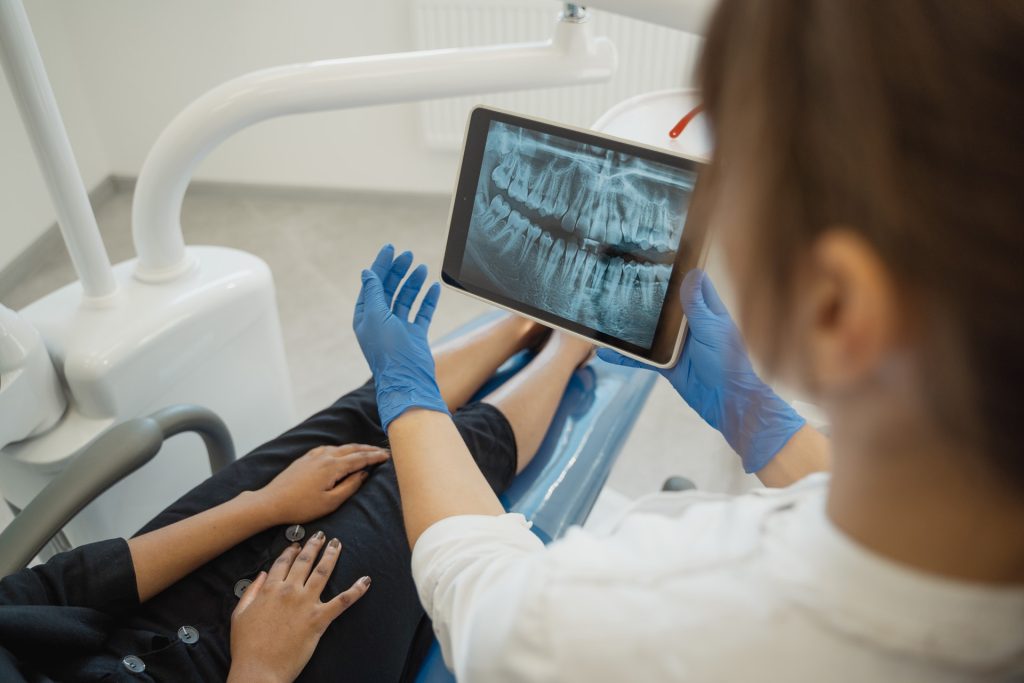
A dentists shows her patient some dental X-rays. Photo by Tima Miroshnichenko from Pexels

Researchers found similar oral bacterial compositions among patients with early rheumatoid arthritis and those at risk of developing the disease, compared with healthy individuals who were not at risk.

The oral cavity is host to approximately 800 identified species of bacteria. The periodontum, ie the tissue surrounding the tooth, can become inflamed because of a complex interaction of bacterial infection and the body’s response, modified by behavioural factors such as smoking, result in periodontal disease. Periodontal disease has been shown to be caused by certain diseases and medical conditions, and may also cause them. Periodontitis is prevalent among rheumatoid arthritis patients. 

The researchers recruited three groups of 50 participants each: early rheumatoid arthritis patients, at‐risk individuals, and healthy controls. They were given periodontal examinations and assessed for bleeding on probing, pocket probing depth, and periodontal inflamed surface area. The microbial composition of subgingival dental plaque, saliva, and tongue coating was assessed using 16S rDNA amplicon sequencing, and compared between groups.

They found that patients and at-risk individuals had an increased relative abundance of potentially pro- inflammatory bacteria in the mouth, suggestive of a possible relationship between oral microbes and rheumatoid arthritis.

“Prevotella and Veillonella–both gram-negative anaerobes–were at higher relative abundance in saliva, and Veillonella was also at higher relative abundance in tongue coating, of both early rheumatoid arthritis patients and at-risk individuals compared to healthy controls,” the authors wrote.

The findings were published in Arthritis & Rheumatology.  

Source: News-Medical.Net

Journal information: Kroese, J. M., et al. (2021) The oral microbiome in early rheumatoid arthritis patients and individuals at risk differs from healthy controls. Arthritis & Rheumatology. doi.org/10.1002/art.41780.

The Latest Anti-vaxx Disinformation: ‘Vaccine Shedding’

‘Vaccine shedding’ is the new disinformation being circulated among anti-vaxxers.

When a school in Florida, US announced that it wouldn’t allow vaccinated teachers in its classrooms, its founder said “vaccine shedding” was her main concern.

Paediatrician Nicole Baldwin, MD, said the anti-vaxx community is buzzing with this latest bit of disinformation.

“It’s amazing, and sad, what people will believe,” Dr Baldwin told MedPage Today.

This piece of disinformation follows that vaccinated people can somehow shed the spike protein, supposedly causing menstrual cycle irregularities, miscarriages, and sterility in women, merely by being in proximity.

“This is a new low, from the delusional wing of the anti-vaxx cult,” said Zubin Damania, MD, aka ZDoggMD, in a video he recently posted to bust vaccine shedding myths.

Damania explained that the misinformation arises from a previous claim that syncytin, a protein involved in placental formation, has some structural similarity SARS-CoV-2 spike protein, and so vaccination would interfere with women’s reproductive systems. Numerous fact checks have shown that vaccines don’t target the protein.

On injection, mRNA and viral vector vaccines prompt cells to make the spike protein, but it’s usually cleared in 24 to 48 hours, leaving little opportunity for “shedding,” even if it was possible, which it isn’t, underscored Dr Damania.

He pointed out another logical fallacy: “Why, then, wouldn’t natural spike protein do the same thing? Wouldn’t you be more scared of natural coronavirus infection? Oh, but it’s ‘natural.'”

There are legitimate questions about and research on whether the coronavirus itself and vaccines affect women’s menstrual cycles, he added. Since the beginning of the pandemic, women who’ve had COVID reported changes to their menstrual cycle, and Dr Damania said that researchers are examining reports of menstrual cycle changes after vaccination.

Regarding the potential relationship to vaccination, “we don’t understand, first, if it’s true, and if it were true, what is the mechanism?” he said. “Anything that causes stress, inflammation, and an immune response may have an effect on the menstrual cycle. […] Could it be that the vaccine causes a temporary change in menses? Sure, it’s possible, and it’s being looked at.”

Source: MedPage Today