Tag: zinc

20mg Zinc Daily Cuts Infections by 38% in Children with Sickle Cell Anaemia

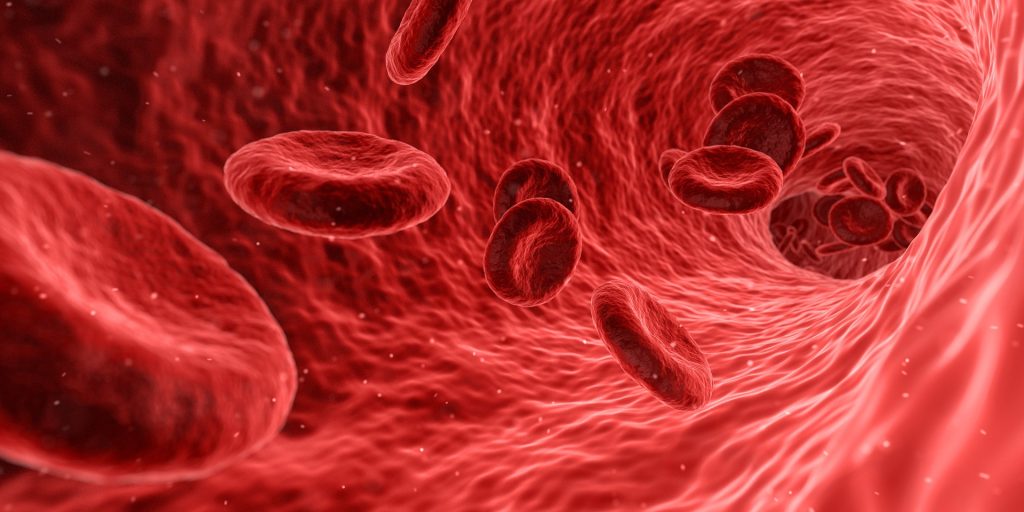
Sickle cell disease. Credit: National Institutes of Health

A daily 20 milligram dose of zinc reduced infections by nearly 40% among Ugandan children younger than 5 with sickle cell anaemia, according to new research led by scientists at the Indiana University School of Medicine and their study partners in Uganda. The findings, recently published in the Journal of the American Medical Association (JAMA), point to an affordable, well-tolerated strategy to decrease hospitalisations and save more lives of children living with the genetic blood disorder.

Sickle cell anaemia causes misshapen red blood cells that block oxygen from smoothly travelling through the body, which can lead to serious health complications. Zinc deficiency is common in affected children, and because zinc supports the body’s immune response, this deficiency leaves children with the disease especially vulnerable to infections that can cause illness, hospitalisation and even death.

“At large volume prices, it can cost less than $3 a year to give a child daily zinc supplementation,” said Chandy John, MD, the Ryan White Professor of Pediatrics at the IU School of Medicine and co-lead investigator on the study. “If further studies confirm our latest research, this could be an important new intervention for children with sickle cell anaemia that is so low-cost and safe that it’s rapidly implementable in almost all health settings.”

In a randomised, double-blind, placebo-controlled pilot study, the team evaluated 100 children between 1 and 5 years old with sickle cell anaemia who received care at Jinja Regional Referral Hospital in Uganda. This clinical trial followed an earlier report that tested a 10 mg daily dose of zinc and found no reduction in infections, indicating the lower dose was insufficient.

Over six months of follow-up, children treated with 20 mg of daily zinc experienced a 38% reduction in all-cause infections – like upper respiratory tract infections, diarrhoea and bacterial infections – compared to the placebo group.

“Zinc given at 20 mg daily provides a readily available and safe medication with the potential to reduce the suffering and deaths of thousands of children in Africa,” said Ruth Namazzi, MMEd, lecturer in the Department of Pediatrics and Child Health at Makerere University in Uganda, research director at Global Health Uganda and co-lead investigator on the study. “However, while our study shows a 38% reduction in all-cause infections, we are not yet recommending this as standard of care for children with sickle cell anaemia as our results need to be validated in larger multi-site studies.”  

Moving forward, the researchers expect to confirm their findings in a larger population across multiple sites. Future trials will also include older children with sickle cell anaemia and test the most effective zinc dosage with the fewest side effects. 

If validated, researchers believe incorporating low-cost zinc into standard clinical care could be rapidly implemented in health settings globally.

IU researchers who contributed to the study include John, Kagan Mellencamp, Andrea Conroy, Michael Goings and Jie Ren. They collaborated with Namazzi, Irene Bagala, Charles Kato, Isaac Birungi, Priscilla Kasembo and Gloria Kyarisiima of Global Health Uganda; Emmanuel Tenywa of Jinja Regional Referral Hospital and Sarah Cusick of the University of Minnesota Medical School.

This research was supported by funding from the Riley Children’s Foundation, IU Dance Marathon, the Herman B Wells Center for Pediatric Research and Cures Within Reach.


Source: Indiana University School of Medicine

How Macrophages Fail Their Jobs in Cystic Fibrosis

Respiratory tract. Credit: Scientific Animations CC4.0

Researchers have discovered how part of the body’s immune system could better combat a leading cause of death for people with cystic fibrosis (CF). 

A team led by The University of Queensland’s Professor Peter Sly and Dr Abdullah Tarique has identified how macrophages – the white blood cells that fight infection in the body – function differently in people with CF, compared to others.

“Macrophages play a critical role in fighting infection, especially in the lungs,” Professor Sly said.

“They’re the ‘Pac-Man’ cells that find and ‘gobble up’ bacteria and pathogens such as mycobacterium abscessus (MABS). 

“We found people with CF have multiple defects in their macrophages that leave them more vulnerable to infection, even when taking the most effective CF drug treatment available.”

Professor Sly said MABS posed the biggest infection risk for people with CF.  

“MABS is resistant to many antibiotics which makes treatment complex and often unsuccessful,” he said. 

“The infection can exclude a patient from being eligible for a lung transplant and is a leading cause of death for people with CF.

“And because of antibiotic resistance, MABS infections are increasing at alarming rates.”

Professor Sly said in people with CF, macrophages aren’t as efficient at both recognising and killing off bugs in the body.

“CF involves a defect in the CFTR protein, the channel on the cell’s surface responsible for transporting ions and chlorine in and out of cells,” he said.

“That lack of chlorine transport means macrophages don’t activate their killing functions to ‘eat’ the bugs. 

“A second important mechanism in macrophages is also deficient – the zinc transport of proteins. 

“Zinc is a potent antibacterial mechanism used to poison bacteria, but with less zinc and less zinc transporter proteins in CF macrophages, they’re less able to fight the infection.”

Professor Sly said a third defect – in the mitochondria – is perhaps the most significant.

“Mitochondria are the batteries or power packs of cells, and produce things called reactive oxygen species to kill bacteria.

“In CF, not only are macrophages less able to make these reactive oxygen species, but they’re also not able to keep reproducing them to increase their mitochondrial mass when infected.”

The research also examined treatments for CF and found even the most effective drug doesn’t boost macrophage’s ability to kill MABS.

“Elexacaftor-tezacaftor-ivacaftor (ETI) has been revolutionary in CF treatment by improving lung function in many people, meaning fewer exacerbations and hospitalisations,” Professor Sly said.

“But it doesn’t fix this part of the immune system, which is why people with CF still get these infections.

“Our findings show we now need to accelerate research into different mechanisms of increasing macrophage function, to identify and initiate killing strategies for MABS. 

“This could significantly reduce the impact of these infections for people with CF.”

Read the research in Proceedings of the National Academy of Sciences.

Source: University of Queensland

Metformin Found to Change Blood Metal Levels in Humans

Although metformin is the most widely prescribed diabetes drug in the world, its mechanism of action is still not clear. Kobe University endocrinologist OGAWA Wataru has now made significant progress, finding that it changes blood metal levels in humans. Photo by Towfiqu Barbhuiya on Unsplash

The widely used diabetes drug metformin may achieve its effects by changing blood metal levels in humans. The Kobe University study is an important step in understanding the drug’s many actions and designing better ones in the future.

Metformin is the most widely prescribed diabetes drug in the world. Apart from lowering blood sugar levels, it is also known to have a broad range of beneficial side effects such as against tumours, inflammations and atherosclerosis. However, although it has been used for more than 60 years now, its mechanism of action is still not clear, hampering the development of even better drugs against these conditions.

Kobe University endocrinologist OGAWA Wataru says: “It is known that diabetes patients experience changes in the blood levels of metals such as copper, iron and zinc. In addition, chemical studies found that metformin has the ability to bind certain metals, such as copper, and recent studies showed that it is this binding ability that might be responsible for some of the drug’s beneficial effects. So, we wanted to know whether metformin actually affects blood metal levels in humans, which had not been clarified.” To do so, Ogawa and his team enlisted about 200 diabetes patients at Kobe University Hospital, half of which took metformin and half of which did not, in a study to analyse their blood serum levels for those metals and various metal deficiency indicators.

In the journal BMJ Open Diabetes Research & Care, the Kobe University team now published the first clinical evidence of altered blood metal levels in patients taking metformin. They showed that drug-taking patients have significantly lower copper and iron levels and heightened zinc levels. Ogawa says: “It is significant that we could show this in humans. Furthermore, since decreases in copper and iron concentrations and an increase in zinc concentration are all considered to be associated with improved glucose tolerance and prevention of complications, these changes may indeed be related to metformin’s action.”

Recently, Japan has approved the use of imeglimin, a new diabetes drug that is a derivative of metformin but that should not be able to bind metals the same way as its parent. “Imeglimin is thought to have a different method of action, and we are already conducting studies to compare the effects the two drugs have,” says Ogawa.

It is not just about understanding the current drugs, however. Ogawa explains the bigger picture, saying: “We need both clinical trials and animal experiments to pinpoint the causal relationship between the drug’s action and its effects. If such studies progress further, they may lead to the development of new drugs for diabetes and its complications by properly adjusting the metal concentrations in the body.”

Source: Kobe University

Zinc’s Surprising Role in Blood Pressure

Source: Wikimedia CC0

Researchers have discovered that a trace element, zinc, plays a previously unknown role in the regulation of blood pressure.

While the role of metals like potassium and calcium have been long known in this process, a new discovery about zinc’s critical and underappreciated role offers a potential new pathway for therapies to treat hypertension. While hypertension had been known to be associated with low zinc levels, it was not clear as to why.

The findings were published recently in Nature Communications.

The smooth muscle cells lining blood vessels regulate the speed at which the blood travels around the body. As smooth muscles contract, they narrow the artery, increasing blood pressure, and as the muscle relaxes, the artery expands and blood pressure falls. Too low a blood pressure, and the blood flow will be insufficient to sustain body tissues. If blood pressure is too high, the blood vessels risk being damaged or even ruptured.

“Fundamental discoveries going back more than 60 years have established that the levels of the calcium and potassium in the muscle surrounding blood vessels control how they expand and contract,” said lead author Ashenafi Betrie, PhD, and senior authors Scott Ayton, PhD, and Christine Wright, PhD, of the Florey Institute of Neuroscience and Mental Health and The University of Melbourne in Australia.

Specifically, the researchers explained, potassium regulates calcium in the muscle, and calcium is known to induce the narrowing of the arteries and veins that elevate blood pressure and restrict blood flow. Other cells surrounding the blood vessel, including endothelial cells and sensory nerves, also regulate the calcium and potassium within the muscle of the artery, and are themselves regulated by the levels of these metals contained within them.

“Our discovery that zinc is also important was serendipitous because we’d been researching the brain, not blood pressure,” said Dr Betrie. “We were investigating the impact of zinc-based drugs on brain function in Alzheimer’s disease when we noticed a pronounced and unexpected decrease in blood pressure in mouse models treated with the drugs.”

The investigators discovered that coordinated action by zinc within sensory nerves, endothelial cells and the muscle of arteries triggers lower calcium levels in the muscle of the blood vessel. This causes the vessel to relax, decreasing blood pressure and increasing blood flow. The scientists found that the brain and heart’s blood vessels were more sensitive to zinc than blood vessels in other areas of the body, warranting further research.

“Essentially, zinc has the opposite effect to calcium on blood flow and pressure,” said Dr Ayton. “Zinc is an important metal ion in biology and, given that calcium and potassium are famous for controlling blood flow and pressure, it’s surprising that the role of zinc hasn’t previously been appreciated.”

This research also explains the fact that the genes that control intracellular zinc levels are known to be associated with cardiovascular diseases including hypertension, and hypertension is also a known side effect of zinc deficiency.

“While there are a range of existing drugs that are available to lower blood pressure, many people develop resistance to them,” said Dr Wright, who added that a number of cardiovascular diseases, including pulmonary hypertension, are poorly treated by currently available therapies. “New zinc-based blood pressure drugs would be a huge outcome for an accidental discovery, reminding us that in research, it isn’t just about looking for something specific, but also about just looking.”

Source: Medical Xpress