Tag: semaglutide

Semaglutide Eliminates Insulin Injections in Some Newly-diagnosed Type 1 Diabetes Patients

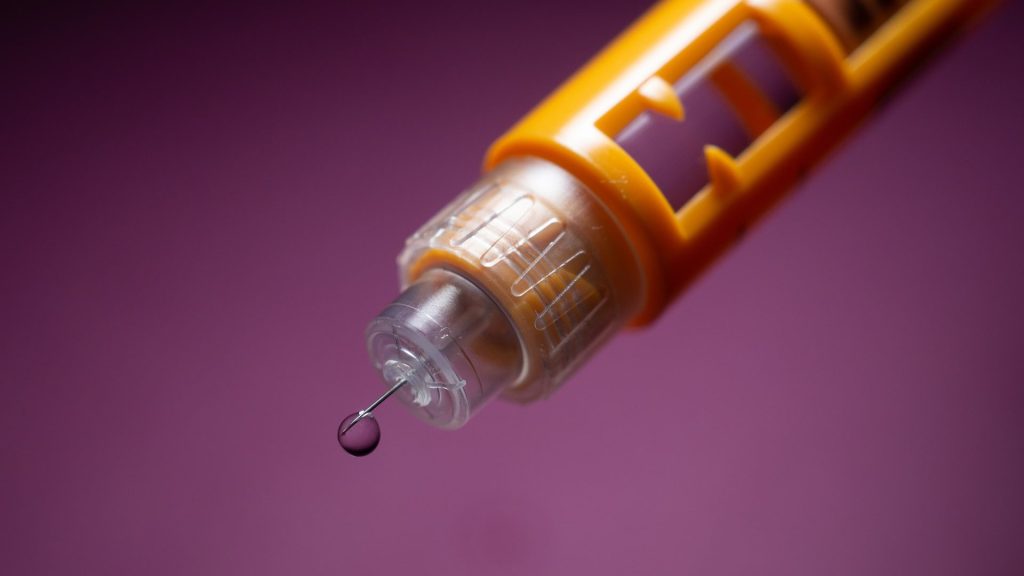
Novolog insulin pen. Photo by Dennis Klicker on Unsplash

Treating newly diagnosed Type 1 diabetes patients with semaglutide may drastically reduce or even eliminate their need for injected insulin, according to the remarkable findings of a small University at Buffalo study reported in the New England Journal of Medicine.

“Our findings from this admittedly small study are, nevertheless, so promising for newly diagnosed Type 1 diabetes patients that we are now absolutely focused on pursuing a larger study for a longer period of time,” says Paresh Dandona, MD, PhD, professor and senior author on the paper.

A total of 10 patients at UB’s Clinical Research Center in the Division of Endocrinology were studied from 2020 to 2022, all of whom had been diagnosed in the past three to six months with Type 1 diabetes. The mean HbA1c level over 90 days at diagnosis was 11.7, far above the American Diabetes Association’s HbA1c recommendation of 7 or below.

The patients were treated first with a low dose of semaglutide while also taking meal-time (bolus) insulin and basal (background) insulin. As the study continued, semaglutide dosing was increased while mealtime insulin was reduced in order to avoid hypoglycaemia.

“Within three months, we were able to eliminate all of the mealtime insulin doses for all of the patients,” says Dandona, “and within six months we were able to eliminate basal insulin in 7 of the 10 patients. This was maintained until the end of the 12-month follow-up period.”

During that time, the patients’ mean HbA1c fell to 5.9 at six months and 5.7 at 12 months.

Applying Type 2 diabetes drugs to treat Type 1 diabetes

For more than a decade, Dandona has been interested in how drugs developed for Type 2 diabetes might be utilized in treating Type 1 diabetes as well.

He and his colleagues were the first to study how liraglutide, another drug for Type 2 diabetes, might work in patients with Type 1 diabetes in a study he published in 2011.

“As we extended this work, we found that a significant proportion of such diabetics still have some insulin reserve in the beta cells of their pancreas,” Dandona explains. “This reserve is most impressive at the time of diagnosis, when 50% of the capacity is still present. This allowed us to hypothesise that semaglutide, which works through stimulation of insulin secretion from the beta cell, could potentially replace mealtime insulin administration.”

From the outset, the goal of the current study was to see if semaglutide treatment could be used to replace mealtime insulin, thereby reducing the insulin dosage, improving glycaemic control, reducing the HbA1c and eliminating potentially dangerous swings in blood sugar and hypoglycaemia.

The most common side effects for patients were nausea and vomiting as well as appetite suppression, which led a number of patients to experience weight loss, an outcome that Dandona says is generally an advantage since 50% of patients with Type 1 diabetes in the US are overweight or obese.

“As we proceeded with the study, we found that even the dose of basal insulin could be reduced or eliminated altogether in a majority of these patients,” he says. “We were definitely surprised by our findings and also quite excited. If these findings are borne out in larger studies over extended follow-up periods, it could possibly be the most dramatic change in treating Type 1 diabetes since the discovery of insulin in 1921.”

Source: University at Buffalo

Semaglutide Also Cuts Cardiovascular Risk, Could Change Cardiology Practice

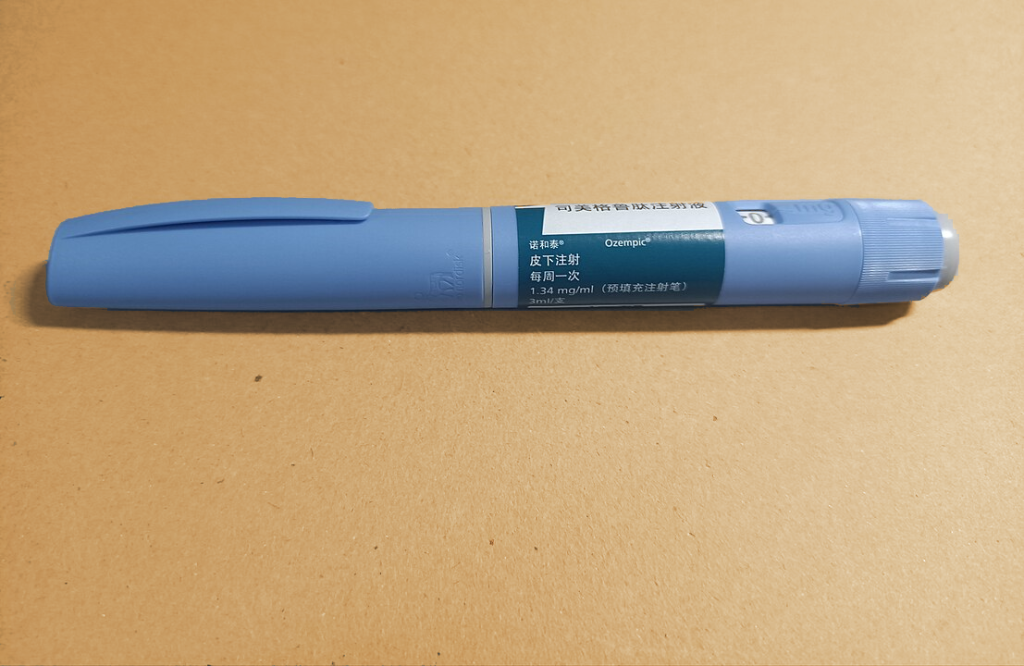
By HualinXMN – Own work, CC BY-SA 4.0, https://commons.wikimedia.org/w/index.php?curid=133759262

According to results from the SELECT trial run by Novo Nordisk, semaglutide dramatically reduces the risk of major adverse cardiovascular events (MACEs) in addition to its obesity benefits. This is bolstered by the results of another trial, STEP-1, which also suggested significant reduction in future cardiovascular events. These results have captured the attention of researchers, who commented in Nature that they could change the practice of cardiology.

Semaglutide, sold in the US for the treatment of both obesity (Wegovy) and diabetes (Ozempic), is an agonist for glucagon-like peptide 1 (GLP-1), a hormone associated with appetite.

”It’s hard to think of other [drugs], apart from statins, that have shown such a profound effect,” says Martha Gulati, director of preventive cardiology at Cedars-Sinai Medical Center in Los Angeles, USA.

It was expected that semaglutide would have cardiovascular benefits through promoting weight loss, but evidence shows that drugs mimicking GLP-1 can improve fatty-acid metabolism and reduce inflammation, for example, says Gulati. “This is what’s so fascinating about these drugs. They work on the brain, the pancreas, the cardiovascular system, the gastrointestinal tract … There’s more to them than simply weight loss.”

Recent studies have been encouraging in terms of semaglutide’s benefits for reducing cardiovascular disease risk. Earlier this month, Novo Nordisk announced the headline results from the SELECT cardiovascular outcomes trial. The double-blinded trial compared subcutaneous once-weekly semaglutide 2.4mg with placebo as an adjunct to standard of care for prevention of MACEs over a period of up to five years. The trial enrolled 17 604 adults aged 45 years or older with overweight or obesity and established cardiovascular disease (CVD) with no prior history of diabetes.

The trial showed 20% reduction in MACEs for people treated with semaglutide 2.4mg compared to placebo. The primary endpoint was a composite outcome of the first occurrence of MACE cardiovascular death, non-fatal myocardial infarction or non-fatal stroke. All three of these components contributed to the MACE reduction. 1270 first MACEs were accrued.

Expanding GLP-1 analogues to cardiovascular disease prevention may not be without challenges, as the European Medicines Agency opened investigations into semaglutide and liraglutide over reports of suicidal thoughts and self-harm.

A separate study based on the STEP 1 trial data found that 93 million adults in the US could benefit from semaglutide, from a combination of weight loss and reduced cardiovascular benefits. They estimate a reduction in relative risk of 18% with the drug.

Safety and Efficacy of Oral Semaglutide Shown in Clinical Trial Success

Photo by Andres Ayrton on Pexels

Participants taking a daily 50mg dose of oral semaglutide, a glucagon-like peptide-1 (GLP-1) receptor agonist, lost more weight than those taking placebo, according to results announced by the manufacturer, Norvo Nordisk.

Novo Nordisk announced headline results from phase 3a trial in a statement. The OASIS 1 trial is a 68-week, efficacy and safety trial comparing once-daily oral semaglutide 50mg for weight management to placebo in 667 adults with obesity or overweight with one or more comorbidities. Participants also undertook lifestyle interventions.

When evaluating the effects of treatment if all people adhered to treatment from a mean baseline body weight of 105.4 kg, people treated with oral semaglutide 50mg achieved a statistically significant weight loss of 17.4% after 68 weeks compared to a 1.8% reduction with placebo. In addition, 89.2% of those who received oral semaglutide 50mg, reached a weight loss of 5% or more after 68 weeks, compared to 24.5% with placebo.

When applying the treatment policy estimand, people treated with oral semaglutide 50 mg achieved a superior weight loss of 15.1% compared to a reduction of 2.4% with placebo and 84.9% achieved a weight loss of 5% or more, compared to 25.8% with placebo.

“We are very pleased with the weight loss demonstrated by the once-daily oral formulation of semaglutide in obesity. The results show comparable weight loss as in the STEP 1 trial with injectable semaglutide 2.4mg in obesity branded as Wegovy®”, said Martin Holst Lange, executive vice president for Development at Novo Nordisk. ”The choice between a daily tablet or weekly injection for obesity has the potential to offer patients and healthcare providers the opportunity to choose what best suits individual treatment preferences”.

Oral semaglutide 50 mg also appeared be safe and was well tolerated, with the most common adverse events being mostly mild to moderate gastrointestinal ones consistent with the GLP-1 receptor agonist class. Gastrointestinal adverse events were most prominent during dose escalation.

Novo Nordisk expects to file for regulatory approval in the US and the EU in 2023. The global launch of oral semaglutide 50mg is contingent on portfolio prioritisations and manufacturing capacity.

Source: Novo Nordisk

Quarter of Teens with Obesity Treated with Semaglutide Fell to Normal Weight

Photo by Andres Ayrton on Pexels

A secondary analysis of a trial of 2.4mg semaglutide (Wegovy) found nearly half of the teenage participants with obesity returned to normal weight or fell below the obesity threshold. The trial, results of which were published in Obesity, added semaglutide to dietary advice and a daily goal of 60 minutes of moderate- to high-intensity physical activity.

During the 68-week STEP TEENS trial, 44.9% of participants (aged 12–18 with obesity) returned to either normal weight or went down to the overweight category while on treatment compared with only 12.1% of those on placebo. At the end of the trial, 25% of the treatment group dropped to normal weight compared to just 2% for placebo.

“These results underscore the high degree of clinical effectiveness of semaglutide in adolescents with obesity,” said first author Aaron S. Kelly, PhD, in a statement. “In a practical sense, we see that semaglutide reduced weight to a level below what is defined as clinical obesity in nearly 50% of the teens in our trial, which is historically unprecedented with treatments other than bariatric surgery.”

An ‘important piece to the puzzle’ of the obesity problem

“A question I get a lot is, ‘Is this going to solve the obesity problem? Should we just give it to everybody’?” said Kelly, who is at the University of Minesota. “No and no. It’s not going to solve the obesity problem, but it’s an important piece to the puzzle in helping to solve it, especially for those who already have obesity.”

The trial’s initial results saw a an average BMI reduction 16.1% with semaglutide compared with a 0.6% increase with placebo at week 68. On average, participants on semaglutide lost 15.3 kg, while those on placebo gained 2.4 kg.

“The degree of body weight reduction is unprecedented,” lead study author Daniel Weghuber, MD, of Paracelsus Medical University, told MedPage Today at the ObesityWeek meeting, when the results were presented. “After years of frustration, all of a sudden patients were actually losing weight. They’d never seen that before.”

These results led to the approval for ages 12 and older by the FDA in December 2022, after being approved for adults in June 2021. The study also found a slightly superior but non-significant effect in females than males, despite not being set up to measure sex differences. The same was true for ages 12–14 vs 15–18.

Source: MedPage Today