The complex shape of respiratory syncytial virus is one hurdle limiting the development of treatments for an infection that leads to hospitalisation or worse. New images of the virus published in Nature from researchers at the University of Wisconsin–Madison may hold the key to preventing or slowing RSV infections.
RSV is of greatest concern in young children, the elderly and adults at high risk for respiratory complications. Yet unlike the flu and other common, communicable respiratory illnesses that annually sweep through schools, there are few options for fighting RSV. In the US, prophylactic treatments are available for young children, and existing vaccines are approved only for pregnant women and the elderly.
The virus’s structure, which consists of tiny, bending filaments, have eluded researchers. This has made it difficult to identify key drug targets, including viral components that are conserved across related viruses.
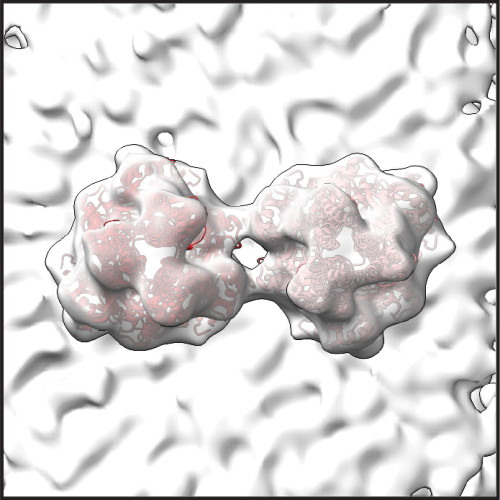
RSV F proteins, shown in this image created by University of Wisconsin–Madison researchers using a technique called cryo-electron tomography, may make RSV more potent by keeping it from infecting cells prematurely. Image by Wright Lab, UW–Madison
“There are a number of viruses related to RSV that are also significant human pathogens, including measles,” says Elizabeth Wright, a UW–Madison biochemistry professor. “What we know about related viruses gives us clues about RSV protein structures, but to identify drug targets we need a closer look at RSV proteins that are intimately associated with the membranes of host cells.”
Using an imaging technique called cryo-electron tomography, Wright and her team have now revealed details of molecules and structures essential to RSV’s form and function. They published their findings recently in Nature.
Cryo-ET freezes viral particles or other molecules at ultracold temperatures, stopping biological processes in action. This allows researchers to examine the structures of organisms, cells and organelles, and viruses and capture small-scale images of structures frozen in time. Flash-freeze many RSV particles, and cryo-ET imaging will capture (nearly) all the virus’s possible configurations from many different angles. These 2D images are combined to produce a representation of the virus’s 3D structures at high resolutions – even at the level of individual atoms.
Wright’s recent study produced high-resolution images detailing the structure of two RSV proteins, RSV M protein and RSV F protein, that are crucial to the interaction between the virus and the host cell membrane. Both proteins are also present in related viruses.
RSV M protein interacts with host cell membranes, holding together the virus’s filamentous structure and coordinating viral components and other proteins – including RSV F proteins. RSV F proteins sit on the viral surface, ready to engage with host cell receptors and regulate the virus’s fusion and entry into the host cell. The scientists’ images reveal that in RSV, two F proteins come together to form a more stable unit. Wright says that this association may prevent the F proteins from prematurely infecting the host cell.
“Our primary findings reveal structural details that allow us to better understand not only how the protein regulates assembly of viral particles, but also the coordination of proteins that enable the virus to be infectious,” says Wright.
The scientists believe that F protein pairs may be a key to destabilising the virus before it is ready to infect its next host, making pairs of F proteins a possible target for future drug development. They will continue to explore how RSV proteins interact with each other to cause infection.
Professor Shabir Madhi of Wits University. Photo: supplied.
By Biénne Huisman
Amid the uncertainty of the early days of the COVID-19 pandemic, Professor Shabir Madhi often stood out for his clarity of thought in making sense of rapidly evolving scientific evidence. Biénne Huisman chatted to Madhi about vaccines, ongoing challenges with the Gauteng health department, and being outspoken about issues such as the war in Gaza.
Professor Shabir Madhi became known to many in South Africa for leading the charge in two of the first COVID-19 vaccine clinical trials conducted in Africa – those for the AstraZeneca and Novavax vaccines. At a time of much scientific uncertainty, he was often quoted in the press – gaining a reputation for keeping his cool and calling things as he saw them based on available evidence.
He spoke out against the politicisation of science and was a staunch advocate for access to vaccines, especially for older people at higher risk of severe illness and death. He wasn’t afraid to ruffle feathers, openly criticising government’s COVID-19 vaccine communication efforts and arguing that government should take vaccines to the people, rather than the other way around. He called for the ending of strict lockdowns, before many others did so. Reflecting on his reputation for not holding back on his beliefs, he admits to “having a short fuse, especially when people are talking nonsense – or what I consider to be entirely off the mark”.
What may be less obvious to the public, is that Madhi’s healthcare impact precedes COVID by decades.
Internationally respected for his research into paediatric infectious diseases, his work has helped to save the lives of hundreds of thousands of children and informed World Health Organization policy (WHO) – notably relating to the pneumococcal conjugate vaccine (to prevent pneumonia and meningitis) and the rotavirus vaccine (to prevent diarrhoeal disease in young children).
His work continues. Just last year a landmark study, led in South Africa by Madhi’s Vaccines and Infectious Diseases Analytics Research Unit at the University of the Witwatersrand (Wits), found that immunisation of pregnant women safely protected their unborn babies from respiratory syncytial virus (RSV). As Spotlight reported at the time, researchers estimate the vaccine can save thousands of young lives.
Speaking to Spotlight over Zoom from Wits in Johannesburg, where he is Dean of Health Sciences, Madhi relays his love of treating kids – who “most importantly, don’t lie, and who are the most vulnerable”.
“Accidental vaccinologist”
Madhi has been described as an “accidental vaccinologist”. Shrugging inside a navy suit, he says he never intended to become a physician, let alone a professor in vaccinology. At medical school at Wits, he nearly dropped out after a month.
As a child, growing up in Lenasia, Madhi wanted to become an engineer. But born to a mathematics teacher father and a stay at home mum, money was tight. His only opportunity to attend university presented itself via a bursary in medicine.
“I only really started to enjoy medicine once I specialised in paediatrics,” he says. “But more importantly, that’s when I realised the huge potential that existed in medicine to make a difference, particularly the potential for vaccines to make a big difference over a short period of time – not on an individual level, but at a community level. And that’s what really drove me into the space of research.”
While doing his peadiatric training at Chris Hani Baragwanath Academic Hospital (he obtained a master’s degree in paediatrics from Wits in 1998), it struck him that the leading causes of death among children were entirely preventable.
“Back then, close to 750 000 children were dying of measles globally; half of those deaths were happening in Africa, despite the vaccine for measles being available since the 1970s. South Africa was one of the countries with a poor public immunisation programme; up until 1992 South Africa didn’t have a public immunisation programme.”
In 2009, in a first on the African continent, pneumococcal and rotavirus vaccines were finally officially rolled out in South Africa.
“While I was training at Baragwanath, there was a ward just for children with gastroenteritis or diarrhoea,” he recalls. “But six months after we introduced the rotavirus vaccine in South Africa [in 2009], we shut down the diarrhoea ward at Baragwanath and probably every other diarrhoea ward in the country.”
Contributing internationally
Today Madhi’s CV is long. He sits on scores of scientific advisory committees, attending conferences and delivering talks around the world.
Since 2019, he has served on a global panel of experts convened by the WHO, the Strategic Advisory Group of Experts on Immunization (SAGE), of which he now is deputy chair. He also chairs the SAGE working group on polio.
“I’m really enjoying SAGE at the moment,” he says. “This is where I think I am making a meaningful contribution. It really is an eye opener to the different types of research that’s taking place globally; but also the type of challenges we face in terms of ensuring that children are adequately immunised.
“It’s great to be working on new vaccines, coming up with new vaccines; but that’s a meaningless exercise unless you can ensure that those vaccines are getting into the arms of children – because that is what saves lives. So yes, dealing with issues around implementation and advocacy.”
SAGE requires frequent trips to Geneva, where the WHO is based.
Our discussion turns to business travel – the amount required for a researcher to remain “relevant and competitive”. With typical candour, Madhi outlines challenges faced by researchers from the global south.
“I think coming from South Africa, coming from the African continent, it’s more of a challenge for researchers to establish themselves, for a number of reasons. Firstly to become known in the international space, you probably need to deliver so much more than what is expected from our northern hemisphere counterparts.
“Then in addition to the inconvenience of needing to travel so often, there are subtle things which people in the northern hemisphere don’t have to deal with. Needing to get visas and dealing with customs officials when entering countries.
“It can become an extremely unpleasant experience, and you really need to swallow your pride given what is blatant racism at times. For example, nowadays I refuse to fly through Germany because the customs office in Frankfurt is probably the worst I have encountered. All of a sudden, they would keep me and question me for both arrival, as well as departure…”
Local challenges
The discussion turns back to South Africa, and health challenges in his home province of Gauteng. Here also Madhi has tried to make a difference, but it hasn’t been plain sailing.
Commenting on a floundered memorandum of agreement (MOA) signed between Wits and the Gauteng Department of Health in June 2022, Madhi says: “The bottom line unfortunately; the Gauteng Department of Health simply doesn’t have stability of leadership. At the level of the MEC in particular; I mean since I’ve been dean, there’s been about four or five heads of department. And it becomes difficult to follow through with any of these programmes.”
Madhi adds that Wits university executives had worked on the memorandum for seven years. The agreement set out a plan to combine university and government resources in “academic health complexes” for enhanced service delivery. But the Department of Health put it on hold three months later, following a related Public Service Commission inquiry.
He explains: “They convened this big workshop, spending probably a mini fortune, to basically facilitate the establishment of an MOA, not just between Wits and the Department of Health, but between the Department of Health and many other academic hospitals in the province. Because of the intervention, the Department of Health indicated that they weren’t going to implement our MOA until that particular commission concluded their work. But since then, there’s been absolutely no report from that meeting.”
Not afraid to speak out
On social media, Madhi speaks out about atrocities being committed in Gaza.
To Spotlight, he says leadership holds no place for neutrality.
“As part of leadership, and I do consider myself a leader in the different roles that I play – either in my research unit or currently as university dean – you need to be prepared to take a stance. You can’t remain neutral on positions. You need to interrogate facts. And once having interrogated the facts, you need to reach a conclusion; then follow through with what is required, if there’s anything that needs to be implemented.”
Madhi says his leadership style was honed during childhood. “Not being afraid to speak out, it does get me into trouble quite often,” he says, laughing. “I think that’s just part of my upbringing, being an activist during apartheid in the Lenasia Youth League and other activist organisations. My upbringing was, when things are not what it’s meant to be, you speak out; you champion the right cause.”
These days Madhi lives in Northcliff with his wife, with whom he has two children. His favourite football team is Arsenal and a book he says he recently enjoyed was The Covenant of Water – a three generation family account set in India, by physician and author Abraham Verghese.
Viral infections trigger more cases of intussusception in young children than previously thought, according to a new study. The research, led by Murdoch Children’s Research Institute (MCRI) and published in Clinical Infectious Diseases, found that during the COVID lockdowns, hospital admissions for intussusception, a medical emergency involving obstruction of the intestine, among young children significantly decreased.
For the study, 12 years of data was analysed across Victoria, NSW and Queensland. A total of 5589 intussusception cases were recorded between January, 2010 and April, 2022. Of those, 3179 were children under the age of two.
During the lockdown periods, Victoria and NSW experienced a decline in hospital admissions for intussusception among children under two by 62.7% and 40.1%, respectively. The rate of intussusception cases has now returned to normal levels.
MCRI and Monash University researcher Dr Ben Townley said the magnitude of the decline supported that common respiratory diseases such as colds, the flu and respiratory syncytial virus (RSV), were behind a significant proportion of intussusception cases.
“Reductions in intussusception hospital admissions were seen in all age groups, however most occurred in children less than two years of age,” he said.
“Intussusception is the leading cause of acute bowel obstruction in infants and young children and without prompt diagnosis and management, can be fatal.
“Countries with prolonged COVID lockdowns and suppression strategies saw reductions in common respiratory viruses, which influenced the drop in intussusception admissions.”
Victoria experienced the greatest lockdown duration, with Melbourne having six lockdown periods, for a total of 263 days. Greater Sydney had 159 days and Brisbane had 18 days in lockdown.
MCRI Professor Jim Buttery said the decrease in intussusception cases was greater than expected given previous research into the causes of the condition.
“Our analysis found commons viruses play a larger role than previously recognised in triggering intussusception,” he said.
Professor Buttery said the findings raised the possibility that emerging vaccines like the new RSV vaccines may help prevent intussusception.
“When a new vaccine against common childhood respiratory viruses is introduced, we may find there are some unexpected benefits, like protecting more children from intussusception,” he said.
Researchers from Sydney Children’s Hospital Network, University of Melbourne and Queensland Health also contributed to the findings.
Respiratory syncytial virus (RSV), a common infection in children and older adults, can also infect nerve cells and trigger inflammation leading to nerve damage, according to a new Tulane University study.
RSV can cause mild symptoms such as coughing, sneezing and fever or lead to more severe conditions such as pneumonia or bronchiolitis. But since the disease was first discovered in 1956, it has been thought to only infect the respiratory tract.
This study, published in The Journal of Infectious Diseases, is the first to prove that RSV can penetrate nerve cells and may provide the clearest link between RSV and reported neurological symptoms in children.
RSV has been previously detected in the spinal fluid of children with seizures. Additionally, 40% of RSV-positive children under the age of 2 have shown acute encephalopathy, brain damage that can result in confusion, memory loss or cognitive difficulties.
The findings underscore the potential long-term impacts of the disease, as well as the importance of preventative measures such as the two RSV vaccines approved by the FDA in 2023.
“This is the most common respiratory virus in the first years of life as well as an impactful virus among the elderly,” said Dr Giovanni Piedimonte, Tulane University vice president for research and professor of pediatrics, biochemistry and molecular biology.
“This adds a new dimension to the importance of RSV vaccines for both the elderly and mothers to protect their babies.”
Researchers studied the virus using 3D peripheral nerve cultures grown from stem cells and rat embryos.
After finding they can be infected by RSV, researchers found RSV induced the release of chemokines – proteins that fight infections by controlling immune cells – and caused significant inflammation.
With low levels of RSV infection, the nerves became hyperreactive to stimulation. At higher levels, they observed a progressive degeneration of the nerve and increased neurotoxicity due to excess inflammation.
“Until this study, the theory was that the inflammatory response was indirectly activating the nerves,” Piedimonte said.
“This study shows that not only does that happen, but the virus can penetrate directly into the nerves.”
The nerve hyperreactivity could explain why children who get RSV are later more likely to have asthmatic symptoms, Piedimonte said.
The study also found that RSV could enter the spinal cord via peripheral nerves despite not having the ability to enter the spinal neurons directly.
More research is needed to explore that mechanism, but Piedimonte theorises that by using the peripheral nerves to enter the spinal cord, RSV can bypass the blood-brain barrier, enter the central nervous system and infect the brain.
If confirmed, it could signal a connection between RSV and other neurological or developmental disorders, Piedimonte said.
“If indeed it’s confirmed in future studies that viruses like this are able to access the central nervous system, that opens a huge Pandora’s box,” Piedimonte said.
Experts have called for further scrutiny of a new Pfizer vaccine given during pregnancy to prevent respiratory infection in infants, after trials of a similar GSK vaccine were stopped after increased preterm birth and infant deaths. Pfizer says its vaccine is safe and effective, but experts contacted as part of an investigation published by The BMJ say that Pfizer’s trial data should be reviewed in light of the trend for preterm births seen in GSK’s trial.
Pfizer’s maternal RSV vaccine aims to protect infants from severe illness caused by the respiratory syncytial virus (RSV). RSV is very common but can be fatal, especially in young children. In 2019, an estimated 3.6% of all deaths worldwide in children aged 1-6 months were due to RSV, with 97% of these deaths occurring in low and middle income countries.
The vaccine has not yet been approved for use, but a decision by the US Food and Drug Administration is expected by August. The European Medicines Agency is also set to make a decision about the vaccine later this year.
In February 2022, GSK halted vaccination in its phase 3 trials of its maternal RSV vaccine after finding an increased risk of preterm birth in vaccinated mothers, mainly in low and middle income countries.
Pfizer published the results of an interim analysis of its phase 3 trial last month, saying that the vaccine was effective against medically attended severe RSV in children and that no safety concerns were identified.
And while the difference in preterm births in the Pfizer trials was not statistically significant, the results have raised concerns about a possible increase in preterm births, and now experts are calling for further analyses of the data and post-approval monitoring of the vaccine should the FDA approve it.
“My interpretation of all these data is that there may be a safety signal for preterm births that should be followed up on,” said Klaus Überla, director of the Virological Institute of the University Hospital Erlangen and member of the RSV working group of the Standing Committee on Vaccination (STIKO), which develops national recommendations for the use of licensed vaccines in Germany.
And a scientist at the National Institutes of Health (NIH) said the Pfizer data should be analysed using more sensitive measures such as average birth weight and subgroup analyses to detect possible signals.
Meanwhile, Cody Meissner, professor of paediatrics and medicine at the Dartmouth Geisel School of Medicine and consultant in the US Centers for Disease Control and Prevention (CDC)’s maternal RSV working group, predicts that possible adverse effects such as premature births will be “closely monitored” in assessment programs by FDA and CDC. “We need a safe vaccine,” he added.
Pfizer did not respond when asked about a possible increase in preterm births associated with its vaccine, but told The BMJ that “no imbalance of neonatal deaths was observed” in its phase 3 trial.
In a linked editorial, researchers point to challenges for RSV vaccine development and the main approaches to protection currently being pursued.
They argue that, while the burden of illness caused by RSV is substantial worldwide, it is particularly important that new vaccines and other prevention strategies are available to infants in low and middle income countries, where the greatest illness and deaths occur.
And they say further research is urgently needed “to identify the best prevention strategies for low and middle income countries, where affordability is paramount and timing of administration is complicated by the lack of predictable seasonal RSV epidemics.”
Scanning electron micrograph of human respiratory syncytial virus (RSV) virions (colourised blue) and labelled with anti-RSV F protein/gold antibodies (colourised yellow) shedding from the surface of human lung epithelial A549 cells.
Credit: National Institute of Allergy and Infectious Diseases, National Institutes of Health (NIH)
Respiratory syncytial virus (RSV) is a dangerous early childhood viral infection, but results of a vaccine trial promise to change things radically.
A new study published in the New England Journal of Medicine, the world’s most prestigious medical journal, on 5 April that examined the effect of an RSV vaccine on pregnant women found that it reduced the risk of severe lower respiratory tract infections in newborns by 82%.
RSV is the most common cause of acute lower respiratory infection – or pneumonia – in infants. Globally, it was responsible for just over 100,000 deaths (with a lower bound of 84,000 deaths and an upper bound of 126,000 deaths) of children under five in 2019. Of these deaths 45% were infants (younger than six months), and nearly all deaths occurred in lower income countries (half in Africa alone). In an article in Spotlight in June 2022, Professor Cheryl Cohen, head of the Centre for Respiratory Diseases and Meningitis at the National Institute for Communicable Diseases (NICD), said that, pre-COVID, RSV led to 44 615 hospitalisations and 490 deaths in children under five each year in South Africa.
RSV causes cold-like symptoms, but can lead to severe symptoms like pneumonia. At present, there is no licensed RSV vaccine, though the virus was first identified in the 1960s.
The study was a phase three, double-blind trial (which compares a new treatment to standard care, and leads the way to regulatory approval and production) conducted in 18 countries, led by Beate Kampmann, Professor of Paediatric Infection and Immunity at the London School of Hygiene and Tropical Medicine, Shabir Madhi, Dean of the Faculty of Health Sciences and Professor of Vaccinology at the University of the Witwatersrand, and Iona Munjal, Director of Clinical Research & Development at Pfizer. It builds on earlier work by Madhi and others.
Women who were between 24 and 36 weeks pregnant were given an injection of a protein–based vaccine (RSVpreF) and a placebo. Pregnant women can passively transfer their immunity to viruses and diseases to their foetuses in utero.
They were then monitored to see if they suffered a severe RSV-associated lower respiratory tract illness that required medical attention, and if their newborns required medical attention for RSV-associated lower respiratory tract illness up to six months after birth.
A total of 7,358 women participated across the two trial groups, and 7,128 babies were monitored, and no safety concerns were identified over the course of the trial.
In November last year, Pfizer announced that it planned to submit a licence application to the US Food and Drug Administration after trials showed that the vaccine was highly effective at reducing severe RSV cases in the first 90 days of an infant’s life.
In a Twitter thread announcing the results, Madhi said that the next challenge would be to ensure that the vaccine is licensed across lower income countries, where most infant RSV deaths occur. Madhi said that there is a “moral responsibility on pharma to licence [the RSV] vaccine in LMIC [Lower and Middle Income Countries] at [an] affordable price.” Governments in poorer countries, “need to act to protect children in their counties by funding and deploying the vaccine timeously,” he said.
Madhi also informed GroundUp that coincidentally in the same issue of the New England Journal of Medicine, a medicine called nirsevimab was found to protect infants against RSV-associated hospitalisation and severe lower respiratory tract infections. Madhi and his team at Wits also participated in this trial.
This medicine is “administered as a single dose at the onset of RSV season,” Madhi explained. “The two approaches [the vaccine and nirsevimab] will be complementary.”
In a world first, scientists have witnessed the fusion two viruses, influenza A virus (IAV) and respiratory syncytial virus (RSV), forming a single, hybrid virus particle (HVP). The discovery was published in Nature Microbiology.
Viruses often share tropism for the same system, such as respiratory viruses preferentially infecting the respiratory system. Coinfections by more than one virus represent between ~10–30% of all respiratory viral infections and are common among children. The clinical impact of viral coinfections is unclear: while some studies indicate that coinfections do not alter the outcome of disease, others report increased incidence of viral pneumonia.
Though evidence suggests virus–virus interactions play an important role in virus dynamics and transmission, viruses are typically studied in isolation. Recent work showed that interactions among respiratory viruses occur and have impacts at multiple levels, from populations, to individuals and tissues. However, studies characterising direct virus–virus interactions within cells are scarce. Here we report previously unknown interactions between IAV and RSV, two clinically important respiratory viruses that belong to different taxonomical families.
To investigate virus–virus interactions, the researchers infected human lung cells with both influenza A virus (IAV) and respiratory syncytial virus (RSV). Using super-resolution microscopy, live-cell imaging, scanning electron microscopy and cryo-electron tomography, the researchers found extracellular and membrane-associated filamentous structures consistent with hybrid viral particles (HVPs).
The researchers found that HVPs harbour surface glycoproteins and ribonucleoproteins of IAV and RSV. HVPs use the RSV fusion glycoprotein to evade anti-IAV neutralising antibodies and infect and spread among cells lacking IAV receptors. Finally, we show that IAV and RSV coinfection in primary cells of the bronchial epithelium results in viral proteins from both viruses latching on together at the apical cell surface.
“Our observations define a previously unknown interaction between respiratory viruses that might affect virus pathogenesis by expanding virus tropism and enabling immune evasion,” the researchers wrote.
“This kind of hybrid virus has never been described before,” virologist and senior author Pablo Murcia toldThe Guardian. “We are talking about viruses from two completely different families combining together with the genomes and the external proteins of both viruses. It is a new type of virus pathogen.”
When IAV and RSV coinfect, IAV becomes more infectious, infecting a wider array of human cells. Carrying the RSV surface proteins, IAV was able to better evade the immune system. The HVP also spread into cells lacking influenza receptors, letting it progress further down the respiratory tract.
The relationship is not mutually beneficial for the viruses as RSV loses potency. Overall though, pilfering another virus’s tools could play a role in viral pneumonia.
“RSV tends to go lower down into the lung than the seasonal flu virus, and you’re more likely to get more severe disease the further down the infection goes,” said Dr Stephen Griffin, a virologist at the University of Leeds who was not involved in the study.
“It is another reason to avoid getting infected with multiple viruses, because this [hybridisation] is likely to happen all the more if we don’t take precautions to protect our health,” he added.
The researchers also found that the combination of viruses was important; IAV did not form an effective hybrid with rhinovirus.