Tag: public health

The ‘Healthy Suntan’ Myth is Alive and Well

Photo by Amy Humphries on Unsplash

A new international study revealed that eight in 10 Europeans believe tans are attractive with almost as many (73%) saying tans are healthy, according to a new study presented at the 31st European Academy of Dermatology and Venereology (EADV) Congress.

This is despite decades of awareness campaigns linking too much sun exposure to skin cancer and ageing in many countries. Latest estimates also presented at EADV 2022 found that about 1.7% of adults in Europe have skin cancer (around 7.3 million people).

Results from a survey, conducted by La Roche-Posay Laboratoires and IPSOS, of 17 000 people from 17 countries, including 6 000 people from the UK, Germany, France, Spain, Italy, and Russia, found the ‘healthy tan’ and other myths about sun safety are still very much alive in Europe and other countries.

Other myths included believing sun protection was not needed in cloudy weather and that you did not need sunscreen if you already had a tan.

People surveyed from non-European countries, including North and South America, Africa, Oceania, and Asia, were slightly less enthusiastic about suntans than Europeans, with 67% saying a tan was attractive and 59% believing a tan was healthy.

Although 92% of Europeans were aware of the skin ageing risks posed by the sun (86% outside of Europe), 84% of them admitted they did not protect themselves all year round (79% outside of Europe).

Lead researcher Prof Thierry Passeron commented on the findings: “This research shows just how entrenched the ‘healthy’ suntan myth is – even in those who have already suffered sun damage or developed skin cancer.”

“We must drive awareness of the damage to skin cells caused by exposure to the sun, which can lead to photoaging and skin cancer. This is particularly important in Europe where sun protection appears most inadequate compared to other countries” added Prof Passeron.

The survey also revealed that only 56% of Europeans know sun protection is useful when the weather is overcast (vs 64% outside of Europe), and 24% thought it was safe to go outside without sun protection when they were already tanned (vs 21% outside of Europe).

Only in 10% of Europeans said they routinely or often used all forms of sun protection, such as applying sunscreen, staying in the shade, wearing a hat and protective clothing all year round, compared to 14% amongst those outside of Europe.

“The public must also understand that they need to protect their skin all year round, even during overcast weather conditions. Once sunscreen has been applied, it must be reapplied every two hours to ensure sufficient protection. Other measures such as wearing sunglasses, a hat, and protective clothing, and seeking shade when it is possible, are also key photoprotection habits”, commented Prof Passeron.

Other study findings include:

  • Just over half of Europeans (51%) said they were likely to wear a hat routinely or often, compared to 57% outside Europe.
  • When it comes to staying in the shade (73%) of Europeans said they did so routinely or often, compared to 80% of those outside Europe.
  • A second analysis by the team found awareness of the dangers of the sun were higher in at-risk* groups of people. But 59% of this group said they could not imagine coming back from a holiday without a tan, compared to 48% of those without a medical history.
  • 62% of Europeans and 52% of non-Europeans applied sunscreen routinely or often, especially on their arms, legs, and chest. But 10% of Europeans said they never used suncream at all, compared to 16% outside Europe. Of those who applied sunscreen in the sun – 34% applied it only once a day, compared to 49% outside Europe.
  • 90% of those in at-risk groups said they were aware of the risks the sun posed to their skin, yet 72% still regarded a tan as healthy, which is higher than those who had no history of skin cancer or other sun-exposure related skin conditions (62%). Additionally, of those who said they applied sunscreen in at-risk groups, only 1 in 4 (26%) applied it every 2 hours or more often than is recommended.

Source: EurekAlert!

Debunking the Myth that Africa Responded Well to COVID

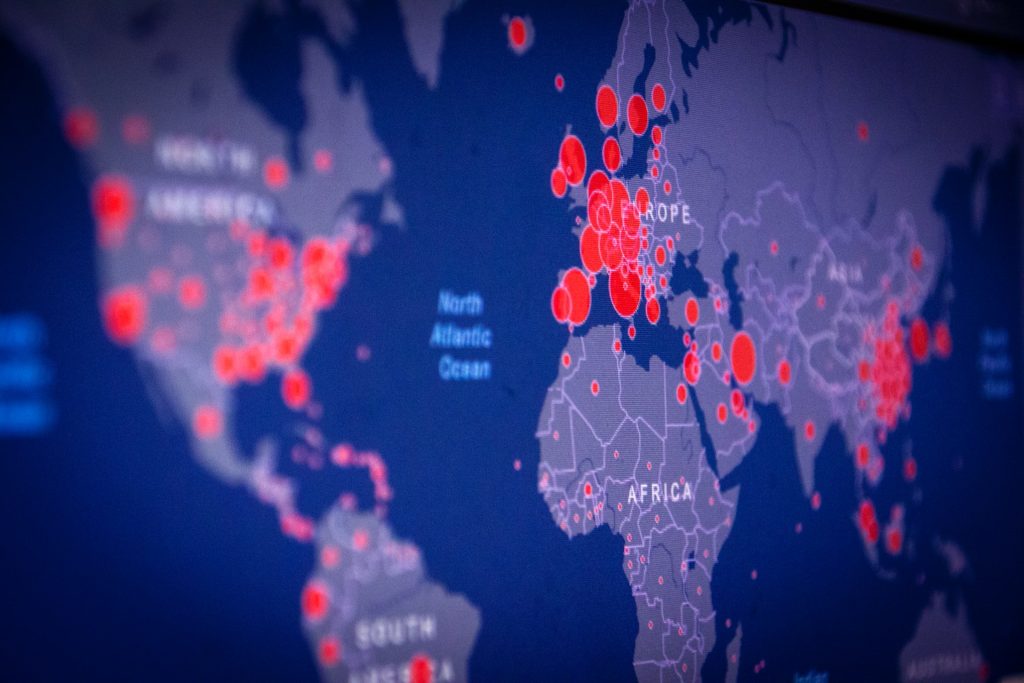
COVID heat map. Photo by Giacomo Carra on Unsplash

By Nathan Geffen and Francois Venter

There is a view being promoted that COVID didn’t hit Africa as badly as the rest of the world. The reason for this, as recently expressed in an article by Boniface Oyugi in The Conversation, was the effective and well-coordinated response of African governments.

We understand the desire to find good news on the continent. But, on balance, the very little evidence available shows that COVID has hit Africa hard. The continent is highly diverse with over 50 states, so broad generalisations should be treated cautiously but, with an exception or two, there is little evidence of an effective response to the COVID pandemic. For one thing, Africa has the lowest vaccination rate of any continent.

Oyugi uses the WHO’s official COVID infection and death statistics to claim that the continent fared better than elsewhere. These state that as of late July, less than 2% of global cases and less than 3% of global deaths occurred in Africa, which has about 17% of the world’s population. (Oyugi also cites a study which pretty much says the same thing.)

COVID test statistics and confirmed COVID deaths don’t paint an accurate picture of how seriously the pandemic has hit a country (see here). If you don’t measure something properly, you can’t conclude that it’s a small problem. COVID tests are typically only administered with any regularity to a small, predominantly better off, part of a country’s population, and countries that test more tend to find more cases. Official COVID death tolls typically count people who have died in hospital with a confirmed positive test result. But it often doesn’t happen this way, especially on a continent with large rural populations and under-resourced hospitals.

Excess deaths: a vital measure

This is why the most important measure of how hard COVID has hit a country is the excess death toll. By excess deaths, we mean the number of deaths that occurred above what you’d expect given recent historical mortality. In sub-Saharan Africa, the only country that has a system capable of reliably estimating this is South Africa. Every week since the beginning of the epidemic, the Medical Research Council (MRC), using death certificate data provided by Home Affairs, has diligently analysed excess deaths. (Many countries wealthier than South Africa do not have as good a system, so it’s something to be proud of.)

The MRC researchers calculate that there have been over 320 000 excess deaths in South Africa since May 2020 (as of July 2022). As they’ve explained, conservatively 85% of these are COVID deaths. It may be as high as 95%. We can conclude that close to 300 000 people have died of COVID in South Africa. Over the past two years about 1 in 200 people in the country have died of this new infection.

The Economist has been reporting excess deaths by country. It states: “Among developing countries that do produce regular mortality statistics, South Africa shows the grimmest picture, after recording three large spikes of fatalities.”

Official deaths are much lower than excess deaths

But if you look at South Africa’s official, and much less accurate, COVID death toll you get a very different picture: Then we’re only 65th worst in the world (source: Worldometer deaths per million people). Lesotho is in 167th place, suggesting it has had a very small epidemic. Is it plausible that an area with a porous border entirely surrounded by South Africa has a completely different epidemic? (See this set of tweets – by one of the authors of South Africa’s weekly mortality report – that explains how the little mortality data we have from Lesotho suggests it had a serious pandemic.)

What about Namibia at position 74 in the Worldometer list, Botswana at 89, Zimbabwe at position 143 and Mozambique at position 190? Is it plausible that this ordering, almost in reverse order of industrial development, accurately reflects how these countries were affected by COVID?

Depending on your bias, you can approach these statistics in two ways. You can be very optimistic and see this as evidence of a smaller epidemic in sub-Saharan Africa. Or you can be realistic and acknowledge that the official numbers are likely very badly undercounted.

We can’t know for sure though because nearly all African governments did not have the systems in place to count excess deaths.

Most African countries need much better death registration systems

Attempts to estimate excess mortality in most African countries are based on almost no data. To the extent that there is data, it supports the view that the numbers have been badly undercounted. For example, a study published in the British Medical Journal, albeit with many caveats, found death rates in developing countries were twice those of rich countries.

During the height of the AIDS pandemic in the 2000s there was much optimism that the massive influx of foreign aid in response could be used to build better health systems. Bits and pieces of evidence do suggest health on the continent has improved. But it’s very disappointing that most countries on the continent still do not have the vital registration systems in place to measure mortality with decent accuracy. This is one of the most important measures of how a population is doing.

By claiming that African governments have responded well to COVID, when there’s no proper evidence to support this, we fail to hold politicians accountable. We also create the impression that institutions like the World Health Organisation and the African Union’s African Centre for Disease Control are more successful than they’ve actually been. This is a disservice to the vast majority of people living in Africa.

Geffen is GroundUp’s editor. Professor Venter is an infectious diseases clinician and head of Ezintsha at Wits University.

This article is republished from GroundUp under a Creative Commons Attribution-NoDerivatives 4.0 International License.

Source: GroundUp

Half of Teens Trust Fake Health News

Photo by Freestocks on Unsplash

A new study has found that teenagers have a hard time discerning between fake and true health messages. Only 48% of the participants trusted accurate health messages (without editorial elements) more than fake ones. Meanwhile, 41% considered fake and true neutral messages equally trustworthy and 11% considered true neutral health messages less trustworthy than fake health messages. The results highlight a need for better training of teenagers to navigate a world where fake health news is so widespread.

Health mis- and disinformation are a serious public health concern, with an increased spread of fake health news on social media platforms in the last few years. Previous research has shown that online health messages are mostly incomplete and inaccurate and have potentially harmful health information. Fake health news can lead to poor health choices, risk-taking behaviour, and loss of trust in health authorities.

“There has been an explosion of misinformation in the area of health during the COVID pandemic,” said principal investigator Dr Radomír Masaryk, of Comenius University.

While most research on message credibility has focused on adults, Dr Masaryk and his colleagues investigated whether teenagers are similarly equipped.

“As adolescents are frequent users of the internet, we usually expect that they already know how to approach and appraise online information, but the opposite seems to be true” Dr Masaryk said.

The researchers found that 41% of teenagers couldn’t tell the difference between true and fake online medical content. Additionally, poor editing of health messages was not perceived as a sign of low trustworthiness. These latest findings were published in Frontiers in Psychology.

Teenagers and the media

As so-called ‘digital natives’, modern teenagers are the world’s most well-connected group, with 71% of the world’s youth using the internet.

Studies have shown that teens increase their risky behaviour in response to positive portrayals of risky behaviour in the media, such as smoking and drinking. On the other hand, online health information that supports information provided by professionals can lead to healthy lifestyle changes, self-care, and treatment compliance.

Teenagers look at the structural features of a website, such as language and appearance, to evaluate online information. For example, authoritative organisations, trusted brands, or websites with business-like language tend to be more trusted.

Previous research on message trustworthiness with adolescents identified five editorial elements that deduced perceived message credibility: superlatives, clickbait, grammar mistakes, authority appeal, and bold typeface. Based on this prior study, the researchers developed a method to evaluate the effects of manipulation with content and format of health online messages on their trustworthiness in an adolescent sample.

They presented 300 secondary school students (aged between 16 and 19 years old) with seven short messages about the health promoting effects of different fruits and vegetables. The messages had different levels: fake message, true neutral message, and true message with editorial elements (superlatives, clickbait, grammar mistakes, authority appeal, and bold typeface). Participants were then asked to rate the message’s trustworthiness.

The participants were able to discern between overtly fake health messages and health messages whether true or slightly changed with editing elements; 48% of participants trusted the true neutral health messages more than the fake ones. However, 41% of participants considered fake and true neutral messages equally trustworthy and 11% considered true neutral health messages less trustworthy than fake health messages.

Clickbait less likely to work

“Putting trust in messages requires identification of fake versus true content,” said Dr Masaryk.

In the case of health messages that seem plausible and reasonable, teenagers could not tell the difference between true neutral health messages and health messages with editorial elements. Teenagers did not seem to decide on the trustworthiness of a message based on editing cues.

“The only version of a health message that was significantly less trusted compared to a true health message was a message with a clickbait headline,” continued Dr Masaryk.

The results highlight a need for better instruction of teenagers to spot editing cues that give away the quality of a piece of information. The authors suggest focusing on health literacy and media literacy training, and skills such as analytical thinking and scientific reasoning.

“Analytical thinking and scientific reasoning are skills that help distinguish false from true health messages,” Dr Masaryk concluded.

Source: Frontiers

Multivitamins and Dietary Supplements are a ‘Waste of Time’ for Most

Vitamin C pills and orange
Photo by Diana Polekhina on Unsplash

For those who aren’t pregnant, vitamins are a waste of money because the evidence for cardiovascular disease or cancer prevention is lacking, according to researchers at Northwestern University Feinberg School of Medicine.

“Patients ask all the time, ‘What supplements should I be taking?’”

Dr Jeffrey Linder, Northwestern University

The researchers penned an editorial in JAMA that supports new recommendations from the United States Preventive Services Task Force (USPSTF), a national panel which makes evidence-based recommendations on clinical prevention. 

Based on a systematic review of 84 studies, the USPSTF’s new guidelines state there was “insufficient evidence” that taking multivitamins, paired supplements or single supplements can help prevent cardiovascular disease and cancer in otherwise healthy, non-pregnant adults. 

“Patients ask all the time, ‘What supplements should I be taking?’ They’re wasting money and focus thinking there has to be a magic set of pills that will keep them healthy when we should all be following the evidence-based practices of eating healthy and exercising,” said Dr Jeffrey Linder, one of the editorial’s authors.

“The task force is not saying ‘don’t take multivitamins,’ but there’s this idea that if these were really good for you, we’d know by now,” Dr Linder added. 

The task force is specifically recommending against taking beta-carotene supplements because of a possible increased risk of lung cancer, and is recommending against taking vitamin E supplements because it has no net benefit in reducing mortality, cardiovascular disease or cancer.

“The harm is that talking with patients about supplements during the very limited time we get to see them, we’re missing out on counselling about how to really reduce cardiovascular risks, like through exercise or smoking cessation,” Dr Linder said.

No substitute for actual fruits and vegetables

Eating fruits and vegetables is associated with decreased cardiovascular disease and cancer risk, they said, so it is reasonable to think those key vitamins and minerals in pills could prevent disease. But, they explain, whole fruits and vegetables contain a mixture of vitamins, phytochemicals, fibre and other nutrients that probably act synergistically to deliver health benefits. Micronutrients on their own may also have a different effect than when consumed with others in foods.

Dr Linder noted that individuals with vitamin deficiency can still benefit from taking dietary supplements, such as calcium and vitamin D, which have been shown to prevent fractures and perhaps falls in older adults. 

New guidelines do not apply to those who are pregnant

The new USPSTF guidelines do not apply to people who are pregnant or trying to get pregnant, said JAMA editorial co-author Dr Natalie Cameron, a physician at Northwestern. 

“Pregnant individuals should keep in mind that these guidelines don’t apply to them,” said Dr Cameron. “More data is needed to understand how specific vitamin supplementation may modify risk of adverse pregnancy outcomes and cardiovascular complications during pregnancy.” 

Source: Northwestern University

Will NHI Mean the End of Medical Aid in South Africa?

Once again, concerns are being raised over the implementation of the proposed National Health Insurance (NHI) scheme. This time, it is over the future of private healthcare and medical aid under the contentious Section 33 of the Bill.

Many previous discussions have focused on the NHI’s affordability, accountability, the potential mass flight of healthcare professionals from the country, and even whether NHI is even possible to achieve given South Africa’s challenges.

In a new healthcare stakeholder opinion report [PDF] published by Section 27 and the Concentric Alliance on Monday, 20 June, it is noted that private healthcare is a major contributor to the economy. May public and private sector respondents believe it could play a significant role in achieving health reform thanks to its resources and capacity.

However, Section 33 of the NHI Bill states that medical schemes may only provide “cover that constitutes complementary or top-up cover and that does not overlap with the personal health care service benefits purchased by the National Health Insurance Fund on behalf of users”.

This basically means medical schemes which are not gap cover will no longer operate – something which does not sit well with the private sector respondents in the report, who argue that even in countries with the best developed public health systems, private healthcare funders still exist.

A carrot vs stick approach

An academic respondent suggested incentivising people into switching to a public healthcare funder, rather than removing private healthcare funding. A private sector respondent also suggested the idea of competition with private funders as a means to improve the NHI’s efficiency. Indeed, it may even be necessary the NHI to function well.

The report makes note of Section 33 of the NHI Bill becoming “something of a hill to die on”. The report says that “During the six-a-side engagements between Business Unity and the National Department of Health, urgent discussions on NHI were nearly derailed by demands that Section 33 be re-opened for discussion and one respondent in the NDOH stating that the Bill was now before parliament. This respondent stated that they would rather see this point litigated, than back down. The current approach to this draft provision has the potential to undermine the implementation of the NHI and delay urgent reform to the health system.”

Whistle-blowing Paediatrician at Rahima Moosa Suspended

Photo by Christian Bowen on Unsplash

The whistle-blowing paediatrician Dr Tim de Maayer who spoke out about appalling conditions at Rahima Moosa Mother and Child Hospital (RMMCH) was suspended yesterday, apparently in a retaliatory move.

In the widely-read open letter appearing on the Daily Maverick, he spoke of the preventable tragedy of babies dying due to lack of resources. This came shortly after a viral video showed pregnant mothers sleeping on the floor.

Presciently, the Daily Maverick, which broke the story, stated that there were two options: act to change the situation for the better, or “shoot the messenger”. As the newspaper wryly noted as it broke the news on Friday, 10 June, the option of shooting the messenger has been taken.

Although there appeared to be an initial positive response, Dr Maayer gave notice on Thursday evening that he was not able to come into work on Friday as he was being placed on suspension. RMMCH doctors then contacted the Daily Maverick.

His suspension leaves the hospital without its only paediatric gastroenterologist, according to an anxious doctor who got in touch with the Daily Maverick late Thursday night. The news has spread like wildfire across social media, with other doctors quick to come to Dr de Maayer’s defence.

A petition on Change.org to reinstate the paediatrician is being circulated by ordinary citizens and clinicians including Professor Shabir Madhi, who has been vocal in his support of Dr de Maayer.

Guy Richards, critical-care professor at Wits University tweeted that it was a “shocking response”.

The Progressive Health Forum (PHF) called for the suspension of Dr de Maayer to be overturned.

“Dr de Maayer has been suspended on the grounds that he has a voice, a conscience and a professional ethic and being a committed public health clinician. This pattern of victimisation has been repeatedly applied to clinicians who dare call out inadequacies of the administration and negative impact on clinicians and on the lives of patients,” the PHF said in a statement.

Source: Daily Maverick

Why Independent Healthcare inside Prisons is Vital

Photo by Emiliano Bar on Unsplash

Judge Edwin Cameron, Inspecting Judge of Correctional Services, writes about the need for healthcare professionals working in prisons should be shifted to the Department of Health.

Our country’s healthcare system is a cumbersome double-decker bus: on top are those of us who have access of some kind to private healthcare (a high estimate is around 27% of the population). The great majority of necessity rely on public healthcare. But, within public healthcare, there is a further divide, an overlooked layer at the very lowermost – the healthcare afforded to people in prison.

During apartheid, healthcare for those inside prison and in police custody was used as a “tool of manipulation and coercion”. There was medical negligence, poor quality care, false medical and autopsy reports, and warped medical ethics. (Bram Fischer, in his dying days, received no treatment for his crippling cancer).

Some doctors and other medics were complicit in abuses, turning a blind eye to what was happening before them.

The Truth and Reconciliation Commission (TRC) Special Hearings on Prisons showed how basic access to medical treatment was used to punish. Henry Magkothi recounted how difficult it was to gain access on Robben Island to the hospital. “The doctor didn’t come often enough and even then there were so many obstacles they placed in your way.”

The problem was not only one of medical ethics. There was a “fragmented approach and a general lack of clarity” in governing what health professionals did to those in their custodial care, wrote Laurel Baldwin-Ragaven, Leslie London and Jeanelle De Gruchy in their book An Ambulance of the Wrong Colour: Health Professionals, Human Rights and Ethics in South Africa.

Not only did doctors have to have security clearance to work in prisons, but there were split institutional loyalties. Some health professionals were employed by the Department of Health and others by the Department of Prisons (now the Department of Correctional Services — DCS). This led to a dilemma of “dual obligations”, where the lines of authority for healthcare and custodial care were blurred. Health professionals owed loyalty to their patients (the inmates). But they had obligations to, and pressure from, their employers (the prison authorities).

Healthcare must be separated from prison administration

This blighted history led Dr Judith van Heerden, an expert in this area, to recommend to the TRC that prison healthcare “must be separated completely from custodial care”. All healthcare professionals in prisons “should be appointed, paid and responsible to the Department of Health” – and no longer to the prison authorities.

The TRC embraced this sound advice in its recommendations. It suggested that: the Department of Health should assume control over prison healthcare; prison health responsibilities and obligations should be clearly defined with an independent line of authority.

These recommendations accord with international guidelines. The UN Mandela Rules entail a demarcation between healthcare and custodial care; there shall be “full clinical independence”. Healthcare professionals “shall not have any role in the imposition of disciplinary sanctions or other restrictive measures”. And clinical decisions may only be taken by healthcare professionals “and may not be overruled or ignored by non-medical prison staff”.

Experts have underscored the importance of providing health services in prison that are separate from the prison administration. The World Health Organisation and the United Nations Office on Drugs and Crime note that healthcare professionals should act “completely independent of prison authorities” and in “alignment with public health services.”

Furthermore, the Association for the Prevention of Torture advocates for the “integration of the prison health service into the national health service” to guard the “professional and ethical independence of the health staff” and “provide recourse to an independent body in case of conflicts.”

Did democratic South Africa heed this advice? No.

Medical ethicist Professor Solomon Benatar observes that the Department of Health “began to dismantle the District Surgeon Services” and “[i]t became possible for DCS to appoint nurses and other medical staff to deliver healthcare” in our prisons.

This is evident in the plain wording of the Correctional Services Act of 1998. Section 12(1) states that DCS “must provide, within its available resources, adequate health care services” and section 12(2)(b) outlines that medical treatment “must be provided by a correctional medical practitioner, medical practitioners or by a specialist or health care institution or person or institution identified by such correctional medical practitioner”. And according to section 12(3), if an inmate opts to be “visited and examined by a medical practitioner of [their] choice” it is “subject to the permission of the Head of Centre”.

Post-apartheid, healthcare in prisons is still not independent. Benatar slates this “retrogressive step”; “diverting some responsibilities for healthcare away from the Department of Health” and towards DCS, diminishes the “loyalty of some health professionals” as it ranks “allegiance to prison authorities higher than professional responsibility to patients.”

A special duty of care

In his book Health and Health Promotion in Prisons, Professor Michael Ross states that depriving inmates of liberty does not mean we may deprive them of access to healthcare. On the contrary, their deprivation of liberty means we owe them a “special duty of care”. Critically, Ross acknowledges that we provide “good care to bad people because we are professional, and because we, and they, are human” and if bad care is given “the humanity we degrade is also ours, not only theirs”.

Those in prison should have the same quality of healthcare as the public outside. This is the “equivalence of care” principle. It means that you don’t add poor healthcare treatment on top of imprisonment to punish. As I have written before, “prison health affects our health” and “equivalence of care” should be considered a minimum threshold. In light of the higher mortality rates in prisons; government may have to provide higher standards of healthcare in prisons.

We know that injuries and the use of anti-depressants are warning signs of trouble. Many cases of claimed abuse (especially sexual violations, assaults, use of force and torture) are reported to nurses and doctors. Later, investigators, both internal and external, rely on medical reports. Ross emphasises that one must ensure health assessments of inmates are based on medical criteria and inmates ought to trust their healthcare providers and feel safe to report and speak out about abuse.

In addition, nurses, psychologists and other medical practitioners play a role in how prisons are run. For example, they are expected to visit inmates in segregation (sometimes in solitary confinement). The Act provides that segregation “must be discontinued” if medical practitioners determine that “it poses a threat to the health of the inmate”.

Further, independent healthcare can provide another significant layer of independent monitoring over our closed-off prisons.

Two parallel healthcare systems are not advisable. Does DCS have adequate training facilities to ensure training and updates on clinical care for clinicians on its payroll? The Judicial Inspectorate for Correctional Services (JICS), which I head, believes not. DCS clinicians often miss out on training opportunities. Further, DCS’s data systems are standalone – they are not linked to the Department of Health’s facilities (connecting them would ensure continuity of care when inmates are released).

And a heartening thought – why not allocate community service doctors to prisons? This would alleviate costs and skills scarcity.

The state of healthcare in our prisons

Grievously, our prisons are a microcosm of all our country’s social ills. This is true of healthcare, but perhaps it is worse, since, notoriously, prisons are epidemiologic pumps for the spread of infectious viruses and diseases.

The 2020-2021 annual report of the Judicial Inspectorate for Correctional Services paints an agonising picture of the state of prison healthcare.

Inmates do not get regular access to nurses and doctors, clinics in prisons are cramped and there is limited privacy for consultations, correctional officials are not always available to escort inmates to healthcare facilities, medications are not always dispensed on time, some medications have expired, health check-ups and screenings upon admission are not always conducted and medical files are not always updated.

Healthcare professionals in prisons, especially psychologists and social workers, are working with a desperate population. In the single year covered in the report, JICS reported 86 hunger strikes, 66 attempted suicides and 27 suicides. According to DCS’s annual report “suicide is the leading cause of [unnatural] deaths in correctional facilities”.

JICS’s recent quarterly report lists 40 unnatural deaths. We don’t know the cause of most; seemingly healthy inmates died. This requires JICS’s close investigative scrutiny of the post-mortem and medico-legal documents, which are in the hands of DCS and sometimes mysteriously go missing.

Further, there were 113 deaths as a result of natural causes, including pneumonia, cancer, meningitis, septicaemia and asthma. Could some of these deaths have been avoided with early detection, close monitoring and regular access to medical assistance? JICS thinks so.

JICS is also alarmed by the 116 declared state patients in prison; these are individuals whom the courts have found are suffering from mental unwellness challenges. As they wait indefinite periods for a transfer to a psychiatric hospital, they are wrongly housed in correctional facilities. State patients should not be a DCS responsibility. JICS has raised its voice on this: correctional facilities are not conducive for state patients, and correctional officials and fellow inmates are not trained to properly accommodate them.

To end off

While inspecting prisons, I have met passionate nurses and committed doctors. Prisons are tough, dangerous and complicated places. I acknowledge that DCS has worked hard to progress in dealing with Covid, HIV and TB behind bars. But we have to do better.

We need institutional reform. Healthcare professionals working in prisons ought to be independent of DCS. This means shifting all healthcare professionals to the Department of Health and ensuring proper channels of authority and oversight within prisons. In addition, healthcare professionals need specific and ongoing training for the prison environment. We also need more healthcare professionals working in prisons – and they must be accessible, proactive and willing to speak out.

That takes us back to where we started. Our Department of Health must be well-resourced, well-capacitated and well-run – and healthcare professionals must be trained and supported and have job security. And this goes to the heart of whether we have a capable state, strong institutions and a culture of accountability.

Judge Cameron is Inspecting Judge of Correctional Services.

Views expressed are not necessarily those of GroundUp.

This article is republished from GroundUp under a Creative Commons Attribution-NoDerivatives 4.0 International License.

Source: GroundUp

Doctors Stand Behind Scathing Indictment of Rahima Moosa Hospital Conditions

Source: CC0

Doctors have come out in support of criticism of the conditions at Rahima Moosa Mother and Child Hospital (RMMCH) in Johannesburg. The dire situation at the hospital, which has reportedly resulted in numerous patient deaths, has been highlighted on a number of occasions.

A year ago, Daily Maverick visited RMMCH after concerns being voiced by doctors and patients, and found a number of problems there. This year, a viral video clip showed pregnant women sleeping on the floor at the Gauteng hospital, and Daily Maverick returned to found the situation had worsened, yet the hospital’s CEO Dr Nozuko Mkabayi emphatically denied anything was amiss.

Dr Mkabayi said that although the hospital experiences periodic drug stockouts and equipment shortages, “Patients’ lives are not in danger and there is enough essential equipment. The hospital equipment committee is functional in ensuring adequate equipment needs for patient care.”

Then paediatrician Dr Tim de Maayer wrote an open letter to the Department of Health which sent further shockwaves through the media.

He said that his patients were dying due to a simple lack of basic resources. Drugs were in short supply; staff were massively overloaded; the hospital’s generators were ill-equipped to handle load shedding; and even water supply was threatened, causing hospital-acquired infections to spread “like wildfire”. These issues, Dr Maayer noted, had been raised with management before.

Gift of the Givers had stepped in and sunk a borehole to assist with the water supply situation – although a charity having to come to the rescue of a public hospital is an embarrassment.

Department of Health spokesperson Kwara Kekana acknowledged that the infrastructure was lacking:

“The hospital has over the past decade seen an increase in patient load with no increase in infrastructure development,” she said. “It has steadily increased intake from 10 000 deliveries to 16 000 deliveries per year, which is the second highest in the country.”

“To add more capacity, the hospital has repurposed 22 beds to accommodate more antenatal patients in the last two years making a total of 56 antenatal beds, which is still insufficient.”

RMMCH had requested exemption from the load shedding schedule, she noted.

In an interview with eNCA, Professor Haroon Saloojee, head of community paediatrics at Wits Universiy, said that he “wholeheartedly” agreed with Dr Mayeer, saying that, “what I think he is describing is the ‘complete storm'” and it “contributes to a reduction in quality care.

“[…]it’s the issue of inadequate staff, just not enough doctors but particularly nurses for the patient load – and certainly for the situation at Rahima Moosa has been far worsened that Charlotte Maxeke has been closed for so long and they’ve had to take the load. So a very busy hospital with a greatly increased number of deliveries as the load has become more. Added to that a problem with getting adequate equipment, he makes that point. And to add to that we’ve had both the crises with water availability and to top that all the regular loadshedding which means the generators weren’t coping.

“So you end up with a major storm and shouldn’t surprise then that children’s lives get affected.”

Regarding procurement issues such as running out of bread he remarked, “I’m sure there’s a lot of bureaucracy, but a lot of it is the simple management of the day-to-day running of a hospital, including how it places accounts, and the truth is that many hospitals are forfeiting at that.”

Since his letter went out, Dr Maayer has said there has been some reaction from the government, with President Ramaphosa reportedly wanting to see a response from RMMCH’s CEO. Deputy Health Minister, Sibongiseni Dhlomo has said that the letter is worrying and will be looked into.

The World is Short of 43 Million Health Workers

Healthcare worker pulling on gloves
Image by Gustavo Fring on Pexels

In order to attain universal healthcare coverage, the world needs an additional 43 million health workers, according to research from the Institute for Health Metrics and Evaluation (IHME) published in The Lancet. Sub-Saharan Africa, South Asia, and North Africa and the Middle East were found to have the largest shortfalls in health worker coverage.

“These are the most comprehensive estimates to date of the global health care workforce,” said senior author Dr Rafael Lozano, Director of Health Systems at IHME. “Health care workers are essential to the functioning of health systems, and it’s very important to have these data available so that countries can make informed decisions and plan for the future.”

Four categories of health worker were studied: physicians, nurses and midwives, dental personnel, and pharmaceutical personnel. In 2019, they estimated that more than 130 countries had shortages of physicians and more than 150 had shortages of nurse and midwives. When comparing current levels of health care workers to the minimum levels needed to meet a target score of 80 on the universal health coverage (UHC) effective service coverage index, researchers estimated a shortage of more than 43 million health care workers, including 30.6 million nurses and midwives and 6.4 million physicians.

“We found that the density of health care workers is strongly related to a nation’s level of social and economic development,” said lead author Dr. Annie Haakenstad, Assistant Professor at IHME. “There are different strategies and policy approaches that may help with addressing worker shortages, and these should be tailored to the individual situation in each country. We hope that these estimates can be used to help prioritize policy interventions and inform future planning.”

The study revealed more than a 10-fold difference in the density of health care workers across and within regions in 2019. Densities ranged from 2.9 physicians for every 10 000 people in sub-Saharan Africa to 38.3 per 10 000 in Central Europe, Eastern Europe, and Central Asia. Cuba also stood out, with a density of 84.4 per 10 000 compared to 2.1 in Haiti.

Similar disparities were observed in measuring numbers of nurses and midwives, with a density of 152.3 per 10 000 in Australasia compared to 37.4 per 10 000 in Southern Latin America. Despite steady increases in the health care workforce between 1990 and 2019, substantial gaps persisted.

The researchers cited existing literature that highlights factors that contribute to worker shortages, including out-migration of health workers, war and political unrest, violence against health care workers, and insufficient incentives for training and retention. They noted that high-income locations should follow WHO guidelines on responsible recruitment of health personnel to avoid contributing to workforce gaps in lower-income regions.

The study findings demonstrated just how poorly prepared the world was when the COVID pandemic struck, further straining health systems that already were short of crucial frontline workers. These estimates will help policymakers, hospitals, and medical clinics prepare for future pandemics by focusing on training and recruitment. The authors also note that there is still much to learn about the impact of the pandemic on the health workforce. This includes gender dynamics in human resources for health (HRH) and how the departure of women from formal employment for care-taking duties at home may have depleted the health workforce, among other stressors on HRH during the pandemic.     

The full dataset from the study is available at the Global Health Data Exchange.

Source: Institute for Health Metrics and Evaluation

Renewed Political Will Needed for the Complexities of African Healthcare

Delegates at the 21st Annual Board of Healthcare Funders (BHF) Conference currently being held in Cape Town.

19 May 2022: Healthcare – Cape Town, South Africa: The healthcare system in South Africa and on the continent is beset with structural challenges and skewed political priorities that hamper the attainment of universal healthcare coverage, therefore a fundamental overhaul of the healthcare system and renewed political will is required to improve citizen’s access to quality healthcare services.

These sentiments kicked off the first day of the 21st Annual Board of Healthcare Funders (BHF) Conference currently being held in Cape Town under the theme: Leading change in strengthening our healthcare ecosystem.

Connected virtually, South Africa’s Minister of Health, Dr Joe Phaahla invited the private sector to submit recommended solutions to strengthen the country’s healthcare systems, emphasising the need for a collaborative approach to transform healthcare.

Dr Phaahla conceded that the health system in the country was already weak before the outbreak of COVID and inequality in access to reliable health services is inextricably linked to the economic and social inequality that our country is facing.

The Minister added, “The country’s healthcare system should be restructured to focus more on preventative services rather than the current curative approach.”

“The socio-economic inequality is perpetuated further by our own health services, which are highly heavily commodified. Our two-tiered healthcare system with one being driven by the private sector for a few who can afford it and the other by the public sector being provided for the majority of the population does not bode well for the future prospects of the country. This system is unsustainable and if we are going to talk about a change in strengthening the health system, we cannot avoid talking about the need to accelerate the creation of a more equitable health system.” 

He acknowledged that the passing of the NHI Bill will not in itself be a silver bullet in the transformation of our health system, however, will lay a good foundation for the country to timely start to fundamentally transform our health system towards equity.

Speaking about the relationship between politics and healthcare, Professor Patrick Lumumba, former Director of the Kenya Anti-Corruption Commission, said, “Politics is at the very heart of the provision of sound healthcare systems.”

He challenged some of the perceptions around the delivery of national healthcare insurance across Africa, asking governments and the private sector to closely examine suitable healthcare solutions that will consider the continent’s current different types of conflicts.

He highlighted that considerations should be made in the best interest of the continent’s populations when making the decision on an approach to be taken for the continent’s healthcare needs, bearing in mind what is affordable to the different countries across the continent, especially given that the continent’s entire GDP is less than that of Italy, which has just under 60 million people.

“The continent is currently under different types of conflict at various intensities, and these conflicts are in turn undermining the provision of healthcare,” said Prof Lumumba.

He noted that in Africa, there is a lack of political will to spend more on healthcare despite the commitments made at Abuja, Nigeria, in 2001 to invest a minimum of 15% of their national budget in healthcare.

“Politicians are rich in making promises. The evidence we have in different countries is that universal health care as promised by politicians and as desired by the population is not easily achievable,” he said.

He cautioned against the temptation to compare the healthcare system in Africa with that of developed countries, citing a lower tax base and GDP in Africa to fund a healthcare system that services a substantially larger population.

“The entire GDP of Africa is slightly over two trillion US dollars, which is smaller than the GDP of Spain, which has a population of no more than 50 million people, it is critical that the private and public sectors; and politicians work together to come up with a system that is going to be beneficial to the majority of Africa’s people,” said Professor Lumumba.

He said the envisaged economic revival of Africa cannot be sustained if the continent’s healthcare needs are not adequately addressed.

“If the continent of Africa is to enjoy the perceived economic growth that is expected, then the population must be healthy. Healthcare is about creating healthcare systems that are also able to retain the skills that are required for Africa’s emerging or growing economies. There is also a clear need for collaboration in the delivery of health services,” said Lumumba.

Dr Millicent Hlatshwayo Chairperson of the Government Employees Medical Scheme (GEMS) reiterated the need for the private healthcare sector to play a meaningful role towards shaping the proposed healthcare funding model to ensure its sustainability.

She acknowledged that the healthcare sector is faced with several systemic challenges, and this is reflected in our international rankings; where South Africa ranks 49th out of 89 countries on the 2022 Global Healthcare Index. Though South Africa is the highest-ranked African country in this index, it has been rated below its peers in BRICS such as China and India, which are rated 40th and 44th respectively.

Dr Hlatshwayo said, “Proposed reforms such as the implementation of the NHI can help to facilitate better cooperation between the public and private sectors. We cannot afford to be passive observers in these deliberations, because our failure to act on these opportunities will be an indictment on the industry.”

Dr Hlatshwayo said from its inception, GEMS has been aligned with the transformation of the healthcare industry and supportive of the principles of universal health coverage.

She said universal health coverage can only be achieved if we get the basics in place, namely qualified staff, equipment and technology, infrastructure and working systems.