Tag: oestrogen

Do Hormones Explain Why Women Experience More Gut Pain?

UCSF researchers discover that oestrogen can turn on pain signals associated with conditions like irritable bowel syndrome.
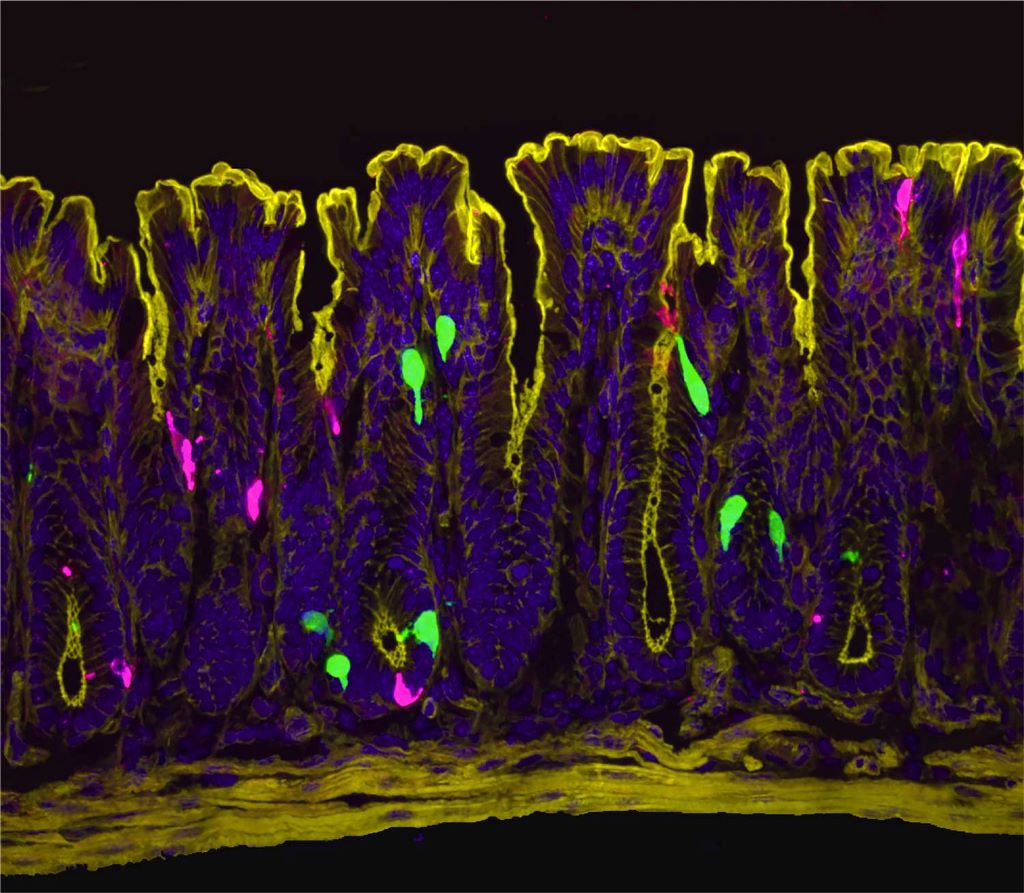
A zoomed in image of the lining of the colon. Cells that produce the hormone  PYY (peptide YY) are in green. Cells that produce the neurotransmitter serotonin are in magenta. PYY triggers the release of serotonin, which activates pain-sensing nerve fibers. Image by Archana Venkataraman/UCSF

Women are dramatically more likely than men to suffer from irritable bowel syndrome (IBS), a chronic condition causing abdominal pain, bloating, and digestive discomfort. Now, scientists at UC San Francisco have discovered why.

Oestrogen, the researchers report in Science, activates previously unknown pathways in the colon that can trigger pain and make the female gut more sensitive to certain foods and their breakdown products. When male mice were given oestrogen to mimic the levels found in females, their gut pain sensitivity increased to match that of females.

The findings not only explain the female predominance in gut pain disorders but also point to potential new ways to treat the conditions.

“Instead of just saying young women suffer from IBS, we wanted rigorous science explaining why,” said Holly Ingraham, PhD, professor UCSF and co-senior author of the study. “We’ve answered that question, and in the process identified new potential drug targets.”

The research also suggests why low-FODMAP diets – which eliminate certain fermentable foods, such as onions, garlic, honey, wheat, and beans – help some IBS patients, and why women’s gut symptoms often fluctuate with their menstrual cycles.

“We knew the gut has a sophisticated pain-sensing system, but this study reveals how hormones can dial that sensitivity up by tapping into this system through an interesting and potent cellular connection,” said co-senior author David Julius, PhD. Julius won the 2021 Nobel Prize for Physiology or Medicine for his work on pain sensation.

Search for oestrogen

Previous research had hinted that oestrogen was to blame for higher rates of IBS in females, but not why. To understand how oestrogen might be involved, Ingraham’s and Julius’s teams first needed to see exactly where the hormone was working in the gut.

“At the time I started this project, we didn’t know where and how oestrogen signalling is set up in the female intestine,” said Archana Venkataraman, PhD, a postdoc in Ingraham’s lab and co-first author of the research. “So, our initial step was to visualise the oestrogen receptor along the length of the female gut.”

The team expected to see oestrogen receptors in enterochromaffin (EC) cells, which were already known to send pain signals from the gut to the spinal cord. Instead, they got a surprise: oestrogen receptors were clustered in the lower part of the colon and in a different cell type known as L-cells.

The scientists pieced together a complex chain reaction that occurs when oestrogen binds to the L-cells. First, oestrogen causes L-cells to release a hormone called PYY (peptide YY). PYY then acts on neighbouring EC cells, triggering them to release the neurotransmitter serotonin, which activates pain-sensing nerve fibres. In female mice, removing the ovaries or blocking oestrogen, serotonin, or PYY dramatically reduced the high gut pain observed in females.

For decades, scientists believed PYY primarily suppressed appetite – drug companies even tried developing it as a weight-loss medication. But those clinical trials failed due to a troubling side effect that was never fully explained; participants experienced severe gut distress. The new findings mesh with this observation and suggest a completely new role for PYY.

“PYY had never been directly described as a pain signal in the past,” said co-first author Eric Figueroa, PhD, a postdoc in Julius’ lab. “Establishing this new role for PYY in gut pain reframes our thinking about this hormone and its local effects in the colon.”

This video shows what happens to the enterochromaffin (EC) cells in the colon when they are treated with PYY. Upon PYY treatment, calcium activity increases in the EC cell, causing it to fluoresce more brightly as it releases serotonin that is detected by nearby pain-sensing nerve fibres. Video by Eric Figueroa/UCSF

A link between IBS and diet

Increased PYY wasn’t the only way that L-cells responded to oestrogen. Levels of another molecule, called Olfr78, also went up in response to the hormone. Olfr78 detects short-chain fatty acids – metabolites produced when gut bacteria digest certain foods. With more Olfr78 receptors, L-cells become hypersensitive to these fatty acids and are more easily triggered to become active, releasing more PYY.

“It means that oestrogen is really leading to this double hit,” said Venkataraman. “First it’s increasing the baseline sensitivity of the gut by increasing PYY, and then it’s also making L-cells more sensitive to these metabolites that are floating around in the colon.”

The observation may explain why low-FODMAP diets help some IBS patients. FODMAPs (fermentable oligosaccharides, disaccharides, monosaccharides, and polyols) are carbohydrates that gut bacteria ferment into those same fatty acids sensed by Olfr78. By eating fewer FODMAPs, patients may be preventing the activation of Olfr78, and, in turn, keeping L-cells from churning out more of the pain signalling PYY.

While men have this same cellular pathway, their lower oestrogen levels keep it relatively quiet. However, the pathway could engage in men taking androgen-blocking medications, which block the effects of testosterone and can elevate oestrogen in some cases, potentially leading to digestive side-effects.

The new work suggests potential ways to treat IBS in women and men alike.

“Even for patients who see success with a low-FODMAP diet, it’s nearly impossible to stick to long term,” Ingraham said. “But the pathways we’ve identified here might be leveraged as new drug targets.”

The researchers are now studying how such drugs might work, as well as asking questions about what other hormones, such as progesterone, might play a role in gut sensitivity and how pregnancy, lactation, and normal menstrual cycles affect intestinal function.

By Sarah C.P. Williams
Source: University of California – San Francisco

Magnesium Inhibits Colorectal Cancer Development – Mostly in Females

The findings from the current study suggest that magnesium also increases the gut synthesis of vitamin D, which does not go to the blood and takes effect locally.

Photo by Danilo Alvesd on Unsplash

Researchers from Vanderbilt University Medical Center have demonstrated in a precision-based clinical trial that a magnesium supplement increases gut bacteria in humans that have been shown to synthesise vitamin D and inhibit colorectal cancer carcinogenesis.

However, the effect was observed primarily in females – an outcome that the researchers surmised may be attributable to the role that oestrogen plays in shifting magnesium from circulation into cellular uptake.

Intestinal microbiome data and colonoscopy results were analysed from participants who were randomised by whether they had the TRPM7 genotype, which plays a crucial role in regulating magnesium and calcium uptake.

Previously, the investigators showed in the same randomised trial that magnesium enhances the synthesis of vitamin D and increases the blood levels of vitamin D. The findings from the current study suggest that magnesium also increases the gut synthesis of vitamin D, which does not go to the blood and takes effect locally.

These results from the trial were published in The American Journal of Clinical Nutrition.

“Our previous study showed magnesium supplementation increased blood levels of vitamin D when vitamin D levels were low,” said Qi Dai, MD, PhD, professor of Medicine. “The current study reveals that magnesium supplementation also increases the gut microbes which have been shown to synthesise vitamin D in the gut without sunlight and locally inhibit colorectal cancer development.”

The participants were divided into two arms, one that received the magnesium supplement and another that received a placebo. Their gut microbiome was analysed from stools, rectal swabs and rectal tissues. Among participants with adequate TRPM7 function, the magnesium supplement increased Carnobacterium maltaromaticum and Faecalibacterium prausnitzii, which were previously found to work synergistically to increase vitamin D and decrease colorectal carcinogenesis. Among those with inadequate TRPM7 function, the magnesium supplement reduced the abundance of F. prausnitzii in rectal mucosa.

Among 236 participants who all had a history of colorectal polyps, 124 underwent colonoscopies after completing the trial with a 3.5-year median follow-up time. A higher abundance of F. prausnitzii in rectal mucosa was associated with an almost threefold increase in developing additional polyps.

Source: Vanderbilt University Medical Center

Oestrogen and Progesterone Stimulate the Body to Make Opioids

Source: Pixabay CC0

Female hormones can suppress pain by making immune cells near the spinal cord produce opioids, a new study from researchers at UC San Francisco has found. This stops pain signals before they get to the brain.

The discovery could help with developing new treatments for chronic pain. It may explain why some painkillers work better for women than men and why postmenopausal women, whose bodies produce less of the key hormones oestrogen and progesterone, experience more pain.

The work reveals an entirely new role for T regulatory immune cells (T-regs), which are known for their ability to reduce inflammation.

“The fact that there’s a sex-dependent influence on these cells – driven by oestrogen and progesterone – and that it’s not related at all to any immune function is very unusual,” said Elora Midavaine, PhD, a postdoctoral fellow and first author of the study, which appears in Science.

The researchers looked at T-regs in the protective layers that encase the brain and spinal cord in mice. Until now, scientists thought these tissue layers, called the meninges, only served to protect the central nervous system and eliminate waste. T-regs were only discovered there in recent years.

“What we are showing now is that the immune system actually uses the meninges to communicate with distant neurons that detect sensation on the skin,” said Sakeen Kashem, MD, PhD, an assistant professor of dermatology. “This is something we hadn’t known before.”

That communication begins when a neuron, often near the skin, receives a stimulus and sends a signal to the spinal cord.

The team found that the meninges surrounding the lower part of the spinal cord harbour an abundance of T-regs. To learn what their function was, the researchers knocked the cells out with a toxin.

The effect was striking: Without the T-regs, female mice became more sensitive to pain, while male mice did not. This sex-specific difference suggested that female mice rely more on T-regs to manage pain.

“It was both fascinating and puzzling,” said Kashem, who co-led the study with Allan Basbaum, PhD. “It actually made me sceptical initially.”

Further experiments revealed a relationship between T-regs and female hormones that no one had seen before: Estrogen and progesterone were prompting the cells to churn out enkephalin, a naturally occurring opioid.

Exactly how the hormones do this is a question the team hopes to answer in a future study. But even without that understanding, the awareness of this sex-dependent pathway is likely to lead to much-needed new approaches for treating pain.

In the short run, it may help physicians choose medications that could be more effective for a patient, depending on their sex. Certain migraine treatments, for example, are known to work better on women than men.

This could be particularly helpful for women who have gone through menopause and no longer produce oestrogen and progesterone, many of whom experience chronic pain.

The researchers have begun looking into the possibility of engineering T-regs to produce enkephalin on a constant basis in both men and women.

Source: University of California – San Francisco

Does the Brain Produce Oestrogen to Control Appetite?

Photo by Fakurian Design on Unsplash

Although a woman’s ovaries produce the most oestrogen, various types of oestrogen are also synthesised throughout different tissues in the body, including the brain’s neurons. New research in The FEBS Journal indicates that such neuro-oestrogens help suppress appetite.

Knowing that the enzyme aromatase is important for the production of oestrogens, investigators depleted or knocked out the gene encoding aromatase in mice, so that the animals were unable to synthesise oestrogens in a systemic or body-wide manner. These mice demonstrated increased food intake and body weight compared with their aromatase-expressing counterparts. Restoring aromatase expression specifically in the brain reduced food intake and increased sensitivity to leptin, the “fullness” hormone, confirming that neuro-oestrogens can influence appetite.

To further investigate the role of neuro-oestrogens independently of ovarian oestrogen involvement, the researchers removed the ovaries in female mice. The brain’s hypothalamus (the central hub for appetite signals) in ovariectomised mice showed increased expression of the gene encoding aromatase, and these mice decreased their food intake.

“Our results imply that neuro-oestrogens likely contribute to appetite regulation and may be relevant for body weight reduction” the authors wrote.

Source: Wiley

Why Does Tamoxifen Work Only for Some Patients but not Others?

Photo by Danilo Alvesd on Unsplash

A new study has shown that variation in the microbiota of the human gut impacts the pharmacokinetics of tamoxifen and thus the effectiveness of the drug. The finding, published in the journal mBio, suggests that in the future, doctors may use a simple stool test to check for certain bacteria in the gut and help predict tamoxifen’s effectiveness for them.

Tamoxifen is a selective oestrogen receptor modulator used to prevent breast cancer. It prevents breast cancer cells from being able to use oestrogen to grow.

“The key takeaway from this study is that while tamoxifen is a common and important treatment for preventing breast cancer recurrence, nearly 50% of patients don’t respond well to it,” said lead study author Yasmine Alam, a PhD candidate in the Department of Biological Chemistry, University of California Irvine. “Since tamoxifen is taken orally and passes through the gut, this difference in how patients respond may be linked to the gut microbiome – the trillions of bacteria in our intestines, which vary greatly from person to person. Our study aims to better understand how these gut bacteria influence the way tamoxifen is absorbed, broken down and recycled in the body, with the goal of improving treatment outcomes for breast cancer patients.”

In the new study, the researchers set out to define the role that gut microbes play in how tamoxifen is processed (ie, absorption, distribution, metabolism and excretion), given its significant variable efficacy across patients. The researchers provided tamoxifen to mice that had no gut microbiome and to mice with a human microbiome (introduced to the mice by a human faecal sample). They found that mice with gut bacteria had higher amounts of tamoxifen in their bloodstream. The scientists then went on to explore what part of the gut microbiome was responsible for controlling the level of drug in the bloodstream. By examining the faecal samples from people, they linked a specific enzyme in bacteria, beta-glucuronidase, as a key factor that allows the drug to enter the bloodstream.

Tamoxifen is absorbed into the bloodstream from the intestine. Tamoxifen is carried by the bloodstream to the liver, where it is converted to its cancer-fighting form. Sometimes a sugar molecule can get attached to it, which signals the body to dump the cancer-fighting form of the drug back into the intestine. This drug can only get out of the intestine by taking the sugar off the molecule – and the researchers found that beta-glucuronidase in gut bacteria can eat the sugar off the drug so it can go on to fight breast cancer.

“Specifically, we found that certain enzymes produced by gut bacteria, called β-glucuronidase, play a role in how tamoxifen is broken down. These enzymes help recycle tamoxifen back into the bloodstream, which can make the drug more effective,” Alam said. “We discovered that a particular type of bacteria, Bacteroides fragilis, was strongly linked to the ability of these enzymes to affect tamoxifen levels in the blood in a positive way. This suggests that the gut microbiome plays an important role in how tamoxifen works in the body.”

The long-term goal of the study is to pave the way for more tailored and effective therapeutic interventions in the prevention of breast cancer recurrence.

Source: American Society for Microbiology

How Oestrogen can Trigger Nerve Impulses in Milliseconds

Photo by Julian Jagtenberg on Pexels

Oestrogen, the major female ovarian hormone, can trigger nerve impulses within milliseconds to regulate a variety of physiological processes. At Baylor College of Medicine, Louisiana State University and collaborating institutions, researchers discovered that oestrogen’s fast actions are mediated by the coupling of the oestrogen receptor-alpha (ER-alpha) with an ion channel protein called Clic1.

Clic1 controls the fast flux of electrically charged chloride ions through the cell membrane, which neurons use for receiving, conducting and transmitting signals. The researchers propose that interacting with the ER-alpha-Clic1 complex enables oestrogen to trigger fast neuronal responses through Clic1 ion currents. The study appeared in Science Advances.

“Oestrogen can act in the brain to regulate a variety of physiological processes, including female fertility, sexual behaviours, mood, reward, stress response, cognition, cardiovascular activities and body weight balance. Many of these functions are mediated by oestrogen binding to one of its receptors, ER-alpha,” said co-corresponding author Dr Yong Xu, professor of pediatrics – nutrition and associate director for basic sciences at the USDA/ARS Children’s Nutrition Research Center at Baylor. 

Fast and slow

It is well known that, upon stimulation by oestrogen, ER-alpha enters the cell nucleus where it mediates the transcription of genes. This classical mode of action as a nuclear receptor takes minutes to hours.

“Oestrogen also can change the firing activity of neurons in a manner of milliseconds, but it was not clear how this happens,” Xu said. “In this case, it did not make sense to us that the minutes-long nuclear receptor function of ER-alpha was involved in such a rapid action. We explored the possibility that ion channels, proteins in the cell membrane that regulate the fast flux of ions, mediated oestrogen’s quick actions.”

In the current study, working with cell lines and animal models, the team searched for cell membrane proteins that interact with ER-alpha. They found that protein Clic1, for chloride intracellular channel protein-1, can physically interact with ER-alpha. Clic1has been implicated in the regulation of neuronal excitability, so the researchers considered it a candidate to mediate oestrogen-triggered fast actions.

“We discovered that oestrogen enhances Clic1-mediated ion currents, and eliminating oestrogen reduced such currents,” Xu said. “In addition, Clic1 currents are required for oestrogen to induce rapid responses in neurons. Also, disrupting the Clic1 gene in animal models blunted oestrogen regulation of female body weight balance.”

The findings suggest that other nuclear receptors could also interact with ion channels, a possibility the researchers look forward to studying in the future.

“This study was conducted with female mice. However, Clic1 is also present in males. We are interested in investigating its role in male physiology,” Xu said.

Chloride channels are not as well studied as other ion channels, such as potassium, sodium or calcium channels. “We are among the first to study the role Clic1 plays in female physiology,” Xu said. “We hope that our findings will inspire other groups in the field to expand these promising investigations.”

Source: Baylor College of Medicine

New Trial Flips the Script for Hormonal Treatment of Breast Cancer

Photo by National Cancer Institute

For decades, hormonal treatment of breast cancer has been going in one direction: blocking oestrogen. Now, a global study has discovered there may be another, less toxic way to defeat the most common form of breast cancer. The results, published in The Lancet Oncology, showed that the androgen receptor (AR) agonist enobosarm, is effective against oestrogen receptor-positive (ER+) breast cancer, which constitutes up to 80% of all breast cancer cases.

“The effectiveness of enobosarm lies in its ability to activate the AR and trigger a natural defence mechanism in breast tissue, thereby slowing the growth of ER+ breast cancer, which relies on the hormone oestrogen to grow and spread,” said senior co-author Professor Wayne Tilley, Director of the Dame Roma Mitchell Cancer Research Laboratories at the University of Adelaide.

“This clinical study is supported by our pre-clinical research, previously published in Nature Medicine, which established that the AR is a tumour suppressor in both normal breast tissue and ER+ breast cancer.”

Along with investigators from the University of Adelaide and Dana-Farber Cancer Institute (DFCI) in Boston, USA, the international study also included researchers from the University of Liverpool in the UK and other experts around the world.

The team assessed enobosarm’s efficacy and safety in 136 postmenopausal women with advanced or metastatic ER-positive, HER2-negative breast cancer.

Enobosarm showed significant anti-tumour activity and was well-tolerated by patients, without adversely affecting their quality of life or causing masculinising symptoms.

This discovery represents the first advancement in hormonal treatment of ER+ breast cancer in decades and offers a promising new oral treatment strategy for the most prevalent form of breast cancer.

The new hormonal strategy differs from the existing standard-of-care hormonal treatments, which have been around for decades and involve suppressing oestrogen activity in the body or inhibiting the ER.

Although successful initially, treatments targeting ER can cause severe side effects and treatment-resistant progression of the disease is common.

“Our findings are very promising. They demonstrate that stimulating the androgen receptor pathway with enobosarm can be beneficial,” said senior co-author and study Principal Investigator Dr Beth Overmoyer from DFCI.

“This is the first time a non-oestrogen receptor hormonal treatment approach has been shown to be clinically advantageous in ER+ breast cancer. The study supports further investigation of enobosarm in earlier stages of breast cancer as well as in combination with targeted therapies, such as ribociclib, a CDK 4/6 inhibitor.”

estrogen to grow and spread,” said senior co-author Professor Wayne Tilley, Director of the Dame Roma Mitchell Cancer Research Laboratories at the University of Adelaide.

“The data strongly encourages more clinical trials for AR-stimulating drugs in treating AR-positive and ER-positive breast cancer. The fact that this drug is well-tolerated also opens possibilities for its use in breast cancer prevention,” said co-author Dr Stephen Birrell, a clinical affiliate of the University of Adelaide.

Source: University of Adelaide

Prescribed Oestrogen and Factor V Leiden Mutation More than Double Blood Clot Risk

Source: Wikimedia CC0

New research from Queen Mary University of London, published in iScience, shows an increased risk of blood clots in women who have any combination of Factor V Leiden gene mutation, oestrogen use, or common medical conditions – specifically: obesity, high blood pressure, high cholesterol, and kidney disease.

Women with the Factor V Leiden (FVL) gene mutation who had been prescribed oestrogen had more than double the risk of blood clotting compared to women who did not have this mutation. And almost 20% of the women who carry FVL, were prescribed oestrogen and had two medical conditions suffered a blood clot. The presence of the FVL gene made a substantial difference to risk, with only around 5% of women taking oestrogen and having two conditions suffering a clotting event.

The study also found that a woman with obesity, hypertension, high cholesterol, and kidney disease (not uncommon in a clinical setting) had an 8 times greater chance of blood clotting compared to a woman with none of these conditions. This amounted to roughly one in every six women with the four conditions in the study suffering a blood clot. Three medical conditions meant a five times greater chance of blood clotting, and two medical conditions meant a two times greater chance.

One in three women who had the FVL gene mutation and three of the medical conditions examined also suffered a blood clotting event.

The researchers examined the health data of 20 048 British-Bangladeshi and British-Pakistani women from the Genes & Health project, a large community-based genetics study. While oestrogen use, FVL, and common medical conditions are all known risk factors of blood clots, studies have not looked at the combined risk of these factors together on blood clot prevalence.

Women are commonly prescribed oestrogen, both through oral contraception containing the hormone and as part of post-menopausal hormone replacement therapy.

Professor Sir Mark Caulfield, from Queen Mary University of London, said: “Our study gives a more complete picture of blood clotting in Bangladeshi and Pakistani communities who have previously been underrepresented in research.

“Genetic testing of the FVL gene mutation could give a clearer sense of someone’s personalised risk of this potentially fatal complication if they were prescribed oestrogen.”

Source: Queen Mary University London

New Study Finds Depression Risk with Hormonal Contraceptive Use

The possibility that contraceptive pills might have negative effects on mental health and even lead to depression has long been debated. Now, evidence published in Epidemiology and Psychiatric Sciences shows that contraceptive pills are in fact linked to depression, with teenage girls at particularly increased risk.

This study is one of the largest and widest-ranging to date, following more than a quarter of a million women from UK Biobank from birth to menopause.

The researchers collected data about women’s use of contraceptive pills, the time at which they were first diagnosed with depression and when they first experienced symptoms of depression without receiving a diagnosis. The method of contraception studied was combined contraceptive pills, which contain progestogen and oestrogen. Progestogen prevents ovulation and thickens the cervical mucus to prevent sperms from entering the uterus, while oestrogen thins the uterine lining to hinder the implantation of a fertilised egg.

“Although contraception has many advantages for women, both medical practitioners and patients should be informed about the side-effects identified in this and previous research,” says Therese Johansson at Uppsala University, one of the researchers leading the study.

According to the study, women who began to use contraceptive pills as teenagers had a 130% higher incidence of symptoms of depression, while the corresponding increase among adult users was 92%.

“The powerful influence of contraceptive pills on teenagers can be ascribed to the hormonal changes caused by puberty. As women in that age group have already experienced substantial hormonal changes, they can be more receptive not only to hormonal changes but also to other life experiences,” Johansson says.

The researchers were also able to see that the increased incidence of depression declined when the women continued to use contraceptive pills after the first two years. However, teenage users of contraceptive pills still had an increased incidence of depression even after stopping using the pill, which was not observed in adult users of contraceptive pills.

“It is important to emphasise that most women tolerate external hormones well, without experiencing negative effects on their mood, so combined contraceptive pills are an excellent option for many women. Contraceptive pills enable women to avoid unplanned pregnancies and they can also prevent illnesses that affect women, including ovarian cancer and uterine cancer. However, certain women may have an increased risk of depression after starting to use contraceptive pills.”

The findings of the study point to a need for healthcare professionals to be more aware of possible links between different systems in the body, such as depression and the use of contraceptive pills. The researchers conclude that it is important for care providers to inform women who are considering using contraceptive pills of the potential risk of depression as a side-effect of the medicine.

“Since we only investigated combined contraceptive pills in this study, we cannot draw conclusions about other contraceptive options, such as mini pills, contraceptive patches, hormonal spirals, vaginal rings or contraceptive rods. In a future study, we plan to examine different formulations and methods of administration. Our ambition in comparing different contraceptive methods is to give women even more information to help them take well-informed decisions about their contraceptive options,” Johansson says.

Source: Uppsala University

Oestrogen Pills may Increase Hypertension Risk

Photo by cottonbro studio

Women ages 45 years and older taking oral oestrogen pills were more likely to develop hypertension than those using transdermal or vaginal formulations, according to new research published in Hypertension.

Less oestrogen and progesterone is produced in a woman’s body after menopause, which may increase the risk for cardiovascular diseases including heart failure, according to the American Heart Association.

Hormone therapy may be prescribed to relieve symptoms of menopause, in gender-affirming care and in contraception. Previous studies have found that some hormone therapies may reduce cardiovascular disease risk in menopausal women under 60 years of age or for whom it has been fewer than 10 years since menopause. The authors of this study noted that while hypertension is a modifiable risk factor for cardiovascular disease, the potential effects of different types of hormone therapy on blood pressure in menopausal women remain uncertain. 

“We know oestrogens ingested orally are metabolised through the liver, and this is associated with an increase in factors that can lead to higher blood pressure,” said lead study author Cindy Kalenga, an MD/PhD-candidate at the University of Calgary. 

“We know that post-menopausal women have increased risk of high blood pressure when compared to pre-menopausal women, furthermore, previous studies have shown that specific types of hormone therapy have been associated with higher rates of heart disease,” Kalenga said. “We chose to dive deeper into factors associated with hormone therapy, such as the route of administration (oral vs non-oral) and type of oestrogen, and how they may affect blood pressure.”

This study involved a large group of over 112 000 women, ages 45 years and older, who filled at least two consecutive prescriptions (a six-month cycle) for oestrogen-only hormone therapy, as identified from health administrative data in Alberta, Canada between 2008 and 2019. The main outcome of high blood pressure (hypertension) was identified via health records.

First, researchers investigated the relationship between route of oestrogen-only hormone therapy administration and risk of developing high blood pressure at least one year after starting the treatment. The 3 different routes of hormone therapy administration were oral (by mouth), transdermal and vaginal application. Additionally, researchers evaluated the formulation of oestrogen used and the risk of developing high blood pressure. For this study, the researchers reviewed medical records of individuals taking oestrogen-only hormone therapy. The two most common forms of oestrogen used by study participants were oestradiol – a synthetic form of oestrogen closest to the naturally produced form – and conjugated equine oestrogen, an animal-derived form of oestrogen and the oldest type of oestrogen therapy.

The analysis found:

  • Women taking oral oestrogen therapy had a 14% higher risk of developing high blood pressure compared to those using transdermal oestrogen and a 19% higher risk of developing high blood pressure compared to those using vaginal oestrogen creams or suppositories. After accounting for age, a stronger association was seen among women younger than 70 years of age compared to women older than 70.
  • Compared to estradiol, conjugated equine estrogen was associated with an 8% increased risk of developing high blood pressure.

Taking oestrogen for a longer period of time or taking a higher dose was associated with greater risk of high blood pressure, the authors noted. According to Kalenga, the study’s findings suggest that if menopausal woman take hormone therapy, there are different types of oestrogen that may have lower cardiovascular risks.

“These may include low-dose, non-oral oestrogen – like oestradiol, in transdermal or vaginal forms – for the shortest possible time period, based on individual symptoms and the risk–benefit ratio, Kalenga said. “These may also be associated with the lowest risk of hypertension. Of course, this must be balanced with the important benefits of hormone therapy, which include treatment of common menopausal symptoms.”

The average age of natural menopause among women worldwide is about 50 years of age. Current evidence supports that initiating menopausal hormone therapy in the early stages may have cardiovascular benefits, though not in the late stages of menopause, according to the American Heart Association’s 2020 Statement on Menopause Transition and Cardiovascular Disease Risk: Implications for Timing of Early Prevention. Previous studies have found that menopausal hormone therapy may help relieve symptoms of menopause, including hot flashes, night sweats, mood changes or sleep disturbances.

Limitations included being based only on medical records, not including women younger than the age of 45 and not collecting data about hysterectomies or menopausal status (which was inferred by taking oestrogen after 45).

The authors will be conducting more research investigating combined oestrogen and progestin, as well as progestin-only formulations of hormone therapy and their impact on heart and kidney diseases.

Source: American Heart Association