Tag: medical aid schemes

High Court Ruling Paves the Way for Affordable Medical Scheme Benefits in South Africa

Photo by Bill Oxford on Unsplash

The recent judgement by the Pretoria High Court in favour of the Board of Health Funders (BHF) carries substantial implications for medical schemes in South Africa. This follows BHF’s court application, which sought to compel the Council for Medical Schemes (CMS) to give a complete record, providing light on the LCBO’s decision-making process thus far.

The Court ordered the Minister of Health and the CMS to provide all of the papers listed in Rule 30A within 10 days of receiving the applicant’s notice of motion. The completion of this crucial milestone hinges on the provision of several documents, which we eagerly await.

This significant victory brings us closer to the ultimate goal of granting Medical Schemes exemptions to offer Low-Cost Benefit Options (LCBOs), which aim to provide greater access to affordable medical scheme benefits for low-income earners. The BHF’s success aligns with the mission of improving
healthcare accessibility and advancing progress towards universal healthcare coverage (UHC) in the country.

In the main application lodged on 8 August, the BHF requested the High Court to:

  • Lift the moratorium that prevents medical schemes from offering LCBOs when the Council for Medical Schemes (CMS) refuses to grant applications for exemptions to medical schemes, pending the finalisation of LCBO guidelines.
  • Declare the failure by the respondents to develop and implement LCBO guidelines as irrational, unreasonable, and unlawful, as per Section 6 of the Promotion of Administrative Justice Act and Section 1(c) of the Constitution.

The BHF represents the majority of the country’s medical schemes and healthcare funders, encompassing schemes and administrators serving nearly 4.5 million individuals.

According to Charlton Murove, the protracted process of crafting a framework for Low-Cost Benefit Options has taken over seven years and is yet to be finalised. Many policymakers have criticised medical schemes for their lack of affordability. The proposed solution aims to address these concerns and move closer to the principles of UHC, ensuring that the healthcare system grants everyone access to quality and affordable healthcare.

Murove stated, “This application seeks to drive a progressive agenda for the public and private healthcare sectors, fostering collaboration to alleviate the current challenges in our healthcare system. The Council for Medical Schemes and the Minister have pivotal roles in implementing policies that enhance access to healthcare. However, progress with LCBOs has been hindered by the CMS’s failure to take the necessary steps for reform, despite the publication of demarcation regulations in 2016.”

The BHF’s victory in the High Court represents a significant step forward in the pursuit of affordable and accessible medical scheme benefits. By addressing the current burdens faced by the state and ensuring that medical scheme premiums remain affordable, we can strive towards a healthcare system that benefits all South Africans.
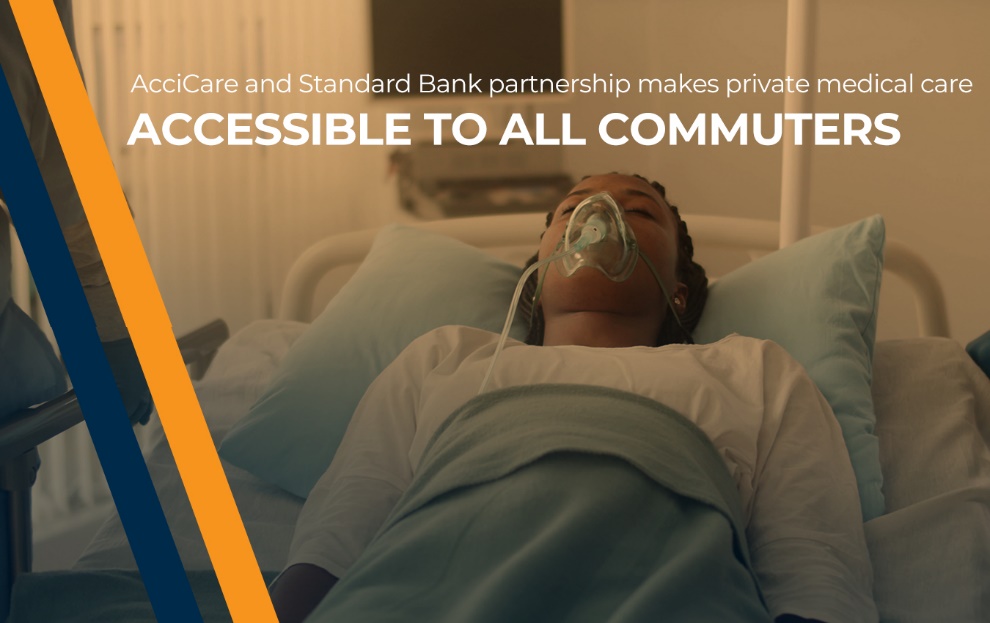
AcciCare and Standard Bank Partnership Makes Private Medical Care Accessible to all Commuters

Public transport is used by more than 10 million commuters in South Africa every day. It’s how people get to work, how they get to the grocery store, how they get their children to school. It’s quite simply a way of life.

For many of these commuters, there is no alternative to minibus taxis. They are an indisputably dominant pillar of the informal public transport system, but they are also notoriously unsafe. The constant threat of an accident is a real concern for commuters, especially those who cannot afford private medical aid.

“We live in a country where 73% of the population doesn’t have access to private medical aid. Couple this with the high number of road accidents in South Africa, and what recourse do the vast majority of commuters have if they are involved in a road accident?” asks Rikus Scheepers, managing director at AcciCare Medical Service Providers.

AcciCare is a medical funding company that assists people who do not have medical aid, to get access to private hospital care when they are involved in a motor vehicle accident. Scheepers started AcciCare in 2017, with the intention of making private medical care accessible to all commuters.

“We started AcciCare in a few hospitals and had limited capital to work with but soon realised the extensive need for this type of service. As a start-up without a long trading history, it became impossible to grow the business to meet the demand. We needed a business partner who shared our vision to supply this essential service throughout the country, and so we approached Standard Bank,” says Scheepers.

“AcciCare is a unique concept not offered in South Africa,” says Jocelyn Hamilton at Standard Bank. “When they approached us for finance we had to apply some out-the-box thinking in order to provide a working capital solution that would enable the business to grow and expand into more provinces in the country.”

In the event a person is injured in a motor vehicle accident, AcciCare will assist treating doctors and hospitals to collect and complete the correct documentation in order for medical costs to be claimed back from the Road Accident Fund (RAF). AcciCare provides financial assistance to these service providers, so they don’t carry the costs while waiting for the RAF to settle accounts.

“We firmly believe that all commuters should have access to private medical care when they need it the most. Through our partnership with Standard Bank we are expanding our footprint and we have exciting initiatives in place for 2023, to educate more people about the reliable private care that is available to them,” says Scheepers. “Together with Standard Bank, AcciCare has saved countless lives and has significantly improved the quality of life of those who have unfortunately been involved in a motor vehicle accident.”

“Our business banking model is centred on partnering with clients to grow their businesses in the communities in which they exist. While we came in as a working capital solution that would see AcciCare achieve their vision, in return we indirectly partnered in improving the long-term quality of life for those unfortunate enough to be in need of medical care at critical times. We hope to continue with this partnership, as they take their business to new heights,” says Hamilton.

Act Now to Stop the Bleed on Medical Schemes Industry

By Junior Biola

Last year, fraud and abuse of medical aids resulted in a loss of R22 billion for medical scheme funds according to The Board of Healthcare Funders – a loss which could be avoided with the implementation of fraud mitigation services.

Medical aid fraud is certainly nothing new: for years, medical schemes have railed against members collaborating with medical practitioners – from doctors to pharmacists – for personal gain. There are the members who convince practitioners to admit them to hospital, for example, and pocket the monies received from their hospital cash back plans; the pharmacists who bill their customers for ‘medicine’, when their baskets are in fact filled with non-medicinal items; or even the practitioners who bill patients for treatments which never take place.

Since the advent of the Covid pandemic, such activities have escalated. In fact, it is no longer rogue pharmacists or practitioners taking advantage of medical aids; the industry is now affected by dishonest members and criminals using stolen cards to deplete medical savings accounts or take advantage of benefits.

The results are catastrophic for an industry which is frequently accused of charging members exorbitant fees. In truth, players are under siege from the steeply rising costs of healthcare, and while they are doing their best to limit the impact on members, this is no easy task when those very members are, in effect, stealing from the scheme through fraudulent claims.

The impacts are far-reaching for all stakeholders. Medical funds have no choice but to raise the price of contributions – after all, they need to maintain a steady pool of funds in order to be able to pay out claims, and if members are dipping into that pool for illicit reasons, it needs to be replenished. Naturally, this affects members severely, especially as many are already challenged by the rising cost of living. On the other side of the equation, practitioners also take a hit: when the pool of medical funds decreases, a less profitable practice is inevitable.

The prevalence of fraud is understandable when you consider that few controls are in place to prevent it. Think of the average consumer entering a retail chain pharmacy, for example: they may be asked to present their loyalty card, and while this may be considered a form of identification, the reality is that it is rather ineffective as a verification tool. The absence of an identification photo means that the purchaser could well be someone besides the patient for whom the script was written; nor is there anything to stop them from adding over-the-counter items to purchase and claiming them from their savings.

The good news? Fraud mitigation is both effective, and simple to implement. Establishing a ‘safety net’ of identity and biometric recognition makes it possible for medical schemes to ensure that members claim only for medicines and treatments they have been prescribed, while also protecting against scripts that have been falsified.

The result? A healthier medical aid industry – for the benefit of all.

Junior Biola is CEO of Johannesburg-based fintech company, Bitventure, a provider of state-of-the-art real-time automated verification and payment solutions. www.bitventure.co.za

Will NHI Mean the End of Medical Aid in South Africa?

Once again, concerns are being raised over the implementation of the proposed National Health Insurance (NHI) scheme. This time, it is over the future of private healthcare and medical aid under the contentious Section 33 of the Bill.

Many previous discussions have focused on the NHI’s affordability, accountability, the potential mass flight of healthcare professionals from the country, and even whether NHI is even possible to achieve given South Africa’s challenges.

In a new healthcare stakeholder opinion report [PDF] published by Section 27 and the Concentric Alliance on Monday, 20 June, it is noted that private healthcare is a major contributor to the economy. May public and private sector respondents believe it could play a significant role in achieving health reform thanks to its resources and capacity.

However, Section 33 of the NHI Bill states that medical schemes may only provide “cover that constitutes complementary or top-up cover and that does not overlap with the personal health care service benefits purchased by the National Health Insurance Fund on behalf of users”.

This basically means medical schemes which are not gap cover will no longer operate – something which does not sit well with the private sector respondents in the report, who argue that even in countries with the best developed public health systems, private healthcare funders still exist.

A carrot vs stick approach

An academic respondent suggested incentivising people into switching to a public healthcare funder, rather than removing private healthcare funding. A private sector respondent also suggested the idea of competition with private funders as a means to improve the NHI’s efficiency. Indeed, it may even be necessary the NHI to function well.

The report makes note of Section 33 of the NHI Bill becoming “something of a hill to die on”. The report says that “During the six-a-side engagements between Business Unity and the National Department of Health, urgent discussions on NHI were nearly derailed by demands that Section 33 be re-opened for discussion and one respondent in the NDOH stating that the Bill was now before parliament. This respondent stated that they would rather see this point litigated, than back down. The current approach to this draft provision has the potential to undermine the implementation of the NHI and delay urgent reform to the health system.”

A Trend of Amalgamations is Underway for Medical Schemes

Image by Gustavo Fring on Pexels

A trend of amalgamations is underway in the South African private healthcare industry, in the face of growing challenges and the impending introduction of National Health Insurance (NHI).

Escalating healthcare inflation and costs, a declining and ageing membership, the impact of the COVID pandemic and a growing burden of disease are all impacting the not-for-profit Medical Scheme industry, which is highly regulated.

Medical scheme consolidation is one of the prominent trends, particularly given the prospect of NHI on the horizon, where smaller schemes will not compete, said Lee Callakoppen, principal officer of Bonitas Medical Fund.

The Council for Medical Schemes (CMS) advises that schemes that cannot compete sustainably on price should consider amalgamation partners, Callakoppen said.

“The trend towards amalgamations is not only for the sustainability of the medical scheme but for the benefit of members who ‘own’ the fund’.

“It is not only the call from CMS for schemes to join forces but also strict regulations around minimum solvency ratios and reserves which are more difficult for smaller schemes to maintain.”

It is a requirement of the Medical Schemes Act that medical schemes shall at all times maintain their business in a financially sound condition. They need to have sufficient assets for conducting business, providing for liabilities and having the prescribed solvency requirements of 25%, said Callakoppen.

“It’s a big ask for small schemes in this volatile and uncertain healthcare market,” he said.

A trend of amalgamation for small schemesThe CMS provides regulatory supervision of more than 80 medical schemes registered in the country and oversees amalgamation prospects.

One proviso for amalgamation is that schemes should complement each other and provide a more comprehensive offering to members.

“One clear indicator of risk is the size of the pool of lives being covered,” said Callakoppen. “Schemes with smaller risk pools are struggling to survive and experience more volatile claims”.

“Amalgamation into a bigger scheme means cross-subsidisation of costs. It is a trend I believe will continue, if not accelerate. In fact, in the past decade, we have seen 28 amalgamations approved by the CMS and the Competition Commission.”

The NHI has been criticised for potentially stifling innovation in healthcare, as well as not actually being able to fix the country’s flawed and unequal healthcare system.

Source: BusinessTech