
Tag: gut microbiota

Reduced Intestinal Bacterial Diversity in IBS Sufferers
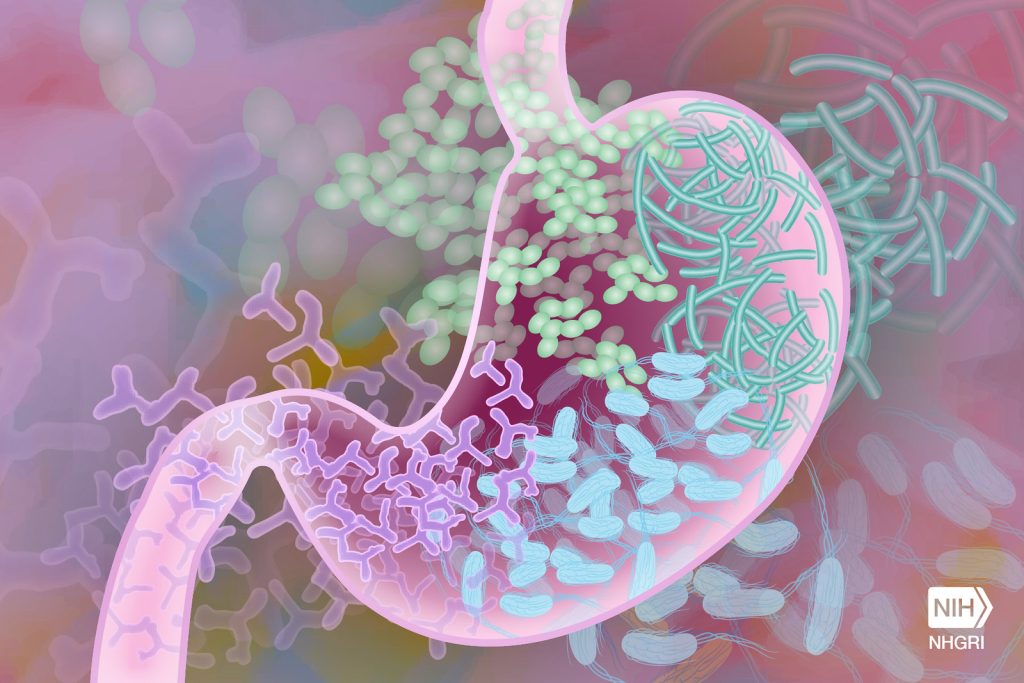
Gut microbiome. Credit: Darryl Leja, NIH

People with irritable bowel syndrome (IBS) have lower bacterial diversity in the intestine than do healthy people, according to research appearing in Microbiology Spectrum. The investigators believe that theirs is the first analysis to find a clear association between IBS and reduced diversity in the microbiota of the gut. The an open-access journal of the American Society for Microbiology.

Normally, “More than 10 000 species of microorganism live in the human intestine,” said corresponding author Jung Ok Shim, MD, PhD, a professor at Korea University College of Medicine. Disruption of the microbiome of the human gastrointestinal tract can trigger IBS. Typically, IBS causes bloating, diarrhoea, and stomach pain or cramps.

Previous studies of gut bacteria in patients with IBS have been controversial, with inconsistent results, due to small sample size and lack of consistent analytical methods used among these studies, said Shim. The investigators combined their own dataset with 9 published, shared datasets, encompassing 576 IBS patients and 487 healthy controls, analysing them with a “unified data processing and analytical method.”

The researchers found that the gut bacterial community is less diverse in IBS patients than in healthy people, said Shim. Additionally, the abundance of 21 bacterial species differed between IBS patients and healthy controls. However, the findings were not statistically significant in the paediatric cohort due to small sample size.

The investigators proved that the disturbed gut bacterial community “is associated with IBS, though this does not mean that the relationship is causal,” said Shim. “Functional studies are needed to prove whether the change in gut micro-organisms contributes to development of IBS.”

Even though IBS is a common disorder, its pathogenesis remains unknown, and as yet there is no effective treatment strategy. “Based on the epidemiological studies of IBS patients, altered gut microbiota was proposed as one of the possible causes of IBS,” the researchers write. “Acute bacterial gastroenteritis can cause chronic, asymptomatic, low-grade intestinal wall inflammation sufficient to alter neuromuscular and epithelial cell function.”


Source: American Society for Microbiology

Gut Bacteria may Contribute to Type 2 Diabetes

Gut microbiome. Credit: Darryl Leja, NIH

One type of bacteria found in the gut may contribute to the development of Type 2 diabetes, while another may protect from the disease, according to a study published in the journal Diabetes.

The study found people with higher levels of a bacterium called Coprococcus tended to have higher insulin sensitivity, while those whose microbiomes had higher levels of the bacterium Flavonifractor tended to have lower insulin sensitivity.

Studies of the gut microbiome have found that people who don’t process insulin properly have lower levels of a certain type of bacteria that produce a type of fatty acid called butyrate.

Mark Goodarzi, MD, PhD, the director of the Endocrine Genetics Laboratory at Cedars-Sinai, is leading an ongoing study that is following and observing people at risk for diabetes to learn whether those with lower levels of these bacteria develop the disease.

“The big question we’re hoping to address is: Did the microbiome differences cause the diabetes, or did the diabetes cause the microbiome differences?” said Goodarzi, who is the senior author of the study and principal investigator of the Microbiome and Insulin Longitudinal Evaluation Study (MILES).

An earlier cohort study from the MILES trial found that birth by caesarean section is associated with a higher risk for developing prediabetes and diabetes. For the present study, investigators analysed data from 352 people without known diabetes.

Study participants were asked to attend three clinic visits and collect stool samples prior to the visits. Investigators analysed data collected at the first visit. They conducted genetic sequencing on the stool samples, for example, to study the participants’ microbiomes, and specifically look for bacteria that earlier studies have found to be associated with insulin resistance. Each participant also filled out a diet questionnaire and took an oral glucose tolerance test, which was used to determine ability to process glucose.

Investigators found 28 people had oral glucose tolerance results that met the criteria for diabetes. They also found that 135 people had prediabetes, a condition in which a person’s blood-sugar levels are higher than normal but not high enough to meet the definition of diabetes.

The research team analysed associations between 36 butyrate-producing bacteria found in the stool samples and a person’s ability to maintain normal levels of insulin. They controlled for factors that could also contribute to a person’s diabetes risk, such as age, sex, body mass index and race. Coprococcus and related bacteria formed a network of bacteria with beneficial effects on insulin sensitivity. Despite being a producer of butyrate, Flavonifractor was associated with insulin resistance; prior work by others have found higher levels of Flavonifractor in the stool of people with diabetes.

Investigators are continuing to study samples from patients who participated in this study to learn how insulin production and the composition of the microbiome change over time. They also plan to study how diet may affect the bacterial balance of the microbiome.

Goodarzi emphasised, however, that it is too early to know how people can change their microbiome to reduce their diabetes risk.

“As far as the idea of taking probiotics, that would really be somewhat experimental,” said Goodarzi, who is also the Eris M. Field Chair in Diabetes Research at Cedars-Sinai. “We need more research to identify the specific bacteria that we need to be modulating to prevent or treat diabetes, but it’s coming, probably in the next five to 10 years.”

Source: Cedars-Sinai Medical Center

Graphene Nanomaterial can Affect the Immune System

Gut microbiome. Credit: Darryl Leja, NIH

The nanomaterial graphene oxide – used in everything from electronics to sensors for biomolecules – can indirectly affect the immune system via the gut microbiome, as shown by a study in the journal Nature Nanotechnology.

“This shows that we must factor the gut microbiome into our understanding of how nanomaterials affect the immune system,” says the paper’s corresponding author Bengt Fadeel, professor at Karolinska Institutet. “Our results are important for identifying the potential adverse effects of nanomaterial and mitigating or preventing such effects in new materials.”

Graphene is an extremely thin material, a million times thinner than a human hair. It comprises a single layer of carbon atoms and is stronger than steel yet flexible, transparent, and electrically conductive. This makes it extremely useful in a multitude of applications, including in ‘smart’ fabrics equipped with wearable electronics and as a component of composite materials, to enhance the strength and conductivity of existing materials.

With increasing use of graphene-based nanomaterials comes a need to examine how these new materials affect the body. Nanomaterials are already known to impact on the immune system, and a few studies in recent years have shown that they can also affect the gut microbiome.

The relationship between nanomaterial, gut microbiome and immunity has been the subject of this zebrafish study. The nanomaterial investigated was graphene oxide, which can be described as a relative of graphene that consists of carbon atoms along with atoms of oxygen. Unlike graphene, graphene oxide is soluble in water and of interest to medical research as, for example, a means of delivering drugs in the body.

In the study, the researchers exposed adult zebrafish to graphene oxide via the water and analysed how it affects the composition of the microbiome. They used both normal fish and fish lacking a receptor molecule in their intestinal cells called the aryl hydrocarbon receptor, commonly abbreviated as AhR, a receptor for various endogenous and bacterial metabolites.

AhR affected the gut microbiome

“We were able to show that the composition of the gut microbiome changed when we exposed the fish to graphene oxide, even at a low dose, and that the AhR also affected the gut microbiome,” says the study’s first author Guotao Peng, postdoc researcher at the Institute of Environmental Medicine at Karolinska Institutet.

The researchers have also generated zebrafish larvae that completely lack a natural gut microbiome, which makes it possible to study the effects of individual microbiome components, in this case butyric acid (a fatty acid), which is secreted by certain types of gut bacteria. Butyric acid is known to be able to bind to AhR.

Doing this, the researchers found that the combination of graphene oxide and butyric acid gave rise to so-called type 2 immunity in the fish. The effect turned out to be dependent on the expression of AhR in the intestinal cells.

“This type of immunity is normally seen as a response to parasitic infection. Our interpretation is that the gut immune response can handle graphene oxide in a similar way to how it would handle a parasite,” says Guotao Peng.

Using an advanced method for mapping the immune cells, the researchers were also able to show that a component of the immune system called innate lymphoid cells are found in zebrafish larvae.

“This shows that the zebrafish is a good model for studying the immune system, including the primitive or innate immune system,” says Bengt Fadeel.

Source: Karolinksa Institutet

Non-nutritive Sweeteners Impact Human Glycaemic Responses

Photo by Amit Lahav on Unsplash

Since the late 1800s, non-nutritive sweeteners have been used to provide sweetness without sugar. Long been believed to have no effect on the human body, researchers reporting in the journal Cell now challenge this notion by finding that these sugar substitutes are not inert, and, in fact, some can alter human consumers’ microbiomes and thereby their glycaemic responses – albeit in a highly individualised fashion.

Previous research has already found found that non-nutritive sweeteners affected the microbiomes of mice in ways that could impact their glycaemic responses, something which the same researchers now investigated in humans.

To address this important question, the research team carefully screened over 1300 individuals for those who strictly avoid non-nutritive sweeteners in their day-to-day lives, and identified a cohort of 120 individuals. These participants were broken into six groups: two controls and four who ingested well below the FDA daily allowances of either aspartame, saccharin, stevia, or sucralose.

“In subjects consuming the non-nutritive sweeteners, we could identify very distinct changes in the composition and function of gut microbes, and the molecules they secret into peripheral blood. This seemed to suggest that gut microbes in the human body are rather responsive to each of these sweeteners,” said senior author Eran Elinav, an immunologist and microbiome researcher. “When we looked at consumers of non-nutritive sweeteners as groups, we found that two of the non-nutritive sweeteners, saccharin and sucralose, significantly impacted glucose tolerance in healthy adults. Interestingly, changes in the microbes were highly correlated with the alterations noted in people’s glycaemic responses.”

To prove the microbiomes were responsible, the researchers transferred microbial samples from the study subjects to mice that have been raised in completely sterile conditions, with no microbiome of their own.

“The results were quite striking,” explained Elinav. “In all of the non-nutritive sweetener groups, but in none of the controls, when we transferred into these sterile mice the microbiome of the top responder individuals collected at a time point in which they were consuming the respective non-nutritive sweeteners, the recipient mice developed glycaemic alterations that very significantly mirrored those of the donor individuals. In contrast, the bottom responders’ microbiomes were mostly unable to elicit such glycaemic responses,” he added. “These results suggest that the microbiome changes in response to human consumption of non-nutritive sweetener may, at times, induce glycaemic changes in consumers in a highly personalised manner.”

Elinav says that he expects the effects of the sweeteners will vary across individuals because of how unique our microbiomes are. “We need to raise awareness of the fact that non-nutritive sweeteners are not inert to the human body as we originally believed. With that said, the clinical health implications of the changes they may elicit in humans remain unknown and merit future long-term studies.”

“In the meantime, we need to continue searching for solutions to our sweet tooth craving, while avoiding sugar, which is clearly most harmful to our metabolic health,” says Elinav. “In my personal view, drinking only water seems to be the best solution.”

Source: Science Daily

Researchers Uncover Major Contributor to Alzheimer’s Disease

Gut microbiome. Credit: Darryl Leja, NIH

Research reports for the first time a pathway that begins in the gut and ends with a potent pro-inflammatory toxin in brain cells contributing to the development of Alzheimer’s disease (AD). Results are published in Frontiers in Neurology, where the researchers also report a simple way to counter the process.

The researchers, led by Drs Yuhai Zhao and Walter J Lukiw, found evidence that a molecule containing a very potent microbial-generated neurotoxin (lipopolysaccharide or LPS) derived from the Gram-negative bacteria Bacteroides fragilis in the human gastrointestinal (GI) tract generates a neurotoxin known as BF-LPS.

“LPSs in general are probably the most potent microbial-derived pro-inflammatory neurotoxic glycolipids known,” explained Dr Lukiw. “Many laboratories, including our own, have detected different forms of LPS within neurons of the Alzheimer’s disease-affected human brain.”

The researchers detailed the pathway of BF-LPS from the gut to the brain and its mechanisms of action once there. BF-LPS leaks out of the GI tract, crosses the blood brain barrier via the circulatory system, and accesses brain compartments. Then it increases inflammation in brain cells and inhibits neuron-specific neurofilament light (NF-L,) a protein that supports cell integrity. A deficit of this protein leads to progressive neuronal cell atrophy, and ultimately cell death, as is observed in AD-affected neurons. They also report that adequate intake of dietary fibber can head off the process.

The novel features of this newly described pathological pathway are threefold. The AD-stimulating pathway begins in the gut microbiome and therefore is very “locally sourced” and active throughout our lives. The highly potent neurotoxin BF-LPS is a natural by-product of gut-based microbial metabolism. Bacteroides fragilis abundance in the microbiome, which is the source of the neurotoxin BF-LPS, can be regulated by dietary fiber intake.

“Put another way, dietary-based approaches to balance the microorganisms in the microbiome may be an attractive means to modify the abundance, speciation, and complexity of enterotoxigenic forms of AD-relevant microbes and their potential for the pathological discharge of highly neurotoxic microbial-derived secretions that include BF-LPS and other forms of LPS,” Dr Lukiw explained.

The researchers conclude that an improved understanding of the interaction between the Gut–Brain axis and the gut microbiome and Alzheimer’s disease has considerable potential to lead to new diagnostic and therapeutic strategies in the clinical management of Alzheimer’s disease and other lethal, progressive, and age-related neurodegenerative disorders.

Source: Louisiana State University Health Sciences Center

Gut Microbes Could Explain Some of Red Meat’s Added Cardiovascular Risk

Photo by José Ignacio Pompé on Unsplash

Part of the higher risk of cardiovascular disease associated with red meat consumption could be from metabolites produced by gut microbes, suggests new research published in Arteriosclerosis, Thrombosis, and Vascular Biology (ATVB).

“Most of the focus on red meat intake and health has been around dietary saturated fat and blood cholesterol levels,” said co-lead author of the study Meng Wang, PhD. “Based on our findings, novel interventions may be helpful to target the interactions between red meat and the gut microbiome to help us find ways to reduce cardiovascular risk.”

Previous research has found that certain metabolites are associated with a greater risk of cardiovascular disease. One of these is trimethylamine N-oxide (TMAO), which is produced by gut bacteria to digest red meat that contains high amounts of the chemical L-carnitine.

High blood levels of TMAO in humans may be linked to increased risks of CVD, chronic kidney disease and Type 2 diabetes. However, whether TMAO and L-carnitine-derived metabolites was linked to cardiovascular disease and to what extent, are still unknown.

To find out, the study researchers measured levels of the metabolites in blood samples. They also examined whether blood sugar, inflammation, blood pressure and blood cholesterol may account for the elevated cardiovascular risk associated with red meat consumption.

Study participants included nearly 4000 of the 5888 adults initially recruited from 1989 to 1990 for the Cardiovascular Health Study (CHS). The participants selected for the current study were free of clinical cardiovascular disease at time of enrolment in the CHS, an observational study of risk factors for cardiovascular disease in adults aged 65 or older. The CHS follows 5 888 participants, whose average age at enrolment was 73; nearly two-thirds were female and 88% of participants self-identified as white. The median follow-up time for participants was 12.5 years, and up to 26 years in some cases.  At follow-up appointment, participants’ medical history, lifestyle, health conditions and sociodemographic characteristics were assessed.

Several blood biomarkers were measured at the start of the study and again in 1996–1997. The fasting blood samples stored frozen at -80°C were tested for levels of several gut-microbiome linked to red meat consumption including TMAO, gamma-butyrobetaine and crotonobetaine.

Additionally, all study participants answered two validated food-frequency questionnaires about their usual dietary habits, including intake of red meat, processed meat, fish, poultry and eggs, at the start of the study and again from 1995 to 1996. For the first questionnaire, participants indicated how often, on average in the previous 12 months, they had eaten given amounts of various foods, ranging from “never” to “almost every day or at least five times per week,” based on medium portion sizes, which varied based on the food source. The second questionnaire used a ten-category frequency of average intake over the past 12 months, ranging from “never or less than once per month” to “six+ servings per day,” with defined standard portion sizes.

For the current analyses, the researchers compared the risk of cardiovascular disease among participants who ate different amounts of animal source foods (ie, red meat, processed meat, fish, chicken and eggs). They found that eating more meat, especially red meat and processed meat, was linked to a higher risk of atherosclerotic cardiovascular disease, an increased risk of 22% for 1.1 serving per day.

The increase in TMAO and related metabolites explained roughly one-tenth of this elevated risk, the authors said. They also noted that blood sugar and general inflammation pathways may help explain the links between red meat intake and cardiovascular disease. Blood sugar and inflammation also appear to be more important in linking red meat intake and cardiovascular disease than pathways related to blood cholesterol or blood pressure. Intake of fish, poultry and eggs were not significantly linked to higher risk of cardiovascular disease.

“Research efforts are needed to better understand the potential health effects of L-carnitine and other substances in red meat such as heme iron, which has been associated with Type 2 diabetes, rather than just focusing on saturated fat,” Dr Wang said. 

Source: American Heart Association

Ulcerative Colitis Treatment Fixes Inflammation in Gut Microbiota

Gut microbiome. Credit: Darryl Leja, NIH

Researchers have developed a new oral treatment for ulcerative colitis that takes the innovative approach of focusing on reducing inflammation in gut microbiota.

Published in Pharmaceutics, the study comprised a two-step approach to fighting ulcerative colitis. First, the researchers reduced inflammation in gut microbiota from a mouse using an anti-inflammatory drug candidate delivered by lipid nanoparticles. Then, they orally administered the end products of these treated microbiota to the same mouse, resulting in a new, effective way to prevent ulcerative colitis.

Studies have shown that irregular gut microbiota composition is linked to ulcerative colitis, and altering this composition can effectively treat a variety of chronic diseases, including ulcerative colitis. However, current methods such as faecal microbiota transplants carry a serious infection risk because they involve the transmission of drug-resistant organisms.

In this study, the researchers developed an organism-free strategy in which gut microbiota were altered in test tubes, and then microbiota-secreted metabolites were transferred back to the host. Analysis of faeces from mice with ulcerative colitis, researchers found that a natural lipid nanoparticle-encapsulated drug candidate modified the composition of inflamed gut microbiota, which were cultured outside of the host, and the secreted metabolites.

The researchers found that their M13/nLNP nano formulation shifted the inflamed microbiota composition toward being non-inflamed. This altered microbiota composition induced significant changes in secreted metabolites, and when these metabolites were fed to mice, they established strong protection against the formation of chronic inflammation.

“Our study demonstrates that modifying microbiota outside of the host using M13/nLNP effectively reshaped the microbial secreted metabolites,” commented Dr Didier Merlin, a professor at Georgia State University. “Oral transfer of these metabolites might be an effective and safe therapeutic approach for preventing chronic ulcerative colitis.”

“Our strategy to tackle the progression of ulcerative colitis might offer an alternative and complementary approach for better managing this disease,” said Dr Chunhua Yang, a research assistant professor at the Institute for Biomedical Sciences at Georgia State. “Although this study demonstrates the anti-inflammatory effects of metabolites modified outside of the organism, further investigations are required to characterise the specific bacteria that contribute to the anti-inflammatory metabolites and to identify anti-inflammatory metabolite structures.”

Source: Georgia State University

Intermittent Fasting May Aid Nerve Repair

A healthy neuron.
A healthy neuron. Credit: NIH

A new mouse study published in Nature showed that intermittent fasting changes gut bacteria, and increases the ability to recover from nerve damage. The fasting led to gut bacteria increasing production of 3-Indolepropionic acid (IPA), a metabolite which is required for regenerating axons.

The bacteria that produces IPA, Clostridium sporogenesis, is found naturally in the guts of humans as well as mice and IPA is found in human bloodstreams too, the researchers said. 

“There is currently no treatment for people with nerve damage beyond surgical reconstruction, which is only effective in a small percentage of cases, prompting us to investigate whether changes in lifestyle could aid recovery,” said study author Professor Simone Di Giovanni at Imperial College London.

“Intermittent fasting has previously been linked by other studies to wound repair and the growth of new neurons – but our study is the first to explain exactly how fasting might help heal nerves.”

The study assessed nerve regeneration of mice where the sciatic nerve, the longest nerve running from the spine down the leg, was crushed. Half of the mice underwent intermittent fasting (one day with food, one day without), while the other half ate freely. These diets continued for a period of 10 days or 30 days before their operation, and the mice’s recovery was monitored 24 to 72 hours after the nerve was severed. The regrown axons were about 50% greater in mice that had been fasting.

Prof Di Giovanni said, “I think the power of this is that opens up a whole new field where we have to wonder: is this the tip of an iceberg? Are there going to be other bacteria or bacteria metabolites that can promote repair?”

The researchers also studied how fasting led to this nerve regeneration. They found that there were significantly higher levels of specific metabolites, including IPA, in the blood of diet-restricted mice.

To confirm whether IPA led to nerve repair, the mice were treated with antibiotics to remove gut bacteria. They were then given gene-edited of Clostridium sporogenesis that could or could not produce IPA.

“When IPA cannot be produced by these bacteria and it was almost absent in the serum, regeneration was impaired. This suggests that the IPA generated by these bacteria has an ability to heal and regenerate damaged nerves,” Prof Di Giovanni said. 

Importantly, when IPA was administered to the mice orally after a sciatic nerve injury, regeneration and increased recovery was observed between two and three weeks after injury.

The next step is investigating spinal cord injuries in mice, along with seeing if more frequent IPA administrations increase its efficacy.

“One of our goals now is to systematically investigate the role of bacteria metabolite therapy.” Prof Di Giovanni said.

More studies will need to investigate whether IPA increases after fasting in humans and the efficacy of IPA and intermittent fasting as a potential treatment in people.

He said: “One of the questions that we haven’t explored fully is that, since IPA lasts in blood for four to six hours in high concentration, would administering it repeatedly throughout the day or adding it to a normal diet help maximise its therapeutic effects?”

Source: Imperial College

Dietary Fibre Shown to Protect Against Atopic Dermatitis

Research suggests that the gut-skin axis may have an influence on skin conditions. Photo by Romina Farias on Unsplash

A study published in Mucosal Immunology into the emerging gut-skin axis has found that microbial fermentation of dietary fibre in the gut can protect against atopic dermatitis. The research could potentially lead to novel treatments to prevent or treat allergies.

The Monash University led by Professor Ben Marsland showed that fermentation of fibre in the gut by bacteria and subsequent production of short chain fatty acids (SCFAs), in particular butyrate, protected against atopic dermatitis in mice.

Previous work had found that dietary fibre was connected to protection against flu through SFCAs activating cytotoxic T cells. SCFAs are also often found in sources including root vegetables such as chicory roots or the skins of citrus fruits

While it is well established that the gut microbiome shapes the immune system, the influence it has on the skin is less explored.

“Previous work from our group, and others, has focused on the local health benefits of SCFAs in the gut as well as at distal sites such as the lung and cardiovascular system,” Professor Marsland said. “We wondered if this might also extend to the skin, which is an area that has not really been investigated.

“People speculate that diet can influence skin health, but there is not a great deal of science behind this.”

The researchers fed mice a diet high in fermentable fibre or gave them purified SCFAs. “This treatment was profoundly protective against allergic skin inflammation,” Professor Marsland said.

They labelled the butyrate with isotopes and tracked it in the body, taking only minutes to reach the skin where it enhanced the metabolism of keratinocytes, priming them to mature and produce the key structural components required for a healthy skin barrier.

“The upshot of this was that the skin barrier was fortified against allergens – we were using house dust mite allergens – that would normally penetrate the skin barrier, activate the immune system and start an allergic reaction in these models,” he said.

“It turns out the immune system was secondary to this skin barrier function.”

Actively improving the skin barrier could have protective effects against environmental exposures that cause allergies and perhaps even other skin diseases which are underpinned by a damaged or weak skin barrier. SCFAs could be administered orally or directly on the skin as a cream, bypassing the gut, he said.

“The fact that short chain fatty acids can be given topically and are well-tolerated opens up possibilities for development of preventative strategies or disease-modifying interventions – that represents the most significant translational potential of our research.”

One possibility to explore is whether this could help children who are at risk of developing skin allergies that cascade towards food allergies and asthma, the so-called ‘Atopic March’.

Source: Monash University

Why Only Some Obese Patients Develop Diabetes

A 3D map of the islets in the human pancreas. Source: Wikimedia

Oregon State University researchers have used a new analytical method to shed light on an enduring mystery in type 2 diabetes: why some obese patients develop diabetes and others don’t. The reason is down to a genetic pathway linking diet and gut microbiota to macrophages and white adipose tissue. Their findings appear in the Journal of Experimental Medicine.

Type 2 diabetes is frequently associated with obesity. Ins some patients, that means insulin resistance. Later stages of the disease sees the pancreas producing insufficient insulin to maintain normal glucose levels.

In either case, hyperglycaemia is the result, which, if left untreated, impairs many major organs, sometimes to disabling or life-threatening degrees. Overweight status is a key risk factor for type 2 diabetes, often a result of eating too much fat and sugar in combination with low physical activity.

Associate Professors Andrey Morgun and Natalia Shulzhenko of OSU and Giorgio Trinchieri of the National Cancer Institute developed a novel analytical technique, multi-organ network analysis, to explore the mechanisms behind early-stage systemic insulin resistance.

The scientists sought to learn which organs, biological pathways and genes are playing roles.

The findings showed that a particular type of gut microbe leads to white adipose tissue containing macrophage cells associated with insulin resistance.

“Our experiments and analysis predict that a high-fat/high-sugar diet primarily acts in white adipose tissue by driving microbiota-related damage to the energy synthesis process, leading to systemic insulin resistance,” said Morgun. “Treatments that modify a patient’s microbiota in ways that target insulin resistance in adipose tissue macrophage cells could be a new therapeutic strategy for type 2 diabetes.”

The human gut microbiome is incredibly complex, comprising more than 10 trillion microbial cells from about 1000 different bacterial species.

Associate Profs Morgun and Shulzhenko, in earlier research developed a computational method, transkingdom network analysis, that predicts specific types of bacteria controlling the expression of mammalian genes connected to specific medical conditions such as diabetes.

“Type 2 diabetes is a global pandemic, and the number of diagnoses is expected to keep increasing over the next 10 years,” Associate Prof Shulzhenko said. “The so-called ‘western diet’ – high in saturated fats and refined sugars – is one of the primary factors. But gut bacteria have an important role to play in mediating the effects of diet.”

In the new study, the scientists made use of transkingdom network analysis and multi-organ network analysis. Mouse experiments examined the intestine, liver, muscle and white adipose tissue, and the molecular signature (gene expression) of white adipose tissue macrophages in obese human patients.

“Diabetes induced by the western diet is characterised by microbiota-dependent mitochondrial damage,” Associate Prof Morgun said. “Adipose tissue has a predominant role in systemic insulin resistance, and we characterised the gene expression program and the key master regulator of adipose tissue macrophage that are associated with insulin resistance. We discovered that the Oscillibacter microbe, enriched by a western diet, causes an increase of the insulin-resistant adipose tissue macrophage.”

The researchers add, however, that Oscillibacter is likely not the only microbial regulator for expression for the genetic pathway they discovered, while clearly instrumental, is probably not the only important pathway, depending on which gut microbes are present.

“We previously showed that Romboutsia ilealis worsens glucose tolerance by inhibiting insulin levels, which may be relevant to more advanced stages of type 2 diabetes,” Shulzhenko said.

Source: Oregon State University