Tag: covid vaccination

SA Daily COVID Vaccination Rate Plummets
Image by Quicknews

The daily COVID vaccination rate in South Africa plunged this week, prompting fears that the vaccination drive may be losing steam. This comes amid criticism around insufficient  information about vaccinations in more remote and impoverished communities.

Just 159 542 doses were administered on 20 September, the lowest weekday total since 13 August, when 147 307 jabs were given, according to government statistics.

That falls short of its target of 300 000 daily doses (which is yet to be obtained), and also the lowest since 18-to-35 year-olds became eligible for vaccines on 1 September.

As of Wednesday, 22 September South Africa has administered 16.56 million doses, but only 8.23 million of the country’s almost 40 million adults are fully vaccinated. Of those fully vaccinated, about 44% are the single-dose Johnson & Johnson vaccines.

To achieve 70% coverage of the adult population by December, a further 18 million adults will need to be vaccinated, noted health minister Dr Joe Phaahla.

In an address to the media on Friday, 17 September, Dr Phaahla said that the government is still focused on adult vaccinations, with the main priority being the 50 and older age group ahead of a possible year-end fourth wave. Dr Phaahla also noted the South African health regulator’s approval of Pfizer’s COVID vaccine for use for children 12 years and older, saying that the policy of vaccination of under 18s would be revisited based on the total number of adults vaccinated by the end of October.

“Even though we know the Pfizer vaccine has been approved [for children], we want to remain focused on the high-risk people as of now.

“If we can reach 70% of the 50+ age group when the next wave comes, our hospitals will not be as overwhelmed as they have been.”

Dr Phaahla added that the government is aware of pressure from schools for vaccinations of children. Other factors to be taken into account are the local government elections on 1 November — a possible super-spreader event — and a surplus vaccine supply to enable targeting under 18s.

“We think it will be very risky to be all over and start just vaccinating people everywhere. Let’s manage the schools,  and keep on pushing the elderly to get vaccinated.”

On Wednesday, 22 September, there were 2967 new COVID cases, with a case positivity rate of 7%. The total number of vaccinations on that day was slightly higher, but only stood at 187 003, short of the government’s goal of 300 000 per day. Of these, 110 847 were fully vaccinated, 45.3% from J&J doses.

Source: BusinessTech

Stockpiling Could Cause 241 Million Vaccine Doses to be Wasted

Image by Mika Baumeister on Unsplash

Analytics company Airfinity estimates the G7 and EU will have an excess of 1 billion vaccine doses by the end of 2021, of which 10% are expected to expire. 

When factoring the time taken to distribute and administer the doses in Lower Income Countries (LICs) and Lower Middle Income Countries (LMICs), the proportion rises. Many of these countries will refuse vaccines that don’t have at least a two month shelf life. Taking into account this two month shelf, 241 million doses could be wasted by the end of 2021, amounting to a quarter of the G7 and EU surplus stock. 

The available vaccines in the G7 and EU, together with already purchased doses and COVAX deliveries, are sufficient for LICs and LMICs to vaccinate 70% of their populations by May 2022. Airfinity estimates that total global COVID cases are likely to exceed 400 million by mid-2022 and immediately redistributing vaccines could potentially avert nearly 1 million deaths from the virus in that time frame. 

“Currently doses tend to get shared in low volumes, at short notice, and with shorter than ideal expiry dates – making it a huge logistical lift to allocate and deliver these to countries able to absorb them,” says Aurélia Nguyen, managing director of the COVAX facility.

Vaccine manufacturers are now making 1.5bn doses every month.

“They’re producing a huge number of doses. It has scaled up immensely over the last three or four months,” Dr Matt Linley, lead researcher at Airfinity, told BBC News.

“I don’t think it was necessarily rich countries being greedy, it’s more that they didn’t know which vaccines would work,” says Dr Linley. “So they had to purchase several of them.”

Airfinity hopes to show governments that there are enough vaccines to fulfil their needs, and thanks to this secure supply they can donate without stockpiling.

“They don’t want to be caught off guard,” said Agathe Demarais. “It’s also about domestic political pressure because part of the electorate would probably be very unhappy to see vaccines being donated, if there is a feeling that they’re still needed at home.”

Co-founder and CEO of Airfinity, Rasmus Bech Hansen said: “The world has witnessed two extraordinary scientific achievements in the pandemic: The fast development of highly effective vaccines and the unprecedented scale up of production.For the world to get the full benefit of this, our data shows, we need a third equally unprecedented achievement: A large scale, rapid, globally coordinated, science driven vaccination campaign.” 

Source: Airfinity

Menstrual Changes After COVID Vaccinations

Photo by Natracare on Unsplash

In an article in the BMJ, authors argue that menstrual changes after COVID vaccination are plausible and should be investigated. 

Listed common side effects of COVID vaccination include a sore arm, fever, fatigue, and myalgia. However, changes to periods and unexpected vaginal bleeding are not listed, and primary care clinicians and those in the reproductive health field are seeing more and more people who have experienced these events shortly after vaccination.

More than 30 000 reports of these events had been made to the UK;s surveillance scheme for adverse drug reactions by 2 September 2021, across all COVID vaccines currently offered.

Most post-vaccination changes to periods return to normal, and there is no evidence that COVID vaccination adversely affects fertility. In clinical trials, there were similar rates for unintended pregnancies in vaccinated and unvaccinated groups. In fertility clinics, fertility measures and pregnancy rates are similar in vaccinated and unvaccinated patients. The UK’s Medicines and Healthcare Products Regulatory Agency (MHRA) says that there are few reported that 

Menstrual changes have been reported after both mRNA and adenovirus vectored COVID vaccines, suggesting that, if there is a connection, it is likely to be a result of the immune response to vaccination rather than a specific vaccine component. Human papillomavirus (HPV) vaccinations have also been associated with menstrual changes. Indeed, the menstrual cycle can be affected by immune activation from various stimuli, including viral infection: one study found about a quarter of menstruating women with COVID experienced menstrual disruption.

Biologically plausible mechanisms linking immune stimulation with menstrual changes include immunological influences on the hormones driving the menstrual cycle or effects mediated by immune cells in the lining of the uterus, which are involved in the cyclical build-up and breakdown of this tissue. Research may also help understand the mechanism.

Though the period changes are short lived, there is need for adequate research. Vaccine hesitancy among young women is largely driven by false claims that COVID vaccines could harm their chances of future pregnancy. Failing to thoroughly investigate reports of menstrual changes after vaccination is likely to fuel these fears. If a link between vaccination and menstrual changes is confirmed, this information will allow people to plan for potentially altered cycles. Clear and trusted information is particularly important for those who rely on being able to predict their menstrual cycles to either achieve or avoid pregnancy.

In terms of management, the Royal College of Obstetricians and Gynaecologists and the MHRA recommend that anyone reporting a change in periods persisting over several cycles, or new vaginal bleeding after the menopause, should be managed according to the usual clinical guidelines for these conditions.

The authors conclude by stating there is an important lesson in that the effects of medical interventions on menstruation should not be an afterthought in future research. In clinical trials, participants are unlikely to report changes to periods unless specifically asked, so in future trials, information about menstrual cycles and other vaginal bleeding should be actively solicited.

Source: The BMJ

Nasal COVID Vaccines Will Greatly Reduce Transmission

Source: CDC on Unsplash

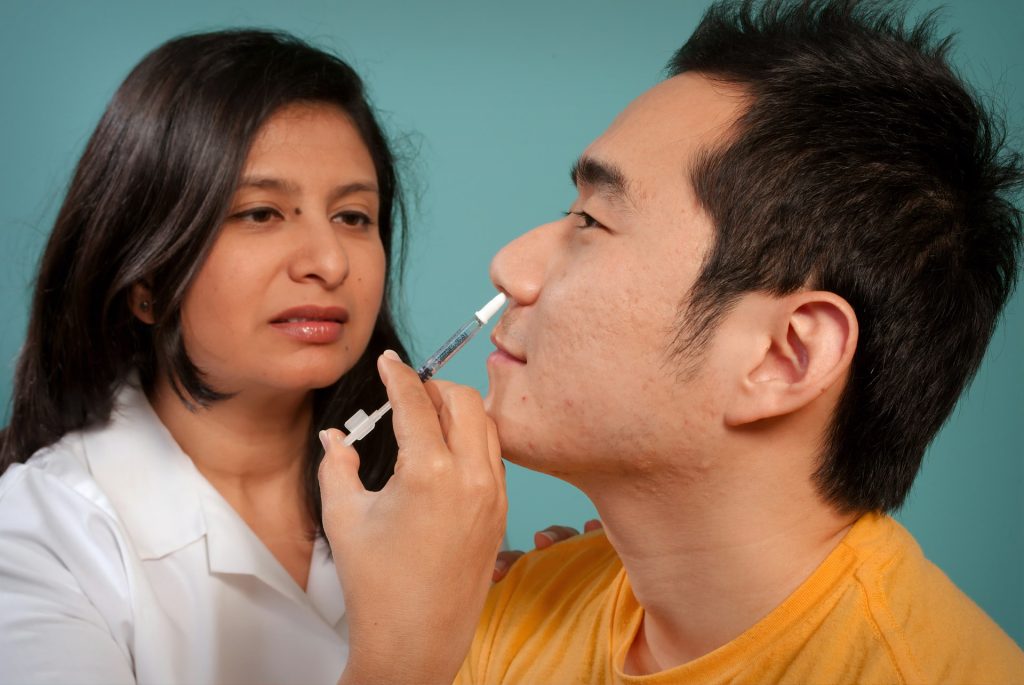
Though great progress has been made in developing intramuscular COVID vaccines, as yet nothing provides mucosal immunity in the nose, the first barrier against the virus encounters before it travels down to the lungs.

In terms of both immune cell deployment and immunoglobulin production, the mucosal immune system is by far the largest component of the entire immune system, having evolved to provide protection at the main sites of infectious threat: the mucosae.

In iScience, Navin Varadarajan, Professor of Chemical and Biomolecular Engineering, and colleagues, report the development of an intranasal subunit vaccine that provides durable local immunity against inhaled pathogens.

“Mucosal vaccination can stimulate both systemic and mucosal immunity and has the advantage of being a non-invasive procedure suitable for immunization of large populations,” explained Prof Varadarajan. “However, mucosal vaccination has been hampered by the lack of efficient delivery of the antigen and the need for appropriate adjuvants that can stimulate a robust immune response without toxicity.”

To get around this, Prof Varadarajan worked with Xinli Liu, associate professor of pharmaceutics, and an expert in nanoparticle delivery. Prof Liu’s team packaged the agonist of the stimulator of interferon genes (STING) inside liposomal particles to create an adjuvant called NanoSTING. 

“NanoSTING has a small particle size around 100 nanometres, which exhibits significantly different physical and chemical properties to the conventional adjuvant,” said Prof Liu.

“We used NanoSTING as the adjuvant for intranasal vaccination and single-cell RNA-sequencing to confirm the nasal-associated lymphoid tissue as an inductive site upon vaccination. Our results show that the candidate vaccine formulation is safe, produces rapid immune responses—within seven days—and elicits comprehensive immunity against SARS-CoV-2,” said Prof Varadarajan.

Intramuscular vaccines have a fundamental limitation in that they are not designed to elicit mucosal immunity. As shown in previous work with respiratory pathogens like influenza, sterilising immunity to virus reinfection requires adaptive immune responses in the respiratory system.

The nasal vaccine will also help the equitable global distribution of vaccines, according to the researchers. Many smaller countries have only vaccinated a small percentage of their population, and outbreaks continue. These outbreaks and viral spread are known to facilitate viral evolution, ultimately leading to decreased efficacy of all vaccines.

“Equitable distribution requires vaccines that are stable and that can be shipped easily. As we have shown, each of our components, the protein (lyophilised) and the adjuvant (NanoSTING) are stable for over 11 months and can be stored and shipped without the need for freezing,” said Prof Varadarajan.

Source: University of Houston

August Poll Results; 18-34s Upbeat on Vaccines

Photo by Mufid Majnun on Unsplash

To date, nearly 12 600 000 vaccinations have been administered in South Africa, with 23.66% of the adult population now fully vaccinated. Quicknews’ August poll revealed that 44% of site visitors felt that the government’s COVID vaccine rollout was “Acceptable”, while 51% felt it was either “Poor” or “Very Poor”. Only 5% rated it “Good” or “Very Good”.

The Department of Health’s COVID-19 and Vaccine Social Listening Report finds that the demand for vaccination had increased, with around 250 000 daily jabs, fuelled by a surge by the recent eligibility of the 18 – 34 age group. The report highlights include:

  • Social media conversations are more positive about the vaccine rollout with improved services, such as free transport and pop-up vaccination sites. Barriers to vaccination seem now to be more of an issue than vaccine hesitancy. It is noticeable that most anti-vax videos originated from other countries (especially the US), while most pro-vax are local (eg celebrating being vaccinated).
  • While vaccination is met with eagerness and discussion among the 18 – 34 age group, they also still appear to be the most vaccine-resistant age group, believing themselves to be healthy and not needing a vaccine. Discussion over whether vaccines should be mandatory is ongoing, eg to go to concerts, with some disinformation suggesting that it is already happening, and a sign of control by the state.
  • There has been increasing media coverage supportive to vaccines. The Department of Health’s vaccine demand acceleration plan has been met positively, as well as favourable coverage of the FDA’s full approval of the Pfizer vaccine. 
  • However, there are some negative views of the government’s vaccine prioritisation, and is seen as neglecting basic services such as sanitation and public transport. 
  • A WhatsApp survey run by Praekelt.org suggests that 90% of 4,000 people who had been vaccinated are willing to encourage others to do so. People reportedly have more rational concerns about vaccines (efficacy, side effects, developed so quickly, reports of deaths) and not the wilder conspiracy theories (eg tracking devices, depopulation).
  • Disinformation and problematic statements such as those from Rev Kenneth Meshoe vaccine-resistant statements and support for anti-vaxxers Dr Susan Vosloo and Prof Tim Noakes have undermined vaccine trust.
  • There is some debate over preferences over currently available vaccines or those that may be available later, eg Astra Zeneca, Sinovac. Confusion on reports that J&J second dose might be required and other booster shots.
  • The report notes some anti-vaccination sentiment in the Muslim community, with messages circulated that vaccines are haram (forbidden by Sharia law), though most Muslim authorities produce responsible evidence-based views.

Source: SA Coronavirus Portal

The Complex Web of South African Vaccine Hesitancy

Photo by Mika Baumeister on Unsplash

A review of surveys towards COVID vaccines in South Africa has revealed that there are multiple factors at work, with an underlying scepticism towards vaccines in general that appears to be growing in the very face of the pandemic.

The findings, published in Expert Review of Vaccines, highlight the multi-faceted and unique aspects of vaccine hesitancy in South Africa, such as men being more likely to reject a vaccine.

Vaccine hesitancy is not new; two years before the emergency of COVID the World Health Organization identified it as a top ten threat to health, underscored by outbreaks of preventable diseases such as measles.

A previous review of 126 surveys in 2020 found a global decline of COVID vaccine acceptance from 70% in March to 50% by October. Vaccine hesitancy has been an obstacle in South Africa for a long time: it was a factor in various measles outbreaks from 2003 to 2011, and it became more apparent during the nation-wide school HPV vaccination programme begun in 2014.

The researchers searched for surveys on COVID vaccine hesitancy in South Africa up until 15 March 2021, with sample sizes ranging from 403 to 75 518.

Unlike elsewhere, men are more hesitant
In a survey by Ask Africa, men were more likely to distrust vaccines (39%) than women (26%). Of the women who would refuse, there was a higher percentage who would  However, women were more likely to take the vaccine even if they thought it was unsafe. The authors cautioned that this result should be interpreted with caution; however, Department of Health deputy director Dr Nicholas Crisp also recently pointed this out, suggesting that more recent survey data helped inform his opinion.
Curiously, this is in contrast to other COVID studies and other vaccine studies in general, which indicate that women are more hesitant than men when it comes to vaccines in general. 

Age, race, education, geographical location
Three of the studies found that age may be important, with older adults having less concerns and/or being more accepting of COVID vaccination. 

The COVID-19 Democracy survey found that people 55 or older were more likely to take the vaccine (74%) compared to those 18 to 24 years old (63%).
The same survey found that white adults were the least likely racial group to accept vaccination, with only 56% willing to be vaccinated compared to 69% of black African adults. Education was another factor, with just 59% of tertiary educated people willing to be vaccinated compared to 72% of this who did not complete high school.

Council for Medical Schemes (CMS) survey found that vaccine acceptance was higher (83%) in urban suburban settings compared to other settings (73% and 78%).

Doubts about safety significant
Three rounds of Ipsos survey data showed a huge drop in acceptance from 64% in July/August and 68% in October to 53% in December. Of those not accepting, concern about side effects as a reason rose from 30% in October to 65% in December.

The Ask Afrika survey indicated that stopping the roll-out of the AstraZeneca vaccine early this year reduced both levels of trust in vaccine safety and confidence in the process. 

Of particular concern were several surveys indicating South African antipathy to all vaccines; in the Ipsos surveys, about a quarter refusing COVID vaccines were also opposed to vaccines in general. Thus, this hesitancy to COVID vaccines, the authors suggest, is just the tip of the iceberg of South African vaccine hesitancy.  Indeed, the Africa CDC survey indicated that at least one in five South Africans were less likely to get vaccinated in general than before the pandemic.

More research and targeted messaging needed
Overall, the authors found about a third of the adult South African public is hesitant towards COVID vaccines. Age, race, education, geographic locations and possibly gender all influence the social nature of vaccine acceptance in South Africa.

The authors conclude that responding to vaccine hesitancy, including COVID vaccine hesitancy, requires a better understanding of the often complex and multi-layered issues influencing vaccination views and practices, and tailoring interventions accordingly. Individualistic, decontextualised, and ‘one-size-fits-all’ approaches are unlikely to have great success.

Source: Expert Review of Vaccines

Govt Switches COVID Focus to Vaccine Access and Hesitancy

Image by Quicknews

As the official COVID death toll in South Africa passes the 80 000 mark, the Department of Health is now shifting focus to addressing flagging vaccine demand.

The department said this will include making access easier, such as vaccinating at shops or places of work.

Another change would be providing transportation to vaccine sites to help those in underprivileged areas. One option being looked into is the introduction of home vaccinations and ‘pop-up’ sites in rural areas where travel is harder to come by and at busy commercial areas such as shopping centres.

The government also hopes for assistance from the religious sector, with the possibility of churches offering vaccines on a Sunday. Mosques, synagogues and other places of worship would also offer a ‘familiar environment’ where people feel comfortable receiving a vaccine.

Public awareness
Social media will be heavily employed for vaccine promotion, and could incude online influencers and ambassadors to encourage vaccination.
This could extend to identifying ‘apolitical’ vaccine champions relevant to the target group who have also great influence, such as celebrities and traditional leaders.

A number of awareness initiatives are being considered, including making use of channels such as social media and teachers to provide information to young people and counteract misinformation, as well as more traditional media efforts such as radio slots and signage.

Vaccine skepticism high in men
Department of Health Deputy director-general Dr Nicholas Crisp, pointed out that South Africa has a particular problem with men not wanting to be vaccinated.

“This is not good,” Dr Crisp said. “It means that men are going to end up very sick and in hospital, and we don’t want that to happen just before Christmas.”

An Africa Centres for Disease Control and Prevention (ACDC) study found that 66% of men in South Africa were sceptical about vaccine safety compared to 74% of women.

Mandatory vaccinations on the cards
Health minister Dr Joe Phaahla warned of a very long road ahead as new cases continue to spike.

The ministerial advisory committee on COVID is now discussing the possibility of mandatory vaccination for certain groups of people, which could include healthcare workers and those professions spending time indoors with other people, according to the Sunday Times.

Scientists and health activists told the paper that the right to refuse a vaccine is outweighed by the health hazard of the pandemic.

The country would then be able to reopen and operate in a way as close as possible to the pre-COVID era, said leading vaccinologist Professor Shabir Madhi.

“In these settings, if people choose not to be vaccinated, they should be compelled to undergo testing every three or four days at their own expense,” he said.

While vaccinations don’t confer complete COVID protection, it is still significant, and more impactful if a greater proportion are vaccinated, Prof Madhi said.

Source: BusinessTech

SA’s Department of Tourism Aims to Join Vaccine Passport System

Image by Quicknews

The Department of Tourism says that it wants to introduce a vaccine passport for South Africa, but a number of international and legislative obstacles have to be overcome.

A lack of standardisation around vaccine passports worldwide is a key issue, said tourism director-general Nkhumeleni Victor Tharage in a briefing to Parliament on 17 August.

“Even in some jurisdictions that have opted to apply this (passport), there isn’t yet a sense of uniformity. When we don’t have a single, standardised specimen, it is a little bit difficult to say which one is which.

“If South Africa introduces (a passport), and there is access to information from the National Institute for Communicable Diseases (NICD) that confirms that a person has been vaccinated, the question is if that person arrives Lagos (Nigeria), what resources will they use to verify this information that is stored on a database in South Africa?”

South Africa has the same problem when it comes to verification of incoming tourists, Tharage said. The government was also cautious about introducing a vaccine passport system that is discriminatory against certain groups of people, he noted.

“When we reopen, and when everyone is starting to travel, it should not be discriminatory. And that principle has been reiterated time and time again.”

The vaccine passport could be a requirement for events, and Tharage said he was confident that this is something that the government could introduce with ease on short notice.

“At the end of the day, it’s about being able to get the necessary confidence from consumers, tourists and trade. If we don’t do that, then there will be a negative impact on our recovery.”

However, Department of Health spokesperson Foster Mohale affirmed that South Africa has no immediate plans to require proof of vaccination for any purpose.

Open for tourism
Transport minister Fikile Mbalula has said that his department is working with businesses to ensure that South Africa successfully reopens for international travel. Presenting his departmental budget speech at the end of May, Mbalula said that South Africa must ensure that it joins the increasing number of countries which accept the International Air Transport Association’s (IATA) mobile travel pass.

The travel pass is a mobile app that helps travellers store and manage their verified certifications for COVID tests or vaccines, and is more secure and efficient than current paper processes, IATA said. This is important given the potentially enormous scale of testing or vaccine verifications that the group must securely manage. IATA said it is looking to introduce further changes, such as QR code scanning by immigration officials.

Source: BusinessTech

Attaining Herd Immunity for COVID Now Unlikely

Image by Quicknews

In an article published in the South African Medical Journal, Shabir Madhi, Professor of Vaccinology at Wits, argues that COVID variants have made the initial goal of attaining herd immunity no longer feasible, even for well-resourced countries. However, vaccine protection against severe COVID seems a more realistic path to normalcy.

In low and middle income countries (LMICs), the official COVID case estimates are likely grossly underestimated, Prof Madhi writes, due to a lack of testing coverage. Even in South Africa, the true number of COVID cases is likely in the region of 10 times the 2.39 million recorded through testing. The true number of COVID-related deaths in India is also estimated as 3.4–3.9 million, again 10 times the official count, and in South Africa it is likely three times the official  figure of 70 388 in July 2021.

While New Zealand researchers have suggested that COVID eradication is feasible, it is likely a very long term goal if at all attainable. The herd immunity goal can be considered with the equation (p1 = 1 – 1/R0), where p1 is the proportion of immune individuals who will also no longer transmit the virus, and R0 is the reproduction rate, ie the number of susceptible individuals a single infected person can further infect. However, this ignores key aspects of the virus.

The problem is that the proportion of people that would need to be immunised to achieve herd immunity was initially calculated at 67%, based on an assumed R0 of 3, derived from the Wuhan strain’s R0 of 2.5 to 4. However, the Delta variant has an R0 of 6, meaning that to reach herd immunity, 84% of the population would need to be vaccinated. In South Africa, this would be 100% of the population aged over 12.

The emergence of SARS-CoV-2 variants, especially the Beta variant with the E484K mutation, showed that existing vaccine protection, including the Pfizer variant, can be degraded to an extent.

Studies have strongly suggested that neutralising and antibody titers are associated with mild to moderate COVID protection, while protection from severe COVID may be mediated by T-cell immunity.

Real world data showed that in Israel, with a world best immunisation of 61.6% using the Pfizer vaccine which produces the greatest antibody response, herd immunity appeared to be successful until an outbreak of the more transmissible Delta variant combined with waning vaccine effectiveness. 

However, in the UK, excess death data showed that, even with a resurgence of cases caused by the Delta variant, there was a significant decoupling of deaths from cases. This points to the effectiveness of vaccines in preventing severe illness, as opposed to reaching herd immunity.

Vaccine rollouts have therefore not interrupted COVID transmission. Prof Madhi concludes that, based on an estimated R0 of 6 for the Delta variant, “it is unlikely that any country could have a sustainable strategy for durable high level of protection against infection by the delta variant. Mutations of the SARS-CoV-2 genome are likely to continue resulting in enhanced transmissibility, infectiousness and resistance to neutralising activity.”

He observes that the “UK approach seemingly concedes that the goal of herd immunity, even in a highly resourced setting, is unattainable.”

He adds that aspiring to reach herd immunity by wealthy countries comes at the cost of exacerbating vaccine inequality, which he says “is immoral.”
Antibody dynamics modelling suggests that a booster would be required every 2–3 years to protect against severe COVID, and every 6–9 months to protect against moderate disease. This is a challenging goal, and likely unattainable for most LMICs, especially given the slow rate of vaccination in those settings.

Source: South African Medical Journal

Single COVID Vaccine Dose Enough For Previously Infected

Infected cell covered with SARS-CoV-2 viruses. Source: NIAID

In a small study, people with previous COVID infection were observed to have higher antibody levels after a single dose of Pfizer vaccine compared with uninfected people after two doses.

Furthermore, there was no increase in IgG levels after the second dose among those previously infected, possibly indicating that one dose of vaccine may be sufficient for this population, reported James Moy, MD, of Rush University Medical Center in Chicago, and colleagues  in a JAMA Network Open research letter.

“This study highlights the potential for recommending a single dose for previously infected individuals and may be useful for discussions surrounding vaccination strategy,” the authors wrote.

Whether to offer only a single dose of vaccine to those previously infected with COVID is a hot topic, with some experts conceding that previously infected individuals likely only need one dose, but would be challenging to implement.

Indeed, Dr Moy’s group urged performing “baseline serological testing” for previously infected individuals, but CDC and the agency’s Advisory Committee on Immunization Practices (ACIP) argued that this would be next to impossible to do for the entire country.

At a meeting in March, ACIP Chair José Romero, MD, voiced concern that the one-dose strategy would only work if individuals had sufficiently high antibody titers. If people had no or low antibodies, they may not have “enough memory B-cells to boost to levels that will be protective,” he said.

The researchers recruited adult participants at the team’s academic medical center, sorting them according toinfection status. Prior infection was established by a positive RT-PCR test and/or a positive SARS-CoV-2 antibody result. Overall, 30 participants had no evidence of infection, while 29 did.

The authors measured SARS-CoV-2 spike IgG levels at baseline and then after the first and second doses of the Pfizer vaccine among all participants.

There were no significant IgG differences between the first and second dose in previously infected individuals. Interestingly, four participants reported a previous positive COVID test via RT-PCR, but had no evidence of antibodies.

“Vaccine responses in these four participants resembled infection-naive individuals,” Moy’s group noted, adding that because this group did not develop S-protein antibodies, baseline testing should be required before forgoing a second dose.

The researchers said study limitations included the small sample size and lack of diversity of participants, as well as lack of neutralisation studies and T-cell response studies.

Source: MedPage Today