

Tag: brain–computer interface

Experimental Brain Implants are on the Rise. What Happens After the Trials are Over?
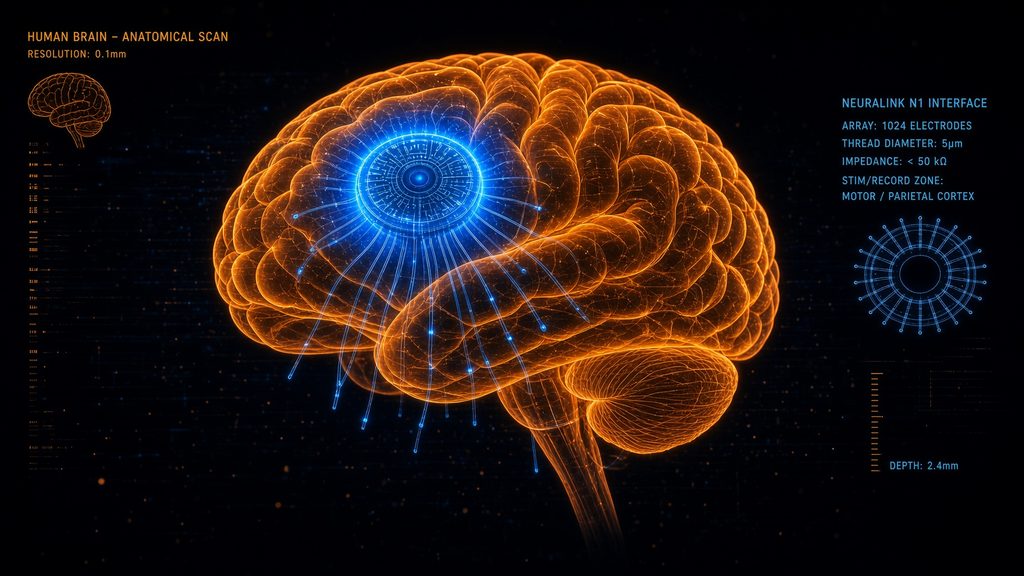
AI image created with Grok

Nathan Higgins, Monash University

In 2024, Elon Musk’s Neuralink put its first brain implant into a human amid doubt from scientists and allegations of animal cruelty.

Two and a half years later, that first patient is one of more than 20 “neuralnauts” who use their implants to participate in the online world.

Brain implants are becoming smaller, more compatible with human bodies, and dramatically more capable. People with paralysis can use brain-computer interfaces to produce speech almost instantaneously. Earlier this year, researchers in the United Kingdom showed volunteers wearing a headset could control robotic limbs and their natural ones at the same time.

As the industry takes off, we will see more and more clinical trials of devices that are implanted in the brain. In a recent study, my colleagues and I tried to address an increasingly important question: when a clinical trial of an experimental neural device ends, what does that mean for the human participants?

Tough questions

There is no simple answer. Some participants may be able to continue using an implanted device “off-label” as part of a special access scheme, or if the trial sponsor enrols participants into a follow-up study.

But if the trial sponsor is funded by a research grant or venture capital, they may not be able to cover the costs of potentially lifelong device support.

Participants may need to have their device removed at the end of the trial, even if they have benefited from it.

These scenarios are not hypothetical.

This is becoming a significant issue in Australia, where a new generation of neurotech companies is taking off.

Last year, Melbourne-based company EpiMinder received FDA authorisation to market their continuous seizure monitoring system for epilepsy.

Synchron has raised well over A$300 million for its “minimally invasive” endovascular brain-computer interface and has recently commenced its latest Australian clinical trial.

No rules, yet

Yet Australia currently has no rules about how trial organisers should be required to support participants for the long term.

Nor are there rules about how participants should be supported when trials are suspended or devices discontinued.

Current guidance offers little direction on what ethical arrangements should involve.

The Australian clinical trial handbook requires researchers to “clearly explain” whether participants will have continued access. However, this is difficult in practice.

Trials of implantable systems often last several years. This makes it difficult for participants to anticipate what their future needs and preferences will be once the trial comes to a conclusion.

Asking the experts

We brought together an expert panel of 24 clinicians, bioengineers, consultants, bioethicists and research governance professionals to develop recommendations on post-trial responsibilities in Australia.

If the sponsor is able to give participants the option of post-trial use, we recommend giving participants and their loved ones a realistic picture of what continued use will look like.

Which clinical and technical supports will remain available, and who will provide them? Will surgery and maintenance be covered by public healthcare or private health insurance? What costs might participants face themselves?

Years may pass before a device receives regulatory approval or becomes eligible for reimbursement. Participants should be provided with updates on changes to funding, regulatory status or manufacturers’ commercial plans that could affect their ongoing care.

This does not always happen in neurotechnology research. Transparency helps participants assess their participation and plan for life after the trial.

Geographic barriers

Geographic and socioeconomic factors also bear on continuing access to device support. Trials are often run from metropolitan teaching hospitals. Some participants may need to make repeated visits to the trial site for outpatient care or inpatient stays.

Flights and accommodation may need to be arranged for participants who must travel interstate, particularly as laws around psychosurgery vary between states. This can complicate access to local care.

We recommend anticipating barriers to continuing device use that may disproportionately affect some participants. During recruitment and study design, research teams should engage participants’ primary treating physicians to discuss what aspects of post-trial support can be safely (and lawfully) taken on locally.

Some procedures will still require specialist expertise, but sharing post-trial support could reduce travel costs and dependence on the original research team. Better treatment for pioneersThe end of a clinical trial should not mean losing access to a device when better planning and coordination between trial organisers could have made continued use possible.

Ultimately, these trial participants are pioneers who put their brains in researchers’ hands to help develop promising new treatments.

Nathan Higgins, Postdoctoral Research Fellow, Monash Bioethics Centre, Monash University

This article is republished from The Conversation under a Creative Commons license. Read the original article.
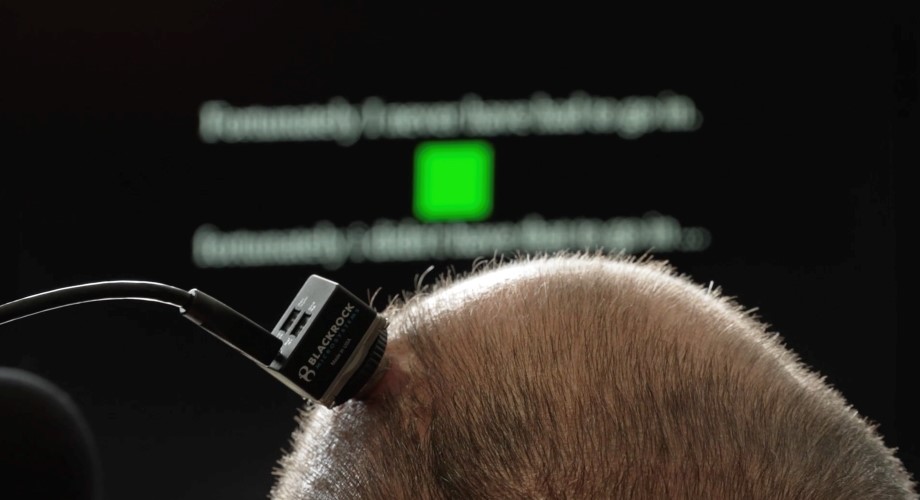
First-of-its-kind Technology Helps Man with ALS ‘Speak’ in Real Time

An investigational brain-computer interface (BCI) allows the study participant to communicate through a computer. Credit: UC Davis

Researchers at the University of California, Davis, have developed an investigational brain-computer interface that holds promise for restoring the ability to hold real-time conversations to people who have lost the ability to speak due to neurological conditions.

In a new study published in the scientific journal Nature, the researchers demonstrate how this new technology can instantaneously translate brain activity into voice as a person tries to speak – effectively creating a digital vocal tract with no detectable delay.

The system allowed the study participant, who has amyotrophic lateral sclerosis (ALS), to “speak” through a computer with his family in real time, change his intonation and “sing” simple melodies.

“Translating neural activity into text, which is how our previous speech brain-computer interface works, is akin to text messaging. It’s a big improvement compared to standard assistive technologies, but it still leads to delayed conversation. By comparison, this new real-time voice synthesis is more like a voice call,” said Sergey Stavisky, senior author of the paper and an assistant professor in the UC Davis Department of Neurological Surgery. Stavisky co-directs the UC Davis Neuroprosthetics Lab.

“With instantaneous voice synthesis, neuroprosthesis users will be able to be more included in a conversation. For example, they can interrupt, and people are less likely to interrupt them accidentally,” Stavisky said.

Decoding brain signals at heart of new technology

The man is enrolled in the BrainGate2 clinical trial at UC Davis Health. His ability to communicate through a computer has been made possible with an investigational brain-computer interface (BCI). It consists of four microelectrode arrays surgically implanted into the region of the brain responsible for producing speech.

These devices record the activity of neurons in the brain and send it to computers that interpret the signals to reconstruct voice.

“The main barrier to synthesising voice in real-time was not knowing exactly when and how the person with speech loss is trying to speak,” said Maitreyee Wairagkar, first author of the study and project scientist in the Neuroprosthetics Lab at UC Davis. “Our algorithms map neural activity to intended sounds at each moment of time. This makes it possible to synthesise nuances in speech and give the participant control over the cadence of his BCI-voice.”

Instantaneous, expressive speech with BCI shows promise

The brain-computer interface was able to translate the study participant’s neural signals into audible speech played through a speaker very quickly – one-fortieth of a second. This short delay is similar to the delay a person experiences when they speak and hear the sound of their own voice.

The technology also allowed the participant to say new words (words not already known to the system) and to make interjections. He was able to modulate the intonation of his generated computer voice to ask a question or emphasize specific words in a sentence.

The participant also took steps toward varying pitch by singing simple, short melodies.

His BCI-synthesized voice was often intelligible: Listeners could understand almost 60% of the synthesized words correctly (as opposed to 4% when he was not using the BCI).

Real-time speech helped by algorithms

The process of instantaneously translating brain activity into synthesized speech is helped by advanced artificial intelligence algorithms.

The algorithms for the new system were trained with data collected while the participant was asked to try to speak sentences shown to him on a computer screen. This gave the researchers information about what he was trying to say.

The electrodes measured the firing patterns of hundreds of neurons. The researchers aligned those patterns with the speech sounds the participant was trying to produce at that moment in time. This helped the algorithm learn to accurately reconstruct the participant’s voice from just his neural signals.

Clinical trial offers hope

“Our voice is part of what makes us who we are. Losing the ability to speak is devastating for people living with neurological conditions,” said David Brandman, co-director of the UC Davis Neuroprosthetics Lab and the neurosurgeon who performed the participant’s implant.

“The results of this research provide hope for people who want to talk but can’t. We showed how a paralyzed man was empowered to speak with a synthesized version of his voice. This kind of technology could be transformative for people living with paralysis.”

Brandman is an assistant professor in the Department of Neurological Surgery and is the site-responsible principal investigator of the BrainGate2 clinical trial.

Limitations

The researchers note that although the findings are promising, brain-to-voice neuroprostheses remain in an early phase. A key limitation is that the research was performed with a single participant with ALS. It will be crucial to replicate these results with more participants, including those who have speech loss from other causes, such as stroke.