
Tag: 6/10/26

Neurosurgery Samples Reveal New Drug Target for Alzheimer’s Disease

Promising anti-inflammatory drug target can block receptors in the brain and potentially dampen down pathways to major brain conditions

Photo by Natanael Melchor on Unsplash

Inflammatory conditions in the brain, including traumatic brain injury and degenerative diseases like Alzheimer’s could be targeted with an existing drug thanks to new research that shows it can work in brain cells.

In a study published in Brain, a team led by Professor Nicholas Barnes at the University of Birmingham has identified a critical receptor that when blocked inhibits neuroinflammation. This first-of-its-kind work with human brain tissue demonstrates how interrupting this pathway could open the door to treating a wide spectrum of chronic neurological conditions. These include not only traumatic brain injury (TBI), but also neurodegenerative diseases such as Alzheimer’s and Parkinson’s disease, and even psychiatric disorders such as depression and psychosis, these latter conditions are increasingly understood to have a neuroinflammatory component.

Using live cultures of human brain cells and slices of brain tissue obtained during neurosurgery, the researchers investigated the role of a receptor known as the P2X7 receptor, which is responsible for triggering inflammatory signalling.

This exciting discovery marks a major step toward repurposing existing therapeutics to combat neuroinflammation at its source. The identification of this receptor could have far-reaching implications for some of the most debilitating and widespread brain disorders

Professor Nicholas Barnes, Professor of Neuropharmacology

Their findings reveal that these P2X7 receptors drive the release of key proteins called cytokines involved in controlling inflammation. By blocking this receptor with a specific antagonist, the team was able to significantly reduce the inflammatory response in human brain tissue.

Professor Nicholas Barnes from the College of Medicine and Health at the University of Birmingham and corresponding author of the paper said: “This exciting discovery marks a major step toward repurposing existing therapeutics to combat neuroinflammation at its source. The identification of this receptor could have far-reaching implications for some of the most debilitating and widespread brain disorders such as Alzheimer’s Disease, Parkinson’s and Multiple Sclerosis, or inflammation-linked psychiatric conditions like schizophrenia and depression”.

Brain’s resident immune sentinels

In order to study how brain cells respond to and manage inflammation, the team developed a way of turning a type of white blood cell into microglia, replicating a normal cellular transformation that has recently been identified to occur in the brain as a natural part of human ageing. These microglia are the central coordinators of the immune system in the brain.

Using readily accessible human peripheral monocytes taken from blood samples, the researchers converted them into microglia-like cells that were used to see how microglia are likely to respond to the inflammation signals. Using the P2X7 receptor antagonist, the team were then able to interrupt the triggers that these microglia give off as they are damaged and die.

Professor Barnes said: “Studying human microglia has long been a major challenge: once removed from their native brain environment, they rapidly lose their defining characteristics, likely due to the absence of critical regulatory signals. Our approach involved the use of monocyte-derived microglia which provide a powerful, scalable, and virtually unlimited platform for studying human microglial biology with unprecedented precision.

“Having identified the response in the human monocyte-derived microglia, this provided the impetus to translate these findings with human brain obtained following neurosurgical procedures. This successful translation means the next stage for this research is the development of clinical trials in patients with neurodegenerative conditions and patients with TBI where there are no effective pharmacological treatments to reduce the neuroinflammation and arising damage.”

Source: University of Birmingham

A Few Licks of this Candy-coated Device Measures Medication Levels in Saliva

A few licks of the lollipop-like prototype collects enough saliva to test for paracetamol levels.

The red, peach-flavoured candy coating on Lollylab stimulates saliva production, and a sensor at the bottom analyses it for paracetamol. Adapted from ACS Sensors 2026, DOI: 10.1021/acssensors.6c00691

What if checking medication levels were as simple as enjoying a lollipop? A candy-coated device, called Lollylab, could provide the answer. In ACS Sensors, researchers describe how the lollipop’s stem transfers saliva to a sensor that measures acetaminophen levels. In an initial test, a peach-flavoured prototype reliably detected the pain reliever in six people’s saliva in less than two minutes. Participants also found it more comfortable and easier to use than traditional collection swabs.

Taking more than the maximum recommended dose of paracetamol can cause serious side effects, such as liver damage. This is especially concerning for children who can be at risk of an unintentional overdose at low levels of the medication. Because paracetamol concentrations in saliva closely reflect those in blood, Sina Khazaee Nejad, Maral Mousavi, and colleagues thought saliva could be a simple, noninvasive way to monitor the medication’s levels. 

Mousavi says they were inspired by the saliva sampling system CandyCollect — a lollipop-like device meant to replace throat swabs — but those specimens need to be analysed elsewhere. In this work, the researchers wanted to create a miniature laboratory-on-a-lollipop, or Lollylab. “By turning a familiar object like a lollipop into both a saliva collection device and a sensor, Lollylab can collect the sample and perform the measurement directly at the point of care,” says Nejad, the first author of the paper.

Lollylab is built from two plastic pieces (each with a round end and a thinner stem) snapped together, with holes at the top for saliva to enter through. The team coated the top of the device with a red, peach-flavoured edible candy shell, which did not interfere with measurements. Saliva flows through the glass fibre paper-lined lollipop stem toward a graphene sensor at the bottom, which measures acetaminophen levels as changes in electrical current. The prototype device detected acetaminophen in both artificial and human saliva.

As proof of concept, six adults used Lollylab before and an hour after taking a standard adult dose of paracetamol (650 milligrams). The device reliably measured the drug in the participants’ saliva in less than two minutes, and they said it was easy to use and more comfortable than typical saliva swabs.

“The main takeaway is that diagnostic testing can be made much easier and more comfortable, especially for children,” says Nejad. Next, the researchers plan to validate Lollylab’s paracetamol measurements with more participants, including children, and develop it to detect other substances in saliva such as naturally occurring stress markers. “Our longer-term goal is to create a multi-assay platform capable of measuring several biomarkers, which could then be evaluated alongside acetaminophen [paracetamol] in larger clinical studies.”

Source: American Chemical Society

Suspected Plague Incident Leaves 1 Dead, 200 under Quarantine in Siberia

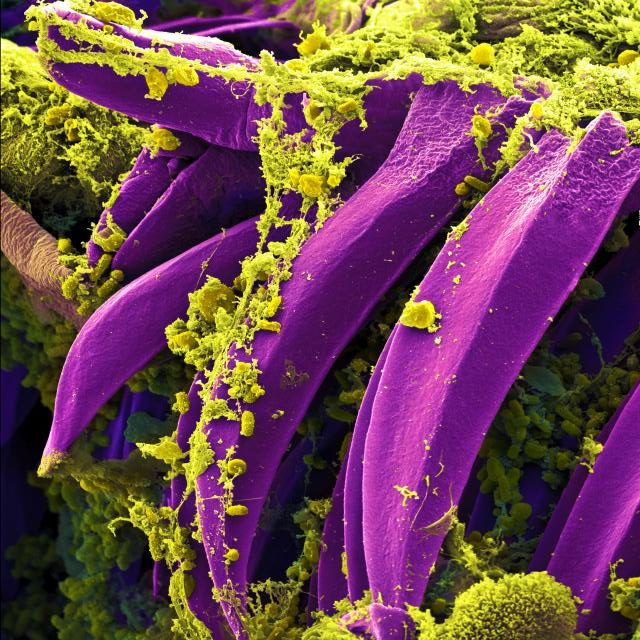
Scanning electron micrograph of Yersinia pestis, which causes bubonic plague, on proventricular spines of a Xenopsylla cheopis flea. Credit: NIAID

A 28-year old female lab technician at the Irkutsk Research Anti-Plague Institute of Siberia, Russia, died of double pneumonia (infection in both lungs) late last week.

Government officials in Russia have not confirmed that the woman died from pneumonic plague, but several media reports suggest she died after an accident involving a broken vial containing a live sample of plague, a deadly bacterial infection. Now, a rumoured 200 people are suspected to be under quarantine. 

Rospotrebnadzor, the official Russian infectious disease agency, said, “No micro-organisms associated with the employee’s professional duties were detected in samples taken from the patient.”

But over the weekend, media in Russia and elsewhere in Europe started to stoke concerns over a lab leak incident or fears that the woman worked in a bioterrorism unit. They suspected that the Russian government was covering up something that posed a serious risk to global health. 

Case does not cause ‘undue concern’

Michael Osterholm, PhD, MPH, director of the University of Minnesota’s Center for Infectious Disease Research and Policy (CIDRAP), which publishes CIDRAP News, said that if the woman did die from pneumonic plague, it would be possible to contain, and close contacts and fellow lab workers would be given prophylactic (preventive) antibiotics. 

This case does not cause undue concern.

“This case does not cause undue concern,” Osterholm said. “We would like more information, of course.”

Osterholm explained that if this incident happened in a friendly nation, people would not be so quick to jump to allegations of bioterrorism. But information from Russia, China, or North Korea often lacks transparency. Osterholm also said that, despite the attention-grabbing headlines, plague infections occur every year around the world. 

The bacterium Yersinia pestis is linked to three main types of plague. The first, bubonic plague, is the one associated with the Black Death and the Middle Ages. It’s spread through flea bites and attacks the lymph nodes. Septicaemic plague is also spread through flea bites and occurs when the bacteria enter the bloodstream.

Pneumonic plague attacks the lungs and is the deadliest of the three main plague types. It’s also the most dangerous in terms of biosecurity, because it can be transmitted from person to person via respiratory droplets. It is considered extremely contagious and has a short incubation period (time from exposure to first symptoms) of roughly 24 hours. 

From 2019 to 2025, the World Health Organization estimates there were 3800 suspected plague cases (mostly bubonic) in 10 countries, resulting in 423 deaths. The last recorded plague case in South Africa was in 1982.

The United States tracks five to seven cases of bubonic plague each year, most often in the Southwest. Though plague kills 30% to 60% of people without treatment, all three strains are very sensitive to modern antibiotics.

Source: University of Minnesota

Autism Is Linked to 14-Year Deficit in Life Expectancy

Excess mortality from influenza, malnutrition, pneumonitis, drowning, and pneumonia contributes to the life expectancy gap

Photo by Peter Burdon on Unsplash

People with autism spectrum disorder (ASD) in the United States face a 14-year deficit in life expectancy, finds a study published in JAMA Network Open. The study provides one of the first large-scale estimates of age-specific death rates and life expectancy among people with ASD.

Autism research has historically focused on biology, genetics, environmental risk factors, and diagnosis, with less attention to long-term health outcomes, crucial for understanding the natural history of the disorder and for developing intervention programs. The new findings, from researchers at Columbia University Mailman School of Public Health and the University of Colorado Anschutz, highlight substantial disparities in life expectancy and identify causes of excess mortality that may be preventable.

“Autism is a complex lifelong condition with substantial costs to the US healthcare system,” said Guohua Li, DrPH, MD, professor of Epidemiology at Columbia Mailman School. “Elevated mortality risk in people with ASD has been reported since the late 1980s, but life expectancy for the autistic population remained unknown because of inadequate data on age-specific death rates.”

To examine life expectancy and causes of excess mortality, the researchers analysed data from the Transformed Medicaid Statistical Information System and Children’s Health Insurance Program Statistical Information System. The enhanced Medicaid data include mortality information linked to the National Death Index for beneficiaries in all 50 states and the District of Columbia from 2000 through 2020.

During the 21-year study period, 2 048 046 individuals with ASD were enrolled in Medicaid. Of these, 76 percent were male; 49 percent were non-Hispanic White, 15 percent were non-Hispanic Black, and 17 percent were Hispanic. A total of 18 268 Medicaid beneficiaries with ASD died between 2000 and 2020.

Life expectancy at birth for Medicaid beneficiaries with ASD was 64.9 years –5.6 years shorter than for the overall Medicaid population and 13.8 years shorter than for the U.S. general population. Estimates were broadly similar across sex and racial and ethnic groups, although the gap relative to the general population was greater for women than for men.

Life expectancy among Medicaid beneficiaries with ASD increased by 1.7 years during the study period, from 63.9 years in 2000–2004 to 65.6 years in 2015–2019. However, the gap compared with both the broader Medicaid population and the U.S. general population persisted.

Medicaid beneficiaries with ASD had a 44 percent higher mortality risk than other Medicaid beneficiaries. Excess mortality occurred across most categories of diseases and health conditions, with particularly heightened risk from influenza, malnutrition, pneumonitis, non-transport accidents, drowning, and pneumonia.

The researchers also found that, compared with the general population, autistic women experienced a greater life expectancy deficit than autistic men, largely associated with higher rates of psychiatric comorbidities and related excess mortality.

“Life expectancy for the autistic population enrolled in Medicaid in the United States is about 65 years, which is the same as for the general population in Haiti or Angola,” said Carolyn DiGuiseppi, MD, PhD, professor of epidemiology at Colorado School of Public Health. “This finding is sobering.”

“The good news is that much of the excess mortality among people with ASD is avoidable through improved social support, primary care, and home- and community-based services,” Said Li, who is also professor of anaesthesiology at Vagelos College of Physicians and Surgeons.

Source: Columbia Mailman School of Public Health

Pollen Season: New Map of South Africa’s Allergy Hotspots Gives You Time to Prepare

Photo by Andrea Piacquadio on Pexels

Trevor Hill, University of KwaZulu-Natal; Andriantsilavo Hery Isandratana Razafimanantsoa, University of Cape Town; Caryn Upton, University of Cape Town; Dilys Berman, University of Cape Town; Frank Neumann, North-West University; Jemma Finch, University of KwaZulu-Natal; Jonny Peter, University of Cape Town, and Takudzwa Matuvhunye, University of Cape Town

For some South Africans, the beginning of the flower season is met not with the joys of spring but rather with a sniffy nose, itchy eyes and a cacophony of sneezing.

In South Africa, allergic rhinitis (hayfever) affects an estimated 20% to 30% of the population – children and adults. Asthma affects around 20% of children and 10% of adults. Air pollution can worsen asthma and eczema symptoms and cause eczema.

Most people recognise that pollen, despite being invisible to the naked eye, is a dominant airborne allergen driving conditions like hayfever. Sufferers are acutely aware that pollen in the air changes seasonally, depending on what is flowering.

But South Africans still know too little about when pollen seasons begin and end, or how they differ across the country. This is because there’s been very little consistent, long-term pollen monitoring. Without local records showing when different plants release pollen, it’s hard for doctors to identify what is causing a patient’s allergy. People with allergies are also left guessing when to start taking medicines that could prevent their symptoms.

Now, a pioneering scientific initiative is changing that. The South African Pollen Monitoring Network, set up seven years ago, sourced equipment and built research teams in different cities. The network has now produced South Africa’s first five-year pollen calendars for several different natural regions. These calendars show which plants release pollen in each region, when they release it and how pollen levels change during the year.

Previously, pollen was measured in only a few African cities, and researchers used different methods, making it difficult to compare the results. The new network uses the same method to collect pollen from the air at all its sites. However, many pollen grains look so similar that scientists can identify only the plant family, such as grasses, rather than the exact species.

The network covered inland grassland sites in Johannesburg and Bloemfontein, and savanna sites in Pretoria and Kimberley. Its coastal sites represented fynbos in Cape Town, the Indian Ocean coastal belt in Durban and Albany thicket in Gqeberha.

We are medical and environmental researchers who have studied pollen for more than 50 years collectively. Together with MSc candidate Yolanda Makgale, we formed a team that constructed these pollen calendars.

We found that grass was the most common pollen everywhere, Bloemfontein had the highest overall pollen levels, Johannesburg had the most tree pollen, and Kimberley the most grass pollen.

This research is important because these calendars could help doctors diagnose and manage allergies and support warnings about periods of high pollen exposure.

The pollen causing allergies in inland cities

Over five years, South African Pollen Monitoring Network researchers identified 103 types of pollen across seven South African cities. Grass produced the most pollen and was the main cause of pollen allergies. Inland cities had much higher pollen levels than coastal cities, and their grass pollen seasons lasted for more than 200 days a year.

Bloemfontein (grassland biome): highest total amount of pollen recorded over a year, mainly because of its high levels of grass and tree pollen. Grass released pollen for an average of 246 days each year – about eight months.

Kimberley (savanna biome): highest average concentration of grass pollen, with an open, grassy landscape and a grass season lasting, on average, 247 days a year.

Johannesburg (grassland biome): highest average tree pollen, probably due to its large “urban forest” of planted exotic trees.

Pretoria (savanna biome): high tree pollen counts, dominated by the exotic Morus (mulberry) tree, which contributed 25% to the total pollen catch.

Coastal cities

In contrast to the inland cities, coastal cities recorded lower overall pollen loads and shorter grass seasons, often under 100 days a year. This difference is likely due to coastal rainfall washing the pollen out of the atmosphere, combined with strong coastal winds.

Cape Town (fynbos biome): the longest tree pollen season in the country, lasting 297 days a year, starting early in July. The pollen profile is dominated by exotic trees, with Cupressaceae (cypress) accounting for 30% of the five-year average, followed by Myrtaceae (eucalyptus) at 11%, and Pinus (pine) at 9%.

Durban (Indian Ocean coastal belt): low overall pollen catch, with the shortest grass season in the study, lasting just 71 days and starting late in summer.

Gqeberha (Albany thicket biome): lowest overall annual pollen load among all seven cities, alongside the shortest tree (116 days) and grass (92 days) seasons.

Climate change impact on pollen allergies

Between 2019-2021 and 2022-2024, pollen levels fell across most regions. Grass pollen nearly halved, while tree pollen doubled in inland cities. Researchers now need to examine whether rainfall, weather, flowering seasons or changes in land use caused this shift.

Climate change may play a part by changing pollen levels and seasons. It can also increase the risk of “thunderstorm asthma”. During some storms, moisture bursts grass pollen into tiny pieces that winds push towards the ground. When inhaled, they can cause sudden and dangerous asthma attacks.

What this means for allergic patients

For people suffering from hay fever or asthma, calendars tailored to South Africa’s specific regions can act as an early warning system. Knowing exactly when pollen season starts lets patients begin preventive treatments, such as antihistamines or nasal sprays, before their symptoms start.

The new data revealed surprising allergy triggers. For instance, birch tree pollen, a major cause of hay fever in the northern hemisphere, was detected across South Africa where it is an ornamental, non-indigenous tree planted in gardens.

The general public may underestimate the dominant role of exotic trees in driving pollen load in big cities like Cape Town, Johannesburg and Pretoria. This finding should feed into decisions about what to plant.

What needs to happen next

Five years of pollen data show why year-round monitoring matters for public health. Researchers want to extend monitoring into rural areas and include pollen warnings in the national health system. They also hope to use DNA testing to identify allergy-causing plants that look identical under a microscope.

For now, the calendars help South Africans see which pollen is in the air, when levels are highest and when they may need to take precautions.

Funding came from Wellcome Trust (grant number: 311673), Cipla, Twinsaver, UCT Lung Institute Postdoctoral Research Fellow Award, a CSIR Parliamentary Grant, Novartis, University of Cape Town, Thermo Fisher Scientific, Clicks, Glenmark Pharmaceuticals, Dr Reddy’s, SA Natural Products, and Zeiss Africa.

Trevor Hill, Professor, Department of Geography, University of KwaZulu-Natal; Andriantsilavo Hery Isandratana Razafimanantsoa, Postdoctoral Research Fellow at the UCT Lung Institute, University of Cape Town; Caryn Upton, Medical Research Officer, Division of Allergology and Clinical Immunology, University of Cape Town; Dilys Berman, Lecturer and aerobiologist in the division of Allergology and Clinical Immunology, Department of Medicine and UCT Lung Institute, University of Cape Town; Frank Neumann, Professor of Geology, North-West University; Jemma Finch, Associate Professor of Geography and Palaeoecologist, University of KwaZulu-Natal; Jonny Peter, Associate Professor, Unit Head and also serves as Head of the Division of Allergology and Clinical Immunology at Groote Schuur Hospital, University of Cape Town, and Takudzwa Matuvhunye, Postdoctoral Researcher at the UCT Lung Institute, University of Cape Town

This article is republished from The Conversation under a Creative Commons license. Read the original article.