

Tag: 24/11/26

Coexisting Alzheimer’s Affect Treatment Outcome for Dementia with Lewy bodies
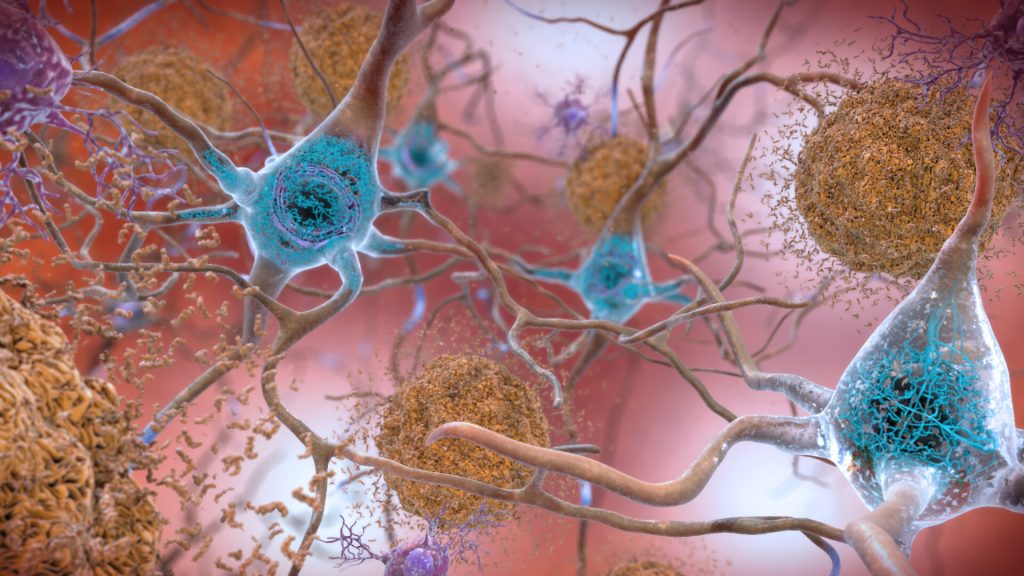
Neurons in the brain of an Alzheimer’s patient, with plaques caused by tau proteins. Credit: NIH

People with dementia with Lewy bodies who also have biological signs of Alzheimer’s disease may experience a faster decline in cognitive function. This is shown in a new study from Karolinska Institutet published in the journal Alzheimer’s & Dementia. The findings suggest that biomarkers could contribute to a more individualised assessment of how the disease may progress.

Dementia with Lewy bodies is a relatively common form of dementia, and people with the same diagnosis may experience different disease trajectories. At the same time, biological changes typical of Alzheimer’s disease are common in people with dementia with Lewy bodies. The researchers therefore wanted to investigate whether such changes are associated with the rate of cognitive decline.

The study included 360 people diagnosed with dementia with Lewy bodies in Sweden between 2010 and 2020. The researchers combined data from the Swedish Dementia Registry, SveDem, with analyses of biomarkers in cerebrospinal fluid and repeated results from cognitive tests. Of the participants, 196 people, or 54 per cent, had biomarkers indicating coexisting Alzheimer’s disease pathology (alzheimer biomarker-positive).

Alzheimer’s pathology linked to faster cognitive decline

People who were alzheimer biomarker-positive experienced a faster decline on average. The difference corresponded to 0.80 points per year on the 30-point Mini-Mental State Examination (MMSE) compared with people who were alzheimer-biomarker negative.

“Our findings suggest that coexisting Alzheimer’s disease pathology may help explain why people with the same diagnosis of dementia with Lewy bodies can have different disease trajectories. Identifying such biological differences could in the future contribute to more individualised prognoses,” says Cen Chen, postdoctoral researcher at the Department of Neurobiology, Care Sciences and Society at Karolinska Institutet.

The researchers also investigated whether the association between dementia medications and cognitive decline differed depending on the presence of positive Alzheimer’s biomarkers. Treatment with cholinesterase inhibitors was associated with slower cognitive decline among participants with positive Alzheimer’s biomarkers,  but not among those with negative Alzheimer biomarkers.

However, because this was an observational study, it is not possible to conclude that the medications caused these differences. Treatment was not randomly assigned to participants, and the group of untreated patients was relatively small.

“The findings raise the question of whether the underlying biology may influence treatment-related outcomes. However, further studies are needed before the findings can be used to guide treatment decisions,” says Professor Maria Eriksdotter at the Department of Neurobiology, Care Sciences and Society at Karolinska Institutet.

The next step is to combine additional biomarkers, including biomarkers of nerve cell damage and inflammation in the nervous system, with clinical data and longer follow-up. The aim is to better understand which biological processes contribute to cognitive decline and whether biologically defined groups have different disease trajectories.

The study was conducted by researchers from Karolinska Institutet and Karolinska University Hospital, the University of Gothenburg, Sahlgrenska University Hospital and international collaborating institutions, among others. The research received funding from several organisations, including the Swedish Research Council, the Swedish Brain Foundation, Region Stockholm, the Center for Innovative Medicine Foundation and Karolinska Institutet’s foundations. Several authors report assignments or remuneration from pharmaceutical and biotechnology companies.

Publication

Biomarker-informed differences in treatment-associated cognitive decline in dementia with Lewy bodies. 
Cen Chen, Hong Xu, Anna Rennie, Tobias Borgh Skillbäck, Silke Kern, Henrik Zetterberg, Linus Jönsson, Daniel Ferreira, Maria Eriksdotter, Alzheimer’s & Dementia, online 20 November 2026, doi: 10.1002/alz.72021

Source: Karolinska Institutet
Scientists May Have Discovered the Hidden Cause of Allergies

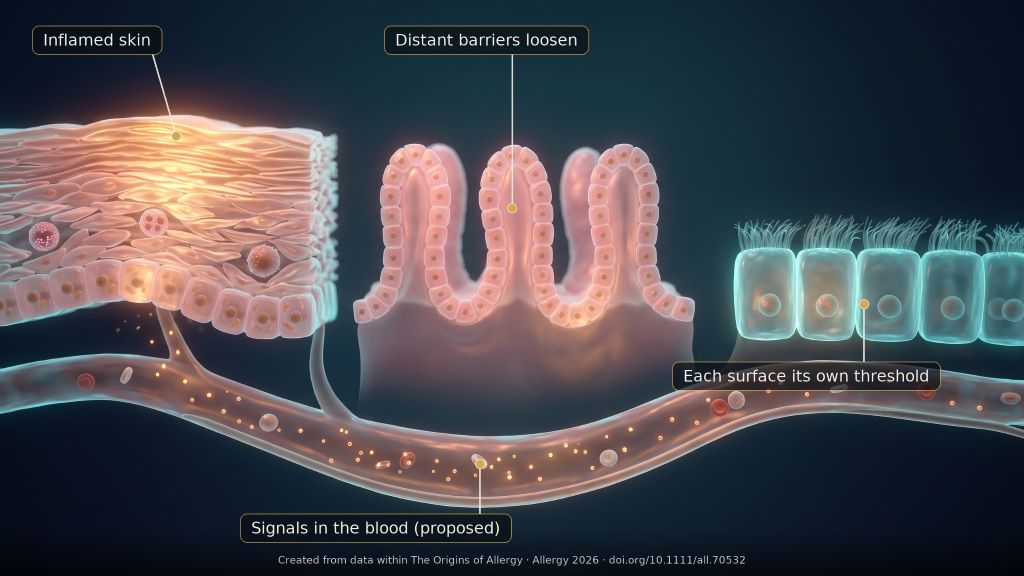
Scientists have potentially cracked the code on allergies by debunking centuries-old teaching that allergies start in the immune system, when in fact, it may be due to a power failure inside the body’s barrier cells which line the skin, gut, nose, lungs and oesophagus.

Study lead Professor Peter Smith, a clinical immunologist from Griffith’s School of Medicine and Dentistry, said the team analysed the largest multi-omic collection of allergy data it was aware of, encompassing 116 case-control cohorts, 3776 patients, and 2164 cohorts.

“For 60 years, we’ve taught that allergies start with the immune system and the barrier breaks as a consequence, but our work suggests it may be the other way around,” Professor Smith said. “Allergy diseases, which now affect up to one in three children, may start one step earlier as a power failure in the mitochondria of the epithelial cells which form the body’s barrier surfaces.

“The barrier cell can’t meet the energy and stress demands of the modern environment so raises the alarm too easily, and the immune events we recognise as an allergy, follow. It could help to explain why some children have eczema, food allergies, hay fever, asthma and related conditions.”

The evidence was strongest in eosinophilic oesophagitis, an allergic disease of the gullet. There, the programme that cells use to clear damaged mitochondria was reduced in all 13 independent patient cohorts. In eczema, changes to the skin’s barrier and antioxidant defences were found even in skin that was not inflamed. The signal was not found in every allergic condition and was absent in established asthma and nasal polyps, and only partly present in hay fever.

The paper also argued many separate triggers acted on one shared target: the energy capacity of the barrier cell. These included processed diets, pollution, microplastics, detergents, loss of dietary fibre and early antibiotics.

Co-author Associate Professor Nic West, a molecular immunologist from Griffith’s School of Pharmacy and Medical Sciences, said allergies had always had too many causes and no single explanation to account for an epidemic which had multiplied within a single generation.

“The research also explains why allergies can relapse,” Associate Professor West said. “Once inflammation is established it damages the barrier further. Today’s drugs act downstream, so the disease often returns when treatment stops as they do not reach the root cause.”

Professor Smith said the team was clear this was a hypothesis to be tested, not a settled mechanism. “We have spent our careers managing the smoke and for the first time we think we can see the fire, and it is not where everyone was looking,” he said. “This is not a cure but is something we have never had before – a logical starting point. The next step is to measure these cells directly in infants before the allergy develops.”

The study’s co-authors were from Mount Sinai, Leuven, Cork, Southampton, Zurich, Miami, Singapore and Aberdeen.

The paper ‘The origins of allergy: An outside-in, bioenergetic hypothesis’ has been published in Allergy.

Source: Griffith University

Can We Target the Immune System to Treat Endometriosis?

Study elucidates how immune cells contribute to disease progression in endometriosis and identifies a potential future therapeutic target.

Photo by Sora Shimazaki on Pexels

Affecting 200 million women of reproductive age, endometriosis is a chronic inflammatory disease that causes pain, infertility, and increased ovarian cancer risk. Hormone therapies are often used to manage pain and prevent the growth of uterine-lining-like tissue outside of the uterus, but these therapies can be ineffective and lead to recurrence. In a new study, published by Wiley in Advanced Science, researchers identified TREM2+ macrophages as a potential future target for endometriosis therapies.

The immune system has been implicated in endometriosis progression. Highly abundant and promoting harmful growth during endometriosis, macrophages are immune cells that destroy infections, cancer, and cellular debris and modulate the adaptive immune system, which is a strong line of defence remembering past invaders. Members of the immune system shown to be dysfunctional in endometriosis are CD8+ T cells and natural killer (NK) cells. While macrophages have been suggested to impair CD8+ T cells and NK cells in disease progression, how they drive these defects in the adaptive immune system remained unclear.

Using single-cell RNA sequencing of endometriosis patient samples, researchers found an enrichment of macrophages expressing the receptor TREM2 compared to control samples. They also found that CD8+ T cells and NK cells in endometriosis samples were terminally exhausted and had reduced ability to kill damaged or foreign cells. The authors hypothesized that TREM2+ macrophages compromise CD8+ T cells and NK cells, which they validated by culturing CD8+ T cells and NK cells with macrophages with and without TREM2 from mice.

The researchers identified the ligand-receptor pair by which TREM2+ macrophages and CD8+ T cells could be communicating. Further, the cellular recycling process called autophagy was connected to CD8+ T cell dysfunction downstream of TREM2+ macrophages. Finally, the scientists tested these findings in mice, showing that mice without TREM2 increased CD8+ T cell and NK cell cytotoxic behaviour and protected against endometrium growth.

In this study, the researchers discovered that TREM2+ macrophages disrupt the adaptive immune system in endometriosis, contributing to disease progression. These results point to TREM2 as a potential therapeutic target, though the safety of TREM2 inhibition in general immune regulation and specifically in reproductive tissues require further evaluation. In addition, larger cohort sizes of patient samples should be used for validation of these findings.

“Our research reveals that a specific subset of macrophages contributes to immune dysfunction in endometriosis by suppressing the activity of cytotoxic immune cells. These findings provide new insights into disease progression and may open new avenues for developing non-hormonal therapies. However, further research is needed before these findings can be translated into clinical practice,” said senior author Guoyun Wang, PhD of the Shandong Provincial Hospital Affiliated to Shandong First Medical University in China.

Source: Wiley

Sustained Cardiac Activation Seen in Drivers’ Everyday Commutes

Photo by Why Kei on Unsplash

Key Takeaways

  • A new University of Houston study using wearable sensors found that drivers’ hearts stay “on duty” behind the wheel, adding cardiovascular strain.
  • Unlike normal periods of rest, driving keeps the cardiovascular system continuously activated – causing heart rates to fluctuate within a narrower range and return to resting baseline roughly half as often as during non-driving sedentary activities.
  • UH researchers found that higher driver anxiety adds roughly one extra heartbeat per minute, which accumulates to approximately 173 000 additional heartbeats per year for full-time or eight-hour daily drivers.

The inactive routine of a driver’s morning commute is associated with sustained cardiac activation, potentially carrying long-term health implications, according to new research from the University of Houston.

Published in npj Digital Public Health, the study found that drivers’ hearts remain “on duty” even during uneventful trips, staying above their resting rate more consistently and returning to baseline less often than during other sedentary activities. Conducted in collaboration with the Texas A&M Transportation Institute (TTI), the research led by UH computer science professor Ioannis Pavlidis makes driving’s hidden physiological demands measurable, opening the door to studying its long-term health impacts.

“Driving requires continuous attention, decisions and readiness to react. The body may be sitting, but the mind is working — and the heart reflects those demands,” said Pavlidis, senior author and Eckhard-Pfeiffer Distinguished Professor. “People need to get to work and go about their lives, but we want to understand how they can do that with less strain.”

Digging Deeper

For one week, Pavlidis’ team at UH’s Affective and Data Computing Laboratory (ACDC Lab) used Apple Watches and iPhones to track 57 participants across major Texas cities, including Houston, Dallas and San Antonio. Comparing heart rates with weather and traffic metrics yielded nearly 180,000 minute-level observations.

The data revealed a sharp physiological contrast between sitting at a desk or relaxing at home versus sitting behind the wheel:

  • Sustained Elevation: Participants’ heart rates remained above their resting baseline for roughly 94% of observed driving time, compared with 81% during other sedentary activities.
  • No Fitness Benefit: Unlike aerobic exercise, which conditions the cardiovascular system, driving-induced elevation offers no fitness benefit.

Tracking the Impact on Heart Health

Over decades, a long daily commute exposes drivers to thousands of hours of this strain, which can be compounded by individual traits like anxiety. In a comparison of participants at the low and high ends of the study’s anxiety scale, the team’s model predicted roughly one additional heartbeat per minute in the higher-anxiety case. For someone driving eight hours every day, that adds up to approximately 173 000 additional heartbeats over a year.

“When the heart works harder during exercise, that is generally a good thing,” Pavlidis said. “But when it works harder while we are sitting behind the wheel, we get none of the benefits of exercise. And when this happens for prolonged periods, day after day, we must wonder about the long-term health consequences. Our research makes this hidden cardiac activation measurable, opening the door for clinical studies to investigate those consequences.”

Researching Road Design and Autonomous Vehicles 

Ultimately, the research team aims to identify what makes driving most demanding and test solutions in road design, vehicle engineering or commuting routines. Supported by TTI through 2027, the ACDC Lab will next examine larger, more diverse populations over longer periods, including long-distance commuters and full-time drivers, such as rideshare drivers.

With autonomous ride services from Waymo and Tesla creating a new kind of commuter – one who becomes a passenger rather than a driver – the team also plans to measure whether the heart gets a break when the vehicle takes over.

By Kelly Schafler

Source: University of Houston

Opinion Piece: What to Consider Before Downgrading Your Medical Aid for 2027

By Brian Harris, CEO at Turnberry Management Risk Solutions

24 November 2026

As we move toward 2027, rising healthcare costs are placing further pressure on already stretched budgets. Medical aid contributions continue to increase, alongside the cost of medication, specialist treatment and other healthcare expenses. For many households, this means having to reconsider whether they can afford to remain on their current medical aid option or whether downgrading could help reduce their expenses.

However, while moving to a more affordable medical aid option may reduce monthly contributions, it can also increase your exposure to out-of-pocket costs. Before making any changes, you need to understand which benefits will change, what limits or co-payments may apply and how much more you could have to pay out of pocket when you need treatment.

The cost of downgrading

Medical aid options differ in terms of benefits, limits, co-payments and network requirements. Moving to a cheaper option could mean higher co-payments, reduced benefits or having to use different healthcare providers, all of which could increase your out-of-pocket expenses.

For example, moving from an option that pays specialists at 200% of the scheme rate to one that pays at 100% could substantially increase the shortfall between what the medical aid pays and what the specialist charges. Higher co-payments, network restrictions or lower benefit limits can further increase these costs.

Oncology benefits are another important consideration. While certain cancer treatments are covered under Prescribed Minimum Benefits (PMBs), not all treatments qualify, and cover for treatment outside these requirements can differ between medical aid options. It is important to check what your medical aid will pay before downgrading, particularly if you are undergoing treatment or have a history of cancer.

The financial impact of medical expense shortfalls

The reality is that medical expense shortfalls can run into hundreds of thousands of rands, particularly when there is ongoing treatment or multiple procedures. Turnberry’s highest individual claim for 2026 so far is R165 422, for a malignant neoplasm of the spinal cord, while the highest amount paid to a family this year is R226 881.

These costs are not necessarily limited to a single year. Turnberry has paid more than R704 000 in lifetime claims for one client, with another five clients receiving more than R500 000 each. For people dealing with serious or ongoing medical conditions, the costs can add up over the course of treatment. Without gap cover, these expenses could place considerable pressure on household finances.

Finding the right balance

Gap cover has become essential in helping households manage medical costs, particularly when considering a move to a more affordable medical aid option. It can help cover medical expense shortfalls that your medical aid does not pay, including certain specialist fee shortfalls, co-payments and expenses arising from sub-limits, depending on the policy’s benefits and limits.

If you are considering downgrading your medical aid to save on monthly contributions, speak to your broker or financial adviser before making any changes. They can help you compare the benefits on your current and proposed options, identify where you may face higher co-payments or medical expense shortfalls, and assess whether your gap cover will still meet your needs.

Turnberry Management Risk Solutions (Pty) Ltd is an authorised Financial Services Provider (FSP no. 36571). Underwritten by Lombard Insurance Company, an Authorised Financial Services Provider (FSP 1596) and Insurer conducting non-life insurance business.