Tag: 23/1/26

Early Treatment can Delay Rheumatoid Arthritis for Years

Early treatment for people at high risk of developing rheumatoid arthritis can delay the disease for several years.

Photo by Towfiqu barbhuiya: https://www.pexels.com/photo/person-feeling-pain-in-the-knee-11349880/

Treating people who are at high risk of rheumatoid arthritis (RA) can delay the onset of the disease for several years, with benefits also continuing well after treatment has stopped. A new trial has shown that one year of treatment with the drug abatacept, a biologic therapy that targets immune cell activation, reduced progression to rheumatoid arthritis in people at high risk.

The new King’s College London study, published in The Lancet Rheumatology, builds on results from a trial reported by King’s researchers in 2024.

While the original trial followed 213 participants from the UK and the Netherlands for two years, the new study reports outcomes from an extended follow-up period of between four and eight years, making it one of the longest follow-up studies of its kind in people at risk of RA.

RA is a chronic autoimmune condition affecting around half a million people in the UK. It develops when the immune system mistakenly attacks the joints, causing pain, swelling, fatigue and long-term disability.

People at risk of developing the condition also often stop working before the disease starts, which creates employment instability and has economic consequences.

While effective treatments exist for people with established RA, there is currently no licensed therapy that can prevent the disease from developing in those at risk.

The researchers found that the benefits of just 12 months of abatacept therapy persisted well beyond the treatment period. People who received the drug took significantly longer to develop RA than those given placebo, with disease onset delayed by up to four years beyond the treatment period.

Although the drug did not permanently prevent RA, the findings show that early treatment can alter the course of the disease by postponing its development, potentially reducing the number of years people live with symptoms and complications.

Intervening early in people at high risk of RA can have lasting benefits. We have shown that this approach is safe and can prevent disease while patients are on treatment as well as substantially relieve symptoms. Importantly, it can also delay the onset of RA for several years, even after treatment has stopped. This could reduce how long people live with symptoms and complications, drastically improving their quality of life.

Professor Andrew Cope, Professor of Rheumatology in the Centre for Rheumatic Diseases at King’s College London

The study also showed that abatacept was most effective in individuals at highest risk of developing RA, identified through a blood test detecting specific autoantibodies. While these participants were at highest risk of progressing to RA they were also much more likely to benefit from early intervention.

During the at-risk phase, treatment with abatacept reduced symptoms such as joint pain and fatigue and improved overall wellbeing. But once treatment stopped, symptom levels became similar between the treatment and placebo groups, suggesting that continued immune modulation may be required to sustain symptom control.

The study found that abatacept was safe, with similar rates of serious adverse events in both the treatment and placebo groups, and no safety concerns linked to the drug.

The researchers suggest the latest findings provide evidence that early, targeted immune treatment can delay RA in people at highest risk, supporting further research into preventive approaches for autoimmune disease.

Source: King’s College London

The Face Scars Less than the Body – New Study Explains Why

Photo by Tom Jur on Unsplash

The face is privileged when it comes to scarring after injury. A Stanford Medicine study in mice not only discovers why but also finds a drug that helps skin from other sites regenerate.

Tweaking a pattern of wound healing established millions of years ago may enable scar-free injury repair after surgery or trauma, Stanford Medicine researchers have found. If results from their study, which was conducted in mice, translate to humans, it may be possible to avoid or even treat the formation of scars anywhere on or within the body.

Scarring is more than a cosmetic problem. Scars can interfere with normal tissue function and cause chronic pain, disease and even death. It’s estimated that about 45% of deaths in the United States are due to some type of fibrosis – usually of vital organs like the lungs, liver or heart.

Scars on the skin’s surface, while rarely fatal, are stiffer and weaker than normal skin and they lack sweat glands or hair follicles, making it difficult to compensate for temperature changes.

Surgeons have known for decades that facial wounds heal with less scarring than injuries on other parts of the body. This phenomenon makes evolutionary sense: Rapid healing of body wounds prevents death from blood loss, infection or impaired mobility, but healing of the face requires that the skin maintain its ability to function well.

“The face is the prime real estate of the body,” said professor of surgery Michael Longaker, MD. “We need to see and hear and breathe and eat. In contrast, injuries on the body must heal quickly. The resulting scar may not look or function like normal tissue, but you will likely still survive to procreate.”

Exactly how this discrepancy happens has remained a mystery, although there were some clues.

“The face and scalp are developmentally unique,” said professor of surgery Derrick Wan, MD. “Tissue from the neck up is derived from a type of cell in the early embryo called a neural crest cell. In this study we identified specific healing pathways in scar-forming cells called fibroblasts that originate from the neural crest and found that they drive a more regenerative type of healing.”

Activating this pathway in even a subset of fibroblasts around small wounds on the abdomen or backs of mice caused them to heal with much less scarring – similar to untreated facial or scalp wounds.

Longaker, the Deane P. and Louise Mitchell Professor in the School of Medicine, and Wan, the Johnson & Johnson Distinguished Professor in Surgery II, are the senior authors of the study, which was published January 22 in Cell. Plastic surgery resident Michelle Griffin, MD, PhD, and clinical and postdoctoral scholar Dayan Li, MD, PhD, are the lead authors of the research.

“Many of the authors on this paper are fellow physician scientists,” said Li, who is board certified in dermatology. “This project was inspired by what we’ve observed in our patients – facial wounds in general heal with less scarring. We wanted to understand, mechanistically, why this is.”

Proteins determine scarring

Li and his colleagues used laboratory mice to investigate differences in wound healing at various sites on the animals’ bodies. They anesthetised the mice before creating small skin wounds on the face, scalp, back and abdomen. The wounds were stabilised by suturing small plastic rings around them to prevent differences in mechanical forces as the animals moved. Mice were given pain relief during the healing process.

After 14 days, the wounds on the face and scalp expressed lower levels of proteins known to be involved in scar formation as compared with those on the abdomen or back of the animals. The sizes of the scars were also smaller.

The researchers then transplanted skin from the face, scalp, back and abdomen of mice onto the backs of control mice. After the transplants had engrafted, they repeated the experiment on the transplanted skin. As before, wounds in the skin transplanted from the faces of the donor mice expressed lower levels of scarring-associated proteins.

Additionally, Li and his colleagues isolated fibroblasts from skin samples from the four body sites in the donor mice and injected them into the backs of control mice. They observed reduced levels of scarring-associated proteins on the recipient animals’ backs injected with fibroblasts from the donor animals’ faces as compared with fibroblasts from the scalp, back or abdomen.

Now that we understand this pathway and the implications of the differences among fibroblasts that arise from different types of stem cells, we may be able to improve wound healing after surgeries or trauma.”

–Derrick Wan

“We found you don’t need to change or manipulate all fibroblasts within the tissue to have a positive outcome,” Li said. “When we injected fibroblasts that we had genetically altered to more closely resemble facial fibroblasts, we saw that the back incisions healed very much like facial incisions, with reduced scarring, even when the transplanted fibroblasts made up only 10% to 15% of the total number of surrounding fibroblasts. Changing just a few cells can trigger a cascade of events that can cause big changes in healing.”

A less-fibrotic wound healing

Digging deeper, the researchers identified changes in gene expression between facial fibroblasts and those from other parts of the body and followed these clues to identify a signaling pathway involving a protein called ROBO2 that maintains facial fibroblasts in a less-fibrotic state. They also saw something interesting in the genomes of fibroblasts making ROBO2.

“In general, the DNA of the ROBO2-positive cells is less transcriptionally active, or less available for binding by proteins required for gene expression,” Li said. “These fibroblasts more closely resemble their progenitors, the neural crest cells, and they might be more able to become the many cell types required for skin regeneration.”

In contrast, the DNA in fibroblasts from other sites of the body allows free access to genes like collagen that are involved in the creation of scar tissue.

“It seems that, in order to scar, the cells must be able to express these pro-fibrotic genes,” Longaker said. “And this is the default pathway for much of the body.”

ROBO2 doesn’t act alone. It triggers a signalling pathway that results in the inhibition of another protein called EP300 that facilitates gene expression. EP300 plays an important role in some cancers, and clinical trials of a small drug molecule that can inhibit its activity are underway. Li and his colleagues found that using this pre-existing small molecule to block EP300 activity in fibroblasts prone to scarring caused back wounds to heal like facial wounds.

“Now that we understand this pathway and the implications of the differences among fibroblasts that arise from different types of stem cells, we may be able to improve wound healing after surgeries or trauma,” Wan said.

The findings are likely to extend to internal scarring as well, Longaker said. “There’s not a million ways to form a scar,” he said. “This and previous other findings in my lab suggest there are common mechanisms and culprits regardless of the tissue type, and they strongly suggest there is a unifying way to treat or prevent scarring.”

By Krista Conger

Source: Stanford University Medical Center

UK Study Proves Effectiveness of Childhood Type 1 Diabetes Screening

Photo by Pavel Danilyuk

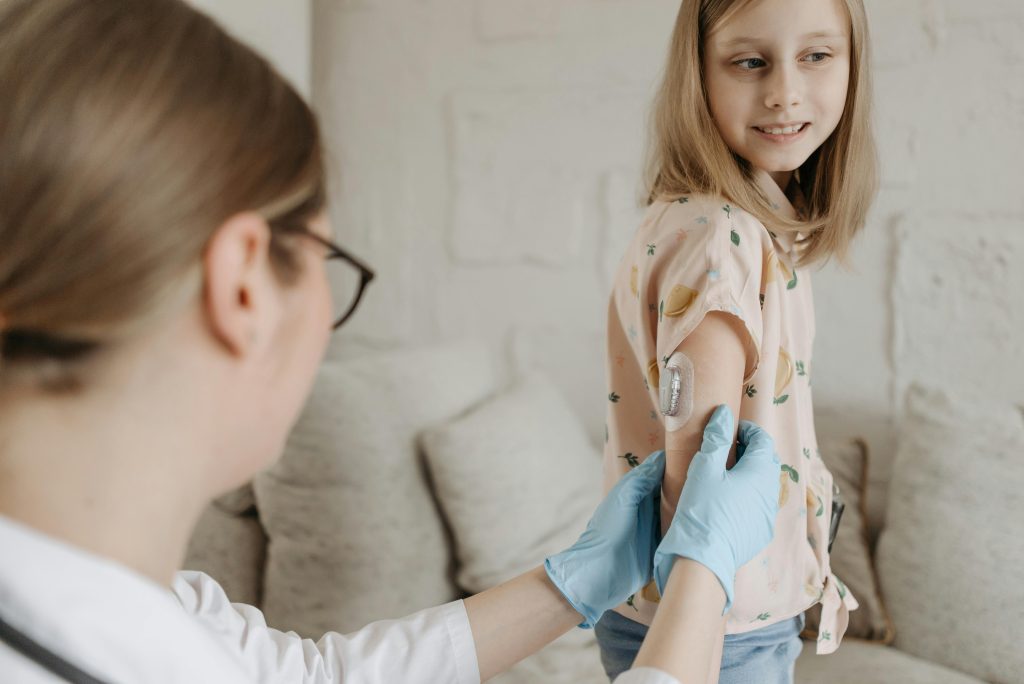
Thousands of families have taken part in a landmark UK study led by researchers at the University of Birmingham which shows that childhood screening for type 1 diabetes is effective, laying the groundwork for a UK-wide childhood screening programme.

Results from the first phase of the ELSA (Early Surveillance for Autoimmune diabetes) study, co-funded by charities Diabetes UK and Breakthrough T1D, have been published in a research letter in The Lancet Diabetes & Endocrinology today.

The findings mark a major step towards a future in which type 1 diabetes can be detected in children before symptoms appear. Currently, over a quarter of children aren’t diagnosed with type 1 diabetes until they are in diabetic ketoacidosis (DKA), a potentially fatal condition that requires urgent hospital treatment. Early detection can dramatically reduce emergency diagnoses and could give children access to new immunotherapy treatments that can delay the need for insulin for years.

We are working towards a future where type 1 diabetes can be detected in a timely manner

Professor Parth Narendran, lead researcher

Launched in 2022, ELSA is the first UK study of its kind, tested blood samples from 17,931 children aged 3-13 for autoantibodies, markers of type 1 diabetes that can appear years before symptoms.

Children without autoantibodies are unlikely to develop type 1 diabetes, while those with one autoantibody have a 15% chance of developing the condition within 10 years. Having two or more autoantibodies indicates the immune system has already started attacking the insulin-producing cells in the pancreas and it is almost certain these children will eventually need insulin therapy. This is known as early-stage type 1 diabetes.

Among the 17,283 children aged 3-13 years who were screened for type 1 diabetes risk at the time of analysis:

  • 75 had one autoantibody, signaling increased future risk.
  • 160 had two or more autoantibodies but did not yet require insulin therapy, indicating early-stage type 1 diabetes.
  • 7 were found to have undiagnosed type 1 diabetes with all needing to start insulin immediately.

Lead researcher, Parth Narendran, Professor of Diabetes Medicine at the University of Birmingham, said: “We are extremely grateful to all the families who have participated in the study and generously given their time to help understand how a UK-wide screening programme could be developed. Together with Diabetes UK, Breakthrough T1D and the National Institute for Health and Care Research, we are working towards a future where type 1 diabetes can be detected in a timely manner, and families appropriately supported and treated with medicines to delay the need for insulin.

“We are also grateful to partners across the Birmingham Health and Life Sciences District and beyond as well as the NIHR for the support they have provided in getting us to where we are.”

Interventions before diagnosis

Families of children found to have early-stage type 1 diabetes received tailored education and ongoing support to prepare for the eventual onset of type 1 diabetes symptoms and to ensure insulin therapy can begin promptly when needed, reducing the chances of needing emergency treatment. Those with one autoantibody also received ongoing support and monitoring.

Some families were also offered teplizumab, the first ever immunotherapy for type 1 diabetes, which can delay the need for insulin by around three years in people with early-stage type 1 diabetes. The first patient was treated at Birmingham Children’s Hospital. Teplizumab was licensed by the Medicines and Healthcare products Regulatory Agency (MHRA) in the UK in August 2025, and is currently being assessed by the National Institute for Health and Care Excellence (NICE) to determine whether it should be available through the NHS.

As of November 2025, more than 37,000 families have signed up to the ELSA programme. Building on this strong foundation, the second phase of the research, ELSA 2, launches today. ELSA 2 will expand screening to all children in the UK aged 2-17 years, with a focus on younger children (2-3 years) and older teenagers (14-17 years). The research team aims to recruit 30,000 additional children across these new age groups.

ELSA 2 will also establish new NHS Early-Stage Type 1 Diabetes Clinics, providing families taking part with clinical and psychological support and creating a clear pathway from screening to diagnosis, monitoring and treatment.

Case study: Knowing what’s coming … has made an enormous difference

Amy Norman, 44, from the West Midlands, was diagnosed with type 1 diabetes at the age of 13. She recently discovered via the ELSA study that her 11-year-old daughter, Imogen, is in the early stages of type 1 diabetes but has been able to slow its progression as the second child in the UK to access a breakthrough immunotherapy drug – teplizumab. She said: “Being part of the ELSA study has helped us as a family to prepare for the future in a way we never expected. Knowing what’s coming – rather than being taken by surprise – has made an enormous difference to our confidence and peace of mind.

“When I was diagnosed, I had no warning and ended up quite poorly in hospital with diabetic ketoacidosis (DKA). When Imogen’s diagnosis arrives, we hope that having this awareness will reduce her chances of experiencing DKA and the added trauma that comes from a sudden illness.

“Imogen took part in the study to further research and help others, but it has helped her too – being forewarned is being forearmed. She was always going to develop type 1 diabetes, but through ELSA we’ve been able to slow down the process and prepare – we know what is coming, but we’re not scared.”

A game-changer: showing what we can achieve in Birmingham

Professor Neil Hanley, Pro-Vice-Chancellor and Head of the College of Medicine and Health at the University of Birmingham, said, “This is a game-changer. This trial shows we can spare countless children the trauma of an emergency diagnosis, ensure they get early support, and potentially give them access to revolutionary new treatments that could delay or even prevent type 1 diabetes.

“Dr Parth Narendran and his team deserve huge credit; and this breakthrough shows what we can achieve in Birmingham. We have world-class clinicians and scientists working side-by-side, backed by great innovation infrastructure and a vibrant, diverse and affordable city – and, as a result, we are changing lives with next generation diagnostics, therapeutics, and clinical care.”

Rewriting the story of type 1 diabetes

Dr Elizabeth Robertson, Director of Research and Clinical at Diabetes UK, said: “For too many families, a child’s type 1 diabetes diagnosis still comes as a frightening emergency. But that doesn’t have to be the case. Thanks to scientific breakthroughs, we now have the tools to identify children in the very earliest stages of type 1 diabetes – giving families precious time to prepare, avoid emergency hospital admissions, and access treatments that can delay the need for insulin for years.

“The ELSA study, co-funded by Diabetes UK, is generating the evidence needed to make type 1 diabetes screening a reality for every family in the UK. We’re incredibly grateful to the 37,000 families who’ve already signed up and urge others to get involved. Together, we can transform type 1 diabetes care for future generations.”

Rachel Connor, Director of Research Partnerships at Breakthrough T1D, said: “This is about rewriting the story of type 1 diabetes for thousands of families. Instead of a devastating emergency, we can offer time, choices, and hope. By finding children in the earliest stages, we’re not just preparing families, we’re opening the door to treatments that can delay the need for insulin by years. That extra time means childhoods with fewer injections, fewer hospital visits and more normality. Thanks to research like ELSA, what once struck as an unexpected crisis can become an actively managed healthcare process, changing the course of T1D for the better.”

The findings from ELSA’s first phase signal a major step towards a future in which type 1 diabetes can be detected early, managed proactively, and potentially delayed through immunotherapy. ELSA demonstrates that childhood screening in the UK is feasible, acceptable to families, and capable of preventing emergency diagnoses. Continued research through ELSA 2 will assess how screening can be scaled across the NHS and evaluate its cost-effectiveness.

Source: University of Birmingham

New Neurosurgical Classification Reveals Pivotal Role of Glioma Volume Reduction

International team develops system for a standardised assessment of operative success in treating certain brain tumours

Photo by cottonbro studio

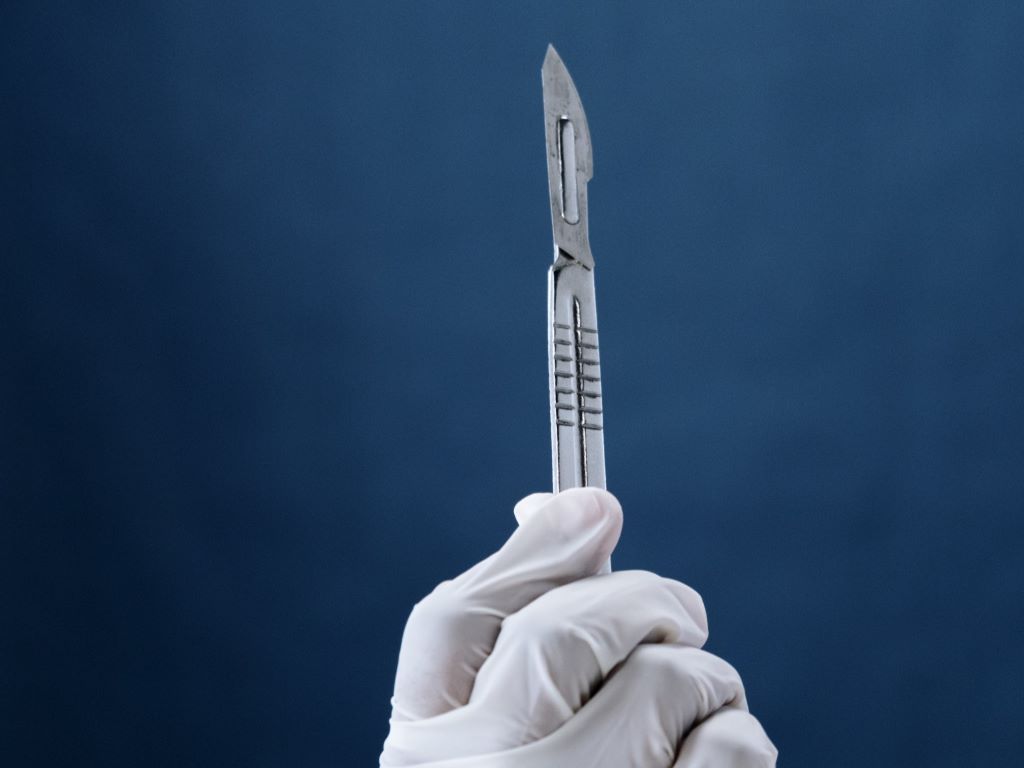
Low-grade brain tumours known as IDH-mutant gliomas CNS WHO grade 2 are life-threatening despite their slow growth. Neurosurgeons across the globe are faced with the question as to striking the correct balance between a “radical” tumour resection and avoiding further neurological damage. An international research team from the RANO working group involving Friedrich-Alexander-Universität Erlangen-Nürnberg (FAU) and Uniklinikum Erlangen has developed a new classification that records the extent to which any residual tumour tissue influences the progression of the disease. The results were published in The Lancet Oncology.

As a rule, the initial treatment for an IDH-mutated glioma CNS WHO grade 2 is surgery. The aim is to remove as much of the tumour as possible without jeopardising important neurological functions. As the results of the operation only become apparent many years later, there has been a lack of clear data, which has led to a number of different approaches. “On the one hand, this is due to the fact that we must be very careful to weigh up the chances of potentially boosting a patient’s chance of survival against avoiding neurological deficits. On the other hand, there has been a lack of clear criteria for assessing the risk of surgery until now, meaning that recommendations for treatment range from taking as little tissue as possible for diagnostic purposes to removing as much tumour tissue as possible,” explains Prof Dr Oliver Schnell from Uniklinikum Erlangen.

New basis for assessing success of surgery

In order to standardise therapeutic decisions, the RANO working group has conducted a large international study and assessed the data of 1391 patients from 16 neuro-oncological specialist units.

Based on the comprehensive data collected, the new RANO classification categorises the extent of the surgery based on the volume of the tumour that remains visible in a special MRI sequence (T2-FLAIR) after the operation. “Until now, there was no common language available for describing surgical outcomes,” explains PD Dr Philipp Karschnia from Uniklinikum Erlangen. “The new classification provides clarity, as it is guided exclusively by the residual tumour tissue.”

Less residual tumor means longer survival

The analysis of the RANO working group shows: A low volume of residual tumor after the initial operation is one of the most important factors for the further progression of the disease. A positive effect was also demonstrated for removing as much of the tumor as possible in the case of oligodendrogliomas, that tend to have a more favourable progression and are highly sensitive to chemo and radiation therapy. “We were surprised to discover that even follow-up treatments such as chemotherapy or radiation therapy were not able to replace the influence of the operation,” admits PD Dr Karschnia.

Internationally verified and useful in a wide range of scenarios

The results were confirmed in an independent patient group at the University of California in San Francisco. The new classification supports surgeons in making more accurate decisions and paves the way for future studies: “The new RANO classification is a milestone that will make a significant impact on neuro-oncological research and care in the long term,” according to Prof Schnell.

The Response Assessment in Neuro-Oncology (RANO) Working Group is an international, multidisciplinary collaboration between experts from various disciplines who have been working together to develop standardised criteria for assessing brain tumours for more than a decade now. Experts involved in the study from Erlangen were Prof Dr Oliver Schnell and PD Dr Philipp Karschnia, who has been leading the surgical focus group of the RANO Working Group since 2024, Dr Nico Teske and Alfred Gramelt from the Department of Neurosurgery at Uniklinikum Erlangen.

Source: Friedrich–Alexander University Erlangen–Nurnberg

High Cholesterol and Insulin Resistance are Rising Among Young South Africans – What that Means for Public Health

Photo by Elizeu Dias on Unsplash

Themba Titus Sigudu, University of the Witwatersrand

In a small mining town in South Africa’s Limpopo province, young people are showing worrying signs of diseases that were once thought to affect only older adults.

These include type 2 diabetes, high blood pressure, high cholesterol, obesity and insulin resistance. This is not unique to Limpopo or South Africa. It reflects a global trend, where young adults in many low- and middle-income countries are increasingly experiencing early-onset metabolic diseases due to rapid urbanisation, lifestyle changes, unhealthy diets and reduced physical activity.

The World Health Organization says non-communicable diseases now account for 75% of all non-pandemic-related deaths globally. Also, 82% of premature deaths before age 70 occur in low- and middle-income countries.

I’m a public health researcher specialising in epidemiology, metabolic health, infectious diseases and environmental health. My colleagues and I conducted a study in the town of Lephalale and found that many young adults there have abnormal cholesterol levels. They also have reduced sensitivity to insulin, a condition known as insulin resistance.

Both are key risk factors for type 2 diabetes and heart disease.

Our findings suggest that these health problems are appearing much earlier in life than expected. This is particularly concerning in communities undergoing rapid social and economic change, where access to health services and screening programmes remains limited.

New jobs, new lifestyles

Lephalale, formerly known as Ellisras, offers a window into these transitions. Once a quiet rural area in the north of South Africa, it has changed rapidly over the past two decades. It is now the site of expanding mining and industrial activities, driven by the expansion of coal mining operations and the development of power stations.

This industrial growth has attracted thousands of workers from surrounding provinces and neighbouring countries, bringing new economic opportunities. It is also reshaping daily life. Increasingly, residents are doing sedentary work and eating energy-dense diets, including fast food. These lifestyle transitions make Lephalale an important setting for studying emerging health risks in young adults.

Long hours sitting at work and reduced physical activity create fertile ground for metabolic disorders. When people eat more processed, high-fat, high-sugar foods and move less, the body begins storing excess energy as fat.

Over time, this can lead to weight gain, elevated blood glucose and abnormal cholesterol levels. These changes make it harder for the body to regulate insulin, causing insulin resistance, the first step towards type 2 diabetes. Also, inactivity and poor diet increase unhealthy cholesterol and triglycerides (types of fat in the blood), raising the risk of heart disease. In rapidly transitioning communities, these health shifts can happen quickly.

Non-communicable diseases such as diabetes, hypertension and heart disease are now among the leading causes of death in South Africa. In 2020, diabetes was reported to be the second biggest underlying cause of death in South Africa, accounting for 6.6% of all deaths.

Our research

We examined 781 young adults aged 18 to 29 years living in Lephalale as part of a long-running study. We have been tracking health patterns in this community since 1992.

Participants provided fasting blood samples that were analysed for glucose, insulin and cholesterol levels. We grouped them into diabetic and non-diabetic categories based on clinical definitions used by the American Diabetes Association.

The results were striking:

  • Diabetic participants had significantly higher total cholesterol, low-density lipoprotein (the “bad” cholesterol) and triglycerides, and lower levels of high-density lipoprotein (the “good” cholesterol) than their non-diabetic peers.
  • Over half (52.7%) of the diabetic group had high total cholesterol, compared with 23% of non-diabetic participants.
  • Insulin resistance, when the body needs more insulin to manage blood sugar, was also much higher among diabetics.
  • Even some non-diabetic participants showed early signs of these metabolic changes.

Unhealthy cholesterol patterns and poor insulin sensitivity tend to occur together, each making the other worse. This combination sets the stage for early heart disease, stroke and diabetes.

Why young adults?

Most public-health strategies focus on older adults because that’s when chronic diseases usually become visible.

But our research adds to growing evidence that the seeds of non-communicable diseases are planted early, often in young adulthood or even adolescence.

Young adults in rural or semi-urban areas may seem healthy, yet many are already developing risks due to diet changes, stress and limited exercise opportunities. The modernisation of small towns, while positive economically, brings hidden health costs.

Without early detection, these individuals may enter middle age already carrying high risk of health problems. This will put pressure on health systems that are already stretched.

What makes this community unique?

Lephalale may be changing, but it still lacks many of the urban services, infrastructure and health resources found in South Africa’s big cities.

Health resources are scarce, and screening for cholesterol or insulin resistance is rare. Public clinics focus on infectious diseases such as HIV or tuberculosis. Silent metabolic disorders go unnoticed until symptoms appear.

Our study shows that rapid industrialisation without parallel investment in public-health education and preventive services risks creating a generation of young adults who are chronically unwell by their thirties.

What can be done?

Three priorities stand out:

Early screening and prevention

Regular cholesterol and glucose testing should be part of routine primary-care visits, especially for adults under 30. Mobile health campaigns, school outreach and workplace screenings could help identify those at risk.

Community-based education

Local awareness campaigns must make the link between diet, physical activity and metabolic health easy to understand. They should show, for example, how frequent consumption of fried or sugary foods contributes to cholesterol build-up and insulin resistance.

Healthy-environment policies

Urban planners and municipalities can support healthy lifestyles by ensuring there are safe spaces for exercise. They must also limit marketing of unhealthy foods, and encourage availability of affordable, nutritious options. Similar “health-in-all-policies” approaches have shown success in other countries. such as Finland’s long-running HiAP strategy, which reduced cardiovascular disease rates and improved population health outcomes.

Young people should be in peak health. Without intervention, today’s young adults risk becoming tomorrow’s chronic-disease patients, burdening families, workplaces and health systems.

Themba Titus Sigudu, Lecturer, University of the Witwatersrand

This article is republished from The Conversation under a Creative Commons license. Read the original article.