Tag: 2/10/26

How Sex Chromosomes Influence Health Throughout Life

A new review published in Science brings together growing evidence that the X and Y chromosomes do much more than determining biological sex. They also shape how cells function, age and respond to disease. 

Differences in health between men and women have long been attributed mainly to sex hormones such as estrogen and testosterone. However, genes on the X and Y chromosomes also play a direct role, working both on their own and alongside hormones. 

The review was co-led by University of Arizona Cancer Center physician-scientist Dr. Dan Theodorescu and Dr. Dena B. Dubal of the University of California, San Francisco. It describes how sex chromosomes influence immunity, metabolism, brain aging, cancer and heart disease, and what this could mean for diagnosis, treatment and the design of clinical trials.

“X and Y chromosomes are often thought of as simple determinants for biological sex, but their role in human health is much larger,” said Theodorescu, one of the study’s corresponding authors and Nancy C. and Craig M. Berge Chair and Director of the Cancer Center. “Our review shows that these chromosomes carry genetic instructions that shape how our cells age and how our bodies defend against major diseases throughout our lives.”

The study shows that the genes on the X and Y chromosomes, rather than circulating hormone levels alone, determine disease risk, progression and therapeutic responses across key heath areas including aging, cancer, neurological conditions, immune system functions and cardiometabolic disease.

The review, which evaluated and synthesized existing evidence from human studies, mouse models and genomic technologies, describes several processes inside cells that shape health across the lifespan.

In women, one of the two X chromosomes is largely switched off early in development, but some of its genes stay active and others can switch back on with age, giving female cells extra doses of certain genes. Studies in mice suggest it also matters whether a cell’s active X came from the mother or the father. Men inherit their only X chromosome from their mother, while in women each cell uses either the mother’s or the father’s copy. In mice whose cells relied mostly on the mother’s X, faster brain aging and memory decline was observed. 

With age, some cells lose a sex chromosome. In women, loss of an X is linked to higher leukemia risk, though its broader effects remain largely unknown. In men, loss of the Y, most often measured in blood, is linked to cancers, heart disease, severe infections and Alzheimer’s disease. The loss of these chromosomes is being explored as both a biomarker of and potential contributor to age-related disease.

“When we look inside human cells, we see that X and Y chromosomes are participants in health and disease throughout a person’s life,” said Theodorescu, who is also a professor at the U of A College of Medicine – Tucson. “In cancer, for example, our laboratory has found that tumors that lose the Y chromosome can evade the immune system, yet may respond better to immunotherapy. Understanding this biology could help us tailor treatment.”

The review originated from discussions at the 2025 National institute on Aging Workshop: Sex Differences Impacting Human Health Across the Lifespan, especially with Francesca Duncan of the Northwestern University Feinberg School of Medicine.

“Our hope is that this review will stimulate further investigation and bring greater awareness to the significant potential of studying the X and Y chromosomes in cancer and other diseases, with far-reaching diagnostic and therapeutic implications,” said Theodorescu. “This would help ensure that treatments and diagnostics are tailored to match every patient’s unique profile. When clinical trials are designed to be sex-aware, researchers can turn these cellular differences into personalized medical care.”

Theodorescu’s previous related research focused on how the loss of the Y chromosome in T cells and cancer cells in men gave tumors the ability to evade the immune system, providing an explanation why the loss of the chromosome has been linked to increased mortality from carcinomas. Other recent Theodorescu group research showed how loss of the Y chromosome in normal-appearing tissues acts as an early warning sign and may mark a hidden zone of genetic risk for cancer to develop.

Original written by Phil Villarreal

Source: University of Arizona

More Wellness, More Value: Bonitas Reinforces Commitment to Healthier Outcomes with 2027 Product Offering

Johannesburg, South Africa – 2 October 2026 – Bonitas Medical Fund unveiled its 2027 product range, signalling a bold step forward in preventive healthcare, improved wellness, personalised support and long-term sustainability within the open scheme market.

Lee Callakoppen, Principal Officer of Bonitas Medical Fund, says: “Healthcare in South Africa is evolving rapidly, and members need more than traditional medical aid cover. They need proactive support, personalised health journeys and meaningful value at every stage of life.”

“Our 2027 product offering and plan enhancements are designed to reflect our commitment to keeping healthcare accessible, affordable and relevant for all our members.”

Earlier detection, better health outcomes

Bonitas has made preventive healthcare a strategic priority for 2027.

“It’s important that members are both enabled and encouraged to identify potential health risks earlier through preventive assessments and screenings,” says Callakoppen.

To support this, Bonitas has expanded access to wellness screenings through a growing provider network that now includes Clicks, Dis-Chem and Medirite pharmacies, bringing basic wellness screening access closer to members across South Africa.

Around 95% of Bonitas members are located within 10km of a health risk assessment provider. With the expanded network, members now have access to more than 1 245 pharmacies nationwide for basic wellness screenings.

The enhancement responds to growing demand. In 2025, health and wellness assessments increased by 138.6% compared to the previous year.

To close the gap between screening and treatment, Bonitas is introducing a GP Confirmation Benefit in 2027. When a potential health risk is identified, eligible members will have access to a risk-funded GP consultation within 14 days of the wellness screening, removing financial barriers to follow-up care and supporting a more connected wellness journey.

Enhancing member experience through more rewards and everyday value

The Benefit Booster, a hallmark of Bonitas innovation, is being expanded by 140% for 2027, offering families up to R12 000 in additional value. For the first time, it will also be available on the BonCap income-based plan.

Complementing this is B-Value, Bonitas’ lifestyle and wellness platform. More than a rewards programme, B-Value supports wellbeing through expert guidance, practical tools and rewards across fitness, nutrition, financial health and stress management. With new partners including Takealot and Checkers Sixty60, members can unlock even more rewards, discounts and lifestyle benefits through healthier behaviours.

Stronger plans, better benefits

Bonitas continues to refine its product range to balance affordability and sustainability for its members. Key enhancements across the product range include improvements to BonPrime, updates to the Standard option and the introduction of a Dental Emergency Benefit on selected plans.

Together, these changes are designed to improve accessibility, affordability and member value while simplifying the healthcare experience.

Expanded support across the care journey

Bonitas continues to invest in proactive healthcare support through initiatives such as Live Lean, the Ocular Health Programme, enhanced rehabilitation support through the new Back, Neck, Shoulder and Knee Rehabilitation programme and expanded mental health services. Together, these programmes are designed to help members manage health risks earlier, access support more easily and achieve better long-term health outcomes.

Smarter digital engagement

Bonitas continues to simplify healthcare through its Member App, Member Zone, WhatsApp support channel and other digital platforms. In 2027, the Fund will also expand digital engagement initiatives, including the Medical Aid Made Easy podcast hosted by Dr B, while enhancing support tools for both employers and brokers.

Balancing affordability with sustainability

“Against a challenging economic backdrop, affordability remains a key priority. Strategic purchasing and provider negotiations continue to help maximise value for members while supporting the long-term sustainability of the Fund,” Callakoppen adds.

Across all plans, the average contribution increase for 2027 will be 8.7%.

“We know that alongside all our updates, enhancements and new rewards, this will go a long way towards providing our members with additional value.”

“Our 2027 product range is about more than just useful medical aid benefits. Our enhanced offering is also about evolving healthcare to meet the needs of our members today and tomorrow. By focusing on prevention, wellness, personalised support and affordability, we are delivering meaningful value for our members, and building a stronger, more sustainable future for healthcare in South Africa,” concludes Callakoppen.

Pneumonia can Reveal Undiagnosed Blood Cancer

Photo by engin akyurt on Unsplash

Severe pneumococcal disease requiring hospitalisation, most commonly pneumonia, can be a sign of previously undiagnosed blood cancer and immunodeficiency in adult patients, according to a study from the University of Gothenburg.

The study followed 156 individuals who developed invasive pneumococcal disease and required hospital care in the Region Västra Götaland between 2018 and 2023. The median age of the patients was 70 years.

The researchers examined the patients’ immune system by measuring antibody levels and studied the presence of M protein, known as a risk marker for blood cancer. The control group consisted of 64 individuals matched for age and sex who did not have invasive pneumococcal disease.

In the pneumococcal disease group, one in four individuals had M protein in their blood, a marker that may be present in blood cancer or in precursor conditions. The examinations led to seven patients being diagnosed with blood cancer, while another twelve were diagnosed with a condition that can, in some cases, progress to blood cancer.

Routine screening should be considered

Eight patients were found to have immunodeficiency, seven of whom were able to start preventive treatment against new, severe infections. These findings were considerably less common in the control group.

The results, published in the journal Scientific Reports, suggest that screening for M proteins and antibody levels in adults with invasive pneumococcal disease should be considered, according to the researchers, as the disease can reveal previously undiagnosed blood cancer and immunodeficiency.

“Currently, these tests are not routinely performed after a severe pneumococcal infection. As a result, we may miss patients with undiagnosed blood cancer or immunodeficiency and therefore missing the opportunity to initiate treatment,” says Tor Härnqvist, a doctoral student at the University of Gothenburg, an infectious disease physician at NU Hospital Group, and one of the lead authors.

Importance of tailoring vaccinations

Karin Bergman is a doctoral student in the same research group and an infectious disease physician at Södra Älvsborg Hospital. The study is part of her doctoral thesis, which she will soon defend at the University of Gothenburg, in which she also demonstrates how the pneumococcal bacteria causing severe disease have changed since the pneumococcal vaccine was introduced into the Swedish childhood vaccination programme.

The bacterial serotypes covered by the childhood vaccine have decreased sharply but have largely been replaced by other serotypes against which the vaccine offers no protection. Older adults and individuals with underlying conditions, particularly cancer and compromised immune systems, are frequently affected by these serotypes.

“The results show that recommendations on pneumococcal vaccines for adults need to take into account which vaccines are used in children and which bacterial serotypes subsequently circulate in the community,” says Karin Bergman.

Study: Invasive pneumococcal disease unmasks monoclonal immunoglobulins and antibody deficiencies: a multicenter prospective study in adults

Thesis: Invasive Pneumococcal Disease Bacterial, Viral, and Host Determinants of Susceptibility

Source: University of Gothenburg

How Parenting Profiles are Associated with Children’s Behavioural and Emotional Problems

Certain parenting approaches, such as lower supervision and inconsistent discipline, are associated with a higher likelihood that children will show behavioral and emotional problems, such as attention difficulties, anxiety, and depression

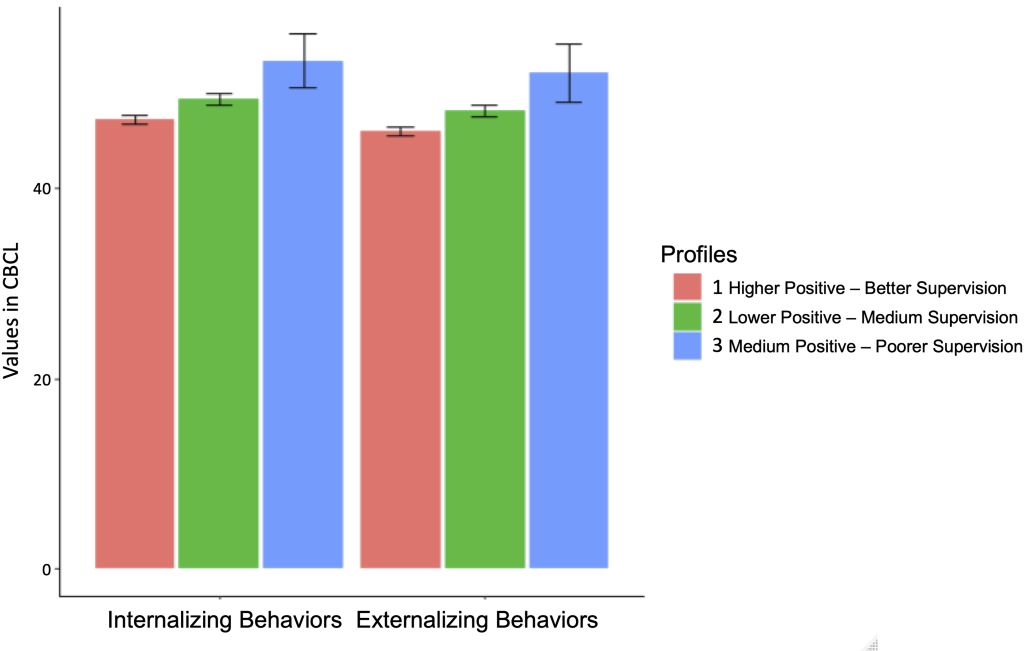
The mean of internalising and externalising behaviors by parenting profiles. The horizontal axis displays child internalising and externalising symptom dimensions, while the vertical axis indicates mean severity scores. Colored bars represent the identified parenting profiles. Error bars reflect 95 percent confidence intervals.  Xu et al., 2026, PLOS One, CC-BY 4.0

There’s no one right way to raise a child, but different patterns of parenting are associated with how kids behave. A new study, published on September 30, 2026 in the open access journal PLOS One, identified data-driven profiles of parenting practices and investigated how these relate to children’s behavioral and emotional problems, generally grouped into internalising behaviours (eg, withdrawal, anxiety, depression) and externalising behaviours (eg, aggression, oppositional behaviour, attention problems). The research team led by Dr Xiaoye Xu, an Assistant Professor of Psychology at SUNY Cortland, US, found that several parenting factors, including low supervision and inconsistent discipline, were linked to a higher likelihood that children would exhibit these behaviours.

The researchers assessed these behaviours in more than 2700 children between the ages of five and 18, using data assembled by the National Institutes of Health’s (NIH) Environmental influences on Child Health Outcomes (ECHO) Program. Parents filled out surveys about their approach to parenting and their children’s behaviour.

Across these responses, the researchers identified three parenting profiles. The first was high positive parenting with better supervision – the term “positive parenting” describes warm, responsive caregiving, such as praising good behaviour and engaging supportively with the child. The other two profiles were lower positive parenting with medium supervision, and medium positive parenting with poorer supervision. While these profiles do not represent the full spectrum of parenting approaches, this range let the researchers analyse the effects of positive parenting and level of supervision together.

Externalising and internalising behaviours were lowest among children raised with high positive parenting and better supervision. These behaviours were more common in the lower positive parenting with medium supervision profile, and highest among children in the medium positive parenting with poorer supervision profile.

Separately, the researchers also examined each parenting behaviour individually rather than as part of a broader profile. This analysis showed that inconsistent discipline – how unpredictably parents enforced rules – was linked to both more internalising and more externalising problems, regardless of a family’s broader parenting profile. Poor supervision, examined this way, was linked to more externalising problems specifically, such as aggression and attention difficulties, but was not significantly linked to internalising problems like anxiety and depression.

The results of this study do not give a full picture of a child’s rearing and its possible influences. The data are based on self-report – mostly mothers filled out the survey, with only 52 fathers participating, and other family or community members involved in the child’s rearing were not included. The researchers also only had a snapshot of the current parent-child relationship, which makes it difficult to establish cause and effect, as both parenting tactics and child behaviour can develop and change in response to one another.

The authors add: “In a large, diverse sample of children across the US, we found that certain patterns of parenting – not just individual behaviours – matter for children’s emotional and behavioral wellbeing. Children tended to have fewer emotional and behavioral problems when parents were consistently positive, provided steady discipline, and stayed closely engaged in their day-to-day lives. It’s a reminder that small, everyday parenting behaviours can add up to meaningful differences for children.”

Provided by PLOS