

How Parenting Profiles are Associated with Children’s Behavioural and Emotional Problems
Certain parenting approaches, such as lower supervision and inconsistent discipline, are associated with a higher likelihood that children will show behavioral and emotional problems, such as attention difficulties, anxiety, and depression
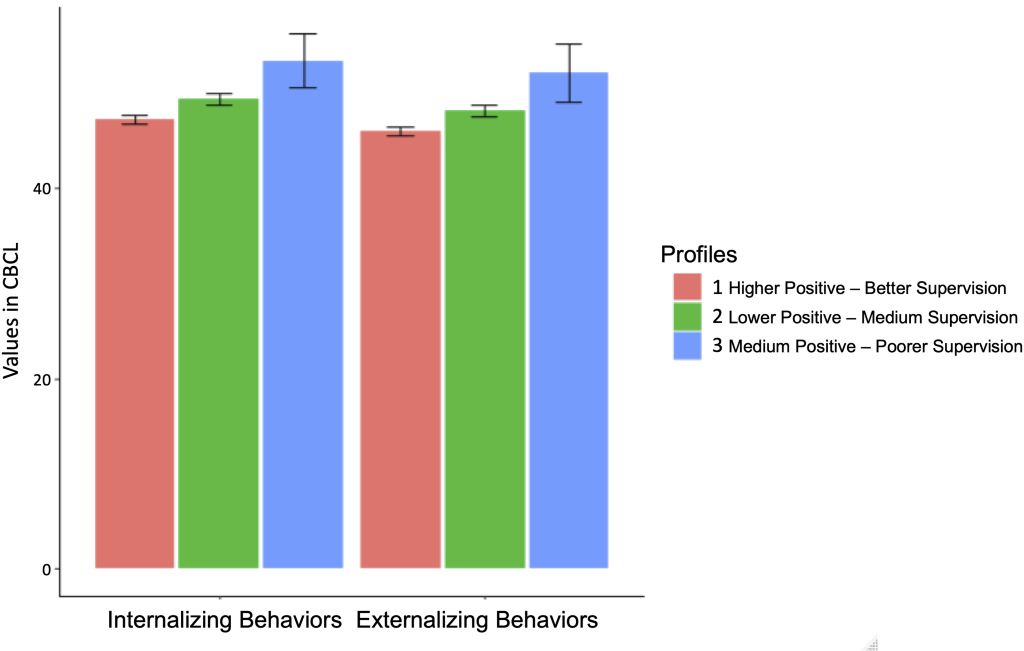
There’s no one right way to raise a child, but different patterns of parenting are associated with how kids behave. A new study, published on September 30, 2026 in the open access journal PLOS One, identified data-driven profiles of parenting practices and investigated how these relate to children’s behavioral and emotional problems, generally grouped into internalising behaviours (eg, withdrawal, anxiety, depression) and externalising behaviours (eg, aggression, oppositional behaviour, attention problems). The research team led by Dr Xiaoye Xu, an Assistant Professor of Psychology at SUNY Cortland, US, found that several parenting factors, including low supervision and inconsistent discipline, were linked to a higher likelihood that children would exhibit these behaviours.
The researchers assessed these behaviours in more than 2700 children between the ages of five and 18, using data assembled by the National Institutes of Health’s (NIH) Environmental influences on Child Health Outcomes (ECHO) Program. Parents filled out surveys about their approach to parenting and their children’s behaviour.
Across these responses, the researchers identified three parenting profiles. The first was high positive parenting with better supervision – the term “positive parenting” describes warm, responsive caregiving, such as praising good behaviour and engaging supportively with the child. The other two profiles were lower positive parenting with medium supervision, and medium positive parenting with poorer supervision. While these profiles do not represent the full spectrum of parenting approaches, this range let the researchers analyse the effects of positive parenting and level of supervision together.
Externalising and internalising behaviours were lowest among children raised with high positive parenting and better supervision. These behaviours were more common in the lower positive parenting with medium supervision profile, and highest among children in the medium positive parenting with poorer supervision profile.
Separately, the researchers also examined each parenting behaviour individually rather than as part of a broader profile. This analysis showed that inconsistent discipline – how unpredictably parents enforced rules – was linked to both more internalising and more externalising problems, regardless of a family’s broader parenting profile. Poor supervision, examined this way, was linked to more externalising problems specifically, such as aggression and attention difficulties, but was not significantly linked to internalising problems like anxiety and depression.
The results of this study do not give a full picture of a child’s rearing and its possible influences. The data are based on self-report – mostly mothers filled out the survey, with only 52 fathers participating, and other family or community members involved in the child’s rearing were not included. The researchers also only had a snapshot of the current parent-child relationship, which makes it difficult to establish cause and effect, as both parenting tactics and child behaviour can develop and change in response to one another.
The authors add: “In a large, diverse sample of children across the US, we found that certain patterns of parenting – not just individual behaviours – matter for children’s emotional and behavioral wellbeing. Children tended to have fewer emotional and behavioral problems when parents were consistently positive, provided steady discipline, and stayed closely engaged in their day-to-day lives. It’s a reminder that small, everyday parenting behaviours can add up to meaningful differences for children.”
Provided by PLOS


