Tag: 19/3/26

Treatment Combo Benefits Patients with Leptomeningeal Metastasis
Photo by Anna Shvets on Pexels

Patients with leptomeningeal metastasis (LM) have historically had few treatment options. Now, researchers from The University of Texas MD Anderson Cancer Center have found a combination of targeted therapies, tucatinib and trastuzumab, plus the  chemotherapy drug, capecitabine, may improve symptoms and extend survival in some breast cancer patients with LM. 

The Phase II study, published in Nature Cancer, included 17 female patients with newly diagnosed LM and HER2+ breast cancer. Median overall survival (OS) in those treated with the combination therapy increased from a historical average of 4.4 months to 10 months. At the 18-month mark, 41% of patients were still alive. Under the combination treatment, disease progression also stalled, with a median of seven months before central nervous system progression, and seven of 12 evaluable patients also had improved neurologic deficits.

“The combination achieved a clinically meaningful improvement in overall survival compared to historical controls,” said lead author Rashmi Murthy, MD, associate professor of Breast Medical Oncology. “For these patients, who often face limited treatment options, our results represent a step forward, offering new hope in how we treat and manage leptomeningeal metastasis.”

Why are there limited treatments for patients with leptomeningeal metastasis?

Leptomeningeal metastasis is difficult to treat primarily because the blood-brain barrier may block drugs from reaching the spinal fluid, where the metastatic cells are found. Additionally, LM is not a solid tumor but is made up of metastatic cells living in fluid, making them more difficult to target. Historically, there also are few studies about this specific disease. 

“In addition to encouraging survival outcomes, throughout this study we observed improvements in neurologic symptoms,” said co-lead author Barbara O’Brien, MD, associate professor of Neuro-Oncology. “Treatments for breast cancer leptomeningeal metastasis have historically focused on stabilising disease rather than improving symptoms, making these findings particularly meaningful and encouraging.” 

How do the treatments in this combination therapy work?

Tucatinib is a targeted therapy pill that blocks the HER2 protein, which helps some breast cancers grow. Trastuzumab is a targeted antibody that attaches to the HER2 protein on cancer cells and helps the immune system destroy them. Finally, capecitabine is a chemotherapy pill that turns into 5-fluorouracil (5-FU) in the body to eliminate fast-growing cancer cells.

The single arm, non-randomised, multi-phase study enrolled patients at four sites in the U.S., including UT MD Anderson. Eligible patients were at least 18 years old with histologically proven metastatic HER2+ breast carcinoma. These patients were treated with 21-day cycles of oral tucatinib (300 mg) twice daily, plus oral capecitabine (1000 mg/m2) twice daily on days 1-14 and intravenous trastuzumab (6 mg/kg) on day 21. 

What are other key findings of the study?

Side effects included diarrhoea, nausea, vomiting, hand-foot syndrome, and liver function test elevation. Most adverse effects improved or resolved with appropriate care and dose modifications. One patient saw alanine aminotransferase elevation after one cycle, which led to discontinuation of the combination, and symptoms resolved after one month.

Study limitations include early termination due to slow accrual following Food & Drug Administration (FDA) approval of the combination therapy. Additionally, LM from HER2+ metastatic breast cancer is rare, resulting in limited published data. As a result, the study design was informed by the small amount of available retrospective evidence.

Source: UT MD Anderson Cancer Center
Rapid Diagnostics Alone Do Not Cut Antibiotic Prescribing for Respiratory Infections

Credit: Scientific Animations CC4.0

Two international studies, a clinical trial led by the University of Oxford and University of Utrecht, and a qualitative study led by the University of Oxford and University of Antwerp, report that point-of-care diagnostic testing, when used alone is unlikely to reduce antibiotic prescribing for respiratory tract infections in primary care. The findings indicate that testing must be embedded within broader antimicrobial stewardship strategies to be effective.

The results of the PRUDENCE trial, published in The Lancet Primary Care took place in 13 European countries. Part of the randomised controlled trial with 2639 patients in all 13 countries was an in-depth qualitative evaluation involving clinicians and patients in six countries.

Together, the studies provide the most comprehensive evaluation to date of whether rapid diagnostic testing can meaningfully decrease antibiotic use in real-world primary care settings without having a negative impact on patient recovery.

Around 90% of antibiotics are prescribed by GPs in primary care, and most of these prescriptions are for respiratory infections such as sore throats and coughs, which are usually caused by viruses and do not need antibiotics.

Point-of-care tests have been widely promoted as a diagnostic tools to help clinicians in treatment decision making, thereby reducing unnecessary prescriptions.

Clinical trial across 13 countries shows no overall reduction in antibiotic prescribing

The clinical trial ran from December 2021 to January 2024. The trial enrolled 2,639 patients aged one year and older who presented with a cough or sore throat. All participants were included because their clinician was considering to prescribe antibiotics.

Participants were randomly assigned to usual care alone or to usual care plus a point-of-care testing strategy. Depending on symptoms and season, testing could include a CRP test (a blood test measuring inflammation), a group A streptococcus test (a rapid throat swab), an influenza A and B test, or a combination of these tests depending on clinical presentation and influenza season.

Antibiotics were prescribed to 45.7% of patients in the point-of-care testing group and 47.1% in the usual care group, a difference that is not statistically significant. Both groups recovered at the same rate, taking an average of four days to return to their usual daily activities. The study also found no increase in complications or serious adverse events linked to the testing strategy.

The trial concludes that point-of-care testing, when introduced as a standalone strategy in situations where clinicians are already inclined to prescribe antibiotics, does not substantially reduce antibiotic prescribing.

Qualitative study reveals why testing alone is insufficient

The qualitative study embedded within the trial explored how clinicians and patients experienced and used point-of-care testing. Researchers conducted in-depth interviews with 56 patients and 33 clinicians across six countries.

The findings from this study help explain why the trial did not lead to a reduction in prescribing rates.

Clinicians often used test results to confirm decisions they had already made, rather than to change them. When the initial clinical assessment strongly suggested a bacterial infection, clinicians frequently prioritised clinical judgement over test results. They also highlighted importance of relying on clinical intuition, and questioned the accuracy of the test rather than revising their prescribing decision.

Point of care tests were more effective in cases of genuine diagnostic uncertainty, when symptoms were non-specific or when it was difficult to distinguish a bacterial from a viral infection. In these cases, a test result could change the prescribing decision in either direction. However, perceived patient expectations, perceived severity of illness, timing of presentation, and cultural norms around antibiotics often outweighed test results.

The question is no longer whether point of care tests work in primary care, but under what conditions they can function optimally and how policy and medical practice can actively create those conditions.

Professor Sarah Tonkin-Crine at the Nuffield Department of Primary Care Health Sciences and senior co-author of the qualitative study, said: ‘The results of our study suggest that diagnostic tests alone are not sufficient. Clinicians across six very different countries and health systems described the same patterns; the primacy of clinical intuition, the pressure of perceived patient expectations and the difficulty of acting on a test result those conflicts with your own assessment. are fundamental to how clinical decisions. This tells us that point-of-care testing needs to be part of a broader strategy, one that includes clinician training, communication support, and clear guidance on how to act safely on test results.’

Professor Chris Butler, Associate Head for Research at the Nuffield Department of Primary Health Care Sciences and lead author of the trial, said: ‘Point-of-care tests have real potential, but our study shows that diagnostics on their own do not inevitably change prescribing decisions. When clinicians are already leaning towards antibiotics, test results often reinforce that choice. To make a meaningful difference, rapid testing must be combined with clear guidance, clinician training, and support to manage patient expectations. In addition, we need better evidence about the safety of following the prescribing implications of tests.’

Diagnostic testing has been widely promoted in national and international action plans as a key mechanism to reduce inappropriate antibiotic use. The results of these studies suggest that diagnostics tests alone are not sufficient to reduce antibiotic prescribing. They must be combined with structured clinician training, clear guidance on the safety of following test results, and strategies to address the cognitive dissonance- the discomfort of holding conflicting information that arises when test results challenge a clinician’s initial assessment.

The paper, ‘Point-of-care testing strategy versus usual care to safely reduce antibiotic prescribing for acute respiratory tract infections in primary care (PRUDENCE): a pragmatic, randomised controlled trial in 13 countries‘, is published in The Lancet Primary Care.

Source: Oxford University

Popular Anti-ageing Compound Causes Callosal Brain Damage

Part of the brain disappears in mice treated with dasatinib and quercetin

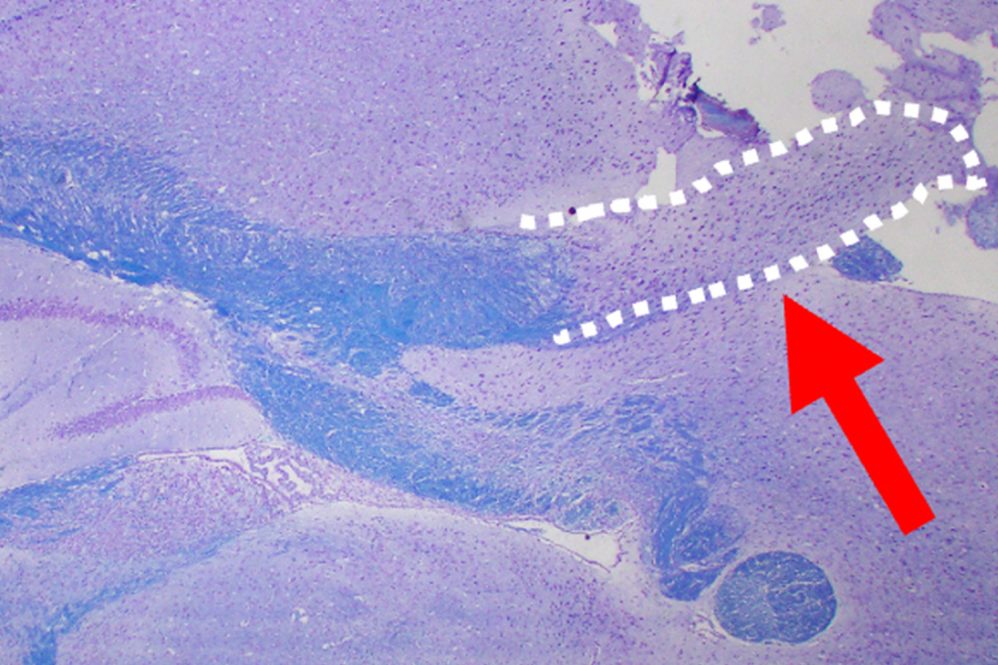
The image shows a section of the brain of a mouse treated with dasatinib and quercetin. The bluish area is the corpus collosum. The dotted outline shows the part of the corpus collosum that is affected by the medication. (Image courtesy of Crocker Lab/UConn School of Medicine)

A two-drug combination frequently used in anti-ageing research causes brain damage in mice, University of Connecticut researchers report in the March 16 issue of PNAS. The findings should make doctors cautious about prescribing the drug combo prophylactically, but also suggest new ways to understand multiple sclerosis.

“When you administer this cocktail to an animal, young or old, the myelin is damaged, which makes it disappear. Even worse in the young animals” than in the aged ones, says UConn School of Medicine immunologist Stephen Crocker.

Myelin is the insulation around the nerves. When it disappears, nerves don’t work as well, and people can develop numbness, pain, and lose the ability to walk. They can also have problems thinking and remembering. Missing myelin is the primary cause of multiple sclerosis. And Crocker and his colleagues saw it happen to mice when treated with dasatinib+quercetin (D+Q) at doses often used to treat ageing-related inflammation and metabolic disorders.

D+Q is a popular combination of medicines in anti-ageing research. Many studies have shown it works to eliminate aged cells that contribute to inflammation and other age-related symptoms. It is being tested for a range of diseases, from type II diabetes to Alzheimer’s. People in the anti-ageing scene sometimes even use it off-label, though the medical community discourages this. Very few studies have looked at its effect on the brain.

Evan Lombardo ’23 (CLAS), currently a Dartmouth neuroscience graduate student, and Robert Pijewski ’21 PhD, now at Anna Maria College, were working in Crocker’s lab when they wondered if it was possible to rejuvenate the brains of people with multiple sclerosis, and potentially heal their symptoms, using D+Q. They tried it on mice, both young (6 to 9 months) and old (22 months), as well as on brain cells cultured in a dish in the lab. The brain cells were oligodendrocytes, the cells that are supposed to grow and maintain myelin.

The results were dramatic. Healthy mice have myelin surrounding the axons (nerve cells) in the brain. It looks like dark rings around the lighter axon (see figure 1, the left panel.) But the mice treated with D+Q had much less myelin around their axons after the treatment, and the damage was worse in the younger mice. The corpus callosum, a region that connects the cerebral cortex to other parts of the brain and is associated with a range of important functions, also disappeared in mice treated with D+Q. This is known to happen sometimes to people who received chemotherapy, and causes the symptoms sometimes referred to as “chemo brain.”

When the researchers looked closely at the damaged brain tissue, they found clues as to why the myelin had disappeared. The myelinating cells – oligodendrocytes – hadn’t died. They’d regressed into a juvenile form of themselves. And the metabolism of the cells was abnormal, too.

“We suspect the drugs are choking off energy the cells need, and the cells respond by reducing complexity, reverting to a younger state, but less functional,” Crocker says.

Interestingly, these cells that have reverted look very much like a distinct population of cells found in people with multiple sclerosis. It suggests that in multiple sclerosis, myelinating cells might come under stress and revert to a younger stage. It also means those cells might be able to recover. And that is what the researchers are working on now.

“If we can mimic this, we have an amazing opportunity to see if the cells can recover and repair the brain,” Crocker says.

Source: University of Connecticut

UP Researchers Innovate Handheld Detection Device that Could Transform TB Screening

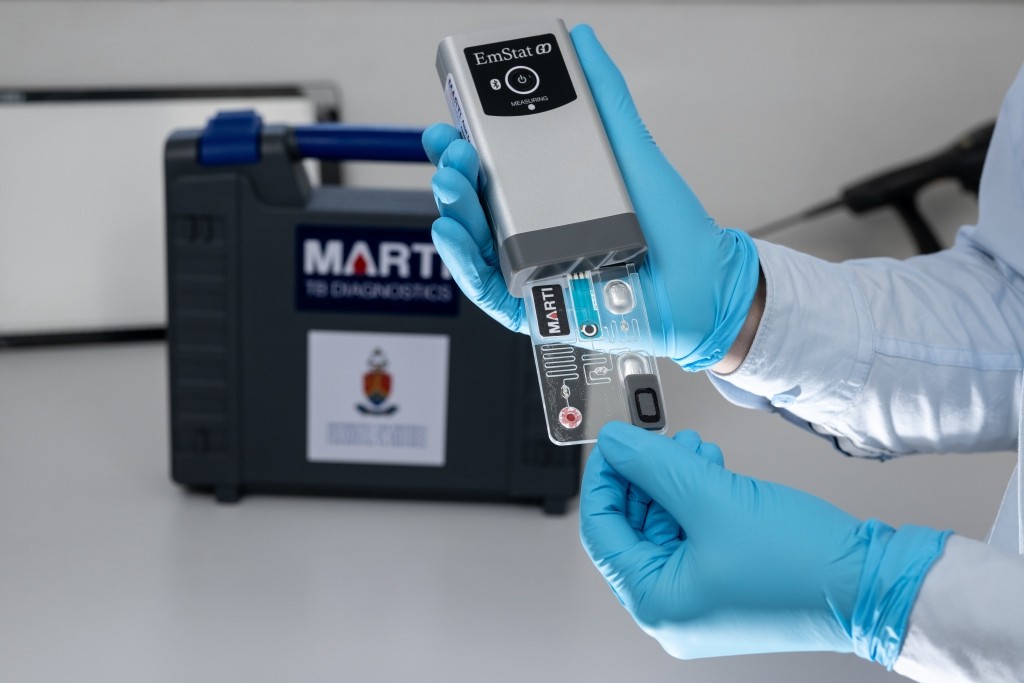
The new MARTI TB screening device

With their innovation of a small but powerful handheld device, researchers at the University of Pretoria (UP) are on course to redefine the tuberculosis (TB) screening process, which could ultimately help to combat the TB pandemic more effectively. TB is one of the deadliest infectious diseases worldwide, claiming more than 1.25 million lives each year, of which about 50 000 deaths occur in South Africa. It is the leading cause of death among people with HIV.

MARTI (mycolate antibody real-time immunoassay) is the name of the handheld device that can provide very high certainty that a person at risk does not have TB. Using just one drop of blood – and no laboratory – it is set to change the way TB is detected. It may even be adapted for use in both human and veterinary healthcare. The diagnostic is fast, accurate, affordable and – the intellectual part of it – proudly South African.

An internal validation trial was recently completed to confirm the accuracy of the test. These trial results show remarkable promise in terms of the specificity, sensitivity and accuracy of the diagnostic test, coming close to the range of targets set by the World Health Organization for the “perfect” test, making MARTI an ideal screening and diagnostic tool. An earlier trial demonstrated great potential in using this test to monitor TB treatment; these results were published in the journal Biomarkers in Medicine.

“Many people aren’t aware that TB doesn’t always sit in the lungs – it can be present in bones, joints and the brain,” says Professor Jan Verschoor, former research leader of UP’s Tuberculosis Research Group in the Department of Biochemistry, Genetics and Microbiology and now an emeritus professor of biochemistry who has been leading this discovery. “The ‘gold standard’ TB test that involves growing cultures from lung sputum can take about six weeks, by which time, many more people could have been infected by the patient or the patient’s health could have deteriorated beyond the prospect of cure. From a simple finger-prick blood sample, the MARTI test gives us a result in 30 minutes. This has profound cost and public health implications in a country like South Africa, where we conduct three to five million TB tests a year.

Tuberculosis bacteria. Credit: CDC

Caused by Mycobacterium tuberculosis, this resilient bacterium has long evaded simple detection methods, particularly in regions where healthcare infrastructure is limited. But now, an unexpected hero has emerged in the war on TB: a molecule in the bacterium’s waxy coat – specifically its mycolic acid (MA) – holds the key. These wax-like substances form a nearly impenetrable barrier, making the bacterium both drug-resistant and difficult to detect.

But while other scientists focused on breaking through this barrier, Prof Verschoor took a different approach: what if the wax itself could be used to detect the disease? He was the first to demonstrate that antibodies to the waxes are reliable indicators of active TB, irrespective of whether someone had been vaccinated or was coinfected with HIV.

A key aspect of the innovation came from Carl Baumeister, a PhD candidate under Prof Verschoor. He made the leap from slow laboratory-based biosensing to a handheld device that detects anti-MA antibodies accurately and affordably in less than 30 minutes. The result is a test that’s as clever as it is simple and cost-effective.

Detecting these anti-MA antibodies requires sophisticated sensing technology: the surface of a screen-printed carbon electrode is pre-coated with a thin layer of MA. MARTI works by flowing a drop of blood over this electrode. If a patient has TB, the sensor detects these antibodies in the blood sample; if a patient does not have TB, no signal would be generated since there are no anti-MA antibodies in the blood sample.

“The device fits in the palm of your hand and requires only a single drop of blood – no sputum, no needles, no laboratory,” says Carl Baumeister, Head of Operations of the UP spin-off company MARTI TB Diagnostics. “This may become a game-changer to diagnose TB in paediatric and HIV-positive patients, where obtaining sputum samples is often neither feasible nor safe. The same could apply to the 20% of all extra-pulmonary cases.”

“If MARTI says you don’t have TB, you can trust it,” Baumeister says. “That’s a critical trait when trying to rule out cases during an outbreak or in mass screening campaigns, much like what was needed during the COVID-19 pandemic.

Unlike other TB diagnostics, MARTI offers something rare and powerful: near-perfect negative predictive value in typical screening applications.

The internal validation trial across six healthcare facilities in Tshwane was led by Prof Veronica Ueckermann, Head of Infectious Diseases at Steve Biko Academic Hospital and UP’s Faculty of Health Sciences.

“Collecting, transporting, processing and analysing the samples from the various sites within the temperature and time constraints of the validation trial protocol posed a significant logistical challenge – but we succeeded,” says Mosa Molatseli, a senior research scientist who heads up the MARTI laboratory.

Recognising its potential, UP established the start-up company MARTI TB Diagnostics (Pty) Ltd to develop and eventually commercialise MARTI.

“This is designed to ensure that the technology remains in South African hands while attracting investment and serving global needs,” says Gerrie Mostert, interim CEO of the company. “The next steps are to get investors, funding and partner organisations on board, obtain regulatory approval and start manufacturing the kit. Ultimately, MARTI should be rolled out to clinics worldwide.”

Beyond Diagnosis: The Treatment Power of Modern Radiology

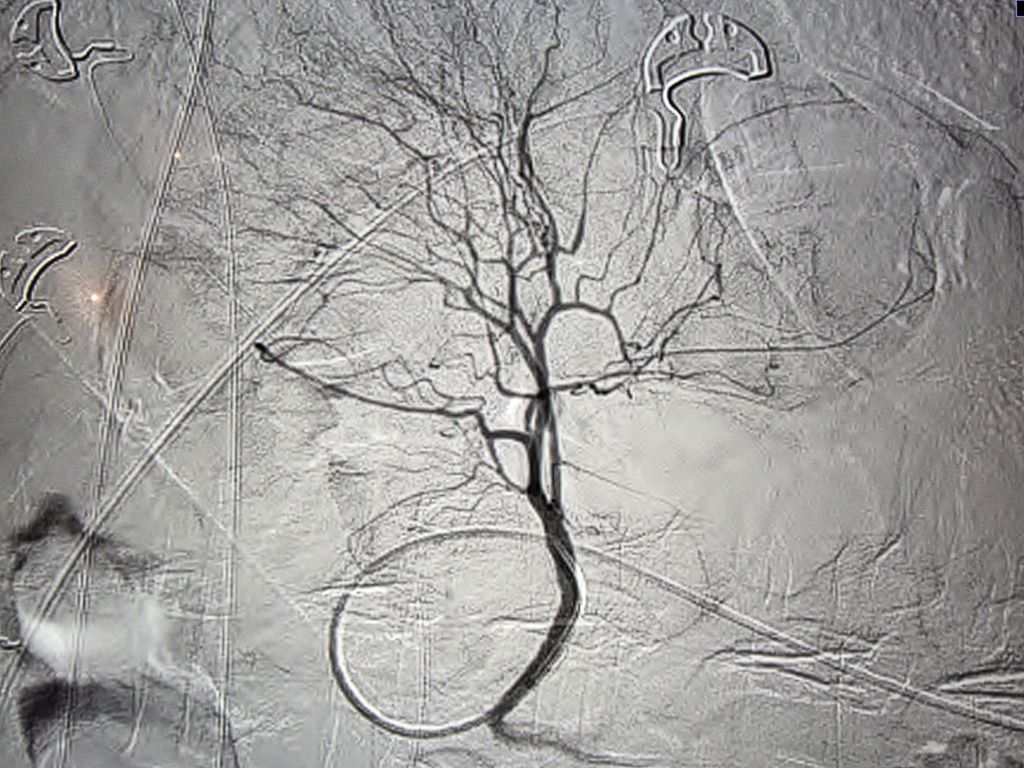
Diagnostic selective angiogram (DSA) to visualise the blood vessels of the small bowel, performed to localise internal bleeding.

When you think about radiology, you probably think of an X-ray, MRI or a CT scan to help radiologists and doctors see what is happening inside the body. This is the ‘medical detective’ part of radiology.  But it has become so much more than that… Interventional Radiology can offer patients an effective alternative to open surgery, with a much shorter recovery time.

Dr Siviwe Mpateni, an Interventional Radiologist (IR) at SCP Radiology, provides insights and answers questions about Interventional Radiology. Why it has become such an important part of modern healthcare and how these highly targeted procedures are helping to improve outcomes for patients across a wide range of conditions.

Dr Siviwe Mpateni – Interventional Radiologist with SCP Radiology

Can you explain IR in simple terms?

In a nutshell, it bridges the gap between diagnosis and treatment. Radiologists use imaging technologies, not only to see inside the body but also to treat disease with extraordinary precision. What is even more remarkable, is that it’s usually through tiny incisions, often no larger than a pinhole.  IR guides miniature instruments, through blood vessels or tissues to stop bleeding, open blocked arteries, treat tumours, relieve pain or for a biopsy.

For patients, this means shorter hospital stays, less pain and a quicker return to normal life. The impact of these procedures can be extraordinary.

You say the impact can be extraordinary – can you give us an example?

One particularly memorable case was a young man who suffered an acute stroke and had lost his ability to speak. Imaging showed a major vessel blockage in his brain, our team performed an urgent thrombectomy (removing blood clots from arteries or veins), successfully restoring blood flow. Seeing him and so many others recover, together with the positive impact of what we do, daily, reinforces my passion for the field.

It is obviously a passion of yours, can you explain what it is that draws you to IR?

It is the problem-solving aspect, the innovative approach to patient care and the impact we can have on patients who often have very few options left. It’s a truly special field.

Many patients referred to us have exhausted conventional therapies, particularly for pain management. A number of these are oncology patients, who may have limited time left. Using targeted, image-guided pain blocks, we can relieve their suffering in a precise and minimally invasive manner. This is the part of IR that I am truly passionate about. Knowing that, without these options, patients could spend their final days in severe pain, drives my commitment to this field. It’s the ability to preserve patient’s dignity and relieve pain at their most vulnerable moment. With our interventions, they can spend that time with their loved ones –  awake and alert, rather than heavily sedated on pain medication.

What IR advancements have there been in the last 10 or 15 years?

IR has progressed rapidly since the 1950s when Charles Dotter pioneered the idea of using imaging. His first major success was opening a blocked leg artery in a patient facing amputation. He saved her limb and launched a new field of medicine.

Since then, there have been remarkable advancements. We have smaller and more versatile devices, while the number of conditions we can treat has expanded significantly.

In collaboration with oncologists, surgeons and other clinical specialists, IR has become invaluable in the patient journey.

Are there any specific areas of medicine that IR have been particularly successful in or made a major impact?

There are several areas, most notably in oncology where IR has developed a powerful and expanding role. Interventional radiologists are now integral partners in the management of solid organ tumours, offering image-guided therapies such as ablation, embolisation and targeted drug delivery. Beyond tumour control, IR plays a crucial role in palliative care – managing cancer-related pain and complications, often significantly improving quality of life for patients who may have previously had limited or no treatment options

These advances reflect how IR has evolved into a central therapeutic specialty, working collaboratively within multidisciplinary teams to improve both progression-free survival and quality of life.

When you think of the trauma of surgery, being under anaesthetic and the recovery, IR is quite revolutionary.

It certainly is but, it is important to remember that IR is not a substitute for surgery. Rather, it complements surgical care and offers alternative or adjunctive options for patients who may benefit from less invasive approaches.

And, because IR spans the entire body, from head to toe, our scope is broad. This can be confusing for patients or referrers, unlike specialties confined to a single organ system. But it’s what makes the work exciting. No two days are ever the same, and there’s always a new challenge to tackle.

‘Radiology is advancing in leaps and bounds’, says Dr Mpateni. ‘IR is a fine tune medicine that has an enormous place in healthcare, where people are being more conservative about having major surgery.’

Dr Mpateni will soon take up an Interventional Radiology Fellowship at the University of Toronto, where he will gain further experience in complex procedures, particularly in interventional oncology and pain management.

‘Training alongside global leaders is an invaluable opportunity,’ he says. ‘My goal is to bring that knowledge and expertise back to South Africa so that we can continue expanding access to advanced, minimally invasive treatments that improve outcomes and quality of life for our patients.’

As IR continues to grow, specialists like Dr Mpateni are helping ensure that South African patients have access to some of the most advanced, targeted and patient-centred treatments available in modern medicine.