Infection by HIV Leaves a ‘Memory’ in Cells
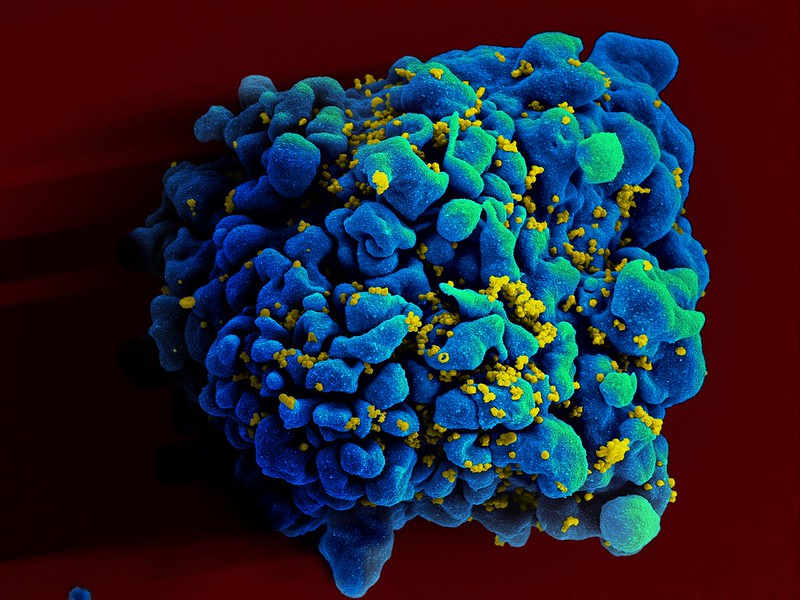
HIV Infecting a T9 Cell. Credit: NIH

Despite the benefits of antiretroviral therapy, people living with HIV often suffer from chronic inflammation, increasing the risk of developing comorbidities such as cardiovascular disease and neurocognitive dysfunction. Now, a new study in Cell Reports explains why chronic inflammation may be happening and how suppression or even eradication of HIV in the body may not resolve it.

In the study, researchers from the George Washington University show how an HIV protein permanently alters immune cells in a way that causes them to overreact to other pathogens. When the protein is introduced to immune cells, genes in those cells associated with inflammation turn on, or become expressed, the study showed. These pro-inflammatory genes remain expressed, even when the HIV protein is no longer in the cells. According to the researchers, this “immunologic memory” of the original HIV infection is why people living with HIV are susceptible to prolonged inflammation, putting them at greater risk for developing cardiovascular disease and other comorbidities.

“This research highlights the importance of physicians and patients recognizing that suppressing or even eliminating HIV does not eliminate the risk of these dangerous comorbidities,” Michael Bukrinsky,professor of microbiology, immunology, and tropical medicine at GW’s School of Medicine and Health Science and lead author on the study, said. “Patients and their doctors should still discuss ways to reduce inflammation and researchers should continue pursuing potential therapeutic targets that can reduce inflammation and co-morbidities in HIV-infected patients.”

For the study, the research team isolated human immune cells in vitro and exposed them to the HIV protein Nef. The amount of Nef introduced to the cells is similar to the amount found in about half of HIV-infected people taking antiretrovirals whose HIV load is undetectable. After a period of time, the researchers introduced a bacterial toxin to generate an immune response from the Nef-exposed cells. Compared to cells that were not exposed to the HIV protein, the Nef-exposed cells produced an elevated level of inflammatory proteins, called cytokines. When the team compared the genes of the Nef-exposed cells with the genes of the cells not exposed to Nef, they identified pro-inflammatory genes that were in a ready-to-be-expressed status as a result of the Nef exposure.

According to Bukrinsky, the findings in this study could help explain why certain comorbidities persist following other viral infections, including COVID-19.

“We’ve seen this pro-inflammatory immunologic memory reported with other pathogenic agents and often referred to as ‘trained immunity,'” Bukrinsky explains. “While this ‘trained immunity’ evolved as a beneficial immune process to protect against new infections, in certain cases it may lead to pathological outcomes. The ultimate effect depends on the length of this memory, and extended memory may underlie long-lived inflammatory conditions like we see in HIV infection or long COVID.”

Source: George Washington University

Healthcare Workers Strike over Salaries and Poor Working Conditions

On Tuesday 22 November, healthcare workers were among the public sector employees who engaged in a strike action to protest a lack of pay increase. A number of hospitals and clinics across South Africa and particularly Gauteng were affected, the Daily Maverick reports.

Unions had been offered a 3% increase plus an additional R1000, which the negotiating unions refused. Union leaders rejected this, demanding a 10% increase. Inflation is running at 6%, and food prices have risen by 12% from the start of the year to September – largely driven up by the war in Ukraine.

Union leaders say the strikes and protests are driven by wages staying the same over the past few years. Healthcare workers had already been suffering high rates of burnout battling COVID waves. In addition, workers complained of being understaffed, and enduring dire working conditions from lack of equipment, medication and food.

On Tuesday morning, burning tires were placed on Chris Hani Road in Soweto. Striking workers wearing union colours were preventing many vehicles, including ambulances, from entering Chris Hani Baragwanath Hospital. Patients inside were being left unattended.

Sebokeng Hospital in Sedibeng meanwhile was running on a skeleton staff, with doctors and nurses prevented from entering. Emergency services were being diverted to nearby facilities.

Meanwhile, GroundUp reported that patients were being turned away from Mabandla Clinic in the Eastern Cape. In Gqeberha, Motherwell NU8 clinic and the Motherwell Healthcare Centre were both reported to be closed. 

On Tuesday afternoon, the Gauteng Department of Health received an interdict against the strikes, preventing striking workers from interfering with access to hospitals, EWN reports. The public healthcare systems in Gauteng and other provinces have already been strained, with recent high-profile protests and resignations over inadequate funding and allegations of corruption.

A Cup of Tea a Day Keeps the Doctor Away

Photo by Joanna Kosinska on Unsplash

Tea has long been known to have many health benefits, but now a study of 881 elderly women found they were far less likely to have extensive build-up of abdominal aortic calcification (AAC) if they consumed a high level of flavonoids in their diet – found in black and green tea, apples, nuts, citrus fruit, berries.

AAC is the calcification of the abdominal aorta and is a predictor of cardiovascular risk such as heart attack and stroke. It has also been found to be a reliable predictor for late-life dementia.

Edith Cowan University researcher and study lead Ben Parmenter said while there were many dietary sources of flavonoids, some had particularly high amounts.

“In most populations, a small group of foods and beverages – uniquely high in flavonoids – contribute the bulk of total dietary flavonoid intake,” he said.

“The main contributors are usually black or green tea, blueberries, strawberries, oranges, red wine, apples, raisins/grapes and dark chocolate.”

The flavonoid family

There are many different types of flavonoids, such as flavan-3-ols and flavonols, which the study indicated appear to also have a relationship with AAC.

Study participants who had a higher intake of total flavonoids, flavan-3-ols and flavonols were 36–39% less likely to have extensive AAC.

Black tea was the study cohort’s main source of total flavonoids and was also associated with significantly lower odds of extensive AAC.

Compared with respondents who didn’t drink tea, participants who had two-to-six cups per day had 16–42% less chance of having extensive AAC.

However, some other dietary sources of flavonoids such as fruit juice, red wine and chocolate, did not show a significant beneficial association with AAC.

Not just tea

Though black tea was the main source of flavonoids in the study – likely due to the age of the participants – Mr Parmenter said people could still benefit from flavonoids without putting the kettle on.

“Out of the women who don’t drink black tea, higher total non-tea flavonoid intake also appears to protect against extensive calcification of the arteries,” he said.

“This implies flavonoids from sources other than black tea may be protective against AAC when tea is not consumed.”

Mr Parmenter said this was important as it allows non-tea drinkers to still benefit from flavonoids in their diet.

“In other populations or groups of people, such as young men or people from other countries, black tea might not be the main source of flavonoids,” he said.

“AAC is a major predictor of vascular disease events, and this study shows intake of flavonoids, that could protect against AAC, are easily achievable in most people’s diets.”

Source: Edith Cowan University

Very Few South Africans can Swim, Says the NSRI. It Aims to Change this

With summer and the holidays approaching, soon thousands of adults and children will flock to the country’s shorelines and public pools. But many who live inland and in poor communities do not have access to safe water bodies and have not learned how to swim. Children play unsupervised in rivers and farm dams.

In Riebeek Kasteel last year, a grade six learner found his way into a dam within walking distance of his school, Meiring Primary. Just 12 years old, he drowned.

Now a bright red container stands at the school. It is one of the National Sea Rescue Institute’s (NSRI) “survival swimming centres”.

Andrew Ingram, NSRI drowning prevention manager, says swimming is an “essential skill”.

The first of its kind, the 12-metre shipping container contains a six-metre heated swimming pool, a changing room, an office and a camera monitored by the NSRI. The water is one metre deep, making it possible for the learners’ feet to touch the ground. The facility can also be locked up to avoid children accessing it unsupervised.

The design is inspired by previous work done with lifeguard containers. Almost everything is donated – the container, the pool’s fibreglass and resin, pumps and the filtration systems. The cost would otherwise be about R650 000.

After the Riebeek Kasteel installation in March, a second centre was set up in Tombo Village, Eastern Cape. Two more are expected next year – in KZN and the Northern Cape.

“We don’t teach the children how to swim, we teach them how to survive,” says Petro Meyer, an NSRI Instructor in Riebeek Kasteel. She said the valley gets very hot in summer and parents are away working. Children then “go to the dams and to the rivers and they swim alone without supervision”.

Meyer says they teach students four things: breath control, orientation, floating and moving through water. Children should be able to swim at least five metres once training is complete. Since the survival school opened, she says that they’ve given about 1,400 lessons.

A 2021 study on drowning prevention by the World Health Organisation found drowning to be the third most common accidental death in the world.

Brenton Cupido, principal at Meiring Primary, said there are no other public pools. The closest public one is 20 minutes by bus to Malmesbury and costs R30.

Riebeek Kasteel has many poor families and many parents at his school are farm workers and the majority depend on social grants.

“The farmers try to stop the learners [from using the farm dams] but they can’t be everywhere,” he says.

Cupido said the government should see that “there is a need for swimming pools in the rural areas with proper supervision”, and this would “prevent further tragedy”. “I don’t want to go through another … drowning again,” said Cupido.

“We have that peace of mind, that if our children … fall in the water, they know how to survive,” he said.

Another NSRI project is the over 1300 pink buoys across South Africa used as assisted floating devices in case of emergencies. These can be found in dams, rivers and the seaside. The NSRI also runs free swimming lessons at various municipal pools in the Western Cape.

According to the NSRI, only 15% of South Africans can swim (we cannot verify this statistic but it is highly likely that most South Africans cannot swim – editor). “If your parents can’t swim, it’s very likely that you won’t learn to swim,” said Ingram. “It’s expensive to learn to swim”.

With the survival centres, the NSRI hopes to “instil a culture of swimming in poor communities where it wouldn’t have been possible previously”.

Republished from GroundUp under a Creative Commons Attribution-NoDerivatives 4.0 International License.

Source: GroundUp

‘Good Cholesterol’ may not be Such a Good Cardiovascular Risk Indicator

Source: Wikimedia CC0

A study published in the Journal of the American College of Cardiology found that high-density lipoprotein (HDL) cholesterol, often called ‘good cholesterol’, may not be as effective as scientists once believed in uniformly predicting cardiovascular disease risk among adults of different racial and ethnic backgrounds.

The research found that while low levels of HDL cholesterol predicted an increased risk of heart attacks or related deaths for White adults – a long-accepted association – the same was not true for Black adults. Additionally, higher HDL cholesterol levels were not associated with reduced cardiovascular disease risk for either group.

“The goal was to understand this long-established link that labels HDL as the beneficial cholesterol, and if that’s true for all ethnicities,” said senior author Nathalie Pamir, PhD, an associate professor at Oregon Health & Science University, Portland. “It’s been well accepted that low HDL cholesterol levels are detrimental, regardless of race. Our research tested those assumptions.”

Pamir and colleagues reviewed data from 23 901 participants from the Reasons for Geographic and Racial Differences in Stroke Study (REGARDS). Previous studies that shaped perceptions about ‘good’ cholesterol levels and heart health were conducted in the 1970s through research with a majority of white adult study participants. For the current study, researchers were able to look at how cholesterol levels from Black and White middle-aged adults without heart disease who lived throughout the country overlapped with future cardiovascular events.

Study participants enrolled in REGARDS between 2003–2007 and researchers analysed information collected throughout a 10- to 11-year period. Black and white study participants shared similar characteristics, such as age, cholesterol levels, and underlying risk factors for heart disease, including having diabetes, high blood pressure, or smoking. During this time, 664 Black adults and 951 White adults experienced a heart attack or heart attack-related death. Adults with increased levels of LDL cholesterol and triglycerides had modestly increased risks for cardiovascular disease, which aligned with findings from previous research.

However, the study was the first to find that lower HDL cholesterol levels only predicted increased cardiovascular disease risk for white adults. It also expands on findings from other studies showing that high HDL cholesterol levels are not always associated with reduced cardiovascular events. The REGARDS analysis was the largest US study to show that this was true for both Black and White adults, suggesting that higher than optimal amounts of ‘good’ cholesterol may not provide cardiovascular benefits for either group.

“What I hope this type of research establishes is the need to revisit the risk-predicting algorithm for cardiovascular disease,” Pamir said. “It could mean that in the future we don’t get a pat on the back by our doctors for having higher HDL cholesterol levels.”

Pamir explained that as researchers study HDL cholesterol’s role in supporting heart health, they are exploring different theories. One is quality over quantity. That is, instead of having more HDL, the quality of HDL’s function – in picking up and transporting excess cholesterol from the body – may be more important for supporting cardiovascular health.

The authors conclude that in addition to supporting ongoing and future research with diverse populations to explore these connections, the findings suggest that cardiovascular disease risk calculators using HDL cholesterol could lead to inaccurate predictions for Black adults.

“When it comes to risk factors for heart disease, they cannot be limited to one race or ethnicity,” said Pamir. “They need to apply to everyone.”

Source: NIH/National Heart, Lung and Blood Institute

Genetic Links between Traits and Diseases may be Inflated

Genetics
Image source: Pixabay

Many estimates of how strongly traits and diseases share genetic signals may be inflated, according to a new study published in Science that indicates current methods for assessing genetic relationships between traits fail to account for mating patterns.

With genome sequencing technology, scientists have been seeking out the genetic associations between traits and disease risk, hoping to find clues in treating diseases. However, UCLA researchers said their new study cautions against relying too much on genetic correlation estimates. They say that such estimates are confounded by non-biological factors more than has been previously appreciated.

Genetic correlation estimates typically assume that mating is random. But in the real world, partners tend to pair up because of many shared interests and social structures. As a result, some genetic correlations in previous work that have been attributed to shared biology may instead represent incorrect statistical assumptions. For example, previous estimates of genetic overlap between body mass index (BMI) and educational attainment are likely to reflect this type of population structure, induced by “cross-trait assortative mating,” or how individuals of one trait tend to partner with individuals of another trait.

The study authors said genetic correlation estimates deserve more scrutiny, since these estimates been used to predict disease risk, glean for clues for potential therapies, inform diagnostic practices, and shape arguments about human behaviour and societal issues. The authors said some in the scientific community have placed too much emphasis on genetic correlation estimates based on the idea that studying genes, because they are unalterable, can overcome confounding factors.

“If you just look at two traits that are elevated in a group of people, you can’t conclude that they’re there for the same reason,” said lead author Richard Border, a postdoctoral researcher in statistical genetics at UCLA. “But there’s been a kind of assumption that if you can track this back to genes, then you would have the causal story.”

Based on their analysis of two large databases of spousal traits, researchers found that cross-trait assortative mating is strongly associated with genetic correlation estimates and plausibly accounts for a “substantial” portion of genetic correlation estimates.

“Cross-trait assortative mating has affected all of our genomes and caused interesting correlations between DNA you inherit from your mother and DNA you inherit from your father across the whole genome,” said study co-author Noah Zaitlen, professor at UCLA Health.

The researchers also examined genetic correlation estimates of psychiatric disorders, which have sparked debate in the psychiatric community because they appear to show genetic relationships among disorders that seemingly have little similarity, such as attention-deficit hyperactivity disorder and schizophrenia. The researchers found that genetic correlations for a number of unrelated traits could be plausibly attributed to cross-trait assortative mating and imperfect diagnostic practices. On the other hand, their analysis found stronger links for some pairs of traits, like anxiety disorders and major depression, suggesting that there truly is at least some shared biology.

“But even when there is a real signal there, we’re still suggesting that we’re overestimating the extent of that sharing,” Border said.

Source: University of California – Los Angeles Health Sciences

Anti-hyperglycaemic Drugs Raise or Lower MS Risk Depending on Age

Image source: Pixabay CC0

A new study published in the journal Heliyon found that people older than 45 whose Type 2 diabetes (T2D) was treated with anti-hyperglycaemic drugs had an increased risk of multiple sclerosis (MS), especially women, while the reverse was true in under 45s.

“Our findings reinforce the need for a precision medicine approach to preventing MS in these vulnerable populations,” said lead researcher Kathleen Rodgers, PhD, associate director of translational neuroscience at the Center for Innovation in Brain Science.

Multiple sclerosis (MS) is an unpredictable autoimmune neurological disorder that affects the central nervous system and leads to severe physical and cognitive disability. It is estimated that more than 2.8 million worldwide are living with MS.

For people with T2D, growing evidence links metabolic disorders and MS through a common driver of increased autoimmunity. This brings into question the impact of anti-hyperglycaemic therapeutics used to treat T2D, including insulin, on the incidence of MS.

“Previous research has shown a neuroprotective effect of anti-hyperglycaemic medications in Alzheimer’s disease and other related dementias,” Dr Rodgers said. “For MS, we wanted to further examine age and sex differences, particularly among men and women under 45 with Type 2 diabetes.”

They found that men older than 45 years old had a slightly significant increase of MS risk and women older than 45 years exhibited a significant increase in MS incidence after anti-hyperglycaemic exposure. In addition to age differences, the risk analysis by drug class showed that exposure to insulin in patients older than 45 years old was associated with a greater increased risk compared with other therapies.

In patients younger than 45, anti-hyperglycaemic exposure was protective against the development of MS.

The study drew on a US-based insurance claims database of 151 million participants to identify more than 5 million patients with a diagnosis of T2D and either early-onset or late-onset MS. Researchers segmented the data by age – T2D diagnosis before or after age 45 – and sex to decode the factors driving MS risk in both populations, especially in women over 45 years of age.

Source: University of Arizona Health Sciences

Supreme Court of Appeal Reverses Controversial Ivermectin Ruling

Gavel
Photo by Bill Oxford on Unsplash

The Supreme Court of Appeal (SCA) has set aside a controversial supervisory order, granted in April 2021, compelling the South African Health Products Regulatory Authority (SAHPRA) to report back to court every three months on access to ivermectin for use in the treatment of COVID patients.

The court has ruled that there was no evidence to justify the order made by Pretoria High Court Judge Cassim Sardiwalla, that affected parties had not asked for the order, and that they had not been heard before he made it.

The judge had also failed to provide his reasons for making it, the court said.

The issue has its genesis in four applications, one by the African Christian Democratic Party in 2021 against SAHPRA seeking access to ivermectin for the treatment of COVID.

At that time, SAHPRA, which was wary of its use saying there was no reliable research to prove its efficacy, had already put in place its “controlled compassionate use” programme in response to reports of illicit ivermectin-containing products entering the South African market. The programme was stopped in May this year.

In terms of that programme, permission was granted to five importers of unregistered oral solid dosage forms of ivermectin. Health facilities were permitted to hold bulk stock but individual applications were still required. SAPHRA said it would monitor its use.

The ACDP and others approached the court for orders directing SAHPRA to remove restrictions and do “all things necessary to regulate and ensure the manufacture” of ivermectin until such time as clinical evidence demonstrated that it was not effective in the treatment of COVID.

The matter was settled along the same lines as SAHPRA’s programme.

But Judge Sardiwalla, in making the settlement agreement an order of court, also granted a “supervisory order”, putting SAHPRA under his judicial authority in respect of ivermectin.

SAHPRA and the Minister of Health applied for and were granted leave to appeal the order to the SCA.

Read the full judgment here

In heads of argument before the SCA, SAHPRA said its appeal concerned the propriety of the order directing an organ of state to report back to court and be subject to judicial supervision where the dispute had been settled and there was no evidence at all that SAHPRA and the minister would not comply with the settlement agreement.

“It was simply imposed without justification. The order constitutes a grave violation of the Constitution … it violates the rule of law, the right to a fair hearing and the principle of separation of powers,” it argued.

The judge, SAHPRA said, had improperly made findings on matters not in dispute and his written reasons for the supervisory order “do not constitute reasons at all”.

In the SCA ruling, Judge Clive Plaskett said Judge Sardiwalla had suggested to the parties that he “regarded himself as seized of all matters involving ivermectin” and had proposed the supervisory order.

Both SAHPRA and the minister indicated they would oppose this and filed further papers.

While the judge had indicated that he would hear the parties on 6 April 2021, his registrar had informed SAHPRA’s attorney that morning that he had made a decision, he would not hear arguments, and he would send his order to the parties shortly.

No reasons accompanied the order.

SAHPRA and the minister asked for reasons but when these were furnished, they made no mention of the supervisory order or why he granted it.

Judge Plaskett said the first difficulty with the order was that Judge Sardiwalla had not given SAHPRA and the minister a hearing despite knowing that they did not agree to it.

“He agreed to a hearing but inexplicably changed his mind. In these circumstances, an oral hearing was, without doubt, essential.

“Courts decide matters, particularly opposed matters, in open court and the exceptions to this rule are limited.”

Judge Plaskett said the fact that the order had not been applied for by any party required that it be set aside.

He said, further, there was a complete absence of evidence to justify it.

“Important as supervisory orders may be in appropriate cases, the granting of this type of relief must be carefully considered – and justified on the facts – particularly because of its separation of powers implications.

“In this case, not only was there no evidence as to the necessity of a supervisory order but the fact that SAHPRA and the minister had settled the matter and agreed to an order suggests that there was probably no necessity for one.

“Had he allowed the parties to argue the matter, he would have been informed of the separation of powers problem …

“Finally, it strikes me as telling that the reasons he furnished made no mention of the supervisory order – and this despite being pertinently asked to furnish reasons on this very issue,” Judge Plaskett said, upholding the appeal, and setting aside the order.

The ACDP originally opposed SAHPRA’s appeal but shortly before the SCA hearing, it withdrew its opposition on the basis that no cost order would be made against it. The SCA therefore did not order costs.

The ivermectin programme was stopped in May this year.

Republished from GroundUp under a Creative Commons Attribution-NoDerivatives 4.0 International License.

Source: GroundUp

‘Thor’ Actor Takes a Break from Acting after Alzheimer’s Gene Discovery

Actor Chris Hemsworth. Credit: Gage Skidmore / Wikimedia Commons

Actor Chris Hemsworth has announced that he is stepping back from acting in order to focus on preventative measures for Alzheimer’s disease.

The 39-year-old star of ‘Thor’ told Vanity Fair that genetic testing had confirmed that he had two pairs of a gene, APOE4. which is highly predictive of developing Alzheimer’s. About one in four have a single copy while 2–3% carry two copies of the gene.

The reason APOE4 increases Alzheimer’s risk isn’t not well understood. The APOE protein helps carry cholesterol and other types of fat in the bloodstream. Recent studies suggest that problems with brain cells’ ability to process lipids may play a key role in Alzheimer’s and related diseases.

Lipid imbalances can impair many of a cell’s essential processes. This includes creating cell membranes, moving molecules within the cell, and generating energy.

Hemsworth had made the discovery while making the TV series ‘Limitless‘, in which he engages in a variety of activities to push the limits of his own body and mind and explores ways of extending the lifespan.

“My concern was I just didn’t want to manipulate it and overdramatise it, and make it into some sort of hokey grab at empathy, or whatever, for entertainment,” said Hemsworth. “It’s not like I’ve been handed my resignation.”

He emphasises that he is thankful at having made the discovery, as it has made him more appreciative of his life, and it now means he can now take steps to protect his health.

Fortunately, research suggests that there are lifestyle changes that may offer preventative effects for APOE4 carriers, such as reducing stress and getting regular exercise – though the latter is unlikely to be a problem for the already athletic actor. Dietary measures include various low-carbohydrate diets (including ketogenic diets), regular portions of oily fish, cruciferous vegetables and abstaining from alcohol.

Supplements with potential benefits include DHA, quercetin, resveratrol, vitamin D3, vitamin K2, B-vitamin complex and possibly lithium.

Scientists Coax CNS Axons into Regenerating

Source: Pixabay CC0

Severed axons are unable to regenerate, which means that central nervous system (CNS) injuries such as to the spinal cord, can result in permanent loss of sensory and motor function. Presently, there are very limited options to help these patients regain their motor abilities. In mice, researchers have found that deleting a certain gene can cause axons to regrow. The results have recently been published in the scientific journal Neuron.

In a study using mice, a research team led by Associate Professor Kai Liu found that the deletion of PTPN2, a phosphatase-coding gene, in neurons can prompt axons to regrow. Combination with the type II interferon IFNγ, can accelerate the process and increase the number of axons regenerated.

Unlike the CNS, peripheral nerves have a greater ability to regrow and repair by themselves after injury. Scientists have yet to fully understand the relationship between this self-repair and the intrinsic immune mechanism of the nervous system. Thus, the team aimed to resolve how immune-related signalling pathways affected neurons after injury, and whether they could enhance axonal regeneration directly.

This study investigated whether the signalling pathway IFNγ-cGAS-STING had any role in the regeneration process of peripheral nerves. Researchers found that peripheral axons could directly modulate the immune response in their injured environment to promote self-repair after injury.

In previous research, Prof Liu’s team had already demonstrated that elevating the neuronal activity and regulating the neuronal glycerolipid metabolism pathway could  boost axon regenerative capacity. The current study is providing further insights into the search of treatment solutions for challenging conditions such as spinal cord injuries, with one possible option being the joining of several types of different signalling pathways.

Source: EurekAlert!