Transforming the Way Cancer Vaccines are Designed and Made

Photo by Louise Reed on Unsplash

A new way to significantly increase the potency of almost any vaccine has been developed by researchers from the International Institute for Nanotechnology (IIN) at Northwestern University, which they describe in Nature.

The scientists used chemistry and nanotechnology to change the structural location of adjuvants and antigens on and within a nanoscale vaccine, greatly increasing vaccine performance. The antigen targets the immune system, and the adjuvant is a stimulator that increases the effectiveness of the antigen. 

“The work shows that vaccine structure and not just the components is a critical factor in determining vaccine efficacy,” said lead investigator Chad A. Mirkin, director of the IIN. “Where and how we position the antigens and adjuvant within a single architecture markedly changes how the immune system recognises and processes it.”

This new heightened emphasis on structure has the potential to improve the effectiveness of conventional cancer vaccines, which historically have not worked well, Mirkin said. 

Mirkin’s team has studied the effect of vaccine structure in the context of seven different types of cancer to date, including triple-negative breast cancer, papillomavirus-induced cervical cancer, melanoma, colon cancer and prostate cancer to determine the most effective architecture to treat each disease.   

Conventional vaccines take a blender approach   

With most conventional vaccines, the antigen and the adjuvant are simply blended and injected into a patient, giving no control over the vaccine structure, and, consequently, limited control over trafficking and processing of the vaccine components. Thus, there is no control over how well the vaccine works.  

“A challenge with conventional vaccines is that out of that blended mish mosh, an immune cell might pick up 50 antigens and one adjuvant or one antigen and 50 adjuvants,” said study author and former Northwestern postdoctoral associate Michelle Teplensky, who is now an assistant professor at Boston University. “But there must be an optimum ratio of each that would maximise the vaccine’s effectiveness.” 

Enter SNAs (spherical nucleic acids), which are the structural platform, invented and developed by Mirkin, used in this new class of modular vaccines. SNAs allow scientists to pinpoint exactly how many antigens and adjuvants are being delivered to cells. SNAs also enable scientists to tailor how these vaccine components are presented, and the rate at which they are processed. Such structural considerations, which greatly impact vaccine effectiveness, are largely ignored in conventional approaches.  

Vaccines developed through ‘rational vaccinology’ offer precise dosing for maximum effectiveness

Mirkin came up with this approach to systematically control antigen and adjuvant locations within modular vaccine architectures, and called it ‘rational vaccinology’. It is based on the concept that the structural presentation of vaccine components matters as much as the components themselves in driving efficacy.   

“Vaccines developed through rational vaccinology deliver the precise dose of antigen and adjuvant to every immune cell, so they are all equally primed to attack cancer cells,” said Mirkin. “If your immune cells are soldiers, a traditional vaccine leaves some unarmed; our vaccine arms them all with a powerful weapon with which to kill cancer. Which immune cell ‘soldiers’ do you want to attack your cancer cells?”

Building an (even) better vaccine  

The team developed a cancer vaccine that reduced tumour growth by more than four times compared to checkpoint inhibitor monotherapy, and led to a 40% extension in median survival.  

By reconfiguring the architecture of a vaccine containing multiple targets, the SNA enables the immune system to find tumour cells. The team investigated differences in how well two antigens were recognised by the immune system depending on their placement, on the core or perimeter, of the SNA structure. For an SNA with optimum placement, they could increase the immune response and how quickly the nanovaccine triggered cytokine (an immune cell protein) production to boost T cells attacking the cancer cells. The scientists also studied how the different placements affected the immune system’s ability to remember the invader, and whether the memory was long-term.  

“Where and how we position the antigens and adjuvant within a single architecture markedly changes how the immune system recognises and processes it,” Mirkin said. 

The most powerful structure throws two punches to outsmart the tumour  

The study data show that attaching two different antigens to an SNA comprising a shell of adjuvant was the most potent approach for a cancer vaccine structure. These engineered SNA nanostructures stalled tumour growth in multiple animal models.   

“It is remarkable,” Mirkin said. “When altering the placement of antigens in two vaccines that are nearly identical from a compositional standpoint, the treatment benefit against tumours is dramatically changed. One vaccine is potent and useful, while the other is much less effective.”  

Many current cancer vaccines are designed to primarily activate cytotoxic T cells, only one defence against a cancer cell. Because tumour cells are always mutating, they can easily escape this immune cell surveillance, quickly rendering the vaccine ineffective. The odds are higher that the T cell will recognise a mutating cancer cell if it has more antigens to recognise it.   

“You need more than one type of T cell activated, so you can more easily attack a tumour cell,” Teplensky said. “The more types of cells the immune system has to go after tumours, the better. Vaccines consisting of multiple antigens targeting multiple immune cell types are necessary to induce enhanced and long-lasting tumour remission.”  

Another advantage of the rational vaccinology approach, especially when used with a nanostructure like an SNA, is that it’s easy to alter the structure of a vaccine to go after a different type of disease. Mirkin said they simply switch out a peptide, a snippet of a cancer protein with a chemical handle that “clips” onto the structure, not unlike adding a new charm to a bracelet.   

Towards the most effective vaccine for any cancer type 

“The collective importance of this work is that it lays the foundation for developing the most effective forms of vaccine for almost any type of cancer,” Teplensky said. “It is about redefining how we develop vaccines across the board, including ones for infectious diseases.” 

In a previously published paper, Mirkin, Teplensky and colleagues demonstrated the importance of vaccine structure for SARS-CoV-2 by creating vaccines that exhibited protective immunity in 100% of animals against a lethal viral infection.  

“Small changes in antigen placement on a vaccine significantly elevate cell-to-cell communication, cross-talk and cell synergy,” Mirkin said. “The developments made in this work provide a path forward to rethinking the design of vaccines for cancer and other diseases as a whole.”   

Source: Northwestern University
Strep A Toxin Serves as Both Weapon and Shield

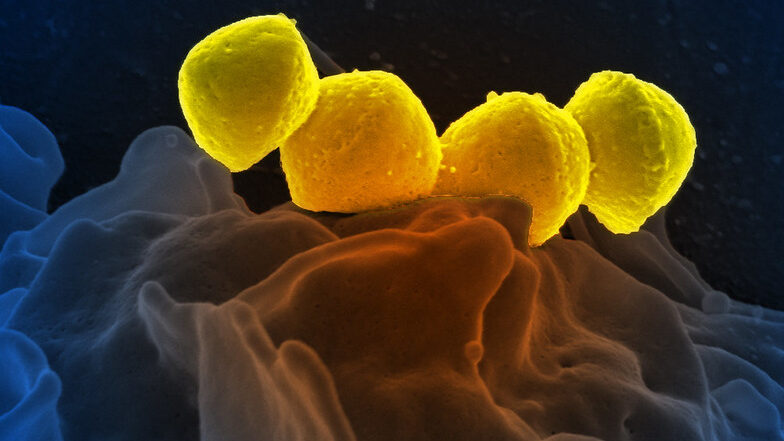
Streptococcus pyrogenese bound to human neutrophil
Streptococcus pyogenese bound to a human neutrophil. Credit: National Institute of Allergy and Infectious Diseases, National Institutes of Health

Griffith University researchers have unlocked one of the secrets as to why some forms of Streptococcus Group A (Strep A) are associated with severe invasive infection. The results, published in mBio, suggest that a toxin it secretes not only damages cells but helps Strep A resist host defence.

Around the world, invasive Strep A diseases are responsible for more than 163 000 deaths annually and a recent increase in cases of invasive Strep A disease has been observed internationally.

For the past 10 years, Institute for Glycomics Associate Professor Manisha Pandey and Professor Michael Good have been researching the pathways in which Strep A can spread through the body.

“The findings from this study will have far-reaching implications as Strep A is responsible for a significant number of invasive and non-invasive infections which cause significant morbidity and mortality globally,” Associate Professor Pandey said.

“The reason for this is that invasive organisms express significantly more of the toxin, streptolysin O (SLO), which was the main focus of this study.

“SLO exerts potent cell and tissue destructive activity and promotes Strep A resistance to clearance by white cells in the body which is the critical first element of host defence against invasive Strep A infection.”

Professor Good said: “We found SLO alters interactions with host cell populations and increases Strep A viability at sites in the body such as the blood and spleen, and that its absence results in significantly less virulence.”

“Essentially, the less SLO present, the less severe the case of Strep A.”

SLO is secreted by nearly all Strep A isolates, but those that secrete the most SLO are the most virulent.

This work underscores the importance of SLO in Strep A virulence while highlighting the complex nature of Strep A pathogenesis.

This improved insight into host-pathogen interactions will enable a better understanding of host immune evasion mechanisms and inform streptococcal vaccine development programs.

Dr Pandey said a key finding was the presence of SLO in invasive organisms did not impair the ability of the Strep A vaccine candidate developed by Griffith University’s Institute for Glycomics and which is now in a clinical trial.

The Strep A virulence study was part of a PhD project undertaken by Dr Emma Langshaw.

Source: Griffith University

Genetic Variations Influence Drug Metabolism in Patients of African Descent

Photo by Agung Pandit Wiguna

Investigators have identified new genetic variations that affect gene expression in the liver cells of patients of African ancestry, findings that provide insight into how drugs are metabolised differently in different populations, according to a study published in The American Journal of Human Genetics.

Expression quantitative locus (eQTL) studies use an individual’s genomic and transcriptomic data to uncover unique genetic variants that regulate gene expression. However, people of African descent have not been well represented in these databases.

Having this comprehensive, multiomic data is key to uncovering the mechanisms that regulate an individual’s genome and understanding how different groups of people respond to drugs differently, which can improve treatment strategies, according to Minoli Perera, PharmD, PhD, associate professor of Pharmacology and senior author of the study.

“We don’t have data from any historically excluded populations to run these analyses, so a big motivation of my lab is to create data in African ancestry populations so that they are represented in multiomics,” said Perera.

In the current study, the investigators treated hepatocytes from liver tissue samples from African American patients with six FDA approved drugs: Rifampin, Phenytoin, Carbamazepine, Dexamethasone, Phenobarbital and Omeprazole.

The investigators then performed whole-genome genotyping and RNA sequencing on primary hepatocytes treated both with and without the drugs. They also mapped eQTLs, or single-nucleotide polymorphisms (SNPs) affecting gene expression, in the liver cells.

From this comprehensive analysis, they uncovered varying transcriptional changes in the cell lines across the different drug treatments and identified NRF2 as a potential gene transcription regulator.

“NRF2 has been already identified as a very important transcription factor for drug metabolism, but this is a much more comprehensive way to look at it,” Perera said.

The investigators also discovered nearly 3000 genetic variants that affect how well hepatocytes respond to external stimuli, including drugs, which the investigators called drug response eQTLs, or reQTLs. Notably, they discovered reQTLs for drug-metabolising genes such as CYP3A5.

Most individuals of European ancestry carry a specific genetic variant in CYP3A5 which results in no/low CYP3A5 enzyme, whereas individuals of African ancestry carry that variant at a lower frequency. According to Perera, this is a problem because most participants that are recruited for clinical trials are of European ancestry, and the findings from these trials directly inform how often and how much of a drug should be prescribed to all patients, regardless of their ancestry.

“When you test drugs in a group of people with limited diversity, and then say this is the dose, this is how fast it’s metabolised, this is how often you dose the drug and then you give this medication to the entire U.S. population, we don’t know for sure how accurate those measures are, and that’s just with one variant. Other variants that may influence how much or how little we up-regulate these important enzymes,” Perera said.

Perera said her team is now expanding their work by increasing the number of hepatocytes from African American participants they’re studying and incorporating other types of omics techniques, such as epigenetic profiling.

“Almost exclusively we’ve done epigenetic screenings in European populations, so what can we find in the epigenome that’s important for African Americans. Also, because there’s more genetic variation in individuals of African descent, would that change the epigenome in ways that we aren’t able to see in Europeans,” Perera said. “We hope that what we’re doing can help annotate new studies coming along for African ancestry populations.”

Source: Northwestern University

Patients ‘Don’t Need to be Checked for Everything’, Recommendation Says

Blood samples
Photo by National Cancer Institute on Unsplash

Commonly ordered tests can provide early warning of underlying disease, but could also create unnecessary risks of false positive results, provoking anxiety in the patient, wasted time and money and risks of invasive testing.

Therefore, to combat commonly ordered – but not always necessary – procedures and tests, the Society of General Internal Medicine (SGIM) on Tuesday released its revised list of recommendations on five primary care procedures and tests that patients and physicians should question.

Northwestern University’s Dr Jeffrey A. Linder and David Liss, who have previously published research on the benefits of primary care checkups, helped revise the list.

For instance, the age-old idea of getting an annual physical exam with “routine blood tests” from a primary care doctor is a misconception because a person’s age and other risk factors should influence how frequently they should see their doctor, Linder said.

“We often have patients come in asking us to ‘check me for everything,’ but this is a potentially anxiety-provoking, dangerous thing for patients because the more testing we do, the more stuff we find, and the more we need to follow up,” said Linder, chief of the division of general internal medicine at Northwestern University Feinberg School of Medicine and a Northwestern Medicine physician. “In someone who is asymptomatic, an ‘abnormality’ is much more likely to be a false positive or of no clinical significance than for us to catch early disease.

“False positives can expose patients to all of the anxiety, costs, hassle and time commitment, and danger from sometimes invasive testing, with a very low likelihood that it is going to improve their health.”

This isn’t to say nobody should get a checkup every year. For instance, patients who have overdue preventive services, rarely see their primary care physician, have low self-rated health and/or are aged 65 or older should get an annual checkup, the scientists said.

The newly revised list is part of SGIM’s Choosing Wisely campaign, which is an initiative of the American Board of Internal Medicine Foundation. SGIM members originally selected the topics in 2013 and later updated the list in 2017.

The list generated controversy when it was first developed in 2013, recalls Linder.

“The list was widely misinterpreted as ‘specialty society says you don’t need to see your doctor,’ but that was not what it said,” Linder said.

Time and downstream financial costs also are issues of these commonly ordered but oftentimes unnecessary tests and procedures, Liss said.

“Patients and care teams often spend valuable time on low-value checkups that could have been devoted to high-need patients,” said Liss, research associate professor of general internal medicine at Feinberg. “There also is the overall increase in costs to the health system. And even if annual checkups are covered by most insurance, patients often have copays for services like blood draws and other diagnostic tests.”

The revised list was developed after months of careful consideration and review, using the most current evidence about management and treatment options. Linder and Liss served as ad hoc members of the SGIM’s Choosing Wisely Working Group.

Here are the five recommendations, based on a review of the most recent studies in the field:

  1. Don’t recommend daily home glucose monitoring in patients with Type 2 diabetes mellitus not using insulin.
  2. Don’t perform routine annual checkups unless patients are likely to benefit; the frequency of checkups should be based on individual risk factors and preferences. During checkups, don’t conduct comprehensive physical exams or routine lab testing.
  3. Don’t perform routine pre-operative testing before low-risk surgical procedures.
  4. Don’t recommend cancer screening in adults with life expectancy of less than 10 years.
  5. Don’t place, or leave in place, peripherally inserted central catheters for patient or provider convenience.

Source: Northwestern University

Pre-eclampsia Causes Coronary Artery Changes Normally Seen in Older Women

Source: Pixabay CC0

A large new study led by researchers from Lund University in Sweden shows that narrowing and calcification of the blood vessels of the heart are more common in women previously affected by pregnancy complications, and in some cases can result in coronary artery changes similar to those in women 10 years older who had no pregnancy complications.

Despite complications in pregnancy having increasingly been acknowledged as a new type of risk factor for heart disease, it is yet to be determined how this information can best be used within healthcare.

“Our results suggest that the correlation exists even among women with a low expected risk of cardiovascular disease. The study is an important piece of the puzzle in understanding how women with pregnancy complications should be followed-up by their healthcare provider after pregnancy,” says lead researcher Simon Timpka, associate professor of clinical epidemiology at Lund University.

Researchers included 10 528 women from the National Medical Birth Register* who have subsequently gone on to participate in the large population study SCAPIS at age 50-65 years. All the women underwent coronary CT angiography in order to detect calcification of blood vessels, narrowing and other signs of heart disease. The researchers investigated signs of heart disease by history of five common complications in pregnancy: pre-eclampsia, gestational hypertension, preterm delivery, gestational diabetes and infants born small for gestational age.

Four per cent more of the women with pregnancy complications had visible atherosclerosis of the coronary arteries, compared to the group who had not had complications in pregnancy (32% as opposed to 28%).

Pre-eclampsia and gestational hypertension were the most strongly linked: among women who had not experienced any pregnancy complications, 2% had narrowing in coronary arteries while the corresponding number among women who previously suffered from pre-eclampsia or pregnancy-induced hypertension was 5%.

“To reduce the risk of these women developing coronary heart disease in the future, it is important that they check risk factors such as blood pressure, blood sugar and cholesterol regularly,” says co-author Sofia Sederholm Lawesson, consultant cardiologist at the University Hospital in Linköping.

“In this study, we have investigated many different associations between complications in pregnancy and heart disease all at once, so it is possible that chance might explain individual results,” says Timpka. “Yet the pattern is relatively consistent, which makes it easier to draw conclusions including that women with prior pre-eclampsia have changes in the coronary arteries that are equivalent to the changes seen in women who have not experienced complications in pregnancy but are five to ten years older.”

According to Timpka, CT scans of the coronary arteries are increasingly used in patients presenting with symptoms, but there is still a lack of large studies into the significance over time of some of the studied changes among women without current symptoms.

“Even if our study provides new knowledge on the development of coronary heart disease among middle-aged women who have previously suffered complications in pregnancy, there is a need for long-term studies in order to understand the true meaning that our discoveries have for symptomatic disease,” concludes Timpka.

Source: Lund University

In Anorexia, Brain Scans Show that Mindfulness Exercises Reduce Anxiety

Source: Pixabay CC0

A team of researchers at Kyoto University’s Graduate School of Medicine has now found that mindfulness meditation does reduce anxieties associated with anorexia nervosa. Results from the study, published in BHPsych Open, show changes in the activity of brain regions involved in anxiety.

Anorexia nervosa (AN) is a severe psychiatric illness associated with intense anxieties concerning weight, shape, and self-esteem. AN is characterised by food restriction, voluntary vomiting, and extreme emaciation. Mindfulness meditation has already become a globally recognised method for addressing AN but its effectiveness in clinically treating neurogenic emaciation has not been studied yet.

The team’s mindfulness meditation program has seen a significant decrease in obsessive thoughts about test subject’s self-image and brain activity associated with related emotions.

“Our results suggest that the participants in the study became better at accepting their anxiety as it is,” says lead author Tomomi Noda.

Mindfulness and meditation work hand-in-hand. The former teaches practitioners to hone their awareness of their present experience and their ability to not judge and rather accept their circumstances. The latter is the medium by which mindfulness can be approached.

“We focused on the possibility that patients with AN try to avoid their crippling anxiety about weight gain and self-image by restricting food or vomiting,” adds co-author Masanori Isobe.

A 4-week mindfulness intervention program examined neural changes using tasks designed to induce weight-related anxiety. The researchers then regulated this anxiety by helping patients accept their current situations and experiences at face value, instead of avoiding them.

The researchers used functional magnetic resonance imaging (fMRI) to analyse attention regulation in relation to eating disorders. The study’s results support the subjective experiences of the researchers, although it was unexpected to them that several global events, such as the COVID pandemic and the Russo-Ukrainian war, were significant factors in patients’ anxieties.

“We anticipate practical implications of our results in clinical psychiatry and psychology and broader research into mitigating suffering through mindfulness, using the strategy of self-acceptance to regulate attention,” concludes group leader Toshiya Murai.

Source: Kyoto University

MRI Reveals How a Dip in Cold Water Boosts Mood

Photo by Yaroslav Shuraev

Observations of the brain when the body is immersed in cold water reveal changes in connectivity between areas which process emotion, which could explain why people often feel more upbeat and alert after swimming outside or taking cold baths.

During a research trial, published in the journal Biology, 33 healthy volunteers were given a functional MRI (fMRI) scan immediately after bathing in cold water. The team included imaging experts from Bournemouth University and University Hospitals Dorset (UHD), and extreme environments researcher, Dr Heather Massey, from the University of Portsmouth. 

Dr Massey, from the School of Sport, Health and Exercise Science, said: “It has been a really pleasing experience to work with this interdisciplinary team to develop a method and publish this piece of research that could only be completed by a group with such a diverse skill set.

“With the growing popularity of outdoor swimming and cold water immersion, which many now use to support improved mood, it is long overdue that we study how it may affect us. We know so much about the impact cold water immersion can have on the body, but the brain has had little focus, primarily as it has been more challenging to study. It is only now that technology is developing, can we start to get some insight.”

Dr Ala Yankouskaya, Senior Lecturer in Psychology at Bournemouth University, led the study. She said: “The benefits of cold-water immersion are widely known from previous studies where participants were questioned on how they feel afterwards, but we wanted to see how the shock of going into the cold water actually affects the brain.” 

Each participant was given an initial fMRI scan and then immersed in a pool of water at 20°C for five minutes whilst an ECG and respiratory equipment measured their bodies’ physiological responses. After being quickly dried they were given a second fMRI scan so the team could look for any changes in their brains’ activity.

“All tiny parts of the brain are connected to each other in a certain pattern when we carry out activities in our day-to-day lives, so the brain works as a whole.” said Dr Yankouskaya. “After our participants went in the cold water, we saw the physiological effects – such as shivering and heavy breathing. The MRI scans then showed us how the brain rewires its connectivity to help the person cope with the shock.”  

Comparing the scans showed that changes had occurred in the connectivity between specific parts of the brain, in particular, the medial prefrontal cortex and the parietal cortex.

“These are the parts of the brain that control our emotions, and help us stay attentive and make decisions,” Dr Yankouskaya said. “So when the participants told us that they felt more alert, excited and generally better after their cold bath, we expected to see changes to the connectivity between those parts. And that is exactly what we found.”

The team are now planning to use their findings to understand more about the wiring and interactions between parts of the brain for people with mental health conditions. 

“The medial prefrontal cortex and parietal cortex have different wiring when people have conditions such as depression and anxiety,” Dr Yankouskaya explained.

“Learning how cold water can rewire these parts of the brain could help us understand why the connectivity is so different for people with these conditions, and hopefully, in the long-term, lead to alternative treatments,” she concluded.

Source: University of Portsmouth

Why Lung Cancer Doesn’t Respond Well to Immunotherapy

A new MIT study explains why dendritic cells (green) in lymph nodes that drain from the lungs fail to stimulate killer T cells (white) to attack lung tumours.
Credits: MIT/ Courtesy of the researchers

Immunotherapy works well against some types of cancer, but it has shown mixed success against lung cancer. A new study from MIT helps to shed light on why the immune system mounts such a lacklustre response to lung cancer, even after treatment with immunotherapy drugs. In a study of mice, the researchers found that bacteria naturally found in the lungs help to create an environment that suppresses T-cell activation in the lymph nodes near the lungs.

The researchers did not find that kind of immune-suppressive environment in lymph nodes near tumours growing near the skin of mice. They hope that their findings could help lead to the development of new ways to rev up the immune response to lung tumours.

“There is a functional difference between the T-cell responses that are mounted in the different lymph nodes. We’re hoping to identify a way to counteract that suppressive response, so that we can reactivate the lung-tumour-targeting T cells,” says Stefani Spranger, the Howard S. and Linda B. Stern Career Development Assistant Professor of Biology, a member of MIT’s Koch Institute for Integrative Cancer Research, and the senior author of the new study.

MIT graduate student Maria Zagorulya is the lead author of the paper, which appears today in the journal Immunity.

Failure to attack

For many years, scientists have known that cancer cells can send out immunosuppressive signals, which leads to a phenomenon known as T cell exhaustion. The goal of cancer immunotherapy is to rejuvenate those T cells so they can begin attacking tumours again.

One type of drug commonly used for immunotherapy involves checkpoint inhibitors, which remove the brakes on exhausted T cells and help reactivate them. This approach has worked well with cancers such as melanoma, but not as well with lung cancer.

Spranger’s recent work has offered one possible explanation for this: She found that some T cells stop working even before they reach a tumour, because of a failure to become activated early in their development. In a 2021 paper, she identified populations of dysfunctional T cells that can be distinguished from normal T cells by a pattern of gene expression that prevents them from attacking cancer cells when they enter a tumour.

“Despite the fact that these T cells are proliferating, and they’re infiltrating the tumour, they were never licensed to kill,” Spranger says.

In the new study, her team delved further into this activation failure, which occurs in the lymph nodes, which filter fluids that drain from nearby tissues. The lymph nodes are where ‘killer T cells’ encounter dendritic cells, which present antigens (tumour proteins) and help to activate the T cells.

To explore why some killer T cells fail to be properly activated, Spranger’s team studied mice that had tumours implanted either in the lungs or in the flank. All of the tumours were genetically identical.

The researchers found that T cells in lymph nodes that drain from the lung tumours did encounter dendritic cells and recognise the tumour antigens displayed by those cells. However, these T cells failed to become fully activated, as a result of inhibition by another population of T cells called regulatory T cells.

These regulatory T cells became strongly activated in lymph nodes that drain from the lungs, but not in lymph nodes near tumours located in the flank, the researchers found. Regulatory T cells are normally responsible for making sure that the immune system doesn’t attack the body’s own cells. However, the researchers found that these T cells also interfere with dendritic cells’ ability to activate killer T cells that target lung tumours.

The researchers also discovered how these regulatory T cells suppress dendritic cells: by removing stimulatory proteins from the surface of dendritic cells, which prevents them from being able to turn on killer T cell activity.

Microbial influence

Further studies revealed that the activation of regulatory T cells is driven by high levels of interferon gamma in the lymph nodes that drain from the lungs. This signalling molecule is produced in response to the presence of commensal bacterial – bacteria that normally live in the lungs without causing infection.

The researchers have not yet identified the types of bacteria that induce this response or the cells that produce the interferon gamma, but they showed that when they treated mice with an antibody that blocks interferon gamma, they could restore killer T cells’ activity.

Interferon gamma has a variety of effects on immune signalling, and blocking it can dampen the overall immune response against a tumour, so using it to stimulate killer T cells would not be a good strategy to use in patients, Spranger says. Her lab is now exploring other ways to help stimulate the killer T cell response, such as inhibiting the regulatory T cells that suppress the killer T cell response or blocking the signals from the commensal bacteria, once the researchers identify them.

Reprinted with permission of MIT News

Ceiling Vents Above COVID Patient Beds Provide Optimal Protection for HCWs

Source: Martha Dominguez de Gouveia on Unsplash

Researchers have modelled the transmission of SARS-CoV-2-containing aerosol particles within an isolation room, and found the optimal layout to reduce the exposure risk for health care workers. In Physics of Fluids, Wu et al. share their findings and guidance for isolation rooms. Their work focuses on the location of the room’s air extractor (air outlet) and filtration rates, the location of the patient’s bed, and the health and safety of the health care workers (HCWs) within the area.

The researchers modelled an isolation room at the Royal Brompton Hospital in London, with the aim of finding out the optimal room layout to reduce the risk of infection for health care staff.

“We modelled the virus transport and spreading processes and considered the effect of the temperature and humidity on the virus decay,” said Fangxin Fang, of Imperial College London. “We also modelled fluid and turbulence dynamics in our study, and explored the spatial distribution of virus, velocity field, and humidity under different air exchange rates and extractor locations.”

They discovered that the area of highest risk of infection is above a patient’s bed at a height of 0.7 to 2 metres, where the highest concentration of SARS-CoV-2 virus is found. After the virus is expelled from a patient’s mouth, it gets driven vertically by buoyancy and wind forces within the room.

Based on the group’s findings, the optimal layout for an isolation room to minimise infection risk is to use a ceiling extractor with an air exchange rate of 10 air changes per hour. The study focused on an isolation room within a hospital and its numerical results are limited due to the omission of droplet evaporation and particle matters, the researchers point out.

Now, the group plans to include evaporation and particle processes in models of a standard hospital patient room, intensive care unit, and waiting room.

“Further work will also focus on artificial intelligence-based surrogate modelling for rapid simulations, uncertainty analysis, and optimal control of ventilation systems as well as efficient energy use,” said Fang.

Source: American Institute of Physics

A High-fat Diet Might be Useful in Expelling Intestinal Worms

Photo by Jonathan Borba on Unsplash

Scientists have discovered that a high-fat diet might actually have a benefit in some cases: it allows the immune system to eliminate a parasitic worm which is a major cause of death and illness in the developing world. Their findings appear in the journal Mucosal Immunology.

Parasitic worms affect up to a billion people, particularly in developing nations with poor sanitation. One of these parasites known as “whipworm” can cause long lasting infections in the large intestine.

Lead author Dr Evelyn Funjika, formerly at Manchester and now at the University of Zambia, said: “Just like the UK, the cheapest diets are often high in fat and at-risk communities to whipworm are increasingly utilising these cheap diets. Therefore, how worm infection and western diets interact is a key unknown for developing nations.

“In order to be able to study how nutrition affects parasite worm infection, we have been using a mouse model, Trichuris muris, closely related to the human whipworm Trichuris trichiura and seeing how a high-fat diet impacts immunity.”

It has been previously shown that immune responses which expel the parasite rely on white blood cells called T-helper 2 cells, specialised for eliminating gastrointestinal parasites.

The findings demonstrate how a high-fat diet, rather than obesity itself, increases a molecule on T-helper cells called ST2 and this allows an increased T-helper 2 response which expels the parasite from the large intestinal lining.

Dr John Worthington from the Department of Biomedical and Life Science at Lancaster University co-led the research.

“We were quite surprised by what we found during this study. High-fat diets are mostly associated with increased pathology during disease. However, in the case of whipworm infection this high fat diet licenses the T-helper cells to make the correct immune response to expel the worm.”

Co-lead Professor Richard Grencis from the University of Manchester said: “Our studies in mice on a standard diet demonstrate that ST2 is not normally triggered when expelling the parasite, but the high-fat diet boosts the levels of ST2 and hence allows expulsion via an alternative pathway.”

Co-lead Professor David Thornton from the University of Manchester added: “It was really fascinating that simply altering the diet completely switched the immune response in the gut from one that fails to expel the parasite, to one that brings about all the correct mechanisms to eliminate it.”

However, Dr Worthington added caution to the findings.

“Before you order that extra take-away, we have previously published that weight loss can aid the expulsion of a different gut parasite worm. So these results may be context specific, but what is really exciting is the demonstration of how diet can profoundly alter the capacity to generate protective immunity and this may give us new clues for treatments for the millions who suffer from intestinal parasitic infections worldwide.”

Source: Lancaster University