UCT Scientists Pioneer Technique in Africa to Speed up Clinical Metagenomics

By Tatjana Baleta

UCT Lab technician Fadheela Patel, pictured here preparing mastermix in the clean room

In a first for the African continent, researchers at the University of Cape Town are using a cutting-edge technique to fast-track the diagnosis of disease, ensuring patients receive the correct treatment sooner.

Clinical microbiologists Professor Adrian Brink and Dr Gert Marais at UCT’s Faculty of Health Sciences have operationalised clinical metagenomics in South Africa, transforming the procedure from a complex logistical procedure to a routine test.

Clinical metagenomics fast tracks the medical diagnostic process, cutting turnover time down – from sample to result – from weeks or even months to just a few days. It can also be used as a ‘sentinel surveillance tool’ to spot new infectious diseases and sound an early warning alarm for future pandemics.

“This kind of technology has never been used in South Africa and as far as we know, the African continent. “Certainly there’s no diagnostic lab in South Africa that does it,” says Brink. He and Marais believe they are the first to develop a clinical metagenomics service in Africa.

Clinical metagenomics is the detailed analysis of all the genetic material (DNA and RNA) in samples from patients – including that of the host (in this case, the patient), and of the microbes living within the host, like bacteria, viruses and fungi.

Gene sequencing everything but the kitchen sink

The genetic sequences appearing in a sample are compared to a database of all known organisms, allowing any and every pathogen present within the patient to be detected at the same time from just one sample. This metagenomic approach is sometimes referred to as “agnostic sequencing”.

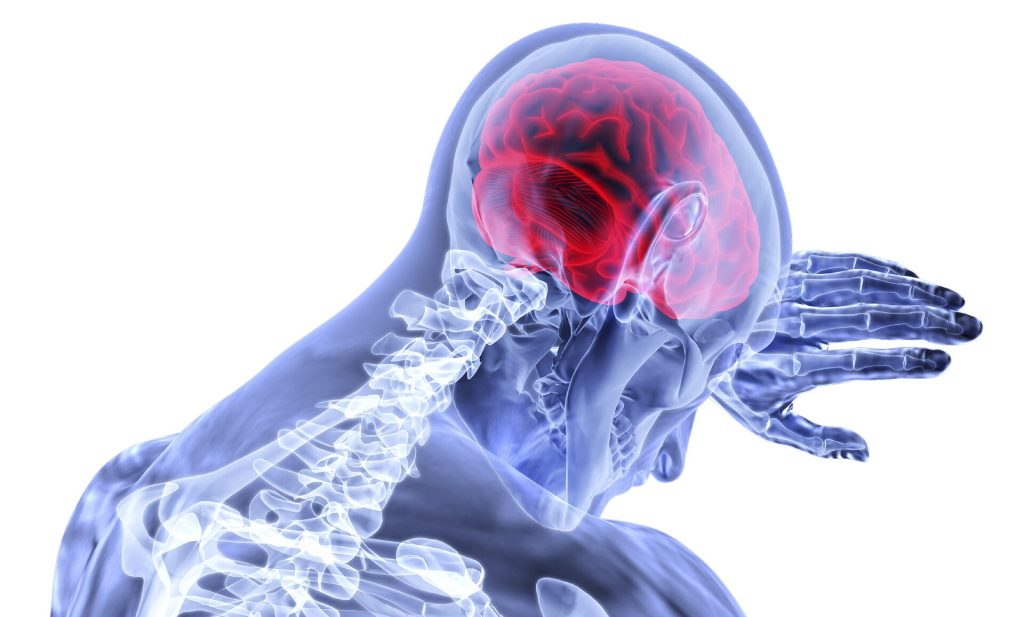
Key steps in Brink and Marais’ clinical metagenomics study on the brain
1) A medical sample is obtained (from cerebral spinal fluid in their study) and treated to extract and purify all
the nucleic acids (genetic material) it contains. These DNA fragments are then made into a ‘library’ by
attaching short molecules called adaptors to the ends. This prepares the sample to be run through a
sequencing machine.
2) The genetic code of the library is read in real-time by running it through a sequencing machine. This
generates a series of ‘reads’ (DNA sequences).
3) The reads are compared to an online database of all known organisms’ genetic codes, allowing any and
every pathogen present within the patient’s brain to be detected at the same time from just one sample.
4) The results are examined for matches with infections organisms and used to determine appropriate patient
treatment.

By contrast, conventional diagnostic testing requires testing individually for a specific suspected disease. If the result comes back negative, a new sample will need to be taken and sent for a different test – a lengthy process when lives are at stake.

“In some cases we investigated, patients had a disease that could have been treated if it had been identified initially. But because the diagnosis could only be made months later, it was too late [to save them]. That’s where the idea for our study originated,” says Marais.

Brink recounts the case of a cancer patient who developed neurological symptoms. “Because he was highly immunocompromised, the list of potential causes for these symptoms was a page long,” says Brink.

The patient passed away, and clinical metagenomics testing of a sample taken at the autopsy revealed he was suffering from Aspergillus, an aggressive fungal infection that requires specific treatment.

Although he was already very sick due to cancer, Brink says the untreated central nervous system aspergillosis may have led to the patient’s death. “If clinical metagenomics methods had been available at the time, the right therapy could have been started weeks earlier, potentially changing the outcome for this patient,” he says.

Brink and Marias used clinical metagenomics to diagnose neurological disorders and study the effects of COVID-19 on the brain. It’s an area of health care where a timely diagnosis is particularly important. “Once the brain is damaged, there’s no going back,” says Marais. This research is currently under review for publication and expected to be released shortly.

While metagenomics has been applied in research settings in Africa before, this is the first time the method has been fully operationalised for clinical applications on the continent – meaning that all sample processing and analysis can now be done in the same laboratory in real time.

Previously, researchers in Africa have had to send samples overseas to Europe or the United States for processing. The reason: the chemical reagents required to run clinical metagenomic tests, despite in some instances being as easy to access in Europe as a DHL order, were not readily available in Africa.

Supported by funding from Oppenheimer Generations Research and Conservation, Brink and Marias remedied this by establishing a reagent supplier pipeline for South Africa, a tricky task when the pandemic had interrupted global supply chains. With a reliable source of reagents, samples can now be processed in labs in South Africa, opening the door for advances in medicine and research on the continent.

Building capacity instead of ‘helicopter research’

Marais emphasised their focus on upskilling and building capacity for Africa, in contrast to the ‘helicopter research’ that has defined clinical metagenomic work on the continent up to this point. “Our goal was to increase the capacity for infectious disease diagnostics going forward, rather than just coming in, testing a few samples, publishing a paper and leaving,” he says.

According to Marias, most prior metagenomics work in Africa has been in the form of discreet research projects with an international collaborator or as field work for an international lab, with little investment in local medical infrastructure and capabilities.

Their initial work so far has already created opportunities for skills transfer in genetic sequencing and bioinformatics at UCT medical school and medical research departments, and at institutes in Johannesburg.

Although the high cost of reagents and lack of standardised protocols remain challenges for a clinical metagenomics rollout in Africa, Brink and Marais are confident that the technology can become a cost-effective tool to improve patient individual care and to identify novel pathogens in low- and middle-income countries (LMICs).

A vast range of applications

Their new paper, co-authored with Associate Professor Diana Hardie and published in The Lancet Microbe in December 2022, calls for the expanded infrastructure developed in LMICs for COVID-19 monitoring to be leveraged to improve infectious disease diagnostics through clinical metagenomics.

“We applied clinical metagenomics to the COVID-19 brain, but the picture is bigger than that,” says Brink. Clinical metagenomics can be used for diagnosing an array of diseases across many health disciplines. In collaboration with colleagues at Cape Town’s Groote Schuur Hospital, Brink and Marias are now exploring the application of the technology in orthopaedics, neurosurgery, haematology-oncology and cardiothoracic surgery.

Specifically, they’re looking at patients with prosthetic joint infections, heart valve infections, brain tumours and leukaemia. The team welcomes collaborators and asks researchers and health care professionals across the continent interested in utilising clinical metagenomics to reach out to them.

Brink and Marias are also examining patients suffering from severe respiratory tract infections without a diagnosis, another area where clinical metagenomics is particularly revolutionary.

Because the genetic sequences found in patient samples are compared to a database of all known organisms, if a sequence yields no match to the database, there’s a chance it could be a novel pathogen.

Since its first reported clinical application in 2014, the technology has already supported the discovery of novel viruses, including identification of the original strain of SARS-CoV-2 (the virus that causes COVID-19) in Wuhan, China.

This application is particularly relevant in LMICs where novel pathogens pose a higher risk due to socioeconomic factors and a lack of infrastructure to deal with local outbreaks. However, despite this, infectious disease surveillance infrastructure is more developed and readily available in high income nations.

While hurdles remain to be navigated before clinical metagenomics can be widely accessible across Africa, the team is confident that technology holds real promise for advancing the continent’s capabilities for medical research and diagnosis. “There aren’t a lot of people doing this kind of thing [in Africa], but this is the future,” says Brink.

Source: University of Cape Town Faculty of Health Sciences

Monkeypox Virus can Linger for up to a Month on Surfaces

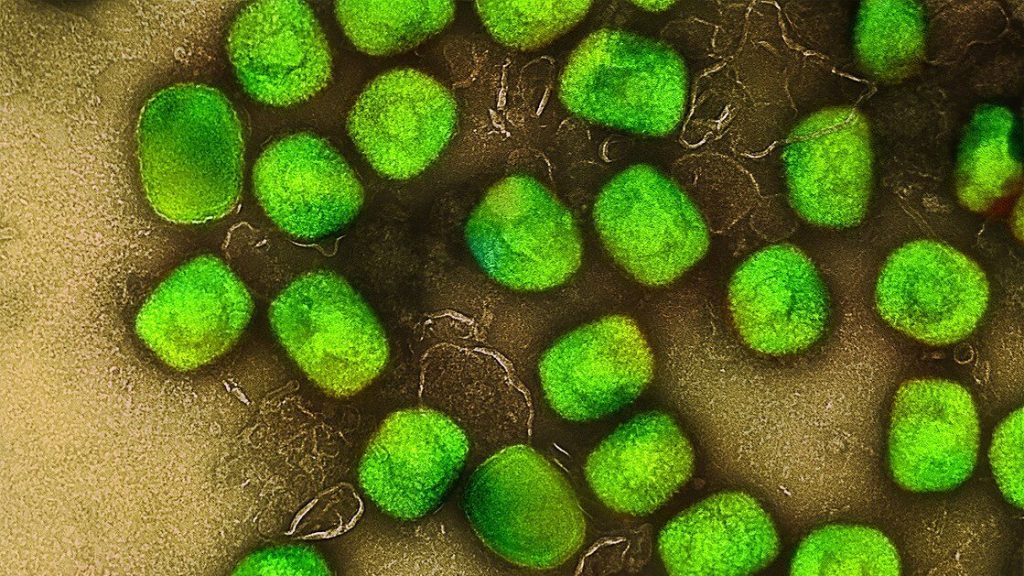
Monkeypox virus. Source: NIH

According to a study published in the Journal of Infectious Diseases, the monkeypox virus remains infectious on steel surfaces for up to 30 days, especially in cold conditions, but can be effectively inactivated by alcohol-based disinfectants.

Smallpox viruses are notorious for their ability to remain infectious in the environment for a very long time. A study conducted by the Department of Molecular and Medical Virology at Ruhr University Bochum, Germany, has shown that temperature is a major factor in this process: at room temperature, a monkeypox virus that is capable of replicating can survive on a stainless steel surface for up to 11 days, and at 4°C for up to a month. Consequently, it’s very important to disinfect surfaces. According to the study, alcohol-based disinfectants are very effective against monkeypox viruses, whereas hydrogen peroxide-based disinfectants have proved inadequate.

Weeks of monitoring

Since 2022, the monkeypox virus has been transmitted more and more frequently from one human host to another. Although infections primarily result from direct physical contact, it’s also possible to contract the virus through contaminated surfaces, for example in the household or in hospital rooms. “Smallpox viruses are notorious for their ability to remain infectious in the environment for a very long time,” explains Dr Toni Meister from the Department for Molecular and Medical Virology at Ruhr University Bochum. “For monkeypox, however, we didn’t know the exact time frames until now.”

The researchers therefore studied them by applying the virus to sanitised stainless steel plates and storing them at different temperatures: at 4°C, at 22°C, which roughly corresponds to room temperature, and at 37°C. They determined the amount of infectious virus after different periods of time, ranging from 15 minutes to several days to weeks.

Viruses remain infectious for a long time

Regardless of the temperature, there was little change in the amount of infectious virus during the first few days. At 22 and 37°C, the virus concentration dropped significantly only after five days. At 37°C, no virus capable of reproducing was detected after six to seven days, at 22°C it took 10–11 days until infection was no longer possible. At 4°C, the amount of virus only dropped sharply after 20 days, and after 30 days there was no longer any danger of infection. “This is consistent with our experience that people can still contract monkeypox from surfaces in the household after almost two weeks,” points out Professor Eike Steinmann, Head of the Department for Molecular and Medical Virology.

In order to reduce the risk of infection in the event of an outbreak, it is therefore extremely important to disinfect surfaces. This is why the researchers tested the effectiveness of five common disinfectants. They found that alcohol-based or aldehyde-based disinfectants reliably reduced the risk of infection. A hydrogen peroxide-based disinfectant, however, didn’t inactivate the virus effectively enough in the study. “Our results support the WHO’s recommendation to use alcohol-based surface disinfectants,” concludes Toni Meister.

Source: Ruhr-University Bochum

Quarter of Teens with Obesity Treated with Semaglutide Fell to Normal Weight

Photo by Andres Ayrton on Pexels

A secondary analysis of a trial of 2.4mg semaglutide (Wegovy) found nearly half of the teenage participants with obesity returned to normal weight or fell below the obesity threshold. The trial, results of which were published in Obesity, added semaglutide to dietary advice and a daily goal of 60 minutes of moderate- to high-intensity physical activity.

During the 68-week STEP TEENS trial, 44.9% of participants (aged 12–18 with obesity) returned to either normal weight or went down to the overweight category while on treatment compared with only 12.1% of those on placebo. At the end of the trial, 25% of the treatment group dropped to normal weight compared to just 2% for placebo.

“These results underscore the high degree of clinical effectiveness of semaglutide in adolescents with obesity,” said first author Aaron S. Kelly, PhD, in a statement. “In a practical sense, we see that semaglutide reduced weight to a level below what is defined as clinical obesity in nearly 50% of the teens in our trial, which is historically unprecedented with treatments other than bariatric surgery.”

An ‘important piece to the puzzle’ of the obesity problem

“A question I get a lot is, ‘Is this going to solve the obesity problem? Should we just give it to everybody’?” said Kelly, who is at the University of Minesota. “No and no. It’s not going to solve the obesity problem, but it’s an important piece to the puzzle in helping to solve it, especially for those who already have obesity.”

The trial’s initial results saw a an average BMI reduction 16.1% with semaglutide compared with a 0.6% increase with placebo at week 68. On average, participants on semaglutide lost 15.3 kg, while those on placebo gained 2.4 kg.

“The degree of body weight reduction is unprecedented,” lead study author Daniel Weghuber, MD, of Paracelsus Medical University, told MedPage Today at the ObesityWeek meeting, when the results were presented. “After years of frustration, all of a sudden patients were actually losing weight. They’d never seen that before.”

These results led to the approval for ages 12 and older by the FDA in December 2022, after being approved for adults in June 2021. The study also found a slightly superior but non-significant effect in females than males, despite not being set up to measure sex differences. The same was true for ages 12–14 vs 15–18.

Source: MedPage Today

Ultra-protective Sunscreens May One Day be Based on Our Own Melanin

Photo by Rfstudio on Pexels

Our body’s own melanin has long held potential as an inspiration for ultra-protective sunscreens, but has been too unstable to properly study. In Nature Chemistry, researchers report a major advance in understanding the fundamental structure of melanin and one of its subunits that turns light into heat, protecting the body from sun damage.

Melanin is the body’s natural pigment that is its first and best natural defence against the damaging effect of ultraviolet radiation. Cosmetics companies have long tried to harness the protective powers of natural and synthetic melanin for use in chemical sunscreens and other personal care products. For example, melanin could, in theory, be used to produce a radiation barrier that augments skin care products by matching a more diverse range of natural skin tones. But melanin is so notoriously unstable and difficult to study that, thus far, scientists have not been able to see what it looks like at the molecular level, resulting in a slow, trial-and-error approach to its potential use in personal care products.

“As we gain a better understanding of the structure of melanin, we should be able to predictably make alternatives that perform better than what is currently available,” said Jean-Philip Lumb, one of the lead authors of the paper. The study found that the melanin component converted light into heat from all wavelengths, spanning the ultraviolet to the infrared, offering a broad spectrum of protection. The molecule was also remarkably small, which the researchers say has practical benefits because the number of atoms needed to provide this level of sun protection is fewer than anything reported up to now. “We’ve taken a major step forward in understanding a new mechanism for how melanin can serve as a sunscreen,” Lumb said.

Source: McGill University

Epstein–Barr Virus Antibodies may Trigger Multiple Sclerosis

Source: CC0

Researchers at Karolinska Institutet have found further links between Epstein–Barr virus and multiple sclerosis. A study published in Science Advances shows that some individuals have antibodies against the virus that mistakenly attack a protein in the brain and spinal cord.

Many years ago, the Epstein–Barr virus (EBV), which infects most people early in life and then usually lies dormant was linked to multiple sclerosis (MS) but the reason remained a mystery. Increasing evidence, including two papers published in Science and Nature last year, suggests that EBV infection precedes MS and that antibodies against the virus may be involved. However, the molecular mechanisms seem to vary between patients and remain largely unknown.

“MS is an incredibly complex disease, but our study provides an important piece in the puzzle and could explain why some people develop the disease,” says Olivia Thomas, postdoctoral researcher at the Department of Clinical Neuroscience, Karolinska Institutet and shared first author of the paper. “We have discovered that certain antibodies against the Epstein-Barr virus, which would normally fight the infection, can mistakenly target the brain and spinal cord and cause damage.”

The researchers analysed blood samples from more than 700 patients with MS and 700 healthy controls. They found that antibodies that bind to a certain protein in the Epstein-Barr virus, EBNA1, can also bind to a similar protein in the brain and spinal cord called CRYAB, whose role is to prevent protein aggregation during conditions of cellular stress such as inflammation. These misdirected, cross-reactive antibodies may damage the nervous system and cause severe symptoms in MS patients, including problems with balance, mobility and fatigue. The antibodies were present in about 23 percent of MS patients and 7% of control individuals.

“This shows that, whilst these antibody responses are not required for disease development, they may be involved in disease in up to a quarter of MS patients,” says Olivia Thomas. “This also demonstrates the high variation between patients, highlighting the need for personalised therapies. Current therapies are effective at reducing relapses in MS but unfortunately, none can prevent disease progression.”

“We are now expanding our research to investigate how T cells fight EBV infection and how these immune cells may damage the nervous system in multiple sclerosis and contribute to disease progression,” says joint first author of the paper Mattias Bronge, affiliated researcher at the Department of Clinical Neuroscience, Karolinska Institutet.

Source: Karolinska Institutet

Young Males Most at Risk of Developing Schizophrenia from Cannabis Use

Photo by Rodnae Productions on Pexels

A registry-based study on cannabis users in Denmark spanning 39 years found that young males were more than twice as likely to develop schizophrenia as young females. The researchers, who published their findings in Psychological Medicine, estimated that about 15% of schizophrenia in this population group is due to cannabis use.

Previous research suggests an increase in schizophrenia population attributable risk fraction (PARF) for cannabis use disorder (CUD). However, sex and age variations in CUD and schizophrenia suggest the importance of examining differences in PARFs in sex and age subgroups.

Moreover, cannabis potency measured by the percentage of delta-9-tetrahydrocannabinol (THC) (main psychoactive component of cannabis) has increased dramatically, eg from 13% in 2006 to 30% in 2016 in Denmark. CUD has also increased markedly – past-year CUD rose significantly from 4.9% in 2014 to 5.9% in 2018 among US 18–25-year-olds.

A growing body of evidence suggests that the relationship between CUD and schizophrenia may differ by sex. Male sex and early heavy or frequent cannabis use are associated with earlier onset of psychosis.

The researchers conducted a nationwide Danish register-based cohort study including all individuals aged 16–49 at some point during 1972–2021, identifying CUD and schizophrenia status.

The researchers examined 6 907 859 individuals, with 45 327 cases of incident schizophrenia during follow-up. Males had slightly higher risk for schizophrenia with CUD (142%) than females (102%). But among 16–20-year-olds, the risk for males (284%) was more than twice that for females (81%). They also found that during the 39-year study period, the annual average increase in PARF for CUD in schizophrenia incidence was 4.8% among males and 3.2% among females. In 2021, among males, this risk fraction was 15%; among females, it was around 4%.

Conclusions

The researchers concluded that “Young males might be particularly susceptible to the effects of cannabis on schizophrenia. At a population level, assuming causality, one-fifth of cases of schizophrenia among young males might be prevented by averting CUD. Results highlight the importance of early detection and treatment of CUD and policy decisions regarding cannabis use and access, particularly for 16–25-year-olds.”

Study Measures the True Facial Processing Ability of ‘Super-recognisers’

Photo by Cottonbro on Pexels

So-called ‘super-recognisers’ are people with a much greater ability to recognise faces in a variety of contexts, but their ability has not been empirically tested. A new study in PNAS shows that super-recognisers do in fact possess greatly superior facial recognition compared to normal peers.

While police departments have known of their abilities for quite some time, it was just over a decade ago, when super-recognisers were described in the literature as having exceptional facial processing abilities. With the increasing use of CCTV in police investigations and the potential for human error, there have been questions raised as to whether super-recognisers could do a better job – or indeed, whether they have empirically superior abilities. A means for actually identifying and defining a super-recogniser as opposed to someone who merely seems to better at recalling faces is therefore needed.

The performance of people with normal facial recognition abilities is not very impressive. While performance is good when people are familiar with the person pictured, studies report an error as high as 35% with unfamiliar faces. Even when people are asked to compare a live person standing in front of them with a photo, a recent study found they still got more than 20% of their answers wrong.

For this study, researchers enrolled 73 super-recogniser and 45 control participants. They compared the two groups on performance on three challenging tests of face identity processing recommended for super-recogniser identification; as well as performance for perpetrator identification using four CCTV sequences depicting five perpetrators and police line-ups created for criminal investigation purposes. They found that the face identity processing tests used here are valid in measuring such abilities and identifying super-recognisers. In addition, they determined that super-recognisers excel at perpetrator identification relative to control participants, with more correct perpetrator identifications, the better their performance across lab tests.

‘Green’ Mediterranean Diet Reduces Aortic Stiffness

Photo by Charlotte Karlsen on Unsplash

Among a variety of diets a low-calorie ‘green’ Mediterranean diet caused the biggest reduction in aortic stiffness among overweight or dyslipidaemic individuals in a post hoc analysis of a randomised trial. The findings were discussed in Journal of the American College of Cardiology.

As its name suggests, the green Mediterranean diet is rich in plant polyphenols and lower in red or processed meat and simple carbohydrates than a typical low-calorie Mediterranean diet.

Controlling for other variables, the green Mediterranean diet reduced proximal aortic stenosis (PAS) by 15%, better than a typical hypocaloric Mediterranean diet (7.3% reduction) or following standard healthy diet guidelines (4.8% reduction).

The study used the unique environment of a remote Israeli nuclear research facility, where the makeup of the staff meals could be closely controlled and monitored. This also created the limitation of having a predominantly male population for the study group.

More than simple weight loss, the green Mediterranean diet may have greater influence on PAS, which as a measure of “the aortic stiffness from the ascending to the proximal descending thoracic aorta, is a distinct marker of vascular aging and a sensitive early predictor of cardiovascular morbidity and mortality risk,” the researchers noted. “Beyond aging, and similarly to atherosclerosis, PAS is sensitive to obesity-related metabolic conditions, specifically metabolic syndrome.”

Source: MedPage Today

Oestrogen May Trigger Breast Cancer, Not Just Fuel it

Breast cancer cells. Image by National Cancer Institute

In what could be a long-missing piece in the puzzle of breast cancer, researchers have identified the molecular sparkplug that ignites cases of the disease currently unexplained by the classical model of breast-cancer development. The team reported their work in Nature.

“We have identified what we believe is the original molecular trigger that initiates a cascade culminating in breast tumour development in a subset of breast cancers that are driven by oestrogen,” said study senior investigator Peter Park, Harvard Medical School professor.

The researchers said as many as one-third of breast cancer cases may arise through the newly identified mechanism.

The study also shows that the sex hormone oestrogen is the culprit behind this molecular dysfunction because it directly alters a cell’s DNA.

Most, though not all, breast cancers are fuelled by hormonal fluctuations. The prevailing view of oestrogen’s role in breast cancer is that it acts as a catalyst for cancer growth because it stimulates the division and proliferation of breast tissue, a process that carries the risk for cancer-causing mutations. The new work, however, shows that oestrogen causes mischief in a far more direct manner.

“Our work demonstrates that oestrogen can directly induce genomic rearrangements that lead to cancer, so its role in breast cancer development is both that of a catalyst and a cause,” said study first author Jake Lee.

While the findings does not have immediate therapy applications, it could lead to tests that can track treatment response and could help doctors detect the return of tumours in patients with a history of certain breast cancers.

Birth of a cancer cell

When DNA breaks in the process of cell division, the breaks usually get swiftly mended by the molecular machinery that guards the integrity of the genome. However, every now and then, the repair of broken DNA gets botched, causing chromosomes to get misplaced or scrambled inside a cell.

Many human cancers arise in this manner during cell division, when chromosomes get rearranged and awaken dormant cancer genes that can trigger tumour growth.

One such chromosomal scramble can occur when a chromosome breaks, and a second copy of the broken chromosome is made before the break gets fixed.

Then, in what ends up being a botched repair attempt, the broken end of one chromosome is fused to the broken end of its sister copy rather than to its original partner. The resulting new structure is a misshapen, malfunctioning chromosome.

During the next cell division, the misshapen chromosome is stretched between the two emerging daughter cells and the chromosome “bridge” breaks, leaving behind shattered fragments that contain cancer genes to multiply and get activated.

It has been known since the 1930s that certain human cancers, including some breast cancers, arise when a cell’s chromosomes get rearranged in this way. Cancer experts can often identify this particular aberration in tumour samples by using genomic sequencing. Yet, a portion of breast cancer cases do not harbour this mutational pattern, raising the question: What is causing these tumours?

These ‘cold’ intrigued study authors Park and Lee, who searched for answers by analysing the genomes of 780 breast cancers obtained from patients diagnosed with the disease. They expected to find the classical chromosomal disarray in most of the tumour samples, but many of the tumour cells bore no trace of this classic molecular pattern.

Instead of the classic misshapen and improperly patched-up single chromosome, they saw that two chromosomes had fused, suspiciously near ‘hot spots’ where cancer genes are located.

Just as in McClintock’s model, these rearranged chromosomes had formed bridges, except in this case, the bridge contained two different chromosomes. This distinctive pattern was present in one-third (244) of the tumours in their analysis.

Lee and Park realised they had stumbled upon a new mechanism by which a ‘disfigured’ chromosome is generated and then fractured to fuel the mysterious breast cancer cases.

A new role for oestrogen in breast cancer?

When the researchers zoomed onto the hot spots of cancer-gene activation, they noticed that these areas were curiously close to oestrogen-binding areas on the DNA.

Oestrogen receptors are known to bind to certain regions of the genome when a cell is stimulated by oestrogen. The researchers found that these oestrogen-binding sites were frequently next to the zones where the early DNA breaks took place.

This offered a strong clue that oestrogen might be somehow involved in the genomic reshuffling that gave rise to cancer-gene activation.

Lee and Park followed up on that clue by exposing breast cancer cells to oestrogen and then used CRISPR gene editing to make cuts to the cells’ DNA.

As the cells mended their broken DNA, they initiated a repair chain that resulted in the same genomic rearrangement Lee and Park had discovered in their genomic analyses.

Oestrogen is already known to fuel breast cancer growth by promoting the proliferation of breast cells. However, the new observations cast this hormone in a different light. They show oestrogen is a more central character in cancer genesis because it directly alters how cells repair their DNA.

The findings suggest that oestrogen-suppressing drugs such as tamoxifen work in a more direct manner than simply reducing breast cell proliferation.

“In light of our results, we propose that these drugs may also prevent oestrogen from initiating cancer-causing genomic rearrangements in the cells, in addition to suppressing mammary cell proliferation,” Lee said.

The study could lead to improved breast cancer testing. For instance, detecting the genomic fingerprint of the chromosome rearrangement could alert oncologists that a patient’s disease is coming back, Lee said.

A similar approach to track disease relapse and treatment response is already widely used in cancers that harbour critical chromosomal translocations, including certain types of leukaemia.

More broadly, the work underscores the value of DNA sequencing and careful data analysis in deepening the biology of cancer development, the researchers said.

“It all started with a single observation. We noticed that the complex pattern of mutations that we see in genome sequencing data cannot be explained by the textbook model,” Park said. “But now that we’ve put the jigsaw puzzle together, the patterns all make sense in light of the new model. This is immensely gratifying.”

Source: Harvard Medical School

Cannabis Use in Pregnancy Reduces Birth Weights

Photo by Elsa Olofsson on Unsplash

With growing legalisation and recreational use of cannabis comes a change in attitudes. Research has shown that dispensaries often recommend cannabis for the easing of pregnancy symptoms, especially morning sickness.

Growing evidence links cannabinoid consumption during pregnancy with poor child outcomes, though the exact effects on the developing foetus remain unclear. In a study published in Frontiers in Pediatrics, researchers in the US have now examined how timing of cannabis exposure during pregnancy impacts foetal development.

“We show that even when marijuana use occurred only in the first trimester of pregnancy, birth weight was significant reduced, by more than 150g on average,” said senior author Dr Beth Bailey, professor and director of population health research at Central Michigan University“If that use continued into the second trimester, newborn head circumference was significantly decreased as well.”

Continued exposure results in largest deficiencies

“These findings are important as newborn size is one of the strongest predictors of later child health and development,” added study first author Dr Phoebe Dodge.

Recent work, including the research by Dodge et al., has shown significant effects of cannabis use on newborn size. “Size deficits were largest among newborns exposed to marijuana throughout gestation,” Bailey explained. The babies born after continued in-utero exposure were nearly 200g lighter, and their head circumference was nearly 1cm less than that of babies who had not been exposed. Pregnancy cannabis use did not significantly predict newborn length in this study.

The effects the scientists observed have also shed light on patterns of use. Their study showed that occasional use, such as for first trimester morning sickness, may reduce fetal growth in the same way as continued use throughout pregnancy. The same is true for other use in early stages, including cases when someone uses cannabis not knowing they are pregnant.

Quitting before pregnancy is best recommendation

The authors pointed out that in their study they did not have information about how much or how often participants used cannabis. Their results were based on whether people did or did not use it at certain times in pregnancy. Therefore, the study could not establish if there was a connection between heavy use and more pronounced outcomes in newborn growth.

More studies are needed to determine whether timing or amount of use is most important when it comes to effects on newborn size, they wrote.

 “The best recommendation is that women should be advised to quit marijuana use prior to becoming pregnant,” Dodge said. However, quitting as soon as possible after getting pregnant is the second-best option to avoid long term adverse health and developmental outcomes. “There are some benefits of quitting among those who begin pregnancy using marijuana,” she continued.

Source: EurekAlert!