Singing Repairs the Language Network of the Brain after Stroke

Photo by Sergio Capuzzimati on Unsplash

Cerebrovascular accidents, or strokes, are the most common cause of aphasia, a speech disorder of cerebral origin. People with aphasia have a reduced ability to understand or produce speech or written language. An estimated 40% of people who have had a stroke have aphasia. As many as half of them experience aphasia symptoms even a year after the original attack.

Researchers at the University of Helsinki previously found that sung music helps in the language recovery of patients affected by strokes. Now, the researchers have uncovered the reason for the rehabilitative effect of singing. The recently completed study was published in the eNeuro journal.

According to the findings, singing, as it were, repairs the structural language network of the brain. The language network processes language and speech in the brain, which has been damaged.

“For the first time, our findings demonstrate that the rehabilitation of patients with aphasia through singing is based on neuroplasticity changes, that is, the plasticity of the brain,” says University Researcher Aleksi Sihvonen from the University of Helsinki.

Singing improves language network pathways

The language network encompasses the cortical regions of the brain involved in the processing of language and speech, as well as the white matter tracts that convey information between the different end points of the cortex.

According to the study results, singing increased the volume of grey matter in the language regions of the left frontal lobe and improved tract connectivity especially in the language network of the left hemisphere, but also in the right hemisphere.

“These positive changes were associated with patients’ improved speech production,” Sihvonen says.

A total of 54 aphasia patients participated in the study, of whom 28 underwent MRI scans at the beginning and end of the study. The researchers investigated the rehabilitative effect of singing with the help of choir singing, music therapy and singing exercises at home.

Singing is a cost-effective treatment

Aphasia has a wide-ranging effect on the functional capacity and quality of life of affected individuals and easily leads to social isolation.

According to Sihvonen, singing can be seen as a cost-effective addition to conventional forms of rehabilitation, or as rehabilitation for mild speech disorders in cases where access to other types of rehabilitation is limited.

“Patients can also sing with their family members, and singing can be organised in healthcare units as a group-based, cost-efficient rehabilitation,” Sihvonen says.

Source: University of Helsinki

Metformin Use Linked to Lower Risk of Developing Blood Cancers

Depiction of multiple myeloma. Credit: Scientific Animations

People who use metformin are less likely to develop a myeloproliferative neoplasm (MPN) over time, indicating that the treatment may help prevent the development of certain types of cancers, according to a study published in Blood Advances.

Metformin is a therapy used to treat high blood sugar in people with type 2 diabetes that increases the effect of insulin, reduces how much glucose is released from the liver and helps the body absorb glucose. A meta-analysis of previous studies connected the therapy with a reduction in the risk of gastrointestinal, breast, and urologic cancers, while a retrospective study of US veterans found that metformin users have a reduced risk for solid and haematological cancers.

Metformin’s anti-inflammatory properties in focus

“Our team was interested in understanding what other effects we see with commonly prescribed treatments like metformin,” said Anne Stidsholt Roug, MD, PhD, chief physician at Aarhus University Hospital and clinical associate professor at Aalborg University Hospital in Denmark. “The anti-inflammatory effect of metformin interested us, as MPNs are very inflammatory diseases. This is the first study to investigate the association between metformin use and risk of MPN.”

MPNs are a group of diseases that affect how bone marrow produces blood cells, resulting in an overproduction of red blood cells, white blood cells, or platelets that can lead to bleeding problems, a greater risk of stroke or heart attack, and organ damage.

Surprisingly strong association

The researchers compared metformin use among patients diagnosed with MPNs and a matched population from the Danish general population between 2010 and 2018. Of the 3816 MPN cases identified from the sample, a total of 268 (7.0%) individuals with MPN had taken metformin as compared to 8.2% (1573 out of 19 080) of the control group of people who had taken metformin but were not diagnosed with MPN. Just 1.1% of MPN cases had taken metformin for more than five years, as compared to 2.0% of controls. The protective effect of metformin was seen in all subtypes of MPN when adjusting for potential confounders.

“We were surprised by the magnitude of the association we saw in the data,” said Daniel Tuyet Kristensen, MD, PhD student, at Aalborg University Hospital and lead author of the study. “We saw the strongest effect in people who had taken metformin for more than five years as compared to those who had taken the treatment for less than a year.” Dr Kristensen added that this makes clinical sense, as MPNs are diseases that develop over a long period of time, like other types of cancer.

The researchers noted that while the protective effect of long-term metformin use was seen in all subtypes of MPN, the study was limited by its registry-based retrospective design. Further, they could not account for risk-modifying lifestyle factors, such as smoking, obesity, and dietary habits.

Dr Roug noted that while the study team were unable to assess exactly why metformin seems to protect against the development of MPN, they hope additional research will be conducted to better understand why this may be. Moving forward, the researchers aim to identify any similar trends with myelodysplastic syndromes and acute myeloid leukaemia in population-level data for future study.

Source: American Society of Hematology

Increase in Global Life Expectancy of Nearly 5 Years by 2050

Photo by Tima Miroshnichenko on Pexels

The latest findings from the Global Burden of Disease Study (GBD) 2021, published in The Lancetforecast that global life expectancy will increase by 4.9 years in males and 4.2 years in females between 2022 and 2050.

The largest increases are expected in countries where life expectancy is lower, such as in sub-Saharan Africa, contributing to a convergence of increased life expectancy across geographies. The trend is largely driven by public health measures that have prevented and improved survival rates from cardiovascular diseases, COVID, and a range of communicable, maternal, neonatal, and nutritional diseases (CMNNs).

This study indicates that the ongoing shift in disease burden to non-communicable diseases (NCDs) like cardiovascular diseases and cancer, and exposure to NCD-associated risk factors, such as obesity and smoking, will have the greatest impact on disease burden of the next generation.

Longer lives, but more years of poor health

As the disease burden continues to shift from CMNNs to NCDs and from years of life lost (YLLs) to years lived with disability (YLDs), more people are expected to live longer, but with more years spent in poor health. Global life expectancy is forecasted to increase from 73.6 years of age in 2022 to 78.1 years of age in 2050 (a 4.5-year increase). Global healthy life expectancy (HALE) – the average number of years a person can expect to live in good health – will increase from 64.8 years in 2022 to 67.4 years in 2050 (a 2.6-year increase).

To come to these conclusions, the study forecasts cause-specific mortality; YLLs; YLDs; disability-adjusted life years (DALYs, or lost years of healthy life due to poor health and early death); life expectancy; and HALE from 2022 through 2050 for 204 countries and territories.

“In addition to an increase in life expectancy overall, we have found that the disparity in life expectancy across geographies will lessen,” said Dr Chris Murray, Chair of Health Metrics Sciences at the University of Washington and Director of the Institute for Health Metrics and Evaluation (IHME). “This is an indicator that while health inequalities between the highest- and lowest-income regions will remain, the gaps are shrinking, with the biggest increases anticipated in sub-Saharan Africa.”

Dr Murray added that the biggest opportunity to speed up reductions in the global disease burden is through policy interventions aimed to prevent and mitigate behavioural and metabolic risk factors.

These findings build upon the results of the GBD 2021 risk factors study, also released today in The Lancet. This accompanying study found that the total number of years lost due to poor health and early death (measured in DALYs) attributable to metabolic risk factors has increased by 50% since 2000. Read more on the risk factors report at https://bit.ly/GBDRisks2021.

Alternative scenarios for 2050

The study also puts forth various alternative scenarios to compare the potential health outcomes if different public health interventions could eliminate exposure to several key risk factor groups by 2050.

“We forecast large differences in global DALY burden between different alternative scenarios to see what is the most impactful on our overall life expectancy data and DALY forecasts,” said Dr Stein Emil Vollset, first author of the study who leads the GBD Collaborating Unit at the Norwegian Institute of Public Health. “Globally, the forecasted effects are strongest for the ‘Improved Behavioural and Metabolic Risks’ scenario, with a 13.3% reduction in disease burden (number of DALYs) in 2050 compared with the ‘Reference’ (most likely) scenario.”

The authors also ran two more scenarios: one focused on safer environments and another on improved childhood nutrition and vaccination.

“Though the largest effects in global DALY burden were seen from the ‘Improved Behavioural and Metabolic Risk’ scenario, we also forecasted reductions in disease burden from the ‘Safer Environment’ and ‘Improved Childhood Nutrition and Vaccination’ scenarios beyond our reference forecast, said Amanda E. Smith, Assistant Director of Forecasting at IHME. “This demonstrates the need for continued progress and resources in these areas and the potential to accelerate progress through 2050.”

“There is immense opportunity ahead for us to influence the future of global health by getting ahead of these rising metabolic and dietary risk factors, particularly those related to behavioural and lifestyle factors like high blood sugar, high body mass index, and high blood pressure,” continued Dr Murray.

Source: Institute for Health Metrics and Evaluation

New Blood Test for Ischaemic Stroke is a ‘Game-changer’

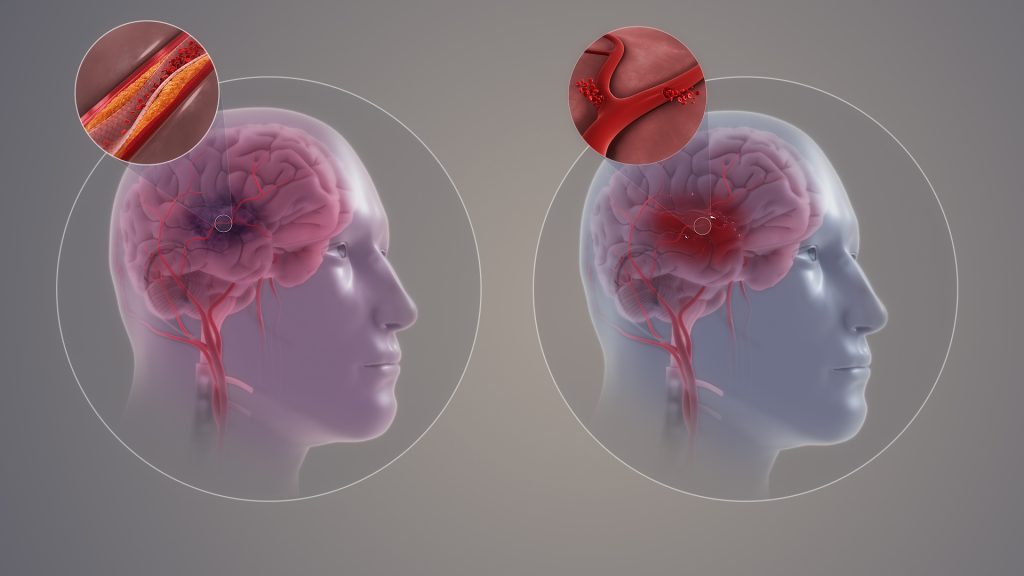
Ischaemic and haemorrhagic stroke. Credit: Scientific Animations CC4.0

A new study led by investigators from Brigham and Women’s Hospital has developed a new test by combining blood-based biomarkers with a clinical score to identify patients experiencing large vessel occlusion (LVO) stroke with high accuracy. Their results are published in the journal Stroke: Vascular and Interventional Neurology.

“We have developed a game-changing, accessible tool that could help ensure that more people suffering from stroke are in the right place at the right time to receive critical, life-restoring care,” said senior author Joshua Bernstock, MD, PhD, MPH, a clinical fellow in the Department of Neurosurgery at Brigham and Women’s Hospital.

Most strokes are ischaemic, in which blood flow to the brain is obstructed. LVO strokes are an aggressive type of ischaemic stroke that occurs when an obstruction occurs in a major artery in the brain, causing brain cells to rapidly die off from lack of oxygen. Major medical emergencies, LVO strokes require the swift treatment with mechanical thrombectomy, a surgical procedure that retrieves the blockage.

“Mechanical thrombectomy has allowed people that otherwise would have died or become significantly disabled be completely restored, as if their stroke never happened,” said Bernstock. “The earlier this intervention is enacted, the better the patient’s outcome is going to be. This exciting new technology has the potential to allow more people globally to get this treatment faster.”

The research team previously targeted two specific proteins found in capillary blood, one called glial fibrillary acidic protein (GFAP), which is also associated with brain bleeds and traumatic brain injury, and one called D-dimer. In this study, they demonstrated that the levels of these blood-based biomarkers combined with field assessment stroke triage for emergency destination (FAST-ED) scores could identify LVO ischaemic strokes while ruling out other conditions such as bleeding in the brain. Brain bleeds cause similar symptoms to LVO stroke, making them hard to distinguish from one another in the field, yet treatment for each is vastly different.

In this prospective, observational diagnostic accuracy study, the researchers looked at data from a cohort of 323 patients coded for stroke in Florida between May 2021 and August 2022. They found that combining the levels of the biomarkers GFAP and D-dimer with FAST-ED data less than six hours from the onset of symptoms allowed the test to detect LVO strokes with 93% specificity and 81% sensitivity. Other findings included that the test ruled out all patients with brain bleeds, suggesting that it may also eventually be used to detect intracerebral haemorrhage in the field.

Bernstock’s team also sees promising potential future use of this accessible diagnostic tool in low- and middle-income countries, where advanced imaging is not always available. It might also be useful in assessing patients with traumatic brain injuries. Next, they are carrying out another prospective trial to measure the test’s performance when used in an ambulance. They have also designed an interventional trial that leverages the technology to expedite the triage of stroke patients by having them bypass standard imaging and move directly to intervention.

“In stroke care, time is brain,” Bernstock said. “The sooner a patient is put on the right care pathway, the better they are going to do. Whether that means ruling out bleeds or ruling in something that needs an intervention, being able to do this in a prehospital setting with the technology that we built is going to be truly transformative.

Source: Brigham and Women’s Hospital

Difference in Brain Structures may Explain Concussion Outcomes for Males and Females

Coup and contrecoup brain injury. Credit: Scientific Animations CC4.0

Important brain structures that are key for signalling in the brain are narrower and less dense in females, and more likely to be damaged by brain injuries, such as concussion. Long-term cognitive deficits occur when the signals between brain structures weaken due to the injury. These structural differences in male and female brains might explain why females are more prone to concussions and experience longer recovery from the injury than their male counterparts, according to a University of Pennsylvania-led preclinical study published in Acta Neuropathologica.

Each year, approximately 50 million individuals worldwide suffer a concussion, also referred to as mild traumatic brain injury (TBI). For more than 15% of individuals who suffer persisting cognitive dysfunction, which includes difficulty concentrating, learning and remembering new information, and making decisions.

Although males make up the majority of emergency department visits for concussion, this has been primarily attributed to their greater exposure to activities with a risk of head impacts compared to females. In contrast, it has recently been observed that female athletes have a higher rate of concussion and appear to have worse outcomes than their male counterparts participating in the same sport.

“Clinicians have observed for a long time that females suffer from concussion at higher rates than males in the same sports, and that they take longer to recover cognitive function, but couldn’t explain the underlying mechanisms of this phenomenon,” said senior author Douglas Smith, MD, a professor of Neurosurgery and director of Penn’s Center for Brain Injury and Repair. “The variances in brain structures of females and males not only illuminate why this disparity exists, but also exposes biomarkers, such as axon protein fragments, that can be measured in the blood to determine injury severity, monitor recovery, and eventually help identify and develop treatments that help patients repair these damaged structures and restore cognitive function.”

Axons connect neurons, allowing communication across the brain. These axons form bundles that make up white matter in the brain and play a large role in learning and communication between different brain regions. Axons are delicate structures and are vulnerable to damage from concussion.

Communication between axons in the brain is powered by sodium channels that serve as the brain’s electric grid. When axons are damaged, these sodium channels are also impaired, which causes loss of signaling in the brain. The loss of signaling causes the cognitive impairment experienced by individuals after concussion.

In this study, researchers used large animal models of concussion to identify differences in brains of males and females after a concussion. They found that females had a higher population of smaller axons, which researchers demonstrated are more vulnerable to injury. They also reported that in these models, females had greater loss of sodium channels after concussion.

“The differences in brain structure not only tell us a lot about how brain injury affects males and females differently but could offer insights in other brain conditions that impact axons, like Alzheimer’s and Parkinson’s disease,” said Smith. “If female brains are more vulnerable to damage from concussion, they might also be more vulnerable to neurodegeneration, and it’s worth further research to understand how sex influences the structure and functions of the brain.”

Source: University of Pennsylvania School of Medicine

New Viruses that could Cause Epidemics on the Horizon

Photo by Artem Podrez on Pexels

There are viruses out there that nobody has on their radar, but they suddenly appear and, like SARS-CoV-2, can trigger major epidemics. They only have a slight genetic difference from before, the exchange of genetic material between different virus species can lead to the sudden emergence of threatening pathogens with significantly altered characteristics. This is suggested by current genetic analyses carried out by an international team of researchers. Virologists from the German Cancer Research Center (DKFZ) were in charge of the large-scale study which appears in PLOS Pathogens.

“Using a new computer-assisted analysis method, we discovered 40 previously unknown nidoviruses in various vertebrates from fish to rodents, including 13 coronaviruses,” reports DKFZ group leader Stefan Seitz. With the help of high-performance computers, the research team, which also includes Chris Lauber’s working group from the Helmholtz Center for Infection Research in Hanover, has sifted through almost 300 000 data sets. According to virologist Seitz, the fact that we can now analyse such huge amounts of data in one go opens up completely new perspectives.

Virus research is still in its relative infancy. Only a fraction of all viruses occurring in nature are known, especially those that cause diseases in humans, domestic animals and crops. The new method therefore promises a quantum leap in knowledge with regard to the natural virus reservoir. Stefan Seitz and his colleagues sent genetic data from vertebrates stored in scientific databases through their high-performance computers with new questions. They searched for virus-infected animals in order to obtain and study viral genetic material on a large scale. The main focus was on so-called nidoviruses, which include the coronavirus family.

Nidoviruses, whose genetic material consists of RNA (ribonucleic acid), are widespread in vertebrates. This species-rich group of viruses has some common characteristics that distinguish them from all other RNA viruses and document their relationship. Otherwise, however, nidoviruses are very different from each other, i.e. in terms of the size of their genome.

One discovery is particularly interesting with regard to the emergence of new viruses: In host animals that are simultaneously infected with different viruses, a recombination of viral genes can occur during virus replication. “Apparently, the nidoviruses we discovered in fish frequently exchange genetic material between different virus species, even across family boundaries,” says Stefan Seitz. And when distant relatives “crossbreed,” this can lead to the emergence of viruses with completely new properties. According to Seitz, such evolutionary leaps can affect the aggressiveness and dangerousness of the viruses, but also their attachment to certain host animals.

“A genetic exchange, as we have found in fish viruses, will probably also occur in mammalian viruses,” explains Stefan Seitz. Bats, which — like shrews — are often infected with a large number of different viruses, are considered a true melting pot. The SARS-CoV-2 coronavirus probably also developed in bats and jumped from there to humans.

After gene exchange between nidoviruses, the spike protein with which the viruses dock onto their host cells often changes. Chris Lauber, first author of the study, was able to show this by means of family tree analyses. Modifying this anchor molecule can significantly change the properties of the viruses to their advantage – by increasing their infectiousness or enabling them to switch hosts. A change of host, especially from animals to humans, can greatly facilitate the spread of the virus, as the corona pandemic has emphatically demonstrated. Viral “game changers” can suddenly appear at any time, becoming a massive threat and – if push comes to shove – triggering a pandemic. The starting point can be a single double-infected host animal.

The new high-performance computer process could help to prevent the spread of new viruses. It enables a systematic search for virus variants that are potentially dangerous for humans, explains Stefan Seitz. And the DKFZ researcher sees another important possible application with regard to his special field of research, virus-associated carcinogenesis: “I could imagine that we could use the new High Performance Computing (HPC) to systematically examine cancer patients or immunocompromised people for viruses. We know that cancer can be triggered by viruses, the best-known example being human papillomaviruses. But we are probably only seeing the tip of the iceberg so far. The HPC method offers the opportunity to track down viruses that, previously undetected, nestle in the human organism and increase the risk of malignant tumours.”

Source: German Cancer Research Center (Deutsches Krebsforschungszentrum, DKFZ)

Celiac Disease: New Findings on the Effects of Gluten

Photo by Mariana Kurnyk

May 16 is International Celiac Day. Celiac disease is a chronic autoimmune condition that occurs in around 1% of the world’s population. It is triggered by the consumption of gluten proteins from wheat, barley, rye and some oats. A gluten-free diet protects celiac patients from severe intestinal damage. Together with colleagues, chemist Dr Veronica Dodero from Bielefeld University was able to determine new details on how certain gluten-derived molecules trigger leaky gut syndrome in celiac disease.

The key finding of the study: a particular protein fragment formed in active celiac disease forms nanosized structures, the so-called oligomers, and accumulates in a gut epithelial cell model. The technical name of the molecule is 33-mer deamidated gliadin peptide (DGP). The study team has now discovered that the presence of DGP oligomers may open the tightly closed gut lining, leading to the leaky gut syndrome. The study has now been published in the journal Angewandte Chemie.

Wheat peptides causing leaky gut

Gluten proteins cannot be completely broken down by the gut. This can lead to the formation of large gluten fragments (peptides) in our gut. In cases of active coeliac disease, researchers discovered that the enzyme tissue transglutaminase 2 (tTG2) present in humans modifies a specific gluten peptide, resulting in the formation of the 33-mer DGP. This usually happens in a part of our gut called the lamina propria. However, recent research has shown that this process can also occur in the gut lining.

‘Our interdisciplinary team characterized the formation of 33-mer DGP oligomers through high-resolution microscopy and biophysical techniques. We discovered the increased permeability in a gut cell model when DGP accumulates, reports Dr. Maria Georgina Herrera, the first author of the study. She is researcher at the University of Buenos Aires in Argentina and was a postdoctoral fellow at Bielefeld.

When the intestinal barrier is weakened

Leaky gut syndrome occurs when the lining of the intestine becomes permeable, allowing harmful substances to enter the bloodstream, leading to inflammatory responses and different diseases. In celiac disease, there’s debate about the early stages of increased permeability. The mainstream theory suggests that chronic inflammation in coeliac disease leads to a leaky gut. However, there is a second theory that proposes that gluten’s effects on gut lining cells are the primary cause. In this view, gluten directly damages the cells of the intestinal lining, making them permeable, which triggers chronic inflammation and potentially leads to celiac disease in predisposed people.

However, since gluten is consumed daily, what molecular triggers lead to the leaky gut in celiac disease patients? If 33-merDGP oligomers are formed, they may damage the epithelial cell network, allowing gluten peptides, bacteria, and other toxins to pass massively into the bloodstream, leading to inflammation and, in celiac disease, autoimmunity.

‘Our findings reinforce the medical hypothesis that impairment of the epithelial barrier promoted by gluten peptides is a cause and not a result of the immune response in celiac patients,’ says the lead author of the study, Dr Veronica Dodero from the Bielefeld Faculty of Chemistry.

The relationship between 33-mer DGP and Celiac Disease

Human leukocyte antigens (HLAs) are proteins found on the surface of cells in the body. They play a crucial role in the immune system by helping it distinguish between self (the body’s own cells) and non-self (foreign substances like bacteria or viruses). In celiac disease, two specific HLA proteins, namely HLA-DQ2 and HLA-DQ8, are strongly associated with the condition. The 33-mer DGP fits perfectly with HLA-DQ2 or HLA-DQ8 and triggers an immune response, leading to inflammation and small intestine villous atrophy. This strong interaction turns the DGP into what scientists call a superantigen. For those affected, a gluten-free diet is the only lifelong therapy.

Source: Bielefeld University

Birth by C-section More than Doubles Odds of Measles Vaccine Failure

Photo by Christian Bowen on Unsplash

A study by the University of Cambridge, UK, and Fudan University, China, has found that a single dose of the measles jab is up to 2.6 times more likely to be completely ineffective in children born by C-section, compared to those born naturally.

Failure of the vaccine means that the child’s immune system does not produce antibodies to fight against measles infection, so they remain susceptible to the disease.

A second measles jab was found to induce a robust immunity against measles in C-section children.

Measles is a highly infectious disease, and even low vaccine failure rates can significantly increase the risk of an outbreak.

A potential reason for this effect is linked to the development of the infant’s gut microbiome — the vast collection of microbes that naturally live inside the gut. Other studies have shown that vaginal birth transfers a greater variety of microbes from mother to baby, which can boost the immune system.

“We’ve discovered that the way we’re born – either by C-section or natural birth – has long-term consequences on our immunity to diseases as we grow up,” said Professor Henrik Salje in the University of Cambridge?’s Department of Genetics, joint senior author of the report.

He added: “We know that a lot of children don’t end up having their second measles jab, which is dangerous for them as individuals and for the wider population.

“Infants born by C-section are the ones we really want to be following up to make sure they get their second measles jab, because their first jab is much more likely to fail.”

The results are published today in the journal Nature Microbiology.

At least 95% of the population needs to be fully vaccinated to keep measles under control but the UK is well below this, despite the Measles, Mumps and Rubella (MMR) vaccine being available through the NHS Routine Childhood Immunisation Programme.

An increasing number of women around the world are choosing to give birth by caesarean section: in the UK a third of all births are by C-section, in Brazil and Turkey over half of all children are born this way.

“With a C-section birth, children aren’t exposed to the mother’s microbiome in the same way as with a vaginal birth. We think this means they take longer to catch up in developing their gut microbiome, and with it, the ability of the immune system to be primed by vaccines against diseases including measles,” said Salje.

To get their results, the researchers used data from previous studies of over 1500 children in Hunan, China, which included blood samples taken every few weeks from birth to the age of 12. This allowed them to see how levels of measles antibodies in the blood change over the first few years of life, including following vaccination.

They found that 12% of children born via caesarean section had no immune response to their first measles vaccination, as compared to 5% of children born by vaginal delivery. This means that many of the children born by C-section did still mount an immune response following their first vaccination.

Two doses of the measles jab are needed for the body to mount a long-lasting immune response and protect against measles. According to the World Health Organization, in 2022 only 83% of the world’s children had received one dose of measles vaccine by their first birthday – the lowest since 2008.

Salje said: “Vaccine hesitancy is really problematic, and measles is top of the list of diseases we’re worried about because it’s so infectious.”

Measles is one of the world’s most contagious diseases, spread by coughs and sneezes. It starts with cold-like symptoms and a rash, and can lead to serious complications including blindness, seizures, and death.

Before the measles vaccine was introduced in 1963, there were major measles epidemics every few years causing an estimated 2.6 million deaths each year.

The research was funded by the National Natural Science Foundation of China.

The original text of this story is licensed under a Creative Commons Attribution-NonCommercial-ShareAlike 4.0 International Licence.

Source: University of Cambridge

Exploring the Mechanism behind Drug Eruptions in the Skin

Skin cell (keratinocyte). This normal human skin cell was treated with a growth factor that triggered the formation of specialised protein structures that enable the cell to move. We depend on cell movement for such basic functions as wound healing and launching an immune response.
Credit: Torsten Wittmann, University of California, San Francisco

Millions of people worldwide suffer from unpredictable drug toxicities every year. In particular, drug eruptions which manifest through symptoms such as redness, blisters, and itching on the skin, are quite common. Severe drug eruptions can become life-threatening and can have long-lasting consequences.

Previous studies have identified specific variants of certain genes as potential causal agents of drug eruptions. Scientists believe that the genes encoding the human leukocyte antigen (HLA), a protein expressed on the surface of leucocytes known to play an important role in the immune system, are involved in the onset of drug eruption. But current theories cannot explain why HLA-related drug eruptions typically manifest on the skin rather than in multiple organs throughout the body.

To address this knowledge gap, a research team including Lecturer Shigeki Aoki, Kousei Ito, and Akira Kazaoka from the Graduate School of Medical and Pharmaceutical Sciences, Chiba University, conducted an in-depth study on the link between HLA and drug eruptions. Their findings were published in PNAS Nexus.

The researchers first conducted a series of experiments on mice keratinocytes. These keratinocytes, the most common type of skin cell, were engineered to express a specific variant of the HLA gene called HLA-B*57:01, which specifically bind to the antiviral drug abacavir. Then, they validated these findings in genetically modified mice expressing HLA-B*57:01, that were exposed to abacavir.

The researchers found that HLA-B*57:01-expressing keratinocytes that were exposed to abacavir exhibited endoplasmic reticulum (ER) stress responses, such as immediate release of calcium into the cytosol and elevated expression of heat shock protein 70 (HSP70). They also observed an increased production of cytokines and immune cell migration. Abacavir exposure triggered HLA misfolding in the ER, leading to ER stress. Moreover, the researchers observed that the ER stress could be reduced by using 4-phenylbutyrate (4-PB). By alleviating this stress, they managed to suppress the onset of severe drug eruption symptoms. This newfound knowledge could form the basis for innovative treatment options for management of drug eruptions.

HLAs – secondary players for the immune system

But how does this new information contrast with what was already known about HLA? “HLA molecules are an integral component of our immune system, that typically present foreign antigens to white blood cells, which judge these antigens as self or non-self. In this established role, HLAs are usually secondary players,” explains Dr Aoki. “However, our research highlights a novel function of the HLA molecule within skin cells. We revealed that a specific HLA genotype in keratinocytes can recognise certain drugs as foreign, triggering an endoplasmic reticulum stress response.”

Taken together, the findings of this study uncover a new role of HLA proteins in sensing and responding to potential threats in skin cells. Thus, their functions may extend well beyond mere antigen presentation for the immune system. Moreover, considering that the variant of HLA possessed by an individual can be determined through genetic testing, this study could help develop preventive measures and diagnostics against severe adverse drug reactions.

According to Dr Aoki, this is in line with current research directions and trends in medical science.

“In 10 years, we anticipate entering the ‘whole genome era,’ where personalised medicine based on individual genomes will become a standard practice,” he comments. He further adds, “Building on the findings of this study, we believe that a comprehensive understanding of the mechanism underlying HLA-dependent adverse drug reactions will enable the delivery of safe medical care, allowing patients to avoid unnecessary suffering due to side effects.”

Future research might minimise the occurrence of drug eruptions and save people from potentially fatal adverse drug reactions.

Source: Chiba University

Supply Shortage Reveals that a Common Antibiotic has Unintended Consequences

Photo by Marcelo Leal on Unsplash

Clinicians often have to make split-second decisions about which antibiotics to give a patient when a life-threatening infection is suspected. By taking advantage of a shortage of a common antibiotic, researchers at U-M found that antibiotic selection may have unintended consequences for patient outcomes.

Beginning in 2015, a 15-month national shortage of a commonly prescribed antibiotic, piperacillin/tazobactam (Zosyn), provided a unique opportunity to compare rates of death in hospitalised patients with sepsis who were administered two different types of antibiotics – one that spares the gut microbiome and one that profoundly alters it.

Piperacillin/tazobactam is a broad-spectrum antibiotic that is commonly administered for sepsis, a life-threatening complication from infection. In its absence, clinicians commonly instead use another antibiotic, cefepime, which has similar activity against common sepsis pathogens but, unlike piperacillin/tazobactam, has minimal effects on anaerobic gut bacteria. The results, published in JAMA Internal Medicine, were surprising.

“We saw this Zosyn shortage as a one-of-a-kind opportunity to ask whether this antibiotic, which we know depletes the gut of anaerobic bacteria, makes a difference in terms of patient outcomes,” said Robert Dickson, MD of the Department of Medicine’s Division of Pulmonary & Critical Care Medicine and Deputy Director of the Weil Institute for Critical Care Research & Innovation.

In health, the gut microbiome is largely populated by anaerobic bacteria that rarely cause disease. Prior work by the study team has revealed that even a single dose of piperacillin/tazobactam kills most of these anaerobic gut bacteria, which play important roles in the body’s metabolism, immunity, and prevention of infections.

Dickson, Rishi Chanderraj, MD of the Division of Infectious Disease, Michael Sjoding, MD of the Division of Pulmonary & Critical Care Medicine and their multidisciplinary team at U-M and the VA Ann Arbor used patient record data to look at outcomes in 7569 patients. The team compared 4523 patients who were treated were piperacillin/tazobactam with 3046 patients who received cefepime.

They found marked differences: treatment with piperacillin-tazobactam was associated with a 5 percent increase in 90-day mortality, more days on a ventilator, and more time with organ failure.

“These are powerful antibiotics that are administered to patients every day in every hospital nationwide,” said Chanderraj. “Clinicians use them because they are trying to treat every possible pathogen that might be causing their patients’ illness. But our results suggest that their effects on the microbiome might also have important effects on patient outcomes.”

The study builds on previous work by the researchers that suggested critically ill patients may do worse when given antibiotics that deplete the gut of anaerobes. They have also seen similar effects when studying animal models.

“Our prior work suggested that there might be harm with piperacillin/tazobactam, but it was an observational study that had some limitations,” said Sjoding, the study’s senior author. “That’s why the drug shortage was such an amazing opportunity. It created an almost perfect natural experiment that let us test the difference between these two drugs on patient outcomes in a very rigorous manner.”

A recent clinical trial pitted these two antibiotics against each other and compared side effects and mortality after two weeks. That trial did not find any differences in the short term – a finding that the U-M team also observed in their analysis.

“When we looked at two-week outcomes in our study, we didn’t find differences either,” said Chanderraj. “But the differences at three months were dramatic.”

Overall, the new findings suggest that treatment with piperacillin/tazobactam instead of cefepime may contribute to one additional death per every 20 septic patients treated.

“A 5% mortality difference has enormous implications because sepsis is so common,” said Dickson. “Every day, thousands of clinicians are deciding which of these drugs to use in septic patients.”

Physicians should give more thought about whether anti-anaerobic antibiotics are warranted before prescribing them, added Chanderraj. “We need to think about antibiotics like chemotherapy. In the right context, treatment can be lifesaving, but in the wrong context, it can be quite harmful.”

Source: Michigan Medicine – University of Michigan