Category: Obstetrics & Gynaecology

Audit Finds Women are Uninformed of Common Anaesthetic’s Effect on Contraception

Women undergoing operations are not being routinely informed that a common anaesthetic may reduce their contraception’s effectiveness, putting them at risk of an unplanned pregnancy, suggests new research which is being presented at Euroanaesthesia, the annual meeting of the European Society of Anaesthesiology and Intensive Care (ESAIC).

The drug sugammadex is widely used in anaesthesia.  Administered towards the end of the operation, ahead of waking the patient up, it reverses the action of the neuromuscular blocking drugs rocuronium and vecuronium given earlier in the procedure to relax the patient’s muscles.

Sugammadex is known to interact with progesterone, possibly reducing the effectiveness of hormonal contraceptives, including the progesterone-only pill (mini-pill), combined pill, vaginal rings, implants and intra-uterine devices.

Current guidance is to inform women of child-bearing age (WCBA) that they have received the drug and, due to increased risk of contraceptive failure, advise those taking oral hormonal contraceptives to follow the missed pill advice in the leaflet that comes with their contraceptives and advise those using other types of hormonal contraceptive to use an additional non-hormonal means of contraception for seven days.

However in the experience of the authors, robust methods for identifying at-risk patients and informing them of the associated risk of contraceptive failures is not common practice across anaesthetic departments within the UK, and likely further afield. 

To find out more, Dr Neha Passi, Dr Matt Oliver and colleagues at the University College London Hospitals NHS Foundation Trust surveyed anaesthetists at their hospital trust on their use of sugammadex and carried out a retrospective audit of sugammadex use in the Trust.

A seven-question survey was sent to all anaesthetists at the Trust.  Including consultants, junior doctors and physician assistants, this numbered almost 150 professionals.

Of the 82 anaesthetists who responded, 94% said they were aware of the risk of contraceptive failure – but 70% of respondents reported they do not routinely discuss sugammadex with patients who received it.

During the audit, 65 WCBA patients were given sugammadex, and 48 of these should have received advice on the risks of contraceptive failure.  There was no record of it, however, in the medical notes of any of the 48 women. (The other 17’s medical history meant they weren’t at risk of pregnancy and so not eligible for the advice.)

Dr Passi said: “It is concerning that we are so seldom informing patients of the risk of contraceptive failure following sugammadex use.

“Use of sugammadex is expected to rise as it becomes cheaper in the future and ensuring that women this receiving medicine are aware it may increase their risk of unwanted pregnancy must be a priority.”

Dr Oliver added: “We only studied one hospital trust but we expect the results to be similar in elsewhere in the UK.”

Dr Passi adds: “It is important to note, however, that most patients receiving an anaesthetic do not need a muscle relaxant2 and that sugammadex is one several drugs available to reverse muscle relaxation.”

In response to their findings, the study’s authors have created patient information leaflets and letters and programmed the Trust’s electronic patient record system to identify ‘at-risk’ patients and deliver electronic prompts to the anaesthetists caring for them in the perioperative period.

Sugammadex is the only anaesthetic drug known to have this effect.

Source: EurekAlert!

Doctors Stand Behind Scathing Indictment of Rahima Moosa Hospital Conditions

Source: CC0

Doctors have come out in support of criticism of the conditions at Rahima Moosa Mother and Child Hospital (RMMCH) in Johannesburg. The dire situation at the hospital, which has reportedly resulted in numerous patient deaths, has been highlighted on a number of occasions.

A year ago, Daily Maverick visited RMMCH after concerns being voiced by doctors and patients, and found a number of problems there. This year, a viral video clip showed pregnant women sleeping on the floor at the Gauteng hospital, and Daily Maverick returned to found the situation had worsened, yet the hospital’s CEO Dr Nozuko Mkabayi emphatically denied anything was amiss.

Dr Mkabayi said that although the hospital experiences periodic drug stockouts and equipment shortages, “Patients’ lives are not in danger and there is enough essential equipment. The hospital equipment committee is functional in ensuring adequate equipment needs for patient care.”

Then paediatrician Dr Tim de Maayer wrote an open letter to the Department of Health which sent further shockwaves through the media.

He said that his patients were dying due to a simple lack of basic resources. Drugs were in short supply; staff were massively overloaded; the hospital’s generators were ill-equipped to handle load shedding; and even water supply was threatened, causing hospital-acquired infections to spread “like wildfire”. These issues, Dr Maayer noted, had been raised with management before.

Gift of the Givers had stepped in and sunk a borehole to assist with the water supply situation – although a charity having to come to the rescue of a public hospital is an embarrassment.

Department of Health spokesperson Kwara Kekana acknowledged that the infrastructure was lacking:

“The hospital has over the past decade seen an increase in patient load with no increase in infrastructure development,” she said. “It has steadily increased intake from 10 000 deliveries to 16 000 deliveries per year, which is the second highest in the country.”

“To add more capacity, the hospital has repurposed 22 beds to accommodate more antenatal patients in the last two years making a total of 56 antenatal beds, which is still insufficient.”

RMMCH had requested exemption from the load shedding schedule, she noted.

In an interview with eNCA, Professor Haroon Saloojee, head of community paediatrics at Wits Universiy, said that he “wholeheartedly” agreed with Dr Mayeer, saying that, “what I think he is describing is the ‘complete storm'” and it “contributes to a reduction in quality care.

“[…]it’s the issue of inadequate staff, just not enough doctors but particularly nurses for the patient load – and certainly for the situation at Rahima Moosa has been far worsened that Charlotte Maxeke has been closed for so long and they’ve had to take the load. So a very busy hospital with a greatly increased number of deliveries as the load has become more. Added to that a problem with getting adequate equipment, he makes that point. And to add to that we’ve had both the crises with water availability and to top that all the regular loadshedding which means the generators weren’t coping.

“So you end up with a major storm and shouldn’t surprise then that children’s lives get affected.”

Regarding procurement issues such as running out of bread he remarked, “I’m sure there’s a lot of bureaucracy, but a lot of it is the simple management of the day-to-day running of a hospital, including how it places accounts, and the truth is that many hospitals are forfeiting at that.”

Since his letter went out, Dr Maayer has said there has been some reaction from the government, with President Ramaphosa reportedly wanting to see a response from RMMCH’s CEO. Deputy Health Minister, Sibongiseni Dhlomo has said that the letter is worrying and will be looked into.

No Food Allergy Link to Caesarean Delivery

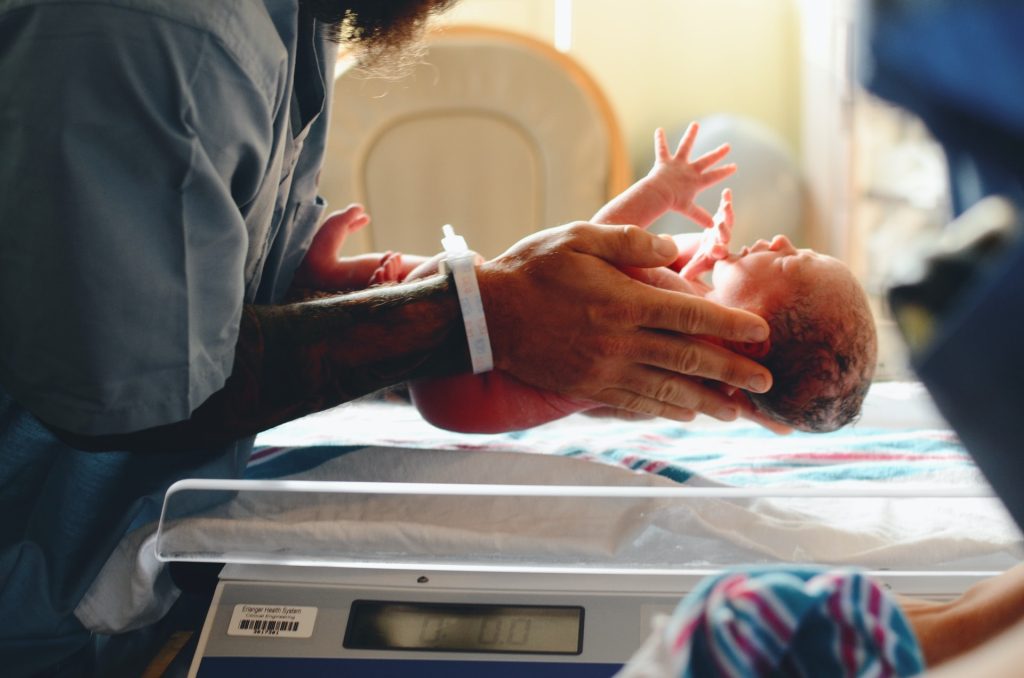
Man holding newborn baby
Photo by Jonathan Borba on Unsplash

A new study found that caesarean delivery, either with or without labour, or elective or emergency, compared to vaginal birth does not impact on the likelihood of food allergy at 12 months of age. Led by the Murdoch Children’s Research Institute (MCRI), the study was published in the Journal of Allergy and Clinical Immunology: In Practice.

Associate Professor Rachel Peters of the Children’s Research Institute (MCRI) said the association between food allergy and mode of delivery remained unclear due to the lack of studies with food challenge outcomes.

The study involved 2045 infants from the HealthNuts study, with data linked to a perinatal database for detailed information on birth factors.

The study found that, of the 30% born by caesarean, 12.7% had a food allergy compared to 13.2% born vaginally.

“We found no meaningful differences in food allergy for infants born by caesarean delivery compared to those born by vaginal delivery,” Associate Professor Peters said. “Additionally, there was no difference in the likelihood of food allergy if the caesarean was performed before or after the onset of labour, or whether it was an emergency or elective caesarean.”

Associate Professor Peters said it was thought a potential link between caesarean birth and allergy could reflect differences in early microbial exposure from the mother’s vagina during delivery.

“The infant immune system undergoes rapid development during the neonatal period,” she said. Caesarean delivery may interfere with the normal development of the immune system, as there is less exposure to the mother’s vagina and gut bacteria, influencing the baby’s own microbiome. “However, this doesn’t appear to play a major role in the development of food allergy.”

Australia has the highest rates of childhood food allergy in the world, with about one in 10 infants and one in 20 children over five years of age having a food allergy.

These findings come as other MCRI-led research found 30% of peanut allergy and 90% of egg allergy resolves naturally by age six.

Associate Professor Peters said the resolution rates were great news for families and were even a little higher than what was previously thought.

The results, published in the Journal of Allergy and Clinical Immunology, found infants with early-onset and severe eczema and multiple allergies were less likely to outgrow their egg and peanut allergies.

Associate Professor Peters said these infants should be targeted for early intervention trials that evaluate new treatments for food allergy such as oral immunotherapy.

“Prioritising research of these and future interventions for infants less likely to naturally outgrow their allergy would yield the most benefit for healthcare resources and research funding,” she said.

Source: SciTech Daily

Study Confirms Analgesics during Pregnancy Carries Risks for Newborns

Pregnant with ultrasound image
Source: Pixabay

Researchers have called for a reassessment of medical advice on analgesic use during pregnancy after a new study published in BMJ Open found that pregnant women using over-the-counter analgesics are about 1.5 times more likely to have a baby with health issues.

The study found elevated risks for preterm delivery, stillbirth or neonatal death, physical defects and other problems compared with the offspring of mothers who did not take such medications.

Between 30% and 80% of women globally use non-prescription analgesics in pregnancy for pain relief. However, there is presently great variation in evidence for safety of use during pregnancy, with some drugs considered safe and others not.

“We would encourage a strong reinforcement of the official advice for pregnant women.”

Aikaterini Zafeiri, first author of the study

The study analysed data from more than 151 000 pregnancies over 30 years (1985–2015) which contained medical notes for non-prescribed maternal consumption of five common analgesic. These were paracetamol, aspirin, and non-steroidal anti-inflammatory drugs (NSAIDs), diclofenac, naproxen and ibuprofen – either as single compounds or in combinations.

Overall, 29% of women have taken over-the-counter analgesics during pregnancy, a figure which more than doubled to 60% during the last seven years of the 30-year study period.

When asked specifically at their first antenatal clinic visit, as opposed to later in pregnancy or after labour, 84% of women using painkillers reported use during the first 12 weeks after conception. However, the duration and dose of use and medical reason for use were not recorded.

Nevertheless, given that up to 60% of women reported using over the counter analgesics, they could not all have underlying medical conditions that would cause the increased risks seen in this study.

The study found increases in the following:

  • Neural tube defects: 64% more likely.
  • Admission to a neonatal unit: 57% more likely.
  • Neonatal death: 56% more likely.
  • Premature delivery before 37 weeks: 50% more likely.
  • Baby’s condition at birth based on APGAR score of less than 7 at five minutes: 48% more likely.
  • Stillbirth: 33% more likely.
  • Birthweight under 2.5 kg: 28% more likely.
  • Hypospadias, a birth defect affecting the penis: 27% more likely.

First author of the paper, Aikaterini Zafeiri of the University of Aberdeen said: “In light of the study findings, the ease of access to non-prescription painkillers, in combination with availability of mis-information as well as correct information through the internet, raises safety concerns.

“This is especially when mis-informed or partially-informed self-medication decisions are taken during pregnancy without medical advice.

“It should be reinforced that paracetamol in combination with NSAIDs is associated with a higher risk and pregnant women should always consult their doctor or midwife before taking any over-the-counter drugs. We would encourage a strong reinforcement of the official advice for pregnant women.”

Source: University of Aberdeen

No Added Seizure Risk from Antidepressant Use in Pregnancy

Pregnant with ultrasound image
Source: Pixabay

A large Swedish study in the journal Neurology found that pregnant women taking selective serotonin reuptake inhibitors (SSRIs) or selective norepinephrine reuptake inhibitors (SNRIs) during the first trimester of was not linked to an increased risk for neonatal seizures and epilepsy in childhood.

Any increase in seizures or epilepsy is likely due to other factors, the researchers said.

“It’s not likely the medications themselves that are causing the seizures and epilepsy in children, but rather the reasons why these women are taking the medication,” according to Kelsey Kathleen Wiggs, a PhD candidate at Indiana University in Bloomington. There are also the other background factors that differ between women who do and do not use SSRI/SNRIs.

“When it rains, it pours,” Wiggs said. “Women who are taking antidepressants in pregnancy are doing that for lots of different reasons, and they might be at risk for different things than women who aren’t taking those medications in pregnancy.”

The study found an elevated risk for neonatal seizures (risk ratio [RR] 1.41) and epilepsy in early childhood (HR 1.21) among offspring of mothers who used antidepressants in pregnancy.

Adjustment for maternal indications for SSRI/SNRI use and background factors like smoking during pregnancy revealed that they were drivers for both associations: neonatal seizures (RR 1.10); epilepsy diagnosis at 5 years (HR 0.96). Parental history of epilepsy was not found to affect the association.

The findings provide a “conclusive answer” to these concerns with using SSRI/SNRIs during pregnancy, according to Anne Berg, PhD, and Torin Glass, BM, Bch, BAO.

“[SSRI/SNRIs] have been demonstrated to have serotonergic central nervous system effects and are associated with an observable withdrawal syndrome which may be seen in the neonate following in utero exposure,” noted Drs Berg and Glass, in an accompanying editorial.

“The authors understood that with a population-based data registry and huge sample size, they had more than sufficient statistical power to detect even a modest increase in risk,” the editorialists wrote. “They tested this hypothesis and were able to reject it, definitively!”

In order to determine whether antidepressants had a causal association with infant seizures and childhood epilepsy, the researchers analysed data from national Swedish healthcare registries on a total of 1 721 274 children in Sweden born between 1996 and 2011.

Participants were divided into two groups: one group of mothers who reported use of an SSRI (fluoxetine, citalopram, paroxetine, sertraline, fluvoxamine, escitalopram) or SNRI (venlafaxine, duloxetine) during the first trimester of pregnancy (n = 24 308), and another group with no reported antidepressant use (n = 1 696 966).

Source: MedPage Today

Children Must be Psychologically Assessed Before Mother’s Surrogacy, Court Rules

pregnant woman holding her belly
Source: Anna Hecker on Unsplash

The existing children of a woman who agrees to a surrogate pregnancy must be psychologically assessed before an agreement can be sanctioned. This is according to a recent ruling by Judge Brenda Neukircher at the High Court in Pretoria.

In her ruling, Judge Neukircher laid down further guidelines to be followed in surrogacy agreements which come before courts for approval. Some of the guidelines are in terms of the Constitutionally-entrenched principle of the “best interest of the child”.

Judge Neukircher ruled that, “Were it to be found that the surrogacy may have a harmful effect on their psychological well-being, this would be a factor that a court would be able to weigh up in the consideration of whether the agreement should be confirmed or not.”

Setting out the history of surrogacy laws in South Africa, Neukircher said that one provision was that a surrogate mother must have a documented history of at least one pregnancy, a “viable delivery”, and a living child of her own.

Neukircher noted the importance for the courts to consider the impact a surrogate pregnancy would have on the woman’s existing child or children. “How does a surrogate pregnancy affect the surrogate mother’s own child/children? Bearing in mind that they watch her pregnancy for nine months, know she is carrying a child and see her going to hospital to deliver a baby and then comes home without a baby in her arms. Is it important that the interest of these children be protected and, if so, how does a court do that?” she stated.

The applicants in the matter before Neukircher were financially stable. They already had a ten-month-old baby born through a previous surrogate arrangement with the same surrogate mother. The surrogate mother had previously been a surrogate for other couples and had once given birth to twins.

Neukircher said the couple had one frozen egg left and now wanted another child with the surrogate mother. “In all respects, they function as a stable family unit and I’m satisfied that they are able to care for a second child financially, emotionally, physically and educationally. Any child that will be born of this surrogacy will have his/her best interests catered to in every aspect of the (Children’s Act),” the Judge said.

Turning to the surrogate mother, Judge Neukircher said she was married and had two children of her own aged ten and seven years old. “At the time of the first surrogacy, they were six and three. Each time their mother carries a child as a surrogate, they are confronted by her pregnancy which does not end in a child being brought home to join their family. My concern was how healthy, psychologically, it is for children to go through this process?”

Neukircher said she had ordered that expert reports be compiled on the surrogate’s physical suitability to have another child, and the effect, if any, of her surrogate pregnancies on her own children.

She said the report revealed that both the surrogate’s children did not want her to have more children of her own. “Both were proud of the fact that she was helping others have a family and it seems both have adjusted to the fact that she acts as a surrogate….they do not see [the babies] as being part of their own family….they do not want their mother to bring baby home”.

She said the “invaluable report” highlighted the importance that the children of surrogate mothers needed to be prepared for the pregnancy “which goes a long way to alleviating any possible anxiety”.

The Judge said lawyers for both the commissioning parents and the surrogate mother and her husband had agreed that in not requiring such expert reports, the legislature had overlooked the “best interests” principle when it came to existing children. She said the Act laid down compliance factors for surrogacy agreements, including that a court must consider the personal circumstances and family situation of all concerned.

Going forward, Neukircher said, this must include an assessment of children already born. In this matter, she granted an order confirming the agreement.

Written by Tania Broughton for GroundUp.

Source: GroundUp

Caesarean and Induced Deliveries Fell During Pandemic

Photo by Christian Bowen on Unsplash

During the first few months of the COVID pandemic, premature births from caesarean and induced deliveries fell by 6.5% – and remained consistently lower throughout, according to research reported in the journal Pediatrics. This is likely a result of fewer prenatal visits due to lockdown and social distancing rules, the researchers suggested, and call into question how many such interventions are necessary.   

The study, the first to examine pandemic-era birth data at scale, raises questions about medical interventions in pregnancy and whether some decisions by doctors may result in unnecessary preterm deliveries, according to Assistant Professor Daniel Dench, the paper’s lead author.

“While much more research needs to be done, including understanding how these changes affected fetal deaths and how doctors triaged patient care by risk category during the pandemic, these are significant findings that should spark discussion in the medical community,” A/Prof Dench said.

In effect, the study begins to answer a question that never could have been resolved in a traditional experiment: What would happen to the rate of premature C-sections and induced deliveries if women didn’t see doctors as often, especially in person, during pregnancy?

Doing such a study would be unethical, but lockdown had a side effect of reducing prenatal care visits by more than a third, according to one analysis. That gave A/Prof Dench and colleagues an opportunity to evaluate the impacts, after all.

The researchers took records of nearly 39 million US births from 2010 to 2020, and compared them to expected premature births (born before 37 weeks) from March to December 2020. 

The researchers found that in March 2020, when lockdowns began in the US, preterm births from C-sections or induced deliveries immediately fell from the forecasted number by 0.4%. From March 2020 to December 2020, the number remained on average 0.35% below the predicted values. That translates to 350 fewer preterm C-sections and induced deliveries per 100 000 live births, or 10 000 fewer overall.

Before the pandemic, the number of preterm C-sections and induced deliveries had been rising. Spontaneous preterm births also fell by a small percentage in the first months of the pandemic, but much less than births involving those two factors. The number of full-term caesarean and induced deliveries increased.

“If you look at 1000 births in a single hospital, or even at 30 000 births across a hospital system, you wouldn’t be able to see the drop as clearly,” said A/Prof Dench. “The drop we detected is a huge change, but you might miss it in a small sample.”  

The researchers also corrected for seasonality, for example, preterm births are higher on average in February than in March, which helped them get a clearer picture of the data.

The research comes with caveats. Up to half of all preterm C-sections and induced deliveries are due to a ruptured membrane, which is a spontaneous cause. But in the data Dench and his team used, it’s impossible to distinguish these C-sections from the ones caused by doctors’ interventions. So, Dench and co-authors are seeking more detailed data to get a clearer picture of preterm deliveries.

Still, these findings are significant because the causes for preterm births are not always known.

“However, we know for certain that doctors’ interventions cause preterm delivery, and for good reason most of the time,” A/Prof Dench said. “So, when I saw the change in preterm births, I thought, if anything changed preterm delivery, it probably had to be some change in how doctors were treating patients.”

The researchers’ findings raise a critical question: Was the pre-pandemic level of doctor intervention necessary?

“It’s really about, how does this affect foetal health?” said A/Prof Dench. “Did doctors miss some false positives – did they just not deliver the babies that would have survived anyway? Or did they miss some babies that would die in the womb without intervention?”  

A/Prof Dench plans to use foetal death records from March 2020 to December 2020 to answer this question. If he finds no change in foetal deaths at the same time as the drop in preterm births, that could point to “false positives” in doctor intervention that can be avoided in the future. Learning which pregnancies required care during the pandemic and which ones didn’t could help doctors avoid unnecessary interventions in the future.  

“This is just the start of what I think will be an important line of research,” A/Prof Dench said.

Source: Georgia Institute of Technology

Scientists Discover the Neurological Basis of Food Cravings in Pregnancy

Photo by Andriyko Podilnyk on Unsplash

By examining mice, which get pregnancy cravings similar to humans, scientists have identified the neurological basis of food craving during pregnancy.

During pregnancy, the mother’s body undergoes a series of physiological and behavioural changes to create an environment facilitating the embryo’s development. Frequent consumption of tasty, high calorie foods driven by the cravings contributes to weight gain and obesity in pregnancy, with possible negative consequences for the baby’s health.

“There are many myths and popular beliefs regarding these cravings, although the neuronal mechanisms that cause them are not widely known,” noted study leader March Claret, at the University of Barcelona and leader of the study published in the journal Nature Metabolism.

The researchers found that the brains of pregnant female mice undergoes changes in the functional connections of the brain reward circuits, as well as the taste and sensorimotor centres. Mice, like pregnant women, are also more sensitive to sweet food, and develop binge-eating behaviours towards high calorie foods. “The alteration of these structures made us explore the mesolimbic pathway, one of the signal transmission pathways of dopaminergic neurons. Dopamine is a key neurotransmitter in motivational behaviours,” notes Claret, member of the Department of Medicine of the UB and the Diabetes and Associated Metabolic Diseases Networking Biomedical Research Centre (CIBERDEM).

The team saw that dopamine levels and dopamine receptor (D2R) activity increased in the nucleus accumbens, a brain region involved in the reward circuit. “This finding suggests that the pregnancy induces a full reorganisation of the mesolimbic neural circuits through the D2R neurons,” noted study leader Roberta Haddad-Tóvolli. “These neuronal cells – and their alteration – would be responsible for the cravings, since food anxiety, typical during pregnancy, disappeared after blocking their activity.”

The team demonstrated that persistent cravings have consequences for the offspring, affecting the metabolism and development of neural circuits that regulate food intake, leading to weight gain, anxiety and eating disorders. “These results are shocking, since many of the studies are focused on the analysis of how the mother’s permanent habits – such as obesity, malnutrition, or chronic stress – affect the health of the baby. However, this study indicates that short but recurrent behaviours, such as cravings, are enough to increase the psychological and metabolic vulnerability of the offspring,” concluded Claret.

The conclusions of the study could contribute to the improvement of nutritional guidelines for pregnant women in order to ensure a proper prenatal nutrition and prevent the development of diseases.

Source: University of Barcelona

IVF Babies Have Better Quality of Life as Adults

Pregnant with ultrasound image
Source: Pixabay

Being conceived via assisted reproductive technology (ART), such as IVF, could boost quality of life in adulthood, according to the results of a new study published in Human Fertility. The findings offer reassuring news for people who have been conceived with ART, and those who need to use the technology to conceive.

“Our findings suggest that being ART-conceived can provide some advantages on quality of life in adulthood, independent of other psychosocial factors,” said lead author Karin Hammarberg of Monash University. “Together with previous evidence that adults conceived by ART have similar physical health to those who were naturally conceived, this is reassuring for people who were conceived with ART—and those who need ART to conceive.”

In the more than four decades since the first birth following in vitro fertilization (IVF) in 1978, more than 8 million children have been born as a result of ART. In that time, many studies have evaluated the physical health, development and psychosocial well-being of ART-conceived children compared with those naturally conceived (NC). But currently, there is less known about the health and quality of life of adults who were conceived by ART.

The study recruited 193 young adults conceived through ART and 86 through NC. These participants completed questionnaires, which included a standardised quality of life measure (World Health Organization Quality of Life – Brief Assessment [WHOQoL-BREF]), when aged 18–28 years (T1) and again when aged 22–35 years (T2). The WHOQoL-BREF assesses four domains of quality of life: 1) physical 2) psychosocial 3) social relationships and 4) environment.

The researchers looked at the associations between factors present at T1 (mode of conception, the mother’s age when the participant was born, sexual orientation, family financial situation in secondary school, perceptions of own weight, number of close friends, frequency of vigorous exercise and quality of relationships with parents) and the scores on the four domains of WHOQoL-BREF at T2.

After making statistical adjustments to account for other psychosocial factors present in young adulthood, the results showed that being ART-conceived was strongly linked with higher scores (better quality of life) on both the social relationships and environment WHOQoL-BREF domains at T2. In addition, having less psychological distress, a more positive relationship with parents, a better financial situation, and perceptions of being about the right weight at T1 were associated with higher scores on one or more WHOQoL-BREF domains at T2.

“Children conceived via ART are nowadays a substantial part of the population—and it’s important to continue to evaluate the long-term effects of ART on their physical health and well-being as they progress through adolescence into adulthood,” said Hammarberg. “When accounting for other factors present in young adulthood, being ART-conceived appears to confer some advantages in quality of life. Perhaps unsurprisingly, we also found that, independently of how the person was conceived, having a better relationship with parents, less psychological distress, and a better family financial situation in young adulthood contributed to a better adult quality of life.”

This is the first study to explore the contributions of being conceived with ART and psychosocial factors present in young adulthood to the quality of life of adults. While the findings are reassuring, they should be interpreted with caution because many of those who took part in the first study did not take part in the follow-up study.

Source: Taylor & Francis

COVID Vaccination During Pregnancy Does not Cause Complications

Source: Pixabay

COVID vaccination during pregnancy is not associated with a higher risk of pregnancy complications, according to a large scale Swedish and Norwegian study published in the journal JAMA.

The study, which comprised almost 160 000 pregnancies, found there to be no increase in the risk of preterm birth, growth retardation, low Apgar scores at birth or the need for neonatal care after vaccination against COVID during pregnancy.

“The results are reassuring and can hopefully make pregnant individuals more willing to get vaccinated,” said co-first author Anne Örtqvist Rosin, researcher at the Department of Medicine, Karolinska Institutet.

Studies have shown that, compared to non-pregnant peers, pregnant women are at risk of serious COVID requiring intensive care with a higher risk of death. Preterm births are also more likely in pregnant women with severe COVID. COVID vaccines have been available in Sweden and Norway since January 2021, and in May 2021 Sweden recommended all pregnant individuals to have a COVID jab, followed in August by Norway.

“We’re still seeing that vaccination rates are lower than in the rest of the population, so it’s likely that there’s some concern about how the vaccines affect the pregnant individual and the foetus,” explained Dr Örtqvist Rosin. “When the vaccines were produced, pregnant women were not included in the large clinical studies, and until now there have been no population-based data about any risk there might be to them.”

The researchers linked Sweden’s Pregnancy Register and Norway’s Medical Birth Register to each country’s vaccination register to obtain data on if and when pregnant individuals were vaccinated and with which vaccine. The study included a total of 157 521 individuals who gave birth between January 2021 and January 2022, of whom 18% had been vaccinated. It was found that vaccinated individuals were at no higher risk than unvaccinated of developing one of the studied complications.

The majority of the pregnant individuals included in the study were vaccinated after week 12 in accordance with current recommendations, and 95% received an mRNA vaccine. This should be factored in when interpreting the results, which were similar for the different mRNA vaccines regardless of whether one or two doses were given. Vaccination during the third trimester and vaccination with the Moderna vaccine was associated with a slightly lower risk of needing neonatal care.

A possible benefit of vaccination during pregnancy is that the antibodies generated pass through the placenta, conferring a certain degree of protection against COVID to the newborn baby.

“We’re now planning to study how long this protection lasts, and if SARS-CoV-2 infection or vaccination during pregnancy has any other lasting effects on the child’s health,” said joint last author Professor Olof Stephansson at the Karolinska Institutet .

Source: Karolinska Institutet