People experienced less stress and anxiety while listening to nature soundscapes, but the addition of road traffic noise increased their stress and anxiety
Photo by Lucas Davies on Unsplash
Manmade sounds such vehicle traffic can mask the positive impact of nature soundscapes on people’s stress and anxiety, according to a new study published November 27, 2024, in the open-access journal PLOS ONE by Paul Lintott of the University of the West of England, U.K., and Lia Gilmour of the Bat Conservation Trust, U.K.
Existing research shows that natural sounds, like birdsong, can lower blood pressure, heart, and respiratory rates, as well as self-reported stress and anxiety. Conversely, anthropogenic soundscapes, like traffic or aircraft noise, are hypothesized to have negative effects on human health and wellbeing in a variety of ways.
In the new study, 68 student volunteers listened to three 3-minute soundscapes: a nature soundscape recorded at sunrise in West Sussex, U.K., the same soundscape combined with 20 mile per hour road traffic sounds, and the same soundscape with 40 mile per hour traffic sounds. General mood and anxiety were assessed before and after the soundscapes using self-reported scales.
The study found that listening to a natural soundscape reduced self-reported stress and anxiety levels, and also enhanced mood recovery after a stressor. However, the benefits of improved mood associated with the natural soundscape was limited when traffic sounds were included. The natural soundscape alone was associated with the lowest levels of stress and anxiety, with the highest levels reported after the soundscape that included 40 mile per hour traffic.
The authors conclude that reducing traffic speed in urban areas might influence human health and wellbeing not only through its safety impacts, but also through its effect on natural soundscapes.
The authors add: “Our study shows that listening to natural soundscapes can reduce stress and anxiety, and that anthropogenic sounds such as traffic noise can mask potential positive impacts. Reducing traffic speeds in cities is therefore an important step towards more people experiencing the positive effects of nature on their health and wellbeing.”
Photo by Inzmam Khan: https://www.pexels.com/photo/man-in-black-shirt-and-gray-denim-pants-sitting-on-gray-padded-bench-1134204/
A study by researchers at the University of Helsinki and HUS Helsinki University Hospital found a significant association among adolescents between having psychotic-like experiences and depressive symptoms, as well as with self-destructive behaviours.
Psychotic-like experiences resemble symptoms of psychosis, but are milder, less frequent and much more common than psychotic disorders. While these symptoms do not constitute a disorder diagnosed as psychosis, they can still be disruptive, distressing or detrimental to functional capacity. Typical psychotic-like experiences include perceptual distortions and hallucinations, suspicious paranoid thinking, delusions and bizarre, unusual thoughts.
Psychotic-like experiences are abundant among adolescents referred to care, but are generally considered fairly neutral, with only some of the adolescents reporting them as frightening, worrisome or harmful. In the study, published in the journal Psychosis, the correlation between psychotic-like experiences and depressive symptoms turned out to be strong. This link was not explained by connections between individual psychotic-like experiences and depressive symptoms, but by factors that more broadly measure paranoia and unusual thoughts. In addition to depressive symptoms, paranoid thoughts and unusual thought content were also associated with self-destructive thinking.
Making questions about psychotic-like experiences part of care
The findings show that psychotic-like experiences should be systematically surveyed in all adolescents seeking psychiatric care. It should also be assessed how frightening, worrisome or harmful they are considered to be. Particularly in the case of responses emphasising bizarre thinking and exaggerated suspiciousness, attention should also be paid to assessing mood and self-destructive thinking, as these factors can remain hidden without further enquiry.
“Our findings provide a clear recommendation for treatment practices: psychotic-like experiences should be assessed as part of routine procedures, but it is also important to determine how they are perceived. These phenomena cannot be uncovered unless separately and systematically asked,” says the principal investigator, Docent Niklas Granö.
It should be clearly explained to adolescents and their families that these symptoms are common and often manageable. In addition, applications of cognitive psychotherapy, even brief interventions, can help adolescents understand their symptoms and alleviate the strain they cause.
This is a pseudo-coloured image of high-resolution gradient-echo MRI scan of a fixed cerebral hemisphere from a person with multiple sclerosis. Credit: Govind Bhagavatheeshwaran, Daniel Reich, National Institute of Neurological Disorders and Stroke, National Institutes of Health
Fampridine is currently used to improve walking ability in multiple sclerosis. A new study shows that it could also help individuals with reduced working memory, as seen in mental health conditions like schizophrenia or depression.
Working memory allows a memory to be actively retained for a few seconds, for cognitive tasks such as remembering an email address to save it, or participating in a conversation. Certain conditions, such as schizophrenia or depression, as well as ADHD, impair working memory. Those affected lose track in conversations and struggle to organise their thoughts.
Fampridine is a drug that could help in such cases, as shown in a study led by Professors Andreas Papassotiropoulos and Dominique de Quervain at the University of Basel. The team has reported their findings in the journal Molecular Psychiatry.
Effective only if working memory is poor
In their study, the researchers tested the effectiveness of fampridine on working memory in 43 healthy adults. It was in those participants whose baseline working memory was at a low level that fampridine showed a more pronounced effect: after taking the active substance for three days, they scored better in the relevant tests than those who took the placebo. In contrast, in people who already had good baseline working memory, the drug showed no effect.
The researchers also observed that fampridine increased brain excitability in all participants, thus enabling faster processing of stimuli. The study was randomized and double-blind.
Established drug, new application
“Fampridine doesn’t improve working memory in everyone. But it could be a treatment option for those with reduced working memory,” explains Andreas Papassotiropoulos. Dominique de Quervain adds: “That’s why, together with researchers from the University Psychiatric Clinics Basel (UPK), we’re planning studies to test the efficacy of fampridine in schizophrenia and depression.”
The drug is currently used to improve walking ability in multiple sclerosis (MS). Particularly in capsule form, which releases the active ingredient slowly in the body, fampridine has shown effects on cognitive performance in MS patients: for some, it alleviates the mental fatigue that can accompany MS.
The researchers did not select the drug at random: this study followed comprehensive analyses of genome data in order to find starting points for repurposing established drugs. Fampridine acts on specific ion channels in nerve cells that, according to the researchers’ analyses, also play a role in mental disorders such as schizophrenia.
Children whose mothers have taken antiseizure drugs during pregnancy are more likely than others to receive a neuropsychiatric diagnosis. This is according to a comprehensive study by researchers at Karolinska Institutet and elsewhere, published in Nature Communications. However, the researchers emphasise that the absolute risk is low.
Antiseizure drugs are used to treat epilepsy and to stabilise mood in certain psychiatric conditions. However, some of these drugs, such as valproate, are known to affect the foetus if used during pregnancy.
The current study included data from over three million children in the UK and Sweden, 17 495 of whom had been exposed to antiseizure drugs during pregnancy.
As expected, children exposed to valproate were more likely to be diagnosed with autism, intellectual disability or ADHD compared to children not exposed to antiseizure drugs. Children exposed to topiramate had a 2.5-fold increased risk of intellectual disability, while those exposed to carbamazepine had a 25 per cent increased risk of being diagnosed with autism and a 30 per cent increased risk of intellectual disability.
No increased risk with lamotrigine
However, the researchers found no evidence that taking the antiseizure drug lamotrigine during pregnancy increases the risk of neuropsychiatric diagnoses in the child.
“Our findings suggest that while certain medications may pose some risk, lamotrigine may be a less risky option, but active monitoring of any antiseizure medication is critical to ensure safety and effectiveness, particularly during pregnancy,” says Brian K. Lee, Professor at Drexel University Dornsife School of Public Health, USA, and affiliated researcher at the Department of Global Public Health, Karolinska Institutet, Sweden.
The researchers emphasise that the absolute risk of the child receiving a neuropsychiatric diagnosis is low and that there may also be risks associated with not taking antiseizure medication during pregnancy.
“If you’re pregnant or trying to become pregnant, and taking one of these medications, it may be worth talking with your physician to make sure you’re taking the best medicine for your needs, while minimising risk to future children,” says Viktor H. Ahlqvist, researcher at the Institute of Environmental Medicine, Karolinska Institutet, and joint first author with Paul Madley-Dowd at the University of Bristol, UK.
The results support previous findings from smaller studies that found links between antiseizure drugs during pregnancy and the risk of neuropsychiatric diagnoses in the child. One difference is that the new study found no statistically significant association between topiramate or levetiracetam and ADHD in the child.
A study at the University of Jyväskylä showed that the heart rate variability of a dog and its owner adapt to each other during interaction. High heart rate variability is associated with relaxation, while low heart rate variability indicates stimulation. The study, published in Scientific Reports, deepens our understanding of the emotional connection between a dog and its owner, including its underlying physiological mechanisms.
Emotional connection enhances interaction in human relationships. Emotional synchronisation in the interaction between a child and a parent is essential for affective attachment. The relationship between a dog and its owner is also based on attachment, but little is known about its physiological mechanisms.
The heart rate variability of a dog and its owner adapt to each other
In a study conducted at the University of Jyväskylä, at the Department of Psychology and Jyväskylä Centre for Interdisciplinary Brain Research, it was found that the heart rate variability of a dog and its owner are interconnected during interaction. Heart rate variability, in other words, the variation in the heartbeat intervals, indicates the state of the autonomic nervous system. High heart rate variability is associated with a state of relaxation and recovery, while low heart rate variability indicates stimulation or strain, such as stress during an exam or sport performance. In this study, the owner’s high heart rate variability was connected to the dog’s high heart rate variability, and vice versa. In addition, the physical activity levels of a dog and its owner mutually adapted to each other during the study.
Different connections for activity and heart rate variability
The connections of heart rate variability and activity levels between a dog and its owner were monitored during specific interaction tasks. Both heart rate and activity level were interconnected between dogs and their owners, but at different times. During free-form resting periods, the owner’s high heart rate variability was connected to the dog’s high heart rate variability. In other words, when the owner was relaxed the dog was also relaxed. Moreover, the owner’s and dog’s activity levels were similar during the given tasks, such as playing. Although it is known that physical activity has an impact on heart rate, the strongest connections of these variables between dog and owner were found in different situations and do not fully explain each other. This suggests that the connection in heart rate variability reflects the synchrony of emotional state rather than of activity levels.
“The interconnection in heart rate variability between the dog and its owner during resting periods may be explained by the fact that in those instances there were no external tasks, but the counterparts could react more to each other’s state in a natural way,” says Doctoral Researcher Aija Koskela.
Owner’s temperament is connected to the dog’s heart rate variability
The study also investigated various background factors for the interconnection of the heart rate variability of the dog and its owner. Bigger dogs had higher heart rate variability. In addition, the dog’s high heart rate variability was also explained by the owner’s negative affectivity, a temperament trait that reflects the person’s tendency to become easily concerned about negative things. This type of owner tends to develop a strong emotional bond with the dog, and therefore the shepherd dogs of this study possibly had a higher sense of safety with these owners.
The dog also influences the owner
A surprising finding in the study was that the owner’s heart rate variability was best explained by the dog’s heart rate variability, even though also the owner’s activity level and body mass index, which are known to impact heart rate, were taken into account in the analysis.
“We exceptionally investigated both a dog’s and its owner’s heart rate and activity level simultaneously, whereas previous studies have commonly focused either on the human’s or the dog’s perspective,” says the leader of the study, Academy Research Fellow Miiamaaria Kujala. “The challenging research setting gives a better opportunity to investigate interactive aspects.”
This study indicates that the emotional states of dogs and their owners as well as the reactions of their nervous system become partially adapted to each other during interaction. The same mechanisms that strengthen human affective attachment also seem to support the relationship between a dog and its owner. This study deepens our understanding about interaction between species and about the meaning of emotional connection between dogs and humans.
Interaction research involved dogs bred for cooperation
The study was funded mainly by the Research Council of Finland and the Agria & Svenska Kennelklubben Research Fund. It involved altogether 30 voluntary dog owners with their dogs. The dogs represented breeds refined for cooperating with humans, such as sheep dogs and retrievers. The research findings are in line with previous studies, which have suggested that breeds selected for cooperation are particularly sensitive to react to their owners’ behaviour and personality traits. Next, the project will seek to shed light more specifically on the influential mechanisms involved in this phenomenon.
Patients who have had a heart attack are typically treated using beta blockers. According to a Swedish study conducted earlier this year, this drug is unlikely to be needed for those heart patients who have a normal pumping ability. Now a sub-study at Uppsala University shows that there is also a risk that these patients will become depressed by the treatment.
“We found that beta blockers led to slightly higher levels of depression symptoms in patients who had had a heart attack but were not suffering from heart failure. At the same time, beta blockers have no life-sustaining function for this group of patients,” says Philip Leissner, a doctoral student in cardiac psychology and the study’s first author. The study was published in European Heart Journal Acute Cardiovascular Care.
Beta blockers are drugs that block the effects of adrenaline on the heart and have been used for decades as a basic treatment for all heart attack patients. In recent years, their importance has started to be questioned as new, successful treatments have begun to be developed. This is mainly the case for heart attack patients who do not suffer from heart failure.
The researchers wanted to look at the side effects of beta blockers, that is, whether they affect anxiety and depression levels. This is because older research and clinical experience suggests that beta blockers are linked to negative side effects such as depression, difficulty sleeping and nightmares.
Earlier this year, a major national study was conducted in Sweden, which found that those who received beta-blocking drugs were not protected from relapse or death compared to those who did not receive the drug. Leissner and his colleagues based their research on these findings and conducted a sub-study. It ran from 2018 to 2023 and involved 806 patients who had had a heart attack but no problems with heart failure. Half were given beta blockers and the other half were not. About 100 of the patients receiving beta blockers had been taking them since before the study, and the researchers observed more severe symptoms of depression in them.
“Most doctors used to give beta blockers even to patients without heart failure, but as the evidence in favour of doing so is no longer so strong, this should be reconsidered. We could see that some of these patients appear to be more at risk of depression. If the drug doesn’t make a difference to their heart, then they are taking it unnecessarily and at risk of becoming depressed,” adds Leissner.
A type of therapy that involves applying a magnetic field to both sides of the brain has been shown to be effective at rapidly treating depression in patients for whom standard treatments have been ineffective.
Our accelerated approach means we can do all of the sessions in just five days, rapidly reducing an individual’s symptoms of depression
Valerie Voon
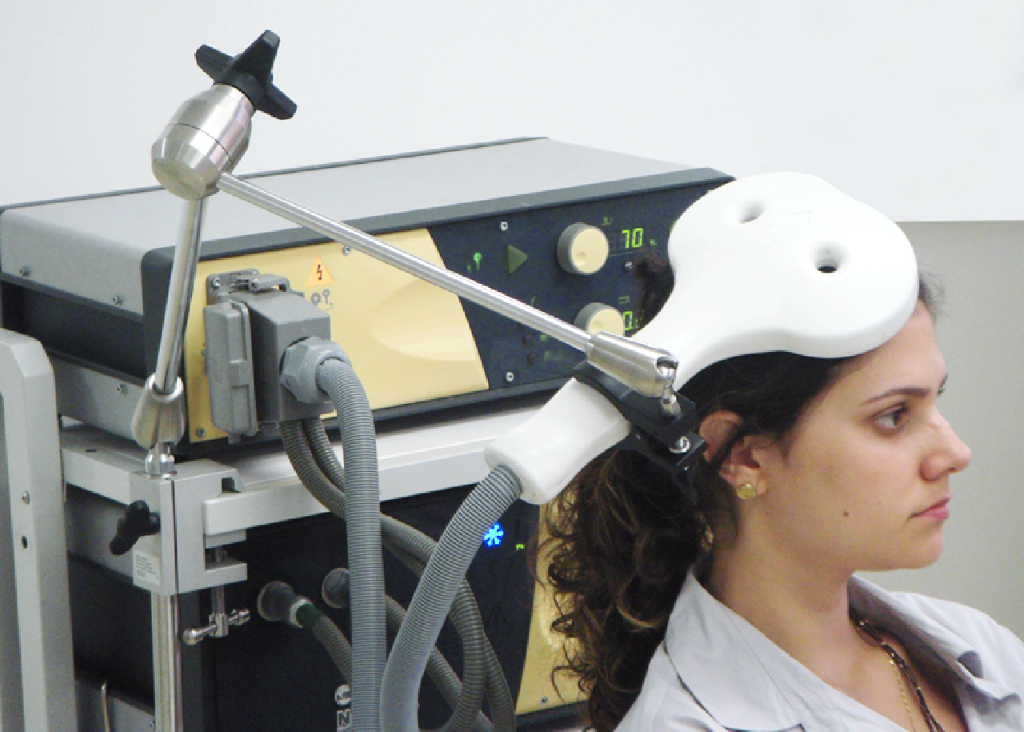
The treatment – known as repetitive transcranial magnetic stimulation (TMS) – involves placing an electromagnetic coil against the scalp to relay a high-frequency magnetic field to the brain.
Around one in 20 adults is estimated to suffer from depression. Although treatments exist, such as anti-depressant medication and cognitive behavioural therapy (‘talking therapy’), they are ineffective for just under one in three patients.
One of the key characteristics of depression is under-activity of some regions (such as the dorsolateral prefrontal cortex) and over-activity of others (such as the orbitofrontal cortex (OFC)).
Repetitive transcranial magnetic stimulation applied to the left side of the dorsolateral prefrontal cortex (an area at the upper front area of the brain) is approved for treatment of depression in the UK by NICE and in the US by the FDA. It has previously been shown to lead to considerable improvements among patients after a course of 20 sessions, but because the sessions usually take place over 20-30 days, the treatment is not ideal for everyone, particularly in acute cases or where a person is suicidal.
In research published in Psychological Medicine, scientists from Cambridge, UK, and Guiyang, China, tested how effective an accelerated form of TMS is. In this approach, the treatment is given over 20 sessions, but with four sessions per day over a period of five consecutive days.
The researchers also tested a ‘dual’ approach, whereby a magnetic field was additionally applied to the right-hand side of the OFC (which sits below the dorsolateral prefrontal cortex).
Seventy-five patients were recruited to the trial from the Second People’s Hospital of Guizhou Province in China. The severity of their depression was measured on a scale known as the Hamilton Rating Scale of Depression.
Participants were split randomly into three groups: a ‘dual’ group receiving TMS applied first to the right- and then to the left-hand sides of the brain; a ‘single’ group receiving sham TMS to the right-side followed by active TMS applied to the left-side; and a control group receiving a sham treatment to both sides. Each session lasted in total 22 minutes.
There was a significant improvement in scores assessed immediately after the final treatment in the dual treatment group compared to the other two groups. When the researchers looked for clinically-relevant responses – that is, where an individual’s score fell by at least 50% – they found that almost half (48%) of the patients in the dual treatment group saw such a reduction, compared to just under one in five (18%) in the single treatment group and fewer than one in 20 (4%) in the control group.
Four weeks later, around six in 10 participants in both the dual and single treatment groups (61% and 59% respectively) showed clinically relevant responses, compared to just over one in five (22%) in the control group.
Professor Valerie Voon from the Department of Psychiatry at the University of Cambridge, who led the UK side of the study, said: “Our accelerated approach means we can do all of the sessions in just five days, rapidly reducing an individual’s symptoms of depression. This means it could be particularly useful in severe cases of depression, including when someone is experiencing suicidal thoughts. It may also help people be discharged from hospital more rapidly or even avoid admission in the first place.
“The treatment works faster because, by targeting two areas of the brain implicated in depression, we’re effectively correcting imbalances in two import processes, getting brain regions ‘talking’ to each other correctly.”
The treatment was most effective in those patients who at the start of the trial showed greater connectivity between the OFC and the thalamus (an area in the middle of the brain responsible for, among other things, regulation of consciousness, sleep, and alertness). The OFC is important for helping us make decisions, particularly in choosing rewards and avoiding punishment. Its over-activity in depression, particularly in relation to its role in anti-reward or punishment, might help explain why people with depression show a bias towards negative expectations and ruminations.
Dr Yanping Shu from the Guizhou Mental Health Centre, Guiyang, China, said: “This new treatment has demonstrated a more pronounced – and faster – improvement in response rates for patients with major depressive disorder. It represents a significant step forward in improving outcomes, enabling rapid discharge from hospitals for individuals with treatment-resistant depression, and we are hopeful it will lead to new possibilities in mental health care.”
Dr Hailun Cui from Fudan University, a PhD student in Professor Voon’s lab at the time of the study, added: “The management of treatment-resistant depression remains one of the most challenging areas in mental health care. These patients often fail to respond to standard treatments, including medication and psychotherapy, leaving them in a prolonged state of severe distress, functional impairment, and increased risk of suicide.
“This new TMS approach offers a beacon of hope in this difficult landscape. Patients frequently reported experiencing ‘lighter and brighter’ feelings as early as the second day of treatment. The rapid improvements, coupled with a higher response rate that could benefit a broader depressed population, mark a significant breakthrough in the field.”
Just under a half (48%) of participants in the dual treatment group reported local pain where the dual treatment was applied, compared to just under one in 10 (9%) of participants in the single treatment group. However, despite this, there were no dropouts.
For some individuals, this treatment may be sufficient, but for others ‘maintenance therapy’ may be necessary, with an additional day session if their symptoms appear to be worsening over time. It may also be possible to re-administer standard therapy as patients can then become more able to engage in psychotherapy. Other options include using transcranial direct current stimulation, a non-invasive form of stimulation using weak electrical impulses that can be delivered at home.
The researchers are now exploring exactly which part of the orbitofrontal cortex is most effective to target and for which types of depression.
The research was supported by in the UK by the Medical Research Council and by the National Institute for Health and Care Research Cambridge Biomedical Research Centre.*
The Swedish Board of Health and Welfare reports that in 2022 10.5% of boys and 6% of girls received an ADHD diagnosis, which is 50% more than in 2019. And the board forecast that the rates will eventually plateau at 15% for boys and 11% for girls.
So, what might be the reasons behind the startling rise? Here are eight possible causes, many of which overlap and interact with each other.
1. Multiple diagnoses made in the same person
Previously, doctors were recommended by diagnostic manuals and trained to limit diagnoses in an individual to the most prominent one, and not to make certain combinations of diagnoses at all – for example, autism and ADHD. Today, it is recommended and common practice in the mental health sector to make as many diagnoses needed to meaningfully describe and cover the symptoms and challenges of a person.
2. Increased knowledge and awareness by professionals
Today, there is a new generation of professionals working in services with higher awareness and knowledge of ADHD. This has led to earlier detection and to ADHD being diagnosed in groups that were previously neglected, particularly girls and women – but also in adults, generally
3. Reduced stigma
In many societies, ADHD is far less stigmatised than previously. Doctors have fewer doubts about making the diagnosis, and those receiving it feel less stigmatised. For more and more people, ADHD has fewer negative connotations and is becoming a natural part of people’s identities .
4. Modern society places higher demands on cognitive skills
ADHD is not a disease but a malfunctioning composition of cognitive traits that exist on more functional levels even in the general population, such as “attention control” (concentration) and organisational and self-regulation skills. Modern societies are fast and complex, placing high demands on these cognitive traits. So people with lower than average skills in these key cognitive areas begin struggling to cope with everyday demands and might receive an ADHD diagnosis.
5. Higher expectations on health and performance
People’s expectations of their own and others’ performance and health are rising. The so-called “social baseline” of average health and performance is higher today. Therefore, people may express concerns about their own and others’ functioning earlier and more often, and may presume that ADHD could be an explanation.
6. Changes in schools have led to more students struggling
Schools have gone through substantial changes in how they teach, such as digitisation and introducing more project- and group-based learning, as well as much more self-guided education.
These changes have led to a less clear learning environment, including increased demands on students’ motivation and their cognitive skills, factors that can make it harder for students with even just a few traits of ADHD to succeed. It has also caused schools to refer more students whom they suspect of having ADHD for assessment.
7. Policymakers prioritise assessment
Politicians in many countries have tried to address the rising diagnosis rates predominantly by making diagnostic assessments more accessible so that people don’t have to wait a long time to receive a diagnosis.
While this is understandable, it fuels the number of diagnoses made and does not focus on avoiding diagnoses, such as by improving how children are taught, improving workplaces to make them more neurodivergent friendly, and offering support without requiring that a person have a diagnosis.
8. Diagnosis guarantees access to support and resources
In most societies, services are constructed as such that only a clinical diagnosis guarantees access to support and resources. It is often the only way for people and their families to get support.
Generally, not a lot is done for people without a diagnosis as service providers do not get reimbursed and are therefore less obliged to take action. So people in need of support are more likely to actively seek a diagnosis. And professionals are more inclined to assist them by giving a diagnosis, even if the person doesn’t quite meet the diagnostic criteria for ADHD – a phenomenon called “diagnostic upgrading”.
Research using animal models has shown that the diabetes drug dulaglutide, which is a glucagon-like peptide-1 (GLP-1) receptor agonist, may reduce symptoms of depression. A new study published in Brain and Behavior reveals the mechanisms that are likely involved.
By conducting a range of tests in mice treated with and without dulaglutide, investigators confirmed the effects of dulaglutide on depressive-like behaviours, and they identified 64 different metabolites and four major pathways in the brain associated with these effects.
Markers of depression and the antidepressant effects of dulaglutide were linked to lipid metabolism, amino acid metabolism, energy metabolism, and tryptophan metabolism.
“These primary data provide a new perspective for understanding the antidepressant-like effects of dulaglutide and may facilitate the use of dulaglutide as a potential therapeutic strategy for depression,” the authors wrote.
In a recently published study, researchers at the Institute for Environmental Medicine (IMM), Karolinska Institutet show that there are pronounced sex differences in the incidence rates of psychiatric disorders over the lifespan, which varied depending on age, type of psychiatric disorders, calendar period, and socioeconomic status.
Psychiatric disorders are among the most pressing global public health concerns. The sex difference in psychiatric disorders is among the most robust finding in psychiatry. For example, males have a higher risk of neurodevelopmental disorders, while females are more prone to depression and anxiety disorders. However, most of the evidence were based on prevalence studies, without differentiating new-onset (incident) cases from prevalent and recurrent cases, which may not inform optimal time windows for screening and interventions to reduce sex differences. There is research gap on sex differences in incident psychiatric disorders over the lifespan.
By using the nationwide Swedish register data and adopting a life-course approach, the researchers at IMM and collaborators from MEB, Uppsala University, Oslo University Hospital, and University of Iceland, have been able to depict a comprehensive atlas of sex differences in the incidence rates of clinically diagnosed psychiatric disorders over the lifespan, with an emphasis on analyzing sex differences by various types of psychiatric disorders, socioeconomic status and calendar period.
Their findings that sex differences in psychiatric disorders exist almost across the whole life supports the need of gendered mental health prevention strategies. The variation in these differences by age and socioeconomic status suggests that the current knowledge can be enhanced by integrating data on age and socioeconomic status. This study also provides evidence for screening and intervention strategies that focus on specific age groups and socially disadvantaged populations, where pronounced sex disparity in psychiatric disorders were observed.