After what was an insightful and collaborative meeting of the minds of healthcare professionals and experts at the 2024 BHF Annual Conference, the final day concluded by providing crucial insights into regulatory reforms shaping the future of healthcare in South Africa, as well as the legalities surrounding the controversial NHI Bill.
Facilitated by Nomo Khumalo, BHF Director and Head of Solutions at MMI Health, part one of the discussion comprised the key regulatory responses essential for building a resilient health system capable of navigating beyond current barriers.
Among the notable delegates participating in the discussion were Vincent Tlala, Registrar and CEO of the South African Pharmacy Council; Dr Magome Masike, Registrar of the Health Professions Council of South Africa; Dr Thandi S Mabeba, Chairperson of the Council for Medical Schemes; Dr Mark Blecher, Chief Director of Health and Social Development at the National Treasury; Yoliswa Makhasi, Director General of DPSA; and Dr Sandile Buthelezi, Director-General of the National Department of Health.
Their expertise across the healthcare regulatory sector added invaluable insights into the state of the sector, where they explored the current policy landscape, analysed the intent of reforms versus the realities, and discussed necessary changes for policymakers to ensure healthcare sustainability.
While all dignitaries note the need for Universal Health Coverage (UHC) to bridge the gap in access to healthcare in South Africa, Dr Sandile Buthelezi, acknowledged the complexity of implementing the NHI and the need for a phased approach. To this end, Buthelezi cited that significant work is required to establish the fund, develop regulations, and set up administrative structures.
“Apart from this, optimising healthcare delivery requires prioritising resource utilisation through proper management and spending, and addressing managerial issues to utilise available resources effectively,” suggests Buthelezi.
“Regulatory reforms are essential for advancing healthcare, encompassing standardised data collection, quality enhancement, and informed policy evolution. Moreover, the integration of digital health strategies is paramount, leveraging technology to bolster comprehensive health information systems and elevate healthcare delivery.”
Amidst the discussions, a common thread resonated among all dignitaries: the vital importance of collaboration. Here, Buthelezi stressed the necessity for stakeholders within the healthcare sector to unite in pursuit of shared goals, emphasising the need to improve health outcomes and effectively tackle challenges through collaborative efforts.
Following this, the conversation swung to the legalities of the impending NHI Bill in a session chaired by Michelle Beneke of Michelle Beneke Attorneys Inc, and featured industry experts Neil Kirby, Director at Werksmans Attorneys, and David Geral, Partner at Bowmans.
The conversation focused on the several facets of the implementation of the Bill, including its constitutionality, lack of government response to engagement efforts, and the broader regulatory challenges facing the healthcare industry.
According to Kirby, Werksman Attorneys, as legal representatives of BHF, have closely monitored the evolution of the NHI Bill, thoroughly scrutinising its alignment with South Africa’s constitutional principles.
“Regrettably, the implementation process hasn’t yielded a bill that adequately addresses our constitutional concerns. Despite incremental progress and assurances of future adjustments, the current iteration falls short of meeting the constitutional litmus test.
“As stakeholders directly impacted by the bill’s implications, we cannot afford to overlook constitutional shortcomings. Our obligation demands rigorous adherence to constitutional standards, ensuring that any legislation enacted upholds the rights and principles enshrined in our constitution,” he says.
To this end, Geral adds that the Bill introduces significant changes to the healthcare system, which may potentially affect tax policy and revenue sources.
In closing the conference, Dr Katlego Mothudi, Managing Director at BHF, emphasised the success of the conference in addressing industry challenges while promoting sustainability across the healthcare sector.
“As we conclude this enlightening conference, we reflect on the breadth of topics covered, from disease burden to the transformative potential of digitisation and AI in healthcare. Our discussions underscored the necessity of embracing change, combating fraud, and fostering regional collaboration.
“With a firm focus on healthcare reform, particularly the intricacies of the NHI Bill, our gathering has propelled us toward a future marked by innovation, resilience, sustainability and collective action. In the words of Edgar Tan – we can have what we need if we use what we have,” he concludes.
Professor Ntobeko Ntusi in front of a painting depicting student protests inside his office at Groote Schuur Hospital – the same office that once housed his mentor, the late Professor Bongani Mayosi. (Photo: Biénne Huisman/Spotlight)
Professor Ntobeko Ntusi may be softspoken, but he is not afraid to stand by his strongly held views. As he is set to take up the hot-seat at the country’s primary health research funder, he tells Spotlight’s Biénne Huisman about his background and his priorities for the new job.
Professor Ntobeko Ntusi’s bearing brings to mind the aphorism “speak softly and carry a big stick” cited by the 26th president of the United States Theodore Roosevelt.
Inside his office at Groote Schuur’s Old Main Building, department head of medicine at the hospital; Ntusi is soft spoken, his words a few decibels above a whisper. However his observations are thoughtful and sharp, crafted with precision. Known to call out issues around race and racism at South African universities – “inbuilt biases” even amongst young students – his level, unblinking gaze commands attention.
Born in Umthatha to academic parents, Ntusi at age 13 was named South African Junior Ballroom Dance Champion at an event in Sasolburg. Some three decades later, the cardiologist with qualifications from around the world, does not sidestep public healthcare debate in favour of keeping the peace.
Catastrophic budget cuts
Earlier this year, Ntusi publicly criticised healthcare budget cuts. R200 million was shaved off Groote Schuur’s coffers just last year, as the Western Cape Department of Health and Wellness announced an R807.8 million shortfall for the coming year. Speaking to Spotlight, Ntusi described communication on the matter by provincial government officials (with healthcare professionals) as “appalling”.
In February, Ntusi was one of a group of executives at the hospital – affiliated to the University of Cape Town (UCT) – who spearheaded a petition to national and provincial treasury, decrying “crippling austerity” and “catastrophic budget cuts”; saying how clinicians with multiplying work hours are watching patients deteriorate, as waiting lists for lifesaving elective surgery grow longer.
At a boardroom table inside his office, he says: “How we ration limited resources, this is causing real moral injury to our front-facing clinicians. I mean, we’re having to deal with complaints from patients who no longer have access to services they have grown accustomed to. This is causing a lot of distress, especially among young doctors, and medical registrars – the engine of our operation – who are increasingly anxious and taking time out for mental health reasons.”
In his present position, Ntusi’s voice has clout. He oversees thirteen divisions – from cardiology to pulmonology, and infectious diseases and HIV medicine – and corresponding research units such as the Desmond Tutu HIV Centre, directed by Professor Linda-Gail Bekker.
‘Hope cannot be a strategy’
Reflecting on how Groote Schuur’s management are responding to these challenges, Ntusi says the hospital’s CEO (since February) Shaheem de Vries, while new, in time ought to bring concrete priorities to the table. “It’s important to have hope, but hope cannot be a strategy,” he says.
This insight may well inform how he approaches his own new job as CEO and President of the South African Medical Research Council (SAMRC), taking over from Professor Glenda Gray. From July, Ntusi will give up his Groote Schuur office, putting away his clinician’s stethoscope, to take up the hot-seat at the country’s primary health research funder at its headquarters behind a facebrick facade in Parow. The SAMRC employs 718 employees and will see Ntusi answer to the National Department of Health, the SAMRC board, and the Parliamentary Portfolio Committee on Health (you can see the latest report to the committee here).
Across medical bureaucracies, budget remains an issue. The South African government allocated R1.35 billion to the SAMRC for 2023/24. In the council’s latest annual report, diminishing funding from government is listed as a threat; while the ability to attract external funding is listed as a strength.
“A key role of the President of the SAMRC is to engage with organisations like the Wellcome Trust [in the United Kingdom] and the NIH [the National Institutes of Health in the United States] and high worth individuals to attract funding,” says Ntusi.
He points out that the SAMRC has had clean audits for several years running – a remarkable achievement for a South African parastatal. Indeed, the council’s annual performance plan for 2024/2025 states: “Despite interruptions of COVID-19, SAMRC’s exemplary performance and good governance led to the organisation achieving four consecutive clean audits… It is the organisation’s intention to continue on the same path.”
On the SAMRC’s functions, Ntusi explains: “For government, the SAMRC plays a critical role in bridging the gap between strategy and policy, and implementation. In science, it plays a critical role in providing priorities for the funding of research, and capacity building…”
In the SAMRC’s last financial year, R61.6 million was allocated to funding 171 “research capacity development” grants, including 120 to women. The annual report describes this as funding “the next generation of health researchers… with most of these awards aimed at individuals from historically disadvantaged backgrounds.”
For Ntusi, points of focus to be expanded on at the SAMRC include health issues relating to climate or planetary change, epidemic preparedness, “restoring trust in science in an age of misinformation”, digital health and artificial intelligence; and projects linking South African scholars with research entities across Africa. “In many of these countries, they don’t have the research infrastructure and budgets we have in South Africa – it is important to assist them with projects.”
To the US and back home
When he was 14, Ntusi’s family – he is one of three boys – moved to the United States where his mother pursued a PhD in social work. In Philadelphia, Pennsylvania, he continued competitive ballroom dancing while attending Lower Merion High School, where a video on child birth showed in a biology class stirred his passions.
At liberal arts college Haverford, in Pennsylvania, he completed a BSc Honours in cellular and molecular biology, before returning “home” to South Africa in 1999, to enrol in medical school at UCT. Here his initial interest in obstetrics was disappointed – “it was loud and messy, an anti-climax” – seeing him drawn to internal medicine and cardiology instead. In following years, he would study cardiovascular medicine under mentorship of the late Professor Bongani Mayosi.
Like Mayosi, Ntusi was awarded the Oxford Nuffield Medical Scholarship, which funded his D.Phil at the University of Oxford in the United Kingdom. His doctoral research looked at cardiovascular magnetic resonance (CMR – noninvasive tests that produce images of a beating heart) to study inflammatory heart disease.
In 2016, Ntusi took over from Mayosi as head of Groote Schuur’s department of medicine, as Mayosi became dean of the university’s faculty of health sciences. At the time Ntusi continued treating cardiology patients, with ongoing research projects including on HIV-related heart disease.
Seven years later, against pale yellow walls (the same walls decorated by Mayosi back when it was his office) several art works and certificates attest to Ntusi’s time here. He points out one painting of student protestors made by a friend – based on the #FeesMustFall protests at the university in 2016 – “a difficult time”, he says.
In 2018, Mayosi’s suicide was partially attributed by some to pressures relating to the violent protests; while also putting a spotlight on pressure on prominent black academics at UCT, and other tertiary institutions in South Africa. An enquiry found that the “sometimes disrespectful manner” in which protest was conducted, and “instigation of students’ action by some of his colleagues”, caused Mayosi “a lot of distress”.
Displayed on a shelf, beside a stuffed doll of the Archbishop Desmond Tutu and a 2021 SAMRC gold trophy for “scientific achievement”, a burgundy-bound book recounts Mayosi’s legacy. Ntusi penned the introduction, where he writes: “Bongani Mayosi – as a leader, he was awesome. He is one of the most inspiring people I will ever know. He always reminded me: ‘a journey of a thousand miles begins with a few steps’.”
Asked about following in the footsteps of a star such as Mayosi, Ntusi replies: “I am his protégée. There were always room for me to build my own scientific investigations.”
Precarious times
As Ntusi is poised to depart from Groote Schuur, present dean of UCT health sciences Associate Professor Lionel Green-Thompson points out how the cardiologist cared for critically ill patients in COVID-19 high-care wards, particularly during the fear and uncertainty of hard lockdown.
“Sometimes we would work up to 16 hour shifts in the high-care wards; upon finally leaving I’d go outside to find anti-vaccine protestors in front of the hospital. I mean, they were just annoying,” Ntusi recalls.
“Communication around the AstraZeneca vaccine went very badly – increasing confusion and vaccine hesitancy. It is really, really important to advocate for vaccines. And this brings me back to the point of restoring people’s faith in science; redressing the public image of science, a priority I have for the SAMRC going forward.” (After procuring the AstraZeneca SARS-CoV-2 vaccine, the South African government decided early in 2021 not to use it after it showed limited efficacy against mild to moderate COVID-19 in a study.)
Foremost, Ntusi describes himself as a “humanist”. Apart from science, medicine and health equity, his interests include art, wine and dogs. Ntusi lives in Milnerton. A keen runner, he is a member of the Gugulethu Athletics Club.
Professor Bob Mash. (Photo: Division of Family Medicine and Primary Care, Stellenbosch University)
By Bob Mash for Spotlight
To drum up support as South Africans head to the polls, President Cyril Ramaphosa reportedly vowed to “end the apartheid that remains in healthcare” when he hit the campaign trail. Professor Bob Mash has three health reforms on his wishlist for the incoming administration to prioritise.
South Africa is battling a quadruple burden of disease that includes HIV and tuberculosis (TB), non-communicable diseases such as diabetes, hypertension and mental health problems, challenges with maternal and child health, as well as substantial trauma from interpersonal violence and road traffic accidents.
At least 80% of the population is dependent on public sector health services. However, currently, we are in a state of austerity, with substantial cuts to the health budget that undermine years of work to improve the quality and coverage of health services.
In this context, what health reforms can be recommended?
In 2008, the World Health Organization (WHO) told us that we need primary healthcare “now more than ever” and recommended four health reforms. Universal health coverage has become a mantra for governments and implies that everyone should have easy access to quality primary care without any significant financial barriers. They also recommended that services should move away from a focus on a few priority diseases (such as HIV) and selected health programmes (such as immunisations). Rather, services should be integrated and built around the needs of people, across the life course, and in a comprehensive approach that spans health promotion, disease prevention, treatment, rehabilitation, and palliative care.
The WHO also recommended that integrated primary care be combined with essential public health functions. In other words, we don’t just worry about the people who enter the doors of the clinic but think about the health needs of all the people living in the catchment area. Finally, they recommended transformation of the leadership in health to make it more collaborative and to dialogue on policy with multiple stakeholders.
In South Africa, our last set of reforms were known as primary healthcare re-engineering. This led to the establishment of specialist clinical teams in each district to improve maternal and child healthcare, the establishment of teams of community health workers to extend the work of the clinic into the community and a focus on better health services – like health screenings and HPV vaccinations – at primary and secondary schools.
Of course, the other major policy reform that is still on the table is the introduction of national health insurance (NHI) to improve health equity and universal health coverage.
Going forward, three areas need urgent reform and attention.
More family physicians
Firstly, notwithstanding the 2030 Human Resources for Health Strategy, South Africa does not really have a comprehensive policy on the human resources for health that are needed. Thinking on primary healthcare and district hospitals has been particularly flawed in relation to family physicians. South Africa created a new medical speciality of family medicine in 2008 which has led to the training of family physicians in all nine medical schools. These are doctors who spend four years of additional training to be specialists in family medicine and to work in primary healthcare and district hospitals.
Family physicians are known to improve the quality of primary and district hospital care. They bring expertise closer to the community, capacitate the whole clinical team, improve quality, patient safety and reduce litigation. Adding a family physician to the clinical team is a cost-effective intervention. Despite this, only one province has really gone to scale with the employment of family physicians. This is a wasted opportunity and a low-hanging fruit in terms of reform.
The South African Academy of Family Physicians has a medium-term goal of one family physician at every community health centre, every district hospital and subdistrict (without a health centre). To achieve this, we need provinces to incrementally create posts over the next 10 years and to support an increase in the number of training opportunities.
Community-orientated primary care
As previously mentioned, we have introduced community health worker (CHW) teams into primary healthcare across the country. Unfortunately, many of these teams are dysfunctional due, for example, to an absence of supportive supervision, lack of resources or poor collaboration with the local primary care facility. Often, they are regarded as just extensions of the facility-based services and expected to perform tasks allocated by the clinic nurses.
The presence of these community health worker teams is, however, a huge opportunity to introduce community-orientated primary care (COPC). This model of primary care makes the switch to a focus on the health needs of the whole population served. Introducing COPC requires commitment to nine essential principles for organising primary healthcare.
Firstly, there must be a clear delineation of the community served and CHWs given responsibility for designated households (typically 250 households per CHW). Facility-based and community-based health care workers must operate as one multidisciplinary team and offer a comprehensive approach as described earlier. The team must make a careful analysis of the health needs in their community and also the resources available (government, non-government and private, health and social services) to address these needs.
At this local level, the team should prioritise the health needs in a participatory process with community and other stakeholders, and develop interventions tailored to their community. This process requires a commitment to community and stakeholder engagement. It also requires data to provide information on the health needs and this can come from households, facilities, and other sources. Finally, the service should be built around the needs of people and ensure that equity is improved.
The implementation of CHWs across the country needs to be reframed within a clearer policy on COPC. One province has already published its intention to make COPC the model of care and other provinces have examples of best practice.
Honing in on diabetes, hypertension, and mental health care
The final area that needs reform with more resources and attention is non-communicable diseases – particularly diabetes, hypertension, and mental healthcare. Historically, we have focused on the challenges of HIV and TB in service delivery, research, and donor funding. We have also been mindful of the need to improve maternal and child health.
Diabetes is now the leading cause of death in women in South Africa. Hypertension, heart disease and stroke are together the largest cause of deaths across all causes. Mental health, substance abuse and psychosocial problems may not cause death, but are a huge cause of morbidity and illness.
There is a danger of inequity by disease, and we need to ensure that we allocate resources commensurate to the problem of non-communicable diseases. In particular, we need to ensure that we have patient education and counselling that empowers people for lifestyle change, self-management and better mental health. Interventions are also needed in communities and the population to make healthier choices (on problem-solving, physical activity, healthy eating, tobacco smoking, alcohol and substance use) the easier choice.
Improving people’s health and healthcare is essential for sustainable development in South Africa. As the country heads to the polls, the incoming government would do well to keep this in mind. Such reforms will lead to higher quality primary healthcare and help pave the way for the proposed national health insurance.
*Mash is the Executive and Divisional Head of the Department of Family and Emergency Medicine in the Faculty of Medicine and Health Sciences at Stellenbosch University. The views expressed are those of the author and do not necessarily reflect those of Stellenbosch University.
On 10 April 2024, the South African Health Products Regulatory Authority (SAHPRA) received a report from the Nigerian National Agency for Food and Drug Administration and Control (NAFDAC) regarding the detection of high levels of diethylene glycol in a batch of Benylin Paediatric Syrup. SAHPRA immediately contacted the South African manufacturer, Kenvue (formerly Johnson and Johnson) for a response. Following engagements with the manufacturer and in the best interest of the public, it was resolved that affected batches would immediately be recalled while an investigation is ongoing.
SAHPRA, in collaboration with Kenvue, have identified the affected batch numbers as 329304 and 329303. These affected batches have been distributed to the following countries: South Africa, Eswatini, Rwanda, Kenya, Tanzania and Nigeria.
Benylin Paediatric presents as a clear, bright red syrup having a raspberry odour and taste, packed in amber glass bottles containing 100 mL with a plastic measuring cup. It is indicated for the relief of cough and its congestive symptoms and for the treatment of hay fever and other allergic conditions affecting the upper respiratory tract.
SAHPRA wishes to inform the public not to panic as the matter is being handled with priority. Batch recalls are batch-specific and do not necessarily apply to other batches/similar products. The manufacturer is a SAHPRA-licenced manufacturer and complies with Good Manufacturing Practices. The public is reminded that the recall is limited to two batches and should not panic regarding the range of products bearing the same name.
SAHPRA is alerting healthcare professionals and the public to discontinue the use of the two batches mentioned, remove them from their inventory and return them to their normal distribution channel(s) with immediate effect.
Classification of the recalls
The recall is classified as a Class 1, Type A recall, which is associated with a serious product quality concern that may have severe consequences. This is a country-wide recall. The product is being recalled from hospitals, retail outlets, healthcare professionals, authorised prescribers and individual customers or patients.
What the public should know
Diethylene glycol is toxic to humans when consumed and can prove fatal. Toxic effects can include abdominal pain, vomiting, diarrhoea, inability to pass urine, headaches, altered mental state, and acute kidney injury which may lead to death.
Members of the public who have consumed these two batches who experience any adverse reaction or witness it in children should consult their healthcare professional and report this using the Med Safety App or send an email to: adr@sahpra.org.za.
The recall is limited to batch numbers 329304 and 329303 of Benylin Paediatric Syrup.
“As a national regulatory authority, the recalling of medical products is a crucial measure to address safety concerns or quality issues so that we protect the health of the public. SAHPRA is recalling these two batches from the market due to reported high levels of diethylene glycol, with the potential to cause serious adverse events,” indicates SAHPRA CEO, Dr Boitumelo Semete-Makokotlela.
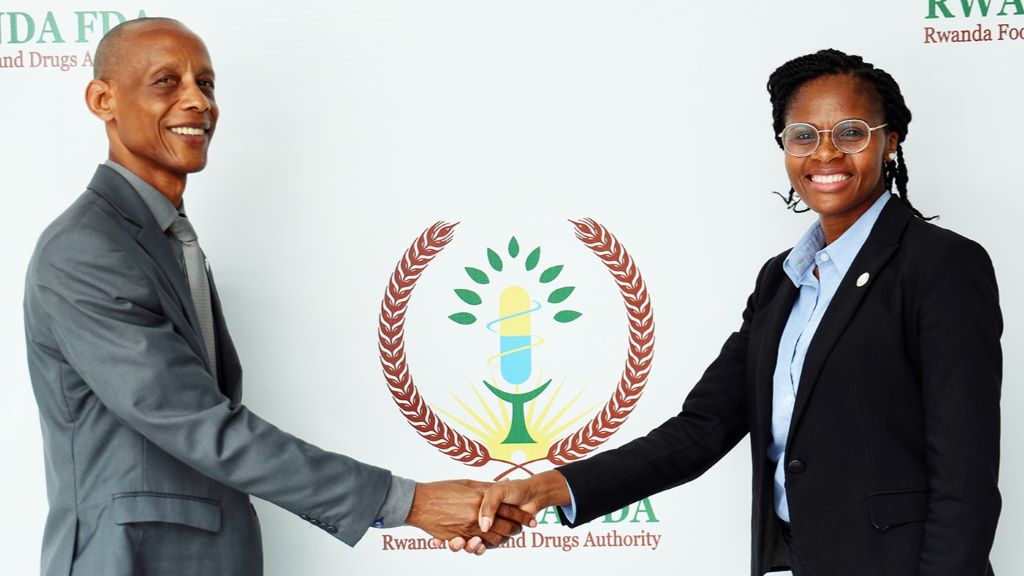
The MOU between SAHPRA and Rwanda FDA will allow the regulators to develop a cooperative partnership towards ensuring access to safe, quality, and effective health products in the respective countries.
Areas of cooperation
SAHPRA and Rwanda FDA will cooperate in joint products reviews and inspections to enable efficient access to health products. The World Health Organization (WHO) has set up an initiative for establishing a mRNA technology transfer hub, together with six spokes, in Africa as a strategy to increase mRNA vaccine production capacity in under-served regions and thus promote regional health security. Rwanda is one of the spokes and South Africa being the hub. Thus, building on this model, SAHPRA and Rwanda FDA will collaborate in the area of mRNA vaccines regulatory oversight.
“The forging of partnerships with fellow African National Regulatory Authorities, namely the Rwanda Food and Drug Authority allows SAHPRA to further our drive in enhancing and building capacity on the continent,” says SAHPRA CEO, Dr Boitumelo Semete-Makokotlela.
“The signing of this MoU underscores the profound potential of collaboration among African NRAs, affirming that the solutions to our shared challenges lie within our continent. Rwanda FDA staunchly believes in the power of collaboration and strategic partnerships. This MoU symbolises the culmination of dedicated efforts and signifies our unwavering commitment to facilitating mutual exchange and enhancing regulatory oversight. Through collaborative efforts with SAHPRA, we aim to strengthen our regulatory capacity and promote public health. As we embark on this journey together, let us harness the collective strength of our agencies to advance the pharmaceutical sector in Rwanda and beyond,” shares Rwanda FDA Director-General, Professor Emile Bienvenu.
Spotlight visits Rahima Moosa Mother and Child Hospital and sees progress for the struggling hospital but also the reality that there’s a long road ahead to undo what a health ombud report suggests has been years of neglect and poor management.
Rahima Moosa Mother and Child Hospital serves up to 2 300 people admitted per month as well as 10 000 outpatients each month. (Photo: Denvor de Wee/Spotlight)
By Ufrieda Ho for Spotlight
It’s been a year since a damning Health Ombud’s report on the Rahima Moosa Mother and Child Hospital (RMMCH) was released. This month also marks the end of the last deadline the Gauteng Department of Health had to act on recommendations in the report.
At 80 years old, RMMCH is an iconic landmark on the western edge of Johannesburg. But it has gone from a one-time outlier for excellence to being in steady decline, marked by what the Ombud’s report criticised as incompetent leadership, neglect and crumbling infrastructure.
In May 2022, the hospital suffered a public low point when paediatric gastroenterologist, Dr Tim de Maayer, penned an open letter, slamming multiple failings at the facility. Public outcry from the letter, complaints from hospital users, and a widely circulated video of pregnant mothers sleeping on hospital corridor floors prompted the ombud’s investigation.
When Spotlight visited the hospital at the end of February (2024), there were positive outward signs that recent maintenance work had been completed, per the Ombud’s recommendations. Some areas have been painted and surfaces where underground sewer pipes had to be unblocked have also been tarred. The stench from overflowing sewage appears to be a thing of the past. Renovations to the antenatal care ward, shown in the video that went viral, are also near completion and the ward is expected to be operational again by the middle of March.
More signs that RMMCH is blipping on radars again include a new granite plaque at the entrance ready to be unveiled to commemorate the hospital in its 80th year. On noticeboards were flyers that advertised a community fun-walk for the end of February. It was an event intended to “reconnect” hospital staff with the immediate community it serves.
The hospital is also part of the roll-out of the provincial health information system (HIS) and admin staff were seen enrolling new patients on the system. The HIS is a long-awaited system to modernise patient file storage and make patient files accessible at facilities province-wide. Spotlight previously reported on the system.
These encouraging advances since the Ombud’s investigation get the thumbs up from hospital insiders. But they flag that even though the Gauteng Department of Health has announced a six-year renewal plan for the hospital and R53 million was approved in December 2023 for the next phase of renovations, the department is playing catch-up and still dragging its feet.
CT scan empty promises
For Dr Z, the biggest of her current concerns is that the hospital’s CT scan has not been in operation for the past 14 months. Dr Z asked not to be named because of the risk of victimisation.
“We have to beg other hospitals to do our scans. So even when you have a patient who actually needs a CT scan, you think twice – you ask yourself do they really, really need it or should you just watch them for another couple of months. It’s very demoralising and we keep hearing empty promises from management,” Dr Z says.
A shortage of clerical staff means clerks are shared between departments, resulting in inevitable administrative glitches and delays, Dr Z says.
There is also a growing need for child mental health services but the hospital doesn’t have in-patient psychiatry services and only has sessional psychological services.
“We serve an ever bigger community that has changing needs but our infrastructure has stayed the same and our staff numbers have not increased,” says Dr Z. The doctor has worked at RMMCH for nearly two decades – “my second home” she calls it.
The hospital has around 1200 staff members. They serve up to 2300 people admitted per month as well as 10 000 outpatients each month.
Dr Z tries to stay hopeful, saying “we look to the positive things and we do what we can”, but RMMCH can be a daunting place to work. Safety and security has resurfaced as a concern this February. This comes on the back of a car hijacking that took place in the hospital’s parking area at the beginning of the month. The Ombud’s report also looked into the hijacking of an intern’s car that took place in its investigation period.
Parking too is a daily frustration – there are only 300 parking spots for staff on the hospital campus but at least 400 vehicles that need a place to park at peak times. Visitors are told to park on the streets.
‘Mr Fixer’
Acting CEO of the hospital Dr Arthur Manning met with Spotlight to answer questions put to him and to the Gauteng Department of Health.
Manning took up the job in September 2022 as part of the Ombud’s recommendation to redeploy the previous CEO, Dr Nozuko Mkabayi, whom the government oversight body found to be a dismal failure.
Manning calls himself “a fixer”. His role, he recognises, has been to help stop the slide for RMMCH, also to boost staff morale, restore communication channels and regain the community’s trust in the facility.
“We are a system under pressure and we know there is burnout and low morale but we have improved counselling support and we try to recognise and thank people. We held a nurse’s awards dinner last year exactly for these reasons,” he says.
Manning says the hospital organogram was last updated in 2006, but he has submitted a revised one to the Gauteng Department of Health. It makes the case for more admin and support staff, more junior and training doctor posts and bolstering psychiatric and psychological services. These, he says, are especially necessary because services for children are particularly neglected.
The broken CT scanner at Rahima Moosa Mother and Child Hospital. (Photo: Denvor de Wee/Spotlight)
On the matter of the CT scanner, he says “procurement is underway”. It’s a planning failure that the machine is five years beyond its expected lifespan and was not replaced sooner, resulting in the current gap. Manning says the Gauteng Department of Health is now piggybacking on Limpopo’s procurement contract. Piggybacking refers to provisions in the Public Finance Management Act, that under certain conditions, allow a department in one province to procure goods and services via a contract that a department in another province has concluded with a service provider.
According to Manning, the Gauteng province is currently concluding an X-ray equipment tender that has delayed the procurement of the CT scanner for RMMCH. “Without a tender in place, procurement is more difficult,” he says. Approval to use Limpopo’s tender contract cuts out some red tape and means the CT scanner and maintenance contract has been secured at the price of R30 million. By May, he says, the hospital will also have an MRI-scanning facility.
Staff helps to spruce up waiting area
Manning has been credited by some for shifting morale and competently overseeing the interventions set out by the Ombud’s report. On a hospital walkthrough with Spotlight, he engages casually with staff and patients. He’s also evidently proud of staff-driven initiatives to improve the hospital experience for patients. He points out a freshly painted waiting area in one of the departments where children are playing with new toys and crawling on bright green astro turf. More than half the money for this project came from doctors and nurses raising funds cycling and running in race events in the city.
Keeping staff motivated means their concerns and working conditions – including the parking problem and safety and security – have to be priorities, he says.
Cars are double and triple-parked in the overcrowded staff parking area. Currently, informal management of this is done via Whatsapp groups. People on the groups are notified to move their cars as spots free up. Manning says the hospital is working to secure nearby grounds for additional parking. On safety and security, he says the hospital has stepped up collaboration with local police and the community policing forums to increase patrolling around the hospital especially around shift changes. He adds: “We have expanded our CCTV camera coverage, requested for armed security control and we’re exploring panic button systems.”
A bigger budget and a permanent CEO
There are two key outstanding issues from the Ombud’s report. The first is reclassification of the hospital that is also an academic and training hospital, from a regional facility to a tertiary hospital.
“This is something that involves national, but when reclassification is done it will means RMMCH’s budgets and grants will be adjusted and we will be able to do so much more,” says Manning.
The second issue is the appointment of a permanent CEO, which Manning says is “being handled by central office”. He side-steps a question on whether his name is in the mix. It’s expected that an announcement on the new CEO will take place in April.
Professor Ashraf Coovadia is academic head of Paediatrics and Child Health at Wits University and heads up this department at RMMCH. He says Manning has “been good for RMMCH” but he says above the level of CEO, it’s the Gauteng Department of Health that needs to get its house in order . He says there has been a lack of communication, consultation, transparency and decisive action from the Gauteng Department of Health for years.
“A CEO can do only so much. When we have having acting heads in so many departments who are in acting positions for forever, it’s a joke. It means decisions don’t get made or decisions don’t get made for the long run and this compromises how the hospital is run and the care we give patients,” he says.
He adds that when there is less “hospital floor” consultation and more bureaucratic centralisation from the department it alienates doctors and nurses. “It becomes more and more difficult to try to motivate especially junior doctors who start off wanting to give back to the public health service but become so frustrated they don’t stay.”
Back to the 1900s
Like Dr Z, Coovadia highlights the CT scan issue, as well as the long delays and the excuses for the delays.
“Working without a scanner takes us back to the 1900s; we are not practising modern medicine and we are not able to diagnose patients early enough,” he says.
Coovadia adds that even though water and electricity supply issues at RMMCH have improved, infrastructure fixes remain patchy. “There are fewer issues of burst pipes and flooding, but it’s still happening.”
Coovadia has been with the hospital for 26 years, he knows better than most the precariousness of the situation and why the hospital is not yet out of the woods. He says: “The negative attention on the hospital did bring about some positive change. But it can make you cry when you see the slide over the last ten years… The hospital is not collapsing, but there are daily collapses.”
NOTE: Coovadia is on the board of SECTION27. Spotlight is published by SECTION27, but is editorially independent – an independence that the editors guard jealously. Spotlight is a member of the South African Press Council.
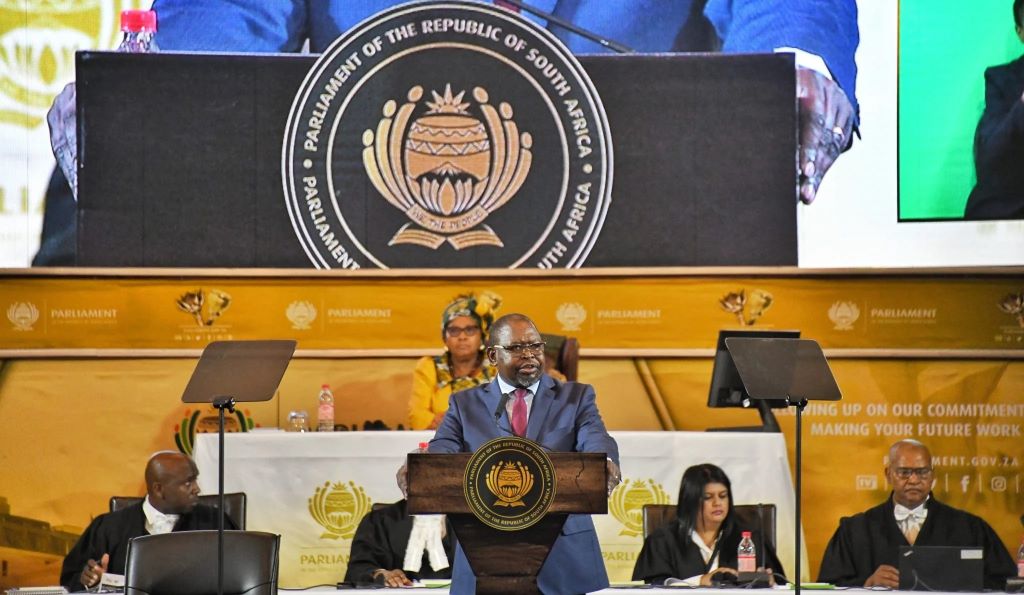
Finance Minister Enoch Godongwana tables his 2024 Budget during a joint seating of the National Assembly in the Cape Town City Hall. (Photo: National Treasury)
By Wanga Zembe, Donela Besada, Funeka Bango, Tanya Doherty, Catherine Egbe, Charles Parry, Darshini Govindasamy, Renee Street, Caradee Wright and Tamara Kredo
The 2024 national budget offers some glimmers but allocations for direct health benefits fall short of making a difference to people’s health and wellbeing. These include a ring-fenced allocation to crack down on corruption in health to inspire trust for theNational Health Insurance, taxing accessories for e-cigarettes, a jacked up child-support grant, clarity on plans dealing with climate change and its impacts on human health, and finally greater investment to enhance women’s capabilities alongside the Covid-19 grant, researchers from the South African Medical Research Council write exclusively for Spotlight.
The 2024 national budget presented last week by Finance Minister Enoch Godongwana contained several key elements that have an impact on systems, services and wellbeing from a health perspective.
Importantly, not only direct health spend, but budget allocated to social protection and climate infrastructure has implications for health outcomes such as nutrition, growth and food security. Health taxes, to address illness caused by alcohol, cigarettes and e-cigarettes amongst others, are also key revenue streams with taxation intended to deter use.
As researchers at the South African Medical Research Council we are dedicated to improving the health of people in South Africa through research and innovation. We wish to share some insights into positive areas in the budget and to point out areas where there are gaps with potentially dire consequences for the health of our nation.
In real terms, the health budget is shrinking.
Health has been allocated a total of R848-billion over the medium-term expenditure framework. This includes R11.6-billion to address the 2023 wage agreement, R27.3-billion for infrastructure and R1.4-billion for the National Health Insurance (NHI) grant. Compared to the medium-term budget policy statement in October last year, government is now adding R57.6-billion to pay salaries of teachers, nurses and doctors, among other critical services.
In real terms, the health budget is shrinking. The allocation to cover last year’s higher-than-anticipated wage settlement is a positive step to try to fill posts for essential health workers. But this allocation falls short of fully funding the centrally agreed wage deal, meaning that provincial health departments will be unable to fill all essential posts.
Treasury’s Chief Director for Health and Social Development, Mark Blecher, was quoted as saying that the “extra money would not be sufficient to hire all the recently qualified doctors who have been unable to secure jobs with the state, and provincial Health Departments will need to determine which posts should be prioritised”. He added: “There will be less downsizing, and more posts will be filled, but it is unlikely they all will be.”
South Africa has a ratio of only 7.9 physicians per 100 000 people in the public health system, while it has been estimated that there are more than 800 unemployed newly qualified doctors. Considering the health-workforce shortfalls, the amount of money allocated appears optimistic for service coverage for the increasing population.
The World Health Organization (WHO) considers building a health workforce a highly cost-effective strategy. Salaries continue to consume the largest share of provincial health budgets, estimated at 64% since 2018. The Human Resources for Health strategy lacks clarity on the implementation of workforce-planning approaches with significant implications for how provinces prioritise workforce cadres to keep up with the increasing needs – particularly in light of NHI.
Nutrition support on the decline
The Minister described protecting the budgets of critical programmes such as school-nutrition programmes, which includes almost 20 000 schools. He noted that the early childhood development (ECD) grant will be allocated R1.6-billion rising to R2-billion over the medium term.
Ensuring nutrition support to children under-five for optimal physical and cognitive growth is vital. The 2023 National Food and Nutrition Security Survey by the Human Sciences Research Council found that 29% of children under five in South Africa are stunted (short for their age). The proportion of children experiencing both acute and chronic under-nutrition has increased over the past decade. Stunted children are more likely to earn less and have a higher risk of obesity and non-communicable diseases such as diabetes and heart disease as adults.
Currently, only registered or conditionally registered Early Learning Programmes (ELPs) serving poor children (determined by income-means testing) are eligible to receive the ECD subsidy. This is not aligned with inflation and the real value of the R17 per child per day subsidy and the contribution to nutrition costs have decreased over time. The subsidy is not enough to cover the costs of running quality programmes, let alone the costs of providing nutritious meals. The World Bank suggests a minimum of R31 per child per day.
There is also concern about the children missed who attend informal or unregistered programmes. According to the 2021 Early Childhood Development Census, only 41% of ELPs are registered and only 33%, registered or not, receive the subsidy. Unregistered ELPs are more likely to be based in vulnerable communities and attended by children from vulnerable households. Further, although about 1.7 million children are enrolled in ELPs, enrolment rates vary across provinces from 40% in Gauteng to 26% in the Eastern Cape. This means many young children are not enrolled, and, of those enrolled, most do not benefit from the subsidy.
Child grants increase not keeping up with inflation
Child grants appear in the budget every year, but the increases do not keep up with inflation, and particularly not with the basket of goods needed for a growing child. In real terms grant amounts are decreasing – visible in the way hunger is increasing throughout the country, particularly in the Eastern Cape where uptake of social grants is very high.
The Social Relief of Distress Grant and women’s economic empowerment
As part of pandemic recovery efforts, we commend government for the roll-out of the Social Relief of Distress (SRD) grant and its plans to extend this beyond March 2025. While SRD continues to suffer implementation challenges related to the amount and roll-out; it presents an opportunity for renewed attention to a comprehensive and inclusive approach to women’s economic empowerment.
The recent Stats SA labour survey reported a higher unemployment rate among women (35.7%) versus men (30.7%). Our research also finds that women caregivers of children and adolescents living with HIV are particularly vulnerable to poor health and economic outcomes. Greater investment in programmes that enhance women’s opportunities alongside the SRD could promote the sustainability of pandemic-recovery efforts.
The NHI, health-system reforms and dealing with corruption in health
The Minister indicated that the allocation for NHI – government’s policy for implementing universal health coverage – demonstrates commitment to this policy. He also noted that there are a range of system-strengthening activities, that are key enablers of an improved public healthcare system, including strengthening the health-information system; upgrading facilities; enhancing management at district and facility level; and developing reference pricing and provider payment mechanisms for hospitals. He recognised that these require further development before NHI can be rolled out at scale.
The NHI allocation must show a tangible commitment to health-system reforms. Funding needs to be allocated for the creation of organisational infrastructure that ensures transparent, trustworthy decisions will be made about the benefits package and programmes to be funded. Specifically, funding for conducting Health Technology Assessments with credible processes that manage interests and ensure coverage decisions are informed by independent appraisal of the best-available evidence, measures of affordability, and with public input. Some areas of government already undertake such work, for example the National Essential Medicine Committee, but how these processes will expand beyond medicine to include decisions about health-systems arrangements and public-health interventions remain unclear, and apparently unfunded.
Undoubtedly, facilities need to be upgraded. It’s positive to see this as a named activity. It is however unclear how the upgrade of health facilities and quality of care will be ensured, given that tertiary infrastructure grants have been reduced due to underspending of conditional grants. Currently, health facilities’ quality is assessed by the Office of Health Standards Compliance whose role is to inspect and certify facilities. This is a prerequisite for accreditation under NHI. This means the watchdog agency will need adequate budget. Implementation research is also required to test out the different NHI public-private contracting models. Furthermore, a ring-fenced allocation to deal with corruption in health, would be welcomed and inspire trust for NHI.
‘Sin’ taxes vs ’health taxes’
The Minister proposed excise duties and above-inflation increases of between 6.7 and 7.2% for 2024/25 for alcohol products and indicated that tobacco-excise duties will be increased by 4.7% for cigarettes and cigarette tobacco and by 8.2% for pipe tobacco and cigars. And, based on inputs from citizens, the Minister also tabled an increase in excise duties on electronic nicotine and non-nicotine delivery systems (vapes).
While there may be a concern that increasing taxes on products consumed by the poor is regressive, there are ways to direct revenue gained back to those sub-populations and it’s not fair to deny them the benefits of consuming less alcohol products.
It is notable that excise taxes on wine have been increased to a greater percentage than spirits, but the health effects of alcohol come from the ethanol not the type of liquor product so it would make more sense to make the excise tax rate per litre of absolute alcohol equal across all products. The budget has not moved this forward in any meaningful way.
The proposed tax on tobacco products is not in line with WHO recommendations and is below inflation. This should be at least 70% of the retail price to have a positive impact on public health by reducing tobacco use, especially in a country with one of the highest tobacco-use rates in the region. In South Africa, the tax is currently between 50 – 60%. Although the tax on electronic cigarettes has increased, it is still below inflation. We hope that this increase will deter more young people from starting to use e-cigarettes and encourage current users to quit. We also hope that this increase is not just once-off and that future increases are made with the goal of reducing e-cigarette use.
Overall, the taxes on tobacco products and electronic nicotine and non-nicotine delivery systems are below inflation. This means that manufacturers can absorb the increases, and consumers may not be deterred from using them. This is a missed opportunity, as there is a clear link between these products and the development of non-communicable diseases, like hypertension, and the worsening of communicable diseases, like tuberculosis.
The impact of climate change on lives and livelihoods
Climate and health are closely related, with more attention being paid by the global research community to potential impacts of climate change and natural disasters on lives and livelihoods. The Minister noted a multi-layered risk-based approach to manage some of the fiscal risks associated with climate change. These include a Climate Change Response Fund; disaster-response grants; support and funding from multilateral development banks and international funders to support climate adaptation, mitigation, energy transition and sustainability initiatives; and, municipal-level adaptation and mitigation initiatives.
There are numerous health co-benefits to these strategies. For example, investing in renewable energy sources can improve air quality, leading to reduced respiratory illness. There is a need to highlight these co-benefits and to foster intersectoral collaboration.
Overall, from the perspective of health researchers, we note the mention of NHI plans, social protection, nutrition, health workforce, health taxes and climate. However, we all agree that the allocations for direct health benefits and to address social determinants of health, such as education and poverty-alleviation, fall short of what is recommended, from global and national research evidence, to make a difference to people’s health and wellbeing.
Scores of unemployed doctors, nurses and other health workers marched to the Union Buildings in Pretoria on Monday, calling for the Presidency to intervene in the ongoing financial problems facing the health sector.
One of their main demands is for the health budget to be increased to absorb about 800 medical professionals.
Joining the march, Mandla Matshabe, said he never imagined being unemployed when he completed his community service at Sefako Makgatho University in December last year after studying in Cuba.
“Now I’m sitting at home with a medical qualification when there is a dire need. It’s appalling to think there are medical professionals at home,” he said.
Matshabe, who lives in Hazyview in Mpumalanga, said many unemployed health workers were becoming depressed at home. He said hiring qualified doctors could help alleviate some of the burnout among doctors in the public sector.
“Doctors in communities are overburdened because we don’t have enough medical professionals, including physiotherapists and dieticians or everyone in the hospital,” he said.
University of Cape Town graduate Lerato Jaca said it was discouraging to be an unemployed doctor. “I come from KwaNzimakwe in Port Shepstone where there were literally no doctors when I was growing up.”
Jaca was raised by an unemployed single mother who relied on the money she made during Jaca’s three-year community service employment at Ermelo Hospital.
She said they now rely on her brother’s disability grant and his children’s child support grants to buy food.
Deputy President of the South African Medical Association, Dr Nkateko Minisi, said: “Other health professionals in the allied sectors, including pharmacy, are here with us to hand over a memorandum to build up the health system. But to do so, we feel that human capital must be optimised by hiring all these unemployed professionals. Not tomorrow, not next week but now!” she said.
Mnisi said more than 80% of the population depends on public health services. “Healthcare is not a privilege that should be enjoyed by some; it is a basic human right that every single person deserves.”
Communications Manager at The Presidency, Phil Mahlangu accepted the group’s memorandum.
He said that the presidency was “immensely worried as the presidency about the negative issues affecting the medical industry”. He promised the protestors a response within a week.
The funding required to initiate and sustain the National Health Insurance (NHI) project, aimed at achieving Universal Health Coverage for South Africa, has healthcare industry experts and some of the country’s leading economists raising fundamental questions about its financial viability as outlined in the NHI Bill.
“South Africa needs actionable solutions now to broaden healthcare access and improve affordability however, with the current debt to GDP ratio and many demands on the public purse, it is difficult to see how the State could afford to finance the NHI alone, as outlined in the NHI Bill,” said Craig Comrie, chairperson of the Health Funders Association (HFA).
“The existing regulatory framework could offer a more viable springboard to achieve the aims of Universal Health Coverage sooner through collaborative healthcare initiatives that improve healthcare access for all South Africans.”
He points out the substantial financial commitment demanded by the NHI, noting that an initial allocation of more than R20 billion has already been disbursed. “This allocation, which is merely the tip of the iceberg, accentuates the magnitude of the financial hurdle that lies ahead for the country and its people if the NHI Bill is enacted in its current form,” Comrie says.
“In the current economic climate marked by reduced GDP and tax collections, financing the NHI presents an impossible task for National Treasury, particularly with the exclusion of private health funding collaboration.
“We are therefore urging the Presidency to prioritise the exploration of alternative pathways towards realising Universal Health Coverage in South Africa. There is a critical, urgent need to reassess and redirect vital resources towards more pressing national priorities than the NHI’s potentially unsustainable framework.
“This is a heavy financial burden for the South African taxpayer to shoulder, particularly at this time, with cost projections ranging from R200 billion to a staggering R500 to R800 billion annually if fully implemented. This exorbitant sum, dwarfing recent and future government bailouts, presents an insurmountable challenge given our economic downturn and diminished tax revenue,” asserts Comrie.
The HFA, a professional body representing the majority of medical schemes in South Africa, proposes leveraging the existing regulatory framework to expedite Universal Health Coverage through collaborative healthcare initiatives, emphasising the urgency of exploring viable alternatives.
Comrie also addresses the limitations of tax increases as a revenue solution, emphasising the strain it not only places on families but on the broader economy.
“While NHI implementation may be decades away, we recognise that immediate action is imperative to enhance affordability and access to quality healthcare. We, therefore, must prioritise exploring sustainable solutions rooted in economic viability,” he urges.
“At this stage, realistic timelines for NHI implementation will be decades away, and in the meantime, there is much we could be doing to improve affordability and access to quality healthcare for more South Africans. A good starting place would be to finalise the Low Cost Benefit Options framework and ensure regular reviews of Prescribed Minimum Benefits [PMBs].
Highlighting the current ambiguity surrounding NHI services and the staggering cost projections, Comrie stresses the critical need for clarity from the Minister of Finance.
He emphasises that the HFA’s stance is firmly rooted in a deep commitment to quality healthcare and the implementation of sustainable solutions that can definitively grow accessibility. This mission necessitates prudent financial planning and a steadfast commitment to transparency in healthcare financing.
“With Treasury facing an impossible task to finance the NHI in its current proposed form, all alternatives must be considered. As a country, we cannot afford to gamble on a project lacking clear direction and financial viability.
“We advocate for a recalibration of priorities, urging policymakers to explore collaborative healthcare initiatives to deliver healthcare funding solutions within well-researched reforms including those indicated in the Health Market Inquiry.
“Now almost five years later, the reforms suggested by the Competition Commission have yet to be actioned. South Africans cannot wait decades for NHI implementation, and the real question is, can we afford to embark on this unproven and unrealistic model,” he asks.
“NHI is not the sole path to Universal Health Coverage, nor is it the most expedient. We must pursue reforms rooted in economic viability to safeguard healthcare assets and extend access. As the HFA continues to champion sustainable healthcare solutions, we affirm our commitment to preserve South Africa’s healthcare landscape for the benefit of all citizens,” he concludes.
Dr Keith Cloete, head of the Western Cape Department of Health and Wellness, has told health workers in the province that the “severe and drastic measures” taken to “constrain the filling of posts” in the past three months has brought the department back within budget.
Cloete was speaking in a video update circulated to the department’s employees on Thursday. Health workers in the province have raised concerns over a “near-complete” freezing of vacant posts to curb budget cuts imposed by National Treasury.
Initial cuts to provincial budgets and conditional grants that fund hospitals were made at the start of 2023/24 and were further exacerbated by in-year cuts.
Provincial governments also had to absorb within their existing budgets a mandatory public sector wage increase. National Treasury recommended in November that provincial departments freeze hiring.
Since November, posts in the Western Cape could only be filled on approval by head office, but Cloete said in his video that those decisions will now be “decentralised” again.
Line managers may again fill vacant posts on condition that they “apply their minds” and work within “a tight framework”, said Cloete. He added that he was mindful of the impact the hiring constraints have had on services.
In January, GroundUp reported on significant staff shortages at Groote Schuur Hospital and Red Cross War Memorial Hospital. Senior hospital managers in the province complained that there had been a lack of communication from the department’s management on how long budget cuts would last and what would be done to mitigate their impact.
On 4 February, more than 1200 doctors wrote an open letter to Western Cape Premier Alan Winde, Western Cape Finance Minister Mireille Wenger and national Finance Minister Enoch Godongwana, calling for an end to “catastrophic budget cuts”.
The health workers warned that the cuts will cause surgical operations to be cancelled or postponed; patients in need of specialist medical care to wait longer; cancer treatment to be delayed and cancers diagnosed at later stages with less chance of successful treatment; and gains in neonatal, infant and paediatric care would be “reversed”, among many other issues.
In Thursday’s video update, Cloete said that the budget for the 2024/25 financial year has not yet been finalised. The final budget allocation will be tabled in the provincial legislature in early March.
Budget cuts are expected to continue into the foreseeable future. Over the next three years, the Western Cape government faces cuts amounting to R6.7-billion. According to premier Alan Winde, 37% of the province’s budget goes to healthcare.
Cloete announced that a meeting will be held with managers, clinicians and support staff “to have a discussion of how do we redesign our healthcare services across the entire system in the Western Cape” on 21 February.
“I understand anxieties that everyone will experience in this specific area. I call on everyone to please attempt to get a slightly bigger view …. And for us to do this together. Together, we can actually navigate this successfully.”