Category: Gastrointestinal

Metabolic Diseases may be Driven by Gut Microbiome, Loss of Ovarian Hormones

Photo by Ravi Patel on Unsplash

The gut microbiome interacts with the loss of female sex hormones to exacerbate metabolic disease, including weight gain, fat in the liver and the expression of genes linked with inflammation, researchers report in the journal Gut Microbes.

The findings, using rodent models, may shed light on why women are at significantly greater risk of metabolic diseases such as obesity and Type 2 diabetes after menopause, when ovarian production of female sex hormones diminishes.

“Collectively, the findings demonstrate that removal of the ovaries and female hormones led to increased permeability and inflammation of the gut and metabolic organs, and the high-fat diet exacerbated these conditions,” said Kelly S. Swanson, the director of the Division of Nutritional Sciences and a professor in nutrition at the University of Illinois Urbana-Champaign who is a corresponding author of the paper. “The results indicated that the gut microbiome responds to changes in female hormones and worsens metabolic dysfunction.”

“This is the first time it has been shown that the response of microbiome to the loss of ovarian hormone production can increase metabolic dysfunction,” said first author Tzu-Wen L. Cross, a professor of nutrition science and the director of the Gnotobiotic Animal Facility at Purdue University. Cross was a doctoral student at the U. of I. when she began the research.

“The gut microbiome is sensitive to sex hormone changes and can further impact the risk of disease development.”

Cross said early microbiome research, beginning around 2005, looked at how the microbiome contributes to obesity development, but most of those studies focused on males.

“Metabolic dysfunction that is driven by the loss of ovarian-function in menopausal women – and how much the gut microbiome contributes to that – has not been studied. The aetiology is clearly very complex, but those gut-microbiome related factors are certainly components that we speculated play a role,” she said.

The scientists created diet-induced obesity in female mice and simulated the loss of female sex hormones by removing the ovaries in half of the population to examine any metabolic and inflammatory changes, including those to enzymes in the gut. The diets for both groups of mice were identical except for the proportion of fat, which constituted 60% or 10% of calories for those in the high-fat and low-fat groups, respectively.

In the second leg of the study, faecal samples were harvested from mice with or without ovaries and implanted in germ-free mice to study the impact on weight gain and metabolic and inflammatory activity in the gut, liver and fat tissue.

“The mice that were recipients of the gut microbiome of ovariectomized mice gained more weight and fat mass, and they had greater expression of genes in the liver associated with inflammation, obesity, Type 2 diabetes, fatty liver disease and atherosclerosis compared with those in the control group,” Swanson said.

Assessing the severity of fatty tissue and triglyceride concentrations in the liver, the scientists found that the triglyceride levels were significantly higher and fatty deposits in the liver and groin were greater in the mice that consumed the high-fat diet compared with all other treatment groups.

Those on the high-fat diet and those without ovaries had significantly larger fat cells, which are associated with cell death and the infiltration of macrophages. Along with elevated expression of the genes associated with inflammation and macrophage markers, these mice had lower expression of genes that are involved with glucose and lipid metabolism.

In the donor mice without ovaries that consumed the low-fat diet, the scientists found increased levels of beta-glucuronidase, an enzyme produced by the colon and some intestinal bacteria that breaks down and recycles steroidal metabolites such as oestrogen and various toxins, including carcinogens.

The scientists also examined the expression of genes coding for tight-junction proteins, which affect cell membranes’ permeability. They found that the mice without ovaries and those fed the high-fat diet had lower levels of these proteins in the liver and colon, which suggested their gut barriers were more permeable, compromised by either their diet or the absence of female hormones.

In the livers of the recipient mice that received transplants from donors without ovaries, the scientists found elevated expression levels of the gene for arginase-1, which plays a critical role in the elimination of nitrogenous waste. High levels of this protein have been associated with cardiovascular problems such as hypertension and atherosclerosis.

Source: University of Illinois at Urbana-Champaign, News Bureau
No Difference in Short-term Complications for Obesity Surgeries

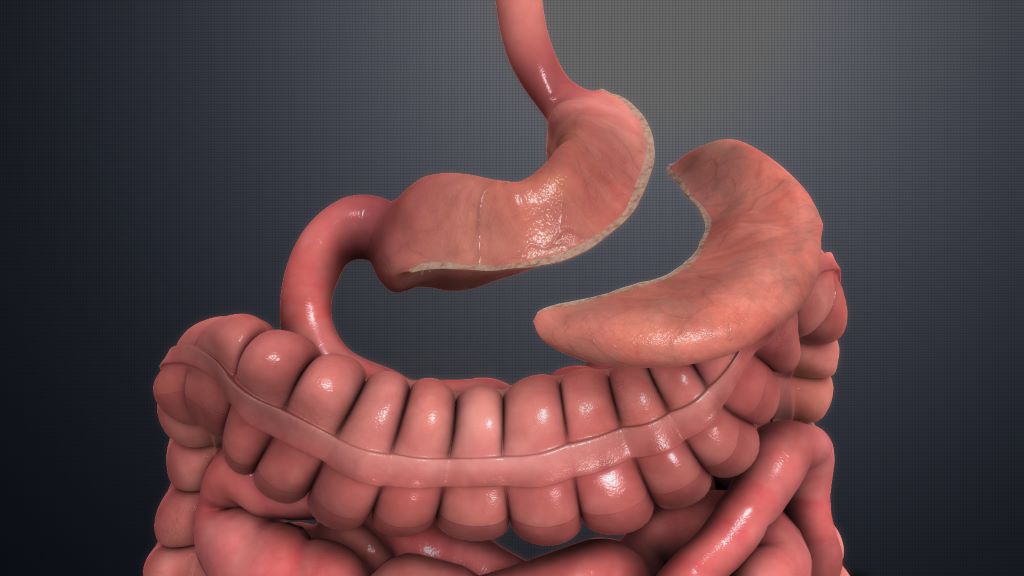
Sleeve gastrectomy. Credit: Scientific Animations CC4.0

The two most common obesity surgeries, gastric bypass and gastric sleeve, have few short-term complications and show no significant differences, according to study findings published in the journal JAMA Network Open. These are the first results of a multicentre randomised controlled trial comparing obesity surgeries conducted by the University of Gothenburg.

Patients undergoing obesity surgery will normally have a BMI of at least 40, or 35 if they also have other serious medical conditions related to obesity.

The most common procedures are gastric bypass, where a large part of the stomach and part of the small intestine are bypassed, and gastric sleeve, where a large part of the stomach is surgically removed.

The aim of the current study was to compare the short-term risks of the different procedures.

The study is the largest of its kind. 1735 adult patients planned for surgery in Norway and Sweden between 2015 and 2022 agreed to participate, and they were randomly assigned to either gastric bypass or gastric sleeve.

Relatively few complications

Surgical time was longer for gastric bypass, averaging 68 minutes compared to 47 minutes for gastric sleeve, but hospitalisation after surgery was one day regardless of method.

The follow-ups also gave equivalent results for the two methods.

At 30 days after surgery, both groups had relatively few complications such as haemorrhage, leakage, blood clots and infections.

No deaths occurred during the follow-up period of a total of 90 days.

“For both surgical procedures, the risk of complications is very low, especially from an international perspective, and there is no statistically significant or clinically relevant difference between the groups,” says Suzanne Hedberg, first author of the study.

Many stakeholders and many opinions

“Many people have had surgery, or are on waiting lists for surgery, and there are lots of discussions and opinions about the different methods. What the study shows is that patients and doctors can now choose their surgical method without considering short-term surgical risks,” she says.

Suzanne Hedberg defended her thesis in surgery at Sahlgrenska Academy, University of Gothenburg in April 2023, and is a consultant at Sahlgrenska University Hospital.

The study, included in her thesis, is the first publication with results from BEST (Bypass Equipoise Sleeve Trial), a Scandinavian registry-based randomised controlled multicentre study comparing the two methods of obesity surgery.

The main outcome of the trial which analyses the risk of complications and weight progression over 5 years, is expected to be completed in 2028.

“For the ongoing studies, we are off to a good start with equivalent groups, laying a good foundation for further comparisons of more long-term results,” concludes Suzanne Hedberg.

Source: University of Gothenburg

Gut Microbiome Composition Affects Sensitivity to Respiratory Viruses

Gut Microbiome. Credit Darryl Leja National Human Genome Research Institute National Institutes Of Health

The composition of microbiota found in the gut influences how susceptible mice are to respiratory virus infections and the severity of these infections, according to Georgia State University researchers. The findings, published in the journal Cell Host & Microbe, report that segmented filamentous bacteria, a bacterial species found in the intestines, protected mice against influenza virus infection when these bacteria were either naturally acquired or administered.

This protection against infection also applied to respiratory syncytial virus (RSV) and severe acute SARS-CoV-2. To maintain this protection, the study noted that segmented filamentous bacteria required immune cells in the lungs called basally resident alveolar macrophages.

In this study, the researchers investigated how differences in specific microbial species can impact outcomes of respiratory virus infections and how they might do so, which hasn’t been well defined previously.

They studied mice with discrete microbiome differences and mice differing in only the presence or absence of segmented filamentous bacteria.

Viral titers in the lung were measured several days after infection and varied significantly depending on the nature of the microbiome of the different animal groups.

“These findings uncover complex interactions that mechanistically link the intestinal microbiota with the functionality of basally resident alveolar macrophages and severity of respiratory virus infection,” said Dr. Andrew Gewirtz, co-senior author of the study and Regents’ Professor in the Institute for Biomedical Sciences at Georgia State.

The study found that in segmented filamentous bacteria-negative mice, basally resident alveolar macrophages were quickly depleted as respiratory virus infection progressed.

However, in segmented filamentous bacteria-colonised mice, basally resident alveolar macrophages were altered to resist influenza virus infection depletion and inflammatory signaling.

The basally resident alveolar macrophages disabled influenza virus, in large part by activating a component of the immune system referred to as the complement system.

“We find it remarkable that the presence of a single common commensal bacterial species, amidst the thousands of different microbial species that inhabit the mouse gut, had such strong impacts in respiratory virus infection models and that such impacts were largely attributable to reprogramming of basally resident alveolar macrophages,” said D. Richard Plemper, co-senior author of the study, Regents’ Professor and director of the Center for Translational Antiviral Research at Georgia State.

“If applicable to human infections, these findings will have major implications for the future risk assessment of a patient to advance to severe disease.”

“We find it highly unlikely that segmented filamentous bacteria is the only gut microbe capable of impacting the phenotype of alveolar macrophages, and consequently, proneness to respiratory virus infection,” Gewirtz said.

“Rather, we hypothesize that gut microbiota composition broadly influences proneness to respiratory virus infection. Microbiota mediated programming of basally resident alveolar macrophages may not only influence the severity of acute respiratory virus infection, but may also be a long-term post-respiratory virus infection health determinant.”

Source: Georgia State University

Researchers Figure out Why Cancer Immunotherapy can Cause Colitis

Gastrointestinal inflammation. Credit: Scientific Animations CC4.0

Researchers have identified a mechanism behind immunotherapy sometimes causing colitis. They also found a way to deliver immunotherapy’s cancer-killing impact without the unwelcome side effect. The researchers, from the University of Michigan Health Rogel Cancer Center, published their findings in Science.

“This is a good example of how understanding a mechanism helps you to develop an alternative therapy that’s more beneficial. Once we identified the mechanism causing the colitis, we could then develop ways to overcome this problem and prevent colitis while preserving the anti-tumour effect,” said senior study author Gabriel Nunez, MD, professor of pathology at Michigan Medicine.

Immunotherapy is a promising treatment for several types of cancer. But immune checkpoint inhibitors can also cause severe side effects, including colitis. Colitis can cause severe gastrointestinal discomfort, causing some patients to discontinue their cancer treatment because of it.

The problem facing researchers was that while patients were developing colitis, the laboratory mice were not, preventing them from studying the cause of this side effect.

To get past this, the Rogel team, led by first author Bernard C. Lo, PhD, created a new mouse model, injecting microbiota from wild-caught mice into the traditional mouse model.

In this model, the mice did develop colitis after administration of antibodies used for tumour immunotherapy. Now, researchers could trace back the mechanism to see what was causing this reaction.

In fact, colitis developed because of the composition of the gut microbiota, which caused immune T cells to be hyper-activated while regulatory T cells that put the brakes on T cell activation were deleted in the gut. This was happening within a specific domain of the immune checkpoint antibodies.

Researchers then removed that domain, which they found still resulted in a strong anti-tumour response but without inducing colitis.

“Previously, there were some data that suggested the presence of certain bacteria correlated with response to therapy. But it was not proven that microbiota were critical to develop colitis. This work for the first time shows that microbiota are essential to develop colitis from immune checkpoint inhibition,” Nunez said.

To follow up what they saw in mice, researchers reanalysed previously reported data from studies of human cells from patients treated with immune checkpoint antibodies, which reinforced the role of regulatory T cells in inducing colitis.

The Rogel team plans additional studies to further understand the mechanisms causing colitis and seeks clinical partners to move this knowledge to a clinical trial.

Source: Michigan Medicine – University of Michigan

The Inability to Burp – A Rarely Discussed Condition that Affects Quality of Life

Photo by Kyle Glenn on Unsplash

The inability to burp, called retrograde cricopharyngeus dysfunction (R-CPD), is caused by failure of the throat’s cricopharyngeal muscle to relax to allow the outward passage of gas. An interview-based study in Neurogastroenterology & Motility reveals the impact of R-CPD on quality of life.

The study included 199 adults affected by the condition, most of whom reported abdominal bloating, socially awkward gurgling noises, excessive flatulence, and difficulty vomiting. Only half discussed their symptoms with their primary care clinician, and 90% felt they did not receive adequate help. Participants also reported embarrassment, anxiety/depression, negative impacts on relationships, and work disruption due to R-CPD.

“R-CPD encompasses more than just the physical challenge of being unable to burp; it also significantly impacts people’s daily lives, relationships, and mental well-being,” said corresponding author Jason N. Chen, a medical student at Texas Tech University Health Sciences Center. Future efforts should concentrate on raising awareness about R-CPD, which can help increase identification and treatment rates.”

Source: Wiley

Tryptophan-rich Foods might Ease Colitis… and Braai Smoke may Help too

…although braai smoke still isn’t great for your lungs

Irritable bowel syndrome. Credit: Scientific Animations CC4.0

Ulcerative colitis is an inflammatory bowel disease that is prone to flareups, especially around feasts. New research in mice suggests that certain foods – especially those high in tryptophan, like turkey, pork, nuts and seeds – could reduce the risk of a colitis flare. It also helps explain why cigarette smokers are less likely to have colitis. The findings, published in Nature Communications, point to a noninvasive method of improving long-term colitis management, if the results are validated in people.

“Although there are some treatments for ulcerative colitis, not everyone responds to them,” says senior author Sangwon Kim, PhD, an assistant professor of immunology at Thomas Jefferson University.

“This disease has a huge impact on quality of life, and can lead to surgery to remove the colon or cancer.”

Since ulcerative colitis is caused by inflammation of the inner lining of the colon and rectum, Dr Kim and his colleagues looked for ways to calm the inflamed tissue.

They focused on a group of immune cells called T-regulatory (T-reg) cells, which can help break the cycle of inflammation. They reasoned that getting more T-reg cells to the colon might reduce the inflammation that causes colitis.

Dr Kim’s team thought about how to attract the T-reg cells, and found a specific receptor, CPR15, on the surface of T-reg cells that acts like a magnet for the colon. The more CPR15 the T-reg cells have, the more strongly they are attracted to the colon.

So they searched for molecules that could make T-reg cells produce more GPR15 to turn up the power of the magnet. They found tryptophan – specifically, one of the molecules that tryptophan breaks down into in the body – could increase these receptors called GPR15.

To test whether these molecules could control colitis, the researchers supplemented tryptophan in the diet of mice over a period of two weeks.

They saw a doubling in the amount of inflammation-suppressing T-reg cells in the colon tissue compared to mice that weren’t fed extra tryptophan.

Dr. Kim’s team also saw a reduction in colitis symptoms, which seemed to last for at least a week after tryptophan was removed from the diet.

“In human time that might translate to about a month of benefit,” explained Dr Kim.

However, when tryptophan was given to mice during a colitis flare, it provided little benefit, suggesting this dietary change might only be effective at preventing future flares rather than treating them.

In a chance finding, while looking for molecules that could increase GPR15, the researchers also stumbled across a molecule that helps explain why smoking seems to be protective against colitis. Researchers have long observed that people who smoke cigarettes have a lower incidence of ulcerative colitis than the general public.

Dr. Kim’s team found a molecule that is prevalent in smoke – from cigarettes and barbeque alike – that can also increase GPR15 levels on T-reg cells “Although both might help protect against colitis, tryptophan is obviously the much safer and healthier option,” says Dr Kim.

In the future, the researchers plan to test whether these results can be translated to people with colitis. Tryptophan supplement is considered safe, as long as the dose doesn’t exceed 100mg per day. Using the mouse data as a guide, Dr Kim expects that 100mg could be enough to see an effect in humans, and is planning further testing in clinical trials.

Source: Thomas Jefferson University

Even Low-level IBD is a Risk Factor for Serious Infection

Photo by Andrea Piacquadio on Pexels

A study using Swedish health registers had found that inflammatory bowel disease (IBD) is an independent risk factor for serious infection, even at very low levels of gastrointestinal inflammation.

IBD is an umbrella term for chronic inflammatory bowel diseases, with a population prevalence of around 0.5%. The main types of IBD are ulcerative colitis and Crohn’s disease. Unlike irritable bowel syndrome (IBS), IBD results in visible damage to the intestinal mucous membrane.

In IBD, periods of high disease activity are sometimes followed by longer periods of low or no activity. However, the extent to which IBD patients with low disease activity are also at increased risk of serious infections, including sepsis, has been unclear.

The current study, published in the journal Clinical Gastroenterology and Hepatology, included data on more than 55 000 people diagnosed with IBD. ‘Serious infections’ was defined as infections requiring hospitalisation.

The difference between healed and unhealed

The results show that during periods of low disease activity but active gastrointestinal inflammation, known as microscopic inflammation, there was an increased risk of being affected by serious infections compared to periods of microscopically healed intestinal mucosa.

In the case of microscopic inflammation, the number of serious infections was 4.62 per 100 people per year. The corresponding figure for microscopically healed mucosa was 2.53. This corresponded to a 59% relative risk increase for residual microscopic gastrointestinal inflammation, on adjusting the results for various confounders.

Interestingly, the results held true even after adjusting for the prescribed IBD medications, and were otherwise similar regardless of age group, sex, and level of education.

Healing provides important protection

First and corresponding author Karl Mårild, an associate professor in paediatrics at the University of Gothenburg’s Sahlgrenska Academy, explained: “We have shown that even during periods of microscopic intestinal inflammation, IBD patients have an increased risk of serious infections, including sepsis, compared to periods when they have a microscopically healed mucosa. This is also true for patients who appear to have low-active disease in clinical terms, but who have microscopic intestinal inflammation beneath the surface.

“The results indicate that achieving a fully healed intestinal mucosa in IBD may reduce the risk of serious infections. This is important, as serious infections currently contribute toward increased morbidity and mortality in both children and adults with IBD.”

The results from the study are based on data from a national cohort (ESPRESSO) with information from Swedish health registers, and from the quality register for IBD (SWIBREG) on people in Sweden diagnosed with IBD between 1990 and 2016. This information was linked to data from microscopic intestinal examinations of patients with IBD.

Source: University of Gothenburg

Hold the GLP-1 Agonists Before Surgery, New Advice Says

Photo by Natanael Melchor on Unsplash

Patients taking Glucagon-like peptide-1 (GLP-1) receptor agonists should stop taking them before they have surgery, due to the risk of aspirating while under general anaesthesia. This is the latest advice from the American Society of Anesthesiologists (ASA).

Initially approved by the Food and Drug Administration (FDA) for type 2 diabetes mellitus and cardiovascular risk reduction, GLP-1 agonists have shot up in popularity due to their effectiveness in weight loss. Despite having recent FDA approval, they have been used off-label for this purpose for quite some time.

When it comes to surgery, a number of organisations have recommended to hold these drugs either the day before or day of the procedure. For patients on weekly dosing, it is recommended to hold the dose for a week, the ASA notes.

GLP-1 agonists are associated with adverse gastrointestinal effects such as nausea, vomiting and delayed gastric emptying. The effects on gastric emptying are reported to be reduced with long-term use, most likely through rapid tachyphylaxis at the level of vagal nerve activation. Based on recent anecdotal reports, there are concerns that delayed gastric emptying from GLP-1 agonists can increase the risk of regurgitation and pulmonary aspiration of gastric contents during general anaesthesia and deep sedation. Patient taking GLP-1 agonists are more likely to have increased residual gastric contents as predicted by adverse gastrointestinal symptoms (nausea, vomiting, dyspepsia, abdominal distension).

The use of GLP-1 agonists in paediatrics has primarily been reported for the management of type 2 diabetes mellitus and obesity. The published literature on GLP-1 agonists in paediatrics is predominantly from paediatric patients 10 to 18 years old and concerns are similar to those reported in adults. During the conduct of general anaesthesia/deep sedation, children on GLP-1 agonists have similar gastrointestinal adverse events at a rate similar to adults.

In a review of the literature, the ASA Task Force on Preoperative Fasting found that, beyond a few case reports, there was little evidence for guidance on preoperative management of GLP-1 agonists. Nevertheless, they made recommendations for elective procedures. In the case of urgent or emergent procedures, they suggested treating the patient as ‘full stomach’.

If the patient’s GLP-1 agonists prescribed for diabetes management are held for longer than the dosing schedule, the guidelines urge surgeons to consider consulting an endocrinologist for bridging the antidiabetic therapy in order to avoid hyperglycaemia.

They further recommend that if gastrointestinal symptoms, such as severe nausea/vomiting/retching, abdominal bloating, or abdominal pain, are present, surgeons should consider delaying elective procedures. If the patient has no gastrointestinal symptoms and the GLP-1 agonists have been held as advised, the surgical team can carry on as normal.

Source: American Society of Anesthesiologists

A Common Tricyclic Drug can Improve IBS Symptoms

Source: CC0

A cheap and widely available prescription drug can improve symptoms of irritable bowel syndrome in patients seen in GP surgeries, according to research findings published in The Lancet and presented today at UEG Week 2023

Amitriptyline, a tricyclic which is commonly used at low doses for a range of health concerns, has been found to improve irritable bowel syndrome (IBS) symptoms too, according to the results of the ATLANTIS trial. 

The study was conducted in primary care, with GPs prescribing the drug and patients managing their own dose based on the severity of their symptoms, using an adjustment document designed for the trial. Most people with IBS are seen and managed in primary care by their GP, which means that the results of this trial are likely to be applicable to many people with the condition. 

Led by researchers at the Universities of Leeds, Southampton, and Bristol and funded by the National Institute for Health and Care Research (NIHR), the study showed that patients taking amitriptyline were almost twice as likely to report an overall improvement in symptoms as those taking a placebo. 

Now the trial team is recommending that GPs support their patients with IBS to use amitriptyline to manage their symptoms – and has made the dose adjustment document available for clinicians and patients. 

Co-chief Investigator Alexander Ford, Professor of Gastroenterology in the University of Leeds’s School of Medicine, said: “Amitriptyline is an effective treatment for IBS and is safe and well tolerated. This new rigorously conducted research indicates that general practitioners should support patients in primary care to try low-dose amitriptyline if their IBS symptoms haven’t improved with recommended first-line treatments.” 

Most treatments for IBS, which affects around 1 in 20 people, only have a modest effect and people often have ongoing troublesome symptoms. 

Amitriptyline was originally used at high doses to treat depression, but is now superseded by newer and better antidepressants.  

Previous small trials of low-dose tricyclic antidepressants for IBS suggested a possible benefit in patients seen in hospital clinics, who often have more difficult to treat symptoms, but this new study is the first randomised controlled trial of low-dose amitriptyline versus a placebo tablet for IBS in primary care. It is also the largest trial of amitriptyline for IBS undertaken worldwide. 

GPs already prescribe low-dose amitriptyline to treat chronic nerve and back pain, and to help prevent migraine attacks. NICE guidelines currently state that GPs could consider using a low dose tricyclic, like amitriptyline, for IBS but, until now, the evidence for a benefit has been uncertain. 

Based on the results of the trial, which showed a clear benefit of amitriptyline, GPs can offer low-dose amitriptyline to people with IBS as part of shared decision making if symptoms don’t improve with first-line treatments.   

Co-chief Investigator Hazel Everitt, Professor of Primary Care Research at the Primary Care Research Centre, University of Southampton, said: “Prior to ATLANTIS, GPs haven’t often prescribed amitriptyline for IBS as the research evidence was uncertain, but our new research provides good evidence of benefit. 

 “GPs already prescribe low-dose amitriptyline for other conditions, such as chronic pain and poor sleep, and when we interviewed GPs as part of this research, they were willing to prescribe it for IBS if the research evidence supported this. Participants were also keen to have another option to try to help their IBS symptoms and most were happy to self-adjust their dose depending on symptoms and side effects.’’ 

Some 463 people with IBS took part, recruited from 55 general practices across the UK.  

Participants were put at random into two groups – those receiving amitriptyline and those receiving a placebo. Participants controlled how many tablets of the trial medication they took, receiving support via the patient dose adjustment document that was developed with patient representatives especially for this trial. This enabled participants to increase or decrease the number of tablets based on their IBS symptoms and any side effects experienced.  

IBS scores were measured using the IBS-SSS scale. Amitriptyline participants scored a 99-point improvement compared with a 69-point improvement among placebo participants. 

Participants taking amitriptyline reported a bigger improvement in their symptom scores after six months compared with those taking a placebo. Those taking amitriptyline were almost twice as likely as those taking a placebo to report an overall improvement in IBS symptoms, with amitriptyline performing better across a wide range of IBS symptom measures. 

Researchers monitored participants’ anxiety or depression scores and found that they were not altered – suggesting that the beneficial effects of the medication were via the gut, not because of any effect as an antidepressant. 

No safety concerns were identified and side effects in people on amitriptyline were mostly mild, such as a dry mouth in the morning. 

Matthew Ridd, GP and Professor of Primary Health Care at the Centre for Academic Primary Care, University of Bristol, said: “Pragmatic trials like this are always challenging to do in primary care and the team worked hard to overcome the additional challenges of the Covid-19 pandemic.  It’s fantastic that we’ve found that amitriptyline is an effective and safe option for patients with IBS to try.” 

Amanda Farrin, Professor of Clinical Trials and Evaluation of Complex Interventions, who leads the Complex Intervention Division of the Leeds Clinical Trials Research Unit, said: “The participants in the ATLANTIS trial had moderate to severe symptoms and an average duration of IBS of 10 years. The fact that amitriptyline had such a big effect over a placebo is significant because it can help improve the quality of life of patients with this condition.” 

Professor Andrew Farmer, Director NIHR’s Health Technology Assessment (HTA) Programme, said: “The results of this study are hugely encouraging. It shows that a drug already widely available to treat a number of other conditions appears to be safe and effective for people with IBS. The findings the research team have shared around the adjustment of dosages can be tremendously helpful to GPs in guiding them when treating patients. 

“IBS affects a significant number of people in the UK and can have a debilitating effect on their day-to-day lives. This is another excellent example of how high-quality research can lead to positive changes in health and social care practice and treatments for the benefit of patients and healthcare professionals.” 

Source: EurekAlert!

For Weight Loss, the Side Effects of GLP-1 Agonists can be Hard to Stomach

Photo by Andres Ayrton on Pexels

GLP-1 agonists are being lauded as game-changers in the fight against obesity, but GLP-1 agonist drugs like semaglutide may come with a heightened risk of severe gastrointestinal problems, according to new research published in JAMA.

Designing their study for the side effects rather than the efficacy of the drugs, the researchers found that GLP-1 agonists are associated with an increased risk of serious medical conditions including gastroparesis (stomach paralysis), pancreatitis and bowel obstruction.

While previous studies highlighted some of these risks in patients with diabetes, this study from the University of British Columbia is the first large, population-level study to examine adverse gastrointestinal events in non-diabetic patients using the drugs specifically for weight loss.

“Given the wide use of these drugs, these adverse events, although rare, must be considered by patients thinking about using them for weight loss,” said first author Mohit Sodhi, a graduate of UBC’s experimental medicine program and fourth year UBC medical student studying the adverse events of commonly prescribed medications. “The risk calculus will differ depending on whether a patient is using these drugs for diabetes, obesity or just general weight loss. People who are otherwise healthy may be less willing to accept these potentially serious adverse events.”

GLP-1 agonists have exploded in popularity over the past decade as an off-label weight-loss tool, reaching approximately 40 million prescriptions in the US in 2022.

It was only in 2021 that some forms of the medications were approved as a treatment for obesity. However, randomised clinical trials examining the efficacy of the medications for weight loss were not designed to capture rare gastrointestinal events due to their small sample sizes and short follow-up periods.

“There have been anecdotal reports of some patients using these drugs for weight loss and then presenting with repeated episodes of nausea and vomiting secondary to a condition referred to as gastroparesis,” said senior author Dr Mahyar Etminan, an epidemiologist and associate professor in the department of ophthalmology and visual sciences at the UBC faculty of medicine. “But until now, there hasn’t been any data from large epidemiologic studies.”

To help fill this knowledge gap, UBC researchers examined health insurance claim records for approximately 16 million US patients and looked at people prescribed either semaglutide or liraglutide, two main GLP-1 agonists, between 2006 and 2020. They included patients with a recent history of obesity, and excluded those with diabetes or who had been prescribed another antidiabetic drug.

The researchers analysed the records to see how many patients developed one of four gastrointestinal conditions, and compared that rate to patients using another weight-loss drug, bupropion-naltrexone. Compared to bupropion-naltrexone, GLP-1 agonists were associated with a:

  • 9.09 times higher risk of pancreatitis, which can cause severe abdominal pain and, in some cases, require hospitalisation and surgery.
  • 4.22 times higher risk of bowel obstruction, resulting in symptoms like cramping, bloating, nausea and vomiting. Depending on the severity, surgery may be required.
  • 3.67 times higher risk of gastroparesis, limiting the passage of food from the stomach to the small intestine and results in symptoms like vomiting, nausea and abdominal pain.

Additionally, the study found a non-significant higher incidence of biliary disease.

The researchers say that although the events are rare, with millions around the world using the drugs, it could still lead to hundreds of thousands of people experiencing these conditions.

“These drugs are becoming increasingly accessible, and it is concerning that, in some cases, people can simply go online and order these kinds of medications when they may not have a full understanding of what could potentially happen. This goes directly against the mantra of informed consent,” said Sodhi.

In the meantime, the researchers hope that regulatory agencies and drug makers will consider updating the warning labels for their products, which currently don’t include the risk of gastroparesis.

“This is critical information for patients to know so they can seek timely medical attention and avoid serious consequences,” said Sodhi.

Source: University of British Columbia