Category: Dermatology

Restricting a Certain Amino Acid Could Potentially Speed up Wound Healing

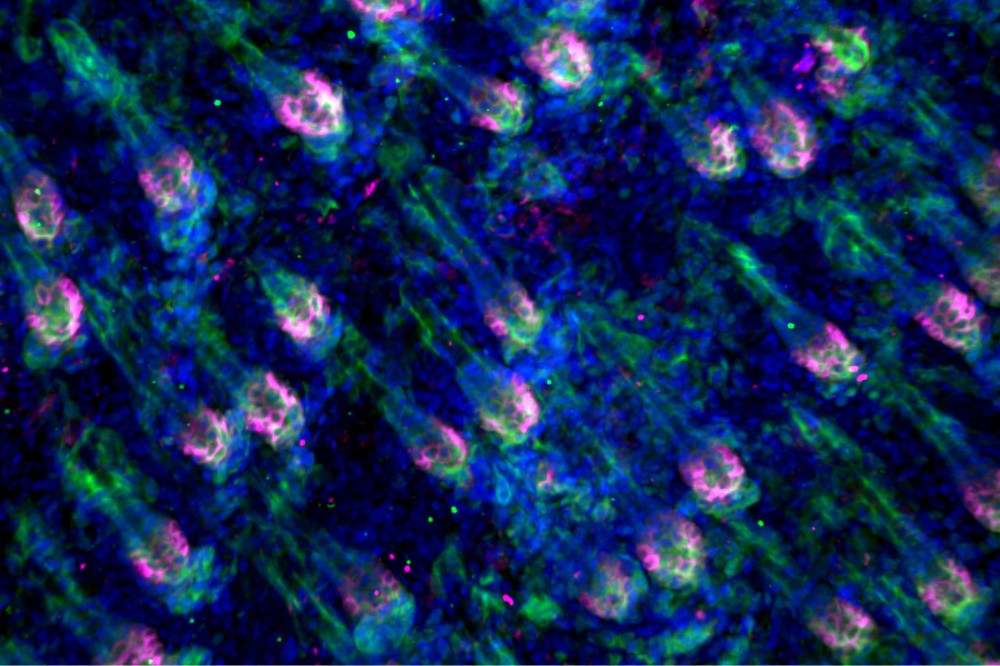
Immunofluorescent microscopy shows hair follicles in the early stages of hair regrowth. (Fuchs Lab)

The skin has two types of adult stem cells: epidermal and hair follicle. Their jobs seem pretty well-defined: maintain the skin, or maintain hair growth. But as research from Rockefeller University has shown, hair follicle stem cells (HFSCs) can switch teams, pitching in to heal the skin when it receives an injury. How do these cells know it’s time to pivot?

The lab behind those original findings has now identified a key signal telling HFSCs when to drop the hair cycle and pick up the skin repair: an integrated stress response (ISR) that directs stem cells to conserve energy for essential tasks.

In the skin, nutrient deficits are sensed by a non-essential amino acid known as serine that’s found in common foods such as meat, grains, and milk. As they demonstrate in a recent study in Cell Metabolism, when serine levels drop, the ISR is activated, causing HFSCs to slow hair production. If the skin is injured on top of nutrient deficits, the ISR is elevated even more, halting hair production and funnelling efforts towards skin repair. This reprioritisation accelerates the healing process.

“Serine deprivation triggers a highly sensitive cellular ‘dial’ that fine tunes the cell’s fate – towards skin and away from hair,” says first author Jesse Novak, former PhD student at Rockefeller’s Robin Chemers Neustein Laboratory of Mammalian Cell Biology and Development, led by Elaine Fuchs. “Our findings suggest that we might be able to speed up the healing of skin wounds by manipulating serine levels through diet or medications.”

Hair stem cells’ second job

Adult tissues harbour stem cell pools that tightly balance cell proliferation, differentiation, and turnover to maintain homeostasis, or normal functioning, and repair wounds. But their metabolic needs remain poorly understood. For the current study, Novak aimed to identify the metabolic factors that keep stem cells humming along during everyday operations – then, track what changes when an injury forces HFSCs to moonlight in wound recovery.

“Most skin wounds that we get are from abrasions, which destroy the upper part of the skin. That area is home to a pool of stem cells that normally takes charge in wound repair. But when these cells are destroyed, it forces hair follicle stem cells to take the lead in repair,” Novak says. “Knowing that, we thought that tracking these skin cells through wound healing presented a very good model for testing if and how metabolites are regulating this process overall.”

Previous findings from the Fuchs lab indicated that pre-cancerous skin stem cells become addicted to serine circulating in the body, and that these cells can be prevented from turning fully cancerous by restricting serine in the diet. These findings demonstrated that the metabolite is a key regulator of tumour formation and inspired trials to implement serine-free diets as cancer treatments. But no one understood how dietary serine deprivation would affect normal tissue functioning. So Novak focused on this amino acid for his studies.

Findings

The team subjected the hair follicle stem cells to a series of metabolic stress tests by either depriving them of serine in their diet or using genetic tricks in mice to selectively prevent hair follicle stem cells from making serine. They found that serine is in direct and constant communication with the ISR, a trigger activated when tissue conditions go off balance. When the serine tank is low, HFSCs tune down hair growth, which requires substantial energy.

Turning to another stress challenge, the team then focused on wound repair. They discovered that the ISR also activates in HFSCs after injury. Moreover, when mice experience both serine deficiency and injury, the pendulum swings even further, suppressing hair regeneration and favoring wound repair. In this way, the ISR measures overall tissue stress levels and prioritizes regenerative tasks accordingly.

“No one likes to lose hair, but when it comes down to survival in stressful times, repairing the epidermis takes precedence,” says Fuchs. “A missing patch of hair isn’t a threat to an animal, but an unhealed wound is.”

Serine’s effect does not go both ways

It was clear that low levels of serine had a significant impact on stem cell fate and behaviour. But what about the opposite? Could a large dose of serine supercharge hair growth, for example?

Unfortunately for anyone who suffers from hair loss, it turns out that the body tightly regulates the amount of serine in circulation. When Novak fed mice six times the amount of serine than normal, their serine levels only rose 50%.

“However, we did see that if we prevented a stem cell from making its own serine and replenished its losses through a high-serine diet, we were able to partially rescue hair regeneration,” Novak adds.

Next on the horizon is exploring the potential to speed up wound healing through reducing dietary serine or via medications that affect serine levels or ISR activity. The team also wants to test other amino acids to find out whether serine is unique in its influence. “Overall, the ability of stem cells to make cell fate decisions based upon the levels of stress they experience is likely to have broad implications for how tissues optimise their regenerative capacities in times where resources are scarce,” says Fuchs.

Source: The Rockefeller University

Preclinical Study Unlocks a Mystery of Rapid Mouth Healing

Photo by The Creative Exchange on Unsplash

Your mouth is a magician. Bite the inside of your cheek, and the wound may vanish without a trace in a couple of days. A preclinical study co-led by Cedars-Sinai, Stanford Medicine and the University of California, San Francisco (UCSF), has discovered one secret of this disappearing act. The findings, if confirmed in humans, could one day lead to treatments that enable rapid, scarless recovery from skin wounds on other parts of the body.

The study was published in the peer-reviewed journal Science Translational Medicine.

“Our research began with two questions: Why does your mouth heal so much better than your skin?” said Ophir Klein MD, PhD, co-corresponding author of the study. “And if we figure that out, can we use that information therapeutically?”

The need for therapies is clear. Wounds to the lining of the mouth typically disappear in one to three days. But skin wounds may take nearly three times as long to heal and can leave unsightly scars.

“Unfortunately, current treatments do not adequately resolve or prevent scarring because we do not fully understand the mechanism,” Klein said. “Our research helps fill in that knowledge gap.”

In the study, investigators analysed tissue samples from the lining of the mouth, known as the oral mucosa, and the facial skin of laboratory mice. In the oral mucosa, they found a signaling pathway between cells, involving a protein called GAS6 and an enzyme called AXL, which blocks a different cellular pathway, known as FAK, that promotes scarring.

When the investigators inhibited the AXL enzyme in the laboratory mice, the oral mucosa wounds’ healing worsened, making them more like skin wounds. When AXL was stimulated in the skin wounds, they healed much like oral mucosa wounds, regenerating tissue more efficiently.

“This data shows that the GAS6-AXL pathway is potentially important for scarless healing in the mouth and that manipulating it may help reduce skin scars as well,” Klein said.

The next steps are to determine how these preclinical findings apply to humans and to develop therapies to improve healing of skin wounds, according to Michael Longaker, MD, Professor in the School of Medicine at Stanford University, and the study’s co-corresponding author.

“Further clinical studies should be performed to assess the nature of the relationship between AXL and scarring in humans,” Longaker said.

Source: Cedars Sinai

Vitamin C Rekindles Skin’s ‘Youth Genes’, Reversing Age-related Thinning

As we age, our skin naturally becomes thinner and more fragile due to a decline in cell production. Now, researchers have found that vitamin C (VC) can help counteract this ageing process. Using a 3D human skin model, they showed that VC boosts epidermal thickness by activating genes linked to cell growth through DNA demethylation. These findings suggest that VC may help prevent age-related skin thinning and support healthier, stronger skin in ageing individuals.

With age, the epidermis, the outermost layer of skin, gradually becomes thinner and loses its protective strength. About 90% of the cells in this layer are keratinocytes, which originate from deeper layers of the epidermis and migrate upward, ultimately forming the skin’s protective barrier. To combat ageing’s impact on skin, numerous studies have emphasised the benefits of vitamin C (VC), a vitamin well known for its role in skin health and antioxidant properties.

Now, researchers in Japan have discovered that VC helps thicken the skin by directly activating genes that control skin cell growth and development. Their findings, published online in the Journal of Investigative Dermatology on April 20, 2025, suggest that VC may restore skin function by reactivating genes essential for epidermal renewal.

This study was led by Dr Akihito Ishigami, Vice President of the Division of Biology and Medical Sciences at Tokyo Metropolitan Institute for Geriatrics and Gerontology (TMIG), Japan

“VC seems to influence the structure and function of epidermis, especially by controlling the growth of epidermal cells. In this study, we investigated whether it promotes cell proliferation and differentiation via epigenetic changes,” explains Dr Ishigami.

To investigate how VC affects skin regeneration, the team used human epidermal equivalents, which are laboratory-grown models that closely mimic real human skin. In this model, skin cells are exposed to air on the surface while being nourished from underneath by a liquid nutrient medium, replicating the way human skin receives nutrients from underlying blood vessels while remaining exposed to the external environment.

The researchers used this model and applied VC at 1.0 and 0.1mM – concentrations comparable to those typically transported from the bloodstream into the epidermis. On assessing its effect, they found that VC-treated skin showed a thicker epidermal cell layer without significantly affecting the stratum corneum (the outer layer composed of dead cells) on day seven. By day 14, the inner layer was even thicker, and the outer layer was found to be thinner, suggesting that VC promotes the formation and division of keratinocytes. Samples treated with VC showed increased cell proliferation, demonstrated by a higher number of Ki-67-positive cells – a protein marker present in the nucleus of actively dividing cells.

Importantly, the study revealed that VC helps skin cells grow by reactivating genes associated with cell proliferation. It does so by promoting the removal of methyl groups from DNA, in a process known as DNA demethylation. When DNA is methylated, methyl groups attach to cytosine bases, which can prevent the DNA from being transcribed or read, thereby suppressing gene activity. Conversely, by promoting DNA demethylation, VC promotes gene expression and helps cells to grow, multiply, and differentiate.

These findings reveal how VC promotes skin renewal by triggering genetic pathways involved in growth and repair. This suggests that VC may be particularly helpful for older adults or those with damaged or thinning skin, boosting the skin’s natural capacity to regenerate and strengthen itself.

“We found that VC helps thicken the skin by encouraging keratinocyte proliferation through DNA demethylation, making it a promising treatment for thinning skin, especially in older adults,” concludes Dr Ishigami.

Source: Tokyo Metropolitan Institute for Geriatrics and Gerontology

Long-Term Atopic Dermatitis Treatment Benefits Patients with Delayed Response

Atopic dermatitis in a young patient. Source: NIH

New research from the Icahn School of Medicine at Mount Sinai reveals that patients with moderate-to-severe atopic dermatitis (eczema) who did not initially respond to biologic treatment may still achieve significant clinical improvements with continued therapy.  

The findings, published in the latest issue of Journal of the American Academy of Dermatology (JAAD), highlight the efficacy of extended lebrikizumab treatment up to 52 weeks and pave the way for more personalised, patient-centred approaches to managing this chronic skin condition. 

Lebrikizumab is designed to treat moderate-to-severe eczema by targeting a key source of inflammation in the body. It works by blocking interleukin-13 (IL-13), a protein that plays a central role in the itching, redness, and skin damage seen in atopic dermatitis. 

“This is a significant breakthrough because it shows that people who do not respond to lebrikizumab treatment right away should not give up,” says lead author Professor Emma Guttman-Yassky, MD, PhD, at Mount Sinai. “Initial non-response at 16 weeks does not mean treatment failure. By sticking with treatment longer (52 weeks), most patients saw their eczema improve significantly.” 

Researchers analysed data from two international clinical trials. At 16 weeks, 38.1% of lebrikizumab-treated patients failed to meet strict trial criteria for response. However, 58.1% had already achieved at least a 50% improvement in their Eczema Area and Severity Index (EASI) scores. By 52 weeks, 75.5% had reached a 75% improvement (EASI 75), 44.2% had achieved a 90% improvement (EASI 90), and 66.4% reported a significant reduction in itching. 

“This research supports a more personalised approach to care,” Dr. Guttman-Yassky says. “It offers new hope for patients with difficult-to-treat eczema and may help guide treatment decisions in clinical practice.” 

Source: Mount Sinai Hospital

Can Early Exposure to Dogs Lessen Genetic Susceptibility to Eczema?

Photo by Pauline Loroy on Unsplash

New research published in Allergy indicates that certain environmental exposures may affect a child’s risk of developing atopic eczema, a condition characterised by dry, itchy, and inflamed skin. In other words, although some people may be genetically predisposed to eczema, certain environmental factors may increase or decrease that risk.

For the study, investigators analysed data from 16 European studies to test for interactions between the 24 most significant eczema-associated genetic variants and 18 early-life environmental factors. They applied their findings to an additional 10 studies and used lab modelling tests to assess their results.

The first analysis (including 25 339 individuals) showed suggestive evidence for interaction between 7 environmental factors (antibiotic use, cat ownership, dog ownership, breastfeeding, elder sibling, smoking, and washing practices) and at least one established genetic variant for eczema, with 14 interactions in total.

In the additional analysis (254 532 individuals), dog exposure interacted with a particular genetic risk variant on chromosome 5, near the gene that codes for the interleukin-7 receptor, a protein involved in immune cell function. Lab modelling tests showed that this variant affects expression of interleukin-7 receptor in human skin cells and that dog exposure modifies the genetic effect of this variant on the development of eczema, essentially providing a protective effect by suppressing skin inflammation.

Additional studies are needed to explore these lab findings and the other potential interactions identified in the first analysis.

“Our research aims to answer some of the most difficult questions that I am asked in clinic: ‘Why does my child have eczema?’ and ‘What can I do to help protect my baby?’ We know that genetic make-up affects a child’s risk of developing eczema and previous studies have shown that owning a pet dog may be protective, but this is the first study to show how this may occur at a molecular level,” said corresponding author Sara J. Brown, MD, PhD, FRCPE, of the University of Edinburgh. “More work is needed, but our findings mean we have a chance to intervene in the rise of allergic disease, to protect future generations.”

Source: Wiley

Burning for Beauty: How TikTok Skin Trends Are Harming Young Girls

It turns out when teens on TikTok say, “Get ready with me,” it can be more harmful than they might realise.

Photo by Steinar Engeland on Unsplash

In the first peer-reviewed study to examine the potential risks and benefits of teen skin-care routines posted on social media, scientists at Northwestern Medicine found girls ages 7 to 18 are using an average of six different products on their faces, with some girls using more than a dozen products. These products tend to be marketed heavily to younger consumers and carry a high risk of skin irritation and allergy, the study found.

The findings are published in the journal Pediatrics.

Each teen daily skin-care regimen costs an average of $168 (which the authors estimate typically lasts a month depending on the size of the products), with some costing more than $500, the study found. As the summer nears, the study authors cautioned that only 26% of daytime skin care regimens included sunscreen – arguably the most important skin care product for any age range, but particularly for kids.

The top-viewed videos contained an average of 11 potentially irritating active ingredients, the study found, putting the content creators at risk of developing skin irritation, sun sensitivity and a skin allergy known as allergic contact dermatitis. Prior evidence has shown that developing such an allergy can limit the kinds of soaps, shampoos and cosmetics users can apply for the rest of their lives.

“That high risk of irritation came from both using multiple active ingredients at the same time, such as hydroxy acids, as well as applying the same active ingredient unknowingly over and over again when that active ingredient was found in three, four, five different products,” said corresponding author Dr. Molly Hales, a postdoctoral research fellow and board-certified dermatologist in the department of dermatology at Northwestern University Feinberg School of Medicine.

For example, in one video included in the study, the content creator applied 10 products on her face in six minutes.

“As she’s applying the products, she begins to express discomfort and burning, and in the final few minutes, she develops a visible skin reaction,” said senior author Dr. Tara Lagu, adjunct lecturer of medicine and medical social sciences at Feinberg and a former Northwestern Medicine hospitalist.

Videos ‘emphasized lighter, brighter skin’

“We saw that there was preferential, encoded racial language in some cases that really emphasized lighter, brighter skin,” Lagu said. “I think there also were real associations between use of these regimens and consumerism.”

These videos offer little to no benefit for the pediatric populations they’re targeting, the study authors concluded. What’s more, given how the algorithms work, it’s nearly impossible for parents or pediatricians to track exactly what children or adolescents are viewing. Lastly, there are dangers beyond skin damage, Hales said.

“It’s problematic to show girls devoting this much time and attention to their skin,” Hales said. “We’re setting a very high standard for these girls. The pursuit of health has become a kind of virtue in our society, but the ideal of ‘health’ is also very wrapped up in ideals of beauty, thinness and whiteness. The insidious thing about ‘skin care’ is that it claims to be about health.”

Studying teens in the TikTok environment

In the study, Hales and another researcher each created a new TikTok account, reporting themselves to be 13 years old. The “For You” tab was used to view relevant content until 100 unique videos were compiled. They collected demographics of content creators, number and types of products used and total cost of regimens and then created a list of products used and their active and inactive ingredients. The Pediatric Baseline Series used in patch testing was used to identify ingredients with elevated risk of inducing allergic contact dermatitis.

Source: Northwestern University

Abdominal Fat More Linked to Psoriasis Risk than Total Body Fat

Findings in the Journal of Investigative Dermatology reinforce the role of weight management in psoriasis care

Source: Pixabay CC0

Researchers have found that central body fat, especially around the abdomen, is more strongly linked to psoriasis risk than total body fat, particularly in women. This link between central fat and psoriasis remained consistent regardless of genetic predisposition, indicating that abdominal fat is an independent risk factor. The study in the Journal of Investigative Dermatology, published by Elsevier, provides insights that could help improve early risk prediction and guide personalised prevention strategies.

While it is well established that increasing levels of body fat raise the risk of developing psoriasis, the impact of specific fat distribution and genetics remains unclear.

Researchers of the current study analysed data from over 330 000 participants with White British ancestry in the UK Biobank, including more than 9000 people with psoriasis. They examined 25 different measures of body fat using both traditional methods and advanced imaging techniques, assessing how each was associated with psoriasis.

Lead investigator Ravi Ramessur, MD, St John’s Institute of Dermatology, King’s College London, explains, “Our research shows that where fat is stored in the body matters when it comes to psoriasis risk. Central fat – especially around the waist – seems to play a key role. This has important implications for how we identify individuals who may be more likely to develop psoriasis or experience more severe disease, and how we approach prevention and treatment strategies.”

Senior author Catherine H. Smith, MD, also at King’s College London, adds, “As rates of obesity continue to rise globally, understanding how different patterns of body fat influence chronic inflammatory conditions such as psoriasis is important. Our findings suggest that central body fat contributes to psoriasis risk irrespective of genetic predisposition and reinforces the importance of measuring waist circumference and pro-active healthy weight strategies in psoriasis care.”

Because this study only included individuals of White British ancestry from the UK Biobank, the generalisability of these findings to more diverse populations may be limited. Future studies incorporating datasets with dermatologist-confirmed diagnoses and broader ethnic representation will be important to further validate these associations and refine risk stratification approaches.

Dr Ramessur notes, “We were surprised by how consistently strong the association was across different central fat measures and how much stronger the effect was in women. The observed links between central body fat and psoriasis suggest that there may be underlying biological mechanisms contributing to the disease that are not yet fully understood and which warrant further investigation.”

In an accompanying editorial Joel M. Gelfand, MD, MSCE, FAAD, at the University of Pennsylvania Perelman School of Medicine, points to the potential of incretin therapy for psoriatic disease. Incretins are gut-derived hormones, principally glucagon-like peptide-1 (GLP-1) and glucose-dependent insulinotropic peptide (GIP), that regulate glucose, digestion, and appetite, and are approved for treatment of diabetes, obesity, and obesity-associated obstructive sleep apnoea.

Dr Gelfand comments, “The strong relationship between psoriasis and obesity and the emerging promise of glucagon-like peptide-1 receptor agonists (GLP1RA) for reducing psoriasis morbidity is a call to action for large scale clinical trials of GLP1RA monotherapy for treatment of psoriasis. Our current paradigm of just focusing on the skin and joint manifestations when treating psoriasis is outdated in the context of our evolving understanding of the tight relationship of psoriasis, obesity, and cardiometabolic disease.“

Source: Elsevier

Dermatology Researchers Discover New Skin Disease with Innovative Approach

Picture by Macrovector on Freepik

In a recent paper published in Scientific Reports, researchers from the University of Maryland School of Medicine described a new skin disease in a male patient with erythroderma, causing 80% of his skin to be covered with red, exfoliating skin lesions that itched and burned. After undergoing months of treatment with traditional therapies for erythroderma, which included the steroid prednisone, anti-itch creams, and immunosuppressive drugs, the patient experienced little relief.

“We isolated individual circulating blood cells and created a new blood test using flow cytometry to identify specific cytokine signatures,” said study corresponding author Shawn Kwatra, MD, the Joseph W. Burnett Endowed Professor and Chair of Dermatology at UMSOM and Chief of Service Dermatology at the University of Maryland Medical Center (UMMC). The authors received a patent for this new method, involving “peripheral blood flow cytometry-based immunophenotyping enabled us to identify a novel form of a severe and potentially life-threatening skin disease.”

Erythroderma is a rare but severe and potentially life-threatening inflammation that occurs on most of the body’s skin surface. It causes redness and scaling of the skin that spreads over the body and causes the skin to slough off. This can lead to problems with thermoregulation and can cause protein and fluid loss, leading to severe complications.

To determine which of the immune system’s components were driving the inflammatory disease, Dr Kwatra and his team used a new flow cytometry platform technique, for which they received a patent, to immunophenotype skin diseases. They found that two of these cytokines, called interleukin-13 and interleukin-17, were at increased levels in this patient compared to healthy controls as well as when compared to patients with other known causes of erythroderma. Subsequently, targeted treatment with biologic inhibitors of IL-13 and IL-17 reversed the patient’s disease.

“We found a new role for interleukin-13 and interleukin-17 in the blood samples taken from this patient which supported the use of those two particular medications,” said study first author Hannah Cornman, MD, an incoming dermatology resident at the University of North Carolina who conducted the research as a medical student at UMSOM.  “These cytokines appeared to be the key cytokines in defining the disease.”

When the patient was treated with a dual therapy of two monoclonal antibodies, dupilumab and secukinumab, his symptoms dramatically decreased and eventually resolved, essentially curing him of his erythroderma. The authors also identified the cell sources of these pathological cytokines and monitored the decline in immunopathogenic (disease-causing) cell numbers, and the decline of interleukin-13, and interleukin-17 levels in the patient’s blood throughout the treatment course. 

“We created a new diagnostic test to discover a previously undescribed skin disease and initiate appropriate treatment. We are now exploring developing our diagnostic test to a range of other inflammatory skin,” said Dr Kwatra.

Source: University of Maryland School of Medicine

Plant-rich, Low Saturated-fat Diet Linked to Reduced Psoriasis Severity

Photo: CC0

A new study by researchers at King’s College London, published in the British Journal of Nutrition, has found significant associations between diet quality and the severity of psoriasis. The findings provide novel insights into how dietary patterns may be related to psoriasis severity in non-Mediterranean populations.

Psoriasis is a long-lasting inflammatory skin disease which causes flaky patches of skin that form scales. It affects millions worldwide and is believed to be caused by a problem with the immune system.

The research analysed data from 257 adults with psoriasis who had completed an online survey. Participants’ adherence to various diet quality scores, including the Mediterranean Diet Score, the Dietary Approaches to Stop Hypertension (DASH) score, and the Healthy Plant-based Diet Index, was assessed using a food frequency questionnaire. Psoriasis severity was self-assessed using a validated questionnaire.

Key findings from the study indicate that individuals with very low adherence to the DASH diet index and the Healthy Plant-based Diet Index were significantly more likely to report higher psoriasis severity.

Further analysis of the different elements of the DASH dietary pattern revealed that greater red and processed meat intake was associated with more severe psoriasis even when body mass index (BMI) was considered. Fruits, nuts and legume intakes were also associated with less severe psoriasis, but this relationship was not independent of BMI.

The study was published as part of the Asking People with Psoriasis about Lifestyle and Eating (APPLE) project and funded by the Psoriasis Association.

Our findings point to the potential benefits of dietary interventions in improving patient outcomes. Given the impact of psoriasis on physical and psychological well-being, incorporating dietary assessments into routine care could offer patients additional support in managing their condition.

Sylvia Zanesco, PhD student from the Department of Nutritional Sciences at King’s College London who led the research

The DASH dietary pattern was originally designed to lower blood pressure and emphasises fruits, vegetables, whole grains, low-fat dairy foods and lean meats while limiting salt, sugar, and saturated fats. A high Healthy Plant-based Diet Index characterises a dietary pattern rich in healthy plant foods including fruits and vegetables, whole grains, nuts and seeds, legumes and plant oils rich in unsaturated fats, as well as being low in animal foods and unhealthy plant foods such as sugary foods and drinks and refined starches.

The study accounted for several confounding factors, including age, sex, smoking status, alcohol, energy intake, and mental health, ensuring a comprehensive analysis of dietary patterns that are independently associated with psoriasis severity.

This research brings much-needed evidence that there may be a role for dietary advice, alongside standard clinical care, in managing symptoms of psoriasis. Our next steps will be to explore whether diets rich in healthy plant foods can reduce symptoms of psoriasis in a controlled clinical trial.

Professor Wendy Hall, Professor of Nutritional Sciences at King’s College London and senior author of the study

The findings of the study contribute to the growing body of evidence supporting dietary modification as a complementary strategy in psoriasis management to potentially alleviate disease severity and improve patients’ quality of life.

Source: King’s College London

New Study Identifies a Key Protein’s Role in Psoriasis

Photo: CC0

A new study on psoriasis has determined that a protein called NF-kB c-Rel can intensify the condition’s symptoms when activated by signals from the body’s immune system. Understanding how “c-Rel” affects skin inflammation could lead to new treatments, said the researchers at Case Western Reserve University School of Medicine.

The study, published recently in eBioMedicine, examined how c-Rel contributes to the function of dendritic cells (DCs), a type of immune cell. The study examined how c-Rel responds to specific immunological signals through Toll Like Receptor 7 (TLR7), which regulates innate immunity and inflammation, exacerbating psoriasis.

The researchers also found the absence of c-Rel alleviates inflammation that causes red, scaly patches on the skin. TLR7 meanwhile is known to be activated by diseases such as HIV and HPV, which are also linked to the development psoriasis.

“We believe that by focusing on c-Rel and TLR7, scientists might be able to create more targeted treatments that reduce inflammation and help psoriasis symptoms,” said Parameswaran Ramakrishnan, associate professor of pathology, member of the Case Comprehensive Cancer Center and researcher at Louis Stokes Cleveland VA Medical Center, the study’s principal investigator.

“This may help relieve the discomfort millions of people live with skin inflammation.”

The researchers examined skin samples from psoriasis patients and a mouse model with similar skin changes.

They analysed c-Rel levels and its behaviour in specially engineered cells lacking the protein; they also examined the mouse model lacking c-Rel.

Their goal: to better understand how c-Rel impacts the immune response in psoriasis.

“Our research shows that c-Rel plays a major role in psoriasis inflammation,” said Angela Liu, lead author and a recent graduate of the School of Medicine’s pathology department.

“We saw higher levels of c-Rel in psoriasis; mice lacking c-Rel were significantly protected from developing psoriasis and showed less inflammation.”

Ramakrishnan said their study revealed the potential role for TLR7 and c-Rel signalling in human psoriasis. A range of viruses that activates TLR7, including human immunodeficiency virus (HIV), human papilloma virus (HPV) and hepatitis C virus (HCV), are linked to the development of psoriasis.

“The research warrants future studies on TLR7-c-Rel-dependent molecular mechanism regulating DC function as a potential link for how viral TLR7 activation is involved in worsening psoriatic disease,” Ramakrishnan said. “From a broad perspective, it would be interesting to further explore the role of c-Rel and TLR7 in other biologically relevant diseases involving these proteins, such as systemic lupus erythematosus and wound-healing in diabetes.”

Source: Case Western Reserve University