A new analysis describes how people in the UK shifted the amount of time they spent on various activities over various stages of pandemic restrictions and shifted to online versus in-person settings. The findings were published in the open-access journal PLOS ONE.
When the COVID pandemic began, the U.K. joined many countries in introducing restrictions on people’s movement and social activities to mitigate viral spread. A growing body of research reveals how such restrictions have affected people’s lifestyles worldwide. This study examined how UK residents’ habits changed over time as different restrictions were implemented and lifted.
The researchers conducted six online surveys of UK residents between April 2020 and July 2021 and were ultimately able to follow 203 people who responded to multiple surveys. The surveys included questions about 16 different types of activities respondents participated in during different phases of the pandemic, such as journalling, shopping, and getting active, and whether they participated online or in person.
Statistical analysis of the responses showed that the biggest changes in terms of amount of time spent – as well as the biggest changes in online versus in-person participation – occurred for cultural activities, spending time with others, and travelling. Changes were most pronounced in March to June 2020, corresponding with the first lockdown period, when participation in all 16 activities decreased. The biggest shift from in-person to online participation occurred from March to October 2020, which included the first lockdown followed by relaxation of restrictions.
Cultural activities, such as going to museums, and group activities were the two categories that fell the most, and did not recover to pre-pandemic levels when UK restrictions were lifted on July 19, 2021. During the restrictions, participation was mostly online in these activities. Spending time with family was among the most robust, and remained mostly in-person, though supplemented by online interaction.
These findings could help policymakers understand the impact of their pandemic restrictions. In the future, the researchers plan to investigate how demographic factors, such as age and employment, may have affected the results, as well as long-term mental health implications of the lifestyle changes.
Professor Patty Kostova, leader of the study, added: “This longitudinal research study illustrated citizens’ resilience throughout the stages of the pandemic.”
Lan Li adds: “This longitudinal study determines the frequency and way of people doing activities from Spring 2020 to Summer 2021 during different phases of the COVID pandemic in the UK. The findings provide an invaluable insight into understanding how people in the UK changed their lifestyle, including what activities they do, and how they accessed those activities in light of the COVID pandemic and related public health policy implemented to address the pandemic.”
South African researchers have found that, compared to Omicron BA.1 and earlier infections, those caused by Omicron BA.4 and BA.5 do not have an increased risk of hospitalisation for severe disease or death.
The study, which appears online in the medRxiv server, aimed to compare clinical severity of Omicron BA.4/BA.5 infection with BA.1 and earlier variant infections among laboratory-confirmed SARS-CoV-2 cases in the Western Cape, South Africa, using timing of infection to infer the lineage/variant causing infection.
In their study, the researchers included public sector patients aged 20 years or older with laboratory-confirmed COVID between 1 and 21 May 2022 (for the BA.4/BA.5 wave) and equivalent prior wave periods. They compared the risk for death and severe hospitalisation/death (all within 21 days of diagnosis), adjusting for for demographics, comorbidities, admission pressure, vaccination and prior infection.
Comparing 3793 patients from the BA.4/BA.5 wave and 190 836 patients from previous waves the risk of severe hospitalisation or death was similar in the BA.4/BA.5 and BA.1 waves (adjusted hazard ratio [aHR] 1.12). Both Omicron waves had a lower risk of severe outcomes than previous waves. They also found that both prior infection (aHR 0.29) and vaccination (aHR 0.17; 0.40 for boosted vs no vaccine) were protective.
Overall, the researchers found that COVID disease severity was similar for the BA.4/BA.5 and BA.1 periods in the context of growing immunity against SARS-CoV-2 due to prior infection and vaccination, which were both strongly protective.
High dose inhaled nitric oxide gas (iNO) is a safe and effective respiratory therapy for pregnant women hospitalised with severe COVID pneumonia, resulting in faster weaning from oxygen and shorter hospital stay, according to a study published in Obstetrics & Gynecology. Massachusetts General Hospital (MGH) researchers reported that the addition of twice-daily nitric oxide to standard of care oxygen therapy decreased the respiratory rate of pregnant women with low oxygenation levels of the blood without causing any side effects.
“To date, very few respiratory treatments to complement supplemental oxygenation in COVID pregnant patients have been tested,” explained the study’s senior author, Lorenzo Berra, MD. “Investigators from all four medical centers that participated in our study agreed that administration of high dose nitric oxide through a snug-fitting mask has enormous potential as a new therapeutic strategy for pregnant patients with COVID.”
Pneumonia triggered by COVID is particularly threatening to pregnant women since it may quickly progress to hypoxaemia, requiring hospitalisation and cardiopulmonary support. “Compared to non-pregnant female patients with COVID, pregnant women are three times more likely to need intensive care unit admission, mechanical ventilation, or advanced life support, and four times more likely to die,” noted lead author Carlo Valsecchi, MD. “They also face a greater risk of obstetric complications such as preeclampsia, preterm delivery, and stillbirth.”
Nitric oxide is a therapeutic gas that was initially approved by the U.S. Food and Drug Administration in 1999 for inhalation treatment of intubated and mechanically ventilated newborns with hypoxic respiratory failure. With MGH driving many early studies, iNO in high concentrations was also shown to be effective as an antimicrobial in reducing viral replication of SARS-CoV-1 and, more recently, SARS CoV-2. During the first wave of COVID, MGH treated six non-intubated pregnant patients with iNO at high doses of up to 200 parts per million (ppm). Favourable outcomes with iNO led MGH clinicians to offer this treatment to other pregnant patients, and motivated the present study.
Researchers and clinicians from multiple departments in four hospitals – including critical care medicine, respiratory care, and maternal foetal medicine – studied 71 pregnant patients with severe COVID pneumonia admitted to these hospitals, 20 of whom received iNO200 twice daily. The study found that iNO therapy at this dosage, when compared to standard of care alone, resulted in reductions in the need for supplemental oxygen and in hospital and ICU lengths of stay. No adverse events related to the intervention were reported in either mothers or their babies.
“Being able to wean patients from respiratory support quicker could have other profound implications, including reducing stress on women and their families, lowering the risk of hospital-acquired infections, and relieving the burden on the health care system,” noted Dr Berra. “Above all, our study supports the safety of high dose nitric oxide in the pregnant population, and we hope more physicians will consider incorporating it into carefully monitored treatment regimens.”
In the past year, the Commission for Conciliation, Mediation and Arbitration (CCMA) has delivered several arbitration awards which have upheld the dismissals of employees who refused to get vaccinated against COVID.
But a recent award has created some confusion about whether this is still allowed and under what circumstances.
On 22 June, CCMA Commissioner Richard Byrne found that it was unfair and unconstitutional for Baroque Medical, which supplies and sells medical equipment, to retrench Kgomotso Tshatshu for refusing to get a Covid vaccination. The company was ordered to pay her 12 months’ salary as compensation (the maximum allowed).
But this contradicts an earlier CCMA award by Commissioner Piet van Staden, delivered in May, who found that Baroque Medical was within its rights to retrench another employee, Cecilia Bessick, who had also refused to get a COVID vaccine.
These conflicting decisions may be understandable, because CCMA arbitration awards do not create binding legal precedent in the same way as court judgments. The most recent CCMA ruling therefore does not set a binding legal precedent that employees cannot be dismissed for refusing to get a COVID vaccine.
The Labour Court has also not yet delivered any binding judgment about whether an employer can fairly dismiss an employee who refuses to get a Covid vaccination. Until this occurs, it is likely the CCMA will continue to give conflicting decisions about whether employers can fairly dismiss employees who refuse to get a vaccine.
Below, we explain what the law currently says about whether an employee can be dismissed for refusing to get a COVID vaccine and under what circumstances.
Labour Relations Act
The Labour Relations Act (LRA) says that an employee can only be dismissed for these reasons: when they are guilty of misconduct; suffer from an incapacity, such as ill health or injury, which prevents them from performing their duties; have to be retrenched because of the economic, structural, technological or similar needs of their employer.
The LRA also requires an employer to follow a fair procedure before dismissing an employee. Usually, this would involve explaining to an employee why they could be dismissed if they refuse to get a Covid vaccine and give the employee an opportunity to explain why they should not be dismissed.
The LRA, however, does not explain whether an employee who refuses to get vaccinated can be dismissed for misconduct or incapacity. The LRA also does not explain whether an employee who refuses to get a Covid vaccine can be retrenched.
Occupational Health and Safety Act
But the Occupational Health and Safety Act does require employers to take all reasonable steps to provide their employees with a safe and healthy working environment. The act also requires employers to take reasonable steps to ensure other people who may be affected by their business activities (such as customers or suppliers) are not exposed to a hazard to their health or safety – such as Covid.
During March, the Minister of Labour issued a Code of Good Practice which explains the steps that an employer should take to manage Covid in their workplace and to comply with their legal duties to provide a safe and healthy working environment.
This code was enacted after a previous directive on managing Covid in the workplace was repealed after the State of Disaster came to an end.
Code of Good Practice
According to the new Code of Good Practice, every employer with at least 20 employees must conduct a “risk assessment” and must develop a COVID plan with the measures it will implement regarding vaccination of employees and when they should be fully vaccinated. When developing the plan, the employer must consult with any representative trade union in its workplace or an employee representative.
The risk assessment and plan, among other things, should identify employees who must be vaccinated and must notify them of their duty to get a vaccination.
The code also states employers can require employees to disclose their vaccination status and to produce a vaccine certificate in order to give effect to the code.
The code further states that employees can lawfully refuse work when there exists a serious risk that they may imminently be exposed to COVID in the workplace. Should this occur, the employer cannot take any action against that employee for refusing to work, such as later dismissing or suspending them from work.
There may be situations where a refusal by employees to work because other employees refuse to get vaccinated, could justify the dismissal of the employees who refuse to get a COVID vaccine. This is because the refusal of many employees to work could affect the ability of a company or business to operate. This could potentially justify retrenchment of employees who refuse to get a COVID vaccine.
However, should an employee refuse to get vaccinated, the code also says that the employer should take steps to reasonably accommodate them in a position that does not require them to be vaccinated. Should an employee produce a valid medical certificate, which provides legitimate reasons why they cannot be vaccinated, the employer can send that employee to another doctor at their own expense.
The code does recognise that it would be unfair to dismiss employees who cannot be vaccinated on valid medical grounds. But, the duty to accommodate employees who refuse to get vaccinated on other grounds would depend on whether an employer has another position available which does not require that employee to be vaccinated. Should the employer not have an alternative position which does not require the employee to be vaccinated, this could be a fair reason to dismiss them.
It is important to note that the code does state that it reflects the policy position of the Department of Labour and that it should be applied until any of its provisions are reversed by a court judgment. Until the Labour Court delivers a binding judgment on when employees can be dismissed for refusing to get a COVID vaccination, it would seem it would be best to follow the provisions of the code.
COVID vaccine acceptance across much of the world increased by 3.7% between 2020 and 2021, according to a new study published in Nature Communications.
In a June 2021 survey of over 23 000 individuals across 23 countries, the researchers found that 75.2% of respondents reported vaccine acceptance, up from 71.5% one year earlier.
The study was carried out during a year of substantial but very unequal global COVID vaccine availability and acceptance, which required new assessments of the drivers of vaccine hesitancy and the characteristics of people not vaccinated.
Vaccine hesitancy was most consistently associated with concerns about vaccine safety and efficacy and mistrust in vaccine development. Other factors associated with vaccine hesitancy varied by country and included personal experience with COVID (eg, sickness or loss of a family member) and demographic characteristics (eg, gender, education, and income).
The authors also found that vaccine hesitancy was not associated with a country’s current COVID case burden and mortality. In June 2021, vaccine hesitancy was reported most frequently in Russia (48.4%), Nigeria (43%), and Poland (40.7%), and least often in China (2.4%), the UK (18.8%), and Canada (20.8%).
“In order to improve global vaccination rates, some countries may at present require people to present proof of vaccination to attend work, school, or indoor activities and events,” said CUNY SPH Senior Scholar Jeffrey Lazarus. “Our results found strong support among participants for requirements targeting international travellers, while support was weakest among participants for requirements for schoolchildren.”
Those who were vaccine-hesitant were also less likely to express support for vaccine mandates. “Importantly, however, recommendations by a doctor, or to a lesser extent by an employer, might have an impact on a respondent’s views on vaccination in some countries,” said CUNY SPH Dean Ayman El-Mohandes.
Although some countries are currently disengaging from evidence-based COVID control measures, the disease has by no means been controlled or ended as a public health threat. The authors note that for ongoing COVID vaccination campaigns to succeed in improving coverage going forward, substantial challenges remain. These include targeting those reporting lower vaccine confidence with evidence-based information campaigns and greatly expanding vaccine access in low- and middle-income countries.
The Role of Social Networks
The researchers also held a meeting to explore vaccine messaging. According to data presented from a European survey carried out by the Vaccine Confidence Project, the population group most exposed to social networks, ie people under 24, with secondary or university studies and living in urban areas, are the most reluctant to be vaccinated. Additionally, messages that call for vaccination as a “moral obligation” are strongly rejected compared to those that call for “protection,” which are more commonly well received.
As with previous studies, humour was shown to be one of the most effective ways to convey anti-vaccine messages. Therefore, participants in the meeting agreed on the need to disseminate the benefits of vaccines using this same tool, but without making fun of those who have mistaken beliefs about vaccines. In the face of misinformation, it is important to improve information on vaccination using simple language and channels that reach the population, such as social networks, the participants concluded.
COVID heat map. Photo by Giacomo Carra on Unsplash
A new study on coronavirus transmission in rats suggests that COVID will enter the endemic stage in about two years. The study also suggested that infections from high-risk conditions such as close contact with infected individuals produced more robust immunity than by exposure in low-risk settings.
The study, published in PNAS Nexus, made use of rats to determine when and how SARS-CoV-2 would eventually become endemic. Rats, like humans, are susceptible to coronaviruses. By collecting data on coronaviral reinfection rates among rats, the researchers were able to model the potential trajectory of COVID.
SARS-CoV-2 is just one of many coronaviruses, and there are several that cause the common cold. Many livestock animals live with endemic coronaviruses, too, and a key factor identified in the spread of animal and human coronaviruses alike is their tendency to evoke non-sterilising immunity.
“It means that initially there is fairly good immunity, but relatively quickly that wanes,” explained the study’s senior author, Caroline Zeiss, a professor of comparative medicine at Yale School of Medicine. “And so even if an animal or a person has been vaccinated or infected, they will likely become susceptible again.”
Over the past two years, scientists have come to see that SARS-CoV-2 yields non-sterilising immunity as people become re-infected.
The strong similarities between animal and human coronaviruses, animal data helps improve the understanding of SARS-CoV-2, said Prof Zeiss.
“There are many lessons to be learned from animal coronaviruses,” she said.
In this study, Prof Zeiss and her colleagues observed how a coronavirus similar to one that causes the common cold in humans was transmitted through rat populations. The team modelled the exposure scenario to resemble human exposures in the US, where a portion of the population is vaccinated against COVID and where people continue to face natural exposure to SARS-CoV-2. They also reproduced the different types of exposure experienced by people in the US, with some animals exposed through close contact with an infected rat (high risk of infection) and others exposed by being placed in a cage once inhabited by an infected rat (low risk of infection).
Infected animals contracted an upper respiratory tract infection and then recovered. Three to four months later, the rats were then reorganised and re-exposed to the virus. The rates of reinfection showed that natural exposure yielded a mix of immunity levels, with those exposed to more virus through close contact having stronger immunity, while those exposed to lower virus levels by (being placed in a contaminated cage) having higher rates of reinfection.
The takeaway, said Prof Zeiss, is that with natural infection, some individuals will develop better immunity than others. People also need vaccination, which is offered through a set dose and generates predictable immunity. But with both vaccination and natural exposure, the population accumulates broad immunity that pushes the virus toward endemic stability, the study showed.
Mathematical models using the data predicted that the median time for SARS-CoV-2 to become endemic in the United States is 1437 days, or just under four years from the start of the pandemic in March 2020.
In this model’s scenario, 15.4% of the population would be susceptible to infection at any given time after it reaches endemic phrase.
“The virus is constantly going to be circulating,” said Prof Zeiss. So it will be important to keep more vulnerable groups in mind. “We can’t assume that once we reach the endemic state that everybody is safe.”
Four years is the median time predicted by the model, she said, so it could take even longer to reach the endemic stage. And this doesn’t take into account mutations that could make SARS-CoV-2 more harmful.
“Coronaviruses are very unpredictable, so there could be a mutation that makes it more pathogenic,” said Prof Zeiss. “The more likely scenario, though, is that we see an increase in transmissibility and probable decrease in pathogenicity.” That means the virus would be easily transmitted between people but less likely to cause severe illness, much like the common cold.
There is precedent for this trajectory. In the late 1800s, the ‘Russian flu’ killed approximately one million people around the world. Researchers now think that virus was a coronavirus that originated in cattle, which eventually evolved into one of the common cold viruses still in circulation. Reduced pathogenicity associated with the transition from epidemic to endemic status has also been observed in pig coronaviruses. And almost all commercial chicken flocks across the globe are vaccinated for an endemic respiratory coronavirus that has been present since the 1930s.
Longstanding experience with coronaviral infections in other animals can help navigate a pathway to living with SARS-CoV-2.
However, endemic stability in the United States also depends on what happens to the virus elsewhere.
“We are one global community,” Zeiss said. “We don’t know where else these mutations are going to arise. Until we reach endemic stability around the entire globe, we are vulnerable here to having our US endemic stability disrupted by introduction of a new variant.
“But I think overall the picture’s hopeful. I think we will be in endemic stability within the next year or two.”
Since the start of the COVID pandemic, dogs have been found to be able to sniff out signs of the virus in infected individuals, with some countries deploying the dogs at border posts to quickly check incoming travellers. Now, a new study published in PLOS One shows that they can be faster than rapid antigen tests, and in some instances even more sensitive than PCR testing.
Applications for medical sniffer dogs have been increasingly studied in recent years, and with the arrival of the COVID pandemic, they provided a quick, efficient way to test for SARS-CoV-2 infection. A number of studies demonstrated their effectiveness, with one study reporting a 94% accuracy. Now, this new study shows that can be as accurate as antigen tests, especially in asymptomatic individuals.
The researchers conducted a prospective cohort study in two community COVID screening centres, with 143 symptomatic and 192 asymptomatic adults. Participants were tested with two nasopharyngeal swabs (NPS), one saliva and one sweat sample. The dog handlers (and the dogs…) were blinded to the individuals’ COVID status. The dogs’ sniff tests were compared to nasopharyngeal RT-PCR as the reference standard, saliva RT-PCR and nasopharyngeal antigen testing.
Overall, 109 of the 335 participants tested positive on nasopharyngeal RT-PCR, 78 symptomatic and 31 asymptomatic. The overall sensitivity of canine detection was 97% and even reached 100% in asymptomatic individuals compared to NPS RT-PCR. The specificity was 91%, reaching 94% for asymptomatic individuals. The sensitivity of canine detection was higher than that of nasopharyngeal antigen testing (97%), but the specificity was lower (90% versus 97%).
The researchers concluded that using dogs’ sense of smell to detect SARS-CoV-2 infection could be a speedy alternative to NPS RT-PCR when rapid testing is necessary when antigenic tests are the standard for mass screening.
Vaccination only reduces the risk of long COVID after infection by only about 15%, according to a study of more than 13 million people published in Nature Medicine. That’s the largest cohort that has yet been used to examine how much vaccines protect against the condition, but it is unlikely to end the uncertainty as other studies have produced conflicting results.
Studying long COVID has been challenging not least because of how hard it is to define from its constellation of symptoms. Even its prevalence has been hard to determine, with some studies suggesting it occurs in 30% of people after COVID infections. But nephrologist Ziyad Al-Aly and colleagues conducted a study of about 4.5 million people treated at US Department of Veterans Affairs (VA) hospitals, and the findings suggested that the number is 7% overall and lower than that for those who were not hospitalised.
Another mystery has been whether long COVID is less likely to occur after a breakthrough infection. But Al-Aly’s team now looked at VA health records from January to December 2021, including those of about 34 000 vaccinated people who had breakthrough SARS-CoV-2 infections, 113 000 people who had been infected but not vaccinated and more than 13 million people who had not been infected.
These results indicated only 15% a reduction of Long COVID in vaccinated individuals, a marked contrast to previous, smaller studies which suggested much higher protection rates. It’s also a departure from another large study, which used self-reported data from 1.2 million UK smartphone users and found that vaccination halved the risk of long COVID.
The authors of the latest study also compared symptoms such as brain fog and fatigue in vaccinated and unvaccinated people for up to six months after they tested positive for SARS-CoV-2. The team found no difference in type or severity of symptoms between those who had been vaccinated and those who had not. “Those same fingerprints we see in people who have breakthrough infections,” Al-Aly said.
In the US alone there have been over 83 million COVID infections, he noted. If even a small percentage of those turn into long COVID, “that’s a staggeringly high number of people affected by a disease that remains mysterious”.
Such limited protection means putting vulnerable people such as the immunocompromised at risk if measures such as masking are withdrawn. “We’re literally solely reliant, now almost exclusively, on the vaccine to protect us and to protect the public,” said Al-Aly. “Now we’re saying it’s only going to protect you 15%. You remain vulnerable, and extraordinarily so.”
“Generally speaking, this is horrifying,” said David Putrino, a physical therapist at Mount Sinai Health System in New York City who studies long COVID. While he praises the study, he notes that it is limited because it does not break the data down by key factors, such as medical history. “These are very important questions we need answers to,” Putrino says. “We don’t have any really well constructed studies just yet.”
Steven Deeks, an HIV researcher at the University of California, San Francisco, points out that the study includes no data from people infected during the period when the Omicron variant was causing the majority of infections. “We have no data on whether Omicron causes long COVID,” he says. The findings, he adds, “apply to a pandemic that has changed dramatically”.
Deeks added, that the results do highlight the need for more research on long COVID, and for accelerated development of therapies. “We don’t have a definition, we don’t have a biomarker, we don’t have an imaging test, a mechanism or a treatment,” he said. “We just have questions.”
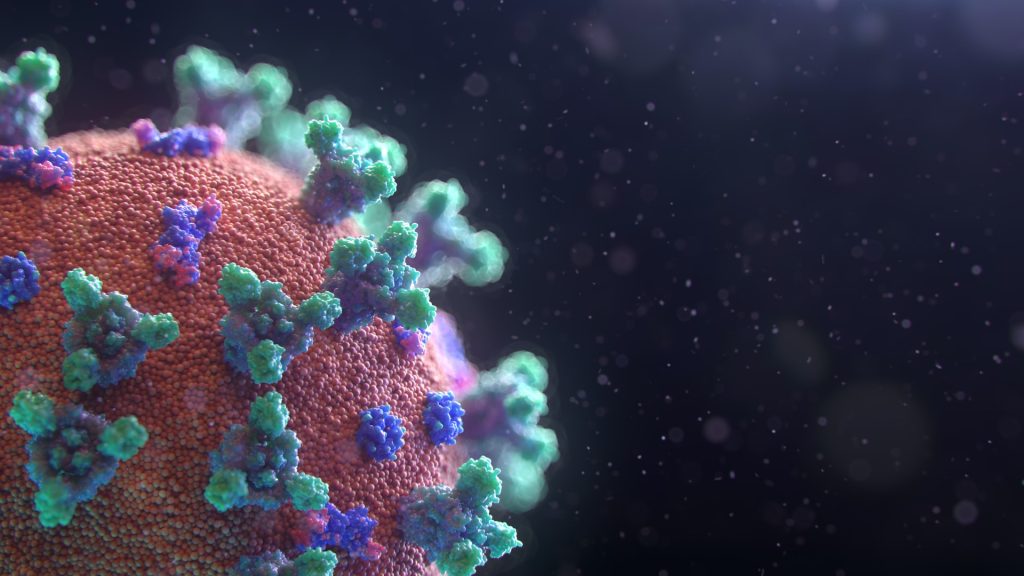
SARS-CoV-2 virus. Source: Fusion Medical Animation on Unsplash
A small study published in the New England Journal of Medicine has found that viral load shedding of the omicron variant is similar to other strains, and is not significantly affected by vaccination status.
The SARS-CoV-2 omicron variant has a shorter incubation period and a higher transmission rate than previous variants. Recently, the Centers for Disease Control and Prevention recommended shortening the strict isolation period for infected persons from 10 days to 5 days after symptom onset or initial positive test, followed by 5 days of masking. However, the viral delay kinetics and load shedding of omicron is still unclear.
Using nasal swabs to measure viral load, sequencing, and viral culture, they enrolled 66 participants, including 32 with delta variant and 34 with omicron. Participants who received COVID–specific therapies were excluded; only one participant was asymptomatic.
The characteristics of the participants were similar in the two variant groups except that more participants with omicron infection had received a booster vaccine than had those with delta infection (35% vs 3%). After adjustments for age, sex, and vaccination status, the number of days from an initial positive polymerase-chain-reaction (PCR) assay to a negative PCR assay and the number of days from an initial positive PCR assay to culture conversion were similar in the two variant groups.
The median time from the initial positive PCR assay to culture conversion was 4 days in the delta group and 5 days in the omicron group; the median time from symptom onset or the initial positive PCR assay, whichever was earlier, to culture conversion was 6 days and 8 days, respectively. There were no appreciable between-group differences in the time to PCR conversion or culture conversion according to vaccination status, although the sample size was quite small, which led to imprecision in the estimates.
In these participants with nonsevere COVID, the viral decay kinetics were similar with omicron infection and delta infection. No large differences in the median duration of viral shedding was seen among participants who were unvaccinated, vaccinated but not boosted, and those who were vaccinated and boosted.
Discussing limitations, the authors cautioned that the small sample size limits precision, and there are possible residual confounding variables. Further studies are need to properly correlate culture positivity with infectivity.
They conclude by saying: “Our data suggest that some persons who are infected with the omicron and delta SARS-CoV-2 variants shed culturable virus more than 5 days after symptom onset or an initial positive test.”
Scientists following COVID patients up to 12 months after diagnosis have found that mild cognitive impairment is common even after mild to moderate COVID. The study results, currently in preprint on the medRxiv server awaiting peer review, suggest that cognitive impairment, though barely noticeable, may affect large portions of the global population.
The finding comes as the US Centers for Disease Control reported that up to 1 in 5 Americans experienced at least one symptom that could be attributable to Long COVID.
SARS-CoV-2 is believed to cause lasting cognitive impairment in some cases, though the exact nature of it was not clear. Severe COVID cases risk damage through hypoxia, stroke, as well as the immune and inflammatory response to SARS-CoV-2. Mild to moderate COVID cases are still at risk of brain dysfunction, and cognitive deficits, providing a window into the potential mechanisms of brain injury without the confounding role of severe disease and its complications. Given the large numbers of people who had mild to moderate COVID disease, there would be significant implications for public health.
To assess the effects of the disease, the researchers studied 128 SARS-CoV-2 positive patients, assessing cognition and olfaction at set intervals after COVID diagnosis, along with lung capacity and blood biomarkers including the kynurenine pathway (KP).
After correcting for demographics, mild to moderate cognitive impairment was present in 26% on year post diagnosis, respectively. Overall cognitive performance declined mildly, but was statistically significant. KP metabolites quinolinic acid, 3-hydroxyanthranilic acid, and kynurenine were significantly associated with cognitive decline.
“The immune system reacts first with the virus … tries to basically get rid of the virus,” she said to ABC News. “Then it goes a little bit into overdrive and this overdrive does not fully calm down.”
The KP pathway was seen to be disturbed similarly to the way inflammation is caused by viruses such as HIV.
“I think we’re seeing something a bit akin here, where this low level of inflammation is more and more understood as being able to traffic to the brain, or even being within the brain and affecting those regions of the brain where we process information that demand speed, extra attention and extra cognitive demands,” she explained.
Dr Cysique emphasises that the cognitive decline recorded among most participants in the study is mild and they may not even notice it.
The researchers suggested that as a unique biomarker, the KP offers a potential therapeutic target for COVID-related cognitive impairment.