Author: ModernMedia

Fasting-mimicking Diets Reduce Signs of Biological Ageing

Photo by Pixabay: https://www.pexels.com/photo/broccoli-161514/

Cycles of a diet that mimics fasting can reduce signs of immune system ageing, as well as insulin resistance and liver fat in humans, resulting in a lower biological age, according to a new study in Nature Communications. The USC Leonard Davis School of Gerontology-led study adds to the body of evidence supporting the beneficial effects of the fasting-mimicking diet (FMD).

The FMD is a five-day diet high in unsaturated fats and low in overall calories, protein, and carbohydrates and is designed to mimic the effects of a water-only fast while still providing necessary nutrients and making it much easier for people to complete the fast.

The diet was developed by the laboratory of USC Leonard Davis School Professor Valter Longo, the senior author of the new study.

“This is the first study to show that a food-based intervention that does not require chronic dietary or other lifestyle changes can make people biologically younger, based on both changes in risk factors for aging and disease and on a validated method developed by the Levine group to assess biological age,” Longo said.

Previous research led by Longo has indicated that brief, periodic FMD cycles are associated with a range of beneficial effects, including: promoting stem cell regeneration, lessening chemotherapy side effects, and reducing the signs of dementia in mice. In addition, the FMD cycles can lower the risk factors for cancer, diabetes, heart disease and other age-related diseases in humans.

The Longo lab also had previously shown that one or two cycles of the FMD for five days a month increased the healthspan and lifespan of mice on either a normal or Western diet, but the effects of the FMD on aging and biological age, liver fat, and immune system aging in humans were unknown until now.

Lower disease risks & more youthful cells

The study analysed the diet’s effects in two clinical trial populations, each with men and women between the ages of 18 and 70. Patients randomised to the fasting-mimicking diet underwent 3-4 monthly cycles, adhering to the FMD for 5 days, then ate a normal diet for 25 days.

The FMD is comprised of plant-based soups, energy bars, energy drinks, chip snacks, and tea portioned out for 5 days as well as a supplement providing high levels of minerals, vitamins, and essential fatty acids.

Patients in the control groups were instructed to eat either a normal or Mediterranean-style diet.

An analysis of blood samples from trial participants showed that patients in the FMD group had lower diabetes risk factors, including less insulin resistance and lower HbA1c results.

Magnetic resonance imaging also revealed a decrease in abdominal fat as well as fat within the liver, improvements associated with a reduced risk of metabolic syndrome.

In addition, the FMD cycles appeared to increase the lymphoid-to-myeloid ratio – an indicator of a more youthful immune system.

Further statistical analysis of the results from both clinical studies showed that FMD participants had reduced their biological age, a measure of how well one’s cells and tissues are functioning, by 2.5 years on average.

“This study shows for the first time evidence for biological age reduction from two different clinical trials, accompanied by evidence of rejuvenation of metabolic and immune function,” Longo said.

The study, conducted by first authors Sebastian Brandhorst, USC Leonard Davis research associate professor, and Morgan E. Levine, founding principal investigator of Altos Labs and USC Leonard Davis PhD alumna, lends more support to the FMD’s potential as a short-term periodic, achievable dietary intervention that can help people lessen their disease risk and improve their health without extensive lifestyle changes, Longo said.

“Although many doctors are already recommending the FMD in the United States and Europe, these findings should encourage many more healthcare professionals to recommend FMD cycles to patients with higher than desired levels of disease risk factors as well as to the general population that may be interested in increased function and younger age,” Longo said.

Source: University of Southern California

Excessive Protein Consumption Increases Atherosclerosis Risk

Cardiovascular pitfalls to increasing protein intake discovered

Image by Scientific Animations, CC4.0

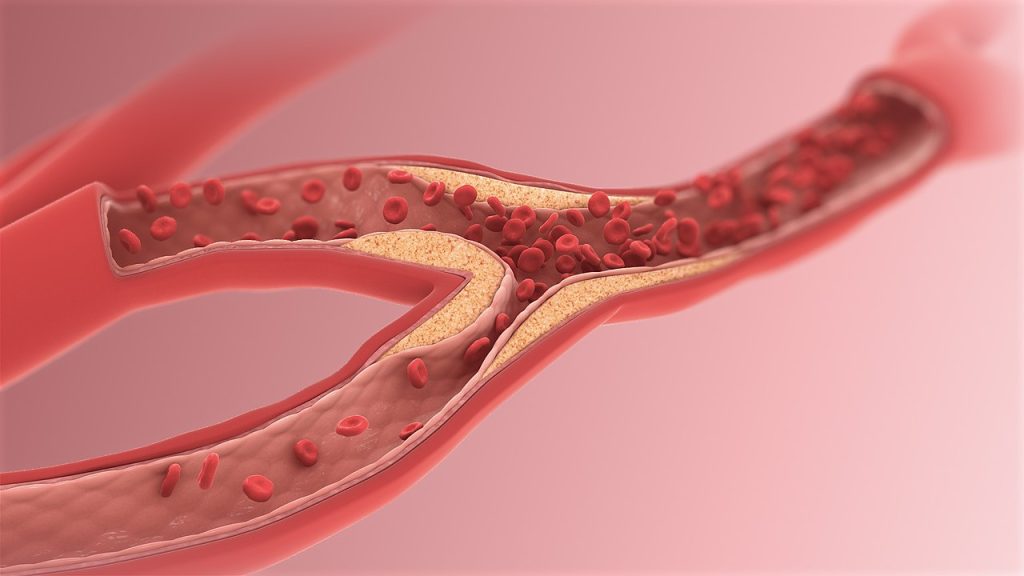
University of Pittsburgh School of Medicine researchers discovered a molecular mechanism by which excessive dietary protein could increase atherosclerosis risk. The study, published in Nature Metabolism, combined small human trials with in vitro human and mouse cell experiments.

It showed that consuming over 22% of dietary calories from protein can lead to increased activation of immune cells that play a role in atherosclerotic plaque formation, driving the disease risk.

Furthermore, the scientists showed that one amino acid, leucine, seems to have a disproportionate role in driving the pathological pathways linked to atherosclerosis, or stiff, hardened arteries.

“Our study shows that dialling up your protein intake in pursuit of better metabolic health is not a panacea. You could be doing real damage to your arteries,” said senior and co-corresponding author Babak Razani, MD, PhD, professor of cardiology at Pitt.

“Our hope is that this research starts a conversation about ways of modifying diets in a precise manner that can influence body function at a molecular level and dampen disease risks.”

According to a survey of an average American diet over the last decade, Americans generally consume a lot of protein, mostly from animal sources.

Further, nearly a quarter of the population receives over 22% of all daily calories from protein alone.

That trend is likely driven by the popular idea that dietary protein is essential to healthy living, says Razani.

But his and other groups have shown that overreliance on protein may not be such a good thing for long-term health.

Following their 2020 research, in which Razani’s laboratory first showed that excess dietary protein increases atherosclerosis risk in mice, his next study in collaboration with Bettina Mittendorfer, PhD, a metabolism expert at the University of Missouri, Columbia, delved deeper into the potential mechanism and its relevance to the human body.

To arrive at the answer, Razani’s laboratory, led by first-authors Xiangyu Zhang, Ph.D., and Divya Kapoor, M.D., teamed up with Mittendorfer’s group to combine their expertise in cellular biology and metabolism and perform a series of experiments across various models, from cells to mice to humans.

“We have shown in our mechanistic studies that amino acids, which are really the building blocks of the protein, can trigger disease through specific signaling mechanisms and then also alter the metabolism of these cells,” Mittendorfer said.

“For instance, small immune cells in the vasculature called macrophages can trigger the development of atherosclerosis.”

Based on initial experiments in healthy human subjects to determine the timeline of immune cell activation following ingestion of protein-enriched meals, the researchers simulated similar conditions in mice and in human macrophages, immune cells that are shown to be particularly sensitive to amino acids derived from protein.

Their work showed that consuming more than 22% of daily dietary calories through protein can negatively affect macrophages that are responsible for clearing out cellular debris, leading to the accumulation of a “graveyard” of those cells inside the vessel walls and worsening of atherosclerotic plaques overtime.

Interestingly, the analysis of circulating amino acids showed that leucine, an amino acid enriched in animal-derived foods like beef, eggs and milk, is primarily responsible for abnormal macrophage activation and atherosclerosis risk, suggesting a potential avenue for further research on personalized diet modification, or “precision nutrition.”

Razani is careful to note that many questions remain to be answered, mainly: What happens when a person consumes between 15% of daily calories from protein as recommended by the USDA and 22% of daily calories from protein, and if there is a ‘sweet spot’ for maximising the benefits of protein (such as muscle gain) while avoiding kick-starting a molecular cascade of damaging events leading to cardiovascular disease.

The findings are particularly relevant in hospital settings, where nutritionists often recommend protein-rich foods for the sickest patients to preserve muscle mass and strength.

“Perhaps blindly increasing protein load is wrong,” Razani said.

“Instead, it’s important to look at the diet as a whole and suggest balanced meals that won’t inadvertently exacerbate cardiovascular conditions, especially in people at risk of heart disease and vessel disorders.”

Razani also notes that these findings suggest differences in leucine levels between diets enriched in plant and animal protein might explain the differences in their effect on cardiovascular and metabolic health.

“The potential for this type of mechanistic research to inform future dietary guidelines is quite exciting,” he said.

Source: University of Pittsburgh

Can Yoga Effectively Treat Chronic Back Pain?

Photo by Sasun Bughdaryan on Unsplash

New research published in the Journal of Orthopaedic Research suggests that the physical postures, breathing exercises, and mindfulness practices of yoga may benefit individuals with back pain.

In the study, 10 women with and 11 without chronic low back pain underwent an 8‐session yoga program over 4 weeks, with the first session conducted in a clinic and the rest delivered with a tele‐approach. Women with chronic low back pain experienced a significant decrease in pain intensity, as assessed through a 10-point visual analogue scale (an average pain of 6.80 at the start, dropped to 3.30 after the sessions) and through a spine-related measure called the flexion–relaxation phenomenon, which is often absent or disrupted in people with low back pain  (5.12 at the start versus 9.49 after the sessions).

The findings suggest yoga can positively impact the neuromuscular response during trunk flexion and pain perception in individuals with chronic low back pain.

“It was interesting to show the role that yoga might play in the management of chronic back pain,” said corresponding author Prof Alessandro de Sire, MD, of the University of Catanzaro “Magna Graecia” and University Hospital “Renato Dulbecco,” in Italy.

The authors noted that further research is warranted to assess yoga’s long‐term effects.

Source: Wiley

First HIV Antiretrovirals Manufactured in Space Delivered Back to Earth

For the first time, unique commercial pharmaceuticals produced using the zero gravity of outer space have been returned to Earth. After being stuck in space waiting for clearance to land, a capsule containing the small but extremely valuable cargo of HIV antiretrovirals landed in the desert in the US state of Utah. Drugs produced this way have higher purity and often improved pharmacokinetics, but have been too costly to produce until now.

In June 2023, a miniature pharmaceuticals factory built by Varda Space Industries was launched into Earth orbit. This small space startup company had only been around since 2020 – and the COVID pandemic had inspired them to look for a way to use the unique properties of space to directly benefit the health of people on Earth.

Zero gravity process can give drugs new properties

According to Varda co-founder Delian Asparouhov, gravity has significant effects somewhere between the microscopic scale and the atomic scale. This has beneficial applications in all manner of processes like crystal formation in drug manufacturing. For example, it is possible to give certain solid state pharmaceuticals improved solubility, turning a four-hour intravenous infusion into a couple of subcutaneous injections. The number of oral pills required for a treatment could be reduced. Since treatment compliance is a major obstacle to treatment, such improved drugs could significantly improve outcomes.

There are many drugs that were abandoned simply because administration was too impractical. Zero gravity manufacturing could open up these libraries of discarded drugs, Asparouhov says. It could also be possible to modify certain drugs to cross the blood–brain barrier.

Antiviral Drug Polarized crystals (photographed through a microscope) of the drug 2-3 dideoxyadenosine, also known as ddA, a drug that is closely related to AZT or azidothymidine. The antiviral effect of ddA against HIV was discovered at the National Cancer Institute. Credit: Larry Ostby (Photographer), National Cancer Institute, National Institutes of Health

Onboard the small space factory is a pharmaceutical manufacturing system designed to produce ritonavir, an antiretroviral which was initially used to treat HIV. This early antiretroviral has a number of notorious gastrointestinal and metabolic side effects. In 1998, there was a major production crisis when it was discovered that were production defects in the the oral form stemming from crystallisation problems.

Nowadays, ritonavir has been surpassed by newer antiretroviral drugs for the treatment of HIV but has been investigated for cancer treatment and during the pandemic received emergency use authorisation for COVID treatment. The samples retrieved from the capsule will only be used for evaluation purposes, to help inform the production of other pharmaceuticals.

Producing drug proteins in space is nothing new. This has been done on space stations for decades – however, these were for research purposes in developing drugs and understanding biological processes. It is only now that technology has advanced to the point where it has become cheap enough to use the unique environment of outer space to manufacture high-value products.

The capsule with its onboard factory is specially designed to be recovered and reused to minimise costs. This has only been possible thanks to rockets becoming vastly cheaper. NASA’s space shuttle cost US$65 400 for each kilogram of cargo launched into space. Today, SpaceX’s Falcon 9 rocket costs a mere 4% of that, with costs set to fall further.

Such breakneck technological development was bound to run into a snag – this one consisting of red tape. The agency that regulates commercial air and spaceflight, the Federal Aviation Administration (FAA) gave Varda a licence for their payload to be launched, but not for the capsule to re-enter the atmosphere. The vast majority of satellites don’t have to worry about that, simply burning up in the atmosphere when they can no longer function. The FAA is obviously concerned about a large module returning intact but out of control.

Eventually, after more than six months of delays and looking at alternatives such as landing in Australia instead, Varda was able to secure a re-entry permit for 21st February and its capsule returned to Earth under a parachute in the Utah desert.

Asparouhov envisions a time when much larger orbital factories produce pharmaceuticals and other valuable materials in orbit.

Raised Blood Pressure is the Leading Risk Factor for Death in Australia

Hypertension has contributed at least 44% to CVD deaths over thirty years, more than dietary factors and tobacco

Raised blood pressure has been the leading risk factor for death in Australia for the past three decades, according to a study published February 21, 2024, in the open-access journal PLOS ONE led by Alta Schutte and Xiaoyue Xu from The George Institute for Global Health and UNSW, Sydney, with colleagues across Australia. It is also the main contributor to deaths from cardiovascular disease (CVD) specifically.

Raised blood pressure has long been recognized as a contributing factor to CVD and death, but is not always prioritized in national health plans. In this study, researchers focused on Australia, which lags behind other high-income countries in hypertension control. Data on how raised blood pressure compares to other risk factors for CVD burden – and how this changes over time – can help to guide public health agendas and inform the effectiveness of public health policies.

Researchers analysed epidemiologic data from the Global Burden of Disease (GBD) study between 1990 and 2019 to determine the leading risk factors associated with both all-cause and CVD deaths, over time and between gender and age groups. The GBD study provides data on nearly 400 diseases and 87 risk factors across 204 countries.

They found that while the contribution of raised blood pressure to these outcomes declined early in the study period (from around 54% to around 44%), it persisted as the leading risk factor for all-cause and CVD deaths. Dietary factors and tobacco use rounded out the top three risk factors. These findings strongly align with the recently established National Hypertension Taskforce of Australia, which aims to improve Australia’s blood pressure control rates from 32% to 70% by 2030 (Hypertension – Australian Cardiovascular Alliance [ozheart.org]). The research findings further advocate for the prioritisation of blood pressure control on the public health agenda.

Differences by gender and age were also seen. For example, the contribution of raised blood pressure to stroke-related deaths in males aged 25–49 years were higher than other age groups, exceeding 60% and increasing steeply over time.

The study reinforces the importance of blood pressure control and awareness. The researchers hope that the data will urge policymakers to prioritise blood pressure control efforts in Australia and will provide insight into age groups and populations that would benefit from more targeted action.

The authors add: “There is no doubt that raised blood pressure has remained the leading risk factor for all-cause and cardiovascular deaths in Australia across the past three decades. Our findings support actions to strengthen primary care and to improve the prevention, detection, treatment and control of raised blood pressure, with the goal of significantly reducing all-cause and cardiovascular deaths in Australia over the next decade.”

“Movies” with Colour and Music Visualise Brain Activity Data in Beautiful Detail

Novel toolkit translates neuroimaging data into audiovisual formats to aid interpretation

Simple audiovisualisation of wide field neural activity. Adapted from Thibodeaux et al., 2024, PLOS ONE, CC-BY 4.0

Complex neuroimaging data can be explored through translation into an audiovisual format – a video with accompanying musical soundtrack – to help interpret what happens in the brain when performing certain behaviours. David Thibodeaux and colleagues at Columbia University, US, present this technique in the open-access journal PLOS ONE on February 21, 2024. Examples of these beautiful “brain movies” are included below.

Recent technological advances have made it possible for multiple components of activity in the awake brain to be recorded in real time. Scientists can now observe, for instance, what happens in a mouse’s brain when it performs specific behaviours or receives a certain stimulus. However, such research produces large quantities of data that can be difficult to intuitively explore to gain insights into the biological mechanisms behind brain activity patterns.

Prior research has shown that some brain imaging data can be translated into audible representations. Building on such approaches, Thibodeaux and colleagues developed a flexible toolkit that enables translation of different types of brain imaging data – and accompanying video recordings of lab animal behaviour – into audiovisual representations.

The researchers then demonstrated the new technique in three different experimental settings, showing how audiovisual representations can be prepared with data from various brain imaging approaches, including 2D wide-field optical mapping (WFOM) and 3D swept confocally aligned planar excitation (SCAPE) microscopy.

The toolkit was applied to previously-collected WFOM data that detected both neural activity and brain blood flow changes in mice engaging in different behaviours, such as running or grooming. Neuronal data was represented by piano sounds that struck in time with spikes in brain activity, with the volume of each note indicating magnitude of activity and its pitch indicating the location in the brain where the activity occurred. Meanwhile, blood flow data were represented by violin sounds. The piano and violin sounds, played in real time, demonstrate the coupled relationship between neuronal activity and blood flow. Viewed alongside a video of the mouse, a viewer can discern which patterns of brain activity corresponded to different behaviours.

The authors note that their toolkit is not a substitute for quantitative analysis of neuroimaging data. Nonetheless, it could help scientists screen large datasets for patterns that might otherwise have gone unnoticed and are worth further analysis.

The authors add: “Listening to and seeing representations of [brain activity] data is an immersive experience that can tap into this capacity of ours to recognise and interpret patterns (consider the online security feature that asks you to “select traffic lights in this image” – a challenge beyond most computers, but trivial for our brains)…[It] is almost impossible to watch and focus on both the time-varying [brain activity] data and the behavior video at the same time, our eyes will need to flick back and forth to see things that happen together. You generally need to continually replay clips over and over to be able to figure out what happened at a particular moment. Having an auditory representation of the data makes it much simpler to see (and hear) when things happen at the exact same time.”

  1. Audiovisualisation of neural activity from the dorsal surface of the thinned skull cortex of the awake mouse.
  2. Audiovisualisation of neural activity from the dorsal surface of the thinned skull cortex of the ketamine/xylazine anaesthetised mouse.
  3. Audiovisualisation of SCAPE microscopy data capturing calcium activity in apical dendrites in the awake mouse brain.
  4. Audiovisualisation of neural activity and blood flow from the dorsal surface of the thinned skull cortex of the awake mouse.

Video Credits: Thibodeaux et al., 2024, PLOS ONE, CC-BY 4.0

More Practical Solutions for SA’s Health Future 

Health funding options towards Universal Health Coverage

Photo by Kindel Media

The funding required to initiate and sustain the National Health Insurance (NHI) project, aimed at achieving Universal Health Coverage for South Africa, has healthcare industry experts and some of the country’s leading economists raising fundamental questions about its financial viability as outlined in the NHI Bill.

“South Africa needs actionable solutions now to broaden healthcare access and improve affordability however, with the current debt to GDP ratio and many demands on the public purse, it is difficult to see how the State could afford to finance the NHI alone, as outlined in the NHI Bill,” said Craig Comrie, chairperson of the Health Funders Association (HFA).

“The existing regulatory framework could offer a more viable springboard to achieve the aims of Universal Health Coverage sooner through collaborative healthcare initiatives that improve healthcare access for all South Africans.”

He points out the substantial financial commitment demanded by the NHI, noting that an initial allocation of more than R20 billion has already been disbursed. “This allocation, which is merely the tip of the iceberg, accentuates the magnitude of the financial hurdle that lies ahead for the country and its people if the NHI Bill is enacted in its current form,” Comrie says.

“In the current economic climate marked by reduced GDP and tax collections, financing the NHI presents an impossible task for National Treasury, particularly with the exclusion of private health funding collaboration.

“We are therefore urging the Presidency to prioritise the exploration of alternative pathways towards realising Universal Health Coverage in South Africa. There is a critical, urgent need to reassess and redirect vital resources towards more pressing national priorities than the NHI’s potentially unsustainable framework.

“This is a heavy financial burden for the South African taxpayer to shoulder, particularly at this time, with cost projections ranging from R200 billion to a staggering R500 to R800 billion annually if fully implemented. This exorbitant sum, dwarfing recent and future government bailouts, presents an insurmountable challenge given our economic downturn and diminished tax revenue,” asserts Comrie.

The HFA, a professional body representing the majority of medical schemes in South Africa, proposes leveraging the existing regulatory framework to expedite Universal Health Coverage through collaborative healthcare initiatives, emphasising the urgency of exploring viable alternatives.

Comrie also addresses the limitations of tax increases as a revenue solution, emphasising the strain it not only places on families but on the broader economy.

“While NHI implementation may be decades away, we recognise that immediate action is imperative to enhance affordability and access to quality healthcare. We, therefore, must prioritise exploring sustainable solutions rooted in economic viability,” he urges.

“At this stage, realistic timelines for NHI implementation will be decades away, and in the meantime, there is much we could be doing to improve affordability and access to quality healthcare for more South Africans. A good starting place would be to finalise the Low Cost Benefit Options framework and ensure regular reviews of Prescribed Minimum Benefits [PMBs].

Highlighting the current ambiguity surrounding NHI services and the staggering cost projections, Comrie stresses the critical need for clarity from the Minister of Finance.

He emphasises that the HFA’s stance is firmly rooted in a deep commitment to quality healthcare and the implementation of sustainable solutions that can definitively grow accessibility. This mission necessitates prudent financial planning and a steadfast commitment to transparency in healthcare financing.

“With Treasury facing an impossible task to finance the NHI in its current proposed form, all alternatives must be considered. As a country, we cannot afford to gamble on a project lacking clear direction and financial viability.

“We advocate for a recalibration of priorities, urging policymakers to explore collaborative healthcare initiatives to deliver healthcare funding solutions within well-researched reforms including those indicated in the Health Market Inquiry.

“Now almost five years later, the reforms suggested by the Competition Commission have yet to be actioned. South Africans cannot wait decades for NHI implementation, and the real question is, can we afford to embark on this unproven and unrealistic model,” he asks.

“NHI is not the sole path to Universal Health Coverage, nor is it the most expedient. We must pursue reforms rooted in economic viability to safeguard healthcare assets and extend access. As the HFA continues to champion sustainable healthcare solutions, we affirm our commitment to preserve South Africa’s healthcare landscape for the benefit of all citizens,” he concludes.

South Korean Trainee Doctors Walk Out en Masse

Photo by Hush Naidoo on Unsplash

Physicians argue that trying to combat dwindling numbers with increased medical school places ignores the real problem: gruelling hours and low pay

At several major South Korean hospitals, thousands of doctors walked out on Tuesday, causing widespread disruption in a protest at the government’s plan to increase the numbers of medical school students, The New York Times reports.

On Monday, over 6000 doctors had submitted resignations at Seoul’s five hospitals and left at 6am on Tuesday, the Health Department reported. One of the hospitals had up a sign saying that its emergency department was only handling cardiac arrest cases; the other four were on “red alert”.

Government sources state that 7813 doctors had walked off the job, Reuters reports.

South Korea may have one of the most advanced healthcare systems in the world, but it is plagued by a critical shortage of doctors. The protestors, interns and residents, say that this shortage is confined to certain areas such as emergency medicine, which are poorly compensated by the government and insurance providers. Cosmetic medicine on the other hand, is highly profitable.

One survey found that doctors in training regularly work shifts longer than 24 hours and many work for more than 80 hours a week. (In South Africa, a 2012 study found that interns regularly put in 150–200 hours of overtime per month, working out to 80–90 hours a week.)

Other factors such as an ageing population are putting more and more strain on doctors.

Early this month, the government announced a plan to increase South Korea’s medical school admissions quota from 3000 to 5000. The Ministry of Health and Welfare regulates the licences to practice medicine. Doctors were immediately critical of the plan, protesting with placards saying things like “end of health care.”

Women Get the Same Exercise Benefits as Men, but with Less Effort

Photo by Ketut Subiyanto on Unsplash

A new study from the Smidt Heart Institute at Cedars-Sinai shows there is a gender gap between women and men when it comes to exercise. The findings, published in the Journal of the American College of Cardiology (JACC), show that women can exercise less often than men, yet receive greater cardiovascular gains.

“Women have historically and statistically lagged behind men in engaging in meaningful exercise,” said Martha Gulati, MD, director of Preventive Cardiology in the Department of Cardiology in the Smidt Heart Institute at Cedars-Sinai, the Anita Dann Friedman Chair in Women’s Cardiovascular Medicine and Research and co-lead author of the study.

“The beauty of this study is learning that women can get more out of each minute of moderate to vigorous activity than men do. It’s an incentivising notion that we hope women will take to heart.”

Investigators analysed data from 412 413 US adults utilising the National Health Interview Survey database. Participants between the time frame of 1997 to 2019 – 55% of whom were female – provided survey data on leisure-time physical activity.

Investigators examined gender-specific outcomes in relation to frequency, duration, intensity and type of physical activity.

“For all adults engaging in any regular physical activity, compared to being inactive, mortality risk was expectedly lower,” said Susan Cheng, MD, MPH, the Erika J. Glazer Chair in Women’s Cardiovascular Health and Population Science, director of the Institute for Research on Healthy Aging in the Department of Cardiology in the Smidt Heart Institute, and senior author of the study.

“Intriguingly, though, mortality risk was reduced by 24% in women and 15% in men.”

The research team then studied moderate to vigorous aerobic physical activity, such as brisk walking or cycling, and found that men reached their maximal survival benefit from doing this level of exercise for about five hours per week, whereas women achieved the same degree of survival benefit from exercising just under about 2 ½ hours per week.

Similarly, when it came to muscle-strengthening activity, such as weightlifting or core body exercises, men reached their peak benefit from doing three sessions per week and women gained the same amount of benefit from about one session per week.

Cheng said that women had even greater gains if they engaged in more than 2 ½ hours per week of moderate to vigorous aerobic activity, or in two or more sessions per week of muscle-strengthening activities.

The investigators note their findings help to translate a longstanding recognition of sex-specific physiology seen in the exercise lab to a now-expanded view of sex differences in exercise-related clinical outcomes.

With all types of exercise and variables accounted for, Gulati says there’s power in recommendations based on the study’s findings.

“Men get a maximal survival benefit when performing 300 minutes of moderate to vigorous activity per week, whereas women get the same benefit from 140 minutes per week,” Gulati said.

“Nonetheless, women continue to get further benefit for up to 300 minutes a week.”

Christine M. Albert, MD, MPH, chair of the Department of Cardiology in the Smidt Heart Institute and the Lee and Harold Kapelovitz Distinguished Chair in Cardiology, says concrete, novel studies like this don’t happen often.

“I am hopeful that this pioneering research will motivate women who are not currently engaged in regular physical activity to understand that they are in a position to gain tremendous benefit for each increment of regular exercise they are able to invest in their longer-term health,” said Albert, professor of Cardiology.

Source: Cedars-Sinai Medical Center

Getting the Most from AI in MedTech Takes Data Know-How

As a leader in Medical Technology innovation, InterSystems, a pioneer in healthcare data platform development, has learned, understood, and incorporated pivotal insights from its extensive experience in digital health solutions. That experience points up the need to give AI a strong foundation.

We understand the importance of leveraging AI to drive transformative change in healthcare. Our latest white paper, “Getting the Most from AI in MedTech Takes Data Know-How,” dives into the challenges and opportunities facing MedTech companies venturing into the realm of AI. From data cleanliness to privacy and security considerations, we address key issues that MedTech companies must navigate to succeed in today’s rapidly evolving healthcare landscape.

AI in MedTech Takes Data Know-How

The promise of AI in revolutionising MedTech is undeniable. AI in varying forms and degrees is forecasted to save hundreds of thousands of lives and billions of dollars a year. But here’s the catch- AI models are only as good as the data they’re built on. An AI application can sift through large amounts of data from various Electronic Health Record (EHR) environments and legacy systems and identify patterns within the scope of its model, but it can’t identify data that exists outside of those boundaries.

If one asks “What risk factors does the patient have for stroke?”, AI can only answer based on the information that’s there. Sometimes, things get lost in translation, and that’s why interoperability – the ability to exchange information in a way that ensures the sender and receiver understand data the same way is crucial.

InterSystems: Your Data Sherpa:

Ever wondered why some AI models in MedTech fall short? It’s all about the data. This means MedTech companies can’t just lean on their currently used standard but should consider all those in which relevant data is captured in the market or build on a platform that does.

With InterSystems by your side, you gain access to a treasure trove of healthcare data expertise. One of the benefits of our business is that it’s much broader than a single EHR. This means providing software solutions like The HL7® FHIR® (Fast Healthcare Interoperability Resources) offering a comprehensive view of patient data, accelerating development timelines, and delivering tangible results that showcase the value of your innovations.

Clean Data Is a Must

Data cleanliness is key in the world of AI. Pulling data from various sources presents its own set of challenges, from ensuring data cleanliness to reconciling discrepancies and omissions. Raw data is often messy, inconsistent, and filled with gaps like missing labels. If the data fed into an AI model is incomplete and error-ridden, the conclusions drawn from its analysis will be similarly flawed and suspect. Thus, maintaining high standards of data quality is essential to ensure the accuracy and effectiveness of AI-driven insights.

Henry Adams, Country Manager, InterSystems South Africa, says: “InterSystems advocates for robust preprocessing, cleaning, and labelling techniques to ensure data quality and integrity. Our platform keeps track of data lineage, simplifies labelling, and aggregates health data into a single, patient-centric model ready for analysis”.

Privacy, Security, and Reliability: The Sweet Success!

Privacy and security are essential across industries, but they are even more critical for MedTech product developers. Handling sensitive patient data necessitates strict adherence to regulations like HIPAA and GDPR to safeguard patient confidentiality and comply with legal requirements. Beyond regulatory compliance, ensuring privacy and security is crucial for maintaining patient safety, preserving reputation and trust, and fostering collaboration within the industry.

To help MedTech companies comply with regulations and safeguard patient data, InterSystems’ platform meets needs across major deployments, such as a nonprofit health data network and uses techniques like redundant processing and queues built into the connective tissue of their software. Reliable connectivity solutions ensure seamless data exchange, even in the most demanding healthcare environments.

Charting the Course Forward

If you are a MedTech company still struggling to make sense of siloed healthcare data for your AI initiatives? We have the answers-collaboration with the right partner is essential for integrating AI into medical practices. An ideal partner understands the need for data acquisition, aggregation, cleaning, privacy, and security regulations. “With InterSystems as your partner and by your side, you can navigate the complexities of AI integration and drive transformative innovation in healthcare, making MedTech excellence easier to attain,” concludes Adams.

You can learn more about our support for MedTech innovation at InterSystems.com/MedTech.

For more information or to download the guide, please visit!