

More than half of postmenopausal women have clinically measurable hair loss. The most common response is to tell them to do nothing
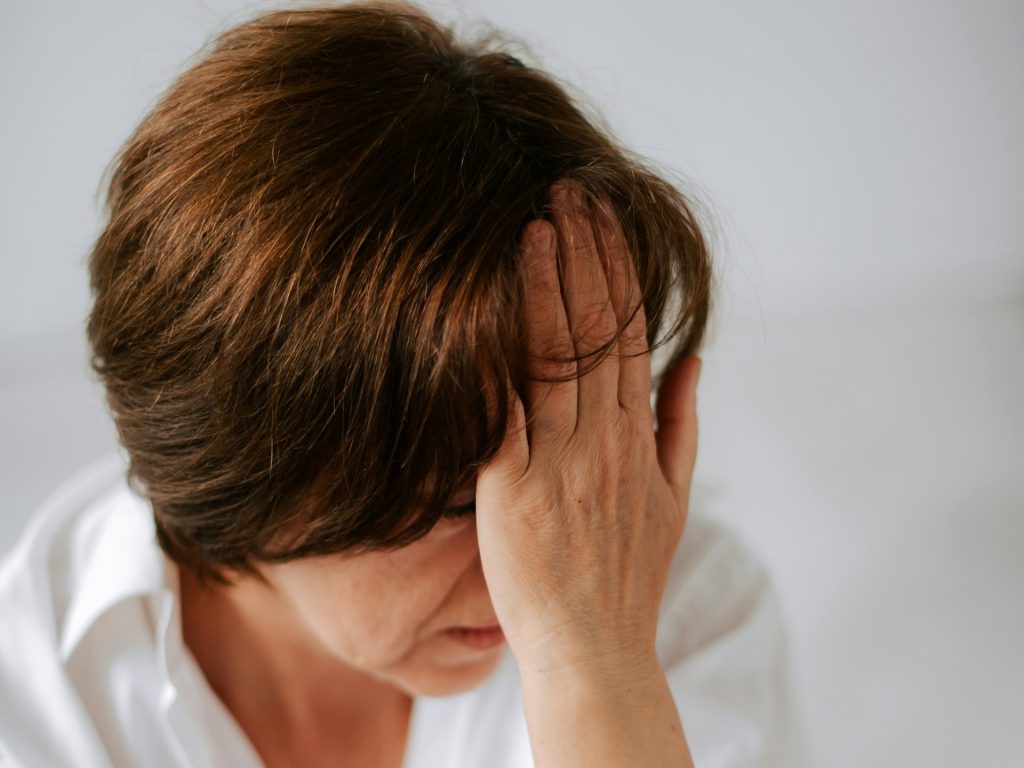
52% of postmenopausal women experience female-pattern hair loss, according to peer-reviewed research published in Menopause, the journal of the North American Menopause Society. Hot flushes – one of the symptoms that owns many public conversations about menopause – affect a larger proportion of women, but the disparity is not in the data. It is in how medicine responds to them. At more than one in two women, female-pattern hair loss is routinely absent from clinical consultations, rarely investigated at first presentation, and almost universally met with the same advice: give it time.
Why timing matters
During and after menopause, declining oestrogen levels and shifts in androgen balance cause susceptible hair follicles to gradually shrink. Each hair grows finer and shorter, with a briefer growth period per cycle. Left long enough without intervention, some follicles reach a point of no return, and the damage becomes irreversible.
“When we say irreversible, we mean that the follicle has become so damaged or inactive that it can no longer reliably regenerate a healthy terminal hair on its own,” says Dr Kashmal Kalan, Medical Director at Alvi Armani South Africa. “Medical therapies may help stabilise surrounding hair at that stage, but they may not recover what has already been lost,” says Dr Kalan.
For many women, that window closes not because they made an informed decision, but because nobody told them they had options. The advice they received – that gradual thinning is normal, that stress is a likely factor, that it may settle with time – sounded measured.
The cost of being dismissed
When the condition is classified as cosmetic, clinical urgency disappears. The patient is reassured rather than assessed, even though menopausal thinning is frequently a visible signal of systemic change. Hormonal shifts, nutritional deficiencies, thyroid dysfunction, and inflammatory or metabolic factors are all documented contributors, and none of them are cosmetic.
The consequences reach well beyond the scalp. Research published in the British Journal of Dermatology found that over 60% of women with hair loss actively avoided social interactions because of it. A separate study in the Journal of Cosmetic Dermatology found that affected women reported significantly higher social anxiety, lower self-esteem, and reduced life satisfaction compared to men experiencing the same condition. What begins on the scalp moves into how a woman presents professionally, how she engages socially, and how she sees herself.
A clinical framework built for men, applied to women
The protocols widely used to assess and treat this condition were largely developed around male patients. Defined hairline recession, concentrated donor areas, and linear progression are all considered male presentations. As a result, women have largely been assessed within a framework built for someone else.
“Applying male-based protocols to women can absolutely compromise outcomes. Female hair restoration requires an understanding of female-specific patterns of loss, progression risk, and the long-term hormonal picture. Preservation of softness, natural density gradients, and age-appropriate framing are considerations with no real equivalent in the male framework. In experienced hands, those distinctions are built into every stage of assessment and planning – not treated as secondary.”
What rigorous care looks like
At Alvi Armani, the first step is not a treatment recommendation – it is a diagnosis. A comprehensive workup, including blood investigations, is conducted before any intervention is discussed, because in menopausal women the drivers are rarely singular and what is visible on the scalp is seldom the whole picture.
“Not every patient is an immediate candidate for surgical restoration and recognising this is itself part of responsible practice. Medical stabilisation, non-surgical therapies, and hormonal management in collaboration with relevant specialists all form part of the treatment landscape – guided by individual diagnosis, not assumption,” Dr Kalan concludes.
“If any of this sounds familiar – the gradual changes, the concerns dismissed, the years of quietly adapting – it is worth knowing that the window is not necessarily closed. But it is also not standing still. Hair loss during menopause is extremely common – but common does not mean insignificant, and it does not mean inevitable.”
