Day: August 7, 2026

Fridge-free Tetanus-diphtheria Vaccine Shows Promise of Reaching Millions Worldwide
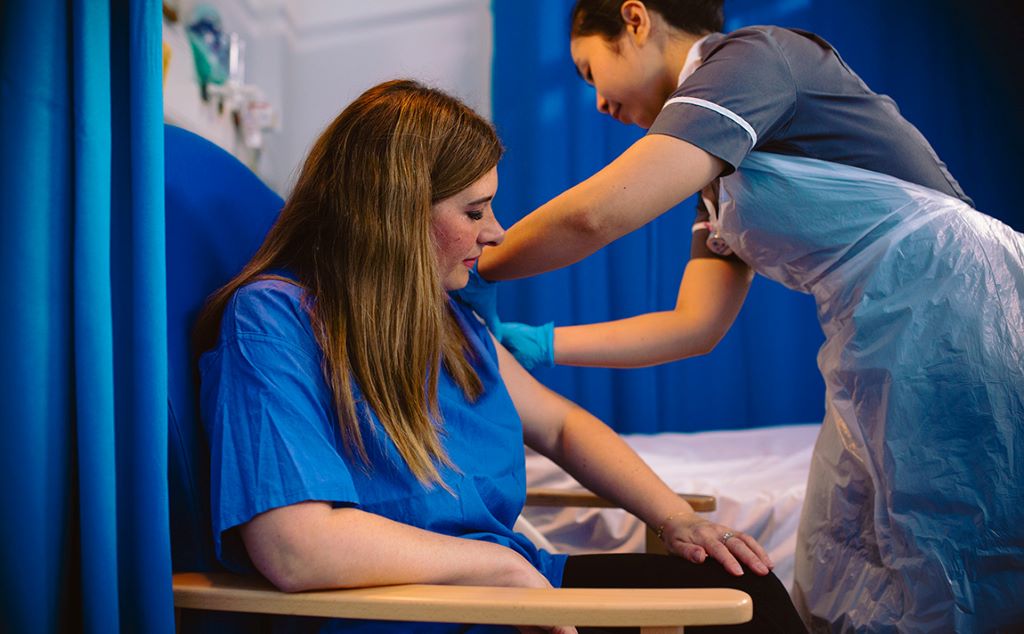
Nurse and participant in the vaccine trial.

The world-first trial of a fridge-free tetanus-diphtheria vaccine has produced encouraging results that could improve access worldwide to crucial treatments, while reducing carbon emissions.

Around half of vaccines are wasted globally each year, according to the World Health Organization. Millions of doses are lost because of temperature changes during storage and transport. Fridge-free vaccines have the potential to transform vaccine delivery by reducing this dependence on refrigeration. This would improve access in more isolated communities and cut the environmental impact by reducing vast amounts of energy that lead to emissions.

This phase I study, led by the University of Southampton and University Hospital Southampton NHS Foundation Trust, found the vaccine was well tolerated, with no vaccine-related serious adverse events. Results are published in The Lancet group’s eClinicalMedicine.

Saul Faust , Professor of Paediatric Immunology and Infectious Diseases at the University of Southampton and Director of the NIHR Clinical Research Facility in Southampton, who led the study, said: “Keeping vaccines cold from the factory to the patient is one of the biggest challenges facing immunisation programmes worldwide. Our study suggests that this vaccine can remain safe and effective without refrigeration.

“If larger studies confirm these findings, this technology could help transform the way vaccines are stored and delivered around the world.”

The trial

The trial took place in the National Institute for Health and Care Research (NIHR) Clinical Research Facility at University Hospital Southampton and was delivered through the NIHR Biomedical Research Centre: Southampton . The reformulated vaccine, known as SPVX02, was developed by UK-based biotech company Stablepharma using its StablevaX technology.

The research shows that SPVX02 can be stored at temperatures of up to 30°C for at least two years without losing its effectiveness. Scientists are now investigating whether it can remain stable for as long as four years. Researchers have also demonstrated that the vaccine remains stable, and fully potent, after three cycles of extreme temperature fluctuation from -20°C to +40°C.

The randomised trial, which also involved the Medicines Evaluation Unit (MEU) in Manchester, enrolled 60 healthy adults. By 28 days after vaccination, all participants receiving SPVX02 achieved protective antibody levels against both tetanus and diphtheria, demonstrating immune responses comparable to licensed vaccines.

Next steps

The eClinicalMedicine publication follows the launch of a Phase 2b trial that will further assess the vaccine in a larger group of participants. Stablepharma’s technology platform, StablevaX, can be applied to vaccines, small molecules, peptides and biologics. They are currently working with a partner to thermostabilise small molecule oncology and anti-infective products, in addition to other vaccines.

Özgür Tuncer, Stablepharma CEO and Executive Director, said: “This peer reviewed validation represents a pivotal moment for our StablevaX platform and the future of thermostable vaccines. These findings strengthen the scientific and global health case for a new generation of fridge free vaccines, particularly in regions where cold chain limitations hinder equitable access.”

Health and Social Care Minister Diana Johnson said: “This pioneering research demonstrates how British innovation is helping to tackle some of the biggest challenges in global healthcare, and providing life-saving breakthroughs for use around the world.

“Right now, people are dying of preventable diseases all over the world, not due to a lack of vaccines, but a lack of refrigeration. Fridge-free vaccines have the potential to be a game-changer for global health, especially for people in remote communities, or regions affected by conflict.

“Backed by NIHR’s world-leading research, this breakthrough shows once again how our investment in science and life sciences is driving better health outcomes, while supporting economic growth and reinforcing the UK’s position at the forefront of medical innovation.”

Stablepharma’s SPVX02 vaccine has been developed with support from Innovate UK, part of UK Research and Innovation (UKRI). It is a reformulated version of the WHO-prequalified Tetadif tetanus-diphtheria vaccine. Scientists from the UK Health Security Agency (UKHSA) provided specialist laboratory testing.

Stablepharma expects to complete the clinical development programme for SPVX02 by 2027.

Source: University of Southampton

Neanderthal Gene Variant May Increase Muscle Mass in Modern Humans

Photo by John Arano on Unsplash

A gene variant inherited by modern humans from Neanderthals causes the body’s cells to respond more strongly to growth hormone. In a study published in Current Biology, researchers at Karolinska Institutet and several international universities report that adults who carry the variant have, on average, slightly greater muscle mass.

Neanderthals were generally more robustly built than people are today. The researchers examined a variant of the growth hormone receptor that modern humans inherited from Neanderthals around 47 000 years ago. Today, the variant is found mainly in South and East Asia, and in some populations in these regions it is carried by up to 24 per cent of people.

In laboratory experiments, the researchers studied two changes unique to the Neanderthal receptor. When stimulated with growth hormone, cells carrying the Neanderthal variant grew 40 per cent more than cells with the most common modern human version of the receptor.

“It is fascinating that a gene variant inherited from Neanderthals still affects people today. But this gene is only one of many factors that influence the body’s growth and shape,” says Hugo Zeberg, who led the study and is a senior lecturer at the Department of Physiology and Pharmacology, Karolinska Institutet.

The researchers analysed data from just over 1.1 million adults. The variant was associated with an average increase in body weight of 285 grams, almost all of which was due to greater muscle mass. By contrast, no effect was seen in more than 6,000 children aged 11 or younger, suggesting that the difference may emerge later, possibly during puberty.

“As someone who does CrossFit, I found it fun to link Neanderthal genetics to muscle mass. But not even a Neanderthal growth hormone receptor can replace training,” says co-author Miriam Berreiter of the same department.

Carriers of the variant also had slightly shorter tooth roots and subtle differences in jaw shape, features that resemble those seen in Neanderthals.

Source: Karolinska Institutet

New Method Distinguishes Between Healthy and Diseased Immune Cells in Blood Samples

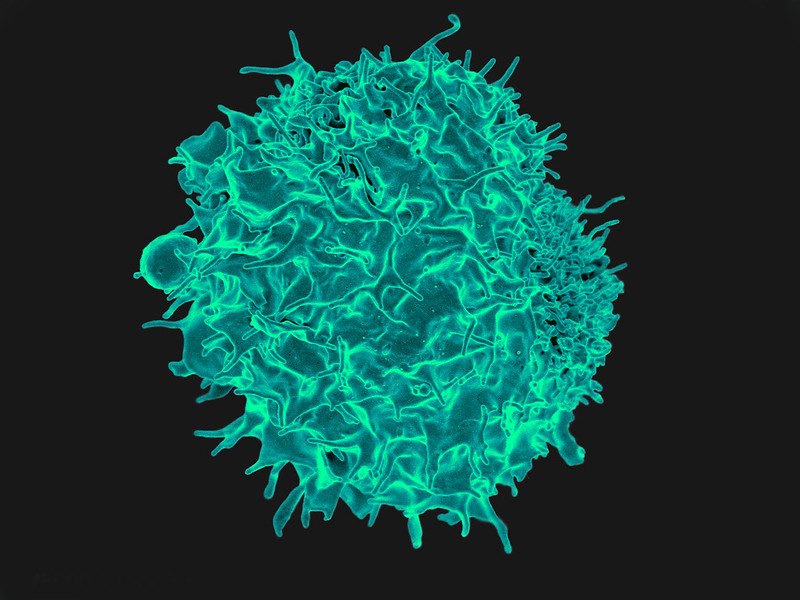
Scanning electron micrograph of a T cell lymphocyte. Credit: NIH / NIAID

Researchers at Karolinska Institutet and SciLifeLab have developed a new method to analyse the condition of immune cells in the blood. The method has been tested on patients with atherosclerosis and can distinguish their immune cells from those of healthy individuals. The study is published in the journal Nature Nanotechnology.

The physical properties of immune cells, such as how the cell membrane is structured or how the mitochondria function, affect how the cells move, communicate, and respond to inflammation. These properties have previously been difficult to measure on a large scale.

Now, researchers have developed a method that measures multiple physical properties simultaneously in individual cells, across very large cell populations. The method is called spectral biophysical cytometry (SBC) and combines fluorescent nanosensors, which respond to the cells’ physical environment, with advanced flow cytometry, where thousands of cells are analysed one by one using laser light in a few minutes.

The researchers used the method to analyse immune cells in blood from 38 patients with atherosclerosis and 26 healthy control individuals.

“We show that immune cells in atherosclerosis have altered physical properties that can be measured directly in blood samples, without first needing to analyse genes or proteins,” says Erdinc Sezgin, researcher at SciLifeLab and the Department of Women’s and Children’s Health, Karolinska Institutet. “The method provides an integrated picture of the health status of the immune cells and can serve as a complement to more time-consuming and costly analyses.” 

May affect disease processes

The analyses revealed clear differences in, among other things, the organisation of cell membranes and mitochondrial function, particularly in different types of T cells. These changes could also be linked to alterations in the cells’ lipid composition and which genes were active.

“This suggests that the physical properties of cells are indications of health and important in disease processes in atherosclerosis and possibly also in other diseases,” says Erdinc Sezgin.

The study is a so-called proof-of-concept study, meaning an early step demonstrating that the principle works. The next step is to investigate the method in larger patient cohorts and in other diseases.

Source: Karolinska Institutet

Does Longer Therapeutic Hypothermia Improve Outcomes for Out-of-Hospital Cardiac Arrests?

Photo by Navy Medicine on Unsplash

For the past two decades, doctors have been using therapeutic hypothermia to prevent or treat brain injury in comatose survivors of cardiac arrest. The process involves cooling down the body, which slows the body’s metabolism and triggers other protective mechanisms that reduce brain damage. However, clinical trials of therapeutic hypothermia for out-of-hospital cardiac arrests have not consistently shown that the process works.

To get a clearer understanding, University of Michigan doctors and researchers led the Influence of Cooling duration on Efficacy in Cardiac Arrest Patient, or ICECAP, trial to determine if longer durations of cooling are more effective than those previously used. The largest US trial focusing on this question, ICECAP included 71 hospitals in the US between 2020-2025 and investigated adults who underwent cooling durations between six and 72 hours.

“We knew that cooling reduces brain injury, but we didn’t know how to make that work in a clinical environment,” said Robert Silbergleit, MD, Professor of Emergency Medicine.

“Most of the previous trials used limited durations of cooling, but longer durations were better in laboratory experiments. We wanted to study whether longer durations were more beneficial for adults with cardiac arrest.”

The study, published in JAMA, focused on 1158 patients, across different genders and races, whose heartbeats were restored with or without a defibrillator. It also included a range of injury severity seen in emergency departments. Patients who suffer cardiac arrests fall into two categories: those who have a sudden arrest, usually from a heart attack and those whose bodies have slowed down over time.

“The two situations created a lot of uncertainty in previous studies because those who have a sudden arrest are usually less sick and their hearts can be quickly restarted with defibrillators,” said William Meurer, MD, Professor of Emergency Medicine and Neurology.

“It was important to study both populations because sometimes doctors can give up hope for patients who had a longer period of CPR and never received a defibrillator shock.”

The study found that outcomes did not change when they underwent cooling for longer durations. Future analyses will explore whether duration of cooling was more important for some types of patients but not others. Additionally, the survival rate in the non-shockable patients was higher than in previous studies with cooling.

“Our study showed that some patients undergoing therapeutic hypothermia can wake up even after two weeks,” Meurer said. “Although it can be a difficult process to go through, it gives families and doctors hope.”

The team is conducting a similar study for paediatric cardiac arrest patients where they are looking at the benefits of cooling for up to four days.

Source: Michigan Medicine

Decades of Data Reveal Who’s Most at Risk of Snakebites, and How to Prevent Them

Global patterns can guide prevention policies in homes, workplaces, and more

Hidden in plain sight, the Salazar’s pit viper melts effortlessly into the vibrant emerald tea bushes of Assam. Ramiz Ali, CC-BY 4.0 (https://creativecommons.org/licenses/by/4.0/)

Snakebites aren’t random, but instead are predictably correlated with a variety of environmental and socioeconomic factors, according to a study published August 6, 2026 in the open-access journal PLOS Neglected Tropical Diseases by Jaideep Menon of Amrita University, India and colleagues.

Snakebite is considered a neglected tropical disease, responsible for as many as 1.4 million deaths per year and disproportionately affecting rural populations in low- and middle-income countries. However, limited information is available on the environmental and socioeconomic factors influencing snakebite incidence.

In this study, Janakiram and colleagues synthesised data from 142 studies documenting over 200 000 snakebites worldwide as far back as the 1800s. This review found that snakebite is strongly related to occupation, with nearly 70% of cases occurring during outdoor work such as farming and construction, and also to timing, with most cases occurring during rainy seasons and during the evening and early night hours. Snakebite cases were also found to be correlated with factors related to poverty, such as lack of adequate footwear, poorly secured homes, and limited access to healthcare education. 

These results highlight areas where targeted policies might significantly reduce the risk of snakebite, including the realms of workplace safety, rural development, housing improvement, and health education. The authors note that this dataset is limited, being mostly focused in South Asia and suffering from inconsistent reporting of variables involved in each snakebite incident, and that future studies should focus on filling these gaps to form a more comprehensive global understanding of factors related to snakebite. 

The authors say: “The scoping review told us something we needed to hear: limiting ourselves to antivenom will never address the behavioural and environmental factors that put people at risk in the first place.” They add: “The inverse care law is particularly relevant to snakebite; The people most exposed to snakes – because of where they live and the work, they do – are also the people furthest from a hospital that can treat them. You cannot fix that gap with antivenom alone; antivenom sits at the wrong end of the problem.”

Provided by PLOS