Month: September 2023

New Genes, Natural Toxins Offer Hope for Patients with Head and Neck Cancer – and Maybe Others
Photo by National Cancer Institute on Unsplash

Research led by Queen Mary University of London and published in Molecular Cancer has revealed two new genes that cause head and neck cancer patients to be resistant to chemotherapy. The study also shows that silencing either gene can make cancer cells that were previously unresponsive chemotherapy subsequently respond to it.

The two genes discovered actively ‘work’ in most human cancer types, meaning the findings could potentially extend to other cancers with elevated levels of the genes.

The researchers also looked through a chemical library, commonly used for drug discovery, and found two substances that could target the two genes specifically and make resistant cancer cells almost 30 times more sensitive to a common chemotherapy drug called cisplatin. They do this by reducing the levels of the two genes and could be given alongside existing chemotherapy treatment such as cisplatin. One of these substances is a fungal toxin – Sirodesmin A – and the other – Carfilzomib – comes from a bacterium. This shows that there may be existing drugs that can be repurposed to target new causes of disease, which can be cheaper than having to develop and produce new ones.

The research is the first evidence for the genes NEK2 and INHBA causing chemoresistance in head and neck squamous cell carcinoma (HNSCC) and gene silencing of either gene overturning chemoresistance to multiple drugs.

The scientists first used a method known as data mining to identify genes that may be affecting tumour responsiveness to drug therapy. They tested 28 genes on 12 strains of chemoresistant cancer cell lines, finding 4 ‘significant’ genes that were particularly responsive that they then investigated further and tested multidrug-resistance.

Senior study author Dr Muy-Teck Teh, from Queen Mary University of London, said: “These results are a promising step towards cancer patients in the future receiving personalised treatment based on their genes and tumour type that give them a better survival rate and treatment outcome.

“Unfortunately, there are lots of people out there who do not respond to chemotherapy or radiation. But our study has shown that in head and neck cancers at least it is these two particular genes that could be behind this, which can then be targeted to fight against chemoresistance.

“Treatment that doesn’t work is damaging both for the NHS and patients themselves. There can be costs associated with prolonged treatment and hospital stays, and it’s naturally extremely difficult for people with cancer when their treatment doesn’t have the results they are hoping for.”

90% of all head and neck cancers are caused by HNSCCs, with tobacco and alcohol use being key associations. In the UK, there are 12 422 new cases of head and neck cancer each year, and the overall 5-year survival rate of patients with advanced HNSCC is less than 25%. A major cause of poor survival rates of HNSCC is because of treatment failure that stems from resistance to chemotherapy and/or radiotherapy.

Unlike lung and breast cancer patients, all HNSCC patients are treated with almost the same combinations of treatment irrespective of the genetic makeup of their cancer.

Source: Queen Mary University of London

Statins Might Reduce the Risk of Colorectal Cancer in Those with Ulcerative Colitis

Photo by Towfiqu Barbhuiya on Unsplash

New research published in eClinicalMedicine suggests that statins might protect patients with ulcerative colitis from developing and dying from colorectal cancer. The study, by Karolinska Insitut researchers, also found that statin treatment was associated with a lower risk of death regardless of cause in patients with ulcerative colitis or Crohn’s disease.

First author Jiangwei Sun notes that previous studies have shown that the risk of colorectal cancer in patients with IBD, such as ulcerative colitis and Crohn’s disease, is 50% higher than in the general population. This is likely to be because of the chronic gut inflammation that these patients have. Researchers have long sought drugs that can reduce the inflammation-related cancer risk.

“Even though more studies are needed to confirm our results, our study suggests that statins can prevent colorectal cancer in patients with inflammatory bowel disease (IBD), which is a high-risk group for this kind of cancer,” says Dr Sun.

The observational study conducted by Dr Sun and his colleagues compared over 10 500 IBD patients from around the country, of whom half were statin users; the other half of the group, who were matched with the first, were not. After a follow-up period of, on average, 5.6 years, 70 of the statin group and 90 of the non-statin group had been diagnosed with colorectal cancer.

The effect increased over time

The protective effect was directly proportional to the length of time the patient had been on statins and could be demonstrated after two years’ treatment.

There were also fewer deaths from colorectal cancer in the statin group (20) than in the non-statin group (37) during the study period, and deaths regardless of cause (529 versus 719).

The study shows that some 200 IBD patients need to be treated with statins to avoid one case of colorectal cancer or death from the cancer within ten years of treatment onset. The protective effect was only statistically valid for patients with ulcerative colitis.

“We think this is because the study contained fewer patients with Crohn’s disease,” explains Dr Sun. “More and larger studies compiling data from patient populations in many countries will probably be needed to achieve statistical significance for Crohn’s disease.”

Significantly fewer deaths

To avoid death regardless of cause during the same ten-year period, the number of treated patients dropped to 20, on account of how statins also protect against more common conditions, such as cardiovascular disease. Statins were linked to fewer deaths in both ulcerative colitis and Crohn’s disease patients.

The study was based on the ESPRESSO-cohort, which is run by its initiative-taker Jonas F Ludvigsson, paediatrician at Örebro University Hospital and professor at Karolinska Institutet, and the study’s last author.

“In that we can combine tissue data from patients with colorectal cancer with data from Swedish health registries, we’re uniquely placed to study the long-term effects of drugs for IBD,” he says. “Our hope is that these studies will improve the care of IBD patients.”

The most solid evidence so far

According to the researchers, the new results provide the most solid evidence so far that statins could be an effective prophylactic for colorectal cancer among people with IBD. However, more knowledge must be gathered before the treatment can be recommended in general guidelines.

“More studies are needed to ascertain if there is a causal relationship, at what point of the pathological process statins should be administered, what a reasonable dose would be and how long treatment needs to last if it’s to be of benefit,” says Dr Sun.

Source: Karolinska Institut


Clinical Researchers Discover Four New Factors that Predict Atrial Fibrillation

UK researchers have developed a new way of identifying patients at risk of atrial fibrillation (AF). While not life threatening, the condition increases people’s risk of having a transient ischaemic attack (TIA) or stroke by up to five times. A new study, published in the European Journal of Preventive Cardiology, reveals four specific factors that can predict which patients will have atrial fibrillation.

The researchers investigated clinical and echocardiographic parameters for AF and found that the combination of advanced age, increased DBP, increasing lateral PA (time interval from the beginning of the P wave on the surface electrocardiogram to the beginning of the A′ wave on pulsed wave tissue Doppler of the lateral mitral annulus), and impaired LA reservoir strain is associated with AF. Other studies have linked most of these factors have been linked with an increased risk of AF in stroke survivors.

The team went on to create an easy tool for doctors to use in practice to identify those at high risk, which they hope will help diagnose and treat more patients, reducing their risk of future strokes.

Lead researcher Prof Vassilios Vassiliou, from UEA’s Norwich Medical School and Honorary Consultant Cardiologist at the Norfolk and Norwich University Hospital, said: “Identifying who is at high risk and more likely to develop atrial fibrillation is very important.

“This is because it requires specific treatment with anticoagulants, commonly known as blood thinners, to reduce the risk of future strokes.

“Patients who have had a stroke usually undergo multiple investigations to determine the cause of the stroke, as this can influence the treatment they receive long-term.

“These investigations include prolonged monitoring of the heart rhythm with a small implantable device called a loop recorder, and an ultrasound of the heart, called an echocardiogram.”

The research team collected data from 323 patients across the East of England, treated at Cambridge University Hospitals NHS Foundation Trust, who had had a stroke with no cause identified- known as Embolic Stroke of Undetermined Source.

They analysed medical records as well as data from prolonged heart rhythm monitoring. They also studied their echocardiograms.

Prof Vassiliou said: “We determined how many of these patients were found to have atrial fibrillation up to three years following their stroke, and went on to perform a thorough assessment to identify if there are specific parameters that are connected with atrial fibrillation identification.

“We identified four parameters that were linked with the development of atrial fibrillation, which were consistently present in patients that had this arrhythmia. We then developed a model that can be used to predict who will show atrial fibrillation in the next three years, and is therefore at increased risk of another stroke in the future.”

“This is a very easy tool that any doctor can use in clinical practice,” he added.

“And it can potentially help doctors provide more targeted and effective treatment to these patients, ultimately aiming to highlight the people at higher risk of this arrhythmia that can benefit from prolonged heart rhythm monitoring and earlier anticoagulation to prevent a future stroke.”

Source: University of East Anglia

Study Reveals Global Differences in Sleep Patterns

Photo by Cottonbro on Pexels

Using data from a consumer sleep tracker, a new study has shown that not only do people in Asia go to sleep later and have shorter sleep, they also have lower sleep quality than those in other parts of the world. The study, published in Sleep Medicine, also showed that South Africans, Australians and New Zealanders went to bed and rose earlier than the other parts of the world included in the research, but also got the most sleep.

This finding surfaced after a team of researchers from the Centre for Sleep and Cognition at the Yong Loo Lin School of Medicine, National University of Singapore (NUS Medicine) in partnership with Oura Health Oy (Finland), analysed 50 million nights of anonymised sleep data, contributed by over 220 000 users of the “Oura Ring”, a consumer sleep tracker, from across 35 countries. Most of the users were working adults, aged between 30 and 55 years. To provide a comprehensive analysis of sleep measures for each user, the team gathered sleep data from multiple nights across a whole year – on average, each user contributed 242 nights of data. Weekday and weekend sleep were analysed separately to assess the impact of the working week on sleep patterns.

The results showed that people in Asia have shorter sleep, and display higher variability in both sleep timing and duration on weekdays. They also fall asleep later than those living in Europe, Oceania and North America. Previous studies have shown that shorter sleep duration is usually associated with higher sleep efficiency as people try to make the most of their sleep opportunity; however, in this study, despite sleeping less, people in Asia also had lower sleep efficiency. This may be because factors that result in short sleep (eg, work-related anxiety) also lead to lower quality sleep.

People often sleep for longer at the weekends than during the week, a phenomenon known as weekend sleep extension. While there was a clear association between shorter weekday sleep and longer weekend sleep extension, suggesting that people caught up on sleep at the weekend, even after accounting for this, people in Asia had the shortest weekend sleep extension.

While there are many socio-cultural factors that affect sleep patterns, the team hypothesises that because it plays such a fundamental role in our lives, work (and the broader work culture) is one of the most influential factors affecting how we sleep. Previous evidence from time use studies have demonstrated a strong association between long work hours and short sleep. Additionally, there is evidence that preoccupation with work demands and the inability to stop thinking about work contribute to sleep disturbances.

Dr Adrian Willoughby, Senior Research Fellow at NUS Medicine’s Centre for Sleep and Cognition, said, “In Europe, weekends are generally considered time for relaxation, and engaging in social activities with friends and family. In Asia, however, people may use the weekends to catch up on work, do the things they didn’t have time for during the week or attend to more family responsibilities. We think that longer working hours and the difference in work culture in Asia means that people don’t catch up on sleep as much at the weekends, but try to catch up whenever they have the opportunity over the course of the week.”

Prof Michael Chee, Director of the Centre for Sleep and Cognition at NUS Medicine said, “Sleep is a significant issue to address, especially for people living in Asia, who seem to sleep less than other global regions. Access to such a large dataset has allowed us to have unique insights into global sleep patterns. This research enables us to work towards our goal of giving customised sleep advice that considers individual sleep needs, environment factors and larger socio-cultural pressures that affect sleep. We want people to practise sleep routines that fit different contexts, but also promote health, well-being and performance.”

Source: National University of Singapore, Yong Loo Lin School of Medicine

Antioxidants Boost Tumour Growth by Stimulating Blood Vessel Formation

In this image from a genetically engineered mouse model, lung cancer driven by the Kras oncogene shows up in purple. As a key driver in many types of cancer, the Kras gene makes a promising target for new cancer therapies. Credit: National Cancer Institute, National Institutes of Health

A new study from Karolinska Institutet shows that vitamin C and other antioxidants stimulate the formation of new blood vessels in lung cancer tumours. Published in The Journal of Clinical Investigation, this discovery corroborates the idea that dietary supplements containing antioxidants can accelerate tumour growth and metastasis.

“We’ve found that antioxidants activate a mechanism that causes cancer tumours to form new blood vessels, which is surprising, since it was previously thought that antioxidants have a protective effect,” says study leader Martin Bergö, professor and vice president of Karolinska Institutet in Sweden. “The new blood vessels nourish the tumours and can help them grow and spread.”

Antioxidants neutralise free oxygen radicals, which can damage the body, and are therefore commonly found in dietary supplements. But overly high doses can be harmful.

“There’s no need to fear antioxidants in normal food but most people don’t need additional amounts of them,” says Professor Bergö. “In fact, it can be harmful for cancer patients and people with an elevated cancer risk.”

Previously unknown mechanism

Professor Bergö’s research group has previously shown that antioxidants like vitamin C and E accelerate the growth and spread of lung cancer by stabilising a protein called BACH1. BACH1 is activated when the level of free oxygen radicals drops, which happens, for example, when extra antioxidants are introduced via the diet or when spontaneous mutations in the tumour cells activate endogenous antioxidants. Now the researchers have been able to show that the activation of BACH1 induces angiogenesis, the formation of new blood vessels .

While hypoxia is known to be required for angiogenesis to occur in cancer tumours, the new mechanism identified by the researchers demonstrates that tumours can form new blood vessels in the presence of normal oxygen levels as well. The study also shows that BACH1 is regulated in a similar way as the HIF-1α protein – a mechanism that was awarded the 2019 Nobel Prize in Physiology or Medicine and that allows cells to adapt to changes in oxygen levels. HIF-1α and BACH1 work together in the tumours, the new research shows.

Hoping for more effective drugs

“Many clinical trials have evaluated the efficacy of angiogenesis inhibitors, but the results have not been as successful as anticipated,” says Ting Wang, doctoral student in Professor Bergö’s group at Karolinska Institutet. “Our study opens the door to more effective ways of preventing angiogenesis in tumours; for example, patients whose tumours exhibit high levels of BACH1 might benefit more from anti-angiogensis therapy than patients with low BACH1 levels.”

The researchers used a range of cell-biological methods and concentrated most of their work on lung cancer tumours by studying organoids, as well as mice and samples of human breast and kidney tumours. Tumours in which BACH1 was activated, either via ingested antioxidants or by overexpression of the BACH1 gene, produced more new blood vessels and were highly sensitive to angiogenesis inhibitors.

“The next step is to examine in detail how levels of oxygen and free radicals can regulate the BACH1 protein, and we will continue to determine the clinical relevance of our results,” says Ting Wang. “We’ll also be doing similar studies in other cancer forms such as breast, kidney and skin cancer.”

Source: Karolinska Institute

Fathers Who Smoked as Young Teens Pass Epigenetic Changes to Offspring

A new study suggests boys who smoke in their early teens risk damaging the genes of their future children, increasing their chances of developing asthma, obesity and low lung function.

This research, published in Clinical Epigenetics, is the first human study to reveal the biological mechanism behind the impact of fathers’ early teenage smoking on their children.

Researchers from the University of Southampton and the University of Bergen in Norway investigated the epigenetic profiles of 875 people, aged 7 to 50, and the smoking behaviours of their fathers.

They found epigenetic changes at 19 sites mapped to 14 genes in the children of fathers who smoked before the age of 15. These changes in the way DNA is packaged in cells (methylation) regulate gene expression (switching them on and off) and are associated with asthma, obesity and wheezing.

“Our studies in the large international RHINESSA, RHINE and ECRHS studies have shown that the health of future generations depends on the actions and decisions made by young people today – long before they are parents – in particular for boys in early puberty and mothers/grandmothers both pre-pregnancy and during pregnancy,” says Professor Cecilie Svanes from the University of Bergen and Research Director of the RHINESSA study. “It is really exciting that we have now been able to identify a mechanism that explains our observations in the cohorts.”

‘Unique markers’

“Changes in epigenetic markers were much more pronounced in children whose fathers started smoking during puberty than those whose fathers had started smoking at any time before conception,” says co-lead author of the paper Dr Negusse Kitaba, Research Fellow at the University of Southampton. “Early puberty may represent a critical window of physiological changes in boys. This is when the stem cells are being established which will make sperm for the rest of their lives.”

The team also compared the paternal preconception smoking profiles with people who smoked themselves and those whose mothers smoked before conception.

“Interestingly, we found that 16 of the 19 markers associated with fathers’ teenage smoking had not previously been linked to maternal or personal smoking,” says Dr Gerd Toril Mørkve Knudsen from the University of Bergen and co-lead author of the study. “This suggests these new methylation biomarkers may be unique to children whose fathers have been exposed to smoking in early puberty.”

Teenage vaping ‘deeply worrying’

The number of young people smoking has fallen in the UK in recent years. But co-author Professor John Holloway, from the University of Southampton and the NIHR Southampton Biomedical Research Centre, is concerned about children taking up vaping.

“Some animal studies suggest that nicotine may be the substance in cigarette smoke that is driving epigenetic changes in offspring,” says Professor Holloway. “So it’s deeply worrying that teenagers today, especially teenage boys, are now being exposed to very high levels of nicotine through vaping.

“The evidence from this study comes from people whose fathers smoked as teenagers in the 60s and 70s, when smoking tobacco was much more common. We can’t definitely be sure vaping will have similar effects across generations, but we shouldn’t wait a couple of generations to prove what impact teenage vaping might have. We need to act now.”

The new findings have significant implications for public health. They suggest a failure to address harmful exposures in young teenagers today could damage the respiratory health of future generations, further entrenching health inequalities for decades to come.

Source: University of Southampton

Can Taking Statins after an Intracerebral Haemorrhage Reduce the Risk of Another Stroke?

Source: CC0

Patients who have had an intracerebral haemorrhage who take cholesterol-lowering drugs called statins may have a lower risk of having another stroke, especially ischaemic stroke, compared to people who also had an intracerebral haemorrhage but were not taking statins, according to a new study published in Neurology, the medical journal of the American Academy of Neurology.

“Previous research has had mixed results on the risk of stroke in people who are taking statins and have already had a bleeding stroke, so we evaluated this further,” said study author David Gaist, MD, PhD, of the University of Southern Denmark in Odense and a member of the American Academy of Neurology. “We looked at whether use of statins after a bleeding stroke is associated with the risk of any additional stroke, including both those caused by bleeding and by blood clots. We found that those who used statins had a lower risk of stroke, notably ischaemic stroke, while there was no change in the risk of bleeding stroke.”

For the study, researchers looked at health records in Denmark and identified 15 151 people who had a first bleeding stroke.

People were followed from 30 days after their first bleeding stroke until the first occurrence of another stroke, death, or the end of follow-up, which on average lasted 3.3 years. Researchers used prescription data to determine information on statin use.

Researchers then compared 1959 people who had another stroke to 7400 people who did not have another stroke who were similar in age, sex and other factors. Of those who had another stroke, 757 people, or 39%, took statins compared to 3044 people, or 41%, of those who did not have a second stroke.

After adjusting for factors like hypertension, diabetes and alcohol use, statin use was associated with a 12% lower risk of another stroke.

Then they compared 1073 people who had an ischaemic stroke to 4,035 people who did not have another stroke. Of those who had an ischaemic stroke, 427 people, or 40%, took statins compared to 1687 people, or 42%, of those who did not have another stroke.

After adjusting for similar factors, statin use was associated with a 21% lower risk of an ischaemic stroke after the initial bleeding stroke.

They also compared 984 people who had another bleeding stroke to 3755 people who did not have another stroke. Of those who had a recurrent bleeding stroke, 385 people, or 39%, took statins compared to 1532 people, or 41%, of those who did not have another stroke.

After adjustments, researchers did not find a link between statin use and recurrent bleeding stroke.

“The results of our study are good news for people taking statins who have had a bleeding stroke,” Gaist added. “While we did find a lower risk of having another stroke, it is important to note that when looking at the data more closely, that lower risk was for ischaemic stroke. Still, we found no increased risk for bleeding stroke. More studies are needed to confirm our findings.”

A limitation of the study was that it only included the Danish population, which is primarily people of European ancestry, and may not be generalisable to people from other populations.

Source: American Academy of Neurology

High Levels of Metal In Blood and Urine of Exclusive Marijuana Users

Photo by Rodnae Productions on Pexels

Researchers have detected significant levels of metals in the blood and urine among marijuana users, concluding that marijuana may be an important and under-recognised source of lead and cadmium exposure. This is among the first studies to report biomarker metal levels among marijuana users and most likely the largest study to date, that links self-reported marijuana use to internal measures of metal exposure, rather than just looking at metal levels in the cannabis plant. The results are published online in the journal Environmental Health Perspectives.

Measurements reported by participants for exclusive marijuana use compared to nonmarijuana-tobacco had significantly higher lead levels in blood (1.27ug/dL) and urine (1.21ug/g creatinine). 

“Because the cannabis plant is a known scavenger of metals, we had hypothesised that individuals who use marijuana will have higher metal biomarker levels compared to those who do not use,” said first author Katelyn McGraw, postdoctoral researcher. “Our results therefore indicate marijuana is a source of cadmium and lead exposure.”

The researchers, from Columbia University Mailman School of Public Health, combined data from the National Health and Nutrition Examination Survey for the years 2005-2018, a biannual programme of studies designed to assess the health and nutritional status of adults and children in the U.S.

McGraw and colleagues classified the 7254 survey participants by use: non-marijuana/non-tobacco, exclusive marijuana, exclusive tobacco, and dual marijuana and tobacco use. Five metals were measured in the blood and 16 in urine. 

The researchers used four NHANES variables to define exclusive marijuana and tobacco use: current cigarette smoking, serum cotinine levels, self-reported ever marijuana use, and recent marijuana use. Exclusive tobacco use was defined as individuals who either answered yes to ‘do you now smoke cigarettes, or if individuals had a serum cotinine level >10ng/mL.

The study found higher levels of cadmium (Cd) and lead (Pb) in blood and urine among participants reporting exclusive marijuana use compared to non-smokers. Cd and Pb levels were also higher in exclusive marijuana users who reported using marijuana within the last week. Cd biomarker levels were higher in those who smoked only marijuana than , either because of differences in frequency of use or differences in Cd levels in the tobacco and cannabis plants themselves. However, blood and urinary Pb levels among exclusive marijuana users and exclusive tobacco users were similar. Dual marijuana and tobacco users also had higher levels of Cd and Pb compared with non-smokers.

These observations marijuana use is an important and underrecognised source of Cd and Pb exposure independent of tobacco use, the researchers concluded.

Marijuana is the third most commonly used drug in the world behind tobacco and alcohol. As of 2022, 21 states and Washington D.C., covering more than 50 percent of the U.S. population, have legalised recreational use of marijuana; and medical marijuana is legal in 38 states and Washington D.C. However, because marijuana is still illegal at the federal level, regulation of contaminants in all cannabis-containing products remains piecemeal and there has been no guidance from federal regulatory agencies like the FDA or EPA. As of 2019, 48.2 million people, or 18% of Americans, report using marijuana at least once in the last year.

While 28 states regulate inorganic arsenic, cadmium, lead, and total mercury concentrations in marijuana products, regulation limits vary by metal and by state. 

“Going forward, research on cannabis use and cannabis contaminants, particularly metals, should be conducted to address public health concerns related to the growing number of cannabis users,” said Tiffany R. Sanchez, PhD, assistant professor of environmental health sciences at Columbia Public Health, and senior author.

Researchers Discover Stem Cells in the Thymus

Photo by Nhia Moua on Unsplash

Researchers have identified stem cells in the human thymus for the first time. These cells represent a potential new target to understand immune diseases and cancer and how to boost the immune system. Their reported their discovery in the journal Developmental Cell.

The thymus is a gland located in the front part of the chest, the place where thymocytes (the cells in the thymus) mature into T cells, specialised immune cells crucial to fighting disease. The thymus has a unique and complex 3D structure, including an epithelium (a lining of cells able to guide T cell maturation) that forms a mesh throughout the whole organ and around the thymocytes.

Owing to its relatively inaccessible location, comparatively recent discovery and the fact that it shrinks with age, the thymus has only been investigated for a short period of time compared to other organs. Until now, scientists believed it didn’t contain ‘true’ epithelial stem cells, but only progenitors arising in foetal development.

However, these findings from researchers at the Francis Crick Institute, show for the first time the presence of self-renewing stem cells, which give rise to the thymic epithelial cells instructing thymocytes to become T cells. This suggests the thymus plays an important, regenerative role beyond childhood, which could be exploited to boost the immune system.

In the course of their experiments, the researchers examined these stem cells based on the expression of specific proteins in the human thymus. They identified stem-cell niches (areas where stem cells are clustered) in two locations in the thymus: underneath the organ capsule, or outer layer, and around blood vessels in the medulla, the central part.

They demonstrated that thymic stem cells contribute to the environment by producing proteins of the extracellular matrix, which functions as their own support system.

By using state-of-the-art techniques to map gene expression in single cells and tissue sections, they found that these stem cells, named Polykeratin cells, express a variety of genes allowing them to give rise to many cell types not previously considered to have a common origin. They can develop into epithelial as well as muscle and neuroendocrine cells, highlighting the importance of the thymus in hormonal regulation.

The researchers isolated Polykeratin stem cells in a dish and were able to show that thymus stem cells can be extensively expanded. They demonstrated that all the complex cells in the thymus epithelium could be produced from a single stem cell, highlighting a remarkable and yet untapped regenerative potential.

Roberta Ragazzini, postdoctoral research associate at the Crick and UCL, and first author, said: “It’s paradoxical that stem cells in the thymus – an organ which reduces in size as we get older – regenerate just as much as those in the skin – an organ which replaces itself every three weeks. The fact that the stem cells give rise to so many different cell types hints at more fundamental functions of the thymus into adulthood.”

It’s understood that the thymus’ activity is tightly regulated in adults, providing enough immune support to fight infections but not overshooting to the degree of attacking the body’s own cells.

However, in certain people, the thymus isn’t working properly, or their immune system has reduced capacity. Today’s findings suggest it could be helpful in these cases to stimulate the stem cells to regrow the thymus and rejuvenate their immune system.

Paola Bonfanti, senior group leader of the Epithelial Stem Cell Biology and Regenerative Medicine Laboratory at the Crick, said: “This research is a pivotal shift in our understanding of why we have a thymus capable of regeneration. There are so many important implications of stimulating the thymus to produce more T cells, like helping the immune system respond to vaccinations in the elderly or improving the immune response to cancer.”

The researchers will next study thymic stem cell properties throughout life and how to manipulate them for potential therapies.

Source: The Francis Crick Institute

Scientists Snip Muscular Dystrophy Gene, Yielding Shorter but Now-functional Proteins

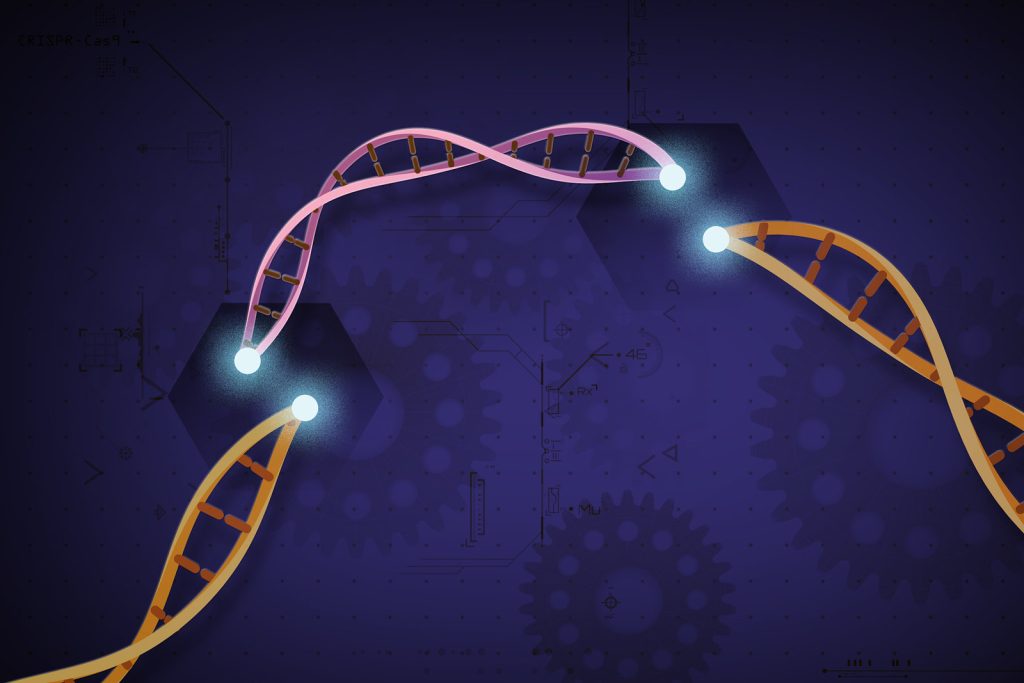
CRISPR-Cas9 is a customisable tool that lets scientists cut and insert small pieces of DNA at precise areas along a DNA strand. This lets scientists study our genes in a specific, targeted way. Credit: Ernesto del Aguila III, National Human Genome Research Institute, NIH

The most common inherited muscular disorder and one of the most severe, Duchenne muscular dystrophy (DMD) results from mutations of the dystrophin gene. In the journal Stem Cell Reports, researchers used a dual CRISPR RNA method to restore dystrophin protein function in stem cells derived from DMD patients. By removing large sections of the dystrophin gene, the cells were able skip faulty or misaligned sections of the genetic code, yielding shortened but still functional proteins for a wide variety of mutation patterns associated with DMD.

“Dual CRISPR-Cas3 is a promising tool to induce a gigantic genomic deletion and restore dystrophin protein via multi-exon skipping induction,” says senior author Akitsu Hotta of Kyoto University. “We expect this study to enlighten new ways to treat DMD patients and other genetic disorders that require extensive deletions.”

Due to significant variations in the mutation patterns affecting the dystrophin gene, deleting a small section of the gene can only be used for a limited number of DMD patients. For example, the most common mono-exon skipping of exons 51, 53, and 45 can be applied to 13%, 8%, and 8% of DMD patients, respectively.

Multi-exon skipping (MES) has broad applicability to various DMD mutation patterns. By targeting the mutation hotspots in the dystrophin gene, MES from exon 45 to 55 was estimated to benefit more than 60% of DMD patients. Unfortunately, few techniques are available to induce a large deletion to cover the target exons spread over several hundred kilobases.

To overcome this hurdle, Hotta and his team used CRISPR-Cas3 to induce a deletion of up to 340 kilobases at the dystrophin exon 45-55 region in various DMD mutation patterns. Because it was rare to observe a deletion of more than a hundred kilobases using a single CRISPR RNA – which helps to locate the correct segment of DNA – the researchers used a pair of CRISPR RNAs inwardly sandwiching the target genomic region.

Limitations of the dual CRISPR RNA system include is variation in the deletion pattern, and the precise start and end points of the deletion cannot be fully controlled. This could be a drawback when a large but precise deletion is required. The study also did not demonstrate the functionality of the recovered dystrophin protein. Future research should aim to improve the overall genome editing efficiency of the Cas3 system.

“Our dual-Cas3 system might apply to future gene therapies once we’re able to deliver the dual-Cas3 components in vivo to skeletal muscle tissues safely and efficiently,” says Hotta. “The ability to induce several hundred kilobases of DNA deletion itself also has broad applicability for basic research when a large deletion is needed.”

Source: Science Daily