

Day: May 5, 2022

Vascular Endothelial Cells Communicate in a Vast Network
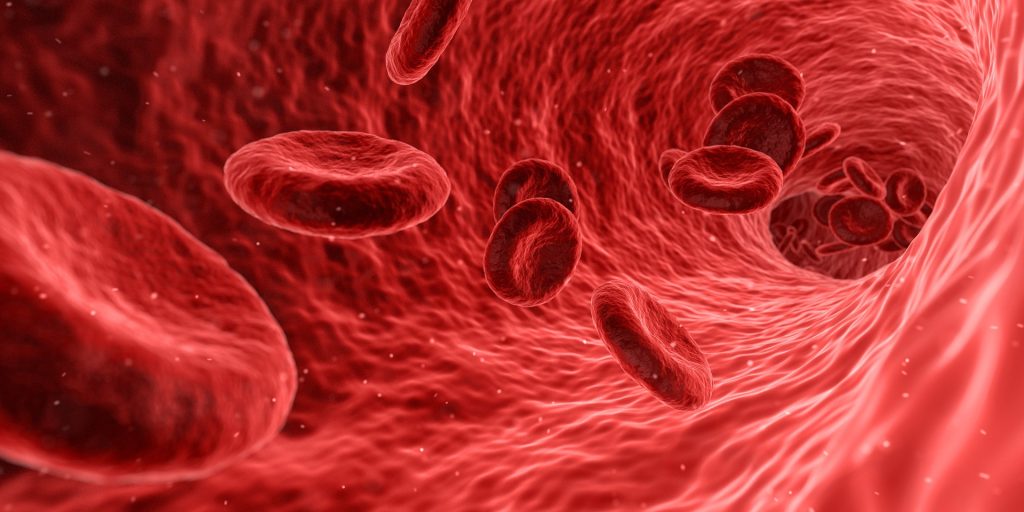
Source: Wikimedia CC0

Vascular endothelial cells use a vast network of connections to control all cardiovascular functions, and failures in this network contribute to the risk of developing cardiovascular disease, according to a new study published in PNAS.

It has long been known that the development of these conditions begins with changes in the vascular endothelial cells lining the body’s blood vessels. But why and how changes in endothelial cell function occur is not entirely clear.

Research has revealed that these cells communicate with each other using a sophisticated system. Failures in this communication system may be the first step in the development of cardiovascular disease.

The endothelium, which forms the thin inner layer of cells in blood vessels, regulates blood flow, blood pressure, blood clotting, inflammation and response to disease. On a continual basis, it processes the vast amounts of information held in the composition of blood, and chemicals in the area around each blood vessel to keep the cardiovascular system working properly.

The study identified clusters of cells in the endothelium that are specialised to particular functions and they operate in ‘cliques’. Between cliques, numerous interlinked connections act to convey information, with a high density of connections to protect the system against communication failures. The system bypasses neighbouring cells by use of shortcuts to transmit information quickly over distance.

The endothelial communication network design is in fact remarkably similar to the communication operations of the internet and it is effective for local blood vessel control and global efficiency in determining overall cardiovascular activity. The design is robust, so that communication systems to control cardiovascular activity will not fail even when there is extensive damage.

The findings also indicate that changes in the organisation of communication, rather than behaviour and function of individual cells, may underlie disease.

The researchers addressed the nature of the communication network by using single-cell calcium ion imaging across thousands of endothelial cells in intact blood vessels and applying mathematical network (graph) theory.

Professor John McCarron at Strathclude University said: “Cells in the endothelium are a major target for the control of cardiovascular disease and are often treated as being a uniform population of cells. Our findings show the cells are not uniform but specialised to particular types of function.

“There is a well-organised, rapid and robust communication system that shares information so that co-ordinated responses occur. The communication system offers new targets for therapy development and insights into why developing treatments has proven so difficult.”

Source: University of Strathclyde

Capsaicin Sustained Release Formations – a Spicy Anti-cancer Treatment?

A study published in Pharmacology & Therapeutics provides the first in-depth description of the anti-cancer activity of capsaicin sustained release formulations. Capsaicin, responsible for the hot and spicy taste of chili peppers, is being, explored in sustained release formulations of capsaicin for extended anti-cancer activity. However, how to get around its fiery taste remains a challenge.

The article chronicles the growth-suppressive activity of sustained release capsaicin drugs, including solid dispersion systems, liposomes, phospholipid complexes and nanoparticles. This marks the first publication to provide an in-depth description of the anti-cancer activity of capsaicin sustained release formulations. The research team was led by Associate Professor of Biomedical Sciences Piyali Dasgupta, PhD., and Professor of Biomedical Sciences Monica Valentovic, PhD.

“This review article is the first to provide a comprehensive overview of capsaicin formulations in human cancer,” said Prof Dasgupta, the study’s corresponding author. “Previous publications in the literature only briefly address sustained release formulations of capsaicin.”

The reviewers found that capsaicin displayed robust growth-inhibitory activity in a diverse array of human cancers. However, the clinical applications of capsaicin as a viable anti-cancer agent were hindered by three factors: poor solubility, low bioavailability and spicy flavour.

“Oral use of capsaicin is associated with unfavourable side effects such as stomach cramps, nausea, a burning sensation in the gut and gastrointestinal irritation,” said Prof Valentovic, a senior author on the publication. “A strategy to overcome these drawbacks is the development of different delivery systems, such as encapsulating capsaicin in long-acting sustained release drug delivery systems could allow for more consistent capsaicin levels that could be more efficient as anti-cancer agents.”

Source: Marshall University

Two Doses of Pfizer or J&J Vaccine are Effective vs Severe Omicron

Image of a syring for vaccination
Photo by Mika Baumeister on Unsplash

A South African-led study published in the New England Journal of Medicine has shown that two doses of the Pfizer or the Johnson and Johnson (J&J) vaccine are equally effective against severe COVID caused by the omicron variant.

The omicron variant has been shown to escape antibody neutralisation by both the Pfizer/BioNTech mRNA and the Johnson & Johnson adenovirus viral vector vaccine, the only two COVID vaccines available in South Africa. As of May 1, 44.8% of adults in South Africa had been fully vaccinated. Assessing vaccine effectiveness is critical for national vaccine programs.

Starting in October 2021, health care workers who were participating in phase 3b of the Sisonke study of the early vaccine access program were eligible to receive a second dose of the J&J vaccine. Discovery Health data was accessed for Pfizer vaccine effectiveness. Severe COVID was defined as hospitalisation or admission to an intensive care unit (ICU) or to high care.

Vaccine effectiveness was compared between the two vaccine groups according to the number of days since the second vaccine dose had been administered. However longer follow-ups were not available for the J&J group as booster had been initiated later for them.

PCR results were analysed from participants who had received two doses of the Pfizer vaccine given at least 42 days apart or two doses of the J&J vaccine given 4 to 6 months apart. Among these participants, the test positivity rate was 34%; of those with a positive PCR test, 1.6% had been admitted to a hospital and 0.5% to an ICU or to high care.

Effectiveness against hospitalisation in the J&J group, was found to be 55% within 13 days after the second dose, 74% at 14 to 27 days, and 72% at 1 to 2 months. For the Pfizer group, the vaccine’s effectiveness was 81% within 13 days after the second dose, 88% at 14 to 27 days, 70% at 1 to 2 months, 71% at 3 to 4 months, and 67% at > 5 months. Among J&J vaccine recipients, the vaccine effectiveness against ICU admission or high care was 69% at 14 to 27 days and 82% at 1 to 2 months after the second dose; among the Pfizer recipients, effectiveness against ICU admission or high care was 70% at 1 to 2 months, 73% at 3 to 4 months, and 71% at > 5 months.

Gray et al concluded, “After two doses, both vaccines were equally effective against severe disease caused by the omicron variant. These estimates of vaccine effectiveness were calculated in a South African population with a high background prevalence of SARS-CoV-2 exposure during the Covid-19 pandemic. These data provide reassurance about the continued value of the national Covid-19 vaccine program during a surge in the omicron variant.”