Year: 2021

New Insights into What Stimulates Bone Growth
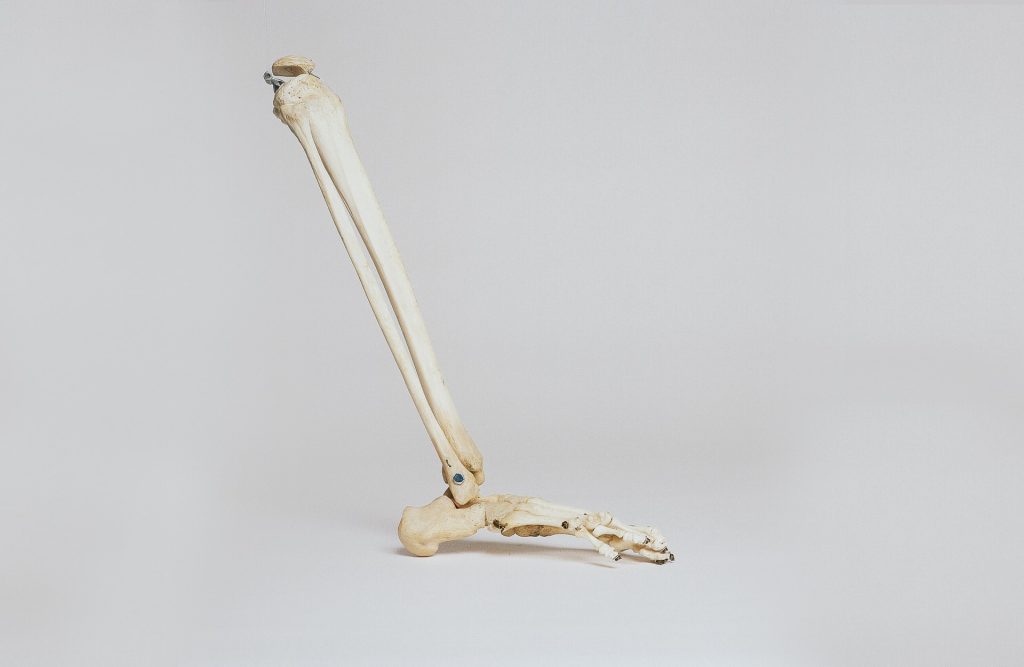
Photo by Nino Liverani on Unsplash

Researchers have discovered some new insights into how bone mass is maintained and how physical load stimulates bone growth.

Researchers from the National Cerebral and Cardiovascular Center Research Institute in Japan have revealed that the expression of the peptide osteocrin (OSTN) is influenced by load – decreasing when load is reduced, and increasing when it is added. Their study was published in Cell Reports.

Bones and skeletal muscles are strengthened by loads produced in exercise, preventing bone and muscle atrophy, and maintaining bone and muscle strength is important for maintaining physical activity. The growth of long bones, such as the femur and tibia, is a very complex process controlled by genetic and environmental factors, such as exercise and gravity.

Understanding bone loss would help retain bone density and strength in people who are unable to exercise due to immobility, the elderly, as well as astronauts in spaceflight.

Study lead author Haruko Watanabe-Takano said, “Not much is known about how mechanical force initiates biochemical signals to control bone growth. We investigated how load is related to the metabolic balance adjustment of bone maintenance.”

Bone mass and strength is maintained by the balanced activities of two types of cells – the bone-genearting osteoblasts, and the bone-dissolving osteoclasts – and is thought to be made in response to load demand. Specifically, the team investigated the expression of OSTN, a peptide produced by osteoblasts, in mice. OSTN is critical to the regulation of bone growth, as well as physical endurance.

The researchers found that OSTN was very strongly expressed in bones such as the tibia, radius, and ulna, and in regions experiencing load. They determined that OSTN was secreted by the periosteal osteoblasts in these bones. The periosteum is a fibrous membrane that covers nearly every bone in the body, except for the joints of the long bones. This tissue has a major role in bone growth and bone repair and has an impact on the blood supply of bone as well as skeletal muscle. Despite its importance, it has received little attention in the literature and in some ways is not well understood.

“We also found that OSTN expression decreased when load was reduced, and was increased by load stimulation,” says Watanabe-Takano. “Moreover, when we genetically engineered mice lacking OSTN, we found that they had reduced bone mass compared with normal mice and lacked load-induced recovery of bone mass after prolonged load reduction. Thus, we concluded that OSTN makes bone in response to stimulation by load, promoting bone formation.”

The team found that to create this effect, OSTN increases levels of another peptide, called C natriuretic peptide, which in turn drives bone-forming osteoblasts to multiply, mature, and become functional.

The findings have implications for treatments for bed-ridden patients and others at risk of bone loss, such as the elderly. Further studies will explore issues such as how periosteal cells detect load stimulation.

Source: News-Medical.Net

Journal information: Watanabe-Takano, H., et al. (2021) Mechanical load regulates bone growth via periosteal Osteocrin. Cell Reports. doi.org/10.1016/j.celrep.2021.109380.

First Olympic COVID Cases Among SA Soccer Team

Photo by Bryan Turner on Unsplash

Three members of the South African soccer team staying in the Olympic Village have tested positive for COVID just days before the Olympic opening ceremonies. They are also the first Olympic athletes who tested positive in the tightly-monitored athletes’ enclave along a Tokyo waterfront.

The South African team said in a July 17 statement that defender Thabiso Monyane, midfielder Kamohelo Mahlatsi, and Mario Masha, a video analyst on the coaching staff, had tested positive on the weekend. All South African players had tested negative when they departed for Tokyo on July 13. The entire South African football team is now under quarantine, raising doubts whether they’ll be cleared for their July 22 match against Japan.

Since the announcement, South African rugby Sevens coach Neil Powell as well as an unnamed member of the female US gymnastics team have also tested positive. Outside the athlete’s complex, positive results have been reported for South Korean IOC official Ryu Seung, an unnamed member of the Nigerian delegation, and an unnamed athlete.

Despite the country’s best efforts to contain the virus, COVID remains a big concern in Tokyo at the world’s largest sporting event, expected to draw about 11 000 athletes from 200 nations. The Tokyo Olympic Committee has introduced measures such as banning spectators at games, daily COVID screening for athletes, and limiting stays at the Olympic Village to seven days.

With Japan still under a state of emergency and the COVID delta variant spreading rapidly, many continue to appeal to the International Olympic Committee to cancel the games. But some experts said that at this point a cancellation would cost Japan $16.4 billion. It would also run the risk of being sued by the IOC for breach of contract.

Addressing the outbreaks in an effort to rally local support for the events, IOC president Thomas Bach said, “We are well aware of the skepticism a number of people have here in Japan,” he said. “My appeal to the Japanese people is to welcome the athletes for their competitions.”

Source: Quartz

Could Nutritional Supplements Play a Role in Fighting COVID?

Photo by Diana Polekhina on Unsplash

Researchers suggest that nutritional supplements such as Vitamin C do play a role in reinforcing the immune system against SARS-CoV-2.

An article in Advances in Experimental Medicine and Biology lays out the scientific rationale and possible benefits — as well as possible drawbacks — of several dietary supplements currently in clinical trials related to COVID-19 treatment. The article was written by Johns Hopkins Medicine gastroenterologist Gerard Mullin, MD, and colleagues.

Dr Mullin, associate professor of medicine at the Johns Hopkins University School of Medicine, and his colleagues shine a light on melatonin, vitamin C, vitamin D, zinc and several plant-based compounds, such as green tea and curcumin. For instance, the authors explained that vitamin C (ascorbic acid), “contributes to immune defense by supporting cell functions of both the innate and adaptive immune systems.”

The authors discuss in the journal article the mechanism of action of each of the supplements works, how each could benefit a patient with COVID.

Zinc is well tolerated, and well known for its antioxidant, anti-inflammatory, immunomodulatory, and antiviral activities, the latter possibly mediated by its ability to inhibit RNA virus replication, thereby protecting cells from viral infection, oxidative damage, and dysfunction. It has been shown “to inhibit coronavirus RNA replication.” They also noted that, when administered at symptom onset, zinc “can reduce the duration of symptoms from illness attributed to more innocuous coronavirus infections, such as the common cold.”

Finally, Dr Mullin and colleagues gave short summaries of the clinical trials underway to test each supplement’s effectiveness in fighting COVID.

Regarding Vitamin D, which has received a lot of attention with regard to COVID outcomes, Dr Mullin said that, “to date, there are abundant data associating low vitamin D status to higher vulnerability to COVID-19 and poor clinical outcomes.”

The authors however struck a note of caution in that “any benefit of dietary supplements against COVID-19 depends on results of randomised controlled trials” and peer-reviewed literature.

Source: John Hopkins Medicine

New Biomarker for Soft Tissue Infections

This illustration depicted a three-dimensional (3D), computer-generated image, of a group of Gram-positive, Streptococcus pneumoniae bacteria. The artistic recreation was based upon scanning electron microscopic (SEM) imagery. Photo by CDC on Unsplash
This illustration depicted a three-dimensional (3D), computer-generated image, of a group of Gram-positive, Streptococcus pneumoniae bacteria. The artistic recreation was based upon scanning electron microscopic (SEM) imagery. Image by CDC on Unsplash

Researchers have identified a new and very promising biomarker for bacterial soft tissue infections, which previously lacked one. 

In bacterial soft tissue infections, rapid diagnosis is crucial in reducing the risk of severe injury or amputation. Vague symptoms and a varied patient presentations increase the risk of misdiagnosis.The study, by  Researchers at Karolinska Institutet in Sweden  and other research institutions, and published in the Journal of Clinical Investigation, may have implications for both diagnosis and treatment.

Last author Anna Norrby-Teglund, Professor, Department of Medicine, Karolinska Institutet, said: “There are currently no tools for safe, rapid diagnosis in life-threatening soft tissue infections. Our findings are consequently very interesting as the biomarkers identified are possible candidates for improved diagnostics. The results are also relevant for individualised treatment in the future.”

Necrotising soft tissue infections (NSTI) are bacterial infections which are characterised by rapid tissue degradation. Such infections, often caused by streptococci, while relatively uncommon, are extremely serious. In most cases they necessitate intensive care and can quickly become life-threatening.

Extensive surgery, intravenous antibiotics are often required to prevent the infection from spreading, and amputation may be required in extreme situations. Many patients also develop sepsis, which further complicates the course of the condition.

Early, correct diagnosis is crucial to save lives and avoid amputation, but this is complicated by factors such as vague symptoms including vomiting, fever and severe pain, as well as the heterogeneous group of patients. Despite recommendations for surgical evaluation in suspected NSTI, there is a considerable risk of misdiagnosis.

Currently, various laboratory tests, including white blood cell counts, are used as diagnostic tools, but suffer from low sensitivity. NSTI-specific biomarkers are therefore needed. The condition is classified into four types depending on the infecting organism.

Researchers at Karolinska Institutet, Haukeland University Hospital, Norway, and Copenhagen University Hospital, Denmark, have now been able to identify biomarkers specific to different patient groups with soft tissue infections.

Using machine learning, the researchers analysed 36 soluble factors in blood plasma from the 311 NSTI patients included in the international INFECT study. Control groups included patients with suspected NSTI and sepsis, respectively.

The analyses showed a new biomarker that accurately identifies patients with tissue necrosis.

“The new biomarker, thrombomodulin, proved to be superior to the laboratory parameters used clinically today. The analyses also identified biomarkers for patients with soft tissue infection caused by different types of bacteria, as well as patients who developed septic shock,” said first author Laura Palma Medina, researcher at the Department of Medicine, Karolinska Institutet (Huddinge).

Source: Karolinska Institutet

Journal information: Palma Medina, L.M., et al. (2021) Discriminatory plasma biomarkers predict specific clinical phenotypes of necrotizing soft-tissue infections. Journal of Clinical Investigation. doi.org/10.1172/JCI149523.

Vaccination Setbacks and Medical Supply Shortages from Riots

Photo by Jilbert Ebrahimi on Unsplash

Speaking to Bheksisa, deputy director-general at the health department Dr Nicholas Crisp described the vaccination programme’s setbacks and medical supply shortages resulting from the recent violence and looting.

The vaccination programme has been set back due to damage at vaccination sites such as pharmacies, and others such as clinics being unable to operate except for some in KwaZulu Natal’s outer rural regions. The programme is unlikely to reach its 250 000 vaccinations per day, he said, rather, 200 000 is a more likely goal. Currently, “going flat out”, the programme is vaccinating 140 000 people per day elsewhere in the country.

All of the available vaccines will be used including those Johnson & Johnson vaccines left over from innoculating teachers and other critical workers.

Those receiving Pfizer vaccines needn’t be too concerned about missing their second dose appointment, as research shows that the immunity conferred is as strong or even stronger at 42 days as compared to the standard 21 days.

However, he said that “the biggest disaster with the looting of medicine isn’t vaccines; it’s the looting of chronic medicine. For close to half of patients in KwaZulu-Natal, it’s gone. So much of the insulin for diabetes patients, the morphine, the antiretroviral drugs for HIV patients, are gone.”

The other challenge, he said, is getting oxygen to COVID patients via blocked roads, and delivering food supplies to hospitals, warning that there are patients who are without food. 

Afrox has confirmed that its facilities in Durban have not been affected by rioting, and their deliveries of medical oxygen continue though often under police escort.

Source: Bheksisa

High-dose Buprenorphine in ED Could Improve Opioid Abuse Outcomes

Photo by Mat Napo on Unsplash

High-dose buprenorphine therapy, provided under emergency department care, is safe and well tolerated in people with opioid use disorder experiencing opioid withdrawal symptoms, according to a study supported by the National Institutes of Health’s National Institute on Drug Abuse (NIDA).

Lower doses of buprenorphine, a medication approved by the US Food and Drug Administration to treat opioid use disorder, are the current standard of care. Higher doses, however, could extend the period of withdrawal relief for people after being discharged from the emergency department that could help them better seek care. 

“Emergency departments are at the front lines of treating people with opioid use disorder and helping them overcome barriers to recovery such as withdrawal,” said Nora D Volkow, MD, director of NIDA. “Providing buprenorphine in emergency departments presents an opportunity to expand access to treatment, especially for underserved populations, by supplementing urgent care with a bridge to outpatient services that may ultimately improve long-term outcomes.”

Presently, some emergency departments already administer higher buprenorphine doses to treat withdrawal and opioid use disorder. They do this as a response to the growing potency in illicit opioid drug supplies and delays in access to follow-up care, but this practice has not been evaluated previously.

Researchers used a retrospective chart review to analyse data from electronic health records documenting 579 emergency department visits at the Alameda Health System Highland Hospital in California, made by 391 adults with opioid use disorder in 2018. Many patients were from vulnerable populations, with 23% experiencing homelessness and 41% having a psychiatric disorder.

In 63% of cases, clinicians administered more than the standard upper limit of 12 mg of sublingual buprenorphine during emergency department induction, and in 23% of cases, patients were given 28 mg or more. Higher doses of buprenorphine were seen to be safe and tolerable, and there were no reports of respiratory problems or drowsiness among those given the higher doses. The few serious adverse events that occurred were determined to be unrelated to high-dose buprenorphine therapy.

Studies have shown that initiating buprenorphine in emergency departments improves engagement in treatment and is cost effective, but barriers to the medication’s use in the US persist, with restrictions on what training is required, how much can be administered and for how long. Recent changes to prescribing guidelines by the US Department of Health and Human Services now let some clinicians treating up to 30 patients to prescribe buprenorphine without the previous training and services criteria.

“Once discharged, many people have difficulty linking to follow-up medical care,” explained study leader Andrew A Herring, MD, of Highland Hospital Department of Emergency Medicine. “Adjusting the timing and dosage of buprenorphine in the emergency department, along with resources and counseling aimed at facilitating the transition to outpatient services, may provide the momentum needed to access continuing care.”

“This study enhances the evidence we know about emergency-department buprenorphine induction, and could be a gamechanger, particularly for vulnerable populations who would likely benefit from a rapid induction at the time of the visit,” said study author Gail D’Onofrio, MD, of Yale University. Dr D’Onofrio published the original studies on emergency department-initiated buprenorphine, as well as recent consensus recommendations on the emergency department treatment of opioid use disorder.
The researchers noted that their findings need confirmation in other emergency departments. Nevertheless, this study suggests that with proper support and training, emergency medicine providers may safely and effectively initiate high-dose buprenorphine therapy.

Source: NIH

Journal information: JAMA Network Open (2021). DOI: 10.1001/jamanetworkopen.2021.17128

Self-inflicted Firearm Injuries Among Rural Youth Three Times Urban Rates

Photo by Annie Spratt on Unsplash

Emergency Department visits by youth for self-inflicted firearm injuries were three times more common in rural areas compared to urban ones, a national study has found.
The study, published in the Journal of Pediatrics found that Emergency Department (ED) visits by youth for self-harm were nearly 40 percent higher in rural areas compared to urban settings. Youth from rural areas presenting to the ED for suicidal ideation or self-harm also were more likely to need to be transferred to another hospital for care, which underscores the insufficient mental health resources in rural hospitals.

“Our study used pre-pandemic data, and we know that increased attention to youth mental health is even more pressing now everywhere, but especially in rural settings to prevent self-harm in youth,” said lead author Jennifer Hoffmann, MD, pediatric emergency medicine physician at Ann & Robert H. Lurie Children’s Hospital of Chicago and Assistant Professor of Pediatrics at Northwestern University Feinberg School of Medicine. “We need universal screening for suicidal ideation for all children and adolescents age 10 and up who present in the ED to identify youth at risk and intervene before tragedy occurs.”

The study drew on national data on suicidal ideation or self-harm in youth (ages 5-19 years) from a sample of EDs across the country, including those in general hospitals and children’s hospitals. The researchers extrapolated the results to arrive at national estimates.

Dr Hoffmann explained that a number of factors contribute to higher suicide rates and self-harm in rural youth. One of these is access to mental healthcare, which she said is a huge challenge. A lack of paediatric mental health professionals in rural areas is another factor, forcing patients to travel long distances for help. In addition, poor insurance coverage resulting from lower family income and unemployment. Small towns also have anonymity concerns, possibly delaying seeking care until a crisis brings the child to the ED. Firearm ownership is higher in rural firearms, so increased access to firearms may account for the high degree of disparity in self-inflicted firearm injuries.

“We need to improve mental health training for ED providers, allocate more resources and implement policies in rural hospitals on managing young patients who present with suicidal ideation or self-harm,” said Dr Hoffmann. “More widespread use of tele-psychiatry also might help prevent unnecessary transfers to other hospitals. But even more importantly, we need to train primary care providers to help diagnose and treat mental health issues earlier, so we can prevent self-inflicted injuries and death.”

Source: Ann & Robert H. Lurie Children’s Hospital of Chicago

A New Snake Venom ‘Super Glue’ For Wound Closures

Photo by David Clode on Unsplash

A novel snake venom ‘super glue’ has been developed, that can stop life-threatening bleeding in under a minute.

Over the past 20 years, bioengineer Kibret Mequanint, a professor at the University, has developed an array of biomaterials-based medical devices and therapeutic technologies – some of which are either now licensed to medical companies or are in the advanced stage of preclinical testing.

This latest work focuses on a blood clotting enzyme called reptilase or batroxobin, which is found in the venom of lancehead snakes (Bothrops atrox), which are amongst the most venomous snakes in South America.

Prof Mequanint and the international research team designed a body tissue adhesive that takes advantage of the clotting property of this enzyme, incorporating it into a modified gelatin that can be packaged into a small, handy tube for easy application.

“During trauma, injury and emergency bleeding, this ‘super glue’ can be applied by simply squeezing the tube and shining a visible light, such as a laser pointer, over it for a few seconds. Even a smartphone flashlight will do the job,” said Prof Mequanint.

Compared to the industry gold standard for clinical and field surgeons, clinical fibrin glue, the new tissue sealant has 10 times the adhesive strength to resist detachment or washout from bleeding. The blood clotting time is also much shorter, halving the 90 seconds for fibrin glue to 45 seconds for this new adhesive.

This novel biotechnology could reduce blood loss and save more lives. Tests were performed in models of major bleeding, such as deep skin cuts, ruptured aortae, and severely injured livers.

“We envision that this tissue ‘super glue’ will be used in saving lives on the battlefield, or other accidental traumas like car crashes,” said Prof Mequanint. “The applicator easily fits in first aid kits too.”

Besides its trauma application, the new snake venom ‘super glue’ can be used in surgical wound closures.

The study was published in the journal Science Advances..

“The next phase of study which is underway is to translate the tissue ‘super glue’ discovery to the clinic,” said Prof Mequanint.

Source: University of Western Ontario

Journal information: Guo, Y., et al. (2021) Snake extract–laden hemostatic bioadhesive gel cross-linked by visible light. Science Advances.doi.org/10.1126/sciadv.abf9635.

Manufacturer Shuts Down its Robot Mid-surgery

Photo by Piron Guillaume on Unsplash

One of a series of lawsuits against the company that makes the da Vinci surgical robot alleges that the company shut down its robot mid-surgery, forcing the surgeons to switch to an open surgery.

Several hospitals have launched a legal battle against the company Intuitive Surgical, the manufacturer of the da Vinci surgical robot. They allege that the company’s monopoly position forces hospitals to buy its maintenance services and spare parts at inflated prices even though cheaper alternatives are available.

One hospital alleges that, after it said that it was considering a service contract with a third party, Intuitive Surgical remotely shut down its surgical robot “in the middle of a procedure”, forcing the surgeon “to convert the procedure to open surgery with the patient on the operating table”.

Separately, malfunctions of the instrument arms have been reported, requiring additional, sometimes larger, incisions in patients in order to complete the surgical procedure manually. Use of the robotic technology also requires longer operating and anesthesia times as well as several complications occurring from the use of the da Vinci Surgical System itself.

Intuitive Surgical sells its da Vinci surgical robot to hospitals for anywhere from $500,000 to $2.5 million each. However, a majority of Intuitive Surgical’s $4 billion of annual revenue comes from the parts and services that are required to keep the robots running. Its executives are among the most highly paid in the healthcare industry.
Franciscan Health, Valley Medical Center and Kaleida Health filed class-action lawsuits. These hospitals that claim Intuitive Surgical has a monopoly on minimally invasive surgical robots, giving the company a “near-stranglehold” on the parts and services market for the robots.

One lawsuit alleges hospitals cannot have their da Vinci robots serviced by third parties because Intuitive Surgical forces hospitals to sign “multi-year, exclusive servicing agreements” at rates that are much higher than other vendors’. Hospitals also allege they are coerced into buying new, expensive instruments and attachments for their robots (called EndoWrists) after 10 uses, even if the parts are in good working condition. A limited extension of these uses has been launched by the company. The lawsuit alleges that Intuitive Surgical engineers have threatened hospitals with turning the machines into “paperweights” should hospitals seek outside vendors for parts or repairs.

While Intuitive Surgical has faced antitrust lawsuits from third-party repair and service companies since 2019, these hospital class-action lawsuits are new.

In an email, an Intuitive Surgical spokesperson told MedPage Today that the medical robotics company “does not have the ability to remotely shut down a da Vinci system during a surgical procedure underway at hospital.”

“There is risk associated with deviating from the validated processes cleared by regulatory authorities,” the spokesperson stated. “Continued use beyond an instrument’s determined useful life may reduce safety, precision, and dexterity. Further, third parties may use incompatible or unvalidated parts or processes in servicing or repairing the systems, which could cause damage and put patient safety at risk.”

Source: Axios

Liquid Metal Sensors Recreate a Sense of Touch

Photo by ThisisEngineering RAEng on Unsplash

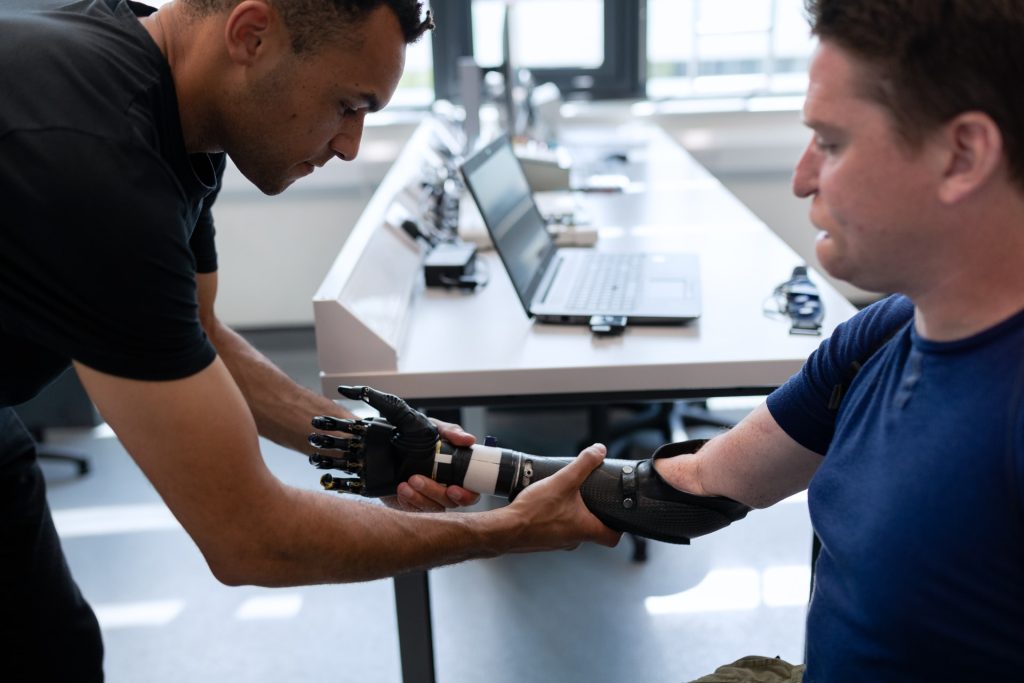
To recreate a sense of ‘touch’, researchers have incorporated stretchable tactile sensors using liquid metal on the fingertips of a prosthetic hand. 

When manipulating an object, humans are heavily reliant on sensation in their fingertips, each of which has over 3000 pressure-sensitive touch receptors. While there are many high-tech, dexterous prosthetics available today, they all lack the sensation of ‘touch‘, resulting in objects inadvertently being dropped or crushed by a prosthetic hand.
To make a prosthetic hand interface that feels more natural and intuitive, researchers from Florida Atlantic University’s College of Engineering and Computer Science and collaborators incorporated stretchable tactile sensors using liquid metal on a prosthetic hand’s fingertips. Encapsulated within silicone-based elastomers, this technology provides key advantages over traditional sensors, including high conductivity, compliance, flexibility and stretchability.

For the study, published in the journal Sensors, researchers used individual fingertips on the prosthesis to distinguish between different speeds of a sliding motion along different textured surfaces. The four different textures had one variation: the distance between the ridges. To detect the textures and speeds, researchers trained four machine learning algorithms. For each of the ten surfaces, 20 trials were performed to test the ability of the machine learning algorithms to distinguish between the different textured surfaces.

Results showed that integrating tactile information from the fingertip sensors simultaneously distinguished between complex, multi-textured surfaces – demonstrating a new form of hierarchical intelligence. The algorithms could accurately distinguish between the fingertip speeds. This new technology could improve prosthetic hand control and provide haptic feedback for amputees to restore a sense of touch.

“Significant research has been done on tactile sensors for artificial hands, but there is still a need for advances in lightweight, low-cost, robust multimodal tactile sensors,” said senior author Erik Engeberg, PhD, an associate professor in the Department of Ocean and Mechanical Engineering. “The tactile information from all the individual fingertips in our study provided the foundation for a higher hand-level of perception enabling the distinction between ten complex, multi-textured surfaces that would not have been possible using purely local information from an individual fingertip. We believe that these tactile details could be useful in the future to afford a more realistic experience for prosthetic hand users through an advanced haptic display, which could enrich the amputee-prosthesis interface and prevent amputees from abandoning their prosthetic hand.”

Researchers compared four different machine learning algorithms for their successful classification capabilities. The time-frequency features of the liquid metal sensors were extracted to train and test the machine learning algorithms. Of these, a neural network algorithm generally performed the best at the speed and texture detection with a single finger and had a 99.2 percent accuracy to distinguish between ten different multi-textured surfaces using four liquid metal sensors from four fingers simultaneously.

“The loss of an upper limb can be a daunting challenge for an individual who is trying to seamlessly engage in regular activities,” said Stella Batalama, Ph.D., dean, College of Engineering and Computer Science. “Although advances in prosthetic limbs have been beneficial and allow amputees to better perform their daily duties, they do not provide them with sensory information such as touch. They also don’t enable them to control the prosthetic limb naturally with their minds. With this latest technology from our research team, we are one step closer to providing people all over the world with a more natural prosthetic device that can ‘feel’ and respond to its environment.”

Source: Florida Atlantic University

Journal information: Abd, M.A., et al. (2021) Hierarchical Tactile Sensation Integration from Prosthetic Fingertips Enables Multi-Texture Surface Recognition. Sensors. doi.org/10.3390/s21134324.