

Tag: rabies

Novel Research Reveals the Active Role that Skin Cells Play in Rabies Infection

New findings identify keratinocytes as replication hubs and immune responders, contributing to the risk of rabies infection from superficial scratches or minor bites

Skin cell (keratinocyte)
This normal human skin cell was treated with a growth factor that triggered the formation of specialised protein structures that enable the cell to move. We depend on cell movement for such basic functions as wound healing and launching an immune response. Credit: Torsten Wittmann, University of California, San Francisco

While it was previously thought that keratinocytes (skin cells) were only passive conductors that allow the rabies virus to pass through, novel research reveals that these cells play a much more active role. The findings of a new study in the Journal of Investigative Dermatology (JID), published by Elsevier, provide direct evidence that keratinocytes can support viral replication and transmit the rabies virus to neurons. The investigators offer a mechanistic explanation for how superficial skin exposures from scratches or minor bites by dogs and bats can lead to neuroinvasion, contributing to the risk of infection.

Rabies is a fatal zoonotic infection caused by rabies virus (RABV), responsible for at least 59 000 human deaths per year. The virus is transmitted through the saliva of infected animals. While most cases are caused by dog bites, superficial exposures such as bat bites or scratches can also lead to infection, although the underlying mechanisms remain poorly understood.

“In our previous work, we discovered that keratinocytes – cells that form the epidermis, the outermost layer of the skin – were infected at the site of entry of the rabies virus, both in natural and experimental infections. This was unexpected, as rabies pathogenesis has traditionally focused on muscle cells and motor neurons,” explains lead investigator Corine H. Geurts van Kessel, MD, PhD, Department of Viroscience, Erasmus Medical Centre, Rotterdam, The Netherlands. “Given the strategic position of keratinocytes at the skin barrier and their close proximity to sensory nerve endings, we wanted to understand whether these cells are simply bystanders or active participants in early rabies infection and neuroinvasion.”

The investigators used primary human keratinocyte cultures to investigate susceptibility to rabies virus infection and characterise the resulting antiviral immune responses. Three viral strains were tested: a vaccine strain and two wild-type (“street”) strains derived from fatal human cases associated with bat and dog exposures. The dog-associated strain caused only minimal infection and limited keratinocyte immune activation, whereas the other two strains infected keratinocytes more readily and triggered a pronounced antiviral response.

To simulate the close contact between keratinocytes and intra-epidermal nerve endings, a co-culture model of keratinocytes and neurons was developed. In this model, virus produced in infected keratinocytes was successfully transmitted to adjacent neurons, giving the virus a direct route into the nervous system. Once the virus has established infection in the central nervous system, it is almost inevitably fatal.

“Our study demonstrates that the skin might play a more important role in rabies infection than previously recognised. We were particularly surprised by the strong antiviral response mounted by keratinocytes to the bat-related rabies virus strain,“ notes co-investigator Keshia Kroh, PhD candidate, Department of Viroscience, Erasmus Medical Centre, Rotterdam, The Netherlands. “Wild-type rabies viruses are known for their immunosuppressive capacities, and we expected an immune evasive effect in keratinocytes. Instead, we observed the opposite. This raises new questions about how keratinocyte-derived immune responses influence overall disease progression in rabies and other viral infections of the skin.”

This in vitro co-culture model is the first to study rabies virus entry to the nervous system across a cell barrier. Future in-depth studies should be performed to provide mechanistic insight into the differential strain tropism, the interactions of infected keratinocytes with immune cells, and the mechanisms of neuroinvasion from superficial skin contact.

According to the World Health Organization (WHO), any transdermal exposure (including small scratches or abrasions) should be assessed as a potential rabies risk and managed appropriately based on exposure category and clinical context.

“Our study provides a biological rationale for these recommendations,” says co-investigator Carmen W.E. Embregts, PhD, Department of Viroscience, Erasmus Medical Centre, Rotterdam, The Netherlands. “At the same time, it is important to emphasise that the risk of rabies virus infection via superficial exposures depends on multiple factors, including the nature of the exposure and the epidemiological setting. Rather than causing alarm, our findings support informed decision-making. Awareness that superficial skin exposures can represent a route of neuroinvasion helps ensure that potential risks are recognised and evaluated appropriately, while treatment decisions remain guided by established public health criteria.”

“The data in this study support the increasingly recognised concept that cells in the skin are in snug communication with the nervous system. That a scratch or bite is needed for the transmission of rabies is further evidence of the importance of an intact skin barrier in health,” observes JID Associate Editor Ethan Lerner, MD, PhD, Associate Professor of Dermatology, Harvard Medical School, and Massachusetts General Hospital, Boston, MA, USA.

Source: Elsevier
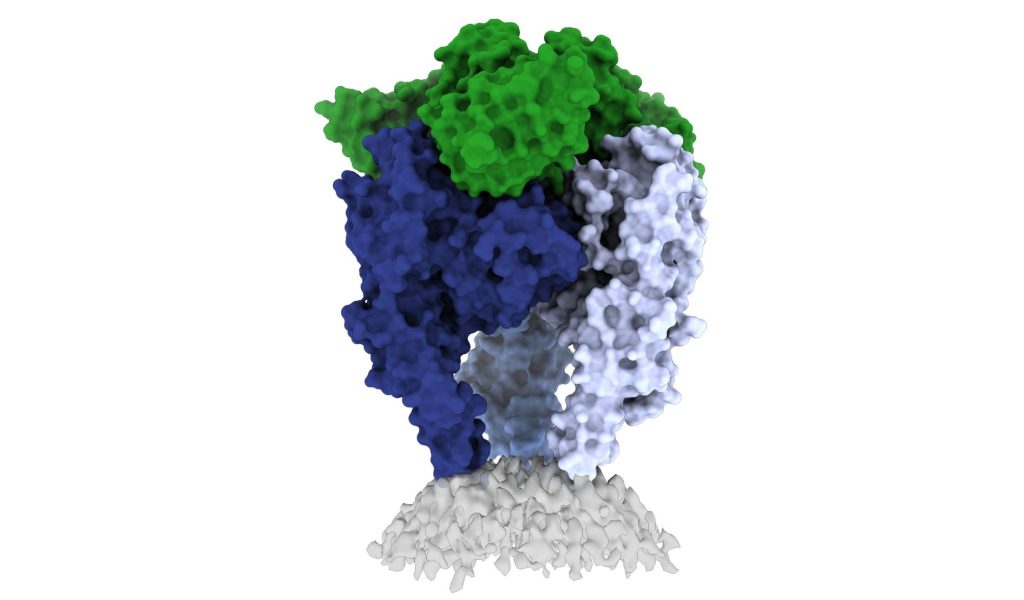
A Crystal Clear Look at Rabies Opens up New Vaccines

Scientists from La Jolla Institute for Immunology and the Institut Pasteur have shed light on the structure of the rabies virus glycoprotein, seen here. Credit: Heather Callaway, Ph.D., LJI

In a new study, researchers from La Jolla Institute have unveiled one of the first high-resolution looks at the rabies virus glycoprotein in its vulnerable ‘trimeric’ form. These new images, published in Science Advances, may open up a new vaccine for the deadly virus.

The CDC estimates that 59 000 people die from rabies virus every year, with 40% of those bitten by rabid animals being under 15. Some victims, especially kids, don’t realise they’ve been exposed until it is too late. The intense rabies treatment regimen is not widely available and the average $3800 is out of the reach of less well-off families.

Rabies vaccines, rather than treatments, are much more affordable and easier to administer. But according to Professor Erica Ollmann Saphire, PhD, of the La Jolla Institute, lead researcher of the new study, those vaccines also come with a massive downside.

“Rabies vaccines don’t provide lifelong protection. You have to get your pets boosted every year to three years,” she said. “Right now, rabies vaccines for humans and domestic animals are made from killed virus. But this inactivation process can cause the molecules to become misshapen – so these vaccines aren’t showing the right form to the immune system. If we made a better shaped, better structured vaccine, would immunity last longer?”

“The rabies glycoprotein is the only protein that rabies expresses on its surface, which means it is going to be the major target of neutralising antibodies during an infection,” said LJI Postdoctoral Fellow Heather Callaway, PhD, the study’s first author.

“Rabies is the most lethal virus we know. It is so much a part of our history – we’ve lived with its spectre for hundreds of years,” added Prof Saphire. “Yet scientists have never observed the organisation of its surface molecule. It is important to understand that structure to make more effective vaccines and treatments – and to understand how rabies and other viruses like it enter cells.”

Shapeshifting Rabies virus evades antibodies

Why rabies vaccines don’t provide long-term protection is still unclear, but they do know that its shape-shifting proteins are a problem.

The rabies glycoprotein has sequences that unfold and flip upward when needed, like a Swiss Army knife. The glycoprotein can shift back and forth between pre-fusion (before fusing with a host cell) and post-fusion forms. It can also come apart, changing from a trimer structure (where three copies come together in a bundle) to a monomer (one copy by itself).

This shapeshifting can make rabies invisible to human antibodies, which are built to recognise a single site on a protein. They cannot follow along when a protein transforms to hide or move those sites.

The new study gives scientists a critical picture of the correct glycoprotein form to target for antibody protection.

Capturing the glycoprotein at last

Over the course of three years, Callaway worked to stabilise and freeze the rabies glycoprotein in its pre-fusion form.

Callaway paired the glycoprotein with a human antibody, which helped her pinpoint one site where the viral structure is vulnerable to antibody attacks. The researchers then captured a 3D image of the glycoprotein using cutting-edge cryo-electron microscope equipment at LJI. 

The new 3D structure highlights several key features researchers hadn’t seen before. Importantly, the structure shows the fusion peptides, the way they appear in real life. These two important sequences link the bottom of the glycoprotein to the viral membrane, but project into the target cell during infection. Getting stable image of these sequences is challenging: other rabies researchers have had to cut them off to try to get images of the glycoprotein.

Dr Callaway solved this problem by capturing the rabies glycoprotein in detergent molecules. “That let us see how the fusion sequences are attached before they snap upward during infection,” said Prof Saphire.

Now that scientists have a clear view of this viral structure, they can better design vaccines to create antibodies with a better picture of the targt.

“Instead of being exposed to four-plus different protein shapes, your immune system should really just see one – the right one,” said Dr Callaway. “This could lead to a better vaccine.”

Preventing a family of viruses

More images are needed of rabies virus and its relatives together with neutralising antibodies, and could reveal common antibody targets for lyssaviruses, which can also infect humans and animals. According to Dr Callaway, scientists are working on solving several of these structures, which could reveal antibody targets that lyssaviruses have in common.

“Because we didn’t have these structures of the rabies virus in this conformational state before, it’s been hard to design a broad-spectrum vaccine,” Dr Callaway said.

Source: La Jolla Institute for Immunology

Nelson Mandela Bay Area Hit by Rabies Outbreak

Source: Pexels CC0

An outbreak of rabies has hit the Nelson Mandela Bay metro, with a nine-year-old Gqeberha boy being its first victim so far.

The Nelson Mandela Bay Metropolitan Municipality (NMBMM) issued a warning calling on residents to be vigilant and to take their domestic pets for rabies vaccinations, following the death of a boy last weekend who was bitten by a dog. Health-e News received confirmation from NMBMM that the nine-year-old boy died at the Dora Nginza Hospital on Friday last week.

“We have learnt with sadness of the passing of the boy from Motherwell, who died due to rabies. We have the family in our prayers,” said Acting Mayor Luxolo Namette.

The municipality’s health services directorate deputy director Dr Patrick Nodwele said vaccinating domestic pets can be the most effective way of preventing rabies transmission to humans.

“The boy passed at Dora Nginza Hospital where it was established that he had been bitten by a dog. Our health officials, together with the Department of Agrarian Reform, have been busy these last couple months vaccinating dogs and cats in an effort to curb the virus as we know that rabies is a vaccine-preventable disease and post-bite vaccinations save lives,” Dr Nodwele told Health-e News.

Rabies causes viral encephalitis which kills up to 70 000 people a year around the world. Infected animal saliva transmits viral encephalitis to humans. Rabies is one of the oldest known diseases in history with cases dating back to 4000 years ago. For most of human history, a bite from a rabid animal was uniformly fatal. In the past, people were so scared of rabies that after being bitten by a potentially rabid animal, many would commit suicide. 

Rabies cases rose significantly over August and September, he added, which is why they are calling on residents to take their domestic pets for vaccinations. The outbreak is spread throughout the entire Nelson Mandela metro region and Nodwele said that 61 rabies specimens submitted for testing all came back positive.

So far 5254 dogs and 438 cats have been vaccinated across the metro. The municipality from time to time issues a domestic pets vaccination schedule, and is calling on residents to observe the schedule so that they bring their animals for vaccination. A vaccination and community education programme is also being run.

Dr Nodwele said the incubation period of rabies is two to three months, though with factors such as bite location and viral load, it can also vary from one week to a year.

“Initial symptoms include a fever and pain, and unusual or unexplained tingling, pricking or burning sensations at the wound site. As the virus spreads through the body to the central nervous system, progressive and fatal inflammation of the brain and spinal cord develops,” Dr Nodwele explained.

Source: Health-e News