Tag: healthcare workers

A Check-up on Western Cape Healthcare
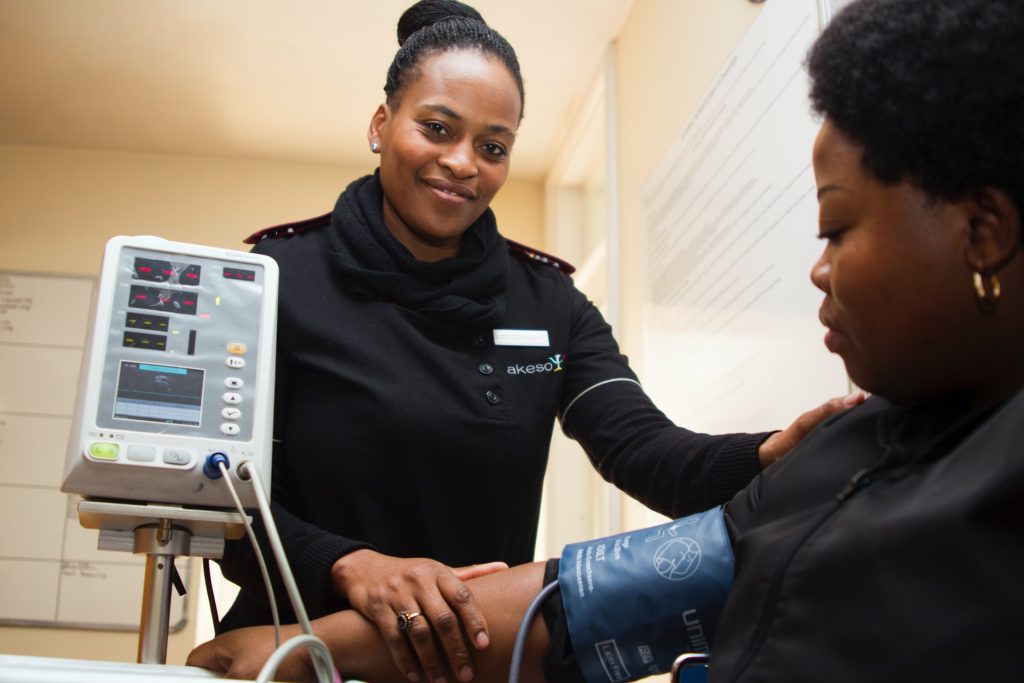
Image by Hush Naidoo from Unsplash

A report by IOL revealed mixed reviews by experts and patients for the Western Cape’s healthcare system, which, while providing mostly excellent service in certain hospitals, is seen to be especially lacking in rural areas, infrastructure and handling of patients.

Award-winning service

Along with receiving the highest marks for efficiency, Western Cape healthcare has earned recognition such as through the Batho Pele Excellence Awards, with a silver medal going to Dr Barry Smith who worked in frontline COVID hospitals in Cape Town, where as medical manager he organised efforts to deal with devastating COVID waves.

A total of R29.4 billion has been allocated to the province’s 2022–2023 budget to deal with a serious backlog of unmet TB, HIV and other medical care put off during the COVID waves, along with a new surge in mental health issues.

A critical view

The ANC’s Rachel Windvogel said that while Western Cape is said have the country’s ‘most efficient’ health-care system, it is deteriorating and “nearing collapse”.

Dilapidated infrastructure in hospitals such as Groote Schuur and Tygerberg Hospitals is a challenged, with “sections that are cordoned off and not functioning.”

The knock-on service pressure across all district hospitals has resulted in patients having to sleep in chairs or on the floor.

Windvogel said that the Khayelitsha District Hospital is a prime example, with R150 million allocated for upgrades by the hospital but with no provincial government funding forthcoming.

She said that the provincial government’s boasts about a leading healthcare system does not match the situation. This can be seen in rural communities where people wait days for an ambulance transfer to city hospitals, she said, and doctors only visiting rural clinics to issue prescriptions without examining patients.

From the wards

Speaking to IOL, on the condition of anonymity, a nurse with over 15 years of experience currently working at a local government hospital said that while they try their best to deliver a service to residents, the sector has so much lacking.

The quality of new nurses has been steadily declining, she said. “As nurses, we are inundated with work but we manage, however, as an experienced nurse seeing how the ‘latest intakes’ have no feeling towards patients is sad.”

There have been deaths from “incorrect triages” as well as problems with nurses not knowing how to speak to the community, resulting in “pissing off the very community we took an oath to serve,” she said.

While she believes nursing is her calling, she is considering moving over to the private sector, driven by a high workload, crime, poor pay and lack of experienced assistance.

A patient’s experience

Candice van der Rheede, director of the Western Cape Missing Persons Unit (WCMPU) has been through a string of hospitals since 2020 following a collapsed lung, and her experiences reflected problems with staffing and gender segregation.

She first stayed at Mitchells Plain District Hospital, and her ward was “spotless” with security “always there”. “If help was needed and you buzzed for help, nurses came immediately,” she told IOL.

The thoracic ward at Groote Schuur Hospital was also praiseworthy – except that her ward was in the middle of the men’s section.

“One night I woke up and saw one of the men standing and watching us ladies with no nurses on the inside,” Van der Rheede said.

However, entering the ICU ward after theatre, her experience took a turn for the worse, being roughly handled when check for bed sores, despite her having a large surgical wound.

In November, Van der Rheede had to overnight in the trauma section at Tygerberg Hospital due to a check-up. While she was generally satisified with the hospital and its staff, there was a major sticking point for her – in the trauma section, “we were men and women sleeping in one room which I had a big problem with. Using one toilet. I could not sleep that night.”

While she has her reservations about the state of hospitals in the province, Van der Rheede told IOL she commended the Mitchells Plain District Hospital for its impeccable service, and the Symphony Clinic in Delft which she currently attends is of the highest standard of service and cleanliness.

Source: IOL

Exodus of Healthcare Professionals as NHI Introduction Nears

Stethoscope
Photo by Hush Naidoo on Unsplash

The prospect of an exodus of doctors and other key healthcare personnel from South Africa ahead of the planned introduction of the National Health Insurance (NHI) scheme has prompted concern among healthcare stakeholders.

In addition to the loss of skilled healthcare professionals, there is also a growing concern that the country could lose valuable training skills as professionals look to leave.

Thirteen years on from its inception, the NHI continues to suffer from the same criticisms. A May 2021 research paper [PDF} found that South Africa’s per capita spending on public healthcare was higher than even wealthier developing countries, yet it ranked near the bottom for measures of healthcare outcomes.

An informal poll on the QuickNews website in March showed that 81% of respondents had at least considered emigrating due to the planned introduction of NHI.

Professional associations are also warning of an exodus with the start of NHI. The South African Medical Association (SAMA) has said that its members cannot support the NHI in its current form.

This stems from a deep-rooted lack of confidence in the capacity of government and its financial ability to ensure the service is successful, the association said. Other concerns that members have raised include only providing emergency treatment to refugees and illegal immigrants, as well as their children.

SAMA conducted a survey which showed that up to 38% of its members plan to emigrate from South Africa due to the planned introduction of the NHI.

6% of members said that they plan to emigrate for other reasons, while 17% of doctors said that they were unsure about leaving the country. Many doctors have said that the aim should rather be to get the public sector to a state where it can appeal to private sector patients.

They added that there should be engagement with private doctors to provide additional services funded by the state. The group also called for a proper pilot of the proposed systems and payment mechanisms.

The Department of Health noted these concerns in a parliamentary briefing this week, noting that skilled personnel will be needed for the NHI to work. It added that this was not limited to healthcare professionals, but that general skilled human resources will be central to the health system going forward.

It added that the complex interactions between training, registration compliance and employment can all be greatly improved.

“This is a big ship that will need to be turned, but the framework is in place,” said acting director-general of health Dr Nicholas Crisp. “We have heard the threats that there will be an exodus of personnel if the NHI is implemented and a brain drain.”

The department is actively responding to this, he said, with a framework in place to ensure the country retains the necessary skills. A ‘Human Resources for Health strategy’ before was already under development before the start of the COVID pandemic, he added.

This framework sets out a multi-work implementation plan, but it requires money and investment in the health workforce to ensure the country is ready for universal health coverage, Dr Crisp said.

“Every health professional has a place in the National Health Insurance – whether you choose to work in the public portion of the delivery system or the private portion of that delivery system.

“We do not think there needs to be a threat on anybody, or their viability, or their role to be played.”

Source: BusinessTech

Up to 180 000 Health Workers may Have Died from COVID

Photo by Mulyadi on Unsplash

Between 80 000 and 180 000 health and care workers (HCWs) are estimated to have died from COVID between January 2020 and May 2021, the World Health Organization (WHO) said on Thursday.

That grim estimate features in a new WHO working paper based on the 3.45 million coronavirus-related deaths reported globally to the UN health agency up to May. The WHO warns it may well be an underestimate of 60%. To highlight the need for better protection, WHO was joined by global partners working to end the pandemic, to issue an urgent call for concrete action on behalf of workers in the sector.  

WHO Director-General, Dr Tedros Adhanom Ghebreyesus, said that “the backbone of every health system is its workforce.”

“COVID-19 is a powerful demonstration of just how much we rely on these men and women, and how vulnerable we all are when the people who protect our health are themselves unprotected”, he added.  

WHO and partners said that besides the deaths, more and more HCWs are suffering from burnout, stress, anxiety and fatigue. They are urging  equitable access to vaccines so that HCWs are prioritised.  

By the end of last month, on average, two in five HCWs were fully vaccinated, but with considerable differences across regions.

“In Africa, less than one in ten health workers have been fully vaccinated. Meanwhile, in most high-income countries, more than 80% of health workers are fully vaccinated”, Dr Ghebreyesus pointed out.  

For him, over 10 months since the approval of the first vaccines, “the fact that millions of health workers still haven’t been vaccinated is an indictment on the countries and companies that control the global supply of vaccines”.

Currently, 82 nations risk missing the target of vaccinating 40% of their population by year end, and 75% of those countries are faced with insufficient supply. The remainder have some limitations that WHO is helping solve.

Speaking to journalists via videolink, Gordon Brown, former UK Prime Minister and currently WHO’s Ambassador for Global Health Financing, said it would be a “moral catastrophe of historic proportions” if G20 countries cannot act quickly.

These nations have pledged to donate more than 1.2 billion vaccine doses to COVAX. According to WHO, so far, only 150 million have been delivered.  

With wealthy countries stockpiling millions of unused doses, close to expiration, Brown said they should start an “immediate, massive, concerted” airlift of vaccines to low income countries.  

If they do not, he argued, they will be guilty of an “economic dereliction of duty that will shame us all.”  

Brown also warned that “the longer vaccine inequity exists, the longer the virus will be present.”

Source: UN News