Tag: cardiac arrest

European COVID Lockdowns Cost Heart Attack Patients up to Two Years of Life

Photo by Camilo Jimenez on Unsplash

Patients who had heart attacks during the first COVID lockdown in the UK and Spain are predicted to live 1.5 and 2 years less, respectively, than their pre-COVID counterparts. That’s the finding of a study just published in European Heart Journal – Quality of Care and Clinical Outcomes.

“Restrictions to treatment of life-threatening conditions have immediate and long-term negative consequences for individuals and society as a whole,” said study author Professor William Wijns of the Lambe Institute for Translational Medicine, University of Galway, Ireland. “Back-up plans must be in place so that emergency services can be retained even during natural or health catastrophes.”

Research has shown that during the first wave of the pandemic, about 40% fewer heart attack patients went to hospital as governments told people to stay at home, fear of catching the virus, and the stopping of some routine emergency care. Compared to receiving timely treatment, heart attack patients who stayed at home were more than twice as likely to die, while those who delayed going to the hospital were nearly twice as likely to have serious complications that could have been avoided.

Heart attacks require urgent treatment with stents (called percutaneous coronary intervention or PCI) to open the blocked artery and restore blood flow. Delays, and the resulting lack of oxygen, lead to irreversible damage of the heart muscle and can cause heart failure or other complications. When a large amount of heart tissue is damaged, potentially fatal cardiac arrest results.

This study estimated the long-term clinical and economic implications of reduced heart attack treatment during the pandemic in the UK and Spain. The researchers compared the predicted life expectancy of patients who had a heart attack during the first lockdown with those who had a heart attack at the same time in the previous year. The study focused on ST-elevation myocardial infarction (STEMI), where a coronary artery is completely blocked. The researchers also compared the cost of STEMIs during lockdown with the equivalent period the year before.

A model was developed to estimate long-term survival, quality of life and costs related to STEMI. The UK analysis compared the period 23 March (when lockdown began) to 22 April 2020 with the equivalent time in 2019. The Spanish analysis compared March 2019 with March 2020 (lockdown began on 14 March 2020). Survival projections considered age, hospitalisation status and time to treatment using published data for each country. For example, using published data, it was estimated that 77% of STEMI patients in the UK were hospitalised prior to the pandemic compared with 44% during lockdown. The equivalent rates for Spain were 74% and 57%. The researchers also compared how many years in perfect health were lost for patients with a STEMI before versus during the pandemic.

The analysis predicted that patients who had a STEMI during the first UK lockdown would lose an average of 1.55 years of life compared to patients presenting with a STEMI before the pandemic. In addition, while alive, those with a STEMI during lockdown were predicted to lose approximately one year and two months of life in perfect health. The equivalent figures for Spain were 2.03 years of life lost and around one year and seven months of life in perfect health lost.

The cost analysis focused on initial hospitalisation and treatment, follow-up treatment, management of heart failure and productivity loss in patients unable to return to work. For example, the cost applied to a STEMI admission with PCI was £2837 in the UK and €8780 in Spain. Heart failure costs were estimated at £6086 in year one and £3882 in all subsequent years for the UK. The equivalent figures for Spain were €3815 (year one) and €2930 (each subsequent year).

Professor Wijns said: “The findings illustrate the repercussions of delayed or missed care. Patients and societies will pay the price of reduced heart attack treatment during just one month of lockdown for years to come. Health services need a list of lifesaving therapies that should always be delivered, and resilient healthcare systems must be established that can switch to emergency plans without delay. Public awareness campaigns should emphasise the benefits of timely care, even during a pandemic or other crisis.”

Source: European Society of Cardiology

Consider More People with PE for Surgery, AHA Statement Urges

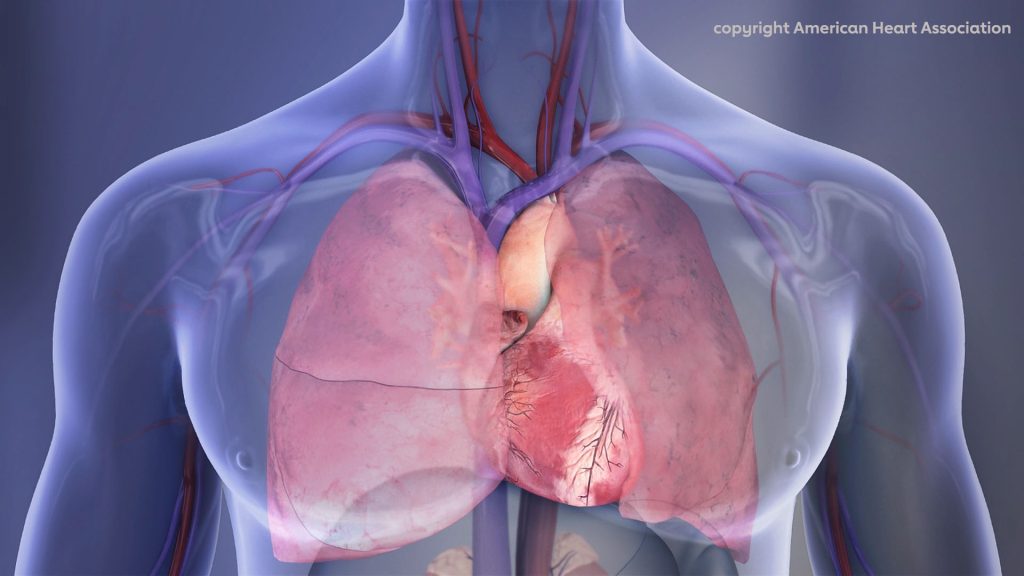
Credit: American Heart Association

A new American Heart Association scientific statement suggests surgery be considered for more people with high-risk pulmonary embolism (PE). The statement, published in the journal Circulation, also calls for data quality registries for high-risk patients with pulmonary embolism and more research to better understand the disease process and effective treatments.

Nearly 45% of patients experiencing PE will progress to severe symptoms, where the clot causes high pressure in the lungs and subsequent damage to the right heart chamber, with a high risk of death. Even therapy following current guideline-directed treatment has a high rate of death, estimated at approximately 40% of cases in some groups.

Treatment options for patients with severe pulmonary embolism include anticoagulation therapy or thrombolysis (either intravenously or via catheter procedure), or advanced surgical interventions such as surgical embolectomy and mechanical circulatory support. Often, surgical techniques are a last resort after other treatments are unsuccessful. The statement suggests that considering surgery earlier may help improve survival for patients with severe PE.

“This statement demonstrates that modern surgical management strategies and mechanical circulatory support results in excellent survival (97%) even among the sickest patients, including those who present with cardiac arrest and have had CPR,” said Joshua B. Goldberg, MD, chair of the statement writing group. 

“Modern surgical strategies and mechanical circulatory support are drastically underutilised,” he said. “It is the hope of the multidisciplinary group of authors that this scientific statement will provide a greater awareness of the safety and efficacy of modern surgical management and mechanical circulatory support in treating the most unstable patients so that lives may be saved. In addition, we hope this statement will facilitate improved understanding of the disease process and effective treatments and encourage future research to improve the survival of patients with this common and deadly disease.”  

The writing group proposes strategies to determine risk more accurately and identify earlier which PE patients may benefit from surgical intervention. They also suggest increased education for clinicians to encourage the use and integration of surgical strategies earlier in PE treatment. Additionally, the statement supports the development of patient registries, particularly focused on data that provides useful context for clinicians and surgeons to understand the progression from intermediate to high-risk pulmonary embolism and treatment outcomes across patients at various risk levels.

Source: American Heart Association

New Algorithm Predicts Sudden Cardiac Arrest Risk

Ambulance
Photo by Camilo Jimenez on Unsplash

Cedars-Sinai researchers have developed a clinical algorithm that is the first to be able to distinguish between treatable sudden cardiac arrest and untreatable forms of the condition. The findings, published in the Journal of the American College of Cardiology: Clinical Electrophysiology, may help prevent sudden cardiac arrest based on key risk factors identified in this study.

“All sudden cardiac arrest is not the same,” explained Professor Sumeet Chugh, MD, lead author of the study. “Until now, no prior research has distinguished between potentially treatable sudden cardiac arrest versus untreatable forms that cause death in almost all instances.”

In the US, 300 000 people die due to out-of-hospital sudden cardiac arrest each year. For those affected, 90% will die within 10 minutes of cardiac arrest.

Prevention could have an enormous impact for this largely fatal condition. The biggest challenge, however, lies in distinguishing between those who stand to benefit the most from an implantable cardioverter defibrillator and those who would not.

“Defibrillators are expensive and unnecessary for individuals with the type of sudden cardiac arrest that will not respond to an electrical shock,” said Prof Chugh. “However, for patients with treatable, or ‘shockable,’ forms of the disease, a defibrillator is lifesaving.”

Prof Chugh said that this new research provides a clinical risk assessment algorithm that can better identify patients at highest risk of treatable sudden cardiac arrest—and thus, a better understanding of those patients who would benefit from a defibrillator.

The risk assessment algorithm consists of 13 clinical, electrocardiogram, and echocardiographic variables that could put a patient at higher risk of treatable sudden cardiac arrest.

The risk factors include diabetes, myocardial infarction, atrial fibrillation, stroke, heart failure, chronic obstructive pulmonary disease, seizure disorders, syncope—a temporary loss of consciousness caused by a fall in blood pressure—and four separate indicators found with an electrocardiogram test, including heart rate.

Source: EurekAlert!

Antiepileptics in Comatose Cardiac Arrest Survivors are Ineffective, Study Shows

Image by Falkurian Design on Unsplash

A large scale study of comatose intensive care (ICU) patients admitted after cardiac arrest and resuscitation has shown that antiepileptics to treat epilepsy-like brain activity has no effect, and may even prolong ICU stay.

Following a cardiac arrest and resuscitation, patients may need an ICU stay, and are in a coma. By that stage, the cardiac arrest may have damaged the brain to such an extent that half of the patients will not recover from coma. The other half will also have permanent damage, for example of memory functions. It is extremely difficult to predict if a patient will awaken and what their prognosis is, so clinicians make use of EEG (electroencephalography).

In 10–20% of the patients admitted to the ICU after cardiac arrest and resuscitation, there are signs of brain activity that appear similar to epilepsy: unlike an attack this activity is continuous. For a long time, it was unclear if anti-epileptic medication could help better recovery. As a result, some patients received this medication and some did not.

Now, a large-scale study done between 2014 and 2021 on 172 patients has proven that this medication is ineffective: it does not help recovery, even necessitating a longer ICU stay. The researchers, led by Professor Jeannette Hofmeijer of the University of Twente and Rijnstate Hospital in Arnhem, published their findings in the New England Journal of Medicine.

The conclusion from this study is that anti-epileptic medication does not lead to an improved recovery. The findings show that patients may need to stay longer at the ICU: for the patient an undesired situation, and it puts extra pressure on the health care system. 

Aside from patients who show continuous epileptic signals, a small group of patients show signs of a typical epileptic seizure: a short and heavy attack. In these situations, anti-epileptics could help, but this still needs further research.

“Although the outcome of the trial may be disappointing in terms of chances of recovery, it also takes away uncertainties from the family. The signals point at serious brain damage that would lead to a much longer stay at the ICU,” said Prof Hofmeijer.

Source: University of Twente

Better Outcomes with Earlier Adrenaline Treatment in Cardiac Arrest

Source: Mat Napo on Unsplash

Earlier adrenaline treatment during a cardiac arrest is linked to better recovery compared to later treatment, according to preliminary research to be presented at the American Heart Association’s Resuscitation Science Symposium (ReSS) 2021.

“Our study’s findings should guide emergency medical services professionals towards earlier administration of epinephrine [adrenaline] during out-of-hospital cardiac arrest management,” said lead study author Shengyuan Luo, MD, MHS, an internal medicine resident physician at Rush University Medical Center in Chicago.

Previous research found that only about 1 in 5 people survive a cardiac arrest outside of the hospital and those who do survive often have long-term impairment in the ability to perform daily living tasks.

During a cardiac arrest, immediate CPR (cardiopulmonary resuscitation) is critical. For some types of cardiac arrest, an AED (automated external defibrillator) also is used to deliver an electric shock through the chest to the heart to restore a heartbeat. For these ‘shockable’ cardiac arrests, adrenalineis injected to help restore blood flow. Previous research indicated that adrenaline should be given after three unsuccessful electric shocks with an AED, however, it was unclear whether it should be given even earlier – such as after the first electric shock.

To compare the effects of earlier versus later administration of adrenaline, the researchers examined medical records to compare epinephrine timing to patient recovery. Study subjects included 6416 multi-ethnic adults across North America who had an out of hospital cardiac arrest with shockable initial rhythm from 2011-2015. They were an average age of 64 years, and most were men.

Overall, adrenaline administration within four minutes after the first shock from an AED was associated with greater chances of recovery, while administration after four minutes was associated with reduced chances. Specifically, people who received adrenaline after four minutes were nearly half as likely to have heartbeat and blood flow restored before hospital admittance and half as likely to survive to hospital discharge or be able to perform daily tasks, as measured by a standard test, at discharge. Additionally, the risks of later adrenaline treatment rose with each minute of delayed treatment.

“It is crucial that whenever a cardiac arrest event is suspected, the emergency medical system be notified and activated immediately, so that people with cardiac arrest receive timely, life-saving medical care,” Dr Luo said.

These findings support the latest American Heart Association CPR and Emergency Cardiovascular Care Guidelines, which were released in October 2020. The guidelines indicate adrenaline should be administered as early as possible to maximise good resuscitation outcome chances. The guideline recommendation was based on previous observational data that suggest better outcomes when adrenaline is given sooner.

Source: EurekAlert!

One Woman’s Journey of Recovery from Cardiac Arrest

Photo from Olivier Collett on Unsplash

At age 37, Mary Gordon was fit and healthy but could not explain the fatigue she began experiencing. Shortly before Christmas 2019, she woke up feeling out of sorts. During Christmas shopping, she nearly passed out at one point.

“Everything went blank,” Gordon recalled. “But it was so quick that I questioned if it really happened.”

Gordon put it down to dehydration and tiredness. But over the next week, she nearly passed out three more times, once while driving. Just before flying home, she managed to get a last-minute appointment on New Year’s Eve with her doctor’s physician assistant. By this point, she half expected to be admitted to hospital.
The physician assistant performed a test on her heart, which looked normal. But her blood pressure was through the roof. She advised Gordon to cancel her flight and to start wearing a heart monitor so the medical team could gather more information.

Gordon was familiar with the heart monitor because in university, her doctor detected a heart murmur and diagnosed her with mitral valve prolapse: extra tissue caused the mitral valve leaflets to expand into the left atrium when her heart contracted. In the severe cases, it can lead to blood leaking back through the valve, potentially resulting in arrhythmia. However, when the doctor reviewed the data, he told her to not worry about it. And an electrocardiogram years later seemed to confirm the diagnosis.

But now, leaving the visit with the physician assistant, Gordon collapsed near the elevator, in cardiac arrest. Fortunately a receptionist found her. For six minutes, the physician assistant and a doctor performed CPR , and also used an automated external defibrillator. The first thing she remembered was being in the emergency room, with her boyfriend, Matt Costakis, and several doctors at the foot of her bed.
She was confused for the first few days.

“My brain was not retaining information,” she said. “It took a few days before things were sinking in. Everything was a blur.”

An implantable cardioverter defibrillator was implanted in her chest, followed by a minimally invasive surgery the week after to repair her mitral valve.

“It wasn’t until the surgery that it was fully recognized she has something that’s particularly rare called mitral annular disjunction,” said Dr. Paula Pinell-Salles, Gordon’s cardiologist at Virginia Heart in Falls Church. “That variant is the most prone to significant prolapse and may be more closely associated with the kind of arrhythmia she presented with.”

Gordon was discharged after a two-week hospital stay. Though fatigued, she eagerly started her cardiac rehab, relishing the supportive environment. 

“The thought of raising my heart rate or being able to ever run again was so foreign,” she said. “It was awesome to know there’s a way to slowly ease back into that with the safety of people watching you.”

When COVID ended in-person rehab, she continued to push herself walking long distances but she still feared exercising alone.

“It was a weird transition and very emotional,” she said, pointing to the emergency ID tag she now wears. “But I got to the point where I could go off by myself.”

Eight months after the cardiac arrest, she was running again. And on the one-year anniversary, Gordon and Costakis, along with her dog, hiked her favourite trail to the top of a mountain, where Costakis proposed to her. 

Now happily engaged and largely recovered, Gordon promotes CPR training and wants to raise awareness about the difference between heart attacks and cardiac arrest.

As defined by the American Heart Association and the American College of Cardiology, “(sudden) cardiac arrest is the sudden cessation of cardiac activity so that the victim becomes unresponsive, with no normal breathing and no signs of circulation. If corrective measures are not taken rapidly, this condition progresses to sudden death. Cardiac arrest should be used to signify an event as described above, that is reversed, usually by CPR and/or defibrillation or cardioversion, or cardiac pacing. Sudden cardiac death should not be used to describe events that are not fatal.”

“It doesn’t hurt to learn it again, or watch the video and just build your confidence,” she said. “If I can do something to help the next person, that’s all I can ask for.”

Source: American Heart Association