Tag: cannabis

Cannabis Vaping Soared in High School Students Before COVID

Man vaping. Photo by Nery Zarate on Unsplash

With reports of severe lung illnesses related to vaping making headlines in 2019, cannabis use skyrocketed among high school students were soaring.

Cannabis vaping involves inhaling evaporated oils, or vapours from heated concentrates known as dabs. Joseph J Palamar, PhD, of New York University reported on his study in the Journal of Adolescent Health.

The long-running Monitoring the Future study results showed that 4.9% (95% CI 4.3%-5.5%) of high school students reported “frequent” vaping of cannabis products — 10 times or more in the previous month — up from 2.1% in 2018 (95% CI 1.7%-2.6%). Rates of any cannabis vaping in the previous month also rose significantly, from 7.5% in 2018 (95% CI 6.7%-8.4%) to 14.0% in 2019 (95% CI 13.1%-14.9%).

These increases accompanied an unsettling outbreak of respiratory illnesses, until it was eclipsed by the COVID pandemic. Nearly 3000 Americans, mostly young adults, fell ill with EVALI — e-cigarette or vaping-associated lung injury — and 68 died, noted Dr Palamar. Epidemiological and lab research eventually identified vitamin E acetate as the likely cause. The substance is a common component of illicit cannabis vaping products, even though a substantial minority of victims denied use of such products.

Dr Palamar’s study drew on Monitoring the Future data on 4072 students in 10th and 12th grades in 2018 and 8314 in 2019. The study also highlighted other trends.

Cannabis vaping in the past month nearly tripled among female students from 2018 to 2019, while rates for students in general age 18 and older rose 2.5-fold. Social activity, as indicated by reports of “going out” four to seven times a week, was linked to increased rates of cannabis vaping. There were also small increases in cannabis vaping among students reporting other psychoactive drug use including opioids, cocaine, “tranquilisers”, and non-LSD hallucinogens.

The study did not address the extent to which school closures and social restrictions resulting from the COVID pandemic affected these trends, and it will be some before data from Monitoring the Future can answer this as the survey was stopped in March 2020 when the pandemic closed schools.

Nevertheless, the available 2020 data showed that the number of 10th graders saying cannabis was “fairly easy” or “very easy” to obtain had dropped sharply, accelerating a trend underway for more than 20 years. This was despite the spread of legal marijuana.

Dr Palamar noted several limitations to his study and to Monitoring the Future in general. Data on drug use was self-reported, and the survey took place at schools, meaning that students “chronically absent or who dropped out are underrepresented,” he wrote. There were also some subgroups such as those vaping cannabis daily, that were too small for analysis.

Source: MedPage Today

Journal information: Palamar J “Increases in frequent vaping of cannabis among high school seniors in the United States, 2018-2019” J Adolesc Health 2021; DOI: 10.1016/j.jadohealth.2021.03.034.

Cannabis Use Screening in Older People Urged

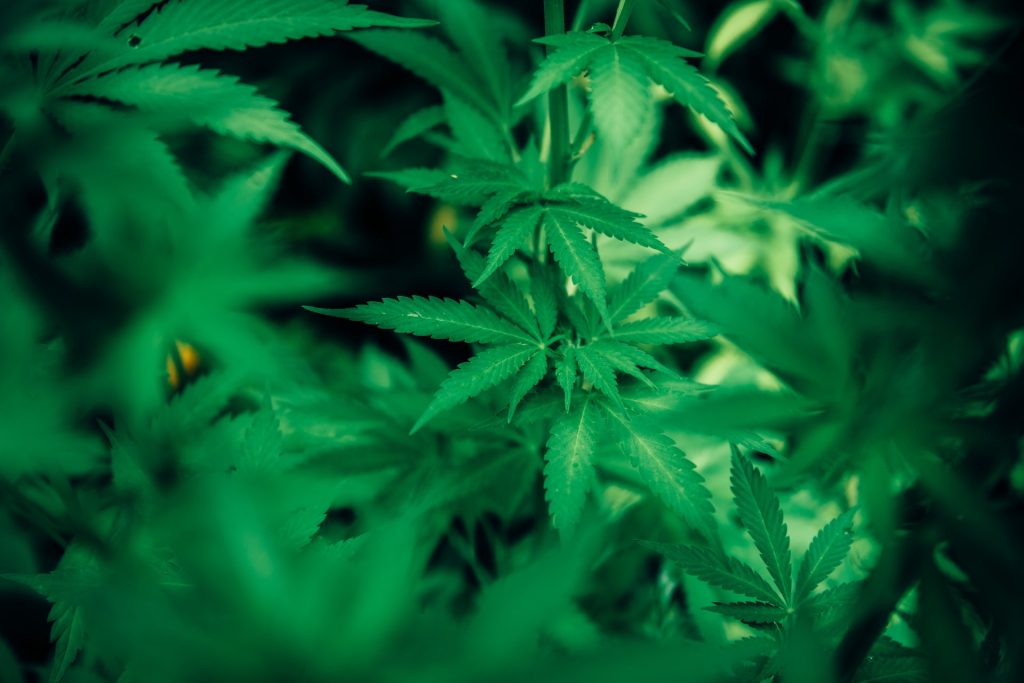
Cannabis plants. Photo by Harrison Haines from Pexels

Older people who use cannabis to relieve or treat health conditions generally don’t discuss their substance use with doctors, according to a new study. 

In this study of over 17 000 people aged 50 and over in the US, some use cannabis daily and others have mental health problems. The findings were published in peer-reviewed The American Journal of Drug and Alcohol Abuse.

The research is the first to identify where older users obtain cannabis, with the majority saying obtaining it was easy. Those who use cannabis for health reasons are more likely than non-medical (recreational) users to buy it at a medical dispensary (20% vs 5%) and less likely to get it for free (25% vs 46%) or from other sources such as parties (49% vs 56%).

According to the authors, the findings have significant clinical and policy implications especially as more US states are legalising cannabis, which is leading to a rapid rise in uptake among older people. This has implications for other countries such as South Africa, which has recently decriminalised it for personal use.

They urge that doctors should be routinely screening older people for cannabis and other substance use, as well as checking cannabis users for mental health problems, and recommending treatment when necessary. They add that education on the risks of obtaining cannabis and cannabis products from unregulated sources is also vital for this group.

“Cannabis is readily available and accessible to older cannabis users for medical or non-medical purposes,” said Namkee G Choi from University of Texas.

“The findings suggest that some medical users may be self-treating without healthcare professional consultation.

“All older people who take cannabis should consult healthcare professionals about their use. As part of routine care, healthcare professionals should screen for cannabis and other substance use, and for mental health problems.

“They should also recommend services or treatment when indicated. Given the increase in THC (tetrahydrocannabinol) potency, healthcare professionals should educate older cannabis users, especially high-frequency users, on potential safety issues and adverse effects.”

THC content has increased significantly over the past decades. Since 1995, the potency of illicit cannabis plant material seized in the US has consistently increased over time, from approximately 4% in 1995 to approximately 12% in 2014. Among older US adults, cannabis has more than doubled between 2008 and 2019. Reasons include pain relief and treating health issues. However, not much is known about where they obtain cannabis and how much they discuss their use with doctors.

Data for the research was drawn responses from the 2018 and 2019 National Survey on Drug Use and Health (NSDUH), with 17 685 men and women aged 50 and older. This annual national survey measures substance use and misuse and mental illness across the US.

The researchers analysed responses including those on frequency of cannabis use, reasons for taking it, where it was obtained, and how much they utilised healthcare services.

The study found that, overall, 9% used cannabis over the past year and of these, 19% used cannabis for a medical purpose to some extent, eg, to treat chronic pain, depression or diseases like arthritis, while the rest (81%) were recreational (non-medical) users.

The authors also found that people who reported cannabis use as being for medical reasons were over four times as likely than non-medical users to discuss their use with a healthcare professional. Nevertheless, only a minority of medical users did so, which implies that some are self-treating without consulting a doctor.

Medical users were also more likely than non-medical users to more frequently take cannabis, with 40% using it between 200 and 365 days a year.

A higher proportion of older cannabis users had mental illness, alcohol use disorder, and nicotine dependence compared with non-users of the same age, although medical users were less likely to have alcohol problems compared to recreational users.

As well as calling on doctors to do more, the study authors say the NSDUH needs updating to “reflect changing cannabis product commercialization”, such as including products available to older people like cannabidiols, topical solutions and edibles.

Limitations of the study included the relatively small number of medical users and the fact some respondents may have under-reported their cannabis and other substance use.

Source: Medical Xpress

Journal information: The American Journal of Drug and Alcohol Abuse, www.tandfonline.com/doi/full/1 … 0952990.2021.1908318

Impairment Lasts up to 10 Hours After Cannabis

A comprehensive analysis of 80 scientific studies has identified a ‘window of impairment’ of between three and 10 hours caused by moderate to high doses of tetrahydrocannabinol (THC), the cannabis component that causes intoxication. According to the researchers, these results have consequences for drug-driving laws around the world.

How long the impairment lasts depends on the THC dose, whether it is taken orally or inhaled, on the usage habits of the cannabis user and the demands of the task. The psychoactive THC component of cannabis has potential medical applications in treating nausea, sleep apnoea, fibromyalgia and chronic pain, though these applications are controversial and currently difficult to study due to legal issues, though off-label use is common. 
Previous research by Dr Arkell and colleagues has shown that cannabidiol (CBD), one of the medically active components of cannabis, does not cause impairment in driving. CBD has analgesic and anti-inflammatory actions, as well as anxiolytic, antiemetic, antipsychotic, and neuroprotective antioxidant properties

Medical and non-medical legal cannabis use is on the rise worldwide.
THC causes acute impairment in driving and cognitive performance, but there is uncertainty among users about the duration of this impairment and when they can start tasks such as driving after consuming cannabis.
“Our analysis indicates that impairment may last up to 10 hours if high doses of THC are consumed orally,”  said lead author Dr Danielle McCartney, Lambert Initiative for Cannabinoid Therapeutics at the University of Sydney. “A more typical duration of impairment, however, is four hours, when lower doses of THC are consumed via smoking or vaporization and simpler tasks are undertaken (eg, those using cognitive skills such as reaction time, sustained attention and working memory). This impairment may extend up to six or seven hours if higher doses of THC are inhaled and complex tasks, such as driving, are assessed.”

A moderate THC dose is considered about 10 milligrams in this study, but could be higher for a regular user, said the researchers.

Co-author Dr Thomas Arkell, also from the Lambert Initiative, said: “We found that impairment is much more predictable in occasional cannabis users than regular cannabis users. Heavy users show significant tolerance to the effects of cannabis on driving and cognitive function, while typically displaying some impairment.”

Regular cannabis users might consume more to get the same effect, resulting in equivalent impairment, the authors noted.

In the case of oral use as in medical cannabis drops, tablets etc, the impairment takes longer to manifest and has a longer duration than the inhalation route.

The findings have implications for so-called drug-driving laws, the researchers said.

Professor Iain McGregor, Academic Director of the Lambert Initiative, said: “THC can be detected in the body weeks after cannabis consumption while it is clear that impairment lasts for a much shorter period of time. Our legal frameworks probably need to catch up with that and, as with alcohol, focus on the interval when users are more of a risk to themselves and others. Prosecution solely on the basis of the presence of THC in blood or saliva is manifestly unjust.

“Laws should be about safety on the roads, not arbitrary punishment. Given that cannabis is legal in an increasing number of jurisdictions, we need an evidence-based approach to drug-driving laws,” Prof McGregor said.

Source: News-Medical.Net

Journal information: McCartney, D., et al. (2021) Determining the magnitude and duration of acute Δ9-tetrahydrocannabinol (Δ9-THC)-induced driving and cognitive impairment: A systematic and meta-analytic review. Neuroscience & Biobehavioral Reviews. doi.org/10.1016/j.neubiorev.2021.01.003.

Cannabinoid Effectiveness in Pain Management Questioned

The effectiveness of cannabinoids as pain management has been brought into question by experts reviewing clinical evidence.

Researchers from the University of Bath’s Centre for Pain Research leading experts from around the world reviewed existing data into cannabinoids, including that on so-called ‘medicinal cannabis’ and ‘medicinal cannabis extracts’.

Their findings suggest that while preclinical data supports the hypothesis of cannabinoid analgesia, uncertainties especially in clinical evidence do not reach the certainty in efficacy and safety necessary for the IASP to endorse their general use for pain control.
 The studies and the statement from the IASP are limited to the use of cannabinoids to treat pain, and not for other conditions for which cannabinoids are used.

Dr Emma Fisher who led the review of the clinical evidence said: “Cannabis, cannabinoids, and cannabis-based medicines are becoming an increasingly popular alternative to manage pain. However, our review shows that there is limited evidence to support or refute their use for the management of any pain condition. The studies we found were poor quality (high risk of bias) and the evidence was of very low-certainty, meaning that we are very uncertain of the findings and more research is needed.”

Professor Christopher Eccleston, Director of the Centre for Pain Research / Department for Health, said: “Cannabis seems to attract strong opinions. If ever a field needed evidence and a rigorous scientific opinion it is this one. For many this will be an unpopular conclusion, but we need to face up to the fact that the evidence is simply lacking. Science is not about popularity but keeping people safe from false claims. The challenge in this field will be for governments to fund independent research, and to ensure balance and equipoise.

“Coming close on the heels of The Lancet Commission on children’s pain and the WHO guidelines on treating chronic pain, this further contribution also found no evidence to support the use of cannabis, cannabinoids, and cannabis-based medicines for children with chronic pain. We need to invest in real solutions to the very real problem of chronic pain in children.”

Source: Medical Xpress

Journal information: IASP Presidential Task Force on Cannabis and Cannabinoid Analgesia. Painjournals.lww.com/pain/pages/co … picalCollectionId=23

Recreational Substances Including Cannabis Linked to Heart Disease

Alcohol, tobacco and cannabis are among recreational drugs that contribute to early-onset atherosclerotic cardiovascular disease (ASCVD) in young people, a study has found.

The study drew on data of more than a million people receiving primary care services throughout the VA Healthcare System in 2014 or 2015, of whom there were 135 703 with premature ASCVD.

A number of independent predictors for first-event ASCVD for men (from age 55) and women (from 65) were picked up. Tobacco (adjusted odds ratio [OR] 1.97) and alcohol use (OR 1.50)  conferred significant additional risk, but the greatest risk increase of generally legal substances was cannabis use (OR 2.65). Cocaine use (OR 2.44), amphetamine use (OR 2.74) and other drug use (OR 2.53) all had very high risk increases.

Those using four or more substances had the greatest risk at nearly nine times normal. Women also had much stronger effect sizes for premature ASCVD than men.

In an accompanying editorial Anthony Wayne Orr, PhD, and colleagues at LSU Health Shreveport, wrote: “Substance use disorders have been associated with an acceleration of the ageing process. We are only young once, and we should do everything in our power to maintain that state as long as we can.”

The editorialists suggested a nationwide ASCVD education campaign targeting people with substance use disorders.

“In addition, clinicians and primary care providers should begin screening their adult and young adult patients with a history of a substance use disorder for symptoms of premature or extremely premature ASCVDs at earlier stages in their patients’ lives,” suggested the editorialists.

Limitations included it being an observational study, lack of socioeconomic data and the cohort being mostly white males, as well as not being able to discern between prescription and recreational amphetamine use.
“Retrospective studies are limited by the available data. While this study supports the association between substance use disorder and early-onset ASCVD, the effect of substance use frequency, dose, and duration cannot be reliably ascertained in this patient sample,” the editorialists stated.

The editorialists recommended that specific biomarkers for substance use-associated cardiovascular disease be identified, and therapeutic window characterised to limit these chronic effects of substance use disorder.

Source: MedPage Today

Journal information: Mahtta D, et al “Recreational substance use among patients with premature atherosclerotic cardiovascular disease” Heart 2021; DOI: 10.1136/heartjnl-2020-318119.

Editorial information: Scott ML, et al “Young at heart? Drugs of abuse cause early-onset cardiovascular disease in the young” Heart 2021; DOI: 10.1136/heartjnl-2020-318856.

Cannabis can Lower Hypertension in Older Adults

Adding to a growing body of evidence as to its health benefits, medical cannabis may lower blood pressure in older adults, according to research from Ben-Gurion University of the Negev (BGU) and its affiliated Soroka University Medical Center.

This is the first such study to investigate cannabis’  effect on blood pressure, heart rate and metabolic parameters in hypertensive adults 60 and older.

“Older adults are the fastest growing group of medical cannabis users, yet evidence on cardiovascular safety for this population is scarce. This study is part of our ongoing effort to provide clinical research on the actual physiological effects of cannabis over time,” said Dr Ran Abuhasira, BGU Faculty of Health Sciences and BGU-Soroka Cannabis Clinical Research Institute

Before and three months after beginning medical cannabis therapy, patients in the study were evaluated using 24-hour ambulatory blood pressure monitoring, ECG, blood tests, and body measurements. Patients ingested cannabis either orally in the form of oil extracts or by smoking.

The findings included a significant drop in 24-hour systolic and diastolic blood pressure values, with the lowest point occurring three hours after ingesting cannabis. Both daytime and nighttime reductions in blood pressure were observed, with more greater changes at night. Higher nighttime than daytime blood pressure may also raise the risk of Alzheimer’s disease, so lowering it at night may offer that benefit.

The pain relief from taking cannabis, often a reason for prescriptions, may also have resulted in a reduction of blood pressure, the BGU researchers postulated.

“Cannabis research is in its early stages and BGU is at the forefront of evaluating clinical use based on scientific studies,” said Doug Seserman, chief executive officer of American Associates, BGU. “This new study is one of several that has been published recently by BGU on the medicinal benefits of cannabis.”

Source: News-Medical.Net

Journal information: Abuhasira, R., et al. (2021) Cannabis is associated with blood pressure reduction in older adults – A 24-hours ambulatory blood pressure monitoring study. European Journal of Internal Medicine.doi.org/10.1016/j.ejim.2021.01.005.

Smoking Risks for Allergic and Asthmatic Cannabis Users

A survey in the US has shown that cannabis users are often asthmatic, and some have allergies from cannabis smoking or its second-hand smoke.

Cannabis allergies can potentially cause respiratory symptoms, contact urticaria, angioedema, and uncommonly anaphylaxis. Inhalation of cannabis may also manifest in allergic rhinitis, conjunctivitis, wheezing, and throat oedema. Given the widespread legal use of cannabis, more information is needed on the effects of cannabis use, particularly smoking, on individuals with asthma and allergies.

The anonymous survey, conducted in concert with the Allergy & Asthma Network, consisted of 489 participants, 18% of whom reported cannabis use. A surprising 60% were asthmatic, and 40% had uncontrolled asthma. 

Inhalation routes were the most popular way of taking cannabis. About half of users smoked cannabis, while a third vaped it. Only 40% reported being asked by their physician about cannabis use, and about the same proportion of participants were willing to talk to a physician about their cannabis use, said study co-author and cannabis allergy expert, William Silvers, MD.

“In order to more completely manage their allergy/asthma patients, allergists should increase their knowledge about cannabis and inquire about cannabis use including types of cannabinoid, route of use, reasons for use, and adverse effects,” said Dr Silvers. “As with cigarette smoking, efforts should be made to reduce smoking of cannabis, and recommend other potentially safer routes such as edibles and sublingual tinctures.”

Reported positive effects of cannabis use (eg, reduced pain, calm, improved sleep) were more frequent than adverse effects (eg, cough, increased appetite, anxiety). Approximately 20% of survey respondents reported coughing from cannabis, which was associated with smoking cannabis; this was cause for concern as it may indicate smoking risks for cannabis users.

“It surprised me that over half of the cannabis users in this study who have asthma were smoking it,” said principal investigator Joanna Zeiger, PhD. “And further, of those with uncontrolled asthma, half reported smoking cannabis. We also found that people with asthma are not routinely being asked or advised by their physician about cannabis and how they are consuming it.”

The researchers commented that further research into the relationship of cannabis and allergies is warranted.
“We look forward to future studies of larger, more diverse cohorts to better explore more deeply the effect of cannabis use on asthma and other allergic disorders,” said Dr Zeiger.

Source: News-Medical.Net

Journal information: Zeiger, J. S., et al. (2021) Cannabis attitudes and patterns of use among followers of the Allergy & Asthma Network. Annals of Allergy, Asthma & Immunology.doi.org/10.1016/j.anai.2021.01.014.

Withdrawal Symptoms of Discontinuing Medical Cannabis

A new study on the long terms effects of having used medical cannabis show that over half of people who used it experience withdrawal symptoms between use. And about one in ten experienced worsening alterations in sleep, mood, mental state, energy and appetite over two years.

Patients who use cannabis usually turn to it because of the failure of other pain medications, or to avoid the long-term risks of opioid use. However, the perception that it is “harmless” is incorrect, as it has cannabinoids that act on receptors in the brain, and from which the brain can experience withdrawal symptoms. This can even lead to cannabis use disorder.

Addiction psychologist Lara Coughlin, PhD, who led the analysis said, “Some people report experiencing significant benefits from medical cannabis, but our findings suggest a real need to increase awareness about the signs of withdrawal symptoms developing to decrease the potential downsides of cannabis use, especially among those who experience severe or worsening symptoms over time.”

After they had gone a significant time without cannabis, the 527 participants in the study were asked whether they had any one of 15 symptoms, ranging from irritability to nausea. Using an analytic method, they empirically grouped them into three groups ranging from mild or moderate symptoms to severe, with most of the symptoms. They then surveyed the patients again after one year and then again after two years. Those in the mild class showed the most stability in symptoms over time.

Younger participants were more likely to be in the severe group, and were more likely to have a worsening trajectory. Coughlin concluded that patients seeking cannabis use for pain need to discuss it with their health care providers, and seek psychosocial treatments such as cognitive behavioural therapy.

Source: Medical Express

Journal information: Coughlin, LN et al. Progression of cannabis withdrawal symptoms in people using medical cannabis for chronic pain. Addiction. 2021. DOI: 10.1111/add.15370