Tag: artificial intelligence

Building a Future ‘Biocomputer’ Using Human Brain Cells

Depiction of a human brain
Image by Fakurian Design on Unsplash

A “biocomputer” powered by human brain cells could be developed within our lifetime, according to an article in the journal Frontiers in Science. The Johns Hopkins University researchers expect such “organoid intelligence” technology to exponentially expand the capabilities of modern computing and create novel fields of study, as well as yielding insights into neurodegenerative diseases.

“Computing and artificial intelligence have been driving the technology revolution but they are reaching a ceiling,” said Thomas Hartung, a professor of environmental health sciences at the Johns Hopkins Bloomberg School of Public Health and Whiting School of Engineering who is spearheading the work. “Biocomputing is an enormous effort of compacting computational power and increasing its efficiency to push past our current technological limits.”

For nearly two decades scientists have used tiny organoids, lab-grown tissue resembling fully grown organs, to experiment on kidneys, lungs, and other organs without resorting to human or animal testing. More recently Hartung and colleagues at Johns Hopkins have been working with brain organoids, orbs the size of a pen dot with neurons and other features that promise to sustain basic functions like learning and remembering.

“This opens up research on how the human brain works,” Hartung said. “Because you can start manipulating the system, doing things you cannot ethically do with human brains.”

Hartung began to grow and assemble brain cells into functional organoids in 2012 using cells from human skin samples reprogrammed into an embryonic stem cell-like state. Each organoid contains about 50 000 cells, about the size of a fruit fly’s nervous system. He now envisions building a futuristic computer with such brain organoids.

Computers that run on this “biological hardware” could in the next decade begin to alleviate energy-consumption demands of supercomputing that are becoming increasingly unsustainable, Hartung said. Even though computers process calculations involving numbers and data faster than humans, brains are much smarter in making complex logical decisions, like telling a dog from a cat.

“The brain is still unmatched by modern computers,” Hartung said. “Frontier, the latest supercomputer in Kentucky, is a $600 million, 6,800-square-feet installation. Only in June of last year, it exceeded for the first time the computational capacity of a single human brain – but using a million times more energy.”

It might take decades before organoid intelligence can power a system as smart as a mouse, Hartung said. But by scaling up production of brain organoids and training them with artificial intelligence, he foresees a future where biocomputers support superior computing speed, processing power, data efficiency, and storage capabilities.

“It will take decades before we achieve the goal of something comparable to any type of computer,” Hartung said. “But if we don’t start creating funding programs for this, it will be much more difficult.”

Medical applications

Organoid intelligence could also revolutionise drug testing research for neurodevelopmental disorders and neurodegeneration, said Lena Smirnova, a Johns Hopkins assistant professor of environmental health and engineering who co-leads the investigations.

“We want to compare brain organoids from typically developed donors versus brain organoids from donors with autism,” Smirnova said. “The tools we are developing towards biological computing are the same tools that will allow us to understand changes in neuronal networks specific for autism, without having to use animals or to access patients, so we can understand the underlying mechanisms of why patients have these cognition issues and impairments.”

To assess the ethical implications of working with organoid intelligence, a diverse consortium of scientists, bioethicists, and members of the public have been embedded within the team.

Source: John Hopkins University

ChatGPT can Now (Almost) Pass the US Medical Licensing Exam

Photo by Maximalfocus on Unsplash

ChatGPT can score at or around the approximately 60% pass mark for the United States Medical Licensing Exam (USMLE), with responses that make coherent, internal sense and contain frequent insights, according to a study published in PLOS Digital Health by Tiffany Kung, Victor Tseng, and colleagues at AnsibleHealth.

ChatGPT is a new artificial intelligence (AI) system, known as a large language model (LLM), designed to generate human-like writing by predicting upcoming word sequences. Unlike most chatbots, ChatGPT cannot search the internet. Instead, it generates text using word relationships predicted by its internal processes.

Kung and colleagues tested ChatGPT’s performance on the USMLE, a highly standardised and regulated series of three exams (Steps 1, 2CK, and 3) required for medical licensure in the United States. Taken by medical students and physicians-in-training, the USMLE assesses knowledge spanning most medical disciplines, ranging from biochemistry, to diagnostic reasoning, to bioethics.

After screening to remove image-based questions, the authors tested the software on 350 of the 376 public questions available from the June 2022 USMLE release. 

After indeterminate responses were removed, ChatGPT scored between 52.4% and 75.0% across the three USMLE exams. The passing threshold each year is approximately 60%. ChatGPT also demonstrated 94.6% concordance across all its responses and produced at least one significant insight (something that was new, non-obvious, and clinically valid) for 88.9% of its responses. Notably, ChatGPT exceeded the performance of PubMedGPT, a counterpart model trained exclusively on biomedical domain literature, which scored 50.8% on an older dataset of USMLE-style questions.

While the relatively small input size restricted the depth and range of analyses, the authors note their findings provide a glimpse of ChatGPT’s potential to enhance medical education, and eventually, clinical practice. For example, they add, clinicians at AnsibleHealth already use ChatGPT to rewrite jargon-heavy reports for easier patient comprehension.

“Reaching the passing score for this notoriously difficult expert exam, and doing so without any human reinforcement, marks a notable milestone in clinical AI maturation,” say the authors.

Author Dr Tiffany Kung added that ChatGPT’s role in this research went beyond being the study subject: “ChatGPT contributed substantially to the writing of [our] manuscript… We interacted with ChatGPT much like a colleague, asking it to synthesise, simplify, and offer counterpoints to drafts in progress…All of the co-authors valued ChatGPT’s input.”

Source: EurekAlert!

AI Picks up Incidental Pulmonary Embolism on Chest CT

Photo by Kanasi on Unsplash

According to a study published in the American Journal of Roentgenology, an AI tool for detection of incidental pulmonary embolus (iPE) on conventional contrast-enhanced chest CT examinations had high false negative and moderate false positive rates for detection, and was even able to pick up some iPEs missed by radiologists.

“Potential applications of the AI tool include serving as a second reader to help detect additional iPEs or as a worklist triage tool to allow earlier iPE detection and intervention,” wrote lead investigator Kiran Batra from the University of Texas Southwestern Medical Center in Dallas. “Various explanations of misclassifications by the AI tool (both false positives and false negatives) were identified, to provide targets for model improvement.”

Batra and colleagues’ retrospective study included 2,555 patients (1,340 women, 1,215 men; mean age, 53.6 years) who underwent 3,003 conventional contrast-enhanced chest CT examinations between September 2019 and February 2020 at Parkland Health in Dallas, TX. Using an FDA-approved, commercially available AI tool (Aidoc) to detect acute iPE on the images, a vendor-supplied natural language processing algorithm was then applied to the clinical reports to identify examinations interpreted as positive for iPE.

Ultimately, the commercial AI tool had NPV of 99.8% and PPV of 86.7% for detection of iPE on conventional contrast-enhanced chest CT examinations (ie, not using CT pulmonary angiography protocols). Of 40 iPEs present in the team’s study sample, 7 were detected only by the clinical reports, and 4 were detected only by AI.

Noting that both the AI tool and clinical reports detected iPEs missed by the other method, “the diagnostic performance of the AI tool did not show significant variation across study subgroups,” the authors added.

Source: American Roentgen Ray Society

An AI ‘Storytelling’ Companion to Assist Dementia Patients

Researchers at the National Robotarium in the UK, are developing an artificial intelligence (AI) ‘storytelling’ companion that will aid memory recollection, boost confidence and combat depression in patients suffering from Alzheimer’s disease and other types of dementia.

The idea for the ground-breaking ‘Agent-based Memory Prosthesis to Encourage Reminiscing’ (AMPER) project came from Dr Mei Yii Lim, a co-investigator of the project and an experienced memory modelling researcher.

In Alzheimer’s patients, memory loss occurs in reverse chronological order, with pockets of long-term memory remaining accessible even as the disease progresses. Rehabilitative care methods currently focus on physical aids and repetitive reminding techniques, but AMPER’s AI-driven user-centred approach will instead focus on personalised storytelling to help bring a patient’s memories back to the surface.

Dr Lim explained the project: “AMPER will explore the potential for AI to help access an individual’s personal memories residing in the still viable regions of the brain by creating natural, relatable stories. These will be tailored to their unique life experiences, age, social context and changing needs to encourage reminiscing.”

Having communication difficulties and decreased confidence are commonly experienced by people living with dementia and can often lead to individuals becoming withdrawn or depressed. By using AI to aid memory recollection, researchers at the National Robotarium hope that an individual’s sense of value, importance and belonging can be restored and quality of life improved.

The project’s long-term vision is to show that AI companions can become more widely used and integrated into domestic, educational, health and assistive-needs settings.

Professor Ruth Aylett from the National Robotarium is leading the research. She said: “One of the most difficult aspects of living with dementia can be changes in behavior caused by confusion or distress. We know that people can experience very different symptoms that require a range of support responses. Current intervention platforms used to aid memory recollection often take a one-size-fits-all approach that isn’t always suitable to an individual’s unique needs.”

“AI technology has the potential to play a pivotal role in improving the lives of people living with cognitive diseases. Our ambition is to develop an AI-driven companion that offers patients and their caregivers a flexible solution to help give an individual a sustained sense of self-worth, social acceptance and independence.

“Through projects like AMPER, we’re able to highlight the many ways AI and robotics can both help and improve life for people now and in the future. At the National Robotarium, we’re working on research that will benefit people in adult care settings as well as across a wide range of other sectors that will make life easier, safer and more supported for people.”

Once developed, the AI technology will be accessed through a tablet-based interface to make it more widely accessible and low-cost. The National Robotarium team will also investigate a using the AI in a desktop robot to see if a physical presence has any benefit.

Source: Heriot Watt University

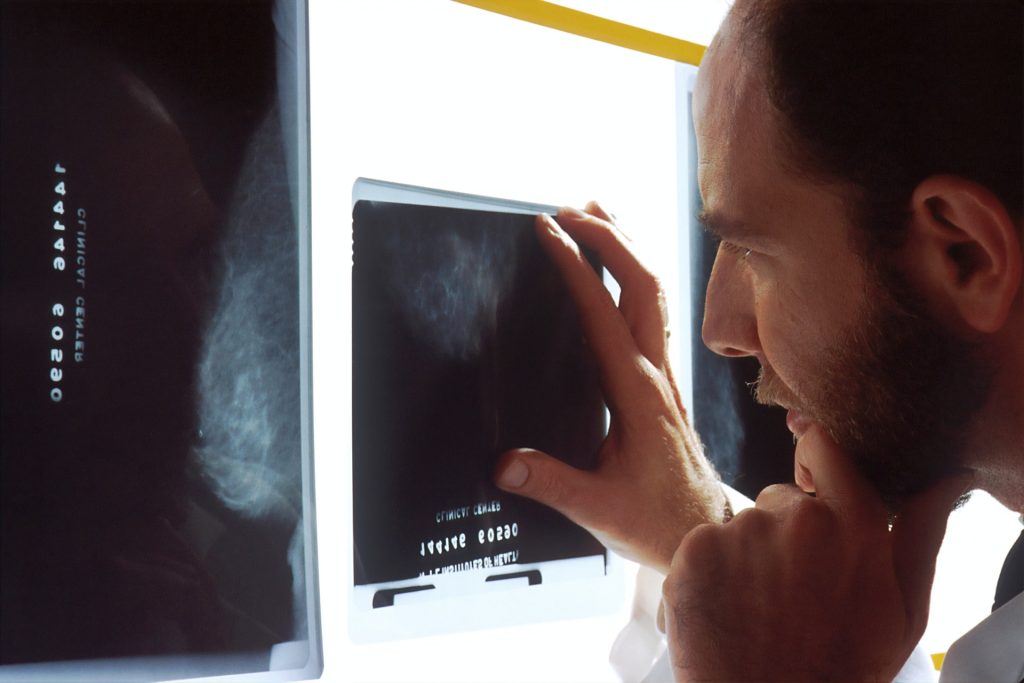
To Properly Use AI to Analyse Breast Cancers, Look to Past Mistakes

Source: National Cancer Institute

Doctors writing in an editorial in JAMA Health Forum caution that while using AI to analyse breast cancer tumours has the potential to improve healthcare efficiency and outcomes, similar technological leaps have previously led to higher rates of false-positive tests and over-treatment.

The editorial wasco-written by Joann G. Elmore, MD, MPH, professor of medicine at the David Geffen School of Medicine at UCLA, and Christoph I. Lee, MD, MS, MBA, a professor of radiology at the University of Washington School of Medicine.

“Without a more robust approach to the evaluation and implementation of AI, given the unabated adoption of emergent technology in clinical practice, we are failing to learn from our past mistakes in mammography,” the authors wrote.

One of those “past mistakes in mammography,” the authors said, was adjunct computer-aided detection (CAD) tools, which grew rapidly in popularity in the field of breast cancer screening starting more than two decades ago. CAD was approved by the FDA in 1998, and by 2016 more than 92% of U.S. imaging facilities were using the technology to interpret mammograms and hunt for tumours. However, CAD did not improve mammography accuracy., according to the evidence. “CAD tools are associated with increased false positive rates, leading to overdiagnosis of ductal carcinoma in situ and unnecessary diagnostic testing,” the authors wrote. The US Medicare system stopped paying for CAD in 2018, but by then the tools had run up more than $400 million a year in wasted health costs.

“The premature adoption of CAD is a premonitory symptom of the wholehearted embrace of emergent technologies prior to fully understanding their impact on patient outcomes,” Drs Elmore and Lee wrote. “As AI algorithms are increasingly receiving FDA clearance and becoming commercially available with ROC curves similar to what we observed prior to CAD clearance and adoption, how can we prevent history from repeating itself?”

The doctors suggest a number of safeguards to avoid “repeating past mistakes” such as tying reimbursement to proven efficacy.

Source: UCLA Health

AI Model Identifies Compounds That Could Extend Life

Photo by Tara Winstead from Pexels
Photo by Tara Winstead from Pexels

The University of Surrey has developed an artificial intelligence (AI) model that identifies chemical compounds that promote healthy ageing, which could help the development of pharmaceuticals for human lifespan extension.

In a paper published in Scientific Reports, a team of chemists from Surrey built a machine learning model based on the information from the DrugAge database to predict whether a compound can extend the life of Caenorhabditis elegans, a translucent worm whose metabolism is similar to humans. Because the worm has such a short lifespan, the researchers were able to test the effectiveness of the compounds.

The AI model identified three compounds that have an 80 percent chance of increasing the lifespan of elegans:

  • flavonoids (anti-oxidant pigments found in plants that promote cardiovascular health, examples include certain spices and herbs),
  • fatty acids (such as omega 3), and
  • organooxygens (compounds that contain carbon to oxygen bonds, such as alcohol).

Co-author Sofia Kapsiani, final year undergraduate student at the University of Surrey, said: “Ageing is increasingly being recognized as a set of diseases in modern medicine, and we can apply the tools of the digital world, such as AI, to help slow down or protect against ageing and age-related diseases. Our study demonstrates the revolutionary ability of AI to aid the identification of compounds with anti-aging properties.”

Commenting on the research, lead author Dr Brendan Howlin, Senior Lecturer in Computational Chemistry at the University of Surrey, said: “This research shows the power and potential of AI, which is a specialty of the University of Surrey, to drive significant benefits in human health.”

Source: SciTech Daily

Journal information: “Random forest classification for predicting lifespan-extending chemical compounds” by Sofia Kapsiani and Brendan J. Howlin, 5 July 2021, Scientific Reports.
DOI: 10.1038/s41598-021-93070-6