Tag: adolescents

Study Untangles the Complex Relationship Between Cannabis and Binge Drinking

Photo by Pavel Danilyuk on Pexels

Binge drinking is most common among younger adults, and using cannabis during late adolescence or early adulthood is known to increase the risk of engaging in binge drinking. Now, new research from the Arizona State University Department of Psychology shows that this increase in risk of binge drinking from cannabis use varies with age, peaking around age 20.

“We found that during ages 18 to 20, cannabis motivates people to binge drink more often, while later in adulthood, around age 24, it motivates them to binge drink less. This dichotomy has consequences for prevention and treatment efforts,” said Jack Waddell, assistant professor of psychology at ASU and first author on the study.

The study used cannabis use and alcohol consumption data from the National Consortium on Alcohol and Neurodevelopment in Adolescence, a long-term study of over 500 participants with sites in California, Oregon, North Carolina and Pennsylvania. The work was published in Alcohol Clinical and Experimental Research.

Not just one substance

Waddell described the interaction of cannabis use and alcohol consumption as a complex relationship. 

He has previously found that individuals who use both alcohol and cannabis report higher rates of substance use disorder than those who use just one. Yet, he has also found that many individuals who use both alcohol and cannabis perceive using them together as being protective against some of the negative consequences of excessive drinking.

In the current study, he and his collaborators expected using cannabis to consistently increase the likelihood of the study participants engaging in binge drinking, not for it to flip from enabling excessive drinking in late teens and early 20s to blunting it around age 24.

“People are reducing their binge drinking but they’re switching to cannabis. This can be viewed positively from a harm-reduction standpoint, but it is important to understand that there are still a lot of risks associated with cannabis use,” Waddell said.

Digging into the dynamics of substance use

Waddell wants to understand how people end up using more than one substance, and to do this, he plans to study how people think about and use substances on a day-to-day basis.

“What is it that motivates the transition from using one substance to more than one? Is it someone’s affective experiences – their emotions and moods – whenever they’re using alcohol or cannabis that makes them want to add the other? Is it the social environment?” he asked.

Going forward, Waddell plans to use technology-enhanced momentary assessments, which are questionnaires or check-ins delivered by push notification on an app or text message, to study people’s behavior in the moment. 

Having a finer-grained level of access to how different kinds of substance use interact with and influence each other will lead to better treatment and prevention strategies.

Hypertension in Children and Adolescents Nearly Doubled Between 2000 and 2020

Pexels Photo by Thirdman

The rate of children and adolescents experiencing high blood pressure worldwide nearly doubled between 2000 and 2020, according to a new meta-analysis published in The Lancet Child & Adolescent Health journal.

In 2000, approximately 3.2% of children had hypertension, but by 2020, the prevalence had increased to more than 6.2% of children and adolescents under age 19, affecting 114 million young people around the world. The study suggests that obesity is a substantial driver of the increase in childhood hypertension, with nearly 19% of children and adolescents living with obesity affected by hypertension, compared to less than 3% in children and adolescents considered a healthy weight.

“The nearly twofold increase in childhood high blood pressure over 20 years should raise alarm bells for healthcare providers and caregivers,” said study author Prof Igor Rudan, Director of the Centre for Global Health Research at The Usher Institute, University of Edinburgh (UK). “But the good news is that we can take steps now, such as improving screening and prevention efforts, to help control high blood pressure in children and reduce the risks of additional health complications in the future.”

Based on a meta-analysis of data from 96 large studies involving more than 443 000 children across 21 countries, the researchers found that how blood pressure is measured in children and adolescents can affect prevalence estimates. When hypertension is confirmed by a healthcare provider over at least three in-office visits, the prevalence was estimated to be approximately 4.3%. However, when the researchers also included out-of-office assessments such as ambulatory or home blood pressure monitoring, the prevalence of sustained hypertension climbed to about 6.7%. The research highlighted that conditions like masked hypertension – where hypertension is not detected during routine checkups – affect nearly 9.2% of children and adolescents globally, indicating potential underdiagnosis. Simultaneously, the prevalence of white-coat hypertension (a condition where a person’s blood pressure is elevated only when they are in a medical setting, such as a doctor’s office, but is normal at home or when measured with a home blood pressure monitor) was estimated at 5.2%, which suggests that a notable proportion of children might be misclassified.

“Childhood high blood pressure is more common than previously thought, and relying solely on traditional in-office blood pressure readings likely underestimates the true prevalence or leads to misdiagnosis of hypertension in children and adolescents. Early detection and improved access to prevention and treatment options are more critical than ever to identify children experiencing or at-risk for hypertension. Addressing childhood hypertension now is vital to prevent future health complications as children transition to adulthood,” said study author Dr Peige Song, of the Zhejiang University School of Medicine (China).

The analysis suggests that children and adolescents with obesity are at a nearly eight times higher risk of developing high blood pressure, with approximately 19% of children with obesity having hypertension, compared to 2.4% of children and adolescents considered to be within a healthy weight range. This happens because obesity can cause other health problems, such as insulin resistance and changes in blood vessels, which make it harder to keep blood pressure within a healthy range.

The study also suggests that an additional 8.2% of children and adolescents have prehypertension, meaning blood pressure levels are higher than normal but do not yet meet the criteria for hypertension. Prehypertension is especially prevalent during adolescence, with rates reaching around 11.8% among teenagers, compared to about 7% in younger children. Blood pressure levels also tend to increase sharply during early adolescence, peaking around age 14, especially among boys. This pattern emphasises the importance of regular blood pressure screening during these critical years. Children and adolescents with prehypertension are more likely to progress to full hypertension.

The authors acknowledge some limitations of the study, including data variability due to differences in measurement methods, study designs, and regional healthcare practices. Many of the articles included originated from low- and middle-income countries, which may influence the overall estimates’ applicability globally. Additionally, some specific hypertension phenotypes and out-of-office assessments had limited data. Lastly, practical barriers such as lack of access to advanced blood pressure monitoring tools in some areas could hamper widespread adoption of recommended diagnostic procedures.

Writing in a linked Comment, lead author Rahul Chanchlani of McMaster University (Canada), who was not involved in the study, said, “Harmonised diagnostic criteria, expanded out-of-office monitoring, and context-sensitive surveillance are essential next steps. Education of healthcare providers, families, and policymakers is also crucial. The integration and implementation of childhood hypertension into broader non-communicable disease prevention strategies is a priority, recognising that cardiovascular risk begins not in middle age, but in childhood. The task ahead is straightforward: to ensure that no child’s elevated blood pressure goes undetected, unrecognised, or untreated.”

Source: EurekAlert!

e-Cigarettes Could Unravel Decades of Tobacco Control

New research finds that UK teens who vape are 33% more likely to smoke cigarettes

Photo by Nery Zarate on Unsplash

Teens who regularly use e-cigarettes are equally as likely as their peers from the 1970s to take up cigarette smoking, despite a substantial reduction in the prevalence of teenage cigarette use over the last 50 years, according to a study co-led by the University of Michigan.

U-M researchers, in collaboration with Penn State University and Purdue University, concluded that teenagers who had never used e-cigarettes had an approximately less than 1 in 50 chance of weekly cigarette use, whereas those who had previously used e-cigarettes had more than a 1 in 10 chance. More importantly, teenagers who reported consistent e-cigarette use had nearly a 1 in 3 chance of also reporting current conventional cigarette use.

The study illustrates shifts in the likelihood of youth cigarette use over time and the impacts of e-cigarettes on this trend. The results were derived from three longitudinal studies collected by the Centre for Longitudinal Studies at the University College of London, following teens from three different U.K. birth cohorts.

The research was published in the journal Tobacco Control and was supported by the National Cancer Institute, part of the National Institutes of Health, and a seed grant from the Criminal Justice Research Center at Penn State University, while data collection by the Centre for Longitudinal Studies was supported by funding from the Economic and Social Research Council.

“The use of e-cigarettes and the proliferation of e-cigarettes have really disrupted those awesome trends and improvements. For kids who have never used e-cigarettes, we do see those historic declines in risk,” said Jessica Mongilio, a research fellow at the U-M School of Nursing and one of the lead researchers on the study. “But for kids who do use e-cigarettes, it’s almost as if all of those policies and all of those perceptions have done nothing, and they’ve got a really high risk of smoking cigarettes.”

Over the past few decades, cigarette smoking has evolved from a once glamorous status symbol to an unhealthy and socially discouraged practice, according to the researchers. This evolution was, in large part, driven by aggressive campaigning that labeled cigarette smoking as a public health risk.

By the late 1990s and into the early 2000s, cigarette smoking was structurally and socially stigmatized, embedded in national federal regulations and health policy. In recent years, cigarette smoking in youths dropped to an all-time low, according to research from the Centers for Disease Control.

E-cigarettes, colloquially known as vapes, often sold in bright colorways and in fruity flavors, have quickly emerged as a perceived “safer” alternative to the conventional cigarette. They stand to threaten decades of advocacy, health policy and cultural aversion toward smoking in both the U.K. and United States, the researchers say.

The Millennium Cohort Study, or MCS, tracked teens born in England, Scotland, Wales and Northern Ireland in 2000 and 2001 and who were children when e-cigarettes were first commercialised. The British Cohort Study tracked individuals born in 1970, who were teenagers during the 1980s when cigarette use was fairly common and in their 40s when e-cigarettes were commercially available. Finally, the National Child Development Study tracked individuals born in 1958, who were young children when cigarette use was at its cultural peak.

“We took data from different cohorts, essentially different generations of people who live in the U.K., and looked at their probability of smoking cigarettes at least once a week, based on some well-known risk and protective factors,” Mongilio said. “For the most recent cohort, we also examined how use of e-cigarettes changed those probabilities.”

According to Mongilio and her collaborators, it’s not entirely clear whether e-cigarette use directly caused cigarette use, but it’s clear their incidences are strongly related. Still, the MCS cohort will be continuously surveyed over time to further understand how the use of e-cigarettes during the critical developmental teen years will affect their health in the long term.

Ultimately, with the findings of this study, the researchers hope to demonstrate the profound impact of e-cigarettes on today’s youth in an attempt to exact meaningful legislative, social and economic change.

“The more you can build evidence – the bigger the pile of support – the harder you can make it to ignore. This will lead toward policy changes and toward increased regulations for e-cigarettes and for producers of e-cigarettes,” Mongilio said. “I think we’re in a place where change is possible and to have increased regulations and enforcement of those regulations for companies that are producing e-cigarettes.”

Source: University of Michigan

Flavoured Marijuana Vapes Becoming New Face of Teen Drug Use, Sparking Addiction Fears

Photo by Nery Zarate on Unsplash

Flavoured marijuana vaping is now the most common form of use among American teenagers who vape cannabis, according to new findings from the University of Michigan.

The research, published in the Journal for Adolescent Health, found particularly sharp increases among younger teens between 2021 and 2024. Among eighth graders who vaped marijuana, the percentage using flavoured solutions jumped from 47% in 2021 to 63% in 2024. The trend was similar for older students, with use climbing from 41% to 53% for 10th graders and from 36% to 50% for 12th graders.

“The findings suggest that these products are gaining traction among youth; in fact, since the pandemic onset in 2020 youth appear to be turning toward these products while reducing their use of all other drugs,” said Richard Miech, principal investigator of the Monitoring the Future study at U-M’s Institute for Social Research.

The overall percentage of marijuana users who chose to vape the drug also grew over the study period. Among eighth graders who had used marijuana in the past 12 months, the percentage who vaped it increased from 48% to 57%. In 10th grade, the number went from 60% to 66%, and among 12th graders, it rose from 58% to 67%.

“Flavoured vaping solutions offer a discreet mode of cannabis use, with flavours apparently enhancing their appeal,” Miech said. “The study results suggest that a growing proportion of youth find the newly available flavours – especially fruit flavours – more attractive than the standard cannabis taste.

“Vaping does not produce the distinctive odor that comes from smoking cannabis, and vaping devices can be quickly concealed if an authority figure appears unexpectedly.”

More addictive?

This increase in those who vaped highlights growing public health concerns about changing patterns of substance use among teens.

“As for health consequences for cannabis use, one of the most potentially serious is addiction,” Miech said. “Should cannabis use become more popular among youth in future years, then a greater number will end up with an addiction that can impair their social and academic life. Many people may not realize that more adolescents meet the criteria for cannabis use disorder than for alcohol use disorder, with 5% affected by cannabis compared to 3% for alcohol.”

These results point to flavored marijuana vaping solutions as a critical area for future research and policy development. The study’s authors suggest that these findings underscore the need for targeted policies, interventions and educational campaigns to address and mitigate this escalating concern among young people.

“Our survey includes questions on both cannabis’s perceived risk and its social acceptability,” Miech said. “Interestingly, perceived risk among adolescents actually increased over the study period from 2021-24, and social acceptability has gone down. That being said, our questions so far have been about cannabis use in general, and not flavoured cannabis solutions, which students may view differently.”

Would restricting flavoured vapes work?

Recent trends in adolescent cannabis vaping raise concerns about the best way to protect youth. Restricting flavors may seem like an easy solution, but it is by no means a guaranteed success, researchers said.

Teens who seek flavored cannabis products could easily shift to unflavored options or return to smoking cannabis in traditional forms. At the same time, adults in states with legal cannabis may resist limits on flavor choices, and industry lobbying could block such policies.

“An alternative approach to restricting supply of cannabis flavours is to restrict demand,” Miech said. “That is, to reduce teens’ interest and willingness to use cannabis, including flavoured vaping solutions. A demand reduction approach has been very effective for cigarettes.”

Evidence from previous studies on cigarette use supports this approach. In 1998, 35% of 12th graders had used cigarettes in the past month. By 2024, that number dropped to 3%. Cigarettes remained legal and available, but broad-based media campaigns, public education and tighter rules on marketing to youth drove the change.

Source: University of Michigan

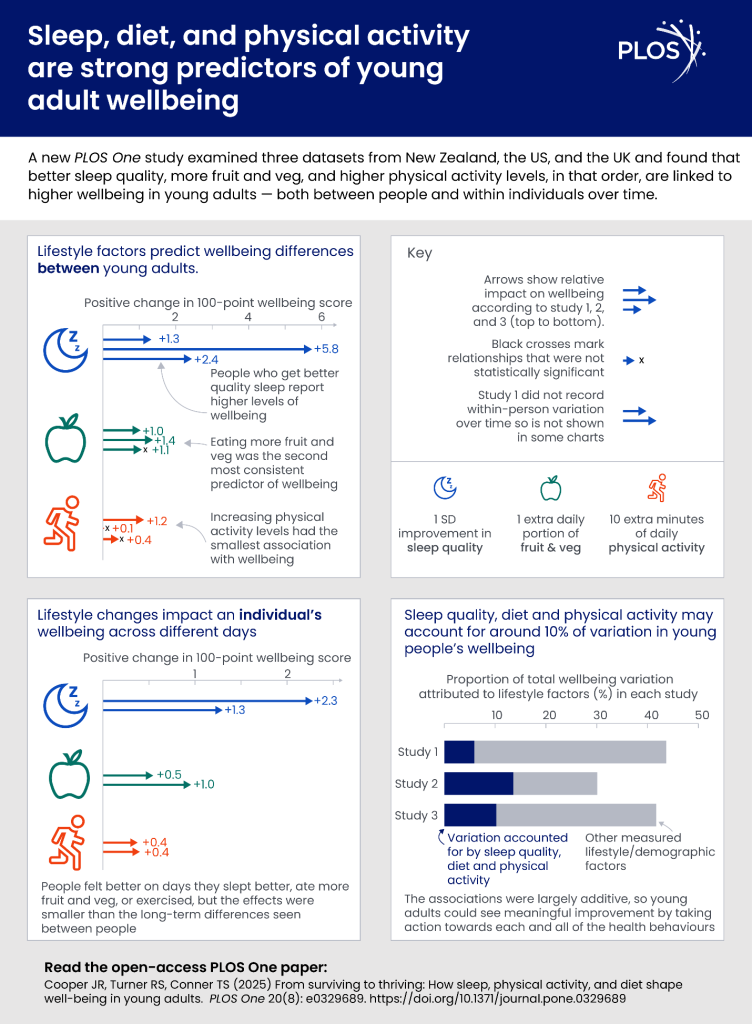
Good Sleep Quality Might be Key for Better Mental Wellbeing in Young Adults

Study also suggests eating fruit and vegetables and exercising are linked with strong benefits – and fruit and vegetable consumption might compensate for poor sleep

Photo by Eren Li

A new study of young adults has strongly linked better sleep quality with better mental wellbeing, with fruit and vegetable consumption and physical activity also strongly associated with psychological wellbeing. Perhaps surprisingly, the findings also suggest that boosting fruit and vegetable intake could potentially help mitigate the effects on wellbeing of a poor night’s sleep. Dr Jack Cooper, previously from the University of Otago, New Zealand, and colleagues present these findings in the open-access journal PLOS One on August 27, 2025.

Prior research has linked better health behaviours—actions that people can adjust in their lives—to better physical health. Evidence also suggests that health behaviours may be linked to mental wellbeing. However, research on this topic has been limited. For example, studies have typically focused only on mental illness, a separate measure from positive psychological wellbeing, and they typically neglect to consider how different health behaviours might interact to affect wellbeing.

To address these and other gaps, Cooper and colleagues analysed relationships between three health behaviours – sleep quality, eating fruits and vegetables, and physical activity – and psychological wellbeing in adults aged 17 to 25. They used data from three studies: a survey study of 1032 adults in New Zealand, the UK, and the US; a 13-day study of 818 New Zealand adults who were asked to keep a daily diary; and an 8-day diary study of 236 New Zealand adults who also wore Fitbits tracking physical activity.

Across all three studies, better sleep quality was most strongly associated with better mental wellbeing, with fruit and vegetable consumption coming in second. Both behaviours showed benefits even when comparing between different days for the same person – so eating more fruit and vegetables one day was associated with a real-time wellbeing boost. Physical activity – whether measured by FitBits or diaries, which aligned – was also linked to better wellbeing, but mostly when comparing between days for an individual rather than when comparing across individuals.

Links between each of the three behaviors and wellbeing appeared to be independent and additive – which might mean that the more of them you do, the bigger the wellbeing benefit. The only exception: above-average intake of fruits and vegetables appeared to mitigate the effects of a poor night’s sleep, and a good night’s sleep appeared to protect against lower fruit and vegetable intake.

This study used samples of young adults from three countries—the U.K., U.S., and New Zealand—and samples sizes were relatively homogeneous. Future research could address some of these limitations by including participants from additional countries and increasing the sample size to improve generalizability. Although this study could not prove a causative link between these behaviors and mental wellbeing, the authors hope that their findings could inform efforts to improve psychological wellbeing of young adults.

Lead author Dr. Jack Cooper adds: “Young adults don’t have to reach some objective benchmark of healthiness to see wellbeing improvement. Sleeping a little better, eating a little healthier, or exercising even for 10 minutes longer than you normally do was associated with improvements to how you feel that day.”

Senior author Professor Tamlin Conner, of the University of Otago Psychology Department, adds: “Understanding what lifestyle factors support wellbeing can help young adults not just ‘get by’ but thrive during this critical life stage.”

“Of these healthy habits, sleep quality stood out as the strongest and most consistent predictor of next-day wellbeing, but eating fruit and vegetables and being active also helped boost wellbeing”.

“This age group faces unique pressures – such as leaving home, financial stress, educational pressures and social stressors – that can lower happiness. Understanding what lifestyle factors support wellbeing can help young adults not just ‘get by’ but thrive during this critical life stage.

Provided by PLOS

Teen Smokers and Vapers Have Higher Rates of Depression and Anxiety, Study Finds

Study analysed data from the US National Youth Tobacco Survey on more than 60 000 middle and high school students.

Photo by Nery Zarate on Unsplash

Adolescents who use either e-cigarettes or conventional tobacco products (CTP) – like cigarettes, cigars, hookah and pipes – are significantly more likely to report symptoms of depression and anxiety than teens who don’t use tobacco products at all, according to a study published this week in the open-access journal PLOS Mental Health by Noor Abdulhay of West Virginia University, USA, and colleagues.

Tobacco use and mental health challenges are known to have a complex, bidirectional relationship. Understanding the interplay between adolescent tobacco use and mental health is particularly important, since adolescence is a critical developmental period during which many health-related risk-taking behaviors begin. Moreover, there are increasing rates of anxiety, depression, and suicide among adolescents in the U.S. as well as shifting patterns of tobacco use.

A white screen with black dotsAI-generated content may be incorrect.

In the new study, researchers used data on tobacco use, depression and anxiety symptoms, among different demographics, from the 2021-2023 National Youth Tobacco Survey. Among the 60,072 middle and high school students who had completed all questionnaires in full, 21.37% had used tobacco products, with 9.94% using only e-cigarettes, 3.61% using only CTPs, and 7.80% using both.

Overall, 25.21% of respondents reported symptoms associated with depression and 29.55% reported anxiety symptoms. Compared to adolescents who had not used any tobacco products, users of e-cigarettes or CTPs displayed a potentially heightened risk of depression and anxiety, whilst those who used both CTPs and e-cigarettes had the highest odds of reporting mental health struggles

The authors conclude that “while causality cannot be determined, the results from this study showed that all forms of tobacco use were significantly associated with mental health issues. There is a need to continue promoting mental health support and implementing tailored interventions to combat all forms of tobacco use among adolescents”.

Provided by PLOS

Catch-up Sleep on the Weekend Can Improve Teens’ Anxiety

Photo by Eren Li

A new study presented at the SLEEP 2025 annual meeting found that teens who get moderate, but not excessive, catch-up sleep on weekends have fewer symptoms of anxiety symptoms.

Results show that teens who got up to two more hours of sleep on weekends than on weekdays exhibited fewer anxiety symptoms compared with those who did not sleep longer on weekends. However, longer durations of catch-up sleep on weekends were associated with slightly more internalising symptoms.

“The results show that both sleeping less on weekends than weekdays and sleeping substantially more on weekends were associated with higher anxiety symptoms,” said lead author Sojeong Kim, a doctoral candidate in the department of clinical psychology and psychology graduate advisor at the University of Oregon in Eugene. “In contrast, moderate catch-up sleep – defined as less than two hours – was associated with lower anxiety symptoms, suggesting that some weekend recovery sleep may be beneficial.”

The American Academy of Sleep Medicine recommends that teenagers 13 to 18 years of age should sleep 8 to 10 hours on a regular basis to promote optimal health. However, CDC data show that only 23% of high school students get sufficient sleep on an average school night.

“Many teens try to make up for lost sleep by sleeping in on weekends,” Kim said.

Consistently getting sufficient sleep is associated with better health outcomes including improved attention, behavior, learning, memory, emotional regulation, quality of life, and mental and physical health. In contrast, insufficient sleep in teenagers is associated with increased risks of problems such as depression and suicidal thoughts.

The study involved 1877 adolescents with a mean age of 13.5 years. Sleep duration was estimated using Fitbit devices, while internalising symptoms were assessed using the Child Behavior Checklist survey. Weekend catch-up sleep was calculated as the difference between weekend and weekday sleep duration.

Kim noted that it is important to identify the right amount of catch-up sleep that is beneficial to teens who restrict their sleep during the week.

“Too little or too much sleep variability from weekday to weekend may contribute to the symptoms someone is trying to combat, like physical or mental fatigue and feelings of anxiety,” she said.

Source: American Academy of Sleep Medicine

Study Links Teen Girls’ Screen Time to Sleep Disruptions and Depression

The association between screen time and depression may be mediated by poor sleep, the new findings suggest.

Photo by Steinar Engeland on Unsplash

Excessive screen time among adolescents negatively impacts multiple aspects of sleep, which in turn increases the risk of depressive symptoms – particularly among girls. That is the conclusion of a new study published in the open-access journal PLOS Global Public Health by Sebastian Hökby of Karolinska Institutet, Sweden, and colleagues.

Recently, the Swedish Public Health Agency published recommendations that adolescents use no more than two-to-three hours of daily leisure screen time, partly to promote better sleep. Previous studies have suggested associations between screen time, sleep disruptions, and depression in teens. However, sleep problems and depression often coincide, and the direction of these associations has been unclear.

In the new study, researchers tracked 4,810 Swedish students aged 12-16, collecting data on sleep quality and quantity, depressive symptoms, and screen usage at three timepoints over the course of a year.  

The researchers found that increased screen time led to deteriorated sleep within three months, impacting both the duration and quality of sleep. Screen time was also found to postpone sleep times towards later hours – disrupting multiple aspects of the human sleep-wake cycle at once. Among boys, screen time had a direct adverse effect on depression after twelve months, while among girls the depressive effect was mediated through sleep disturbances. Sleep could explain about half (38%-57%) of the association between screen time and depression in girls. Boys who spent more time on screens also experienced sleep disruptions, but these were not strongly associated to later depression.

The authors summarize: “In this study, we found that adolescents who reported longer screen times also developed poorer sleep habits over time. In turn, this led to increased depression levels, especially among girls.”

They add: “Our results do suggest that less[…] screen time seems healthier, in line with previous World Health Organization statements…if screen times were somehow reduced, for example through public health policies, our results imply that the high burden of depressive states among young Swedish women, and maybe young men, would likely decrease.”

Provided by PLOS

Adolescents Who Sleep Longer Perform Better at Cognitive Tasks

Photo by Eren Li

Adolescents who sleep for longer – and from an earlier bedtime – than their peers tend to have improved brain function and perform better at cognitive tests, researchers from the UK and China have shown.

But the study of adolescents in the US also showed that even those with better sleeping habits were not reaching the amount of sleep recommended for their age group.

Sleep plays an important role in helping our bodies function. It is thought that while we are asleep, toxins that have built up in our brains are cleared out, and brain connections are consolidated and pruned, enhancing memory, learning, and problem-solving skills. Sleep has also been shown to boost our immune systems and improve our mental health.

During adolescence, our sleep patterns change. We tend to start going to bed later and sleeping less, which affects our body clocks. All of this coincides with a period of important development in our brain function and cognitive development. The American Academy of Sleep Medicine says that the ideal amount of sleep during this period is between eight- and 10-hours’ sleep.

Professor Barbara Sahakian from the Department of Psychiatry at the University of Cambridge said: “Regularly getting a good night’s sleep is important in helping us function properly, but while we know a lot about sleep in adulthood and later life, we know surprisingly little about sleep in adolescence, even though this is a crucial time in our development. How long do young people sleep for, for example, and what impact does this have on their brain function and cognitive performance?”

Studies looking at how much sleep adolescents get usually rely on self-reporting, which can be inaccurate. To get around this, a team led by researchers at Fudan University, Shanghai, and the University of Cambridge turned to data from the Adolescent Brain Cognitive Development (ABCD) Study, the largest long-term study of brain development and child health in the United States.

As part of the ABCD Study, more than 3200 adolescents aged 11-12 years old had been given FitBits, allowing the researchers to look at objective data on their sleep patterns and to compare it against brain scans and results from cognitive tests. The team double-checked their results against two additional groups of 13-14 years old, totalling around 1190 participants. The results are published today in Cell Reports.

The team found that the adolescents could be divided broadly into one of three groups:

Group One, accounting for around 39% of participants, slept an average (mean) of 7 hours 10 mins. They tended to go to bed and fall asleep the latest and wake up the earliest.

Group Two, accounting for 24% of participants, slept an average of 7 hours 21 mins. They had average levels across all sleep characteristics.

Group Three, accounting for 37% of participants, slept an average of 7 hours 25 mins. They tended to go to bed and fall asleep the earliest and had lower heart rates during sleep.

Although the researchers found no significant differences in school achievement between the groups, when it came to cognitive tests looking at aspects such as vocabulary, reading, problem solving and focus, Group Three performed better than Group Two, which in turn performed better than Group One.

Group Three also had the largest brain volume and best brain functions, with Group One the smallest volume and poorest brain functions.

Professor Sahakian said: “Even though the differences in the amount of sleep that each group got was relatively small, at just over a quarter-of-an-hour between the best and worst sleepers, we could still see differences in brain structure and activity and in how well they did at tasks. This drives home to us just how important it is to have a good night’s sleep at this important time in life.”

First author Dr Qing Ma from Fudan University said: “Although our study can’t answer conclusively whether young people have better brain function and perform better at tests because they sleep better, there are a number of studies that would support this idea. For example, research has shown the benefits of sleep on memory, especially on memory consolidation, which is important for learning.”

The researchers also assessed the participants’ heart rates, finding that Group Three had the lowest heart rates across the sleep states and Group One the highest. Lower heart rates are usually a sign of better health, whereas higher rates often accompany poor sleep quality like restless sleep, frequent awakenings and excessive daytime sleepiness.

Because the ABCD Study is a longitudinal study – that is, one that follows its participants over time – the team was able to show that the differences in sleep patterns, brain structure and function, and cognitive performance, tended be present two years before and two years after the snapshot that they looked at.

Senior author Dr Wei Cheng from Fudan University added: “Given the importance of sleep, we now need to look at why some children go to bed later and sleep less than others. Is it because of playing videogames or smartphones, for example, or is it just that their body clocks do not tell them it’s time to sleep until later?”

The research was supported by the National Key R&D Program of China, National Natural Science Foundation of China, National Postdoctoral Foundation of China and Shanghai Postdoctoral Excellence Program. The ABCD Study is supported by the National Institutes of Health.

Reference

Ma, Q et al. Neural correlates of device-based sleep characteristics in adolescents. Cell Reports; 22 Apr 2025; DOI: 10.1016/j.celrep.2025.115565


Republished under a Creative Commons Attribution-NonCommercial-ShareAlike 4.0 International License.

Read the original article.

Intermittent Fasting could be Unsafe for Teenagers

Photo by jamie he

A recent study reveals that age plays a significant role in the outcomes of intermittent fasting. Researchers from Technical University of Munich (TUM), LMU Hospital Munich, and Helmholtz Munich discovered that chronic intermittent fasting disrupted the development of insulin-producing beta cells in young mice. The findings, published in Cell Reports, raise concerns about potential risks for humans, especially teenagers.

“Intermittent fasting is known to have benefits, including boosting metabolism and helping with weight loss and heart disease. But until now, its potential side effects weren’t well understood,” says Alexander Bartelt, the Else Kröner Fresenius Professor and Chair of Translational Nutritional Medicine at TUM. In a recently published study, the team shows that intermittent fasting during adolescence could have long-term negative effects on metabolism.

Fasting improves metabolism in older mice, but not in the young

The researchers studied three groups of mice: adolescent, adult, and older animals. The mice remained without food for one day and were fed normally on two days. After ten weeks, insulin sensitivity improved in both the adult and older mice, meaning that their metabolism responded better to insulin produced by the pancreas. This is key to regulating blood sugar levels and preventing conditions like type 2 diabetes.

However, the adolescent mice showed a troubling decline in their beta cell function, the insulin-producing cells of the pancreas. Insufficient insulin production is linked to diabetes and disrupted metabolism. “Intermittent fasting is usually thought to benefit beta cells, so we were surprised to find that young mice produced less insulin after the extended fasting,” explains Leonardo Matta from Helmholtz Munich, one of the study’s lead authors.

Defective beta cells resemble those of type 1 diabetes patients

The researchers used the latest single-cell sequencing to uncover the cause of the beta cell impairment. By examining the blueprint of the pancreas, the team found that the beta cells in the younger mice failed to mature properly. “At some point, the cells in the adolescent mice stopped developing and produced less insulin,” says Peter Weber from Helmholtz Munich, also a lead author. Older mice, whose beta cells were already mature before the fasting began, remained unaffected.

This shows an accumulation of beta cells from the pancreas of an older mouse.
Beta cells from an older mouse.

The team compared their mouse findings to data from human tissues. They found that patients with type 1 diabetes, where beta cells are destroyed by an autoimmune response, showed similar signs of impaired cell maturation. This suggests that the findings from the mouse study could also be relevant to humans.

“Our study confirms that intermittent fasting is beneficial for adults, but it might come with risks for children and teenagers,” says Stephan Herzig, a professor at TUM and director of the Institute for Diabetes and Cancer at Helmholtz Munich. “The next step is digging deeper into the molecular mechanisms underlying these observations. If we better understand how to promote healthy beta cell development, it will open new avenues for treating diabetes by restoring insulin production.”

Source: Technical University of Munich (TUM)