Tag: 27/8/26

In Addition to Healthy Lifestyles, Certain Medications Slow Aging

Photo by Barbara Olsen on Pexels

When Raghav Sehgal arrived at Yale as a graduate student several years ago, he wanted to explore the use of powerful computer science tools in cancer research. With an engineering background and a computational biology startup already under his belt, he was well prepared.

But as Sehgal began his Ph.D. studies, his thesis adviser at the Yale School of Medicine posed a larger question: If you want to solve cancer or any age-related disease, such as cardiovascular disease, why not solve aging itself? 

“That put me on a different path,” said Sehgal, an associate research scientist in psychiatry with specialties in computational biology and bioinformatics. “As researchers, we have a long way to go in understanding the aging process and whether the steps we take to manage it really work.

What works and what doesn’t

Improved blood-based DNA tests indicate that these interventions seem to be the most effective at slowing the biological aging process:

  •  Prescribed medications for metabolic control and weight management, including metformin and semaglutide.
  •  Healthy diet and exercise combined. Researchers looked at popular diets including, the Mediterranean, low-fat, and low-carb plans.

Additional research is needed to further validate the findings.

Today, Raghav’s research focuses on the biological systems that drive human aging and how to best measure aging, as well as why aging gives rise to diseases like cancer, diabetes, and dementia. And while his research might not necessarily solve aging, he does explore whether the aging process can be reversed through interventions.

Sehgal is the first author of a new paper from the lab of Albert Higgins-Chen, assistant professor of psychiatry in the Yale School of Medicine. In the paper, Higgins-Chen’s research team took a significant step toward determining which existing anti-aging measures have quantifiable impacts.

Using a new class of DNA-based blood tests, they found that lifestyle interventions and certain drug treatments indeed appear to slow the aging process, while over-the-counter supplements don’t have much effect. All members of the Higgins-Chen lab collaborated in the work, including researchers Daniel Borrus, Jenel F. Armstrong, John Gonzalez, Jessica Kasamoto, and Yaroslav Markov. The paper appears in the journal Nature Medicine.

“For the first time we’ve shown that certain therapies have measurable impacts,” said Sehgal. “This wasn’t previously possible, because we didn’t have enough data to say these biomarkers are consistently responsive to these interventions.” Biomarkers are measurable indicators that reflect a person’s functional or biological age rather than just the number of years lived.

For their analysis, the researchers primarily used a type of blood-based biomarker known as epigenetic clocks, which estimate epigenetic or biological age by measuring the pattern of methyl groups (basic chemical structures that act like tags) attached to a person’s DNA. As people age, these chemical tags change, previous research has shown. Successful anti-aging interventions can reverse the tags. Computer algorithms are then able to use the changes observed in these tags to estimate a person’s epigenetic “age.”

In their work, the researchers combined data from 51 anti-aging intervention studies – which examined a range of strategies, from supplements to medical procedures – and measured more than 110 DNA methyl biomarkers (including 16 major epigenetic clocks). They then compared participants’ biological ages before and after various interventions.

“What we did was pretty unique,” Sehgal said. “We already know that certain things might prolong health span and lifespan. There is data from retrospective analysis as well as from animal models. We took all that knowledge along with the real-world clinical studies to identify which interventions in humans were slowing down aging across the board in these known biomarkers.”

The researchers tested four categories of intervention: pharmacological drugs, lifestyle-based changes, over-the-counter supplements, and medical procedures. They found that lifestyle interventions, such as a combination of a healthy diet (whether it’s Mediterranean, low-carb, or low-fat) and exercise, consistently decreased epigenetic age.

Pharmacologic interventions – including metformin and semaglutide, prescription medications used for metabolic control and weight management, and anti-TNF therapies, which use biologic medications to target an immune system protein that triggers harmful inflammation –decreased epigenetic age the most. (TNF, or tumour necrosis factor, is an immune-system protein that helps fight inflammation-related injury.) 

On the other hand, over-the-counter supplements and certain medical procedures didn’t have an effect in decreasing epigenetic age, their analysis showed. Other key findings revealed that the newer biological age clocks outperformed older models, and that biomarkers changed more in people with diseases than in healthy volunteers.

Going forward, the next step would be expanded testing measuring interventions and impact in a widespread, diverse group of volunteers, Sehgal said.

“If these new biomarkers are eventually validated to predict long-term health, scientists will be able to evaluate anti-aging therapies much faster,” he added. “Instead of waiting decades for evidence from clinical trials, we’ll be able to see which interventions are effective and in which people in a few years or even months.”

Senior author Higgins-Chen warned that researchers need to be cautious in interpreting intervention studies. 

“We have developed a rigorous, systematic approach to evaluating and comparing how biomarkers change across a wide variety of interventions, and that is a critical step in the right direction,” he said. “However, the true meaning of that change must be fully understood.”

Which biomarker changes are due to the intervention, and which result from hidden confounders? What is the time course of the change during an intervention – and after the intervention ends? What are the biological mechanisms underlying the change?

“And most importantly – what does the change mean for our long-term risk of age-related disease and functional decline?” Higgins-Chen said. The lab is continuing to investigate these questions in additional studies led by researchers Borrus, Armstrong and Grace Zou. Chen’s lab is also affiliated with the Department of Pathology, the Computational Biology and Bioinformatics Program, and the Y-Age Yale Center for Research on Aging.

Source: Yale University
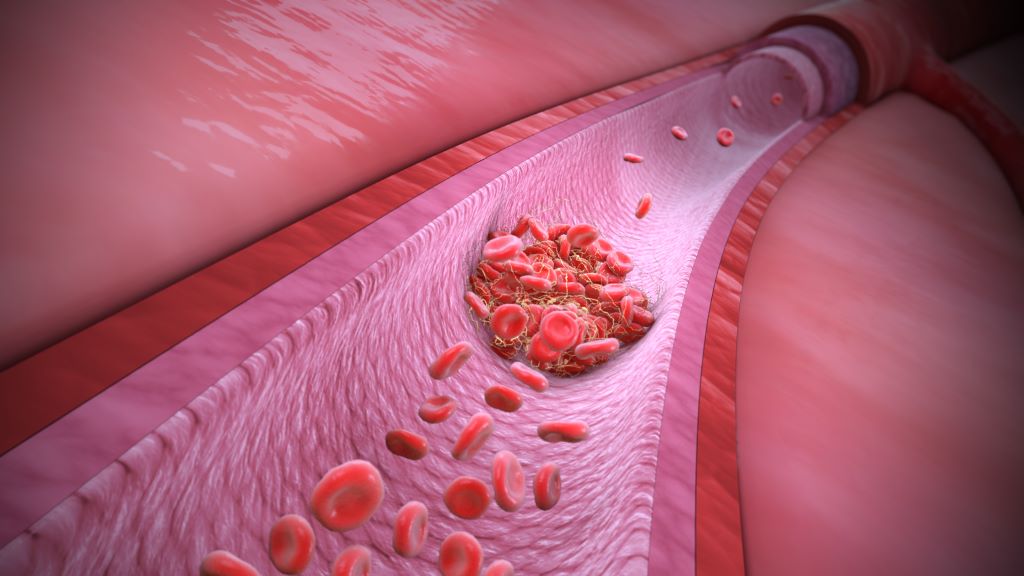
Study Finds Long-Term Benefits of Stroke Thrombectomy

Thrombophilia. Credit: Scientific Animations CC4.0.

A one-year follow-up analysis of a landmark clinical trial suggests that patients with severe strokes experienced better long-term outcomes after undergoing endovascular thrombectomy compared with medical management alone, according to findings published in JAMA.

The study evaluated ischemic stroke patients presenting with large-core infarcts, meaning a significant amount of brain tissue had suffered damage. These patients are historically considered less likely to benefit from mechanical clot removal because of the amount of brain damage that has already occurred by the time treatment begins, said Sameer A. Ansari, MD, PhD, professor and chief of Interventional Neuroradiology in the Department of Radiology, who was a co-author of the study.

While the original trial did not show meaningful benefit at 90 days, the newly reported one-year data show functional gains among patients who received thrombectomy. The results of the current study suggest longer-term follow-up was needed to fully understand the benefits of the procedure, Ansari said.

“At one year, it’s quite evident based on the statistical analysis that there’s significant benefit with thrombectomy,” said Ansari, also a professor in the Ken and Ruth Davee Department of Neurology and of Neurological Surgery.

In the study, investigators found that 23.6 percent of patients treated with endovascular thrombectomy achieved functional independence one year after their stroke, compared with 6.8 percent of patients who received medical management. Patients in the thrombectomy group were also significantly more likely to regain the ability to walk independently, with 35.4 percent achieving independent walking versus 18 percent in the medical-management group.

The multicentre trial enrolled patients at 47 US stroke centres who presented within 24 hours of symptom onset and had large strokes identified using noncontrast computed tomography (CT) imaging.

Patients who underwent thrombectomy also reported better quality of life one year after stroke, while one-year mortality rates were similar between the treatment groups.

The findings add to growing evidence from other large core interventional stroke trials that patients with extensive brain injury can still benefit from rapid thrombectomy to restore blood flow.

One possible explanation for the delayed benefit, Ansari said, is that recovery from severe stroke continues long after the standard 90-day assessment period used in most clinical trials.

“We know that people continue to improve after a stroke for the next one to two years,” Ansari said. “Three months has been an arbitrary standard used in prior stroke trials to assess benefit and functional outcomes after targeted interventions.”

Restoring blood flow may also support long-term neuroplasticity, the brain’s ability to reorganise and form new neural connections after injury, Ansari said. The study reported that patients who received thrombectomy continued to improve between 90 days and one year, while outcomes remained static or declined in the medical-management group.

While more research is needed to fully understand which large core stroke patients benefit most from thrombectomy, the results of the study may provide additional confidence that aggressive intervention can yield meaningful recovery for patients, even when improvement is not immediately apparent.

“What we’re seeing across multiple randomised controlled trials, endovascular thrombectomy remains a powerful intervention across a spectrum of stroke presentations,” Ansari said. “It gives clinicians more confidence to treat patients even with severe brain injury and to counsel their loved ones that the outcome benefit may require time to heal, hard work with physical therapy/rehabilitation, and family support.”

The study was supported by unrestricted grants from Medtronic, Cerenovus, Penumbra, Stryker and Genentech.

Original written by Olivia Dimmer

Source: Northwestern University

Accreditation Brings NWU’s Medical School Closer to Reality

The North-West University (NWU) has reached a decisive milestone in establishing the Desmond Tutu School of Medicine following the accreditation of its Bachelor of Medicine and Bachelor of Surgery (MBChB) programme by the Higher Education Quality Committee (HEQC) of the Council on Higher Education (CHE).

The CHE confirmed the accreditation in correspondence dated 21 August 2026. The six-year, 940-credit programme will be offered in contact mode at the Potchefstroom Campus.

For Prof. Binu Luke, inaugural chief director of the Desmond Tutu School of Medicine, the decision represents both an institutional achievement and the culmination of an immense collective effort.

“The accreditation of our MBChB programme by the Council on Higher Education is a major milestone in the development of the programme,” he says.

“More than excitement, there is a sense of relief because accreditation by the CHE is a crucial step in our progress towards establishing the school.”

The achievement follows an extensive process of planning, coordination and documentation involving teams across the university. According to Prof. Luke, the application required detailed evidence of how the school and its medical programme would function, covering everything from its curriculum and governance to its clinical training arrangements, staffing, finances and infrastructure.

“There is certainly excitement because this is the result of extensive hours of planning, organisation and implementation across our five workstreams,” he says.

“These workstreams cover defining the ‘North-West doctor’, preparing the clinical training platform, human resources and financial matters, infrastructure, governance, and curriculum development and mapping.”

Translating years of preparation into a comprehensive accreditation application was itself a demanding undertaking.

“Documenting all these activities, completing the relevant forms and providing the required portfolio of evidence was no mean feat,” says Prof. Luke.

“Credit must go to the core team, as well as to all the relevant entities within the university that supported this project.”

The CHE’s correspondence confirms the programme’s full accreditation and that all stipulated conditions have been met. The process of registering the qualification with the South African Qualifications Authority (SAQA) on the National Qualifications Framework (NQF) is now under way.

The accreditation process included the submission of detailed information about clinical rotation modules, assessment practices, exit-level outcomes and opportunities for articulation within and across the university.

Prof. Luke compares the establishment of the medical school to the journey from conception to birth, with accreditation representing the point at which the vision has become viable and the university must carry it through to completion.

“If we compare this process to pregnancy and delivery, from conception to a full-term birth at approximately 40 weeks, this milestone represents the point of viability, which we would regard as about 28 weeks,” he says.

“From now on, there is no turning back. We must continue and deliver the fully developed school in January 2028.”

The Desmond Tutu School of Medicine is set to become South Africa’s 11th medical school and plans to welcome its first cohort of students in 2028. Its development forms part of the NWU’s commitment to addressing the country’s healthcare workforce needs and strengthening healthcare delivery, particularly in underserved communities.

Several important steps must still be completed before the first students begin their studies. Among these is professional accreditation by the Health Professions Council of South Africa (HPCSA).

“There are still several activities that we need to complete. The next major milestone is accreditation by the HPCSA, which is essential for our graduates ultimately to enter professional practice,” says Prof. Luke.

“We have planned the HPCSA accreditation visit for February 2027, and we hope to receive its approval so that we can begin enrolling students in the middle of 2027, with the first cohort commencing its studies in 2028.”

The university will also finalise agreements with the University of the Witwatersrand and the National Health Laboratory Service. These partnerships will support the academic, clinical and laboratory components required to train future doctors.

The school’s curriculum and clinical training model are being designed to produce doctors who are clinically competent, ethically grounded and responsive to the realities of South Africa’s healthcare system. Its approach will be guided by the values associated with its namesake, Archbishop Desmond Tutu, including compassion, justice, integrity and service.

For Prof. Luke, the CHE’s decision is not the end of the journey, but confirmation that a vision years in the making has entered a new and irreversible phase.

“This is a crucial step forward,” he says. “There is no going back. We must now continue the work and deliver the school in January 2028.”

According to Prof. Awie Kotzé, executive dean of the Faculty of Health Sciences, the milestone ushers in a new era for both the NWU and the faculty.

His work towards establishing the medical school began in 2017. It will become the sixth school within the faculty and enable the NWU to offer a comprehensive range of clinically oriented qualifications, with several additional programmes expected to be introduced in the near future.

Spouted Baby Food Pouches More Like Sugary Drinks/Smoothies than Nutritious Food

They are high in sugar, low in nutrients, and too thin, finds analysis of UK products.
Current labelling as complementary food source needs regulatory review, say researchers.

Image made with AI

Commercial baby foods in spouted pouches – intended to boost nutritional intake from the age of 6 months onwards – are often more like sugary drinks and smoothies than nutritious food, finds an analysis of UK products, published online in Archives of Disease in Childhood.

They are often higher in sugar and lower in nutrient density than breast milk or formula, as well as frequently lacking the texture needed to help babies learn to eat solid foods, the analysis shows.

These pouches are currently labelled as a complementary food to be used alongside breast milk or formula, but the findings prompt the researchers to question whether this labelling is appropriate and to call for a regulatory review of these products.

Breast milk alone supplies all the key nutrients needed up to the age of around 6 months. After that, complementary foods are essential for establishing healthy food preferences, optimal growth, and long term health, as well as for helping babies learn how to eat solid foods, explain the researchers.

Complementary foods should have an increasingly solid texture and be more energy and nutrient dense than breast milk, they add. But while spouted pouches have become the dominant packaging for commercial baby foods, it’s not clear if their content fulfils these criteria, particularly as the contents need to be thin enough to pass through the spout.

To find out, the researchers reviewed the commercial baby foods available in 6 large hypermarkets, serving families in Glasgow, Scotland in October and November 2024.

In all, they found 298 products from 16 manufacturers, of which 178 (60%) were spouted pouches.  

All these pouches were labelled as suitable for children under 12 months; two-thirds were aimed at babies aged 6 months or younger—counter to official recommendations. Of the other products, 46 (38%) were aimed at infants aged 12 months or more.  

Foods were categorised relative to breast milk for energy, protein, and sugar content, and defined as suitable for complementary feeding if they were: a purée or solid food which would enable weaning; more energy and protein dense than breast milk; had a sugar content no higher than breast milk.  

Food texture was rated by two assessors for 284 (95%) of all the products. Half of the spouted pouches (49%) were liquids (score 1–3, where 0 is thin, and 4 is very thick) compared with 7% of the other products.

Only 10% of the spouted pouches were soft foods, compared with more than three-quarters (77%) of the other products.  

“The texture and manner of complementary feeding is important,” emphasise the researchers. “While suckling is an innate characteristic, the oromotor skills required for the manipulation of solid food in the mouth must be learnt experientially.  

“For that reason, recommendations suggest that first foods offered should progress from purées to lumpy, mashed, and finger foods. For pouches specifically, not only do they deliver a thin food that can be swallowed with little oromotor manipulation, but they are also often consumed by sucking from the spout, rather than from a spoon,” they add.

Overall, the available baby foods had an average energy content of 66.5 kcal/100 g, with only 35% above that for breast milk (65–70 kcal/100 g).

Only half (52%) of spouted pouches had a protein content higher than the range for breast milk..

In common with most of the other baby foods, only around a third of the spouted pouches had more energy per weight than breast milk, even though  61% had higher sugar content than breast milk. This compares with only 8% of the other baby foods.

“High sugar intakes in early childhood have long-term health implications, both in terms of dental health and overweight,” point out the researchers. 

In all, only 14 (8.5%) of the spouted pouches were defined as being completely suitable for a complementary food in that they met all the desired criteria; 48 (29%) met none. By contrast, 37 (32%) of the other wet baby foods met all the desired criteria; only 2 (2%) met none.

The researchers acknowledge various limitations to their findings. For example, they had no data on actual consumption, and the assessment of nutrient content was limited to the information provided by the manufacturers, with iron content, which is a key nutrient, rarely stated.

But they nevertheless conclude: “Products delivered in [spouted] pouches generally do not meet the desired characteristics of complementary foods. Many are more similar to sweet fruit smoothies, which are not recommended at all for babies or preschool children.

“Our findings suggest that regulators should consider whether a change in product categorisation and labelling is needed to make clear which products are foods and which are drinks, to discourage the use of [these pouches] and to enable parents to make informed choices in line with public health recommendations for feeding infants and young children.”

Source: The BMJ Group