Tag: 14/8/26

How Paediatric Radiology Gives Answers when Children Cannot
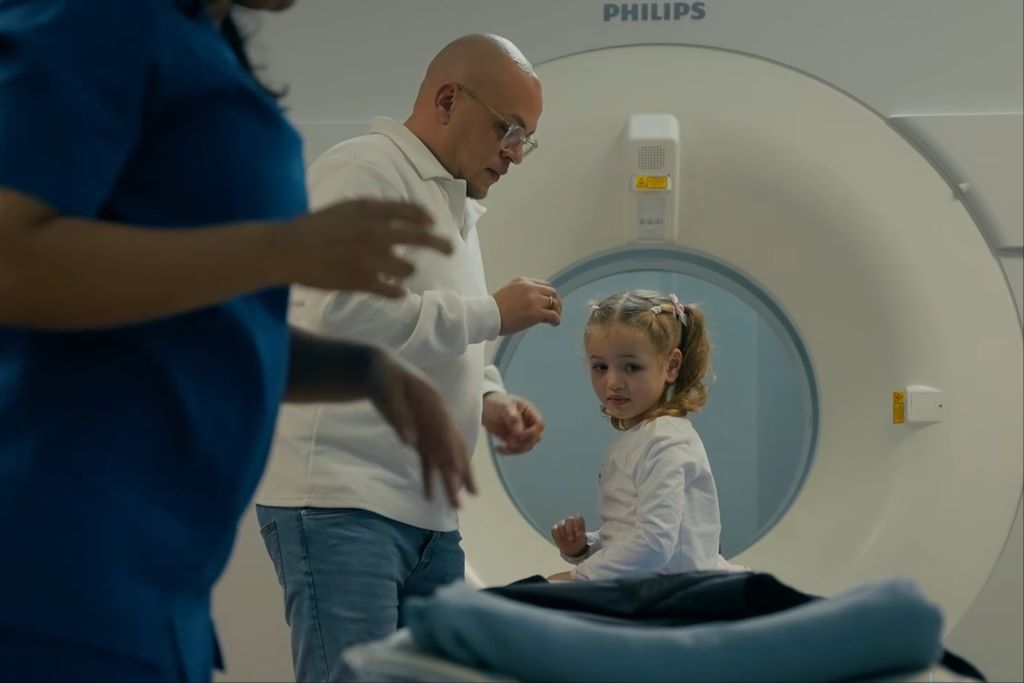
Children are NOT small adults. They experience and express illness and injury very differently from adults. Which is why paediatric diagnostic imaging is a highly specialised field of medical imaging and is specifically designed for children, from birth to adolescence.

Dr Ebrahim Banderker, a paediatric radiologist at Red Cross War Memorial Children’s Hospital (RXCH), explains why children need a different approach to imaging and the role of radiology in children. He also talks about the success of a public-private initiative with SCP Radiology where he is a consulting radiologist.

Why is paediatric imaging so important?

Children are often unable to, or struggle to describe the nature of their discomfort, pain or symptoms clearly. Imaging helps doctors understand what is happening inside the body, when language and understanding are limited.

When we diagnose early, we are often preventing future pain, disability or developmental issues as well as reducing the anxiety of the family. 

What should parents know or understand about paediatric radiology?

Paediatric imaging is designed with the needs, safety and the specific conditions of children in mind. It is a tool for clarity, reassurance and early care. Our goal is to care for the child in their imaging journey and provide their doctors and families with clear answers they can trust.

How is paediatric radiology different from adult radiology?

  • The choice of the method of imaging is primarily based on how safe it is. The effects of radiation from X-rays and CT scans have a greater risk for a child than an adult – so ultrasound and MRI are preferred where possible.
  • Children are often afraid, unsettled because of pain and anxiety and may require sedation or anaesthesia to make them comfortable during the imaging process.
  • Paediatric imaging equipment, anaesthetic apparatus, monitoring and emergency equipment have to be adapted to children of different ages.

Do paediatric radiologist work directly with children and their parents?

Paediatric radiologists interact with the child and their caregivers far more often than adult radiologists interact with their patients. It is one of the most rewarding aspects of our work. Parents are generally more involved and can help the radiologist by confirming the history and symptoms. The radiologist in turn can reduce parent anxiety, explain the procedure and obtain consent where needed.

Please can you talk about radiation and safety in children – we know that one of the issues both parents and other adults have is safety and radiation?

Children have rapidly developing cells and tissues, often tightly packed together in small bodies and are considered to be 10-15 times more sensitive to radiation.  

The guiding principle of all radiation safety is ‘ALARA,’ which stands for ‘As Low As Reasonably Achievable’ or as we say, ‘when benefit clearly outweighs the risk.’  Ultrasound and MRI do not use radiation and these should be used where possible.

What injuries are commonly seen in children that require imaging?

Common injuries include those from motor vehicle accidents and particularly pedestrian accidents, fractures from falls or playing sport and unfortunately, increasingly from child abuse which is sometimes first identified by the radiologist.

Children’s bones are different from adults and have areas where the bone is still growing. These are called growth plates. Injuries to the growth plates require special care because they can affect how a bone develops and this impacts the overall growth of the child. 

Outside of injuries, paediatric imaging also looks at chest infections, abdominal pain, appendicitis, urinary tract problems and hip development in infants. Brain imaging may be used for seizures, headaches or developmental concerns. In essence, imaging can help us rule out serious causes quickly, which brings enormous reassurance to families.

Even for adults, radiology can be stressful and frightening – for children it must be worse.  How are children supported during scans?

Radiographers and radiologists are trained to work gently and calmly with children and parents are encouraged to be involved and ask questions. For example, when a child needs to be sedated for an MRI, the parent will stay with them until they are asleep. When children feel safe, the scan is quicker, easier and more accurate. The team ensures the child is warm and comfortable and the environment is child friendly with toys and reading material to distract patients and to keep them happy and engaged.

What developments in paediatric radiology do you feel are the most important – especially over the 5 years?

  • Digital radiography allows for digital manipulation of images improving image quality and accuracy. Retakes are reduced so there is less radiation involved
  • Ultrasound machines have improved in-depth visualisation of body parts, disease processes and blood vessels
  • CT scanners are faster and offer lower radiation dose options. There are scanners which can scan the entire body of a child in less than a second.  There is not even time to wriggle…
  • MRI imaging is developing at a galloping pace with faster scanning techniques and finer image detail
  • Functional MRI and the ability to do tissue sampling in cancer imaging, is opening many exciting new avenues. 

The scope of interventional radiology techniques (treating not just diagnosing) is expanding rapidly to make less invasive treatment possible, with less complications for patients and much shorter recovery times. Paediatric radiology increasingly includes minimally invasive procedures (image-guided drainages, biopsies, nephrostomies, angiography), which can shorten hospital stays and reduce surgical burden. 

Cosmetic Procedure Addiction Risk May Link to Social Media and Body Image

Photo by Freestocks on Unsplash

As cosmetic procedures surge worldwide and beauty content increasingly dominates social media platforms, a new study from the Hebrew University of Jerusalem, suggests that for some women, cosmetic treatments may begin to resemble compulsive or addiction-like behaviour. The study, led by Dr Vera Skvirsky alongside Dr Uri Lifshin, Dr Dvora Shmulewitz, and Prof Mario Mikulincer from the Department of Psychology at Hebrew University of Jerusalem and the Israel Center for Addiction and Mental Health (ICAMH), examined what the researchers describe as “addictive cosmetic procedures use,” or ACPU, among women.

Published in the Journal of Health Psychology, the study surveyed 1614 women between the ages of 25 and 71, making it one of the larger investigations to date into the psychological patterns associated with repeated cosmetic treatments. The findings point to a phenomenon that researchers say deserves greater attention from both clinicians and the public. Among women who had undergone cosmetic procedures, 20% met the threshold for moderate to severe risk of addictive cosmetic procedure use during their lifetime.

More than 15% reported symptoms that were active within the past year.

Across the full sample, nearly 9% of women showed moderate to severe signs of problematic cosmetic procedure use. The researchers adapted an assessment tool originally based on the Diagnostic and Statistical Manual of Mental Disorders criteria for substance-related disorders. Participants were asked questions typically associated with addiction, including whether they had unsuccessfully tried to stop undergoing cosmetic procedures, felt compelled to continue despite negative consequences, or experienced cravings related to treatments.

While previous research has linked cosmetic procedures to body image concerns and body dysmorphic disorder, this study goes further by examining whether repeated cosmetic treatments can, in some cases, resemble a behavioural addiction. Unlike earlier studies, which often focused on patients at cosmetic clinics, this research surveyed more than 1600 women from the general population and found that addiction-like patterns were most strongly associated with the combination of low body esteem and problematic social media use.

While cosmetic procedures are often associated with confidence and self-expression, the researchers found that repeated engagement may also intersect with vulnerabilities tied to body image and digital behaviour. Women with lower body esteem were significantly more likely to report addictive patterns of cosmetic procedure use, particularly when paired with high levels of problematic social media use. Participants who reported problematic or excessive social media behaviour were especially vulnerable if they also struggled with dissatisfaction about their appearance.

The researchers also observed smaller associations between addictive cosmetic procedure use and lower feminist attitudes, lower attachment security, and more negative attitudes toward aging, though those relationships were less consistent once multiple factors were analysed together.

The findings arrive amid a sharp global increase in cosmetic procedures. According to international estimates cited in the paper, cosmetic interventions worldwide rose by roughly 40% between 2019 and 2023.

The researchers stressed that the study does not argue cosmetic procedures are inherently harmful. Rather, they say the results suggest that in some cases, repeated engagement may take on characteristics similar to behavioral addictions already recognized in mental health research.

“Cosmetic procedures have become deeply normalised in many societies, and for many people they may be a positive experience,” said the researchers. “But our findings suggest that for a meaningful minority, the behaviour may begin to resemble other compulsive patterns we see in addiction research, especially when low body esteem and problematic social media use are involved.”

The researchers cautioned that the study was cross-sectional, meaning it cannot determine cause and effect. It remains unclear whether problematic social media use contributes to addictive cosmetic behaviour, whether cosmetic procedures themselves influence body image and online engagement, or whether other psychological factors drive both.

Source: Hebrew University of Jerusalem

Outdated Ideas About Antibiotics are Common, Study Finds

Photo by Towfiqu barbhuiya

“Always finish your antibiotics” is no longer considered medical best practice for all conditions. This may come as a surprise for many patients.

A new study has found that almost 90% of Americans believe that it’s always best to take the full course of antibiotics, even when you feel better – consistent with long-running but now outdated health campaigns. The reality is more complicated. Sometimes shorter courses are safer, and sometimes longer courses are best.

The survey demonstrates a need for better communication between doctors and patients about what’s healthiest.

“Historically, there was very strong guidance by major health organisations and clinicians that you must always finish the course,” says Alistair Thorpe, PhD, research assistant professor of population health sciences at University of Utah Health and first author on the study. “Now, we’re seeing a growing body of evidence saying that that is not always the case. And oftentimes, shorter durations of antibiotics are as effective and safe as longer alternatives.”

The results are published in Open Forum Infectious Diseases.

A complex reality

The research team surveyed 1475 people across the country on their attitudes about antibiotic course length. They asked participants whether they’d feel more comfortable taking a three- to five-day course of antibiotics if they had pneumonia, as is recommended by current guidelines, or if they’d prefer an antibiotic course of a week or more, which is recommended by outdated guidelines. While shorter courses of antibiotics are as effective and safer for pneumonia than longer ones, about 60% of people said they’d rather take the longer course. 

One of the main reasons people gave for preferring longer antibiotic courses was that they had been told to “always finish their antibiotic course” – 88% of respondents had heard of, and agreed with, this common mantra. Most had been told this by their clinician, and many had also heard it via a public health campaign.

A strong body of scientific evidence shows that, for many common infections, shorter courses of antibiotics work as well as longer courses and are less likely to cause side effects. Still, there are some cases, like tuberculosis, where longer courses are most effective. 

The study authors suggest that doctors and public health campaigns use several evidence-informed strategies to better communicate the complex reality of antibiotic course length – for instance, avoiding overly simplistic claims that either shorter or longer courses are universally better, and acknowledging that as scientific evidence accumulates over time, health recommendations can change. 

To patients who have been prescribed antibiotics, Thorpe recommends having an open conversation with your doctor about the appropriate course length and adherence plan to get health advice that’s specific to your situation.  

“Discuss with your clinician what the right duration is for you and when the right time is to stop your course,” Thorpe says. “Getting advice directly from a clinician on a one-to-one basis about what is most appropriate for you in that situation is the right way to go.”

Thorpe emphasises that the changing recommendations are a positive outcome of increasing knowledge. 

“Evidence is growing and guidance is evolving on antibiotic use, which is a normal process and a good sign that we are working to improve how we provide care,” he says. “Our knowledge about how best to use antibiotics has changed, but it has changed because we’re learning more, and it’s important that we make sure we are communicating this well to the public.”

Source: University of Utah Health

Strep A Immunity Could Be Acquired via Asymptomatic Infection

This illustration depicts a 3D computer-generated image of a group of Gram-positive, Streptococcus pneumoniae bacteria. The artistic recreation was based upon scanning electron microscopic (SEM) imagery. Credit: CDC on Unsplash

Exposure to a mild or symptom-free strain of Streptococcus pyogenes (Strep A) can trigger the body’s immune response and naturally build protection, potentially solving a nearly 100-year-old mystery of immunity.

New Griffith University research, with the help of clinical scientists from the Murdoch Children’s Research Institute (MCRI), investigated how immunity developed over time as infection rates declined with age, suggesting progressive immune protection.

Strep A is a common bug which can cause painful tonsillitis and school sores in young children and teenagers.

If untreated, it can lead to rheumatic fever, rheumatic heart disease and kidney disease, conditions for which First Nations peoples in Australia suffer some of the highest reported rates in the world.

It is estimated 10-20% of children across Australia develop Strep A tonsillitis each year, with some getting the disease multiple times and requiring surgical removal of the tonsils.

By adulthood, most people have developed immunity to Strep A even though most will have only had a few bouts of tonsillitis in their life.

Senior author Associate Professor Manisha Pandey from Griffith’s Institute for Biomedicine and Glycomics said: “How this might happen has never been adequately explained as there are more than 250 distinct strains of Strep A, and immunity to one strain does not provide protection against the others.”

“To address this question, the team investigated the development of immunity using samples collected through a controlled human infection study conducted by MCRI researchers who administered a dose of Strep A which was high enough to cause tonsillitis in most, but not all.

“All participants were treated with antibiotics, regardless.

“Surprisingly, antibodies from the asymptomatic participants not only bound strongly to the exposed strain of bacteria but were able to kill the Strep A germ in a murine model of tonsillitis.”

The findings demonstrated both symptomatic and asymptomatic participants developed robust immune responses to the Strep A strain they were exposed to.

Dr Ailin Lepletier, said it had been known for many years that multiple strains of Strep A were circulating in the community and up to 30% of people had Strep A in their throats without getting sick.

“But we didn’t know this may be providing immunity to these strains, causing silent infections so that by adulthood, we have accumulated antibodies to fight most strains,” she said.

“While a person may not feel sick, their body can still learn how to fight the bacteria and remember it from childhood into adulthood.”

Professor Michael Good AO, said this mechanism of natural immunity may also apply to other common infections.

“While highly intriguing for Strep A, it is unlikely to provide a strategy for a vaccine as it would be necessary to vaccinate against each of the 250 strains,” he said.

Dr Anna Calkin, National Manager of Research at the Heart Foundation, said the findings came from research made possible through approximately $2.79 million in Heart Foundation funding.

“The findings highlight the importance of investing in research that addresses conditions disproportionately affecting First Nations peoples,” Dr Calkin said.

“By improving our understanding of how natural immunity to Strep A develops, this work may contribute to future efforts to prevent rheumatic heart disease and close longstanding health gaps.”

The research team included Griffith University Professor Daniel Kolarich, plus MCRI researchers Associate Professor Joshua Osowicki and Professor Andrew Streer.

The paper ‘Subclinical exposure to Streptococcus pyogenes drives the development of long-lived homologous immunity’ has been published in Nature Communications.

Source: Griffith University