A Scottish patient has become the first person in the world to receive a pioneering therapy aimed at improving outcomes for those having heart bypass surgery. The treatment involves precisely editing DNA in veins to be used during heart bypass surgery to boost the production of a protective protein.
The treatment could help extend the lifespan of blood vessels used during the surgery and significantly improve patient health, experts say.
Cause of failures in bypass surgery
Heart bypass surgery – an operation to improve blood flow to the heart – is a life-saving treatment for patients with coronary heart disease.
The process typically uses one artery and two or more veins as bypass grafts – healthy blood vessels used to bypass a narrowed or blocked artery – creating a new route for blood to flow.
Vein grafts used in this type of surgery can fail because they are not naturally designed to withstand the high pressure of blood flow from the heart.
Protecting vein grafts
The PROTECT study, led by NHS Greater Glasgow and Clyde and the University of Glasgow in collaboration with NHS Golden Jubilee and the University of Edinburgh, is trialling a new gene therapy designed to support newly grafted blood vessels.
The treatment will introduce a gene, which produces a protein called TIMP-3, into the vein to be grafted.
TIMP-3 is involved in tissue remodelling. Higher levels of the protein could help to prevent thickening and blockage of the blood vessel over time, scientists say.
Exciting milestone
The research team has developed a way to treat the graft directly at the time of surgery, safely and efficiently delivering the gene therapy to the affected tissue before grafting into the heart.
It is hoped the treatment will help to extend a patient’s healthy life expectancy and reduce the need for further surgeries, experts say.
Depiction of multiple myeloma. Credit: Scientific Animations
Patients with relapsed or refractory (R/R) multiple myeloma who received a combination of teclistamab, a bispecific monoclonal antibody, and daratumumab, a CD38-directed monoclonal antibody, were 83% more likely to be alive without disease progression compared with those who received standard second-line therapies at a median of nearly 35 months of follow-up, according to the results of a new trial presented at the 67th American Society of Hematology (ASH) Annual Meeting and Exposition.
The trial is the first to test a bispecific monoclonal antibody as early as the first relapse after initial treatment for multiple myeloma. Based on the findings, researchers suggest the combination of teclistamab and daratumumab, known as Tec-Dara, could represent a new standard of care for R/R multiple myeloma.
“We were surprised by the efficacy data because we didn’t expect such a magnitude of benefit,” said lead study author María-Victoria Mateos, MD, PhD, physician in the haematology department and professor of medicine at the University of Salamanca in Spain. “These are the best data we’ve seen in patients with R/R multiple myeloma after one line of therapy. Patients will live longer overall and with no worsening of quality of life.”
Multiple myeloma is a cancer that causes excessive production of plasma cells, crowding out the production of other types of blood cells and harming the body’s ability to fight infections. It is most common in older adults. Patients who relapse or experience an incomplete response to initial treatment often have their cancer return after subsequent therapies, pointing to a need for improved second-line treatments.
Teclistamab is approved by the U.S. Food and Drug Administration for R/R multiple myeloma after at least four prior lines of therapy. Daratumumab is a therapy targeting the CD38 protein that has been approved for use in combination with other therapies for newly diagnosed and R/R multiple myeloma. Laboratory studies have suggested that teclistamab and daratumumab may work synergistically to eradicate cancer to a greater extent than either agent individually.
To test this hypothesis, researchers randomized 587 patients with R/R multiple myeloma to receive either Tec-Dara or standard second-line therapies. For patients in the control arm, treating physicians chose between two standard three-agent combination therapies which included daratumumab with dexamethasone plus either pomalidomide or bortezomib (known as DPd or DVd, respectively).
Study participants had a median age of 64 with a range of 25-88, and all patients were R/R after one to three prior lines of therapy. Participants remained on their assigned treatment regimen unless they experienced intolerable adverse events, and were followed for a median of nearly 35 months.
The 36-month rate of progression-free survival, the study’s primary endpoint, was achieved in 83.4% of participants who received Tec-Dara and 29.7% of those receiving DPd/DVd, a substantial improvement in favor of Tec-Dara. This benefit was consistent across subgroups of patients by age, prior treatment, tumor genetics, and other factors.
In addition to being a highly efficacious treatment for R/R multiple myeloma as early as the first relapse, researchers noted that the Tec-Dara combination could be more accessible than other second-line therapies for multiple myeloma as it could be delivered in community settings, not just academic centers.
Tec-Dara outperformed DPd/DVd in terms of the trial’s secondary efficacy endpoints as well as quality of life outcomes and had a safety profile comparable to the control arm. Patients receiving Tec-Dara were significantly more likely to achieve a complete response or better, which occurred in 81.8% of patients receiving Tec-Dara and 32.1% among the control arm. They were also more likely to test negative for minimal residual disease (MRD), a sensitive test for remaining cancer cells, with 58.4% of those in the Tec-Dara arm achieving MRD-negativity compared with 17.1% in the control arm. Overall survival was also higher in the Tec-Dara arm, with 83.3% of patients in this group being alive at 36 months compared with 65.0% in the control arm.
The results showed comparable rates of treatment-emergent adverse events, with 95.1% of patients in the Tec-Dara arm and 96.6% of those in the control arm experiencing grade 3-4 adverse events. Rates of serious adverse events and discontinuations due to adverse events were also comparable between groups, researchers reported.
The rate of infections was higher among those receiving Tec-Dara, with 96.5% of patients in this group experiencing infections compared with 84.1% in the control group. The onset of higher-grade infections decreased over time, and researchers noted that strategies for managing infections also improved over the course of the study. Low-grade cytokine release syndrome (CRS) was also common, with grade 1-2 CRS occurring in 60.1% of those receiving Tec-Dara.
One limitation of the study is that patients refractory to daratumumab were not included in the trial. However, some patients (5%) had received daratumumab as part of their first-line therapy and benefited equally from the Tec-Dara combination.
Dr. Mateos noted that future studies could help clarify how doctors might select which patients would benefit most from the Tec-Dara combination in comparison to other therapies. Trials involving other bispecific antibody combinations are also underway and could shed additional light on the optimal use of such combinations as early as the first relapse.
New paper challenges old notions of ‘glitched brain’ idea of delusions and instead focuses on physical experiences of strong and deeply held emotion.
Photo by Alex Green on Pexels
People experiencing delusions during an episode of psychosis may be ‘living out’ a deeply held emotion, according to new research that provides a ‘radically different perspective’ on one of the most puzzling elements of psychosis.
About 2–3% of the UK and Australian population will experience psychosis at some point in their lives, with people commonly experiencing their first psychotic episode between the ages of 16 and 30 years old. Delusions are often described as fixed or false beliefs, understood to be reasoning or cognitive deficits and usually portrayed as incomprehensible and bizarre in popular culture.
New research by the University of Birmingham, University of Melbourne, and the University of York, in collaboration with the Australian youth mental health research institute Orygen, offers the first-known study of how delusions in psychosis are shaped by emotions and language, leading those experiencing delusions to ‘live in metaphor.’
Our research provides a radically different perspective on psychotic delusions, demonstrating how they emerge from the emotional, bodily, and linguistic fabric of people’s lives.Dr Rosa Ritunnano, University of Birmingham
Conducted with young adults receiving care from Early Intervention in Psychosis services, the research combines clinical assessment, phenomenological interviews, and life-story narratives to explore how people’s sense of self and their perception of reality change during psychosis.
Dr Rosa Ritunnano, from the Institute for Mental Health at the University of Birmingham, consultant psychiatrist and author of the study, said: “Our research provides a radically different perspective on psychotic delusions, demonstrating how they emerge from the emotional, bodily, and linguistic fabric of people’s lives.
“For a long time, clinicians have struggled to understand where delusions come from and how they take shape. Our research offers new insight by showing how delusions are grounded in emotional experiences that involve great bodily turmoil.”
Strong emotions
The findings reveal that delusions are not isolated ideas produced by ‘glitches in the brain,’ but they reflect distinctive patterns of the body reacting to strong emotions or experiences of dissociation.
Participants described alternating states of intense emotional embodiment, such as feeling exposed, powerful, or connected to God, and disembodiment, such as feeling unreal or detached from one’s body, other people, and the world.
Before the delusions started, people often went through upsetting or traumatic experiences that triggered the same intense feelings they later felt during the delusions, especially being shamed.
Repeated negative experiences such as being publicly mocked and shamed by bullies could induce the bodily perception of being surveilled by others when no one is present (so-called ‘reference delusions’). These turn into persecutory beliefs that others are out to get them, and that an audience can literally see what they are doing or hear what they are thinking at all times — leaving no space for privacy (delusions of ‘thought broadcasting’).
Importantly, delusional experiences were not always negative. For some participants, they involved powerful feelings of awe, love, and spiritual connection, fostering a positive sense of identity and a renewed sense of hope about the future.
Figurative language
A striking feature of participants’ accounts was their use of figurative and metonymic language (expressions linking bodily sensations with complex emotions or abstract ideas). This helps explain why delusional content can appear unusual or bizarre. For instance, feeling ‘exposed’ or ‘tainted’ might be expressed through the beliefs of being watched by cameras or being contaminated (as in delusions of parasitosis).
As a result of having endured strong (often negative) emotional experiences, which are then responded to by the body, and shaped by everyday language use, people experiencing psychotic delusions really are living in metaphor. People may feel delighted and say they are so happy they can ‘touch the sky’; this could lead them to experience the delusion of thinking they can fly.Professor Jeannette Littlemore, University of Birmingham
The language reflects how emotion concepts take shape in bodily experiences, establishing fundamental cognitive links between, for instance, the emotion of parental love and the physical sensation of warmth, or the emotion of shame and the physical sensation of being ‘seen’ by others.
Jeannette Littlemore, Professor of Linguistics and Communication at the University of Birmingham and co-author of the paper, said: “We all use metaphors and narratives to understand our experiences and make sense of our lives. But psychosis patients do so more intensely. As a result of having endured strong (often negative) emotional experiences, which are then responded to by the body, and shaped by everyday language use, people experiencing psychotic delusions really are living in metaphor. People may feel delighted and say they are so happy they can ‘touch the sky’; this could lead them to experience the delusion of thinking they can fly.”
The study argues that better insight into how delusions come about can be used to create more effective care for people experiencing psychosis. Participants felt that there was no space to talk about the meaning of their delusions in the context of their treatment and recovery from psychosis, which led to more shame and increased the sense of being dismissed and marginalised.
The researchers highlight the importance of attending to people’s bodily and emotional worlds, and how they express them, when developing compassionate, effective approaches to psychosis care.
The paper concludes that delusions are not simply beliefs gone wrong, but embodied attempts to restore meaning and emotional balance when life becomes overwhelming. The metaphors and narratives people use are keys to understanding their suffering and are not signs of irrationality.
Hyundai Automotive South Africa reaffirmed its commitment towards embedding disability inclusion into its operations, through continuous disability-related employee training, improving dealership layouts and vehicle modifications.
The aim is to foster a culture that recognises disability as part of human diversity rather than a limitation. “Mobility is not just about getting from one point to another, rather, about access and dignity,” said Stanley Anderson, CEO of Hyundai Automotive South Africa.
“Our commitment is to ensure our vehicles and dealerships are adequately prepared to support the needs of all customers, including those with disabilities. More importantly, we want to empower our customer-facing employees with deeper understanding of disability, dismantle misconceptions. By so doing, we will ensure that customers with disabilities feel welcomed, respected and supported when visiting any Hyundai dealership.”
It has also implemented a range of practical measures to ensure its dealerships are physically accessible and welcoming to persons with disabilities. This includes improving dealership layouts for ease of movement, ensuring wheelchair-friendly access points.
The company works closely with a range of specialised suppliers who modify some of its vehicles to suit the mobility needs of persons with disabilities. “These partnerships ensure that more South Africans can access safe, reliable and custom-adapted mobility solutions suited to their lifestyles and independence,” stated Christine Masinga, Human Resources Director at Hyundai Automotive South Africa.
The national disability prevalence rate in South Africa is estimated at around 7.5%. Despite national government targets for 2% representation of persons with disabilities in workplaces, recent reports indicate that they comprise less than 1% of the total employees across both government and private companies.
According to the Department of Employment and Labour, eight out of ten disabled persons are unemployed nationally, which is significantly higher than the general unemployment rate.
McGill researchers studying printed stickers on packaged food find some chemicals now used instead of bisphenol A can disrupt human ovarian cell function, and warn that ‘BPA-free’ does not necessarily mean safe
Chemicals used to replace bisphenol A (BPA) in food packaging can trigger potentially harmful effects in human ovarian cells, according to McGill University researchers.
A new study examined several chemicals commonly used in price stickers on packaged meat, fish, cheese and produce found early signs of potential toxicity.
The findings, published in the journal Toxicological Sciences, raise concerns about the safety of BPA-free packaging and whether current regulations go far enough to protect consumers.
BPA substitutes disrupt gene expression
The research began with the 2023 discovery by Stéphane Bayen, Associate Professor in McGill’s Department of Food Science and Agricultural Chemistry, that label-printing chemicals like bisphenol S (BPS), a BPA replacement, were leaching through plastic wrap into the food. He teamed up with colleagues in reproductive toxicology to investigate what these substances could be doing inside the body.
Lab-grown human ovarian cells were exposed to four commonly used BPA substitutes: TGSA, D-8, PF-201 and BPS. Several of the chemicals, particularly TGSA and D-8, caused a buildup of fat droplets in the cells and changed the activity of genes that help cells grow and repair their DNA.
“These are major cellular functions,” said Bernard Robaire, co-senior author of the study and James McGill Professor in McGill’s Departments of Pharmacology & Therapeutics and Obstetrics & Gynecology. “Disrupting them doesn’t prove harm in humans, but it gives us a strong signal that these chemicals should be further investigated.”
Unregulated replacements under the radar
BPA is a chemical that can interfere with the body’s hormones, and has been linked to problems with fertility, early development and metabolism. Because of these risks, it has been banned in baby bottles and restricted in some products in Canada.
Many of the chemicals used to replace BPA are not regulated or routinely tested, the researchers explained.
“‘BPA-free’ is an incredibly misleading label,” said Robaire. “It usually means one bisphenol has been swapped for another, and there are more than 200 of them. Some may be just as harmful, or even worse. We need to test these compounds before they’re widely adopted, not after.”
Health Canada has now added all four substances to a list of chemicals requiring further investigation.
For consumers looking to err on the side of caution, Robaire suggests removing labels and plastic wrap from fresh foods before storing. He also recommends choosing items from the top of store display piles rather than the bottom, where pressure from stacking may push chemicals more deeply into the packaging and food.
Many people stop taking cholesterol-lowering statins because they experience muscle aches, weakness, and fatigue. A new study by Columbia researchers now suggests that at least for some people, the side effects arise when statins bind to a protein in muscle cells and cause a leak of calcium ions inside the cells.
“It is unlikely that this explanation applies to everyone who experiences muscular side effects with statins, but even if it explains a small subset, that’s a lot of people we could help if we can resolve the issue,” says Andrew Marks, chair of the Department of Physiology and Cellular Biophysics at the Vagelos College of Physicians and Surgeons.
About 10% of adults taking statins experience these muscular side effects.
“I’ve had patients who’ve been prescribed statins, and they refused to take them because of the side effects. It’s the most common reason patients quit statins, and it’s a very real problem that needs a solution,” says Marks.
Electron microscopy pinpoints statin-muscle interaction
Statins’ muscular side effects have puzzled researchers since the drugs hit the market in the late 80s. Statins are designed to lower cholesterol by binding to an enzyme involved in cholesterol synthesis. But statins also bind to other “off-target” molecules, and some previous studies have suggested that muscular side effects occur when statins bind to a specific protein in muscle.
With cryo-electron microscopy, a technique that can image molecules down to individual atoms, the researchers of the new study documented this binding and uncovered the precise details of the interaction.
Simvastatin molecules bind to two locations on a muscle protein, called the ryanodine receptor, which opens a channel in the receptor. The flow of calcium through the open channel could explain the muscular side effects of statins.
The images revealed two locations on the muscle protein, called the ryanodine receptor, where a statin called simvastatin binds, opening a channel in the receptor and allowing calcium to flow through.
The calcium leak could explain the muscular side effects of statins, Marks says, by weakening the muscle directly or by activating enzymes that degrade muscle tissue.
Building a better statin
The new images also suggest that statins could be redesigned so they do not bind the ryanodine receptor but retain their cholesterol-lowering ability.
Marks is now collaborating with chemists to create such a statin.
Plugging the calcium leak could be another option: Statin-induced calcium leaks in mice can be closed, the researchers showed, with an experimental drug developed in the Marks lab for other conditions involving calcium leaks.
These drugs are currently being tested in people with rare muscle diseases. If it shows efficacy in those patients, we can test it in statin-induced myopathies,” Marks says
This is a pseudo-colored image of high-resolution gradient-echo MRI scan of a fixed cerebral hemisphere from a person with multiple sclerosis.
Credit: Govind Bhagavatheeshwaran, Daniel Reich, National Institute of Neurological Disorders and Stroke, National Institutes of Health
The immune system’s reaction to the common Epstein-Barr virus can ultimately damage the brain and contribute to multiple sclerosis (MS). This is shown by new research from Karolinska Institutet, published in Cell. The study provides new insight into the long-suspected link between Epstein-Barr virus (EBV) and MS.
Multiple sclerosis is a chronic inflammatory disease in which the immune system attacks the central nervous system and causes nerve damage. It has long been known that everyone who develops MS has had an infection with the Epstein-Barr virus (EBV) – a common virus that often infects young people, sometimes causing glandular fever but often without any obvious symptoms.. Exactly how this virus contributes to MS has long been unclear.
The new study shows that when the immune system fights EBV, certain T cells – which normally attack the virus – can also react to a protein in the brain called Anoctamin-2 (ANO2). This phenomenon is called molecular mimicry – immune cells mistaking the body’s own proteins for those of the virus.
The researchers found that these cross-reactive T cells are significantly more common in people with MS than in healthy controls. The study builds on previous research showing that misdirected antibodies after EBV infection may play a role.
“Our results provide mechanistic evidence that immune responses to EBV can directly damage the brain in MS. It is a complex neurological disease, and it may be that the molecular mechanisms vary between patients,” says the study’s first author, Olivia Thomas, assistant professor at the Department of Clinical Neuroscience at Karolinska Institutet.
The study is based on analyses of blood samples from people with MS and compared with healthy controls. The researchers were able to isolate T cells that react to both the EBV protein EBNA1 and ANO2 from people with MS. In addition, experiments in a mouse model showed that these cells can exacerbate MS-like symptoms and cause damage to the brain.
According to the researchers, the results may help explain why some people develop MS after an EBV infection while others do not.
“The discovery opens up new treatments that target these cross-reactive immune cells. Since several EBV vaccines and antiviral drugs are now being tested in clinical trials, the results may be of great importance for future preventive and therapeutic efforts,” says Professor Tomas Olsson, who led the study together with Associate Professor Andre Ortlieb Guerreiro-Cacais at the same institution.
Rates of multiple myeloma (MM), the second most common blood cancer in the United States, are increasing and are twice as high in men than in women. A new study published by Wiley online in CANCER, a peer-reviewed journal of the American Cancer Society, provides insights that may help to explain this disparity.
To investigate the sex difference in MM, researchers analyzed data on 850 patients with newly diagnosed MM enrolled in the Integrative Molecular And Genetic Epidemiology (IMAGE) study at the University of Alabama at Birmingham.
Compared with female patients, male patients were more likely to have advanced (International Staging System stage III) disease at the time of diagnosis. Males were also more likely to have high myeloma load—serum monoclonal protein (an abnormal protein produced by cancerous blood cells), more organ failure (especially kidney failure), and bone damage. Men were less likely than women to have low bone mineral density, and myeloma-defining features tended to differ between the two sexes. These differences were apparent even after taking numerous factors into account – including race, age, body mass index, education, income, smoking, and alcohol use.
Analyses suggested that certain chromosomal abnormalities that lead to initiation of myeloma occurring more often in younger males may help to explain some of the differences seen in this study.
“This research suggests that sex-specific mechanisms promote multiple myeloma pathogenesis, which may account for the excess risk seen in men,” said lead author Krystle L. Ong, PhD, of the O’Neal Comprehensive Cancer Center at the University of Alabama at Birmingham. “These findings may be used to improve risk stratification, diagnosis, and tailored treatments for both men and women with newly diagnosed multiple myeloma or related early precursor conditions.”
Just five extra minutes of moderate intensity physical activity a day or sitting half an hour less could make a measurable difference for public health, according to a new study published in The Lancet.
Researchers analysed data from more than 135 000 adults in Norway, Sweden, USA, and the UK to understand how small, realistic changes in daily habits affect mortality. Using device-measured physical activity, the team estimated how many deaths could be prevented if people moved a little more or spent less time sitting.
The findings suggest that even modest changes matter. For the least active individuals, adding just five minutes of moderate-to-vigorous physical activity per day could prevent about 6% of deaths. When applied across the population – excluding the most active – this figure rises to 10%.
Reducing sedentary time also showed benefits, though smaller. Sitting 30 minutes less each day could prevent around three percent of deaths among the least active and seven percent across the population.
Maria Hagströmer, professor at the Department of Neurobiology, Care Sciences and Society. Photo: Ulf Sirborn.
“These results show that small steps can have a large impact,” says Maria Hagströmer, professor at the Department of Neurobiology, Care Sciences and Society and co-author of the study. “You don’t need to run marathons—just a few extra minutes of brisk walking each day can make a difference.”
Ing-Mari Dohrn, docent at the same department and also a co-author of the study, adds: “Our study focuses on realistic changes. For many people, reducing sitting time or adding short bouts of activity is more achievable than large lifestyle modifications.”
The researchers emphasise that these changes are not a substitute for regular exercise but highlight how small adjustments can contribute to better health at the population level.
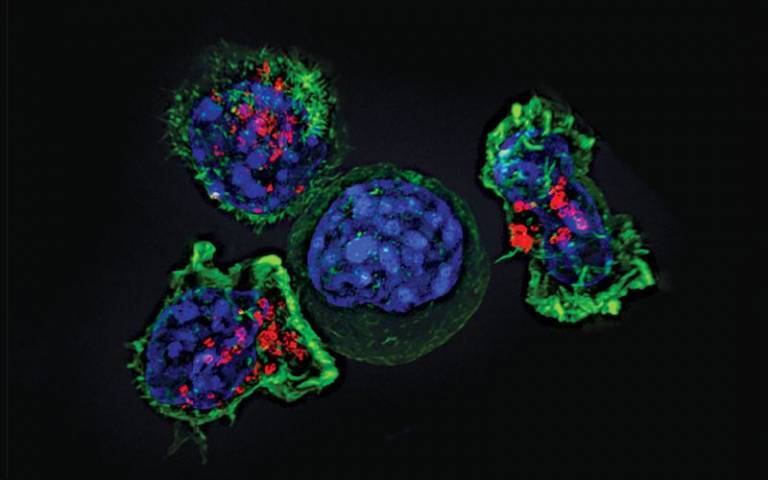
Killer T cells surround a cancer cell. Credit: Alex Ritter, Jennifer Lippincott Schwartz and Gillian Griffiths, National Institutes of Health (CC BY 2.0).
Adult patients with an aggressive form of leukaemia will be able to receive a breakthrough immunotherapy, which was invented by University College London researchers, on the NHS within weeks following approval for use by the UK’s National Institute for Health and Care Excellence (NICE).
The CAR T-cell therapy – known as ‘obe-cel’ and marketed as Aucatzyl – involves taking a patient’s immune cells and reprogramming them in a lab to identify and target their cancer, before returning them to the body as ‘living medicine’.
Obe-cel is a second-generation CAR T cell therapy invented by scientists from the UCL Cancer Institute, led by Dr Martin Pule, and has delivered promising results in treating patients with acute lymphoblastic leukaemia (ALL), an aggressive blood cancer.
The therapy has reduced immune toxicity and persists for longer in blood cancer patients, overcoming two common limitations of earlier CAR T cell therapies. Aucatzyl was taken through clinical trials and is manufactured by UCL spinout business Autolus, which was set up with the help of UCL Business, the commercialisation company of UCL.
The development of CAR T cell therapy has had long-standing support from the National Institute for Health and Care Research (NIHR) UCLH Biomedical Research Centre (BRC).
NHS England today announced that the personalised therapy would be available on the NHS within weeks through specialist centres.
Dr Claire Roddie, one of the team who developed the treatment from UCL Cancer Institute and UCLH consultant haematologist, said: “I am delighted to hear of NICE’s decision. Many more patients now stand to benefit from CAR-T cell therapy on the NHS.
“We have been working on proving the safety and efficacy of this drug since 2017 and it has brought together clinical and research teams from UCL and UCLH, with support from government and arm’s-length bodies like the NIHR and the BRC as well as the pharmaceutical industry.
“The many, many people involved in this work can feel immensely proud of this achievement which will help save the lives of many more patients.”
Eligible patients will receive two doses of CAR-T therapy intravenously, ten days apart, with the treatment being delivered at specialist CAR-T centres across the country.
The treatment will be available to people aged 26 and over with B-cell acute lymphoblastic leukaemia which has returned or not responded to previous treatment.
It is estimated that it could be administered to around 50 patients each year in England.
In a clinical trial, 77% of patients saw their cancer enter remission after treatment with obe-cel, with half of those showing no signs of detectable cancer after three and a half years.
The treatment – which has been researched, developed and manufactured in the UK – was also found to have lower toxicity and was less likely to cause serious side effects than other CAR (chimeric antigen receptor) T-cell therapies.
Dr Anne Lane, UCL Business CEO, said: “This cutting-edge personalised immunotherapy has been on a 10-year journey starting with research by clinical academics in UCL’s Cancer Institute who, with the support of UCL Business, established Autolus, a spinout company dedicated to developing, trialling and bringing AUCATZYL® to market. That journey has required vision, tenacity and over £800m. Today that has hugely paid off and will benefit people across the UK. It’s an inspiring demonstration of what can be achieved when university academics, NHS hospitals and investors work together.”
Professor Peter Johnson, NHS National Clinical Director for Cancer, said: “This cutting-edge therapy has shown real promise in trials and could give patients with this aggressive form of leukaemia a chance to live free from cancer for longer – and, for some, it could offer the hope of a cure.
“This ‘living medicine’ boosts a patient’s own immune system and then guides T-cells towards the cancer to kill it – it is fantastic to have another pioneering option available on the NHS, adding to our range of CAR-T therapies which are helping people with blood cancers live longer, healthier lives.”
Harry, a 19-year-old student from Harrogate, was treated with obe-cel for B-cell ALL as part of a clinical trial in 2024. He said: “I feel so lucky to have had access to such a wondrous treatment. Not only did it work better than my doctors thought it would, it worked without many of the horrible side effects you can get from other treatments.
“I think it’s brilliant obe-cel is now available on the NHS for people over the age of 26. The biggest thing it offers is hope. When you’re facing a situation like mine, hope is the most valuable thing you can have.”
Health Minister Ashley Dalton said: “This pioneering treatment is excellent news for patients and their families, demonstrating how the NHS is at the forefront of medical innovation.
“Our 10 Year Health Plan is about harnessing our world-leading life sciences sector to deliver treatments like this – innovative therapies that save lives.
“By supporting new treatments with fewer side effects and shorter hospital stays, we’re building an NHS fit for the future whilst cementing the UK’s position as a global leader in medical research.”
Fiona Bride, interim Chief Commercial Officer and Director of Medicines Value & Access at NHS England, said: “This is a success story that’s made in Britain, and shows how collaboratively we can bring to life the ambition of the 10 Year Health Plan, showcasing how the UK’s competitive edge in life sciences can translate to better outcomes and treatments for NHS patients.
“The journey of obe-cel from scientific research in a UK university to a safe, clinically and cost-effective treatment set to be delivered through the NHS specialist CAR-T network is a remarkable one and I am grateful to colleagues who have played their part along the way.”
Acute lymphoblastic leukaemia is an aggressive cancer in the blood and bone marrow, with around 800 people being diagnosed in the UK every year, around half of which are in adults.
Data shows patients with aggressive forms of the cancer receiving chemotherapy, the current routine standard of care, live for just 10 months on average after treatment.
The therapy will be fast tracked to patients more quickly than the standard 90-day implementation period thanks to interim funding from the NHS’s Cancer Drugs Fund.