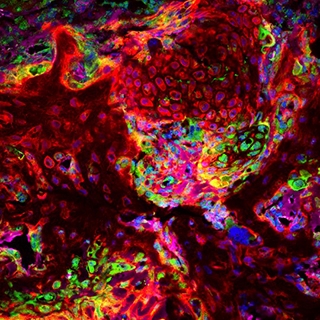
In a new study using mice, neuroscientists have uncovered a crucial component for restoring functional activity after spinal cord injury. In the study, published in Science, the researchers showed that re-growing specific neurons back to their natural target regions led to recovery, while random regrowth was not effective.
In a 2018 study in Nature, the team identified a treatment approach that triggers axons to regrow after spinal cord injury in rodents. But even as that approach successfully led to the regeneration of axons across severe spinal cord lesions, achieving functional recovery remained a significant challenge.
For the new study, the team of researchers from UCLA, the Swiss Federal Institute of Technology, and Harvard University aimed to determine whether directing the regeneration of axons from specific neuronal subpopulations to their natural target regions could lead to meaningful functional restoration after spinal cord injury in mice. They first used advanced genetic analysis to identify nerve cell groups that enable walking improvement after a partial spinal cord injury.
The researchers then found that merely regenerating axons from these nerve cells across the spinal cord lesion without specific guidance had no impact on functional recovery. However, when the strategy was refined to include using chemical signals to attract and guide the regeneration of these axons to their natural target region in the lumbar spinal cord, significant improvements in walking ability were observed in a mouse model of complete spinal cord injury.
“Our study provides crucial insights into the intricacies of axon regeneration and requirements for functional recovery after spinal cord injuries,” said Michael Sofroniew, MD, PhD, professor of neurobiology at the David Geffen School of Medicine at UCLA and a senior author of the new study. “It highlights the necessity of not only regenerating axons across lesions but also of actively guiding them to reach their natural target regions to achieve meaningful neurological restoration.”
The authors say understanding that re-establishing the projections of specific neuronal subpopulations to their natural target regions holds significant promise for the development of therapies aimed at restoring neurological functions in larger animals and humans. However, the researchers also acknowledge the complexity of promoting regeneration over longer distances in non-rodents, necessitating strategies with intricate spatial and temporal features. Still, they conclude that applying the principles laid out in their work “will unlock the framework to achieve meaningful repair of the injured spinal cord and may expedite repair after other forms of central nervous system injury and disease.”
‘Long COVID’ is a mysterious constellation of symptoms associated with having recovered from COVID infection – but how many cases represent a true condition, and how many fall under a poorly-defined umbrella of currently known ones? Overly broad definitions, a lack of appropriate, or any, comparison groups, among other things, in studies looking at the epidemiology of the condition have distorted the risks, say the authors of a review published in BMJ Evidence-based Medicine.
This is further compounded by inclusion of poorly conducted studies into systematic reviews and pooled data analyses that end up overstating the risk yet again, they add.
Likely consequences include increased public anxiety and healthcare spend; misdiagnoses; and diversion of funds from those who really do have other long term conditions secondary to COVID infection, suggest the researchers.
Many after-effects of COVID infection include post-ICU syndrome, which is a constellation of health issues that are present when the patient is in intensive care and which persist after discharge home, and shortness of breath following pneumonia. The trouble is that these are common to many upper respiratory viruses, the researchers point out.
None of the working definitions of ‘long COVID’ used by influential health bodies, such as the US Centers for Disease Control and Prevention, the World Health Organization, the UK National Institute for Health and Care Excellence (NICE), Scottish Intercollegiate Guidelines Network (SIGN), and the Royal College of General Practitioners requires a causal link between SARS-CoV2 and a range of symptoms.
Not only should comparator (control) groups be included in ‘long COVID’ studies, when they often aren’t, but they should also be properly matched to cases, ideally by age, sex, geography, socioeconomic status and, if possible, underlying health and health behaviours, which they rarely are, say the researchers.
During the early stages of the pandemic, when SARS-CoV-2 testing wasn’t widely available, studies were more likely to include a non-representative sample of SARS-CoV-2-positive patients by including fewer patients with mild or no symptoms.
This is known as sampling bias, which occurs when certain members of a population have a higher probability of being included in a study sample than others, potentially limiting the generalisability of a study’s findings, explain the researchers.
“Our analysis indicates that, in addition to including appropriately matched controls, there is a need for better case definitions and more stringent [‘long COVID’] criteria, which should include continuous symptoms after confirmed SARS-CoV-2 infection and take into consideration baseline characteristics, including physical and mental health, which may contribute to an individual’s post COVID experience, “ they write, adding that the umbrella term ‘long COVID’ should be jettisoned in favour of different terms for specific after effects.
While the results of high quality population studies on ‘long COVID’ in adults and children have been reassuring, they point out, the body of research “is replete with studies with critical biases” they add, setting out common pitfalls.
“Ultimately, biomedicine must seek to aid all people who are suffering. In order to do so, the best scientific methods and analysis must be applied. Inappropriate definitions and flawed methods do not serve those whom medicine seeks to help,” they insist.
“Improving standards of evidence generation is the ideal method to take long COVID seriously, improve outcomes, and avoid the risks of misdiagnosis and inappropriate treatment,” they include.
Professor Valerie Mizrahi, a world-leading tuberculosis researcher and director of the Institute of Infectious Disease and Molecular Medicine at the University of Cape Town, is retiring at the end of the year. PHOTO: Nasief Manie/Spotlight
World-leading tuberculosis researcher Professor Valerie Mizrahi was 35 when her mother Etty started losing weight and coughing furiously. After healthcare professionals in Johannesburg failed to accurately diagnose her, it was a doctor in Plettenberg Bay who told Etty: “The good news is you don’t have lung cancer, the bad news is that you have tuberculosis (TB).”
At the time, Mizrahi’s two infant daughters – aged one and three years old – had been spending much time with their granny. And so Mizrahi found herself crushing TB prevention tablets into her children’s porridge with honey.
Etty was treated at the then-Rietfontein Hospital, the precursor to Sizwe Tropical Diseases Hospital in Johannesburg. “My mom got very ill,” recalls Mizrahi. “She almost died of TB. And then 10 years later, she had to have a lobe from one of her lungs removed because she was one of those unfortunate people who got post-TB fibrosis.”
This was the early 1990s. Mizrahi was then with the South African Institute for Medical Research (SAIMR) linked to the University of the Witwatersrand, where she established the Molecular Biology Unit. She had identified TB as a lurking problem in South Africa, particularly in mines and in hospitals, calling it “a worthy foe ripe with opportunity for scientific investigation” – a problem she felt not enough people were talking about. It had been a pivotal moment when TB entered her own home, one that she says galvanised her thinking.
“It was a dramatic eye-opener for me as a basic scientist,” she says. “It was traumatic because of the time it happened in my career. Our family suddenly being thrust into the world of TB control. We had all these questions like we didn’t know where my mum got it, was her TB drug-susceptible, and why it would take so long to find this out. I got to see first-hand how difficult it was to get answers…”
Born in 1958 to Etty and Morris in Harare, Zimbabwe, Mizrahi studied at the University of Cape Town (UCT), forging an unusual career path, veering from mathematics and chemistry to biochemistry, genetics, and microbiology. In a male-dominated field, she became one of the first in South Africa to interrogate TB at a basic science level – that is to say, research aimed at advancing our understanding of the basic science of how TB bacteria survive, replicate, and resist attempts to kill it.
‘the only good TB bacillus is a dead one’
Discussing TB, Mizrahi’s passion is effervescent, her every second sentence punctuated with “okay”. These underscore her statements – subtle pauses allowing for her preceding words to sink in.
Source: CC0
…there’s a reason why TB has persisted for so long. The bacillus is pretty hard to kill. It’s built like Fort Knox.
Prof Valerie Mizrahi
A particular interest for Mizrahi is developing antibiotics “that can kill this bacterium stone cold dead”.
“To me, the only good TB bacillus is a dead one,” she says. “But there’s a reason why TB has persisted for so long. The bacillus is pretty hard to kill. It’s built like Fort Knox. So it’s a monumental challenge. We don’t know where all the bacteria are residing. We know that TB in an infected lung is sitting in really difficult places, hard places for drugs to get to. This notion of going after the bacillus with drugs and just slamming it is a tough problem. Not insurmountable, but there’s a lot of research that needs to be done.”
TB can be cured, but treatment typically takes at least six months and involves taking at least four different antibiotics, with side effects ranging from minor to serious. In addition to research on new antibiotics, there are also several experimental TB vaccines currently in late-phase studies. The only TB vaccine we have was developed more than a century ago and only has some moderate efficacy in kids.
The IDM
Since 2011 Mizrahi has served as director of the Institute of Infectious Disease and Molecular Medicine (IDM) – the University of Cape Town’s (UCT) largest cross-faculty research unit with over 800 affiliated staff and grants running into hundreds of millions of rands.
Mizrahi’s glass-encased office looks directly onto Table Mountain and hospital bend – where, at the time of our interview, N2 traffic out of Cape Town is already at a standstill. Behind her desk, Mizrahi quips. “Yes, this is the most beautiful office at UCT, everyone agrees…” Below, students can be seen milling about on the health sciences campus.
Last year in its Best Global Universities 2022-2023 survey, online portal US News ranked UCT as 24th best university in the world for studying infectious diseases. Mizrahi is ambivalent about the IDM taking credit for this accolade. She notes that this success is founded on problems of a “confounding and overwhelming” scope, with many diseases being proxies for poverty and inequality in South Africa.
The IDM’s focus includes TB, HIV/AIDS, COVID-19, other infectious diseases like sexually transmitted infections, and non-communicable diseases such as preventable cancers, cardiovascular, and psychiatric disorders.
Reflecting on the IDM, she says they have accrued a “research ecosystem – a concentration of expertise, something resembling critical mass” – bringing together specialists across the basic, clinical, and public health sciences, in one place.
“We’ve got Groote Schuur Hospital across the road,” she says. “We have geneticists and biochemists, virologists, and immunologists. There’s a clinician across the corridor from me, bioinformaticians, and microscopists downstairs. If you are the kind of researcher who revels in asking questions and finding people who can answer them, then this is the place for you.”
Going forward, multi-disciplinary research is what excites her. “HIV and TB have been so dominant in the narrative of this country. But now when you look at the figures and the data, we are dealing with a huge burden of non-communicable disease on top of infectious diseases,” she says. “The key question moving forward is how not to think in silos.”
Polymaths and dilettantes
This, she says, takes humility.
“To do this, one has to be very humble. You need to know what you don’t know. People who work really well in interdisciplinary spaces are those who understand the limits of their own specialist knowledge, and the need to listen to where another person is coming from.”
She distinguishes between polymaths and dilettantes. “You have to be careful not to be a dilettante, who knows a little about a lot. Research can be very superficial in that way. So I have my antenna out all the time to distinguish between polymaths, who really are people who know a lot about a lot, and dilettantes who know a little about a lot. And well, in this institute we have a lot of polymaths, brilliant researchers who move across disciplines, very interesting people to work with.”
With a string of awards and an A1-rating from South Africa’s National Research Foundation, earlier this year, Mizrahi was elected a fellow of the Royal Society, the United Kingdom’s National Academy of Sciences. However, she recalls humbling moments along the way – like the time she flew to London seven months pregnant with her second child, for her first-ever interview with the Wellcome Trust committee to secure funding. “I was so confident, but I was ill-prepared,” she says. “They savaged me! I tried to frame it not as a failure but as a learning experience.”
Passing the baton
At the end of this year, Mizrahi will pass on the baton when she retires. Of her achievements, she is proudest of young scholars she has helped to shape. “Their legacies will last much longer than a few more citations of a publication,” she says.
Mizrahi notes more and more women leaders in her field. For example, recently, while delivering a talk at the Weizmann Institute in Israel, she noticed chemist and Nobel laureate Ada Yonath in the room. “Talk about a role model; I was almost in tears.”
Studying at UCT, Mizrahi’s own mentors had mostly been men – something she didn’t even notice, she says, as male professors treated her no different. What did cut her was racial segregation at the time, prompting a political awakening and stints leaving South Africa to work in the United States. First as a postdoctoral fellow at Pennsylvania State University and then at drug company, SmithKline & French in Philadelphia.
Her own background makes her sensitive to marginalised groups, she says. Her grandparents were Sephardi Jews who fled Rhodes Island, today part of Greece, ten years before World War II, to find refuge in Zimbabwe.
Having just read former UCT vice-chancellor Max Price’s book Statues and Storms: Leading a University Through Change, she says, “It took me back to some very difficult times. It’s harrowing and brave and made me realise that even though I was here in the midst of it [#feesmustfall and #rhodesmustfall protests], a senior person of the university, how little I really knew of what was going on. It really is a lesson in crisis leadership.”
There’s no control experiment to life, you can’t go back and redo it.
Mizrahi lives in Sea Point with her one daughter. Her other daughter is based in Vancouver. Here, she likes to park her car at the end of the week, walking around – “either listening to a New York Times podcast or a beautiful piece of music and that’s when I think.”
She describes herself as an introvert who needs personal time to stay sane. She is deeply thoughtful about her roots, wondering about a sense of belonging. “As white people in Africa, I think this is part of the reckoning we go through. I truly identify as being African. Arriving at Johannesburg, just breathing in the air, it feels like home.”
Looking back, Mizrahi notes her mother as a major influence in her life. “Not a highly educated woman. But the wisest, smartest person I know.” Etty still lives in Johannesburg while Morris has passed away. To this day, Etty thinks of herself as a proud TB survivor, says Mizrahi.
On her retirement, the scholar says, “Now it’s about opening up opportunities for others, writing a few papers, and contributing to the TB drug discovery space.”
“I’ve done the best I can,” she says, “I don’t believe in having regrets… There’s no control experiment to life, you can’t go back and redo it. But I don’t know that I could have done it any differently.”
Presenting its financial year-end results to investors and analysts, Discovery Group has reported profit increases of 24% across all of its opertaions. CEO Adrian Gore commented, “Discovery’s three business composites – South Africa, United Kingdom and Vitality Global – delivered excellent performances in line with the Group’s strategy and ambition.”
For the reporting period, Discovery posted an increase in normalised profit from operations, up 24% from R9 384 million to R11 661 million. Headline earnings increased by 5% to R5 490 million; normalised headline earnings increased by 32% to R7 678 million; and core new business annual premium income (API) rose 12% to R22 788 million. Embedded value increased to R98 176 million, which represented a 13.2% return on embedded value.
In a year characterised by significant macroeconomic uncertainty, Discovery continued its focus on delivering quality earnings and cashflow with a strong balance sheet; while following a clear growth strategy for each composite (SA, UK and Vitality Global). The Group invested in its proprietary Vitality Shared-value model, and intensified the focus on key initiatives while closing business areas with marginal benefits.
The Group remained financially resilient with high levels of liquidity and the financial leverage ratio (FLR) improving to 20%. Organic cash generation was robust during the year following growth in quality earnings, a significant recovery in Discovery Life’s cash generation following elevated COVID-19-related claims in the previous reporting period, and the reduction in the cost of new initiatives. The robust balance sheet and cash positions support the resumption of dividends, and the directors declared a final gross cash dividend of 110 cents per ordinary share.
Discovery’s saw excellent results for each composite. The SA Composite’s normalised operating profit increased by 22% to R9 096 million and new business by 11% to R16 818 million. Discovery Health showed strong growth across all metrics with prior investment in technology driving efficiencies and continued innovation. Discovery Life had a resilient performance with positive variances, with Group Life returning to profit. Discovery Invest generated significant growth in profit, given higher investment markets and other in-period gains. Discovery Insure delivered on its profit turnaround, following actions taken in previous periods. Discovery Bank continued with excellent progress across all metrics, as acquisition of quality clients accelerated over the year.
Normalised operating profits rose by 14% for the UK Composite and 49% for Vitality Global (US$44 million), driven by especially strong results from China.
Gore concluded, “Discovery’s growth strategy is based on the efficacy, repeatability, and scalability of our Vitality Shared-value model. It is a powerful platform from which to drive new business and enables us to pursue growth through our organic businesses and global partnerships. The Group is now focused on evolving the model into an integrated value chain with bespoke modules to drive growth and market leadership across each of the composites.”
Positive results from a clinical trial comparing the safety and efficacy of ciclosporin with methotrexate in children and adolescents with severe dermatitis will likely change treatment paradigms for this debilitating skin condition, its researchers have said. The trial, published in the British Journal of Dermatology, also examined whether the severity of the disease changed or returned after treatment ended.
For children and young people with atopic dermatitis, the most common skin condition in children, the main first line conventional systemic treatments are methotrexate and ciclosporin, two immuno-modulatory drugs.
There have been no adequately powered randomised clinical trial evidence for safety and treatment success for paediatric patients with this condition, and with new therapies being introduced at a high cost, establishing a gold standard for treatment with the conventional systemic therapies like methotrexate and ciclosporin is needed.
The trial, led by King’s College London, assessed 103 children with severe atopic dermatitis age 2–16 years across 13 centres in the UK and Ireland. The patients were given oral doses of methotrexate or ciclosporin and assessed over nine months of treatment and six months after the therapy ended.
The study found that ciclosporin works faster and reduces disease severity more at 12 weeks but was more expensive, whereas methotrexate was significantly cheaper and led to better objective disease control after 12 weeks and off therapy, with fewer participant-reported flares of atopic dermatitis after treatment had stopped. There were also no concerning safety signals.
Based on the TREAT trial findings, methotrexate is a useful and safe treatment in paediatric patients with severe atopic dermatitis and a good alternative to ciclosporin, especially in settings where health care resources are limited.
Professor Carsten Flohr, Chair in Dermatology and Population Health Sciences at King’s College London, and consultant dermatologist at St John’s institute of dermatology, Guy’s and St Thomas’ NHS Foundation Trust, said:
“This is the largest paediatric trial using conventional immuno-modulatory treatments in severe atopic dermatitis and was conducted across 13 centres in the UK and Ireland and is likely to change our treatment paradigm around this condition, not just for patients in the UK but also internationally.”
A group of activists for food access and affordability met yesterday (Thursday 21 September 2023) to discuss the worsening food crisis for children. Convened by the Nelson Mandela Children’s Fund and the DG Murray Trust, the meeting sought to identify urgent measures to combat rising rates of severe acute malnutrition and child hunger.
The activist group includes representatives of COSATU, the South African Council of Churches, civil society groups and academics. It endorsed the proposal by the DG Murray Trust and the Grow Great Zero-Stunting Campaign for government and the food industry to contribute equally in making at least one product label of ten highly nutritious foods far more affordable to poorer households. This proposal requests food manufacturers and retailers to ‘double discount’ a list of ten best buy foods, with the amount of profit waived by industry matched by a retail subsidy by government.
“Data from the Department of Health shows that there were over 15 000 cases of severe acute malnutrition requiring hospitalisation in the 2022/3 financial year,” says Dr Linda Ncube Nkomo, CEO of the Nelson Mandela Children’s Fund. “But that is just the tip of the iceberg”, she says. “Malnutrition is the underlying cause of about one-third of all child deaths in South Africa today, this despite Section 28 of the Constitution which guarantees the right of nutrition to every child”.
The problem of acute malnutrition worsens the chronically high levels of food insecurity in South Africa, with over a quarter of children under five nutritionally stunted. Poor physical growth is just one manifestation of much deeper damage being done to the life-long wellbeing of children, not least to their brain development,” says Dr Edzani Mphaphuli, Executive Director of the Grow Great zero-stunting campaign. “If we don’t stop stunting now,” Mphaphuli continues, “we shouldn’t expect learning outcomes to improve or our economy to grow.”
In addition to the double-discounted basket of ten best buys, the group called on the food formula industry to stop extracting massive profits from the poorest mothers, whose own malnutrition makes breastfeeding difficult. Given the high cost of infant formula, desperate mothers water down the milk to make it stretch further, which means that their babies don’t get enough protein and vitamins. It also called on government to ensure that every province has an effective programme in place to identify children at high risk and to provide nutritional supplementation to children failing to thrive.
The group undertook to monitor food prices actively and to challenge the food industry to make the third of young children who live below the food poverty line their responsibility too. “We are heartened that NEDLAC has tasked a multi-sectoral committee to review the viability of proposal to double-discount ten best buy foods”, says Dr David Harrison, CEO of the DG Murray Trust. “No sector of society – not government, not labour, not civil society nor industry – should be able to say that substantive proposals to feed South Africa’s children are too difficult, without putting a better option on the table.”
Researchers have discovered that a genetic biomarker may be able to help predict the severity of food allergy reactions. Currently there is no reliable or readily available clinical biomarker that accurately distinguishes patients with food allergies who are at risk for severe life-threatening reactions versus more mild symptoms. The researchers reported their findings in the Journal of Allergy and Clinical Immunology.
The researchers, led by Ann & Robert H. Lurie Children’s Hospital of Chicago, found that the presence of an enzyme isoform called α-tryptase, which is encoded by the TPSAB1 gene, correlates with increased prevalence of anaphylaxis or severe reaction to food as compared to subjects without any α-tryptase.
“Determining whether or not a patient with food allergies has α-tryptase can easily be done in clinical practice using a commercially available test to perform genetic sequencing from cheek swabs,” said lead author Abigail Lang, MD, MSc, attending physician and researcher at Lurie Children’s and Assistant Professor of Pediatrics at Northwestern University Feinberg School of Medicine. “If the biomarker is detected, this may help us understand that the child is at a higher risk for a severe reaction or anaphylaxis from their food allergy and should use their epinephrine auto-injector if exposed to the allergen. Our findings also open the door to developing an entirely new treatment strategy for food allergies that would target or block α-tryptase. This is an exciting first step and more research is needed.”
Tryptase is found mainly in mast cells, which become activated during allergic reactions. Increased TPSAB1 copy number which leads to increased α-tryptase is already known to be associated with severe reactions in adults with Hymenoptera venom allergy (or anaphylaxis following a bee sting).
Dr Lang’s study included 119 participants who underwent TPSAB1 genotyping, 82 from an observational food allergy cohort at the National Institute of Allergy and Infectious Diseases (NIAID) and 37 from a cohort of children who reacted to peanut oral food challenge at Lurie Children’s.
“We need to validate our preliminary findings in a much larger study, but these initial results are promising,” says Dr Lang. “We also still need a better understanding of why and how α-tryptase makes food allergy reactions more severe in order to pursue this avenue for potential treatment.”
Craniosynostosis, the premature fusion of the top of the skull in infants, is caused by an abnormal excess of a previously unknown type of bone-forming stem cell, according to a preclinical study published in Nature.
Occurring in one in 2500 babies, craniosynostosis arises from one of several possible gene mutations. By constricting brain growth, it can lead to abnormal brain development if not corrected surgically. In complex cases, multiple surgeries are needed.
Led by researchers at and led by researchers at Weill Cornell Medicine, the team focused on what happens in the skull of mice with one of the most common mutations found in human craniosynostosis. They found that the mutation drives premature skull fusion by inducing the abnormal proliferation of a type of bone-making stem cell, the DDR2+ stem cell, that had never been described before.
“We can now start to think about treating craniosynostosis not just with surgery but also by blocking this abnormal stem cell activity,” said study co-senior author Dr Matt Greenblatt, an associate professor of pathology and laboratory medicine at Weill Cornell Medicine and a pathologist at NewYork-Presbyterian/Weill Cornell Medical Center.
A new stem cell driving disorders of premature skull fusion was transplanted (red), showing that it makes the cartilage seen at sites of skull fusion (green). Credit: Greenblatt lab.
In a study published in Naturein 2018, Dr Greenblatt, study co-senior author Dr Shawon Debnath and their colleagues, described the discovery of a type of bone-forming stem cell they called the CTSK+ stem cell. Because this type of cell is present in the top of the skull, or “calvarium,” in mice, they suspected that it has a role in causing craniosynostosis.
For the new study, they knocked out genes associated with craniosynostosis in CSTK+ stem cells in mice. They expected that the gene deletion somehow would induce these calvarial stem cells to go into bone-making overdrive. This new bone would fuse the flexible, fibrous material called sutures in the skull that normally allow it to expand in infants.
“We were surprised to find that, instead of the mutation in CTSK+ stem cells leading to these stem cells being activated to fuse the bony plates in the skull as we expected, mutations in the CTSK+ stem cells instead led to the depletion of these stem cells at the sutures – and the greater the depletion, the more complete the fusion of the sutures,” Dr Debnath said.
The unexpected finding led the team to hypothesise that another type of bone-forming stem cell was driving the abnormal suture fusion. After further experiments, and a detailed analysis of the cells present at fusing sutures, they identified the culprit: the DDR2+ stem cell, whose daughter cells make bone using a different process than that utilised by CTSK+ cells.
The team found that CTSK+ stem cells normally suppress the production of the DDR2+ stem cells. But the craniosynostosis gene mutation causes the CTSK+ stem cells to die off, allowing the DDR2+ cells to proliferate abnormally.
Collaborating with other researchers, they found the human versions of DDR2+ stem cells and CTSK+ stem cells in calvarial samples from craniosynostosis surgeries—underscoring the likely clinical relevance of their findings in mice.
The findings suggest that inappropriate DDR2+ stem cell proliferation in the calvarium, in infants with craniosynostosis-linked gene mutations, could be treated by suppressing this stem cell population, through mimicking the methods that CTSK+ stem cells normally use to prevent expansion of DDR2+stem cells. The researchers found that the CTSK+ stem cells achieve this suppression by secreting a growth factor protein called IGF-1, and possibly other regulatory proteins.
“We observed that we could partly prevent calvarial fusion by injecting IGF-1 over the calvarium,” said study first author Dr Seoyeon Bok, a postdoctoral researcher in the Greenblatt laboratory.
“I can imagine DDR2+ stem cell-suppressing drug treatments being used along with surgical management, essentially to limit the number of surgeries needed or enhance outcomes,” Dr. Greenblatt said.
In addition to treatment-oriented research, he and his colleagues now are looking for other bone-forming stem cell populations in the skull.
“This work has uncovered much more complexity in the skull than we ever imagined, and we suspect the complexity doesn’t end with these two stem cell types,” Dr Greenblatt said.
Diets often recommend avoiding nuts as they contain a large amount of fat even though they are high in protein and fibre. Now, a large study published in the journal Obesity demonstrated that including almonds in an energy restricted diet not only helped participants to lose weight, but also improved their cardiometabolic health.
Examining the effects of energy restricted diets supplemented with Californian almonds or with carbohydrate- rich snacks, researchers found that both diets successfully reduced body weight by about 7kg.
Globally, more than 1.9 billion adults are overweight (650 million with obesity). Two in three people (approximately 12.5 million adults) are overweight or have obesity, as do one in every two South Africans.
UniSA researcher Dr Sharayah Carter says the study demonstrates how nuts can support a healthy diet for weight management and cardiometabolic health.
“Nuts, like almonds, are a great snack. They’re high in protein, fibre, and packed with vitamins and minerals, but they also have a high fat content which people can associate with increased body weight,” Dr Carter says.
“Nuts contain unsaturated fats – or healthy fats – which can improve blood cholesterol levels, ease inflammation, and contribute to a healthy heart.
“In this study we examined the effects of an almond-supplemented diet with a nut-free diet to identify any influence on weight and cardiometabolic outcomes.
“Both the nut and nut free diets resulted in approximately 9.3% reduction in body weight over the trial.
“Yet the almond-supplemented diets also demonstrated statistically significant changes in some highly atherogenic lipoprotein subfractions, which may lead to improved cardiometabolic health in the longer term.
“Additionally, nuts have the added benefit of making you feel fuller for longer, which is always a pro when you’re trying to manage your weight.”
The study, funded by the Almond Board of California, had 106 participants complete a 9-month eating program (a three-month energy-restricted diet for weight loss in Phase 1, followed by Phase 2, a six-month energy-controlled diet for weight maintenance). In both phases, 15% of participants’ energy intake comprised unsalted whole almonds with skins (for the nut diet) or 15% carbohydrate-rich snacks – such as rice crackers or baked cereal bars (for the nut-free diet).
Reductions occurred in fasting glucose (−0.2mmol/L), insulin (−8.1pmol/L), blood pressure (−4.9 mmHg systolic, −5.0mmHg diastolic), total cholesterol (−0.3 mmol/L), low-density lipoprotein (LDL) (−0.2mmol/L), very low-density lipoprotein (−0.1mmol/L), and triglycerides (−0.3mmol/L), and high-density lipoprotein increased (0.1mmol/L) by the end of Phase 2 in both groups.
Gaslight, a psychological thriller starring Ingrid Bergman, was a box-office hit when it was released in 1944, but its time in the limelight could have ended there. However, the ruse employed by its villain gave the work remarkable staying power.
Set in 1880s London, the story plays out in the upper-middle-class, gas-lit home of Gregory and Paula Anton. Gregory is intent on making Paula think she is going insane so that he can have her committed to a mental institution and claim her inheritance. He attempts to convince her that the gas lighting in their house, which the audience can see is flickering, is not really flickering. What her senses tell her is a lie – a sign of her steady descent into madness.
Today, the term “gaslighting” is widely used to describe psychological manipulation, where a person is made to doubt their perception of reality. Politicians are accused of it, as are celebrities. The term also used in discussions about health.
Medical gaslighting refers to cases in which a healthcare practitioner imposes a pattern of questions, testing or diagnosis that runs counter or tangential to the history or symptoms the patient is describing or experiencing.
There is usually a clear power imbalance at play. More often than not, gaslit patients are women, members of the LGBTQ community, people of colour and older adults.
It is a painful reminder that medicine does not occupy a rarefied space apart from society and history. Those who are socially, culturally, politically or economically marginalised don’t find that this experience suddenly changes when they walk through the clinic door.
In many ways, the term gaslighting is an apt fit for medical settings, especially when it comes to the common refrain: “It’s all in your head.”
One of the best-known examples relates to heart disease, where a woman’s symptoms are twice as likely as a man’s to be simply written off as mental illness. This missed diagnosis is often explained by the fact that women’s heart attack symptoms are “strange and unpredictable” (compared with a man’s “normal” symptoms). However, that excuse doesn’t hold water – there is a large overlap in heart attack symptoms between the sexes.
Elsewhere, social media and news reports are full of egregious examples of women being medically gaslit. There are those whose cancer reached an advanced stage before they could get a doctor to take them seriously. And those whose lives were imperilled by a doctor who dismissed their pain as anxiety, as postpartum depression, as not nearly as bad as they think it is.
Examples of medical gaslighting also accrue around chronic but poorly understood diseases. In recent years, there’s been the medical community’s slow and halting recognition of long COVID. Before that, it was long Lyme disease or chronic fatigue syndrome, as Jennifer Brea’s 2017 documentary Unrest movingly shows.
Algorithmically out of whack
Yet medical gaslighting is a far more complex creature than gaslighting in other contexts. While Gregory’s attempts to gaslight his wife were malicious and intentional, medical gaslighting quite often overlaps with a more basic problem in medicine: misdiagnosis.
In many cases, misdiagnosis occurs not because an individual doctor is being malicious or even intentionally – though perhaps unconsciously – prejudiced, but because the symptoms they observe in the patient before them are “algorithmically” out of whack with the standard set of symptoms and characteristics they have been taught to look for and associate with different diseases.
Since these algorithms were explicitly built around heterosexual white men, it makes sense that the vast majority of those who have experienced medical gaslighting or misdiagnosis hail from beyond this extremely narrow band of the population. But even at a more basic level, individuals are simply not standard. Human bodies don’t conform as closely to the algorithms as medicine would ideally like them to.
“The bottom line,” as one doctor put it, “is that diagnosis is hard.” It does not help that research into diagnosis is never as well-funded as research into treatment.
That’s not to say there aren’t any covert (or overt) Gregory Antons out there in medical practice, of course. But it does mean that if we want to address medical gaslighting, the answer is probably not as simple as training medical professionals to be more sensitive to their patient’s descriptions of their symptoms.
Indeed, the very foundation of modern medicine agitates against this kind of attention to individual symptoms, asking medical professionals instead to measure patients against a set of standards – to think statistically as they make their diagnostic decisions.
Until a much greater part of society is included in that statistical reckoning, we can expect medical gaslighting to remain a part of our medical experiences. And even if or when that happens, our system will still be one that grapples with the difficult task of matching the emphatically square holes of symptom and diagnostic categories with the differently shaped realities of individual symptoms and illness experiences.