View of the spinal cord. Credit: Scientific Animations CC4.0
After a spinal cord injury, cells in the brain and spinal cord change to cope with stress and repair tissue. A new study from Karolinska Institutet, published in Nature Neuroscience, shows that this response is controlled by specific DNA sequences. This knowledge could help develop more targeted treatments.
When the central nervous system is damaged – for example, in a spinal cord injury – many cells become reactive. This means they change their function and activate genes that protect and repair tissue. However, how this process is regulated has long been unclear.
Researchers at Karolinska Institutet have now mapped thousands of so-called enhancers; small DNA sequences that act like “switches” for genes, turning them on or boosting their activity. By analysing individual cell nuclei from mice with spinal cord injuries using AI models, the researchers discovered that these genetic switches are activated after injury and instruct specific cell types to respond. The main cells affected were glial cells such as astrocytes and ependymal cells – support cells that help protect and repair the nervous system.
New opportunities for precision treatments
“We have shown how cells read these instructions through a code that tells them how to react to injury. This code combines signals from general stress factors with the cell’s own identity,” explains Enric Llorens-Bobadilla, researcher at the Department of Cell and Molecular Biology at Karolinska Institutet.
“This opens up the possibility of using the code to target treatments specifically to the cells affected by the injury,” says Margherita Zamboni, researcher at the same department and first author of the study.
The study is a collaboration between researchers at Karolinska Institutet and SciLifeLab, supported by the European Research Council (ERC), the Swedish Research Council, and the Swedish Foundation for Strategic Research. Some researchers have reported consultancy roles and patent applications related to the technology.
Nerve damage can be an unfortunate side effect from an accident, illness or even certain treatments, like chemotherapy. Fortunately, the peripheral nervous system can heal itself to a certain extent, albeit very slowly. Researchers are still trying to understand this natural healing process in order to improve it. A recent study published in Science Translational Medicine sheds new light on this.
This mouse-based study from the University of Michigan adds to the evidence regarding a specific protein inside of the nerves, called Sarm1, that seems key for regeneration. Previous studies have revealed that when Sarm1 is activated, it sets off the degenerative process in nerves. The thinking has been that for conditions like chemotherapy induced peripheral neuropathy, diabetes, or nerve trauma, blocking Sarm1 would beneficially block the breakdown of nerves.
But what else would blocking Sarm1 effect?
“We know that nerve breakdown after an injury is quite efficient, and the breakdown is what Sarm1 controls. So, there must be a biological reason for this breakdown to be so quick and efficient,” said Ligia B. Schmitd, PhD, of the Department of Cell and Developmental Biology, lead author of the study.
Schmidt is a research fellow in the lab of Roman Giger, PhD, co-senior author with Ashley Kalinski of the University of South Carolina.
Using mice bred to lack Sarm1 and subjecting them to peripheral nerve injury, the team could observe drastic changes to the distal nerve environment, including fewer blood-borne immune cells resulting in reduced nerve inflammation.
“These cells are important because they have to enter the injured nerve to clean up all of the debris,” said Schmitd.
More importantly, their study revealed a critical effect on Schwann cells, which line and support the peripheral nerves.
Normally following an injury, Schwann cells will convert to a repair state in which they express different genes and proteins to migrate and proliferate in order to regrow the axon, the long projecting portion of the neuron.
But without Sarm1, “the Schwann cells are just stuck there,” said Schmitd.
In essence, Sarm1 controls both nerve degeneration and regeneration through its effect on Schwann cells.
The team also noted that a lack of Sarm1 seemed to boost the nerve’s efforts to regrow, but without activating the repair Schwann cells, these efforts were much less efficient.
“For a long time, we’ve thought that simply preventing nerve breakdown would be a good thing. What our study now shows is that this early breakdown also sends powerful signals to Schwann cells and immune cells that are needed for efficient repair, so any future therapy that targets Sarm1 will have to preserve that delicate balance between protection and regeneration,” said Giger, professor in the Department of Cell and Developmental Biology.
Schmitd notes that the study needs to be done in other animal models and with other proteins involved in nerve repair, “but if this proves to be an important mechanism for triggering the repair Schwann cell state, then down the road, fixing this response could help humans regenerate peripheral nerves.”
New method for the targeted production of specific cells
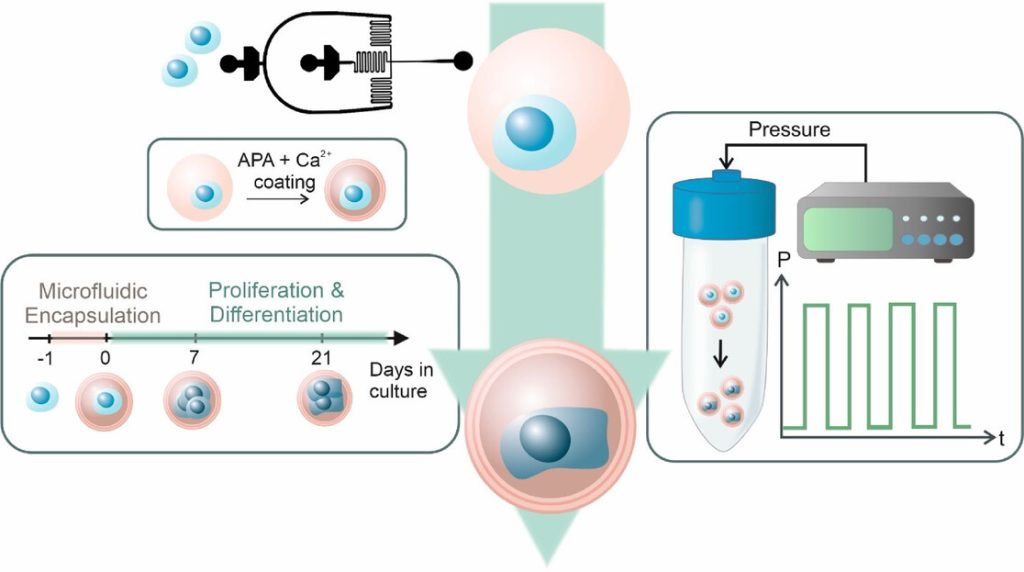
Figure 1 Schematic overview of the experimental workflow. MSCs (blue) were singly encapsulated using a microfluidic approach within calcium-crosslinked, RGD-functionalized alginate microgels (pink), followed by a secondary APA and calcium coating to enhance stability. Encapsulated cells were cultured for 21 days and subjected to cyclic hydrostatic pressure in regular cell culture media without any growth factors. Source: İyisan et al., Small Science, 2025.
For the first time, researchers at the Technical University of Munich (TUM) have succeeded in using nanorobots to stimulate stem cells with such precision that they are reliably transformed into bone cells. To achieve this, the robots exert external pressure on specific points in the cell wall. The new method offers opportunities for faster treatments in the future.
Prof Berna Özkale Edelmann’s nanorobots consist of tiny gold rods and plastic chains. Several million of them are contained in a gel cushion measuring just 60 micrometres, together with a few human stem cells. Powered and controlled by laser light, the robots, which look like tiny balls, mechanically stimulate the cells by exerting pressure. “We heat the gel locally and use our system to precisely determine the forces with which the nanorobots press on the cell – thereby stimulating it,” explains the professor of nano- and microrobotics at TUM. This mechanical stimulation triggers biochemical processes in the cell. Ion channels change their properties, and proteins are activated, including one that is particularly important for bone formation.
Heart and cartilage cells: finding the correct stress pattern
If stimulation is carried out at the right rhythm and with the right (low) force, a stem cell can be reliably triggered to develop into a bone cell within three days. This process can be completed within three weeks. “The corresponding stress pattern can also be found for cartilage and heart cells,” asserts Berna Özkale Edelman. “It’s almost like at the gym: we train the cells for a particular area of application. Now we just have to find out which stress pattern suits each cell type,” says the head of the Microbiotic Bioengineering Lab at TUM.
Mechanical forces pave the way for transformation into bone cells
The research team produces bone cells using mesenchymal stem cells. These cells are considered to be the body’s ‘repair cells’. They are approximately 10 to 20 micrometres in size and are generally capable of developing into bone, cartilage or muscle cells, for example. The challenge: The transformation into differentiated cells is complex and has been difficult to control until now. “We have developed a technology that allows forces to be applied to the cell very precisely in a three-dimensional environment,” says TUM scientist Özkale Edelmann. “This represents an unprecedented advance in the field.” The researchers believe that this method can even be used to produce cartilage and heart cells from human stem cells.
Automation is the next step
For treatments, doctors will ultimately need far more differentiated cells – around one million. “That’s why the next step is to automate our production process so that we can produce more cells more quickly,” says Prof Özkale Edelmann.
Researchers at the University of Arizona College of Medicine – Tucson found evidence that a drug that improves the ability to walk in people with multiple sclerosis can also make bone fractures heal faster.
The findings help further the understanding of specific factors involved in the bone healing process, and potentially open avenues for new therapeutic approaches.
“Broken bones are typically slow to heal in many people, and they can impact lives for months and in different ways. People lose time at work and daily activities at home with family and friends are impacted,” said senior author John Elfar, MD, professor, surgeon and chair of the Department of Orthopaedic Surgery at the U of A College of Medicine – Tucson. “This drug has the potential to change that.”
Elfar partnered with Prem Kumar Govindappa, PhD, DVM, an assistant professor in the department, on the preclinical study that showed treatment with the drug 4-aminopyridine, or 4-AP, resulted in leg fractures healing faster and stronger than without the drug. The paper was published in The Journal of Bone and Joint Surgery.
“Mice with bone fractures healed quicker and were stronger after they healed after treatment with 4-AP,” said Elfar said, who is a member of the university’s BIO5 Institute. “We saw more bone mass and less intermediate cartilage, meaning there was accelerated bone healing.”
The drug is approved for use in chronic neurological conditions, where it helps with walking by improving how signals from the brain and spinal cord reach limbs.
The team also saw improvements in bone mass and the ability to bear weight after treatment with 4-AP. Collagen deposition and bone mineralization, both of which are necessary for bone healing, also received a boost. Collagen forms the structural foundation of bones. In bone mineralization, minerals like calcium and phosphate join the newly forming bone matrix, strengthening and hardening the bone.
“We found that every fine-tuned measure of the strength of bone was better after administering 4-AP to mice,” Elfar said. “We also found more BMP2 protein in bone-forming cells at the fracture site, which again told us we found something that could accelerate the process.”
Examining human bone cells exposed to 4-AP in a dish, the scientists saw increased production of bone morphogenetic protein, or BMP2, a bone-building substance used clinically to help with some kinds of bone repair. BMP2 prompted the production of stem cells that become cells called osteoblasts, which are essential to form new bone.
The research team also measured 4-AP’s effects on human bone narrow mesenchymal stem cells and human osteoblast cells in the lab. 4-AP increased the conversion of the stem cells into osteoblasts and the latter’s ability to migrate and grow, which are essential to the healing process.
Elfar said that 4-AP’s role in driving BMP2 gene and protein activity is key to its bone healing effects, and using 4-AP to prompt BMP2 production in the body could be especially important.
“BMP2 is a hormone the body makes to accelerate bone healing,” Elfar said.
BMP2 is known to modulate bone healing and is approved for use in certain medical procedures, including spinal fusion and sinus reconstruction surgery. An artificial version that has orthopedic medicine uses can have side effects, though, including bone resorption and cervical spine swelling. Finding a way to channel naturally produced BMP2 could improve bone healing while avoiding such problems.
The scientists previously showed that 4-AP could prevent bone and muscle loss in a mouse model of nerve damage. Similarly, they saw indications of 4-AP’s healing effects for wound, nerve and limb injuries.
The researchers plan to eventually test 4-AP’s potential use in healing bones in a clinical trial. They also want to better understand the drug’s effects on BMP2 production, and more broadly, on the biology of healing bone.
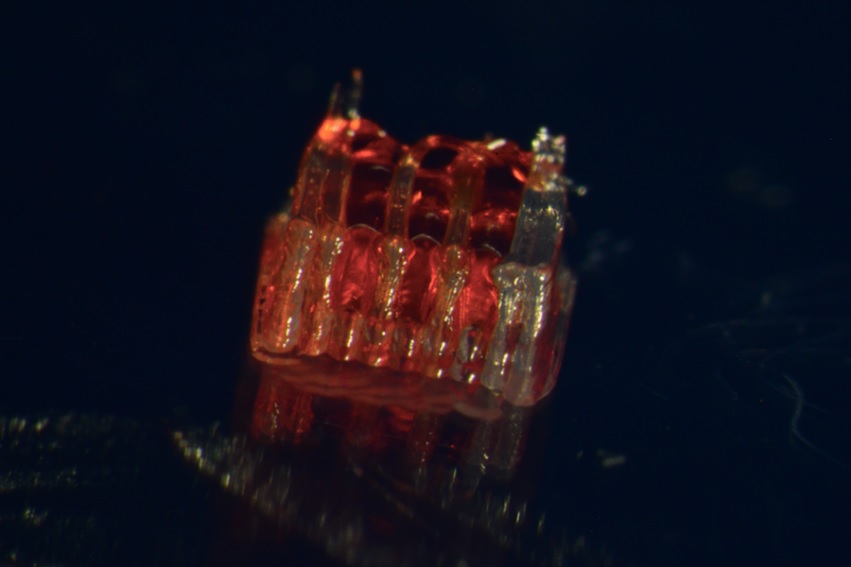
New research combines 3D printing, stem cell biology, and lab-grown tissues for possible treatments of spinal cord injuries. Photo provided by: McAlpine Research Group, University of Minnesota
For the first time, a research team at the University of Minnesota Twin Cities demonstrated a groundbreaking process that combines 3D printing, stem cell biology, and lab-grown tissues for spinal cord injury recovery.
The study was recently published in Advanced Healthcare Materials. Currently, there is no way to completely reverse the damage and paralysis from the injury. A major challenge is the death of nerve cells and the inability of nerve fibres to regrow across the injury site. This new research tackles this problem head-on.
The method involves creating a unique 3D-printed framework for lab-grown organs, called an organoid scaffold, with microscopic channels. These channels are then populated with regionally specific spinal neural progenitor cells (sNPCs), which are cells derived from human adult stem cells that have the capacity to divide and differentiate into specific types of mature cells.
“We use the 3D printed channels of the scaffold to direct the growth of the stem cells, which ensures the new nerve fibres grow in the desired way,” said Guebum Han, a former University of Minnesota mechanical engineering postdoctoral researcher and first author on the paper who currently works at Intel Corporation. “This method creates a relay system that when placed in the spinal cord bypasses the damaged area.”
n their study, the researchers transplanted these scaffolds into rats with spinal cords that were completely severed. The cells successfully differentiated into neurons and extended their nerve fibres in both directions – rostral (toward the head) and caudal (toward the tail) – to form new connections with the host’s existing nerve circuits.
The new nerve cells integrated seamlessly into the host spinal cord tissue over time, leading to significant functional recovery in the rats.
“Regenerative medicine has brought about a new era in spinal cord injury research,” said Ann Parr, professor of neurosurgery at the University of Minnesota. “Our laboratory is excited to explore the future potential of our ‘mini spinal cords’ for clinical translation.”
While the research is in its beginning stages, it offers a new avenue of hope for those with spinal cord injuries. The team hopes to scale up production and continue developing this combination of technologies for future clinical applications.
Weizmann Institute scientists have discovered hundreds of molecules that promote nerve regeneration in mice – and may even encourage growth in brain neurons
Top: Overexpression of genes from the B2-SINE family in retinal ganglion neurons led to accelerated growth after injury. Bottom: Ganglion cells after injury without B2-SINE overexpression. Credit: Weizmann Institute of Science
Unlike the brain and spinal cord, peripheral nerve cells, whose long extensions reach the skin and internal organs, are capable of regenerating after injury. This is why injuries to the central nervous system are considered irreversible, while damage to peripheral nerves can, in some cases, heal, even if it takes months or years. Despite decades of research, the mechanisms behind peripheral nerve regeneration remain only partially understood.
In a new study published in Cell, researchers from Prof Michael (Mike) Fainzilber’s lab at the Weizmann Institute of Science discovered that a family of hundreds of RNA molecules with no known physiological function is essential to nerve regeneration. Remarkably, the study showed that these molecules can stimulate growth not only in the peripheral nervous system of mice but also in their central nervous system. These findings could pave the way for new treatments for a variety of nerve injuries and neurodegenerative diseases.
For a peripheral nerve to regenerate, it must maintain communication between the neuron’s cell body and its long extension – the axon – which in humans can reach more than a meter in length. In a series of studies over the past two decades, Fainzilber’s lab has revealed key components of this communication: proteins that act like postal couriers, delivering instructions for the production of growth-controlling factors and other proteins, from the cell body to the axon. These molecular couriers also help assess the distance between the cell body and the axon tip, allowing the neuron to modulate its growth accordingly. Yet one central issue remained: What triggers the regenerative growth after injury, and why does this not happen in central nervous system cells?
“While the growth acceleration observed in our study is not yet sufficient to address clinical paralysis, it is definitely significant”
In the new study, Dr Indrek Koppel of Fainzilber’s lab, in collaboration with Dr Riki Kawaguchi of the University of California, Los Angeles (UCLA), examined a specific kind of gene expression in the peripheral nerves of mice following injury. The researchers were surprised to find that one day after damage, the neurons increased the expression of an entire family of short genetic sequences called B2-SINEs, whose role was previously unknown. These sequences do not encode any proteins, and because they are known for “jumping” around the genome, meaning that they can appear at the wrong place or time, they have a bad reputation. But the researchers found that after injury, the neurons began expressing many B2-SINE RNA transcripts, in parallel with other processes preparing the cell for regeneration and repair.
However, B2-SINE is an enormous family, comprising some 150 000 sequences scattered throughout the mouse genome. The initial analysis could not determine which of these were responsible for promoting growth. Dr. Eitan Erez Zahavi, also of Fainzilber’s lab, who led the new study alongside Koppel, used bioinformatics tools to identify 453 B2-SINE sequences that are highly expressed after injury, promoting nerve growth. Collaborating with international research teams, the scientists showed that this overexpression after injury is unique to peripheral nerve cells and does not occur in the central nervous system.
The periphery leads, the center follows
The researchers then tested whether B2-SINEs from peripheral nerve cells could also stimulate neuronal growth in the central nervous system. They induced retinal neurons in mice to overexpress RNA molecules of the B2-SINE type and observed faster regeneration after injury. A similar experiment in the mouse motor cortex – the brain region that controls muscle movement via long axons projecting to the spinal cord – showed that neurons expressing high levels of B2-SINE also regenerated faster than control neurons.
“There are still no effective treatments to accelerate nerve cell growth and regeneration,” Fainzilber notes. “While the growth acceleration observed in our study is not yet sufficient to address clinical paralysis, it is definitely significant. Of course, the path from basic research to clinical application is long, and we must make sure that enhancing growth mechanisms does not, for example, increase the risk of cancer.”
One final mystery remained: How do B2-SINE RNA molecules actually promote regeneration? With help from Prof Alma L. Burlingame’s group at the University of California, San Francisco, the researchers discovered that these RNAs promote a physical link between the molecular “couriers” carrying instructions for producing growth-associated proteins and the ribosomes that read these instructions and carry them out. This means that production of the critical factors takes place closer to the cell body rather than to the tip of the axon. The researchers believe that this signals to the neuron that it is “too small,” triggering a growth response.
“There are over a million sequences called Alu elements in the human genome, the human equivalent of B2-SINEs in mice,” says Fainzilber. “These molecules had been previously shown to bind to ribosomes and mail couriers, but why this happens was unknown. We’re now trying to determine whether Alu or other noncoding RNA elements are involved in nerve regeneration in humans.”
“Recovery from peripheral nerve injuries, or from systemic diseases like diabetes that affect these nerves, can be very slow,” he adds. “That’s why we’re now testing a therapy that might speed up regeneration by mimicking B2-SINE activity. This therapy involves small molecules that connect the couriers to ribosomes while keeping them close to the nerve cell body, promoting faster growth. We are conducting this research in collaboration with Weizmann’s Bina unit for early-stage research with applicative potential.”
Beyond promoting peripheral nerve regeneration, the new study also hints at an even broader prospect: regeneration in the central nervous system. “We are currently working with UCLA on a study showing that the mechanism we discovered plays a role in recovery from stroke in mouse models,” Fainzilber says. “Additionally, we’re collaborating with Tel Aviv University, Hebrew University and Sheba Medical Center to study its possible role in ALS, a progressive neurodegenerative disease. Neurodegenerative conditions affect many millions of people worldwide. While the road ahead is long, I truly hope we’ll one day be able to harness our newly discovered regeneration mechanism to treat them.”
Science Numbers
After injury, the axon of a peripheral nerve cell regrows at a rate of around 1 millimetre a day.
A new, highly efficient process for performing this conversion could make it easier to develop therapies for spinal cord injuries or diseases like ALS.
Anne Trafton | MIT News
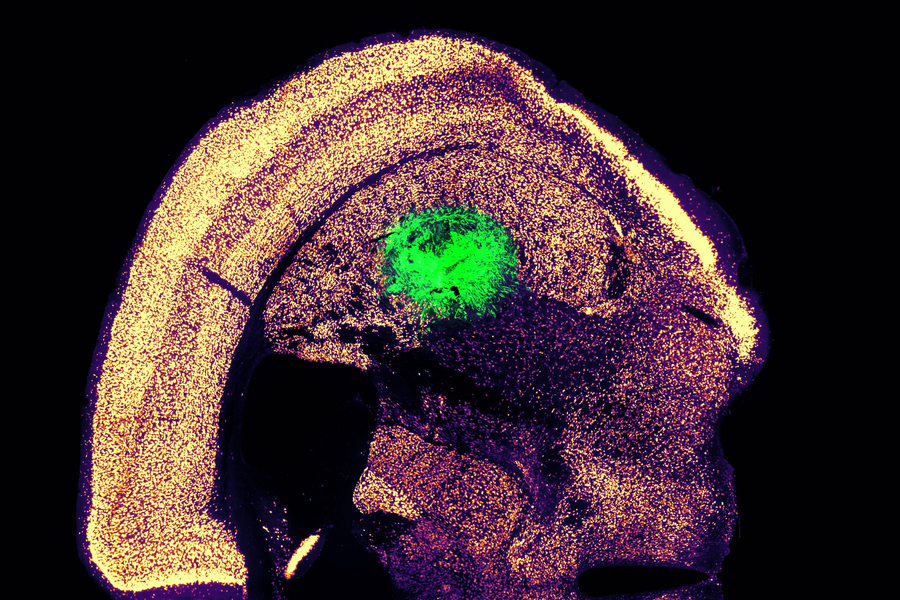
Researchers at MIT have devised a simplified process to convert a skin cell directly into a neuron. This image shows converted neurons (green) that have integrated with neurons in the brain’s striatum after implantation.
Credits :Image: Courtesy of the researchers
Converting one type of cell to another – for example, a skin cell to a neuron – can be done through a process that requires the skin cell to be induced into a “pluripotent” stem cell, then differentiated into a neuron. Researchers at MIT have now devised a simplified process that bypasses the stem cell stage, converting a skin cell directly into a neuron.
Working with mouse cells, the researchers developed a conversion method that is highly efficient and can produce more than 10 neurons from a single skin cell. If replicated in human cells, this approach could enable the generation of large quantities of motor neurons, which could potentially be used to treat patients with spinal cord injuries or diseases that impair mobility.
“We were able to get to yields where we could ask questions about whether these cells can be viable candidates for the cell replacement therapies, which we hope they could be. That’s where these types of reprogramming technologies can take us,” says Katie Galloway, the W. M. Keck Career Development Professor in Biomedical Engineering and Chemical Engineering.
As a first step toward developing these cells as a therapy, the researchers showed that they could generate motor neurons and engraft them into the brains of mice, where they integrated with host tissue.
Galloway is the senior author of two papers describing the new method, which appear today in Cell Systems. MIT graduate student Nathan Wang is the lead author of both papers.
From skin to neurons
Nearly 20 years ago, scientists in Japan showed that by delivering four transcription factors to skin cells, they could coax them to become induced pluripotent stem cells (iPSCs). Similar to embryonic stem cells, iPSCs can be differentiated into many other cell types. This technique works well, but it takes several weeks, and many of the cells don’t end up fully transitioning to mature cell types.
“Oftentimes, one of the challenges in reprogramming is that cells can get stuck in intermediate states,” Galloway says. “So, we’re using direct conversion, where instead of going through an iPSC intermediate, we’re going directly from a somatic cell to a motor neuron.”
Galloway’s research group and others have demonstrated this type of direct conversion before, but with very low yields – fewer than 1 percent. In Galloway’s previous work, she used a combination of six transcription factors plus two other proteins that stimulate cell proliferation. Each of those eight genes was delivered using a separate viral vector, making it difficult to ensure that each was expressed at the correct level in each cell.
In the first of the new Cell Systems papers, Galloway and her students reported a way to streamline the process so that skin cells can be converted to motor neurons using just three transcription factors, plus the two genes that drive cells into a highly proliferative state.
Using mouse cells, the researchers started with the original six transcription factors and experimented with dropping them out, one at a time, until they reached a combination of three – NGN2, ISL1, and LHX3 — that could successfully complete the conversion to neurons.
Once the number of genes was down to three, the researchers could use a single modified virus to deliver all three of them, allowing them to ensure that each cell expresses each gene at the correct levels.
Using a separate virus, the researchers also delivered genes encoding p53DD and a mutated version of HRAS. These genes drive the skin cells to divide many times before they start converting to neurons, allowing for a much higher yield of neurons, about 1100 percent.
“If you were to express the transcription factors at really high levels in nonproliferative cells, the reprogramming rates would be really low, but hyperproliferative cells are more receptive. It’s like they’ve been potentiated for conversion, and then they become much more receptive to the levels of the transcription factors,” Galloway says.
The researchers also developed a slightly different combination of transcription factors that allowed them to perform the same direct conversion using human cells, but with a lower efficiency rate – between 10 and 30 percent, the researchers estimate. This process takes about five weeks, which is slightly faster than converting the cells to iPSCs first and then turning them into neurons.
Implanting cells
Once the researchers identified the optimal combination of genes to deliver, they began working on the best ways to deliver them, which was the focus of the second Cell Systems paper.
They tried out three different delivery viruses and found that a retrovirus achieved the most efficient rate of conversion. Reducing the density of cells grown in the dish also helped to improve the overall yield of motor neurons. This optimised process, which takes about two weeks in mouse cells, achieved a yield of more than 1000 percent.
Working with colleagues at Boston University, the researchers then tested whether these motor neurons could be successfully engrafted into mice. They delivered the cells to a part of the brain known as the striatum, which is involved in motor control and other functions.
After two weeks, the researchers found that many of the neurons had survived and seemed to be forming connections with other brain cells. When grown in a dish, these cells showed measurable electrical activity and calcium signaling, suggesting the ability to communicate with other neurons. The researchers now hope to explore the possibility of implanting these neurons into the spinal cord.
The MIT team also hopes to increase the efficiency of this process for human cell conversion, which could allow for the generation of large quantities of neurons that could be used to treat spinal cord injuries or diseases that affect motor control, such as ALS. Clinical trials using neurons derived from iPSCs to treat ALS are now underway, but expanding the number of cells available for such treatments could make it easier to test and develop them for more widespread use in humans, Galloway says.
The research was funded by the National Institute of General Medical Sciences and the National Science Foundation Graduate Research Fellowship Program.
A dermal matrix – one of the latest advancements to regenerate skin after severe burns.
Severe burns remain one of the most challenging injuries to treat, causing high disease and death rates worldwide, but Australian researchers have flagged some promising new approaches that could save lives and dramatically improve patient recovery.
In a comprehensive review published in Advanced Therapeutics, researchers from the University of South Australia (UniSA), University of Adelaide and Royal Adelaide Hospital (RAH) explore the latest advancements in dermal substitutes – biochemicals used to replace damaged skin – with a particular focus on combating infection and enhancing tissue regeneration following catastrophic burns.
The researchers say that despite decades of progress, traditional treatments such as skin grafting often fail to provide adequate healing and infection control, leading to prolonged hospital stays and soaring healthcare costs.
According to the lead authors Dr Zlatko Kopecki and Dr Bronwyn Dearman, the urgency to develop safer, more effective solutions has never been greater.
“Infections are a major cause of complications and mortality in burn patients,” says Dr Kopecki, a Research Fellow at UniSA’s Future Industries Institute.
“We must innovate beyond conventional methods and develop therapies that regenerate tissue while actively preventing infections.”
The review highlights that while many commercial skin substitutes exist, very few offer integrated antimicrobial protection – a critical factor given the vulnerability of burn wounds to bacterial invasion and sepsis.
The paper discusses emerging technologies such as Kerecis, a novel fish skin graft with inherent antimicrobial properties, and NovoSorb BTM, a synthetic biodegradable matrix that resists bacterial colonisation without relying on antibiotics.
Both products represent a new generation of dermal substitutes with enhanced potential to protect and heal complex burns.
Kerecis comes from wild Atlantic cod, caught from a sustainable fish stock in pristine Icelandic waters and processed using renewable energy. It stands out for retaining natural omega-3 fatty acids, which have strong antimicrobial effects and promote wound healing.
Meanwhile, NovoSorb BTM’s unique polyurethane matrix offers structural resilience even in infected wounds, providing a vital scaffold for tissue regeneration.
“These materials demonstrate a shift towards multifunctional therapies that combine structural support with infection resistance,” says Dr Dearman, Principal Medical Scientist for the Skin Engineering Laboratory at the RAH and an Adjunct Lecturer at the University of Adelaide.
“Such innovations are crucial, particularly as antibiotic-resistant infections continue to rise globally,” she says.
The review calls for the next wave of research to integrate active antimicrobial agents directly into 3D dermal scaffolds that support cell growth, reducing the reliance on antibiotics and temporary dressings.
Beyond infection control, the research points to scarless healing as the future frontier of burn care.
By combining smart biomaterials with cell-based therapies, scientists aim to regenerate skin that restores its full function – an outcome that could revolutionise the recovery for millions of burn survivors worldwide.
Researchers have developed a new therapy that can be injected intravenously right after a heart attack to promote healing and prevent heart failure. The therapy both prompts the immune system to encourage tissue repair and promotes survival of heart muscle cells after a heart attack. Researchers tested the therapy in rats and showed that it is effective up to five weeks after injection.
The research team, led by bioengineers at the University of California San Diego and chemists at Northwestern University, published their findings in Advanced Materials.
“Preventing heart failure after a heart attack is still a major unmet clinical need,” said Karen Christman, one of the study’s corresponding authors and a professor of bioengineering at UC San Diego. “The goal of this therapy is to intervene very soon after someone suffers a heart attack to keep them from ultimately going into heart failure.”
Side by side comparison of heart muscle cells with and without treatment. Damage to the cells is shown in blue. On the left, tissue has been injected with saline and the damaged area is considerably larger. On the right, the issue was treated with the PLP platform and the damaged area is significantly smaller.
The therapy could have broader applications, said Nathan Gianneschi, the paper’s other corresponding author and a professor in the Department of Chemistry at Northwestern.
“This therapeutic platform has tremendous potential for several diseases, including everything from macular degeneration to multiple sclerosis and kidney disease,” Gianneschi said.
The platform aims to block the interaction of two key proteins that intervene in the body’s response to stress and inflammation. When the protein Nrf2 is activated, cells resist the degradation brought on by inflammation. But KEAP1 binds with Nrf2 to degrade it in turn. After a heart attack, this process of degradation has to be stopped so that tissues can health better.
The protein-like polymer, or PLP, platform is made from a polymer that mimics Nrf2. Once injected intravenously, it finds KEAP1 and binds to it, preventing it from binding to the actual Nrf2 protein and degrading it.
Researchers injected rat models after a heart attack with either the PLP platform or a saline solution. The team was blinded to which animals received the polymer or saline. After five weeks, the rodents underwent MRIs while sedated. The animals injected with the polymer showed better cardiac function and significantly more healing in their heart muscle tissue. Other tests also showed that genes that promote healing of tissues were expressed more.
Researchers describe the study as a proof of concept. Before moving on to tests in larger mammals, they want to optimize the design and dosage, and conduct further analysis.
“Proteins are the molecular machines that drive all essential cellular function, and dysregulated intracellular protein-protein interactions are the cause of many human diseases,” Gianneschi said. “Existing drug modalities are either unable to penetrate cells or cannot effectively engage these large disease target domains. We are looking at these challenges through a new lens.”
The therapy method was developed by Gianneschi, while he was a faculty member at UC San Diego, where he is now an adjunct faculty. He continued working on the technology at Northwestern.
Photo by Kampus Production: https://www.pexels.com/photo/man-in-blue-and-black-crew-neck-shirt-8638036/
The cells in human bodies are subject to both chemical and mechanical forces. But until recently, scientists have not understood much about how to manipulate the mechanical side of that equation. That’s about to change.
“This is a major breakthrough in our ability to be able to control the cells that drive fibrosis,” said Guy Genin, professor of mechanical engineering in the McKelvey School of Engineering at Washington University in St. Louis, whose research was just published in Nature Materials.
Fibrosis is an affliction wherein cells produce excess fibrous tissue. Fibroblast cells do this to close wounds, but the process can cascade in unwanted places. Examples include cardiac fibrosis; kidney or liver fibrosis, which precedes cancer; and pulmonary fibrosis, which can cause major scarring and breathing difficulties. Every soft tissue in the human body, even the brain, has the potential for cells to start going through a wound-healing cascade when they’re not supposed to, according to Genin.
The problem has both chemical and mechanical roots, but mechanical forces seem to play an outsized role. WashU researchers sought to harness the power of these mechanical forces, using a strategic pull and tug in the right mix of directions to tell the cell to shut off its loom of excess fibre.
In the newly published research, Genin and colleagues outline some of those details, including how to intervene in tension fields at the right time to control how cells behave.
“The direction of the tension these cells apply matters a lot in terms of their activation state,” said Nathaniel Huebsch, an associate professor of biomedical engineering at McKelvey Engineering and co-senior author of the research, along with Genin and Vivek Shenoy at the University of Pennsylvania.
The forces
The human body is constantly in motion, so it should come as no surprise that force can encode function in cells. But what forces, how much force and in which direction are some of the questions that the Center for Engineering MechanoBiology examines.
“The magnitude of tension will affect what the cell does,” Huebsch said. But tension can go in many different directions. “The discovery that we present in this paper is that the way stress pulls in different directions makes a difference with the cell,” he added.
Pulling in multiple directions in a nonuniform manner, called tension anisotropy (imagine a taffy pull) is a key force in kicking off fibrosis, the researchers found.
“We’re showing, for the first time, using a structure with a tissue, we’re able to stop cell cytoskeletons from going down a pathway that will cause contraction and eventual fibrosis,” Genin said.
Huebsch, who pioneered microscopic models and scaffolds for testing these tension fields that act on cells, explained that tentacle-like microtubules establish tension by emerging and casting out in a direction. Collagen around the cell pulls back on that tubule and becomes aligned with it.
“We discovered that if you could disrupt the microtubules, you would disrupt that whole organization and you would potentially disrupt fibrosis,” Huebsch said.
And, though this research was about understanding what goes wrong to cause fibrosis, there is still much to learn about what goes right with fibroblasts, connective tissue cells, especially in the heart, he added.
“In tissues where fibroblasts are typically well aligned, what is stopping them from activating to that wound-healing state?” Huebsch asked.
Personalised treatment plans
Along with finding ways to prevent or treat fibrosis, Genin and Huebsch said doctors can look for ways to apply this new knowledge about the importance of mechanical stress to treatment of injuries or burns. The findings could help address the high fail rate for treatments of elderly patients with injuries that require reattaching tendon to bone or skin to skin.
For instance, in rotator cuff injuries, there is compelling evidence that patients must start moving their arm to recover function, but equally compelling evidence that patients should immobilise the arm for better recovery. The answer might depend on the amount of collagen a patient produces and the stress fields at play at the recovery site.
By understanding the multidirectional stress fields’ impact on the cell structure, doctors may be able to look at specific patients’ repair and determine a personalised treatment plan.
For instance, a patient who has biaxial stress coming from two directions at the site of injury will potentially need to exercise more to trigger cell repair, Genin said. However, another patient showing signs of uniaxial stress, meaning stress is pulling only one direction, any movement could over-activate cells, so in that case, the patient should keep the injury immobilised. All that and more is still to be worked out and confirmed, but Genin is excited to begin.
“The next generation of disease we’re going to be conquering are diseases of mechanics,” Genin said.