Prenatal magnesium sulfate and steroids can reduce the risks of cerebral palsy and respiratory complications in preterm infants. A review in the International Journal of Gynecology & Obstetrics found that despite being recommended internationally for pregnant women at risk of preterm delivery, these medications are used variably between and within countries.
When they analysed 2012–2024 information on 45 619 babies born at 24–32 weeks’ gestation at 1111 hospitals in an international network, along with information from the UK National Neonatal Research Database and a literature review, investigators found that on average, less than half of infants had been exposed to preterm magnesium sulfate in middle-income countries, and approximately three-quarters in high-income countries. Even within high-income countries, there were large discrepancies in care. Preterm steroids were used more frequently with less variation, although treatment gaps were still apparent.
“Our study has highlighted the international disparities in how two key treatments to protect pre-term babies are implemented. These gaps aren’t because of a lack of evidence,” said corresponding author Hannah B. Edwards, MA, MSc, of the University of Bristol, in the UK. “Lessons can be learned from successful implementation programs like PReCePT, which has transformed use of magnesium sulphate in pre-term births in England. The bigger-picture goal should now be to ensure that no matter where a baby is born, their mother has access to the evidence-based treatments that offer the best start in life.”
Foetuses yawn in the womb, with more yawns associated with a lower weight at birth
Photo by Mart Production on Pexels
Even in the womb, where all oxygen is provided by the parental placenta, foetuses can – and do – yawn. More yawns during observation were associated with a lower weight at birth – potentially indicating mild foetal stress in the womb, according to a study published February 25, 2026 in the open-access journal PLOS One by Damiano Menin, of the Università degli Studi di Ferrara in Italy, and colleagues.
Yawning is a behaviour found across vertebrates – and no one quite knows why. In humans, foetuses yawn in the womb from about 11 weeks. Even though there is no air to breathe, they slowly open their mouths, make motions similar to inhalation and exhalation, and close their mouths again. To understand more about foetal yawns, the authors of this study used ultrasound to observe 32 healthy foetuses (56% female, 44% male) between 23 and 31 weeks. Each foetus was observed for 22.5 minutes.
The authors found that the foetuses yawned between zero and six times during the observation period, with an average of 3.63 yawns per hour. They also showed that foetuses that yawned more during their observations were more likely to have a low weight at birth, which is considered as an indicator of mild distress – though all foetuses in the study were born healthy.
The researchers did not perform any manipulations to see if they could affect foetal yawning and also did not record measures such as foetal heart rate or maternal temperature which might potentially be associated with the behaviour. Additionally, no high-risk pregnancies were observed. Based on their research, the authors suggest that frequent foetal yawning might be a sign of mild distress in the healthy foetus.
The authors add: “We found that yawning frequencies in the womb are negatively related to birth weight, potentially indicating a stress-related response in healthy fetuses. This suggests that even before birth, yawning may serve as an indicator of a foetus’s well-being.”
A second pregnancy changes women’s brains in the same way as a first pregnancy, but in a different way than the first time. This is according to researchers from Amsterdam UMC, published in the scientific journal Nature Communications. The findings of Elseline Hoekzema and her colleagues show that a second pregnancy uniquely changes a woman’s brain, entailing both convergent and distinct neural transformations.
An earlier study by Elseline Hoekzema was the first to demonstrate that pregnancy changes the structure of the human brain. The research group also demonstrated that pregnancy changes the functioning of the brain. For the follow-up study, the results of which have now been published, 110 women were monitored: some were becoming mothers for the first time, others were having their second child, and a third group remained childless. Brain scans before and after pregnancy showed what changes occurred in the brain. “We have shown for the first time that the brain not only adapts during the first pregnancy, but also during the second,” says Hoekzema, head of the Pregnancy Brain Lab at Amsterdam UMC.
Different brain networks
The biggest changes during a first pregnancy occurred in the structure and activity of the so-called Default Mode Network. This part of the brain is important for many functions, including self-reflection and social processes. During a second pregnancy, this network changed again, but less dramatically. However, during a second pregnancy, there were more changes in brain networks related to paying attention and responding to stimuli. “It seems that during a second pregnancy, the brain changes more significantly in networks involved in responding to sensory stimuli and directing your attention,” explains researcher Milou Straathof, who analyzed the data. “These processes can be beneficial when caring for multiple children.”
Mental health of mothers
The researchers also found a connection between the changes in the brain and the bond between mother and child. This link was more prominent in the first pregnancy than during the second pregnancy. In addition, the researchers observed links between structural brain changes and peripartum depression, both during a first and a second pregnancy. This provides the first evidence that the changes that occur in a woman’s cerebral cortex during pregnancy are related to depression. In women who became mothers for the first time, this was particularly noticeable after giving birth. In women who had their second child, this was the case during pregnancy. “This knowledge can help us to better recognize and understand mental health issues in mothers. We must understand how the brain adapts to motherhood.”
The importance of research into the maternal brain
This study provides new insights into how the female brain adapts to motherhood and contributes to closing this important knowledge gap about female biology. Hoekzema: “The majority of women become pregnant one or more times in their lives, but only now are researchers beginning to unravel how this affects the female brain.” The results may also contribute to better care for mothers, for example, in the prevention and treatment of postpartum depression. The study also shows that the brain is flexible and can continually adapt to major changes in life.
The potential effect of induced abortion and miscarriage on the risk of breast cancer has remained debated and has been a persistent source of misinformation. Many previous studies have been small and based on self-reported data. Now, a study published in Acta Obstetricia et Gynecologica Scandinavica found that prior abortion or miscarriage was not linked with an increased risk of developing pre- or postmenopausal breast cancer.
In the nationwide Finnish registry-based study, investigators analysed data on 31 687 women with breast cancer diagnosed in 1972–2021 and 158 433 women without breast cancer.
The risk of breast cancer was found to be similar among women with a history of induced abortion and women with no history of abortion, both before and after 50 years of age. Risks were also similar among women with and without a past miscarriage.
In addition, breast cancer risks did not vary significantly by the number of abortions or miscarriages, nor by the time of first abortion or miscarriage.
“Miscarriage or induced abortion as potential risk factors for breast cancer has continued to raise concerns and has led to the spread of misinformation. In this study using high-quality Finnish registry data, we can reliably eliminate these concerns,” said corresponding author Oskari Heikinheimo, MD, PhD, of the University of Helsinki and Helsinki University Hospital. “Induced abortion or miscarriage are not risk factors for breast cancer, even if there are several of them. This information is important and reassuring for millions of women around the world.”
Antioxidants have been marketed as miracle supplements, touted for preventing chronic diseases and cancers; treating COPD and dementia; and slowing aging. While antioxidant therapies are widely used to treat male infertility, a new study from the Texas A&M College of Veterinary Medicine and Biomedical Sciences (VMBS) found that regularly consuming high doses of antioxidants negatively influences sperm DNA and may lead to offspring born with differences in craniofacial development.
In a study, published in the journal Frontiers in Cell and Developmental Biology, a team of researchers led by Dr Michael Golding examined the effects of N-acetyl-L-cysteine (NAC) and selenium (Se) – two widely used antioxidants – in mouse models.
They found that offspring of male mice exposed to antioxidants for six weeks exhibited skull and facial shape differences, even while the father’s health didn’t change.
These findings suggest that men should exercise caution when consuming high doses of antioxidants, especially if they’re planning to have children in the near future.
When good goes too far
Antioxidants like NAC — which is a key ingredient in many nutritional supplements, including multivitamins — are often used to treat oxidative stress, which can be caused by excessive alcohol consumption.
Because Golding’s lab has been studying the effects of parental alcohol consumption on offspring – and has successfully correlated this consumption to a whole host of issues in children born to males who consumed excessive amounts of alcohol, including craniofacial abnormalities – his team was interested in the impacts of adding NAC or Se to a male mouse’s diet.
“We know alcohol causes oxidative stress and we were looking to push back on it by adding a supplement known to lower oxidative stress,” said Golding, a professor in the VMBS’ Department of Veterinary Physiology and Pharmacology. “When we realised that offspring born to males that had only been given NAC were displaying skull and facial differences, it was a surprise because this molecule is universally thought to be good.
“When we sat down to think it through, we realised that it makes sense – you take a multivitamin to ensure that you’re in balance, but if the thing that you’re taking to ensure you’re in balance is unbalanced (the dose of antioxidants is too high), then you’re not doing a good thing.”
It is well established that high doses of antioxidants can have negative impacts; research has proven that antioxidants can diminish the effects of exercise in endurance athletes, for example, and, in the case of professional athletes, can lead to negative outcomes in performance metrics.
“Sperm health is another performance metric; it’s just not one that we think about in everyday life,” Golding said. “If you’re taking a high dose antioxidant, you could be diminishing your reproductive fitness and part of the journey toward the bad outcome is going to be the effects on the offspring.”
What the face reveals about the brain
Among their unanticipated findings was that female offspring, in particular, exhibited significantly closer-set eyes and smaller skulls, which are also symptoms of foetal alcohol syndrome.
“There’s a very commonly accepted truism in paediatric medicine that the face mirrors the brain, because the brain and the face form at the same time,” Golding said. “When your face migrates (during gestation), it’s using cues from your brain to know where to go, and if the two things are not aligned, there’s either a delay or some kind of abnormality in brain development.
“So, if you see abnormalities in the midline of the face, you’re probably going to see midline abnormalities in the brain,” he said. “People with these abnormalities typically have problems with impulse control, neurological conditions like epilepsy, and other developmental issues.”
Whether the offspring in this project will exhibit central nervous system dysfunction will require further study.
The dose makes the difference
While the lab continues to research this “unexplored frontier,” Golding says in the case of antioxidants, too much of a good thing can, in fact, be too much, especially in the absence of a medical reason to take an antioxidant supplement.
Because many men regularly take high doses of these supplements – including products that contain antioxidant-rich ingredients – it’s important to pay attention to how much of these compounds are listed on the label. This includes NAC, which is one of the key ingredients in many multivitamins and is often found in high doses in these pills.
“The larger message here is that there’s a balance,” Golding said. “Think of yourself as a plant — if you stick your plant out in the sun too long, it’s going to get dehydrated. If you overwater your plant, it gets root rot. But if you have the right balance of sunshine and water, that’s when growth occurs. Health is in that domain.
“If your vitamins are providing 1,000% of the recommended daily amount, you should be cautious,” he said. “If you stick to the 100% range, then you should be OK.”
UCSF researchers discover that oestrogen can turn on pain signals associated with conditions like irritable bowel syndrome.
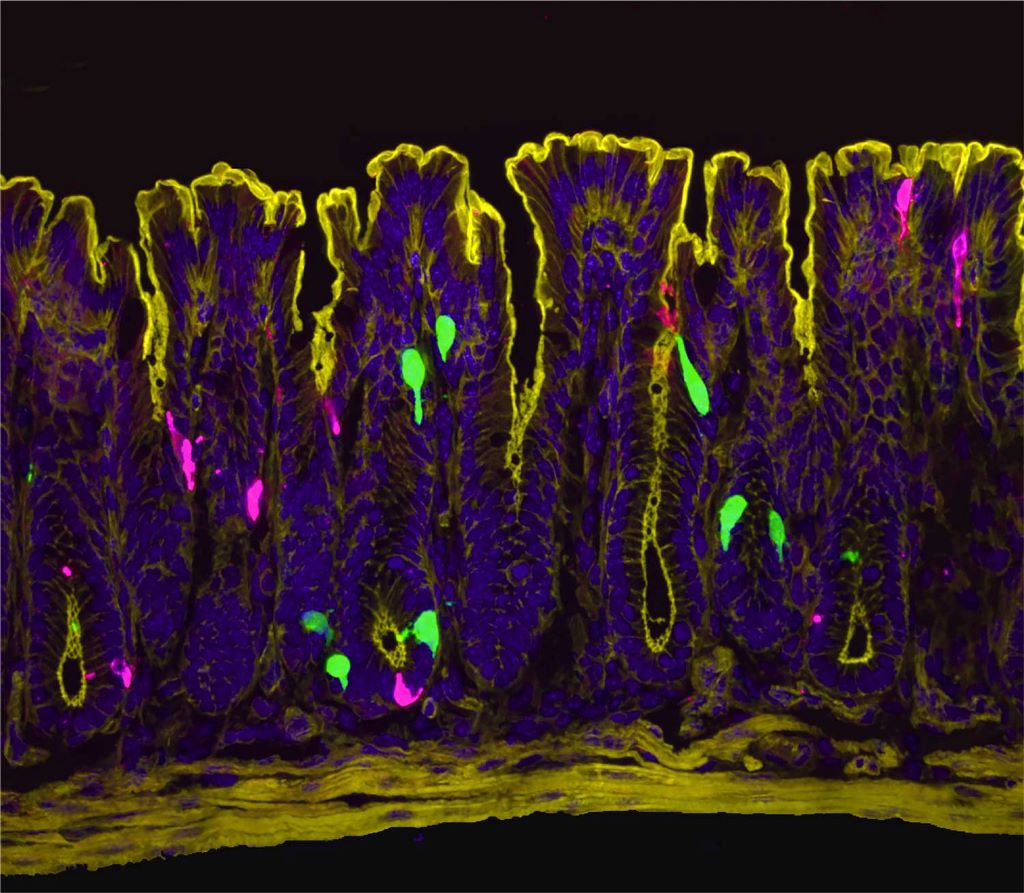
A zoomed in image of the lining of the colon. Cells that produce the hormone PYY (peptide YY) are in green. Cells that produce the neurotransmitter serotonin are in magenta. PYY triggers the release of serotonin, which activates pain-sensing nerve fibers. Image by Archana Venkataraman/UCSF
Women are dramatically more likely than men to suffer from irritable bowel syndrome (IBS), a chronic condition causing abdominal pain, bloating, and digestive discomfort. Now, scientists at UC San Francisco have discovered why.
Oestrogen, the researchers report in Science, activates previously unknown pathways in the colon that can trigger pain and make the female gut more sensitive to certain foods and their breakdown products. When male mice were given oestrogen to mimic the levels found in females, their gut pain sensitivity increased to match that of females.
The findings not only explain the female predominance in gut pain disorders but also point to potential new ways to treat the conditions.
“Instead of just saying young women suffer from IBS, we wanted rigorous science explaining why,” said Holly Ingraham, PhD, professor UCSF and co-senior author of the study. “We’ve answered that question, and in the process identified new potential drug targets.”
The research also suggests why low-FODMAP diets – which eliminate certain fermentable foods, such as onions, garlic, honey, wheat, and beans – help some IBS patients, and why women’s gut symptoms often fluctuate with their menstrual cycles.
“We knew the gut has a sophisticated pain-sensing system, but this study reveals how hormones can dial that sensitivity up by tapping into this system through an interesting and potent cellular connection,” said co-senior author David Julius, PhD. Julius won the 2021 Nobel Prize for Physiology or Medicine for his work on pain sensation.
Search for oestrogen
Previous research had hinted that oestrogen was to blame for higher rates of IBS in females, but not why. To understand how oestrogen might be involved, Ingraham’s and Julius’s teams first needed to see exactly where the hormone was working in the gut.
“At the time I started this project, we didn’t know where and how oestrogen signalling is set up in the female intestine,” said Archana Venkataraman, PhD, a postdoc in Ingraham’s lab and co-first author of the research. “So, our initial step was to visualise the oestrogen receptor along the length of the female gut.”
The team expected to see oestrogen receptors in enterochromaffin (EC) cells, which were already known to send pain signals from the gut to the spinal cord. Instead, they got a surprise: oestrogen receptors were clustered in the lower part of the colon and in a different cell type known as L-cells.
The scientists pieced together a complex chain reaction that occurs when oestrogen binds to the L-cells. First, oestrogen causes L-cells to release a hormone called PYY (peptide YY). PYY then acts on neighbouring EC cells, triggering them to release the neurotransmitter serotonin, which activates pain-sensing nerve fibres. In female mice, removing the ovaries or blocking oestrogen, serotonin, or PYY dramatically reduced the high gut pain observed in females.
For decades, scientists believed PYY primarily suppressed appetite – drug companies even tried developing it as a weight-loss medication. But those clinical trials failed due to a troubling side effect that was never fully explained; participants experienced severe gut distress. The new findings mesh with this observation and suggest a completely new role for PYY.
“PYY had never been directly described as a pain signal in the past,” said co-first author Eric Figueroa, PhD, a postdoc in Julius’ lab. “Establishing this new role for PYY in gut pain reframes our thinking about this hormone and its local effects in the colon.”
This video shows what happens to the enterochromaffin (EC) cells in the colon when they are treated with PYY. Upon PYY treatment, calcium activity increases in the EC cell, causing it to fluoresce more brightly as it releases serotonin that is detected by nearby pain-sensing nerve fibres. Video by Eric Figueroa/UCSF
A link between IBS and diet
Increased PYY wasn’t the only way that L-cells responded to oestrogen. Levels of another molecule, called Olfr78, also went up in response to the hormone. Olfr78 detects short-chain fatty acids – metabolites produced when gut bacteria digest certain foods. With more Olfr78 receptors, L-cells become hypersensitive to these fatty acids and are more easily triggered to become active, releasing more PYY.
“It means that oestrogen is really leading to this double hit,” said Venkataraman. “First it’s increasing the baseline sensitivity of the gut by increasing PYY, and then it’s also making L-cells more sensitive to these metabolites that are floating around in the colon.”
The observation may explain why low-FODMAP diets help some IBS patients. FODMAPs (fermentable oligosaccharides, disaccharides, monosaccharides, and polyols) are carbohydrates that gut bacteria ferment into those same fatty acids sensed by Olfr78. By eating fewer FODMAPs, patients may be preventing the activation of Olfr78, and, in turn, keeping L-cells from churning out more of the pain signalling PYY.
While men have this same cellular pathway, their lower oestrogen levels keep it relatively quiet. However, the pathway could engage in men taking androgen-blocking medications, which block the effects of testosterone and can elevate oestrogen in some cases, potentially leading to digestive side-effects.
The new work suggests potential ways to treat IBS in women and men alike.
“Even for patients who see success with a low-FODMAP diet, it’s nearly impossible to stick to long term,” Ingraham said. “But the pathways we’ve identified here might be leveraged as new drug targets.”
The researchers are now studying how such drugs might work, as well as asking questions about what other hormones, such as progesterone, might play a role in gut sensitivity and how pregnancy, lactation, and normal menstrual cycles affect intestinal function.
A drug mimicking the hormone progesterone has anti-cancer activity when used together with conventional anti-oestrogen treatment for women with breast cancer, a new Cambridge-led trial has found.
In the two-week window that we looked at, adding a progestin made the anti-oestrogen treatment more effective at slowing tumour growth. What was particularly pleasing to see was that even the lower dose had the desired effectRebecca Burrell
A low dose of megestrol acetate (a synthetic version of progesterone) has already been proven as a treatment to help patients manage hot flushes associated with anti-oestrogen breast cancer therapies, and so could help them continue taking their treatment. The PIONEER trial has now shown that the addition of low dose megestrol to such treatment may also have a direct anti-cancer effect.
Around three-quarters of all breast cancers are ER-positive. This means the tumours are abundant in a molecule known as an oestrogen receptor, ‘feeding’ on the oestrogen circulating in the body. These women are usually offered anti-oestrogens, medication that reduces level of oestrogen and hence deprives the cancer of oestrogen and inhibits its growth. However, reducing oestrogen levels can bring on menopause-like symptoms, including hot flushes, joint and muscle pain, and potential bone loss.
In the PIONEER trial, post-menopausal women with ER-positive cancers were treated with an anti-oestrogen with or without the progesterone mimic, megestrol. After two weeks of treatment, those that received the combination saw a greater decrease in tumour growth rates compared to those treated with an anti-oestrogen only.
Although further work is required in larger patient cohorts and over a longer period of time to confirm the findings, researchers at the University of Cambridge say the trial suggests that megestrol could help improve the lives of thousands of women for whom anti-oestrogen medication causes uncomfortable side-effects and can lead to some women stopping taking the medication.
PIONEER was led by Dr Richard Baird from the Department of Oncology at the University of Cambridge and Honorary Consultant Medical Oncologist at Cambridge University Hospitals NHS Foundation Trust (CUH). He said: “On the whole, anti-oestrogens are very good treatments compared to some chemotherapies. They’re gentler and are well tolerated, so patients often take them for many years. But some patients experience side effects that affect their quality of life. If you’re taking something long term, even seemingly relatively minor side effects can have a big impact.”
Some ER-positive breast cancer patients also have high levels of another molecule, known as progesterone receptor (PR). This group of patients also respond better to the anti-oestrogen hormone therapy.
To explain why, Professor Jason Carroll and colleagues at the Cancer Research UK Cambridge Institute used cell cultures and mouse models to show that the hormone progesterone stops ER-positive cancer cells from dividing by indirectly blocking ER. This results in slower growth of the tumour. When mice treated with anti-oestrogen hormone therapy were also given progesterone, the tumours grew even more slowly.
Professor Carroll, who co-leads the Precision Breast Cancer Institute and is a Fellow of Clare College, Cambridge, said: “These were very promising lab-based results, but we needed to show that this was also the case in patients. There’s been concern that taking hormone replacement therapy – which primarily consists of oestrogen and synthetic versions of progesterone (called progestins) – might encourage tumour growth. Although we no longer think this is the case, there’s still been residual concern around the use of progesterone and progestins in breast cancer.”
To see whether targeting the progesterone receptor in combination with an anti-oestrogen could slow tumour growth in patients, Dr Baird and Professor Carroll designed the PIONEER trial, which tested adding megestrol, a progestin, to the standard anti-oestrogen treatment letrozole.
A total of 198 patients were recruited at ten UK hospitals, including Addenbrooke’s Hospital in Cambridge, and randomised into one of three groups: one group received only letrozole; one group received letrozole alongside 40mg of megestrol daily; and the third group received letrozole plus a much higher daily dose of megestrol, 160mg. In this ‘window of opportunity’ trial, treatment was given for two weeks prior to surgery to remove the tumour. The percentage of actively growing tumour cells was assessed at the start of the trial and then again before surgery.
In findings published today in Nature Cancer, the team showed that adding megestrol boosted the ability of letrozole to block tumour growth, with comparable effects at both the 40mg and 160mg doses.
Joint first author Dr Rebecca Burrell from the Cancer Research UK Cambridge Institute and CUH said: “In the two-week window that we looked at, adding a progestin made the anti-oestrogen treatment more effective at slowing tumour growth. What was particularly pleasing to see was that even the lower dose had the desired effect.
“Although the higher dose of progesterone is licenced as an anti-cancer treatment, over the long term it can have side effects including weight gain and high blood pressure. But just a quarter of the dose was as effective, and this would come with fewer side effects. We know from previous trials that a low dose of progesterone is effective at treating hot flushes for patients on anti-oestrogen therapy. This could reduce the likelihood of patients stopping their medication, and so help improve breast cancer outcomes. Megestrol – the drug we used – is off-patent, making it a cost-effective option.”
Because women in the trial were only given megestrol for a short period of time, follow-up studies will be needed to confirm whether the drug would have the same beneficial effects with reduced side-effects over a longer period of time.
The research was funded by Anticancer Fund, with additional support from Cancer Research UK, Addenbrooke’s Charitable Trust and the National Institute for Health and Care Research Cambridge Biomedical Research Centre.
Personalised and precise cancer treatments underpin the focus of care at the future Cambridge Cancer Research Hospital. The specialist facility planned for the Cambridge Biomedical Campus will bring together world-leading researchers from the University of Cambridge and its Cancer Research UK Cambridge Centre and clinical excellence from Addenbrooke’s Hospital under one roof in a brand-new NHS hospital.
More than half of teenage girls experienced heavy bleeding and 40% had an iron deficiency, in a study carried out among girls in upper-secondary schools. The research, led from Lund University in Sweden, also shows that young teenage girls who experience heavy menstrual bleeding – and are therefore at greater risk of iron deficiency – can be identified using a simple questionnaire.
The 2023 study, published in PLOS One, was carried out in two Swedish upper-secondary schools; a total of 394 girls aged 15 and over took part. They responded to questions about menstruation and eating habits and provided blood samples for analysis of blood count (Hb) and iron stores (ferritin). Lund University has previously reported how the research team saw a particularly high risk of iron deficiency and anaemia among those eating a vegetarian or pescetarian diet. Now, researchers have gone further and investigated how the extent of menstruation affects iron deficiency and anaemia.
“We see a lot of young girls who are tired and distracted. Linking that to menstruation or diet is not obvious,” says Moa Wolff, researcher and associate professor at Lund University, specialist physician in general medicine at Region Skåne and the researcher in charge.
Girls with heavy menstruation were three times more likely to have an iron deficiency, with an even higher risk for those who restricted the quantity of meat in their diet.
“Many of them only compare with their own previous experiences without knowing what counts as heavy menstrual bleeding. We also note that many are not aware of the over-the-counter medicines available that reduce the volume of blood,” says Lisa Söderman, gynaecologist and postdoc researcher at Karolinska Institutet who collated the results for the article in question.
SAMANTA questionnaire could be a new tool for school health services
Part of the study evaluated a Spanish questionnaire which asks six questions. This is the first time it has been used in Sweden and the first time it has been tested on teenage girls anywhere, even though it is a validated screening instrument for adult women.
“Based on the answers to the questionnaire, it was possible to clearly identify which secondary school students were at risk of having low iron levels. It is easy to use and could be a valuable tool for school health services and youth clinics or other care healthcare settings where we meet these girls,” says Moa Wolff.
Previous research shows that iron deficiency in young people may affect their energy levels, schoolwork and general wellbeing. Iron stores – Ferritin – form an important component in the formation of red blood cells and is needed for oxygen transport. Therefore, iron deficiency with low ferritin levels can eventually lead to a drop in haemoglobin, which can result in anaemia.
“In the next few years, some of these girls will get pregnant. When that happens, we would like them to have good stores of iron to enable as complication-free a pregnancy as possible, with a successful labour,” says Lisa Söderman.
Over the last 20 years, substance use-related deaths have more than doubled for women of reproductive age. Overdose deaths are now a leading cause of maternal mortality in the US, and in some states, the leading cause.
Still, substantial gaps remain in understanding how different treatment approaches influence the short- and long-term health of mothers and infants, as well as their broader economic impacts over time.
New research published this month in the journal JAMA Pediatrics found that while established medications for opioid use disorder in mothers – buprenorphine and methadone – are both superior and cost saving compared to alternative treatment pathways (naltrexone, medication-assisted withdrawal or no treatment), buprenorphine produced the greatest health gains and cost savings for mothers and infants.
Using a mathematical simulation model, the study projected the health and cost outcomes for pregnant individuals with opioid use disorder and their infants over their lifetime. The economic model captured how treatment decisions during pregnancy can have lasting health and economic consequences, such as risks of preterm birth, that extend from infancy through adulthood and drive substantial downstream health effects and costs. Outpatient buprenorphine emerged as the optimal treatment in most scenarios tested (58%-100%) and in nearly every lifetime scenario that incorporated both mother and infant trajectories (99%). In other words, across thousands of simulations, buprenorphine consistently produced the best health outcomes and lower costs compared to alternative strategies.
The study, led by Ashley Leech, PhD, assistant professor of Health Policy at Vanderbilt University Medical Center, and Stephen Patrick, MD, MPH, O. Wayne Rollins Distinguished Professor of Health Policy and chair of the Department of Health Policy and Management at Emory University, is among the first to compare the short- and long-term health benefits and costs of opioid use disorder treatment for mothers and infants, examining outcomes during pregnancy, postpartum and beyond the infant’s first year of life using simulation modeling.
Existing studies have not examined outcomes beyond the infant’s first year of life. The study used a hypothetical treatment group modeled on known demographic and other social factors to estimate differences in outcomes and cost savings over time for each treatment and population group. The paper found that, although neonatal opioid withdrawal syndrome (NOWS) has received much of the clinical attention as a marker of poor infant health after opioid exposure during pregnancy, preterm birth and low birth weight carry greater morbidity and mortality and played a more significant role in shaping long-term infant outcomes. Notably, buprenorphine, despite its direct association with NOWS, was protective against these critical outcomes.
“Nationwide, we have seen a significant growth of pregnant women with opioid use disorder, but there have not been comprehensive models that evaluate trade-offs of different medications and strategies,” said Patrick. “This study evaluated the trade-offs we face as clinicians – How will medications affect moms and babies? With the evidence we have available, what can we expect years from now? Bottom line, we found that buprenorphine treatment in pregnancy was cost saving and improved outcomes for mothers with opioid use disorder and their babies.”
The researchers emphasised, however, that patient-centred care and patient choice remain essential to sustaining treatment. “While we found that buprenorphine yielded the greatest health gains and was cost saving across all model variations, methadone could still be a viable option for mothers, and at the individual level, it might work better for some,” said Leech, the lead author of the study. “Buprenorphine shows clear benefits for long-term infant outcomes, but it can be more difficult for patients to start and stay on this treatment because, as a partial agonist, it may not feel as strong to those dependent on drugs like heroin or fentanyl. Methadone, by contrast, is often easier for patients to initiate and sustain.
“This is an opportunity to make sure buprenorphine works as well as possible – by ensuring pregnant individuals receive effective doses across trimesters (since they often need higher and increasing amounts for effectiveness compared to nonpregnant patients) and by removing unnecessary Medicaid restrictions.”
The study estimated substantial cost savings to public insurance programmes like Medicaid, finding that treating pregnant individuals this year could save roughly $4 billion in infant-related lifetime costs alone.
“Medicaid is the largest payer for pregnant individuals and those with substance use disorders. Our research shows that treatment is not only effective but also has the potential to generate significant savings for Medicaid, benefiting both mothers and their children’s long-term health,” Leech said.
After birth, moms and babies are required to visit healthcare facilities for essential services like immunisations, postnatal care and HIV testing. Photo by William Fortunato on Pexels
By Elri Voigt
In South Africa, many mothers and their babies have to visit the clinic more than 10 times in the first six months of the postnatal period. Early findings from an ongoing implementation science project suggests we can get this down to five. The hope is that the new approach will also help reduce HIV transmission from mothers to their babies.
Over the last two decades, South Africa has taken huge strides in reducing HIV transmission from mothers to their babies (often called vertical transmission).
Maternal deaths from non-pregnancy-related infections have decreased, because more women are taking HIV treatment, and HIV rates among babies at birth have also gone down. This has all been possible largely because of integrating HIV services with our antenatal services, Dr Jeanette Wessels, of the University of Pretoria’s Research Centre for Maternal, Fetal, Newborn and Child Health Care Strategies, told delegates at the recent Southern African HIV Clinicians Society (SAHCS) Conference.
However, a closer look at the data shows us that while vertical transmission at or before birth has come down dramatically, HIV transmission in the months after birth remains alarmingly common. This happens particularly when the mother contracts HIV in this period and the virus is then transmitted to her baby before she is diagnosed, or before the virus can be brought under control with antiretrovirals. As Wessels puts it, “our next frontier to tackle is the breastfeeding period”.
During the antenatal period (before birth), pregnant women are offered HIV tests and prevention pills or HIV treatment when they visit clinics for their pregnancy check-ups. However, during the postnatal period (after birth), HIV services are not integrated in the same way. This fragmentation of care after birth is a key driver of vertical transmissions, suggests specialist paediatrician Dr Nthabiseng Serudu-Nageng. The thinking is that the fragmentation and high number of clinic visits makes it less likely that new HIV infections in mothers will be picked up before the virus can be transmitted to their babies and that it makes it less likely that new mothers will take the HIV prevention pills or HIV treatment they might need.
Spotlight previously reported that, according to the latest estimates from Thembisa – the leading mathematical model of HIV and TB in South Africa – of the roughly 7 200 babies who contracted HIV in the country from mid-2023 to mid-2024, only about 2 500 got HIV before or at birth. This means that about 4 700 babies got HIV in the months after birth, and while some of these mothers were on antiretroviral therapy, according to the Thembisa estimates, the majority of mothers had not been diagnosed with HIV yet. Meaning a contributing factor to some of these infections is likely that many of these mothers got HIV after the birth of their babies and were unaware of it.
Wessels told delegates that around 75% of mother-to-child transmission of HIV is happening during breastfeeding, and just over one third (35%) of those are due to new HIV infections in the mother. She added that about 80% of those new infections in babies after birth happen in the first six months.
It is important to realise that in terms of absolute numbers, HIV transmission during the breastfeeding period has gone down, but proportionally more babies are getting HIV after birth, explained Professor Ute Feucht, the Director for the University of Pretoria’s Research Centre for Maternal, Fetal, Newborn and Child Health Care Strategies. Feucht is also the Community Paediatrician in the Tshwane District Clinical Specialist Team at the Gauteng Department of Health.
Clinic visits can be halved
To improve care in the postnatal period, researchers in Gauteng have launched an ambitious implementation science project called Sihamba Kunye. Their key idea is that clinic visits for mother and baby can be much better integrated and optimised. This could make it more likely that mother and baby will attend all required clinic visits and get all the healthcare services they need. The project is funded by the Gates Foundation.
During the postnatal period, said Wessels, a mother may have to come to the clinic up to 11 or 12 times in the first six months. This can be to get her baby to the necessary visits for immunisations, as well as family planning, to pick up HIV treatment or prevention pills or postnatal care for herself. Wessels was presenting early observations from the study at the SAHCS conference.
Commenting on this, Feucht, who is the study’s principal investigator, told Spotlight: “That is twice a month, and yes, with a newborn baby!”
To make matters worse, throughout these many visits, mothers and babies are often seen separately, which isn’t optimal since, as Serudu-Nageng pointed out, “whatever affects the mother directly impacts her baby, so integrating their care is essential”. She is the study’s consultant paediatrician.
“One of the biggest challenges mothers face is having to come to the clinic many times in the first six months. This has a huge impact: it affects food security, especially for unemployed mothers, its transport costs, its time away from work or home, and long waiting hours at the facility. Each visit comes with an emotional and financial cost,” said Serudu-Nageng.
“Through the Sihamba Kunye project, we are addressing this [challenge] by aligning and coordinating the mother and baby’s visits so they can be seen together, on the same day and ideally at the same service point,” she said. “This reduces the number of visits, saves time and cost for the mother, eases the workload for the facility because it means less feet through the clinic all while maintaining quality care for both mother and baby.”
By coordinating these different visits, the total number of times a mother and baby might need to go the facility is reduced to only five visits.
How it works
The researchers conducted time-and-motion studies – where industrial engineering students from the University of Pretoria followed patients around with stopwatches to time how long it took them to move through the clinic from arrival to exit. They also conducted interviews with mothers and infant pairs, had consultations with facility managers, and conducted workshops with healthcare workers, as well as created curated resources and tools to assist with the transition to offering integrated care.
Integration of services was classified into two levels, depending how much the services could be streamlined, said Serudu-Nageng. Level two integration means that a mom and her baby are seen on the same day, but at different parts of the facility and likely by different nurses. Level three integration means they are seen together, on the same day, by the same nurse.
“We worked closely with facility managers, sub-district programme managers and clinicians to redesign processes and adapt the model to fit each facility’s realities,” she said.
The time-and-motion studies helped identify bottlenecks and improve the flow and efficacy at the clinics, Serudu-Nageng said. One big time waster was that if a mom comes in with her baby and the healthcare staff only draw baby’s file but later see mom also needs care, she’ll have to go back to get her own file. To resolve this, the project recommends drawing both mom and baby’s files when they visit the facility, regardless of the reason for the visit.
One major component of integrating care, Serudu-Nageng said, was task-shifting. This is to ensure that professional nurses have the time to spend doing clinical consultations with mom and baby together, since their consultation time has essentially doubled. This means designating tasks like checking vital signs, weighing, giving immunisations and vitamin A and deworming to support staff, leaving professional nurses to do tasks only they are qualified to do.
“[T]he professional nurses can be used for other things like clinical decision making and we can rather delegate work that doesn’t require clinical decision making to lower cadres of nurses of staff,” she said. “Together, these efforts have helped facilities streamline workflow, strengthen teamwork and deliver this integrated postnatal care package for both mothers and babies.”
Another thing the researchers did was to compile two important tools that pulled together information from all the relevant national guidelines for primary healthcare – like the HIV, TB, ideal clinic and immunisation guidelines – and putting them together in one place called the the First 1000-day Roadmap. This is used alongside an Integration Wheel that helps nurses coordinate the different visits moms might need to come to the clinic for.
Wessels in her presentation explained that the roadmap has different sections categorised according to the type of visit mom and baby are at the clinic for. She gave the example of the 10-week visit, where babies normally receive some of their key childhood immunisations. One section of the roadmap will include “all the care needed for the mom, her general postnatal care, nutrition, VTP [Vertical Transmission Prevention] and screening like TB screening, STIs, mental health, her contraception and extra care”. The other section will cover all the things the baby will need.
The roadmap is used alongside the Integration Wheel, which is designed like a pregnancy wheel. The front of the wheel can spin to the visit the mom and baby are at the clinic for. “It outlines [among other things] what you do for an HIV positive mom, for an HIV negative mom, what contraception do you get every mom,” Wessels said. At the back, the wheel has information on the different visits mom and baby would still need to come to the clinic for and helps nurses align those visits.
The front of the Integration wheel can be spun to the specific visit mom and baby are at the clinic for and help align their next visits to reduce the number of times they have to come to the facility. Source: Screenshot from Professor Ute Feucht’s presentation on the Sihamba Kunye Project at the 2025 SA AIDS conference.The back of the Integration wheel shows nurses everything they need to do for both mom and baby, depending on their HIV status, baby’s age and mom’s family planning needs and postnatal care. Source: Screenshot from Professor Ute Feucht’s presentation on the Sihamba Kunye Project at the 2025 SA AIDS conference.
With these resources, according to Wessels, nurses at the participating facilities are able to align mom and baby’s visits from their six-day postnatal visit and can reduce those visits to only five in the first six months.
What’s next?
The response to the project has been very positive and created a bit of a “snowball effect”, Feucht said. “The district has actually been asking us, when can we go to the rest [of the clinics in Tshwane]?”
The first phase, she added, was to figure out what is possible in terms of integrating care and how can it be done. “[T]he next step is then taking that toolkit out to the other provinces as well.”
The research team hopes to have several publications showcasing their findings ready to present at key health conferences next year. But they also hope to see the model being more widely used in the future.
“It’s got potential to transform the postnatal period and make it as good as the antenatal period,” Serudu-Nageng said. “[I]ntegrating care and putting the patient at the centre will really, really, be great for outcomes, but for mom and baby as well.”
“Based on my experience, this approach is highly feasible within the broader public healthcare system because it builds on existing structures and staff,” she added. “It is practical and scalable, and we are hopeful that it will serve as a proof of concept for future scale-up across South Africa’s public health system.”
Disclosure: The Gates Foundation is mentioned in this article. Spotlight receives funding from the Gates Foundation, but is editorially independent – an independence that the editors guard jealously. Spotlight is a member of the South African Press Council and subject to the Press Code.