

Postmenopausal human ovaries show progressive molecular remodelling and inflammatory shifts
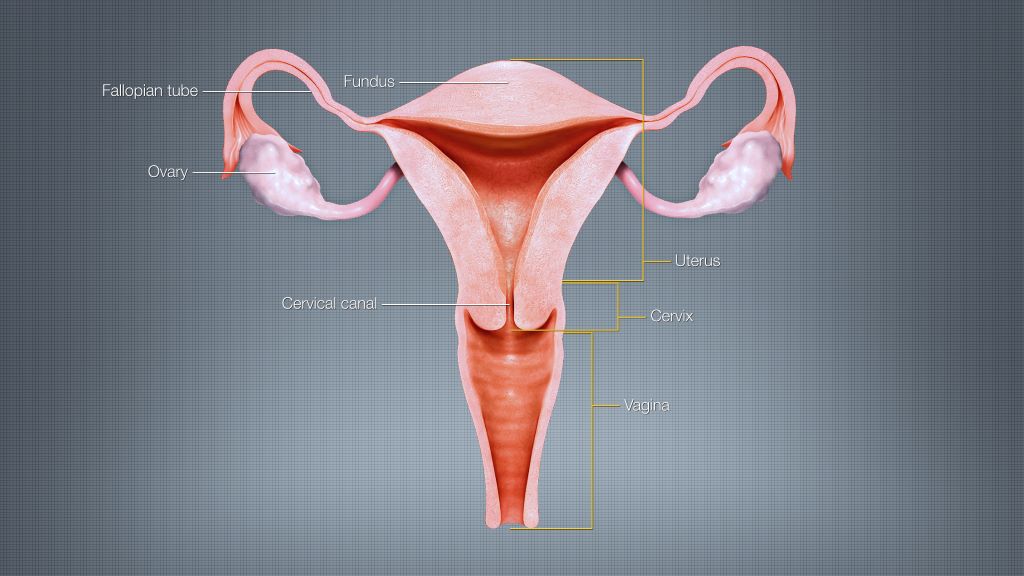
Contrary to popular belief, the postmenopausal ovary is not defunct.
In a new, paradigm-shifting study of ovaries from 28 women, scientists at Northwestern University and the Buck Institute for Research on Aging found that in the decades after menopause the ovary remains biologically active and continues to remodel with age, showing increased inflammation and changes in tissue structure. The study also identified a molecular link between ovarian ageing and cancer.
The study was published on 14 October in Aging Cell.
“In the ovary, we reach a point of no return with respect to fertility in which it’s no longer producing eggs, and I would venture to say most people assume those ovaries are just sitting there doing nothing, similar to the appendix,” said co-corresponding author Francesca Duncan (associate professor of reproductive science in medicine, Northwestern University Feinberg School of Medicine; associate professor in residence, Buck Institute). “But that’s what makes this study very different.”
The findings challenge the notion that the ovary is an innocent bystander after reproduction ends, raising questions about whether it could play a more active role in ageing and chronic disease in women.
“The ovary is not just a reproductive organ,” said co-corresponding author Birgit Schilling (professor and director of the Mass Spectrometry Center, Buck Institute). “It really influences how somebody ages because it speaks to all these other organs, such as the brain, and also to the bone, and women after menopause experience often a lot of bone problems. So, we think there is a connection between all these organs.”
Women now routinely live for decades after menopause, making it increasingly important to understand what the ovary is doing during this long post-reproductive period, Duncan said.
“Is the ovary the canary in the coal mine in women?” said Duncan. “Could ageing in the ovary set off a cascade of changes that continues throughout the body as women get older?”
Duncan’s group previously found similar evidence of continued remodelling in postmenopausal ovaries of mice. When she embarked on that research and the current study in humans, she expected to see very little activity in the postmenopausal ovary.
“I was predicting that if we took a 50-year-old ovary, a 60-year-old ovary, a 70-year-old, an 80-year-old ovary, they would all look exactly the same, have no eggs, and basically be non-functional,” Duncan said. “The fact that across species we’re seeing this gives us confidence that this isn’t just some random event, but something truly meaningful is happening in the biology.”
What remains unknown is exactly what the ovary is doing after menopause and whether those changes are beneficial or harmful, Duncan said.
“Our data points to progressive ageing features in which the ovary appears to lose its original identity and ends up doing something different,” Duncan said. “We do not yet know if there’s ever a point in a woman’s life when this organ is no longer beneficial and it’s actually harmful. These results really point to the need to ask this question.”
To characterise the changes, Schilling’s team – spearheaded by Buck Institute staff scientist Mark Watson – used advanced proteomic technologies to analyse 5,812 protein groups in normal ovarian tissue from postmenopausal women aged 50 to 75.
Human ovarian tissue is difficult to obtain, making the 28 ovaries an unusually valuable collection. By focusing exclusively on women within a relatively narrow 25-year age range after menopause, the researchers examined molecular changes that continue during the postmenopausal years. The technology allowed examination of thousands of proteins across every sample and identification of patterns using multiple statistical approaches.
Those analyses showed that the ovary continues to change well after its reproductive life ends.
Ovaries from younger postmenopausal women had more proteins involved in maintaining cells and tissue structure, while older ovaries had more proteins associated with inflammation, immune activity and the ongoing breakdown and rebuilding of the extracellular matrix. The differences were most pronounced between ovaries from women in their 50s and those from women 70 and older.
“When we analysed the data in multiple different statistical ways, what became clear across all these methodologies is that the ovary was not stagnant,” Schilling said. “In fact, over the decades, there were quite dramatic differences in terms of some proteins’ levels would go up with age and some proteins’ levels would go down, which tells us this organ is quite dynamic.”
The ageing ovaries also showed some of the same molecular patterns seen in cellular senescence.
The findings build on a discovery Duncan’s lab made a decade ago. In 2016, the lab was the first to report that as ovaries age they become increasingly inflamed, fibrotic and stiff. Because cancer cells can thrive in collagen-rich, stiff environments, the scientists have been investigating whether these age-related changes could make the ovary more hospitable to cancer cells.
The new study provides a molecular view of that remodelling process later in life. As postmenopausal ovaries aged, proteins involved in maintaining tissue structure declined, while proteins involved in inflammation and reshaping the tissue environment became more prominent.
Although all the ovarian tissue in the study appeared normal and cancer-free, some proteins previously associated with ovarian cancer were more abundant in ageing ovaries, with the strongest signal among women in their 60s. The finding does not mean the ovaries were cancerous or precancerous, but suggests healthy ovarian ageing and ovarian cancer share some biological processes.
“It’s not that all postmenopausal women get ovarian cancer, but we know that that fibrotic inflammatory environment is certainly an environment that cancer cells prefer to home in on,” Duncan said. “This is all consistent with the idea that the ageing ovary is a potential third hit for ovarian cancer, with the first hit being genetic and the second hit being environmental. So can we target the ageing ovary therapeutically to lower the risk of ovarian cancer, or can we develop novel biomarkers of ovarian cancer?”
The findings do not answer whether healthy ovaries should ever be removed after menopause. Rather, they raise new questions about how the biological activity of the postmenopausal ovary might influence women’s health systemically and whether the observed changes contribute to disease or are features of normal ageing.
Source: Northwestern University
