

A highly sensitive cardiac test brings traditional lab diagnostics to the field, when it’s most needed
A person having a heart attack may be only feet from medical care but miles from the laboratory testing needed to confirm it. That gap matters, especially for rural patients, those in nursing homes, ambulances and other places where access to specialised diagnostics is limited.
In a paper published in Biosensors and Bioelectronics, an international team of researchers details a highly sensitive test designed to bring that molecular evidence closer to the patient.
“A heart attack doesn’t wait for laboratory results,” said lead author Sayantan Tripathy, assistant research scientist in Texas A&M University’s Optical and Bio-Sensing Laboratory in the College of Engineering. “By reducing the time needed to detect heart muscle damage, we’re helping clinicians move more quickly from uncertainty to action, not only in hospitals, but also in ambulatory and resource-constrained settings where rapid diagnostic tools are often unavailable.”
Clinicians may suspect a heart attack based on symptoms or an electrocardiogram, but confirming heart muscle damage has occurred often requires testing for cardiac troponin I, a protein released into the bloodstream when the heart is injured. The most sensitive versions of those tests typically rely on centralised laboratory equipment, creating a potentially dangerous delay between suspicion and certainty.
“Our goal is for emergency medical technicians in an ambulance to be able to take someone’s fingertip sample – just a small finger prick – put that sample into a cartridge that contains all of our components, plug this cartridge into our device, and then be able to run the test in five minutes,” said Dr Samuel Mabbott, associate professor of biomedical engineering and study co-author.
Faster heart attack diagnosis
Many of today’s troponin tests depend on expensive laboratory instruments and trained personnel. As a result, obtaining the information needed to confirm a heart attack can take time, especially when advanced laboratory resources are not immediately available.
“Our vision is to bring affordable and sensitive advanced molecular diagnostics closer to where care is delivered,” said Dr Gerard Coté, professor of biomedical engineering and director of Texas A&M’s Center for Remote Health Technologies and Systems. “The less distance between the patient and the information clinicians need, the faster critical decisions can be made.”
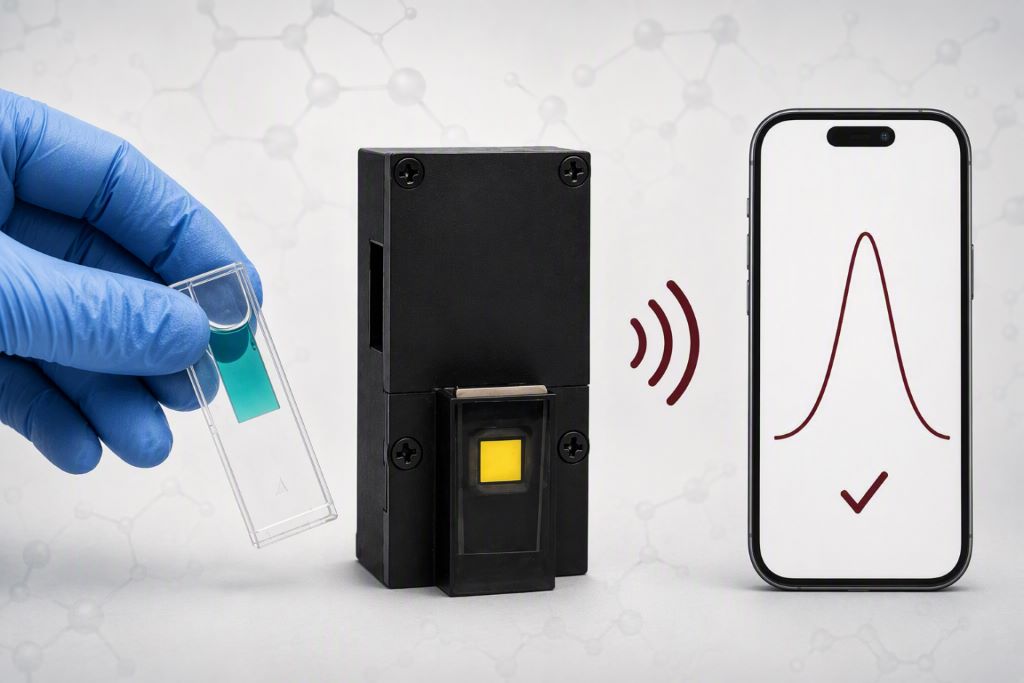
To create the test, the researchers designed a specific structured DNA molecule that remains inactive until it encounters cardiac troponin I. Once it detects the biomarker, it triggers a series of molecular reactions that amplify the signal, making it easier to detect even very small amounts of heart damage. The amplified signal is then measured using portable optical sensing technology.
The researchers say the technology requires additional development before it could be used in clinical practice. The original work takes approximately two hours to complete, but the current version of the technology has reduced the testing time to less than 25 minutes, and further work is underway to shorten it to under 15 minutes, improving its user applicability.
Still, the study points toward a future in which life-saving diagnostic information is no longer tied to a centralized laboratory and can instead move closer to the patients who need it most.
Source: Texas A&M University
