By Sue Segar for Spotlight
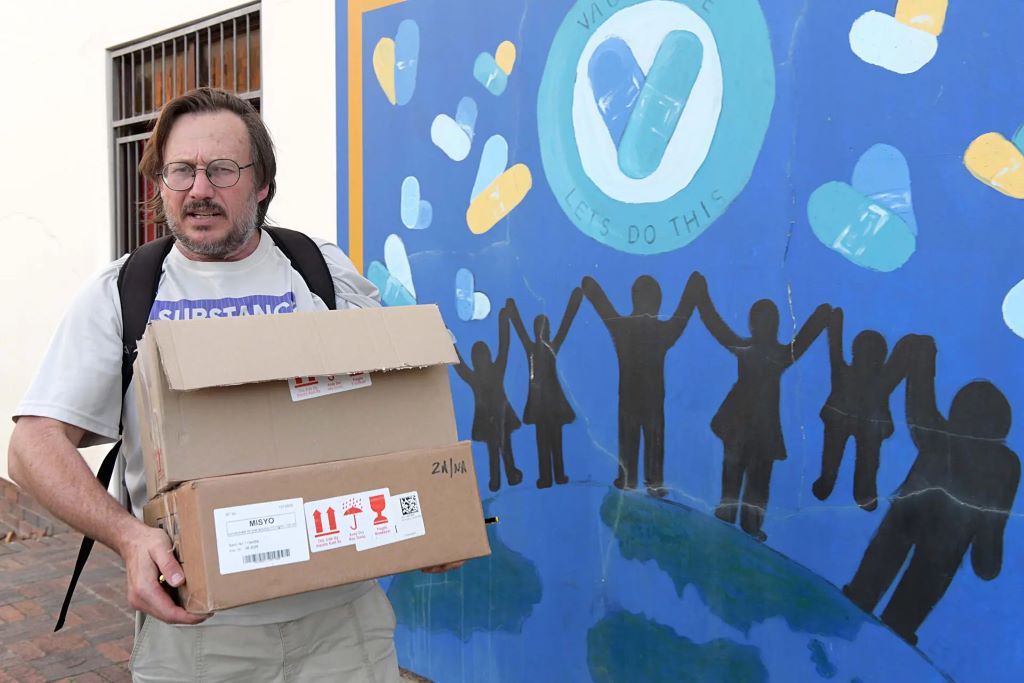
Dr Hermann Reuter did pioneering work treating HIV in the early 2000s in Cape Town and in the rural Eastern Cape. Today, his focus is substance abuse, which he believes is the country’s biggest health issue after HIV. Spotlight spent time with him to learn about his work in the Garden Route city of George.
On a Tuesday afternoon, just before 14:00, Jodie Fonseca, walks into a small consulting room inside the Central Clinic in the Garden Route town of George.
The 37-year-old, who says she has been addicted to heroin for 20 years, is here to fetch her supply of medication used to treat her substance use disorder. The slight, weary looking woman is welcomed warmly by two men as she takes her seat.
“How’s it going?” says Dr Hermann Reuter, a bespectacled man with a strong German accent. He’s wearing a T-shirt with the words Substance Survivor on the front. He looks at her file and dispenses tablets into a bottle.
Brian Faul, a volunteer behavioural change counsellor, chats and jokes with Fonseca. He describes himself to us as a recovering alcoholic, sober for 26 years.
Outside the consulting room, a line of about 30 people, needing help with substance use, have gathered in the narrow corridor in this typical inner-city government clinic. They range from gaunt older women in trackpants to young men in frayed hoodies. Some are seated and others stand patiently waiting.
Reuter hands Fonseca a bottle of pills. “See you next month for your medication,” he tells her.
“Remember, we’re always here if you have issues. We’re an open door, hey.”
Faul urges Fonseca to return to the clinic on Friday, when he runs group and individual counselling sessions for people with addiction.
Fonseca is here to attend a weekly outpatient service, run by the NGO Smoking and Alcohol Harms Alleviation and Rehabilitation Association (SAHARA). Founded in George by Reuter five years ago, the NGO offers free medical-assisted outpatient rehabilitation, and counselling in the form of support groups to people with substance addiction.
Currently, these services are not offered in the public healthcare system in George, but thanks to a relationship with the Western Cape health department, SAHARA uses a consulting room in Central Clinic for a few hours to run the Tuesday methadone programme and the Friday counselling services. On Wednesdays, through a similar arrangement, the NGO runs a programme in Thembalethu clinic.
An addict since 17
Desperate to “get away from the heroin”, Fonseca, a mother of three, tells Spotlight she moved to George from Johannesburg a few months ago.
“Johannesburg was just a battle. I ended up on the streets and lost everything,” she says. “The lifestyle and the familiarity just kept my boyfriend and I in the cycle. Heroin is so easily accessible up there. I’d just had enough. I wanted to get on the methadone programme.”
Fonseca says while it was a struggle for her to get onto a programme in Johannesburg, it was smooth sailing in George with Reuter helping her on her first visit to the clinic. “I was amazed and grateful, actually speechless,” she says. “I walked in and said to him, ‘I can’t carry on in this lifestyle. I feel the next time I pick up I’ll … make sure it’s a deadly dose’.”
Fonseca says the counselling sessions have been helpful too. “Brian downloaded a breathing app to help with my anxiety. It calms me and helps me sleep,” she says.
She dreams of a normal life, back with her children and to spend time with her mother, “my rock”, who she says is in poor health.
Fonseca is by no means alone in having become addicted to heroin. As previously reported by Spotlight, rates of heroin use in South Africa have been on the up. It is estimated that a few hundred thousand people in the country take the drug every day.
A stream of people with substance-use disorders
Next to enter the consulting room are a father and his teenage son. One can sense the love between them, but there’s tension. It’s their first visit, and they’re here because the son wants to quit his marijuana habit. The concerned father asks Reuter to test his son’s urine to check whether his son is using other drugs, like crystal meth, on top of marijuana. The son insists he only uses marijuana.
Intervening gently, Reuter says there’s no need for a urine test. “The treatment for cannabis (marijuana) and crystal meth is the same; there will be no benefit from additional information,” he says. The dad nods. Both agree to return to the clinic for more counselling.
Next to see Reuter are Peter-John Truter and his twin brother, Kenneth, both 36, and addicted to heroin. They tell Spotlight their mother died of breast cancer when they were three-months old and they were lovingly raised by a relative in Mitchells Plain, Cape Town. Initially hard-working and sporty children, they started using “weed, alcohol, ecstasy and tik” as teenagers, before discovering heroin in their 20s.
“Drugs took over the Cape Flats. Wherever you went, people were drinking, smoking tik or whatever. It’s the weekend thing. Our area became infected with heroin. We moved from smoking to mainlining (injecting),” says Peter-John.
The brothers tried rehab several times. Their heartbroken adoptive mother sent them to George, thinking there were no drugs there. They found dealers immediately. Both are now on the methadone programme and sometimes attend counselling.
Next in the small consulting room is a young man who’s addicted to the medication Tramadol.
“I started taking it for toothache and got up to 20 tablets a day. It made me feel good, like I was on drugs, but I started passing out in the street,” he says.
Reuter explains that the treatment for Tramadol addiction is the same as for heroin addiction. Both drugs are opioids.
“No cold turkey with methadone”
Reuter explains that heroin addiction is treated with methadone Opioid Substitution Treatment (OST). Methadone is a synthetic opioid that is typically taken once a day.
“It sits on the same receptor as heroin, so people don’t suffer withdrawal. There’s no cold turkey or cramping. They can go back to normal life quite quickly if they stick to this,” he says.
The first six months of the treatment is usually “a bit up and down”, Reuter says, but the programme has seen most addicts moving back into their homes and into jobs.
“Most people on the programme stop the methadone at some stage, so you won’t see them here anymore. The people you see here today are those who are still on the street and struggling – or who started recently,” he says.
It’s clinic closing time but a few people still need support. Reuter, undaunted, carries his box of medication and continues outside. A small group of users join him.
There we meet Sarah Lessing who says she has been clean from heroin for four years since joining Reuter’s programme. She’s brought two youngsters who live in the mountains outside George.
“In George, there’s unfortunately nowhere for people without a support system to go,” says Lessing. She recalls how she decided to give up heroin, after her partner who also used heroin died. “I had to literally walk past my dealer to get to the taxi to go to Dr Reuter’s clinic.” Fully recovered, she feels part of his “lifesaving” mission to work with other people struggling with addiction.
Thembalethu’s Wednesday clinic
The next morning, Reuter is working in George’s Thembalethu clinic. The service here is offered every Wednesday for people struggling mainly with alcohol and nicotine use.
The first hour is spent with community health workers. SAHARA has been sub-contracted to manage about 65 health workers from five clinics in the district trained in substance use, as well as mental healthcare. Reuter says that, with substance use and mental health issues at crisis levels, it is essential health workers have this capacity added to their skillset.
As part of a Western Cape government youth wellness and substance prevention programme called Planet Youth, the community health workers will be working with schools in their areas to link health and education; and to teach people about the dangers of alcohol and cigarettes.
“Now that we are entrusted with community health workers, we want to expand their scope of practise, so they support the schools, including the relationship between the schools and parents,” says Reuter.
Soon after 09:00, a stream of service users has entered the consulting room. There’s an old man with a walking stick, a few middle-aged women, and some very young people.
Switching from English to Afrikaans to isiXhosa, Reuter greets every person. “You are taking a big step today … we can help you with these tablets, and with our support group,” he says.
A 29-year-old woman tells Spotlight she’s been smoking cigarettes since she was 17. She’s lost count of how many cigarettes she smokes daily and says she feels sick all the time. “It doesn’t even help my stress,” she says.
A man who works as a painter says he hopes to give up alcohol and smoking. “I’ve been smoking since 1984. At weekends, I drink and smoke till I’m dizzy. I don’t even have tastebuds till Wednesday or Thursday,” he says.
More and more people arrive. Reuter listens to each one, and packs medicines for each. For nicotine, he’s got bupropion, and when funds are sufficient, varenicline. “Bupropion helps quit smoking by reducing cravings and withdrawal symptoms. Varenicline is a nicotine receptor blocker. It reduces withdrawal symptoms and reduces enjoyment of smoking,” he explains. He says it’s safe to use these with other medications and during pregnancy but people who have epilepsy must be properly consulted.
For those wanting to reduce alcohol use, he prescribes diazepam and naltrexone. “Diazepam reduces withdrawal symptoms by working on the GABA (gamma-aminobutyrid acid) system, which is the main inhibitory neurotransmitter in the central nervous system… Naltexone blocks the euphoria caused by alcohol-induced endorphins,” he explains.
David Nongogo says he joined Reuter’s programme about five years back and is now a regular at the clinic to encourage others. “It took me only three weeks to get off smoking and drinking,” he says.
“I won’t ever go back there. There’s a drink they make in the township, called ‘iginja’ made from a powder you brew into alcohol. If you drink it, you don’t even know when you need to urinate. You just urinate. I found myself there. If it wasn’t for the programme, I wouldn’t be here,” he says.
Reuter’s public health journey
Well-known for his groundbreaking work in HIV treatment and activism, Reuter graduated in medicine from Stellenbosch University in the early nineties. Politically involved from an early age, he worked for the Treatment Action Campaign (TAC) in the Western Cape in the late nineties. He then ran HIV treatment programmes in Khayelitsha, Cape Town and Lusikisiki in the rural Eastern Cape for Medecins Sans Frontieres (MSF). He also ran HIV services for the health department in KwaZulu-Natal. In 2004, Reuter received the Rural Doctor of the Year Award from the Rural Doctors Association of Southern Africa (RuDASA) for his efforts in providing HIV medicines in remote areas of the country. In 2020, Reuter published this moving article looking back at the role of some key people in the struggle for antiretrovirals in South Africa.
Reuter moved to George in 2015 where, besides running SAHARA, he works as Community-Based Education Coordinator in the Garden Route, for the Division of Primary Health Care in the Department of Family, Community and Emergency Care of the Faculty of Health Sciences at the University of Cape Town.
Reuter’s passion these days is what he calls the “neglected problem” of substance abuse which, he says, is the country’s second biggest health issue after HIV. He says the health system carries the high costs of the harm and illness caused by substance misuse. He argues that it is more cost-effective to treat addiction before it takes hold. This, he feels, should be done at primary care level, as opposed to dealing with the fallout in public hospitals.
He says government should carry the cost of substance abuse medications and points out that the public health system does not currently provide methadone or other medications for treating substance abuse as they are not on the essential medicines list, and clinics are not authorised to keep them on site.
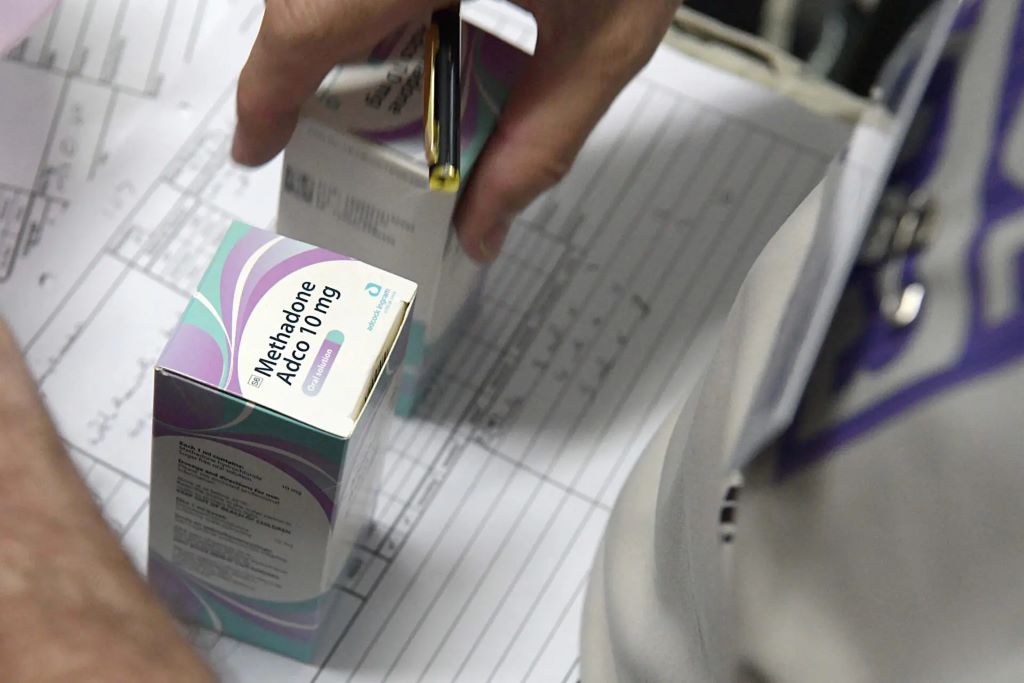
“So, I arrive with my stock, hand it out, and monitor people to ensure they are safe on the medication,” says Reuter. “I am registered as a dispensing doctor so can buy the medication wholesale and distribute it.” His funding comes from a charity in Canada called Child.
George, he says, is no different from any other town in South Africa.
“Over weekends, the hospital is overwhelmed with trauma cases … clearly linked to alcohol abuse. Like other hospitals, we see numerous people with complications arising from smoking, like cardiovascular issues, lung disease, and cancer.”
He continues: “I see families in tears every week, saying ‘our child is stealing and doing drugs, and is not our child anymore’.”
Treat the substance use, not the repercussions
Reuter says he became disillusioned with medicine when he realised he was just working at the tail end of people’s misery. “I knew that the social context in which people lived needed to change. Rather than putting a plaster on much bigger problems, issues should be dealt with much earlier,” he says.
He is disappointed that more doctors are not advocating for medications for treating substance abuse to be made available in government facilities.
“It reminds me of the early days of HIV. We knew there were medicines that worked and not many doctors were prepared to stand up and advocate for it,” he says.
Reuter says that the government’s approach to tackling substance use is not ideal. He explains that the Department of Social Development is tasked with issues relating to substance abuse.
“But substance use is a medical problem. There are many social causes and social problems caused by it. The Department of Health should be dealing with it because the complications down the line are so expensive, and [they do end up] paying for all of them. We should be medically treating substance users to save the health department from these costs,” he says.
A few positives
On the plus side, SAHARA’s integration of its services into the local clinics is yielding results. Community health worker at Thembalethu clinic, Gcobisa Kraai, says she is learning so much about the treatment of substance abuse. “I can see the community really wants this service. Substances are killing our communities,” she says.
Reuter says last year his NGO treated 2 400 people for smoking, 1 400 for alcohol use, with more than 50 people on methadone. “Our budget cannot treat more people, so we restrict clinics where we work so that we have medication for the whole year,” he says. “If we had more funding, we could be at more clinics.”
This article was first published by Spotlight – health journalism in the public interest. Sign up to the Spotlight newsletter.