

“Mpathy Clinics are nurse-led, low-fee primary healthcare facilities with a vision of transitioning from nurse-led to nurse-owned clinics, creating opportunities for nurses to own and operate clinics in their own communities,” said Rhiza Ventures managing director Linda Dunkley.
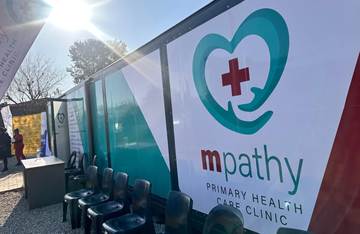
For decades, nurses were the backbone of South Africa’s healthcare system, present in every ward, every emergency and every recovery room, but rarely in positions of ownership and leadership.
Now, as South Africa marks International Nurses Day on May 12 under the global theme “Empowered Nurses Save Lives”, a growing network of township clinics is transforming nurses from employees into entrepreneurs while helping to ease pressure on overcrowded public healthcare facilities.
Affordable Healthcare and Building Local Economies
In communities where patients often endure long queues at public clinics or cannot afford private healthcare, nurse-led Mpathy Clinics are emerging as an accessible and affordable alternative rooted in empowerment, dignity and community-based care.
The model, driven by NPO Rhiza Babuyile, currently operates 11 clinics in township areas including Umlazi, Naledi, Gugulethu, Tembisa and Diepsloot. Beyond expanding primary healthcare access, the initiative is creating something rarely seen in South Africa’s nursing
“South Africa’s public sector serves roughly 80% of the population, yet clinics routinely face long queues, staff shortages and medicine stockouts. Most primary healthcare services fall within the legal scope of a Professional Nurse and policies like NIMART (Nurse Initiated Management of Antiretroviral Treatment) – leaning on nurses is the only way to scale primary healthcare capacity at a cost the country can afford,” says Rhiza Ventures, Managing Director Linda Dunkley.
For Mpathy, this means helping the Department of Health extend healthcare services into underserved communities while aligning with the Ideal Clinic Realisation programme and supporting the long-term National Health Insurance (NHI) rollout, where accredited primary healthcare facilities serve as the first point of entry.
“Nurse-led PHC clinics like Mpathy are where early detection is possible, response rates are highest, and the cost to both the patient and the public system is lowest,” said Dunkley.
Dunkley added that the clinics were designed to complement, rather than compete with, the public healthcare system. “Mpathy is positioned explicitly as an extension of the Department of Health rather than a parallel system,” she said.
The clinics also contribute to local economic development, not only creating jobs for administrators and community health workers, but enabling non-nursing entrepreneurs to own clinics and employ qualified nurses, broadening community-based healthcare investment and expanding access to care.
This month alone, a new Mpathy Clinic will open in Orange Farm on 21 May, led by nursepreneur Sister Mbalenhle, and on 19 May an entrepreneur will be inducted into the model in Zithobeni, Bronkhorstspruit.
‘It’s My Answered Prayer’ — A Nurse Returns Home as Nursepreneur
For professional nurse and nursepreneur Sindiswa Nhlabathi, the model has become deeply personal. Nhlabathi will this week open the Mpathy Clinic in Naledi, Orange Farm on 14 May, serving the same community where she was born and raised.
“I was born at Zola, right across from where the Naledi clinic is based. I grew up in a family where no one was formally employed but they were ‘business people’,” she said. Her mother and grandmother sold cakes and goods to support the family. “It wasn’t easy as there was no money for university,” she said.
Before nursing, she worked at a government hospital as a personal assistant manager. Until a friend changed everything. “One day my friend came to me with nursing application forms and persuaded me to apply. I refused telling her that ‘you know I don’t like nursing’ but she insisted. I was accepted and the minute I was exposed to clinical experiments I knew I was born for this.”
After years in public healthcare, including at Zola Clinic, Nhlabathi resigned from her permanent post and was later offered the opportunity to run the Naledi clinic. “When I was studying it never crossed my mind that one day I might own a clinic. It’s my answered prayer. I feel empowered and I don’t even have the words to articulate my heart but one thing I know is that I intend to take this opportunity and make the best out of it,” says Nhlabathi.
At the clinic, children can receive treatment for under R200, while adult consultations with medication cost up to R350.
“Our clinic is private but very affordable,” Nhlabathi adds that “Our community relies on social grants and low incomes, while public clinics remain overwhelmed. Mpathy Clinics are a bridge between private and public healthcare and our priority is to build trusted relationships with the community.”
Visit https://mpathyclinic.co.za/ to find out more.
